

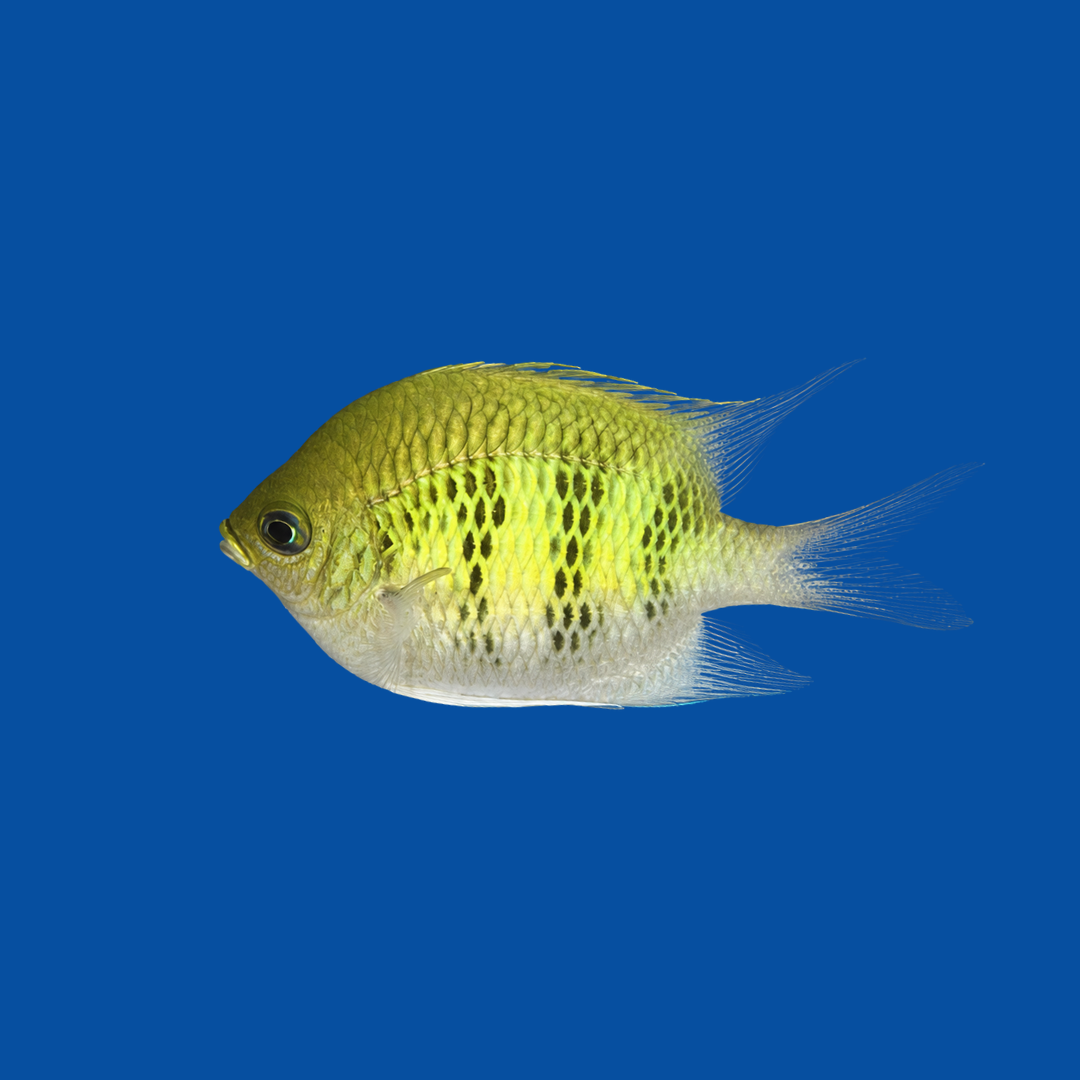
解説 / Description
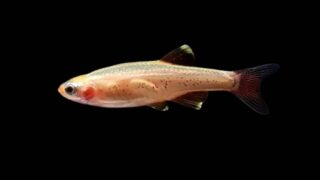
クラカオスズメダイは、東インド洋から西部太平洋のサンゴ礁に広く分布するスズメダイの仲間です。淡い青緑色から銀色を帯びた体に、成魚では3〜5本ほどの暗色横帯が入り、尾びれや背びれの縁が黒く締まって見えるのが特徴です。自然下ではミドリイシ類などの枝状サンゴの上をゆるやかな群れで泳ぎ、危険を感じると枝の隙間へ素早く逃げ込みます。丈夫で餌付きやすく、リーフタンクにも導入しやすい一方、成長に伴って縄張り意識が強くなるため、水槽サイズと混泳相手の選び方が長期飼育の大切なポイントになります。 The Staghorn damselfish is a damselfish species widely distributed across coral reefs from the eastern Indian Ocean to the western Pacific. Adults have a pale blue-green to silvery body with about three to five dusky vertical bars, often framed by dark margins on the tail and soft dorsal and anal fins. In the wild, it often forms loose groups above branching Acropora corals and quickly retreats into the branches when threatened. It is hardy, usually easy to feed, and suitable for reef aquariums, but it can become more territorial as it matures, so tank size and tank mate selection are key to long-term success.
基本情報 / Basic Information
| 学名 / Scientific Name | Amblyglyphidodon curacao |
|---|---|
| 通称 / Common Name | クラカオスズメダイStaghorn damselfish, Black-snouted sergeant-major |
| 分類 / Family | 条鰭綱、スズメダイ科、クラカオスズメダイ属Class Actinopterygii, family Pomacentridae, genus Amblyglyphidodon |
| 英名 / English Name | Staghorn damselfish |
| 分布 / Distribution | 東インド洋から西部太平洋。日本では琉球列島や奄美群島などのサンゴ礁域に見られ、海外ではインドネシア、マレーシア、フィリピン、グレートバリアリーフ、ニューカレドニア、フィジー、サモア、トンガ周辺などに分布します。Eastern Indian Ocean to the western Pacific. In Japan it occurs around coral reef areas such as the Ryukyu Islands and Amami Islands, and elsewhere around Indonesia, Malaysia, the Philippines, the Great Barrier Reef, New Caledonia, Fiji, Samoa, Tonga, and nearby regions. |
| 最大体長 / Max Size | 約11〜13cmAbout 11 to 13 cm |
| 寿命 / Lifespan | 正確な飼育下寿命の情報は多くありませんが、丈夫なスズメダイ類であり、安定した環境では数年以上の長期飼育が期待できます。Precise captive lifespan data are limited, but as a hardy damselfish, it can be expected to live for several years or longer in a stable aquarium. |
飼育環境 / Aquarium Environment
| 水槽サイズ / Tank Size | 単独飼育でも最低60cm規格水槽、水量約60L以上が目安です。複数飼育や混泳水槽では、90cm規格水槽、水量約150L以上を用意すると安定しやすくなります。よく泳ぎ、成魚では縄張りを持つため、ナノタンクでの終生飼育には向きません。A standard 60 cm aquarium of about 60 L or more is the minimum guideline even for a single specimen. For groups or community setups, a standard 90 cm aquarium of about 150 L or more is recommended. It is an active swimmer and becomes territorial as an adult, so it is not well suited to lifelong housing in a nano tank. |
|---|---|
| 水温 / Temperature | 23〜28℃。急な変動を避け、夏場はクーラー、冬場はヒーターで安定させます。 23 to 28°C. Avoid sudden fluctuations and keep the temperature stable with a heater in winter and a chiller if needed in summer. |
| 水質 / Water Quality | 比重1.020〜1.026、pH8.0〜8.5、アルカリ度8〜12dKHが目安です。強健な種類ですが、アンモニアや亜硝酸が検出される環境は避け、十分なろ過と定期的な換水で清浄な海水を維持します。A specific gravity of 1.020 to 1.026, pH 8.0 to 8.5, and alkalinity of 8 to 12 dKH are good guidelines. Although hardy, it should not be kept in water with detectable ammonia or nitrite. Maintain clean seawater with adequate filtration and regular water changes. |
| レイアウト / Layout | ライブロックや枝状サンゴ骨格、人工サンゴなどで、隠れられるクレバスやオーバーハングを多めに作ります。自然下では枝状サンゴに強く依存するため、逃げ込める複雑な構造があると落ち着きやすくなります。サンゴやシャコガイを積極的に食害する魚ではなく、基本的にはリーフタンク向きです。Use live rock, branching coral skeletons, or artificial coral structures to create many crevices and overhangs. In the wild it is closely associated with branching corals, so a complex structure that offers quick shelter helps it feel secure. It is generally reef safe and is not known for actively damaging corals or clams. |
| 注意点 / Precautions | 幼魚期は比較的おとなしく見えますが、成長するとテリトリーを主張しやすくなります。狭い水槽では同種間の追い回しや、臆病な魚への圧力が強く出ることがあります。導入時は隠れ家の数を十分に確保し、混泳魚との体格差や性格差に注意します。Juveniles may appear relatively peaceful, but adults often defend territories. In small tanks, chasing among conspecifics or pressure on timid fish can become noticeable. Provide plenty of shelters and pay attention to size and temperament differences among tank mates. |
餌と給餌 / Feeding
| 餌の種類 / Diet | 雑食性です。人工飼料のフレークや小粒ペレットを主食に、冷凍ブラインシュリンプ、冷凍イサザアミ、細かく刻んだアサリなどを補助的に与えます。自然下では動物プランクトンだけでなく付着藻類も食べるため、スピルリナなど植物質を含む餌を組み合わせると健康維持に役立ちます。It is omnivorous. Use marine flakes or small pellets as the staple food, supplemented with frozen brine shrimp, frozen mysis-type foods, and finely chopped clam. Because it also grazes algae in the wild, foods containing plant matter such as spirulina are useful for long-term health. |
|---|---|
| 給餌のポイント / Feeding Tips | 餌付きは良好で、人工飼料にも慣れやすい種類です。1回で多く与えるより、1日1〜2回、数分で食べ切れる量を与えると水質を保ちやすくなります。混泳水槽では食いがよい本種が先に餌を取ることがあるため、臆病な魚にも餌が行き渡るよう給餌位置を分けると安心です。It usually accepts prepared foods readily. Rather than feeding heavily at once, offer an amount it can finish within a few minutes once or twice daily to help maintain water quality. In community tanks, this active feeder may take food first, so feeding in more than one area helps timid tank mates receive enough food. |
性格と混泳 / Temperament and Tank Mates
| 性格 / Temperament | スズメダイらしいやや気の強い性格です。普段はサンゴや岩組みの周辺で活発に泳ぎますが、成魚になるとお気に入りの場所を守ろうとする行動が出やすくなります。It has the moderately assertive temperament typical of many damselfishes. It swims actively around coral structures and rockwork, and adults may defend favored areas. |
|---|---|
| 混泳の相性 / Compatibility | 同程度以上の大きさで、ある程度泳ぎのしっかりした海水魚とは比較的合わせやすいです。一方、ハタタテハゼのように臆病な魚、小型で遊泳力の弱い魚、導入直後で状態が不安定な魚とは相性に注意します。同種を複数入れる場合は、水槽サイズを大きめにし、隠れ家を十分に増やして攻撃が1匹に集中しないよう観察します。It is usually manageable with similarly sized or larger marine fish that can hold their own. Extra caution is needed with timid species such as firefish, very small or weak swimmers, and newly introduced fish that are still unsettled. When keeping multiple individuals, use a larger tank, provide many hiding places, and watch carefully so aggression does not focus on one fish. |
病気と対策 / Diseases and Prevention
| かかりやすい病気 / Common Diseases | 強健な種類ですが、新規導入時のストレスや水質悪化があると、海水性白点病、ウーディニウム症、外傷からの細菌感染などに注意が必要です。特に白点病は、白点が見えなくなっても底床や岩に潜伏して再発することがあるため、早期発見と隔離管理が重要です。Although hardy, it can still be affected by marine ich, marine velvet, and bacterial infections following injuries, especially under transport stress or poor water conditions. Marine ich is particularly troublesome because visible spots may disappear while the parasite continues its cycle in the substrate or rockwork, making early detection and quarantine important. |
|---|---|
| 対策と予防 / Prevention | 新しく迎えた個体は、可能であれば本水槽に入れる前に隔離水槽で観察します。水温と比重を急変させず、水合わせを丁寧に行い、導入直後は照明を弱めてストレスを減らします。白点病が疑われる場合はサンゴや無脊椎動物のいる本水槽で安易に薬を使わず、隔離水槽で状態を見ながら適切な薬浴や低比重管理を検討します。銅を含む薬剤は無脊椎動物に強い毒性があるため、使用場所と濃度管理に注意が必要です。Observe new arrivals in a quarantine tank before adding them to the display whenever possible. Avoid sudden changes in temperature and salinity, acclimate carefully, and reduce stress with subdued lighting after introduction. If marine ich is suspected, do not casually medicate a reef display containing corals or invertebrates; instead, consider appropriate treatment or hyposalinity management in a separate hospital tank. Copper-based medications are highly toxic to invertebrates, so they require careful placement and concentration control. |
増やし方(繁殖) / Breeding
| 雌雄の判別 / Sexing | 通常時の外見だけで雌雄を確実に見分けるのは難しいです。繁殖期にはオスが巣の周辺でディスプレイを行い、婚姻色として金色を帯びることがあるため、行動と体色の変化が手がかりになります。Reliable sexing by appearance alone is difficult under normal conditions. During breeding, males may display near the nest site and take on a golden nuptial coloration, so behavior and temporary color change can provide clues. |
|---|---|
| 繁殖形態 / Reproduction | 卵生で、岩や死んだサンゴ骨格などの表面に粘着性のある底生卵を産み付けます。オスは産卵床を清掃し、産み付けられた卵に新鮮な水を送ったり、外敵を追い払ったりして保護します。It is oviparous and lays adhesive demersal eggs on surfaces such as rock or dead coral skeletons. The male cleans the nest site and guards the eggs by fanning them with fresh water and driving away intruders. |
| 繁殖のポイント / Breeding Tips | 一般家庭で稚魚まで育てる難易度は高めです。親魚の状態を良く保ち、落ち着いた産卵場所を用意することが第一歩になります。孵化後の仔魚は非常に小さく、初期餌料としてワムシなどの微細な生き餌と、安定した水質管理が必要になります。Raising the fry in a home aquarium is challenging. The first step is maintaining healthy broodstock and providing calm, suitable spawning surfaces. After hatching, the larvae are very small and require tiny live foods such as rotifers along with stable water quality. |
雑学と豆知識 / Trivia and Fun Facts
| 1. 名前に残った、標本時代の地理的な勘違い / 1. A geographical mix-up preserved in the name | 種小名の curacao は、カリブ海のキュラソー島を思わせる名前ですが、クラカオスズメダイは大西洋やカリブ海には分布しません。18世紀に本種が記載された際、標本の由来が混同されたことにより、実際の分布とは異なる地名が学名に残ったと考えられています。命名上の誤解はあっても、先取権の原則により現在も Amblyglyphidodon curacao の名が正式に使われています。The species name curacao suggests Curaçao in the Caribbean, yet this fish does not occur in the Atlantic or Caribbean. When the species was described in the 18th century, the source of the specimen appears to have been confused, leaving a place name in the scientific name that does not match its real distribution. Despite that historical mix-up, the name Amblyglyphidodon curacao remains valid under the principle of priority. |
|---|---|
| 2. 英名は、暮らし方そのものを表す名前 / 2. Its English name reflects its way of life | 英名の Staghorn damselfish は、ミドリイシ類の枝状サンゴを指す staghorn coral に由来します。自然下のクラカオスズメダイは、枝サンゴの上を群れで泳ぎ、危険が近づくと迷路のような枝の間へ逃げ込みます。水槽内でも枝状の構造やライブロックを組むと、本来の「隠れて、出て、また泳ぐ」という行動が引き出されやすくなります。The English name Staghorn damselfish comes from its association with branching staghorn corals, especially Acropora. In the wild, groups swim above branching corals and dart into the maze of branches when danger approaches. In aquariums, branching structures and live rock can help bring out this natural rhythm of hiding, emerging, and swimming again. |
| 3. 夜になると雰囲気が変わるナイトカラー / 3. Night coloration gives it a different look after dark | 日中は淡い銀緑色に見える本種も、夜間には暗い青色を帯び、体側の横帯が明るく浮かび上がるように見えることがあります。これは眠るためにサンゴの隙間や岩陰へ入ったとき、体の輪郭を分断して見えにくくする働きがあると考えられます。水槽でも消灯後の姿は日中とは違った印象になり、サンゴ礁の魚らしい繊細な色彩変化を観察できます。By day this species often appears pale silvery green, but at night it may become darker bluish, with its body bars appearing lighter and more distinct. This is thought to help break up its outline when resting among coral branches or rock crevices. In aquariums, its appearance after lights out can feel quite different from its daytime look and offers a glimpse of the subtle color changes typical of reef fishes. |
| 4. 似た仲間との見分けは、横帯と腹びれに注目 / 4. Bars and pelvic fins help distinguish similar species | 日本のサンゴ礁域では、ニセクラカオスズメダイと見分けに迷うことがあります。成魚では、クラカオスズメダイに暗色の横帯が入るのに対し、ニセクラカオスズメダイには基本的にその横帯がありません。また、クラカオスズメダイの腹びれは白色から透明に近く、ニセクラカオスズメダイでは黄色く見える点も重要な手がかりです。ただし幼魚では差が出にくいため、成長後の特徴まで含めて判断すると安心です。In Japanese reef areas, it can be confused with Amblyglyphidodon ternatensis. Adults of Amblyglyphidodon curacao usually show dusky vertical bars, while Amblyglyphidodon ternatensis generally lacks those bars. The pelvic fins are also helpful: they are whitish to translucent in Amblyglyphidodon curacao but yellowish in Amblyglyphidodon ternatensis. Juveniles can be harder to identify, so it is safest to consider adult traits as well. |
| 5. 繁殖を左右するのは、闘争よりも餌資源かもしれない / 5. Food resources may shape reproduction more than conflict | サンゴ礁のスズメダイというと、縄張り争いの強さが繁殖を左右するように思えます。しかしクラカオスズメダイでは、個体数が多い場所ほどメスが小型化し、抱卵数や性ホルモンの水準が下がる現象が報告されています。これは過密による餌資源の競争が繁殖能力に影響している可能性を示しており、小さな魚でありながら、サンゴ礁の資源量と群れのバランスを映し出す興味深い存在といえます。It is easy to imagine that territorial conflict controls reproduction in reef damselfishes. In Amblyglyphidodon curacao, however, high-density populations have been associated with smaller females, reduced fecundity, and lower levels of reproductive hormones. This suggests that competition for food resources under crowded conditions may influence breeding capacity, making this small reef fish a fascinating indicator of the balance between resources and population density. |
まとめ / Conclusion
クラカオスズメダイは、丈夫さ、餌付きの良さ、リーフタンクとの相性の良さを兼ね備えた、海水魚飼育の入門にも向いた魅力的なスズメダイです。淡い体色と黒く締まったひれの縁取りは、枝状のライブロックやサンゴの周囲でよく映え、群れで泳ぐ姿にはサンゴ礁らしい明るさがあります。 The Staghorn damselfish combines hardiness, easy feeding, and good reef compatibility, making it an appealing damselfish even for aquarists starting marine fishkeeping. Its pale body color and dark fin margins stand out beautifully around branching rockwork and corals, and a small group can bring a bright reef-like atmosphere to the aquarium.
一方で、成長とともにスズメダイらしい自己主張も出てきます。十分な水量、隠れ家、安定した水質を用意し、相性のよい混泳相手を選ぶことで、本来の活発さと落ち着いた美しさを長く楽しめる一匹になります。 At the same time, it becomes more assertive as it matures. With adequate water volume, plenty of shelter, stable water quality, and compatible tank mates, it can show both its active nature and calm reef beauty for many years.

気になる道具や飼い方を見つけてみませんか?
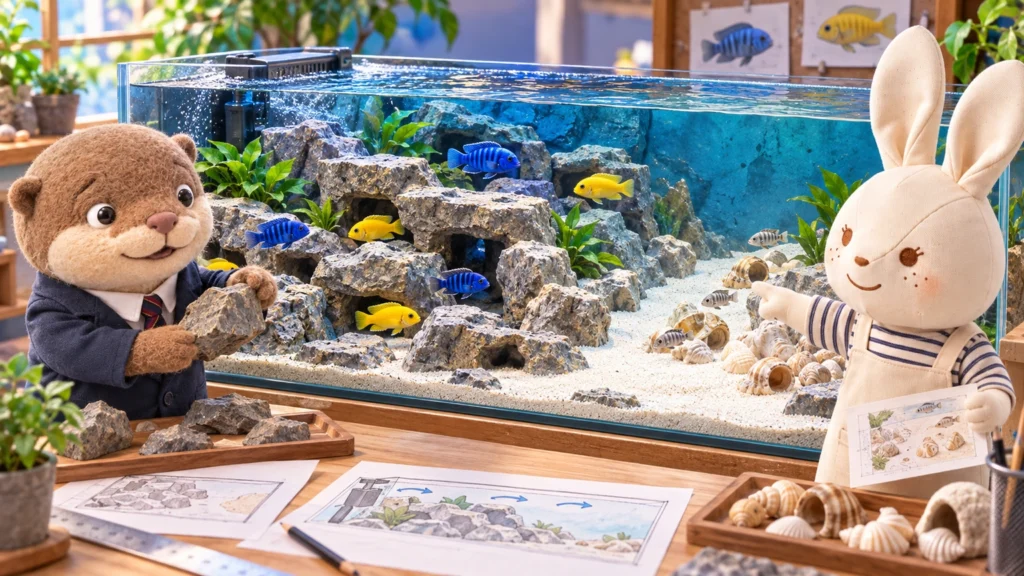 アイのアクアグッズ案内アフリカンシクリッドの飼育用品|水槽・ろ過・底砂・岩組み・餌の選び方道具の特徴や使い方、選ぶときのポイントをアイが紹介します。記事はコチラ →
 アイのアクアグッズ案内テトラミンって、こんなにあるの? アイとコタロウのごはん探究旅道具の特徴や使い方、選ぶときのポイントをアイが紹介します。記事はコチラ →
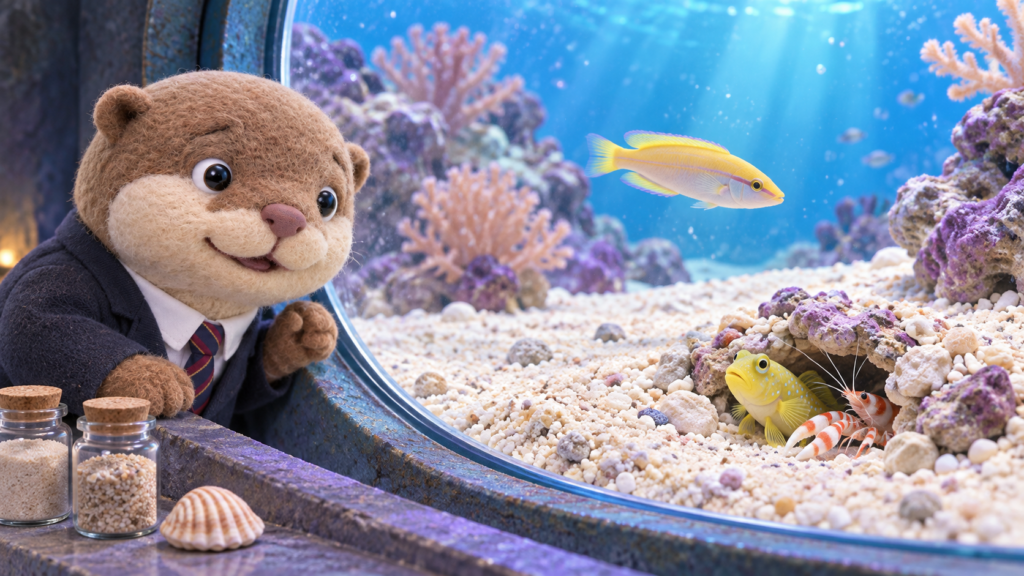 アイのアクアグッズ案内海水魚の底砂の選び方|サンゴ砂・ライブサンドとおすすめ商品道具の特徴や使い方、選ぶときのポイントをアイが紹介します。記事はコチラ →
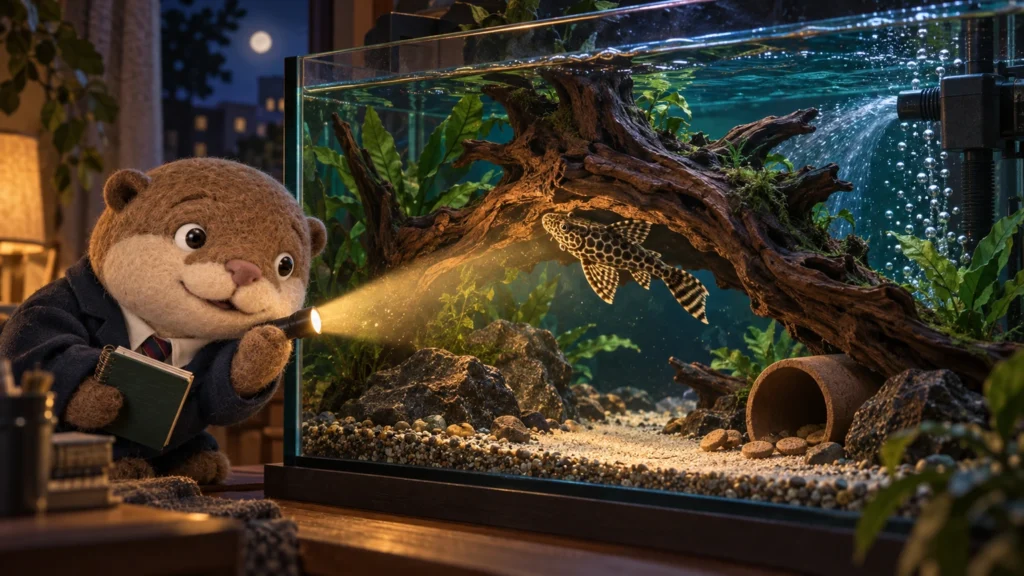 アイのアクアグッズ案内プレコ飼育に必要なもの|餌・流木・ろ過・隠れ家・掃除用品道具の特徴や使い方、選ぶときのポイントをアイが紹介します。記事はコチラ →
さまざまな飼育テーマをご紹介。リンク先の記事には広告・商品紹介が含まれます。
案内・紹介記事一覧へ →分布マップ
クラカオスズメダイは、東インド洋から西部太平洋のサンゴ礁域に広く分布し、日本では琉球列島や奄美群島などでも見られます。この地図では、分布の中心イメージとして東インドネシア周辺を概略代表地点として示しています。
このプロットは、分布欄の記述をもとにした分布イメージ用の概略代表地点です。実際の採集地点や厳密な生息範囲を示すものではありません。
参考文献・根拠資料
本項では、クラカオスズメダイの分類、分布、生息環境、飼育条件、繁殖、病気や注意点を確認するために参照した資料を整理しています。店舗、通販ページ、個人ブログ、一般的なまとめサイトは除外し、学術データベース、公的機関、研究機関、査読誌、専門書を中心に選定しています。
-
WoRMS Editorial Board. Amblyglyphidodon curacao (Bloch, 1787). World Register of Marine Species.
学名の有効性、分類階級、原記載名、シノニムの確認に使用。
https://www.marinespecies.org/aphia.php?p=taxdetails&id=277597 -
Fricke, R., Eschmeyer, W. N. & Van der Laan, R. (eds.). Eschmeyer’s Catalog of Fishes. California Academy of Sciences.
原記載、模式産地に関する歴史的情報、現在の有効名、分類上の扱いを確認するために使用。
https://researcharchive.calacademy.org/research/ichthyology/catalog/fishcatget.asp?spid=16734 -
Froese, R. & Pauly, D. (eds.). FishBase: Amblyglyphidodon curacao, Staghorn damselfish.
最大体長、分布域、サンゴ礁での生息環境、食性、産卵形態、巣として利用する基質の確認に使用。
https://www.fishbase.se/summary/Amblyglyphidodon-curacao.html -
Reef Life Survey. Amblyglyphidodon curacao – Staghorn Damsel.
最大体長、水温範囲、水深、サンゴ礁での生息幅を確認するために使用。
https://reeflifesurvey.com/species/amblyglyphidodon-curacao/ -
Bray, D. J. Amblyglyphidodon curacao in Fishes of Australia.
体色の特徴、オーストラリア周辺を含む分布、生息場所、Acropora上での摂餌行動の確認に使用。
https://fishesofaustralia.net.au/home/species/313 -
Reef Life Survey. Amblyglyphidodon ternatensis – Ternate Damsel.
ニセクラカオスズメダイとの識別で重要になる腹鰭の色、分布幅、近似種との違いを確認するために使用。
https://reeflifesurvey.com/species/amblyglyphidodon-ternatensis/ -
National Ocean Service, NOAA. In what types of water do corals live?
サンゴ礁環境に近い飼育条件を考えるうえで、水温、塩分、透明度などの基本条件を確認するために使用。
https://oceanservice.noaa.gov/facts/coralwaters.html -
Choi, Y.-U., Lee, D.-W., Yoom, K.-T., Oh, C.-H., Heo, S.-J., Kang, D.-H. & Park, H.-S. (2013). Annual reproductive cycle of female staghorn damselfish Amblyglyphidodon curacao in the Chuuk Lagoon, Micronesia. Ichthyological Research, 60(2), 198-201.
クラカオスズメダイの繁殖周期や生殖生理に関する種特異的な研究として参照。
https://jglobal.jst.go.jp/en/detail?JGLOBAL_ID=201302297529876138 -
Yanong, R. P. E. Cryptocaryon irritans Infections (Marine White Spot Disease) in Fish. University of Florida IFAS Extension.
海水性白点病の症状、生活環、白点が見えない場合の注意点、隔離・観察の必要性を確認するために使用。
https://ask.ifas.ufl.edu/publication/FA164 -
Yanong, R. P. E. Use of Copper in Marine Aquaculture and Aquarium Systems. University of Florida IFAS Extension.
銅治療の有効性、濃度管理、吸着・残留、無脊椎動物への影響など、薬浴に関する注意点を確認するために使用。
https://ask.ifas.ufl.edu/publication/FA165 -
Spotte, S. (1992). Captive Seawater Fishes: Science and Technology. John Wiley & Sons.
海水魚を飼育下で維持する際の水質管理、ろ過、環境安定、ストレス管理の基礎を確認するための専門書として参照。
ISBN: 978-0471545545
参照日は2026年7月9日です。治療や投薬の安全性は、個体の状態、同居生物、ろ過設備、薬剤によって変わります。投薬前に対象魚への適用と製品の用法を確認し、判断に迷う場合は魚類診療に対応する獣医師へ相談してください。




コメント