

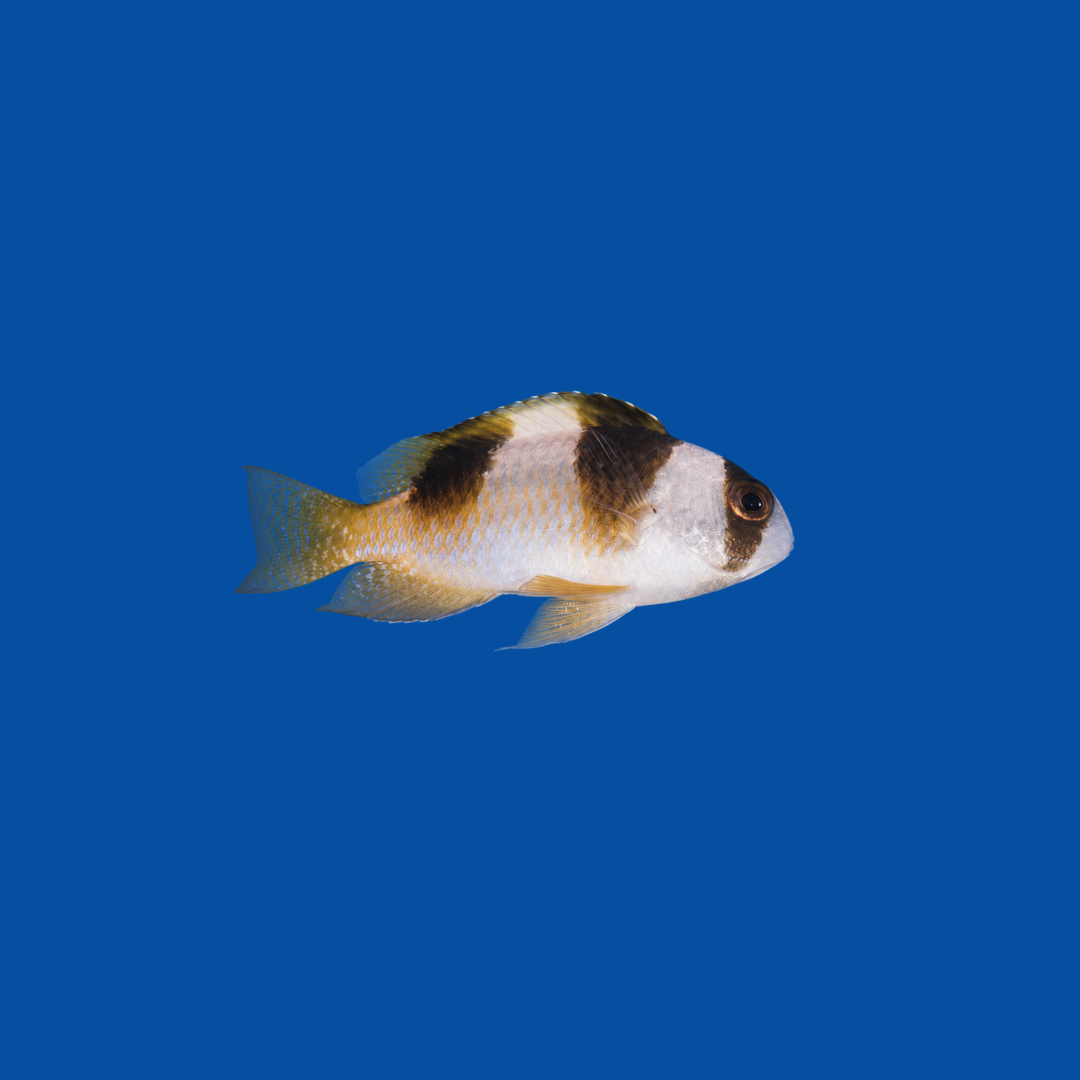
解説 / Description
ブラックバンデッドデムワーゼルは、淡い白色の体に黒褐色の太い帯が入る、西部太平洋を中心に知られる小型のスズメダイです。体側には淡い青色の小さな斑点が並び、個体や成長段階によっては腹部や下側のひれに黄色みが出ます。枝サンゴの周囲だけで暮らすタイプではなく、砂地やシルト質の底、岩やカイメンの周辺といった、比較的落ち着いた環境を利用する点が大きな特徴です。水槽内では丈夫で餌付きやすく、サンゴを積極的に食害する魚としては扱われません。一方で、スズメダイらしいなわばり意識はあるため、隠れ家を十分に作り、混泳相手を慎重に選ぶことが長期飼育の要になります。 The black-banded demoiselle is a small damselfish known mainly from the western Pacific, with a pale body crossed by broad dark brown to black bars. Rows of small pale blue spots may be visible on the sides, and yellowish tones can appear on the belly and lower fins depending on age and individual condition. Rather than being restricted to branching coral habitats, it also uses quieter sandy or silty bottoms around rocks and sponges. In aquariums it is hardy, accepts prepared foods readily, and is not regarded as a fish that actively damages coral polyps. However, it still has the territorial nature typical of damselfishes, so abundant shelter and careful tank mate selection are important for long-term care.
基本情報 / Basic Information
| 学名 / Scientific Name | Amblypomacentrus breviceps |
|---|---|
| 通称 / Common Name | ブラックバンデッドデムワーゼル、ブラックバンデッドデモワゼル、バンデッドダムゼル、ショートヘッドダムゼルBlack-banded demoiselle, blackbanded damsel, black-banded damsel, short-head damsel |
| 分類 / Family | スズメダイ科 Pomacentridae、ミスジスズメダイ属 AmblypomacentrusFamily Pomacentridae, genus Amblypomacentrus |
| 英名 / English Name | Black-banded Demoiselle, Blackbanded Damsel, Short-head Damsel |
| 分布 / Distribution | 西部中央太平洋を中心とする熱帯域。標準的な資料では、東インド諸島、フィリピン、ニューギニア、ニューブリテン、ソロモン諸島、オーストラリア北部からグレートバリアリーフ周辺などが挙げられます。一部の分類データベースでは、モルディブやマレーシア方面の記録も含めて扱われます。日本沿岸での定着種としては一般的に扱われず、国内の観賞魚流通では主に東南アジア方面からの輸入個体として見られます。Tropical waters centered on the western central Pacific. Standard references list areas such as the East Indies, the Philippines, New Guinea, New Britain, the Solomon Islands, northern Australia and the Great Barrier Reef region. Some taxonomic databases also include records from the Maldives and Malaysia. It is not generally treated as an established species in Japanese coastal waters, and aquarium specimens in Japan are mainly imported from Southeast Asia. |
| 最大体長 / Max Size | 約8.5cm。資料によっては約7cmとするものもあるため、水槽内では7〜8cm前後の小型スズメダイとして考えると扱いやすいです。About 8.5 cm. Some references list about 7 cm, so in aquarium planning it is best treated as a small damselfish of roughly 7–8 cm. |
| 寿命 / Lifespan | 本種だけを対象にした明確な寿命データは限られます。安定した水質、適切な給餌、十分な隠れ家を維持できれば、小型スズメダイ類として数年単位の長期飼育が期待できます。Clear species-specific lifespan data are limited. With stable water quality, proper feeding and sufficient shelter, it can be expected to live for several years, as is typical for well-kept small damselfishes. |
飼育環境 / Aquarium Environment
| 水槽サイズ / Tank Size | 単独飼育なら45cm規格水槽、約30L前後から飼育は可能です。ただし、なわばりを作る性質があるため、ゆとりを持たせるなら60cm規格水槽、約60L以上がおすすめです。他種との混泳や複数飼育を考える場合は、60cm規格水槽以上を基準にし、岩組みで視線を切れる場所を複数作ります。A single specimen can be kept from a standard 45 cm aquarium of roughly 30 liters. Because it forms territories, however, a standard 60 cm aquarium of about 60 liters or larger is preferable for easier long-term management. For community setups or keeping more than one individual, use at least a 60 cm tank and create several visual barriers with rockwork. |
|---|---|
| 水温 / Temperature | 25℃前後を中心に、22〜28℃の範囲で安定させます。日本の夏は水温上昇、冬は低温が負担になりやすいため、ヒーター、冷却ファン、水槽用クーラーを水槽環境に合わせて使い分けます。 Keep the temperature stable around 25°C, with an acceptable range of about 22–28°C. In Japan, summer overheating and winter chilling can both be stressful, so use heaters, cooling fans or aquarium chillers according to the setup. |
| 水質 / Water Quality | 海水魚用人工海水を用い、比重1.020〜1.025、pH8.1〜8.4を目安にします。丈夫な魚ですが、急な比重変化や水温変化が重なると調子を崩しやすくなります。定期的な換水と十分なろ過で、硝酸塩が高くなりすぎないように管理します。Use quality marine saltwater with a specific gravity of 1.020–1.025 and pH around 8.1–8.4. Although hardy, it can be weakened by sudden changes in salinity or temperature. Maintain stable conditions with regular water changes and adequate filtration to prevent excessive nitrate buildup. |
| レイアウト / Layout | ライブロックやデスロックで洞窟、すき間、低い張り出しを作り、底砂には細かめから中粒のサンゴ砂を数cm敷くと落ち着きやすくなります。自然下では砂地やシルト質の底、岩やカイメン周辺を利用するため、隠れ家と小さな遊泳スペースの両方を用意すると、本種らしい慎重な出入りの行動を観察しやすくなります。Create caves, crevices and low overhangs with live rock or dry rock, and use a few centimeters of fine to medium aragonite sand. Because it naturally uses sandy or silty bottoms around rocks and sponges, a combination of shelters and small open swimming areas helps it settle and show its natural cautious movements in and out of cover. |
| 注意点 / Precautions | 入荷直後の個体は輸送ストレスを受けていることがあります。購入時は、ヒレの欠け、白点、充血、呼吸の速さ、痩せを確認します。導入時は点滴法でゆっくり水合わせし、可能であれば隔離水槽で数週間観察します。また、流通名のバンデッドダムゼルは別属のスズメダイに使われることもあるため、購入時は学名や体色の特徴を確認すると安心です。Recently imported specimens may be stressed from transport. Before purchase, check for damaged fins, white spots, redness, rapid breathing and emaciation. Acclimate slowly by drip method, and if possible observe the fish in a quarantine tank for several weeks. The trade name “banded damsel” may also be used for other damselfishes, so confirming the scientific name and color pattern is recommended. |
餌と給餌 / Feeding
| 餌の種類 / Diet | 飼育下では、海水魚用の小粒ペレット、フレークフードを主食にできます。補助的に、冷凍ブラインシュリンプ、イサザアミ、細かく刻んだアサリなどを与えると、餌への反応を高めやすくなります。植物質を含む人工飼料も組み合わせると、栄養の偏りを抑えやすくなります。In captivity it can be fed mainly on small marine fish pellets and flake foods. Frozen brine shrimp, mysid shrimp and finely chopped clam can be used as supplemental foods to improve feeding response. Including prepared foods with plant matter also helps reduce nutritional imbalance. |
|---|---|
| 給餌のポイント / Feeding Tips | 1日2回を目安に、数分で食べ切れる量を与えます。導入直後は警戒して物陰から出にくいことがあるため、細かい餌を水流に乗せ、隠れ家の近くまで届くようにします。食べ残しは水質悪化の原因になるため、食欲を確認しながら量を調整します。Feed about twice a day, offering only what the fish can finish within a few minutes. Newly introduced specimens may be cautious and reluctant to leave cover, so let small foods drift with the current toward the shelter. Uneaten food can quickly reduce water quality, so adjust the amount according to appetite. |
性格と混泳 / Temperament and Tank Mates
| 性格 / Temperament | スズメダイ類としては比較的扱いやすい部類ですが、完全におとなしい魚ではありません。水槽に慣れると隠れ家を中心になわばりを持ち、近づく魚を追うことがあります。小型水槽ほど行動範囲が重なりやすいため、岩組みで視線を切ることが大切です。For a damselfish it is relatively manageable, but it is not a completely peaceful fish. Once settled, it may defend a territory centered on its shelter and chase fish that come too close. In smaller aquariums, territories overlap more easily, so rockwork that breaks lines of sight is important. |
|---|---|
| 混泳の相性 / Compatibility | クマノミ類、小型ヤッコ、カエルウオ、アイゴ類の若魚など、ある程度たくましく、生活圏が完全には重ならない魚と相性が良い傾向があります。おとなしい小型ハゼや導入直後の弱った魚は、威嚇されて隠れがちになることがあります。同種を複数入れる場合は、十分な水槽サイズと隠れ家を確保し、できるだけ同時に導入します。サンゴのポリプを積極的に食べる習性は知られておらず、一般的にはリーフタンクにも合わせやすい魚です。It is generally compatible with reasonably robust fishes whose preferred spaces do not completely overlap, such as clownfishes, dwarf angelfishes, blennies and young rabbitfishes. Very timid small gobies or weakened new arrivals may hide if intimidated. If keeping more than one conspecific, provide adequate tank size and shelter, and introduce them at the same time when possible. It is not known for actively eating coral polyps and is generally suitable for reef aquariums. |
病気と対策 / Diseases and Prevention
| かかりやすい病気 / Common Diseases | 海水魚に一般的な白点病、ウーディニウム病、輸送ストレス後の肌荒れ、ヒレの損傷や細菌性のヒレ腐れに注意します。本種だけが特別に病気に弱いわけではありませんが、入荷直後、急な水温変化の後、混泳ストレスが強い環境では症状が出やすくなります。Watch for common marine fish problems such as marine ich, marine velvet, skin irritation after transport stress, damaged fins and bacterial fin rot. This species is not unusually delicate, but symptoms are more likely after import stress, rapid temperature changes or strong social stress in the aquarium. |
|---|---|
| 対策と予防 / Prevention | 購入時の観察、隔離飼育、ゆっくりした水合わせ、安定した水温管理が基本です。白点や異常呼吸が見られる場合は、サンゴや無脊椎動物のいる本水槽ではなく、隔離水槽で状態を確認しながら対応します。日常管理では、ろ過能力を十分に確保し、過密飼育と餌の与えすぎを避けることが最も有効です。Careful inspection before purchase, quarantine, slow acclimation and stable temperature control are the foundation of prevention. If white spots or abnormal breathing are observed, assess and treat the fish in a separate hospital tank rather than in a display aquarium containing corals or invertebrates. In daily care, strong filtration, avoiding overcrowding and preventing overfeeding are the most effective safeguards. |
増やし方(繁殖) / Breeding
| 雌雄の判別 / Sexing | 外見だけでの雌雄判別は難しい魚です。成熟した個体では、繁殖期にオスが産卵場所を掃除し、卵やなわばりを強く守る行動を示すことが判別の手がかりになります。Sexing by appearance alone is difficult. In mature individuals, males may be recognized behaviorally when they clean a spawning site and strongly defend the eggs or territory during the breeding period. |
|---|---|
| 繁殖形態 / Reproduction | 卵生で、繁殖時にはペアを形成します。卵は基質に付着する沈性卵で、産卵後は主にオスが卵を守り、胸びれで水を送って酸素を供給しながら孵化まで世話をします。It is oviparous and forms pairs during breeding. The eggs are adhesive demersal eggs attached to a substrate. After spawning, the male mainly guards the clutch and fans it with the pectoral fins to supply oxygen until hatching. |
| 繁殖のポイント / Breeding Tips | 水槽内で産卵行動が見られる可能性はありますが、仔魚の育成は難易度が高い分野です。親魚には安定した水質、落ち着ける隠れ家、産卵床になる平らな石や貝殻を用意します。孵化した仔魚は非常に小さく浮遊生活を送るため、初期餌料としてワムシなどの微小な生き餌、安定した飼育水、こまめな水質管理が必要になります。Spawning may occur in captivity, but raising the larvae is challenging. Provide the adults with stable water quality, calm shelters and flat stones or shells as spawning sites. Newly hatched larvae are very small and planktonic, so successful rearing requires tiny live foods such as rotifers, stable rearing water and meticulous water-quality management. |
雑学と豆知識 / Trivia and Fun Facts
| 1. 学名に残る「短い頭」 / 1. A short head written into the name | 種小名の breviceps は、ラテン語の brevis、つまり短いという意味と、頭部を示す ceps に由来すると解釈されます。実物を見ると、吻が短く、頭部が丸く詰まったように見えるため、この名前は本種の姿をよく表しています。小さな口で底面や岩肌の細かな餌をついばむ様子にも、この体形の意味が感じられます。The species name breviceps is interpreted as coming from the Latin brevis, meaning short, and ceps, referring to the head. When viewed closely, the fish has a short snout and a compact, rounded head profile, so the name reflects its actual appearance well. Its small mouth and picking behavior over sand and rock surfaces also make this body form feel ecologically meaningful. |
|---|---|
| 2. 原記載と年代表記のゆれ / 2. Original description and date variation | 本種は、もともと Glyphisodon breviceps として記載された魚です。文献やデータベースによって、原記載年が1839年または1840年として示されることがあります。これは古い博物学文献でしばしば見られる出版年の扱いに関係するもので、現在の有効な組み合わせとしては Amblypomacentrus breviceps が用いられています。This species was originally described as Glyphisodon breviceps. Depending on the reference or database, the original description year may appear as 1839 or 1840. This kind of date variation is not unusual in older natural history literature. The currently used valid combination is Amblypomacentrus breviceps. |
| 3. 砂泥底を上手に使うスズメダイ / 3. A damselfish that makes good use of silty bottoms | スズメダイというと、枝サンゴの周りを活発に泳ぐ姿を思い浮かべがちです。しかし本種は、砂地やシルト質の底、岩やカイメンの周辺といった、少し地味に見える環境も利用します。透明度の高いサンゴ礁の主役だけでなく、底質の変化や小さな隠れ家が連なる場所にも適応しているところに、この魚の面白さがあります。Damselfishes often bring to mind colorful scenes around branching corals. This species, however, also uses sandy or silty bottoms around rocks and sponges. Its appeal lies not only in bright reef scenery, but also in its adaptation to quieter habitats where changes in bottom structure and small shelters are important. |
| 4. 幼魚の隠れ家と保護生物 / 4. Juvenile shelters and protective organisms | 幼魚は、捕食者から身を守れる場所を上手に利用します。主要な公開データでは、本種の幼魚が保護のためにイソギンチャクを利用することがあるとされています。一方、長い棘を持つウニとの関係は、本種の確立した特徴としては確認しにくいため、断定的に扱わない方が安全です。水槽内でも、細いすき間や低い岩陰を用意すると、隠れてから出てくる本種らしい慎重な動きを観察しやすくなります。Juveniles make careful use of places where they can avoid predators. Major public databases state that juveniles of this species may use anemones for protection. By contrast, a relationship with long-spined sea urchins is harder to confirm as an established feature of this species, so it is safer not to present it definitively. In aquariums, fine crevices and low rocky shade make it easier to observe the species’ cautious pattern of hiding and emerging. |
| 5. Amblypomacentrus clarus との見分け方 / 5. How it differs from Amblypomacentrus clarus | 同属の Amblypomacentrus clarus は、インドネシアのバンガイ諸島から記載された近縁種で、流通名だけでは混同されることがあります。A. breviceps では淡い青色斑点や下側の黄色みが見られることがあるのに対し、A. clarus は白地と黒帯の対比がよりはっきりし、黄色みが乏しい傾向があります。幼魚では判断が難しい場合もありますが、体側の斑点と下半身の黄色みは、購入時の大切な手がかりになります。The related Amblypomacentrus clarus was described from the Banggai Islands of Indonesia and may be confused in the aquarium trade when only trade names are used. A. breviceps may show pale blue side spots and yellowish tones on the lower body, whereas A. clarus tends to have a stronger white-and-black contrast with little yellow. Juveniles can still be difficult to identify, but the side spots and yellow lower body are useful clues at purchase. |
| 6. 卵を守る小さな親魚 / 6. Small parents with strong nest care | 本種を含むスズメダイ類の多くは、繁殖時に基質へ卵を産み付け、オスが卵を守ります。本種では、貝殻や空き瓶のようなものが巣として利用される例も知られています。小さな体でも、卵に近づく相手には強く反応することがあり、水槽内でその行動に出会えたなら、丈夫さだけでなく、生活史の細やかさにも触れることができます。Many damselfishes, including this species, lay eggs on a substrate during breeding, and the male guards the clutch. In this species, abandoned shells and even bottles have been recorded as nest sites. Even a small fish may react strongly to intruders approaching the eggs, and observing this in an aquarium reveals not only its hardiness but also the finer details of its life history. |
まとめ / Conclusion
ブラックバンデッドデムワーゼルは、黒い帯と淡い体色の対比が美しいだけでなく、砂地やシルト質の底に寄り添うように暮らす行動にも魅力があります。丈夫で餌付きやすく、リーフタンクにも合わせやすい魚ですが、落ち着ける隠れ家と安定した海水環境があってこそ、本来の姿を見せてくれます。 The black-banded demoiselle is attractive not only for the contrast between its dark bars and pale body, but also for the way it lives close to sandy and silty bottoms. It is hardy, easy to feed and generally suitable for reef aquariums, yet it shows its best qualities when given secure shelter and stable marine conditions.
派手さで主役を奪う魚ではありませんが、岩陰からそっと出てきて餌を探し、気に入った場所を守る姿には、小型スズメダイらしい生命感があります。学名と特徴を確認して迎え、なわばりを尊重した水槽づくりを心がければ、西部太平洋の砂地に生きる小さな魚の個性を、日々の観察の中でじっくり味わえます。 It is not a fish that dominates the aquarium through flashiness, but its quiet emergence from cover, careful feeding behavior and attachment to a chosen shelter give it the vivid presence of a small damselfish. By confirming its scientific name and key features, then building an aquarium that respects its territorial nature, keepers can steadily appreciate the character of this small sand-dwelling fish from the western Pacific.

気になる道具や飼い方を見つけてみませんか?
 アイのアクアグッズ案内小型カラシンの群れを楽しむ|餌と水換えから考える飼育用品ガイド小型カラシンの群れを眺める時間を、もっと楽しく。泳ぐ余白、餌の食べ方、続けやすい水換えを軸に、日本で揃えやすい用品の選び方を紹介します。記事はコチラ →
 アイのアクアグッズ案内水換え・底砂掃除の道具の選び方|砂利・砂・ソイルに合うクリーナーとポンプ道具の特徴や使い方、選ぶときのポイントをアイが紹介します。記事はコチラ →
 アイのアクアグッズ案内旅行中、お魚のごはんはどうする? 自動給餌器・使える餌・スマート水槽の選び方旅行中の魚の餌やりを助ける自動給餌器を、アイとコタロウが紹介。時間指定、おかわり給餌、対応するフレークや顆粒、設置台、スマホ管理、一体型水槽、留守番フードまで、使いどころと選び方を案内します。記事はコチラ →
 アイのアクアグッズ案内ダニオの仲間に合わせる飼育用品|ゼブラダニオから超小型種まで水槽・ろ過・餌を選ぶ道具の特徴や使い方、選ぶときのポイントをアイが紹介します。記事はコチラ →
さまざまな飼育テーマをご紹介。リンク先の記事には広告・商品紹介が含まれます。
案内・紹介記事一覧へ →分布マップ
ブラックバンデッドデムワーゼルは、西部中央太平洋を中心とする熱帯域に分布し、東インド諸島、フィリピン、ニューギニア、ニューブリテン、ソロモン諸島、オーストラリア北部からグレートバリアリーフ周辺などが知られています。この地図では、分布イメージを示すため、ニューギニア周辺を概略代表地点として表示しています。
※この地図は分布欄の内容から作成した概略プロットです。実際の採集地点や厳密な生息範囲を示すものではありません。
参考文献・根拠資料
この記事では、分類、分布、生息環境、飼育条件、繁殖、病気や導入時の注意点を支える資料として、学術データベース、公的機関、博物館・大学系資料、査読論文を中心に選定しています。店舗・通販サイト、個人ブログ、まとめサイトは参考文献から除外しました。
- FishBase. Amblypomacentrus breviceps, Black-banded demoiselle. 分類、英名、分布、最大体長、生息環境、単独または小群での出現、幼魚が保護場所を利用する生態、繁殖時のペア形成、沈性付着卵、オスによる卵保護・送水行動の確認に用いた主要資料です。
- Bray, D. J. Amblypomacentrus breviceps in Fishes of Australia. 体側の黒帯、淡い青色斑点、黄色みの出る下腹部・腹鰭・臀鰭、オーストラリア北部からグレートバリアリーフ周辺にかけての分布、砂地・シルト質環境やカイメン・岩周辺を利用する生息環境の確認に用いました。
- Fricke, R., Eschmeyer, W. N. and Van der Laan, R. eds. Eschmeyer’s Catalog of Fishes: Glyphisodon breviceps. 原記載名、原記載地、有効学名、シノニム、分類上の位置づけ、文献による1839年・1840年表記のゆれを整理するための分類学的根拠として使用しました。
- WoRMS Editorial Board. World Register of Marine Species: Amblypomacentrus breviceps. 海産生物の標準的な分類データベースとして、現在受け入れられている学名と分類上の扱いを確認するために参照しました。
- Allen, G. R. and Adrim, M. 2000. Amblypomacentrus clarus, a new species of damselfish from the Banggai Islands, Indonesia. Records of the Western Australian Museum 20: 51–55. 近縁種 Amblypomacentrus clarus との識別点、特に黒帯のコントラスト、青色斑点や黄色みの有無、鰓耙数・側線有孔鱗数の違いを支える資料として採用しました。
- Anil, M. K. et al. 2022. Recent advances in marine ornamental breeding and seed production. Frontiers in Marine Science 9: 907568. 海産観賞魚の繁殖・仔魚育成における水温、塩分、pH、ろ過、水換え、初期餌料、ワムシ・アルテミアなどの一般的な管理条件を補強する資料です。本種専用の繁殖手順ではなく、近縁の海産観賞魚・スズメダイ類の飼育繁殖管理を理解するための補助資料として扱います。
- Arthur, J. R., Bondad-Reantaso, M. G. and Subasinghe, R. P. 2008. Procedures for the quarantine of live aquatic animals: a manual. FAO Fisheries Technical Paper No. 502. 輸入個体や新規導入魚の隔離観察、検疫、病原体を持ち込まないための基本的な考え方を支える公的資料として参照しました。
- Yanong, R. P. E. Cryptocaryon irritans Infections (Marine White Spot Disease) in Fish. UF/IFAS Extension FA164. 海水魚の白点病について、病原体、症状、診断の注意、環境ストレスや水質が発症・重症化に関わる点を確認するために用いました。
- Colorni, A. and Burgess, P. 1997. Cryptocaryon irritans Brown 1951, the cause of white spot disease in marine fish: an update. Aquarium Sciences and Conservation 1: 217–238. 白点病の生活環、感染、病原性、水槽内での被害を整理した査読レビューとして、病気対策の記述を補強するために選定しました。
- Francis-Floyd, R. and Floyd, M. R. 2011. Amyloodinium ocellatum, an Important Parasite of Cultured Marine Fish. SRAC Publication No. 4705. ウーディニウム病、いわゆるマリンベルベットについて、病原体の性質、皮膚や鰓への感染、閉鎖系での急速な拡大、高い死亡リスクを確認するために用いました。
参照日:2026年7月8日。学名・分類は改訂される可能性があるため、公開後もFishBase、Catalog of Fishes、WoRMSなどの更新状況を定期的に確認することを推奨します。





コメント