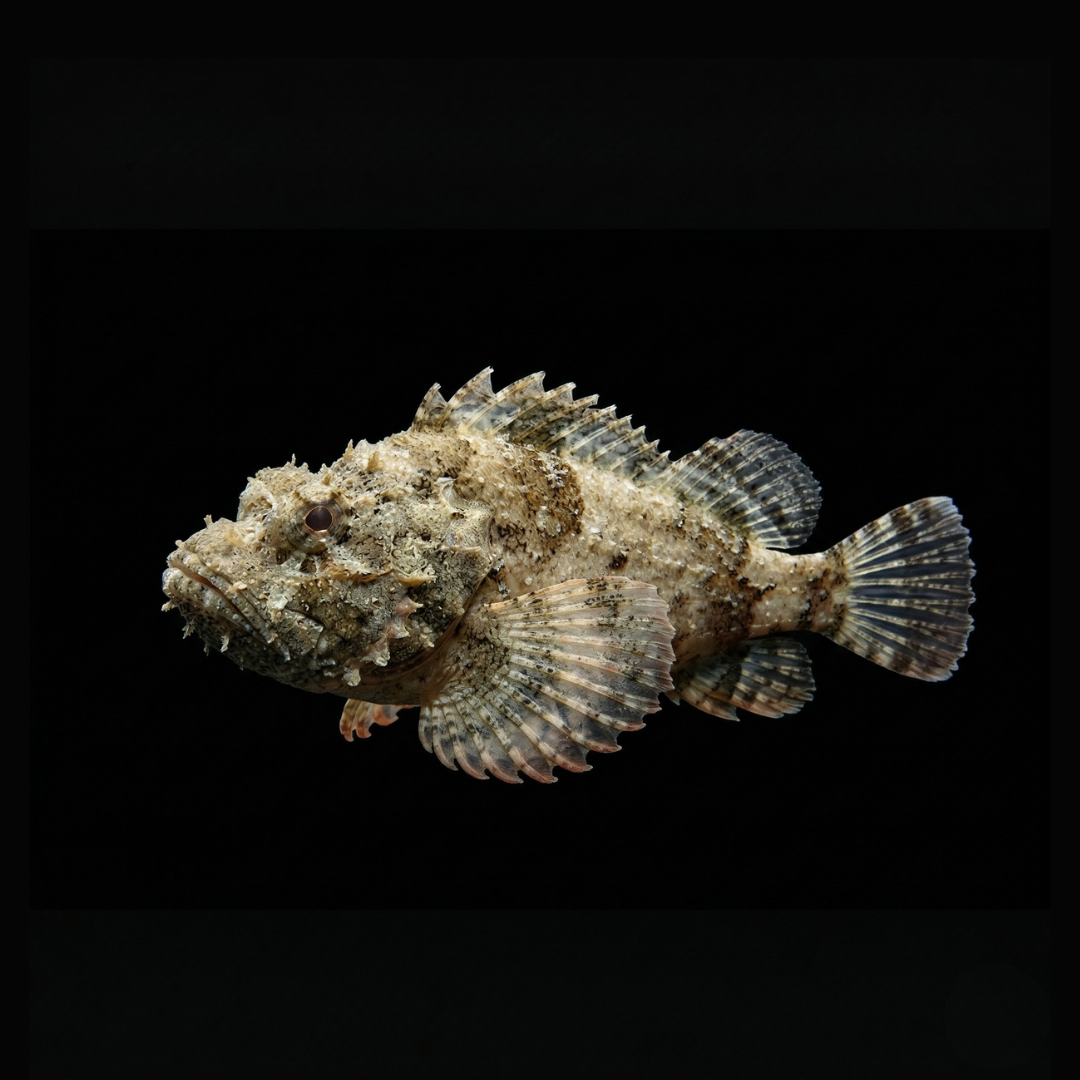
サツマカサゴは、インド西太平洋に広く分布するフサカサゴ科の魚類です。海底で岩やサンゴの死骸に擬態し、獲物を待ち伏せるアンブッシュ・プレデター(待ち伏せ型捕食者)として知られています。体表には無数の皮弁があり、輪郭を周囲の環境に溶け込ませる高度なカモフラージュ技術を持っています。一見すると動かない「生きた岩」のようですが、獲物を捕食する瞬間は爆発的なスピードを見せる、静と動のギャップが魅力的な種です。薩摩(鹿児島)で採取された標本に基づき命名された歴史を持ち、古くから日本の博物学の対象となってきました。The Humpback Scorpionfish (Scorpaenopsis neglecta) is a member of the Scorpaenidae family widely distributed throughout the Indo-West Pacific. Known as an ambush predator, it mimics rocks or coral rubble on the seabed to surprise its prey. It possesses sophisticated camouflage techniques, including numerous dermal appendages that break up its silhouette. While appearing as a sedentary “living rock,” it exhibits explosive speed during predation. Named after specimens collected in Satsuma (Kagoshima), Japan, it has long been a subject of interest in Japanese natural history.
基本情報 / Basic Information
学名 / Scientific Name
Scorpaenopsis neglecta
通称 / Common Name
サツマカサゴHumpback Scorpionfish
分類 / Family
スズキ目カサゴ亜目フサカサゴ科オニカサゴ属Order Perciformes, Suborder Scorpaenoidei, Family Scorpaenidae, Genus Scorpaenopsis
英名 / English Name
Humpback Scorpionfish, Yellowfin Scorpionfish
分布 / Distribution
インド洋、西太平洋(日本国内では関東以南の太平洋沿岸、琉球列島など)Indo-West Pacific (In Japan: Pacific coast south of Kanto, Ryukyu Islands, etc.)
最大体長 / Max Size
約19cmApproximately 19cm
寿命 / Lifespan
数年以上(飼育下では環境により変動)Several years or more (varies depending on the environment in captivity)
飼育環境 / Aquarium Environment
水槽サイズ / Tank Size
120L以上(60cmワイド水槽や90cm規格水槽以上を推奨)120L or more (Recommended: 60cm wide or 90cm standard tank)
水温 / Temperature
24度〜26度24 to 26 degrees Celsius
水質 / Water Quality
比重1.020〜1.025、pH8.1〜8.4の安定した海水Stable seawater with specific gravity 1.020-1.025 and pH 8.1-8.4
レイアウト / Layout
ライブロックで洞窟や隠れ家を作り、着底できる平坦なサンゴ砂のスペースを確保する。Create caves and hiding spots with live rock, while ensuring flat spaces with coral sand for settling.
注意点 / Precautions
強力な毒棘を持つため、素手での作業は厳禁。また、サンゴのポリプの上に乗って傷つける可能性があるため、サンゴ水槽への導入は注意が必要。Possesses powerful venomous spines; never handle with bare hands. Be cautious in reef tanks as they may sit on and damage coral polyps.
餌と給餌 / Feeding
餌の種類 / Diet
導入初期はメダカやイサザアミなどの活餌。慣れれば冷凍の魚の切り身やエビ。Initial stage: Live food like small fish or mysis shrimp. Once acclimated: Frozen fish fillets or shrimp.
給餌のポイント / Feeding Tips
冷凍餌を与える際はピンセットで小刻みに揺らし、生きているように見せる。過食は突然死の原因となるため、数日に一度のペースで与える。When offering frozen food, use tweezers to jiggle it and mimic live movement. Avoid overfeeding to prevent sudden death; feeding once every few days is appropriate.
性格と混泳 / Temperament and Tank Mates
性格 / Temperament
極めて温厚でほとんど動かないが、口に入るサイズの動くものはすべて飲み込もうとする肉食性。Extremely placid and sedentary, yet predatory; it will attempt to swallow anything that fits in its mouth.
混泳の相性 / Compatibility
小型の魚やエビは捕食対象となるため不可。ヤッコやハギなどの突つく魚はカサゴの皮膚を傷めるため避ける。大型のハタやウツボとは混泳可能。Small fish and shrimp will be eaten. Avoid fish that peck (e.g., angelfish, tangs) as they damage its skin. Large groupers and moray eels are suitable tank mates.
病気と対策 / Diseases and Prevention
かかりやすい病気 / Common Diseases
水質悪化による皮膚の細菌感染症(ビブリオ病など)、異常な頻度の脱皮。Bacterial skin infections (e.g., Vibrio) due to poor water quality, and abnormally frequent skin shedding.
対策と予防 / Prevention
強力なプロテインスキマーで有機物を除去し、硝酸塩の蓄積を防ぐ。適切な給餌量を守り、ストレスの少ない環境を維持する。Use a powerful protein skimmer to remove organic waste and prevent nitrate buildup. Maintain a stress-free environment and follow proper feeding amounts.
増やし方(繁殖) / Breeding
雌雄の判別 / Sexing
外見からの判別は極めて困難。Distinguishing gender based on external appearance is extremely difficult.
繁殖形態 / Reproduction
卵生。Oviparous (egg-laying).
繁殖のポイント / Breeding Tips
家庭用水槽内での繁殖例は極めて稀で、詳細なプロセスは解明されていない。Breeding in home aquariums is extremely rare, and the detailed process has not been fully established.
雑学と豆知識 / Trivia and Fun Facts
1. 名前の由来と「見過ごされた」歴史1. Etymology and the “Overlooked” History
サツマカサゴの学名に含まれる「neglecta」は、ラテン語で「無視された・見過ごされた」という意味を持ちます。これは、本種が正式に新種として記載されるまで、長らく近縁種と混同され、その独立した存在が気づかれなかったという分類学的な歴史を反映しています。和名の「サツマ」は、近代魚類学において日本国内で初めて研究の基礎となった標本が、現在の鹿児島県(薩摩)で採取されたことに由来しています。The specific epithet “neglecta” in its scientific name means “overlooked” in Latin. This reflects its taxonomic history, where it was long confused with related species before being recognized as a distinct species. The Japanese name “Satsuma” comes from the fact that the first specimens used for modern ichthyological study in Japan were collected in Kagoshima Prefecture (formerly Satsuma).
2. 驚異の衛生管理術「脱皮」の秘密2. The Secret of “Molting” for Hygiene
サツマカサゴは、海底で動かずにじっとしているライフスタイルを送るため、体表に藻類や外部寄生虫が付着しやすいという悩みを抱えています。これを解決するために、彼らは定期的に自身の古い角質(粘液層)を膜のように脱ぎ捨てる「脱皮」を行います。これは成長のためではなく、あくまで擬態能力を維持し、身体を清潔に保つための衛生管理システムです。飼育下でこの脱皮が異常に頻繁に起こる場合は、水質悪化などのストレスサインである可能性があります。Since Humpback Scorpionfish remain sedentary for long periods, they risk the growth of algae or parasites on their skin. To combat this, they undergo a “skin shedding” or “molting” process, where they slough off an old mucus layer. This is not for growth, but a hygiene system to maintain camouflage and cleanliness. If this occurs too frequently in captivity, it may be a stress signal due to poor water quality.
江戸時代の日本には、独自の博物学(本草学)が花開いていました。幕医であった栗本丹洲は、その緻密な魚譜において、サツマカサゴの複雑な皮弁や模様を驚異的な写実性で描き残しています。また、「日本のリンネ」と称される小野蘭山も、その著作の中で本種の毒棘の危険性について「触れれば腫れ痛みが数日続く」と正確に記録していました。数世紀前のアクアリストの先駆者たちも、この魚の不思議な姿と強力な毒に強い関心を寄せていたのです。During the Edo period, Japan saw a flourishing of natural history. Kurimoto Tanshu, a physician to the Shogunate, left behind incredibly realistic sketches of the complex appendages of this fish. Ono Ranzan, often called the “Linnaeus of Japan,” also accurately recorded the danger of its venomous spines, noting that contact causes swelling and pain for days. Even centuries ago, Japanese naturalists were fascinated by this strange creature and its potent venom.
4. 未利用魚に隠された「美食」としてのポテンシャル4. The Hidden Culinary Potential of an Underutilized Fish
サツマカサゴは、毒棘の扱いの難しさや可食部の少なさから、一般の市場では「雑魚」として扱われ、ほとんど流通しません。しかし、その身質は透明感のある美しい白身で、食味はフグやヒラメにも匹敵するほど非常に美味です。特に煮付けにすると、皮や骨から濃厚な旨味とゼラチン質が溶け出し、絶品の味わいとなります。毒棘をハサミで丁寧に取り除けば、まさに知る人ぞ知る「海の隠れた美食」としての顔を持っています。Due to its venomous spines and low yield, the Humpback Scorpionfish is often treated as “trash fish” in commercial markets. However, its flesh is a beautiful, translucent white with a flavor comparable to blowfish or flounder. When simmered, its skin and bones release rich umami and gelatin, making it an exceptional delicacy. Once the spines are carefully removed with scissors, it reveals its true identity as a hidden gourmet treasure of the sea.
まとめ / Conclusion
サツマカサゴは、その無骨な外見の中に、数百万年の進化が詰め込まれた擬態の結晶です。静かに海底に鎮座するその姿は、水槽の中に本物の自然の奥深さを持ち込んでくれます。飼育には毒棘への警戒と、活餌からの餌付けというハードルがありますが、一度環境に馴染めば非常に丈夫で、飼育者との信頼関係(給餌の際の反応など)も築ける魅力的なパートナーとなります。The Humpback Scorpionfish is a masterpiece of camouflage, embodying millions of years of evolution within its rugged appearance. Its quiet presence on the seabed brings a sense of the ocean’s profound depth into an aquarium. While husbandry requires caution regarding its venomous spines and the challenge of transitioning from live food, once acclimated, it becomes a hardy and fascinating partner that can even develop a responsive relationship with its keeper.
単なる観賞魚としてだけでなく、日本の歴史や食文化とも深く関わるこの「薩摩の名を冠する魚」を、ぜひあなたの水槽でも大切に育ててみてください。ただし、日々のメンテナンスでは常にトングやプラケースを使用し、安全第一でその神秘的な生態を楽しんでくださいね。I hope you will cherish and raise this “fish named after Satsuma,” which is deeply connected to Japanese history and culinary culture. Always remember to use tongs or plastic containers for daily maintenance, prioritizing safety while you enjoy its mysterious and wonderful nature.
[学術原記載] Heckel, J. J. (1837). Ichthyologische Beiträge zu den Familien der Cottoiden, Scorpaenoiden, Gobioiden und Cyprinoiden. Annalen des Wiener Museums der Naturgeschichte, 2, 143-162, pls. 7-9. (サツマカサゴ Scorpaenopsis neglecta の原記載)
[日本魚類相研究] Steindachner, F., & Döderlein, L. (1884). Beiträge zur Kenntniss der Fische Japan’s (II). Denkschriften der Kaiserlichen Akademie der Wissenschaften in Wien, 48(1), 1-40, pls. 1-7. (日本産フサカサゴ科魚類の初期記述)
[分類学的再検討] Motomura, H. (2004). Revision of the scorpionfish genus Scorpaenopsis (Scorpaenidae) with descriptions of eight new species from the Indo-Pacific Ocean. Indo-Pacific Fishes, (36), 1-102. (オニカサゴ属の世界的改訂論文)
[生態・共生観察] Murugan, A., Dhaneesh, K. V., & Ajith Kumar, T. T. (2011). Observations on the scorpionfish Scorpaenopsis neglecta in the seagrass meadows of Sethukarai, Gulf of Mannar, India. Marine Biodiversity Records, 4, e40.
2. 歴史・本草学・図鑑(二次資料・文化)
/ History & Encyclopedias (Secondary Sources)

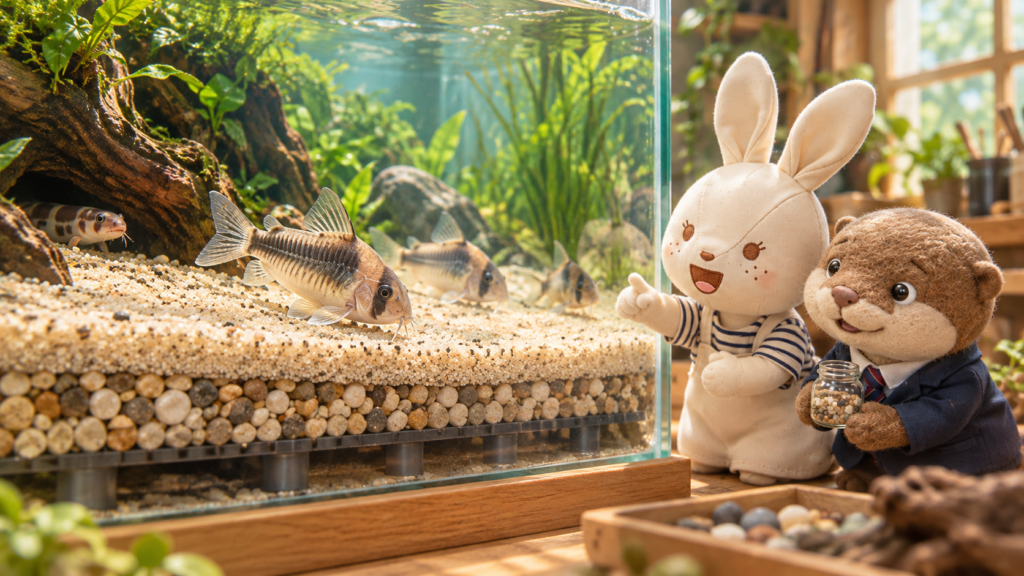 アイのアクアグッズ案内水槽の底砂の選び方|砂・砂利の違いとおすすめ商品道具の特徴や使い方、選ぶときのポイントをアイが紹介します。記事はコチラ →
 アイのアクアグッズ案内エーハイムはおもちゃから始まった? 小さな噴水から水槽へ、アイとコタロウの探訪道具の特徴や使い方、選ぶときのポイントをアイが紹介します。記事はコチラ →
 アイのアクアグッズ案内カルキ抜き・水質調整剤の選び方|水換えと水槽の種類に合わせて選ぶ道具の特徴や使い方、選ぶときのポイントをアイが紹介します。記事はコチラ →
 アイのアクアグッズ案内水槽のコケ掃除|道具の選び方とお掃除生体の得意・不得意道具の特徴や使い方、選ぶときのポイントをアイが紹介します。記事はコチラ →
コメント