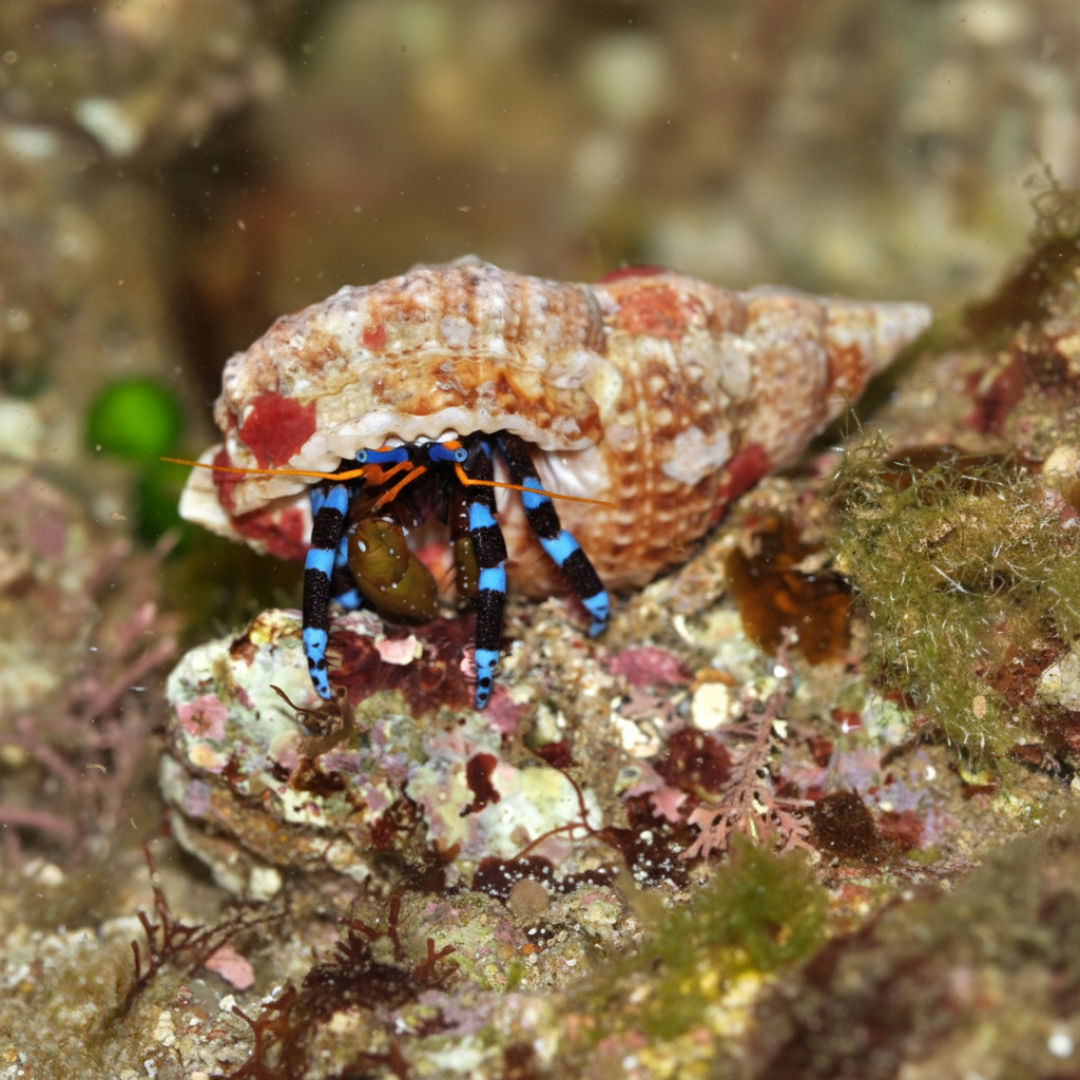
ユビワサンゴヤドカリは、鮮やかな青色と黒色の縞模様の歩脚が目を引く、小型で非常に美しい海洋性ヤドカリです。インド太平洋の広大なサンゴ礁域に生息し、日本でも琉球諸島から房総半島にかけて姿を見ることができます。その色鮮やかな外見から観賞用として絶大な人気を誇るだけでなく、水槽内に発生する厄介な糸状藻やシアノバクテリア(藍藻)を食べてくれる極めて優秀な「お掃除係」としても知られています。丈夫で環境適応能力も高いため、初心者からベテランまで幅広いアクアリストに愛されている頼もしい存在です。The Electric Blue Hermit Crab (Calcinus elegans) is a small, stunning marine hermit crab known for its striking blue and black banded legs. Native to the vast coral reefs of the Indo-Pacific, they can also be found in Japan from the Ryukyu Islands to the Boso Peninsula. Not only are they highly popular for their vibrant appearance, but they are also exceptionally excellent cleaners, consuming nuisance hair algae and cyanobacteria in aquariums. Being hardy and highly adaptable, they are reliable and beloved by aquarists of all levels.
基本情報 / Basic Information
学名 / Scientific Name
Calcinus elegans
通称 / Common Name
ユビワサンゴヤドカリElectric Blue Hermit Crab, Blue Banded Hermit Crab
インド太平洋全域(西インド洋から西太平洋のサンゴ礁域)。日本では琉球諸島から太平洋岸に沿って房総半島まで分布。水深0から10mの浅海。Indo-Pacific region (coral reefs from the western Indian Ocean to the western Pacific). In Japan, distributed from the Ryukyu Islands along the Pacific coast to the Boso Peninsula. Shallow waters from 0 to 10 meters depth.
最大体長 / Max Size
約3から4cm程度(小型のドワーフ種)。市場で流通するのは1から2cm程度の若い個体が多いです。Approximately 3 to 4 cm (a small dwarf species). Young individuals around 1 to 2 cm are commonly distributed in the market.
寿命 / Lifespan
適切な飼育環境下で3年以上。Over 3 years under proper aquarium conditions.
飼育環境 / Aquarium Environment
水槽サイズ / Tank Size
単独飼育であれば50リットル以上(60cm規格水槽など)。複数飼育の場合は縄張り争いを避けるため、1匹あたり150リットル(90cmから120cm水槽など)の十分な空間を推奨します。At least 50 liters (e.g., standard 60cm tank) for a single individual. For keeping multiple crabs, a spacious environment of 150 liters per crab (e.g., 90cm to 120cm tanks) is recommended to prevent territorial disputes.
水温 / Temperature
20℃から26℃
水質 / Water Quality
比重1.026前後。自然の海水に近い、透明度の高い良好な水質を保ちます。Specific gravity around 1.026. Maintain high water clarity and quality, closely resembling natural seawater.
レイアウト / Layout
ライブロックやサンゴ砂を使用し、完全に身を隠せる岩の隙間やクレバスを作ります。脱皮時には無防備になるため、安全な隠れ家が必須です。Use live rock and coral sand to create crevices and caves where they can hide completely. Safe hiding spots are essential as they become vulnerable during molting.
注意点 / Precautions
熱帯性の生物のため、冬季の急激な水温低下には極端に弱いです。また、成長に合わせて引っ越しができるよう、様々なサイズの空き貝殻(カワニナ、ラムズホーン、カノコガイなど)を水槽内に常備することが最も重要です。Being tropical creatures, they are extremely sensitive to sudden temperature drops in winter. Most importantly, always provide a variety of empty shells (e.g., Melanoides, ramshorn, nerite snails) in the tank so they can move as they grow.
餌と給餌 / Feeding
餌の種類 / Diet
雑食性です。水槽内の糸状藻やシアノバクテリアなどのデトリタスを食べますが、それだけでは栄養不足になります。海苔などの植物性飼料に加え、冷凍クリル、イサザアミ、ブラインシュリンプ、人工ペレットなどの動物性タンパク質も必要です。Omnivorous. They eat detritus like hair algae and cyanobacteria in the tank, but relying solely on this will cause malnutrition. In addition to plant-based food like dried seaweed, they need animal protein such as frozen krill, mysis shrimp, brine shrimp, and artificial pellets.
給餌のポイント / Feeding Tips
ヤドカリが飢餓状態になると、他の貝やサンゴ、同種を襲うようになります。常に満腹に近い状態を維持することが平和な水槽を保つ最大の鍵です。意図的かつ定期的に、個別に餌を与えるよう心がけてください。If starved, hermit crabs will attack other snails, corals, and their own kind. Keeping them almost full is the key to maintaining a peaceful tank. Make sure to feed them individually on a regular and intentional basis.
性格と混泳 / Temperament and Tank Mates
性格 / Temperament
基本的には温和で働き者ですが、空き貝殻や餌が不足すると非常に攻撃的になります。また、同種間では縄張り意識が強い一面があります。人に慣れる学習能力も持ち合わせています。Basically peaceful and hard-working, but they become highly aggressive if there is a shortage of empty shells or food. They also exhibit strong territoriality towards their own species. They possess the learning ability to become accustomed to humans.
混泳の相性 / Compatibility
サンゴ(SPS/LPS)とは基本的に安全ですが、大型個体がLPSの上を歩いてストレスを与えることがあります。一般的な海水魚との混泳は問題ありませんが、甲殻類を食べるフグやベラなどの肉食魚は避けてください。ターボスネールなどのクリーナー貝は、殻を奪われるターゲットになりやすいので注意が必要です。Generally safe with corals (SPS/LPS), though large individuals may stress LPS by walking over them. Good with common marine fish, but avoid predatory fish like puffers and wrasses that eat crustaceans. Be cautious with cleaner snails like turbo snails, as they are prime targets for shell theft.
病気と対策 / Diseases and Prevention
かかりやすい病気 / Common Diseases
特筆すべきかかりやすい病気はありません。非常に強健で病気に対する抵抗力が高い生物ですが、水温の急激な低下や極端な水質悪化には耐えられません。No specific common diseases to note. They are extremely hardy creatures with high disease resistance, but they cannot withstand sudden temperature drops or extreme water quality deterioration.
対策と予防 / Prevention
安定した水温と水質の維持が一番の予防です。病気よりも、空き殻不足による「強制退去(他の生体への襲撃)」や、飢えによる共食いなどの物理的なトラブルを防ぐことの方が重要です。多様な貝殻の用意と十分な給餌を徹底してください。Maintaining stable temperature and water quality is the best prevention. More important than disease is preventing physical troubles like forced evictions (attacking other tank mates for shells) and cannibalism due to starvation. Ensure a variety of empty shells and adequate feeding.
増やし方(繁殖) / Breeding
繁殖形態 / Reproduction
卵生です。雌は脱皮を行った直後のタイミングでのみ生殖能力を持ち、受精を行うことができます。Oviparous (egg-laying). Females are only receptive to mating and fertilization immediately after molting.
繁殖のポイント / Breeding Tips
孵化した幼生(ゾエア期およびメガロパ期)は、プランクトンとして長期間海流を漂って成長します。そのため、一般的な家庭用の水槽設備で幼生に適切な餌を与え、水流を管理して育成することは極めて困難です。Hatched larvae (zoea and megalopa stages) live as plankton, drifting in ocean currents for a long period. Therefore, it is extremely difficult to raise them in a typical home aquarium setup, which lacks proper planktonic food and specialized water flow management.
雑学と豆知識 / Trivia and Fun Facts
1. 左利きのヤドカリ / 1. The Left-Handed Hermit
自然界の巻貝は大部分が右巻きの螺旋構造を持っています。ユビワサンゴヤドカリは、その右巻きの貝殻の軸に自らの体をしっかりと固定し、外敵に引きずり出されないよう抵抗するため、左側の筋肉やハサミ、そして尾肢が強力に発達した「左利き」の構造へと進化を遂げました。Most snail shells in nature have a right-handed spiral. Calcinus elegans has evolved a “left-handed” anatomy, with heavily developed left muscles, claws, and uropods, to anchor itself firmly against the central axis of these right-handed shells and resist being pulled out by predators.
2. 鮮烈な青色の生化学的秘密 / 2. The Biochemical Secret of Vibrant Blue
動物界において青色を色素で作り出すことは非常に困難です。本種が放つ鮮やかな青色は、食事から摂取した赤色や黄色のカロテノイド色素が、体内で特定のタンパク質と強固に結合することで生み出される特殊な生化学的反応の結果です。彼らが食べる藻類やデトリタスが、この美しい体色の源泉なのです。Producing blue pigment is very rare in the animal kingdom. The vibrant blue of this species is the result of a special biochemical reaction where red and yellow carotenoid pigments obtained from their diet strongly bind with specific proteins in their body. The algae and detritus they eat are the true source of this stunning color.
3. 縞模様の二面性:警告とカモフラージュ / 3. The Dual Nature of Stripes: Warning and Camouflage
青と黒の印象的な縞模様は、環境によって異なる効果を発揮します。明るい場所では、自分が不味いことや危険であることを天敵にアピールする「警告色」として機能します。一方、サンゴの死骸や岩礁が入り組む複雑な海底では、体の輪郭を曖昧にして背景に溶け込ませる「分断色(カモフラージュ)」として機能する、極めて合理的なデザインです。The striking blue and black stripes serve different purposes depending on the environment. In bright areas, they act as “aposematism” (warning coloration), signaling to predators that they are unpalatable or dangerous. In complex terrains like coral rubble, it acts as “disruptive coloration,” blurring their outline and camouflaging them against the background.
彼らがどうやって滑らかな貝殻の中で体を固定しているか、最新のマイクロCTスキャンが明らかにしました。歩脚の表面にある微小な鱗状の剛毛と歯状の突起が摩擦を生み、さらに発達した尾扇をフックのように巻き貝の中心軸に引っ掛けることで、捕食者の力に負けない強固なロックを実現しています。Recent micro-CT scans have revealed how they anchor themselves inside smooth shells. Tiny scale-like setae and tooth-like projections on their legs create friction, and their well-developed tail fan acts like a hook on the shell’s central axis, providing a secure lock that can withstand a predator’s pull.
5. 賢い殻選びの計算式 / 5. The Clever Calculation of Shell Selection
ヤドカリの殻選びは命がけの計算です。波が強い場所では、流されないようにあえて自身の体に対して重い殻を選びます。逆に、カニなどの強力な天敵が多い場所では、ピッタリのサイズではなく、奥深くまで完全に後退できる「ゆとりのある(ルーズフィットな)」頑丈な殻を選び、防御力を高めます。環境に応じて好みを柔軟に変えているのです。Shell selection is a life-or-death calculation. In high-wave areas, they deliberately choose heavier shells to avoid being swept away. Conversely, in areas with strong predators like crabs, they prefer sturdy, “loose-fitting” shells that allow them to retreat completely deep inside, boosting their defense. They flexibly change their preferences based on the environment.
6. 極限状況での創意工夫と学習能力 / 6. Ingenuity in Extremes and Learning Ability
成長して新しい殻が必要なとき、どうしても良い巻貝が見つからない場合、彼らは一時的な住居として穴の開いた手頃な「小さな石」を背負って歩くほどの柔軟性を持っています。また、飼育環境下では、飼育者が毎日同じ場所から餌を与え続けると、それを学習して定位置で餌を待つようになるなど、高度な認知能力と「慣れ」の獲得を見せます。When they grow and desperately need a new shell but cannot find a suitable snail shell, they are flexible enough to temporarily carry a small stone with a hole. Furthermore, in captivity, if fed from the same spot daily, they learn to wait there for food, demonstrating advanced cognitive abilities and the capacity to become accustomed to human care.
7. インド太平洋を繋ぐ壮大な旅 / 7. An Epic Journey Connecting the Indo-Pacific
遺伝子研究の結果、インドネシアの数百キロ離れた別々の海域に住む個体群同士でも、遺伝的な違いが全くないことが判明しました。これは、彼らの幼生がプランクトンとして海流に乗り、広大なインド太平洋を長期間旅して分散している証拠です。小さなヤドカリの背後には、地球規模の壮大な海流ネットワークが存在しています。Genetic studies have shown absolutely no genetic differences between populations living hundreds of kilometers apart in Indonesia. This is proof that their larvae drift as plankton on ocean currents, traveling vast distances across the Indo-Pacific over long periods. Behind these small crabs lies an epic, global network of ocean currents.
まとめ / Conclusion
ユビワサンゴヤドカリは、その鮮烈な青と黒の色彩で水槽内に美しいアクセントをもたらすだけでなく、生態系を支える優秀なスカベンジャー(掃除役)としての役割を遺憾なく発揮してくれます。シアノバクテリアや糸状藻の抑制において、彼らほど頼りになる存在はそう多くありません。その小さな体には、環境に合わせて貝殻の重さやフィット感を計算し、時には石をも背負う柔軟な知性と、厳しい自然界を生き抜くための驚くべき進化の歴史が詰まっています。The Electric Blue Hermit Crab not only brings a beautiful accent to the aquarium with its striking blue and black colors but also excels in its role as an outstanding scavenger supporting the ecosystem. Few creatures are as reliable in controlling cyanobacteria and hair algae. Within their small bodies lies a flexible intelligence that calculates shell weight and fit according to the environment—sometimes even making do with stones—and a remarkable evolutionary history for surviving in harsh nature.
この魅力的なヤドカリを水槽内で長期間、そして平和に飼育するための秘訣は極めてシンプルです。「常に様々なサイズの空き貝殻を用意しておくこと」と、「動物性タンパク質を含んだ餌をしっかりと定期的に与え、飢餓状態にさせないこと」。この二つの絶対条件さえ守れば、共食いや他の生体への被害を防ぎ、愛嬌のある動きで私たちを長く楽しませてくれる最高のパートナーとなるでしょう。The secret to keeping these fascinating hermit crabs peacefully and long-term in an aquarium is quite simple: always provide a variety of empty shells in different sizes, and regularly feed them a diet including animal protein to prevent starvation. As long as these two absolute rules are followed, you can prevent cannibalism and harm to other tank mates, making them the perfect companions that will charm you with their antics for years to come.
Milne Edwards, H. (1836). Observations zoologiques sur les Pagures et description d’un nouveau genre de la tribu des Paguriens. Annales des Sciences Naturelles, Zoologie, 2e série, 6: 257–288.
Cianci, M., et al. (2002). Structure of lobster apocrustacyanin A1 using two-wavelength anomalous phase evaluation resolving the enigma of blue coloration in marine crustaceans. Proceedings of the National Academy of Sciences, 99(15): 9795-9800.
Garm, A. (2004). Revising the definition of the crustacean seta and setal classification systems based on examinations of the mouthpart setae of seven species of decapods. Zoological Journal of the Linnean Society, 142(2): 233-252.
Ruxton, G. D., Sherratt, T. N., & Speed, M. P. (2018). Avoiding Attack: The Evolutionary Ecology of Crypsis, Warning Signals and Mimicry (2nd ed.). Oxford University Press.
Briffa, M., & Elwood, R. W. (2001). Decision rules, energy metabolism and vigour of hermit-crab fights. Proceedings of the Royal Society of London. Series B: Biological Sciences, 268(1478): 1841-1848.
Farias, A., et al. (2025). Morphological Adaptations for Shell Anchoring in Calcinus tibicen: Insights From µCT Imaging, Histology and Scanning Electron Microscopy. (※サンゴヤドカリ属における殻固定機構の最新の形態学的研究として参照)
Barber, P. H., et al. (2000). A marine Wallace’s line? Nature, 406(6797): 692-693. (※インド太平洋域における海産生物の長距離分散と遺伝的集団構造の代表的研究として参照)



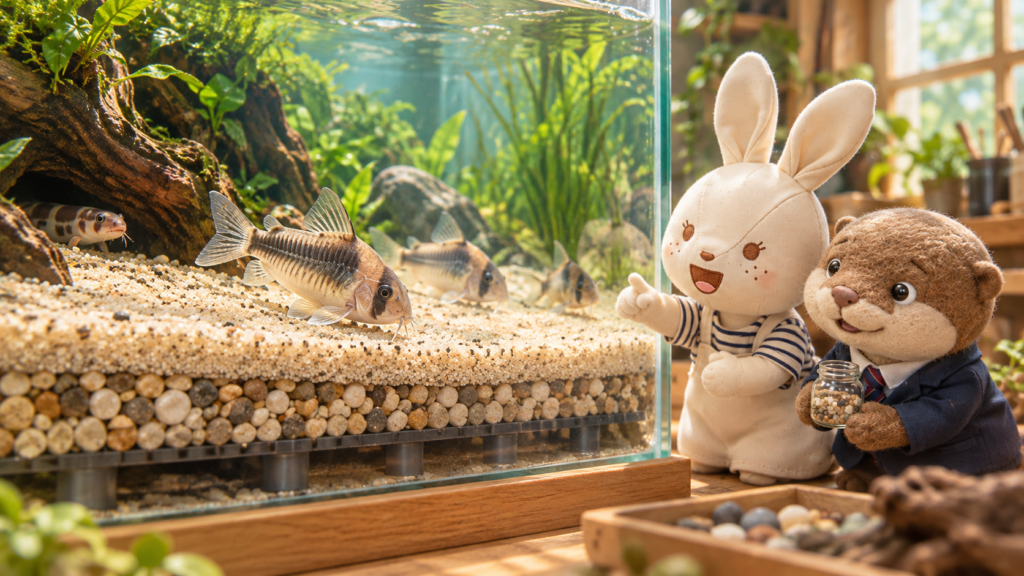 アイのアクアグッズ案内水槽の底砂の選び方|砂・砂利の違いとおすすめ商品道具の特徴や使い方、選ぶときのポイントをアイが紹介します。記事はコチラ →
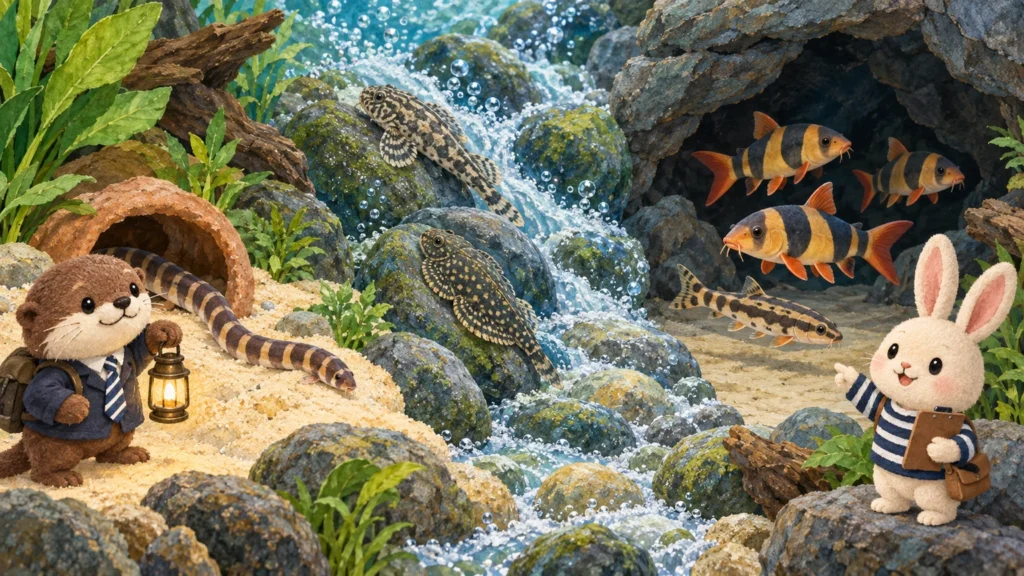 アイのアクアグッズ案内ローチの仲間に合わせる飼育用品|クーリー・流水性・ボーシャの水槽と底砂道具の特徴や使い方、選ぶときのポイントをアイが紹介します。記事はコチラ →
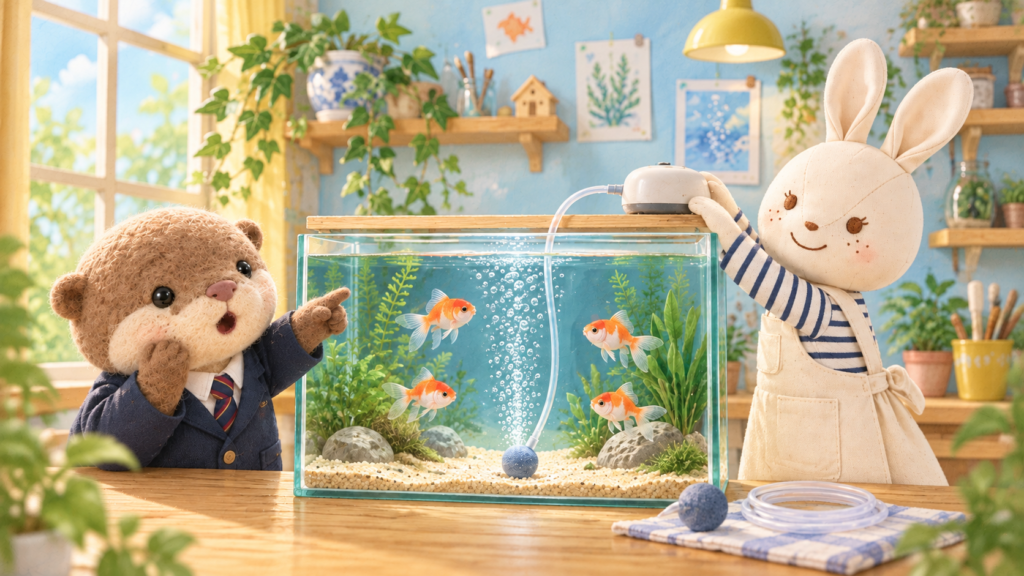 アイのアクアグッズ案内水槽のエアーポンプの選び方|水深・音・泡で選ぶおすすめ用品道具の特徴や使い方、選ぶときのポイントをアイが紹介します。記事はコチラ →
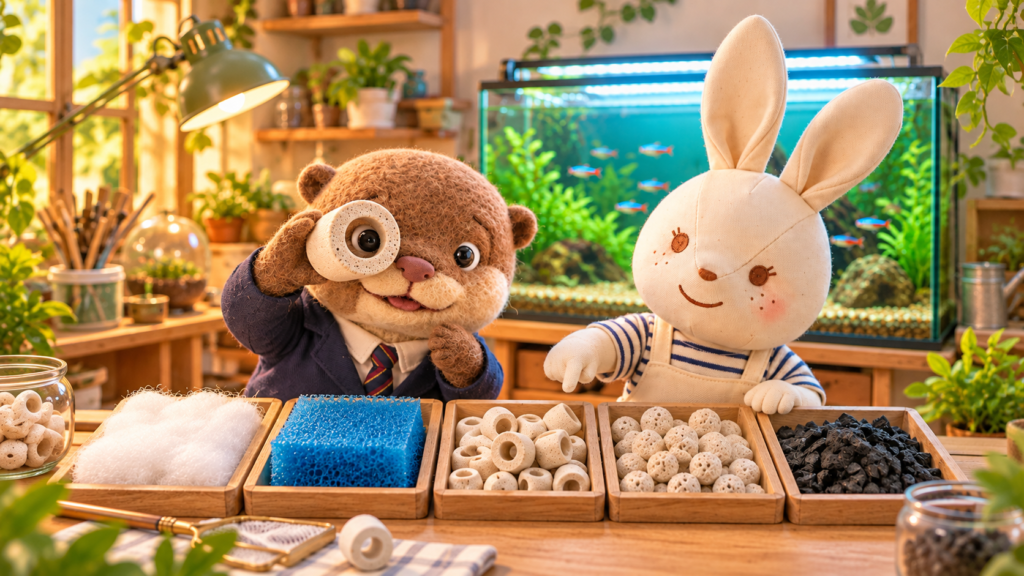 アイのアクアグッズ案内水槽のろ材の選び方|ウール・リング・活性炭の違いとおすすめ商品フィルターの中の綿や石は何をしている? アイとコタロウが、ウール・スポンジ・セラミック・焼結ガラス・活性炭・ゼオライトを比較。機種との相性、入れ方、洗い方と交換まで商品とともに紹介します。記事はコチラ →



コメント