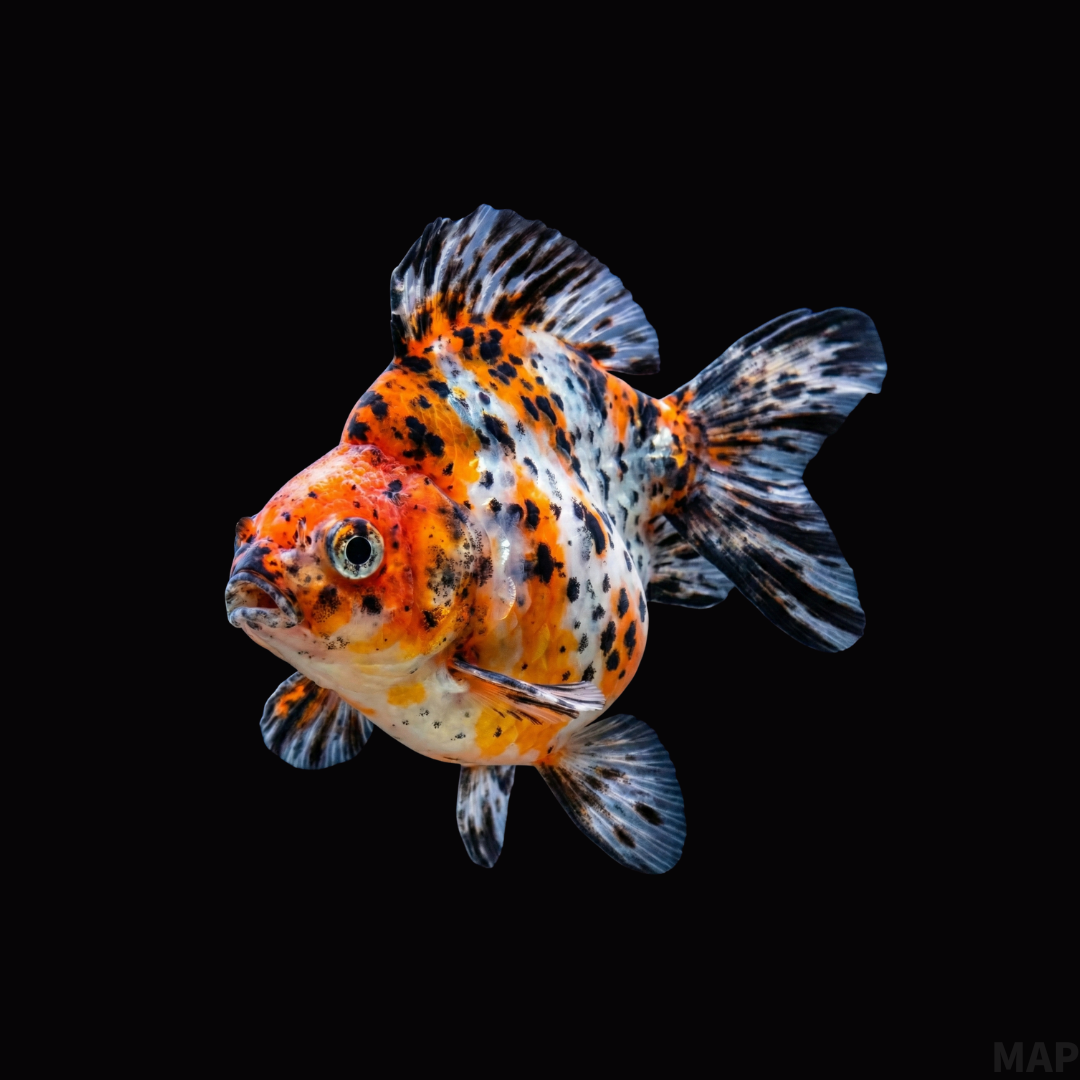
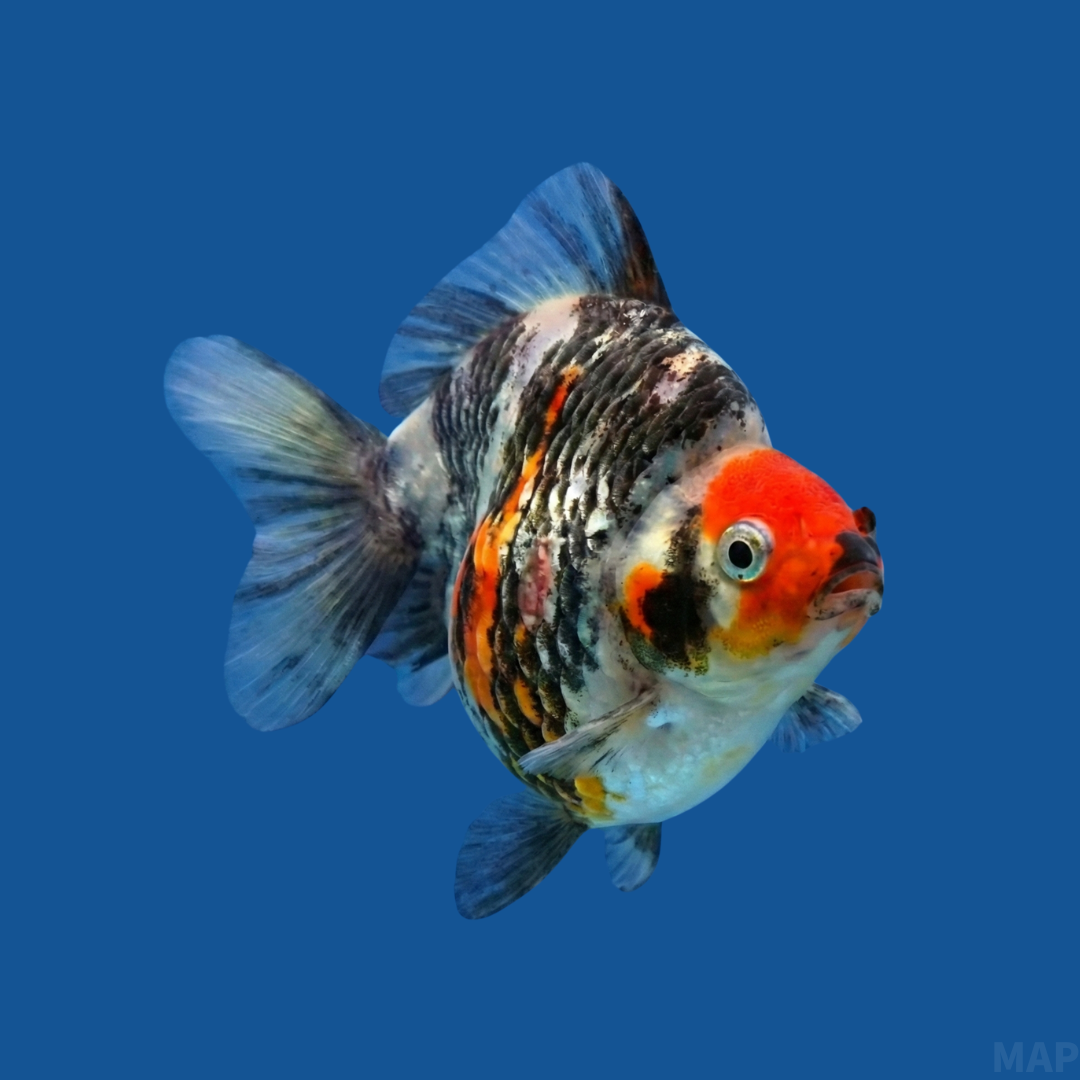
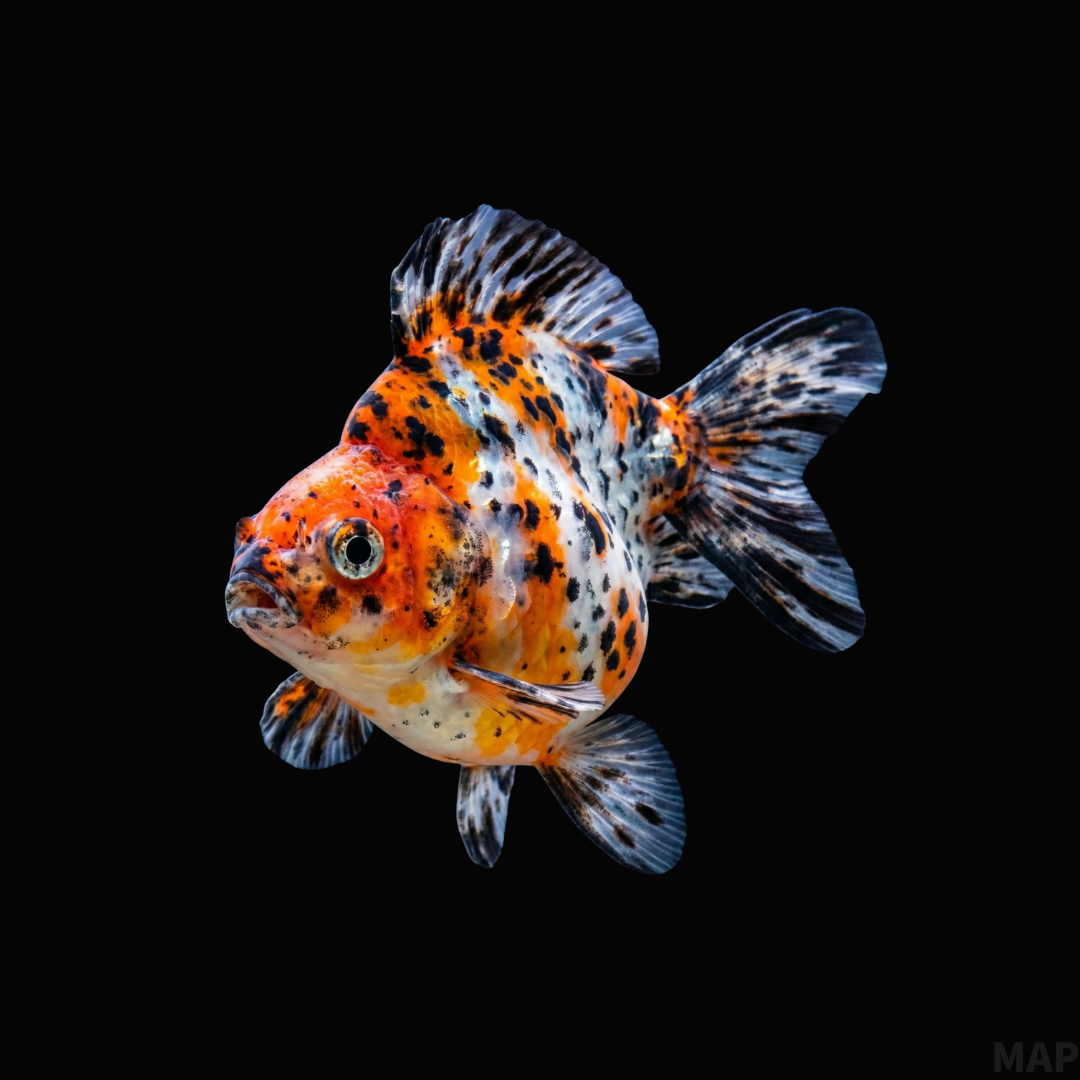
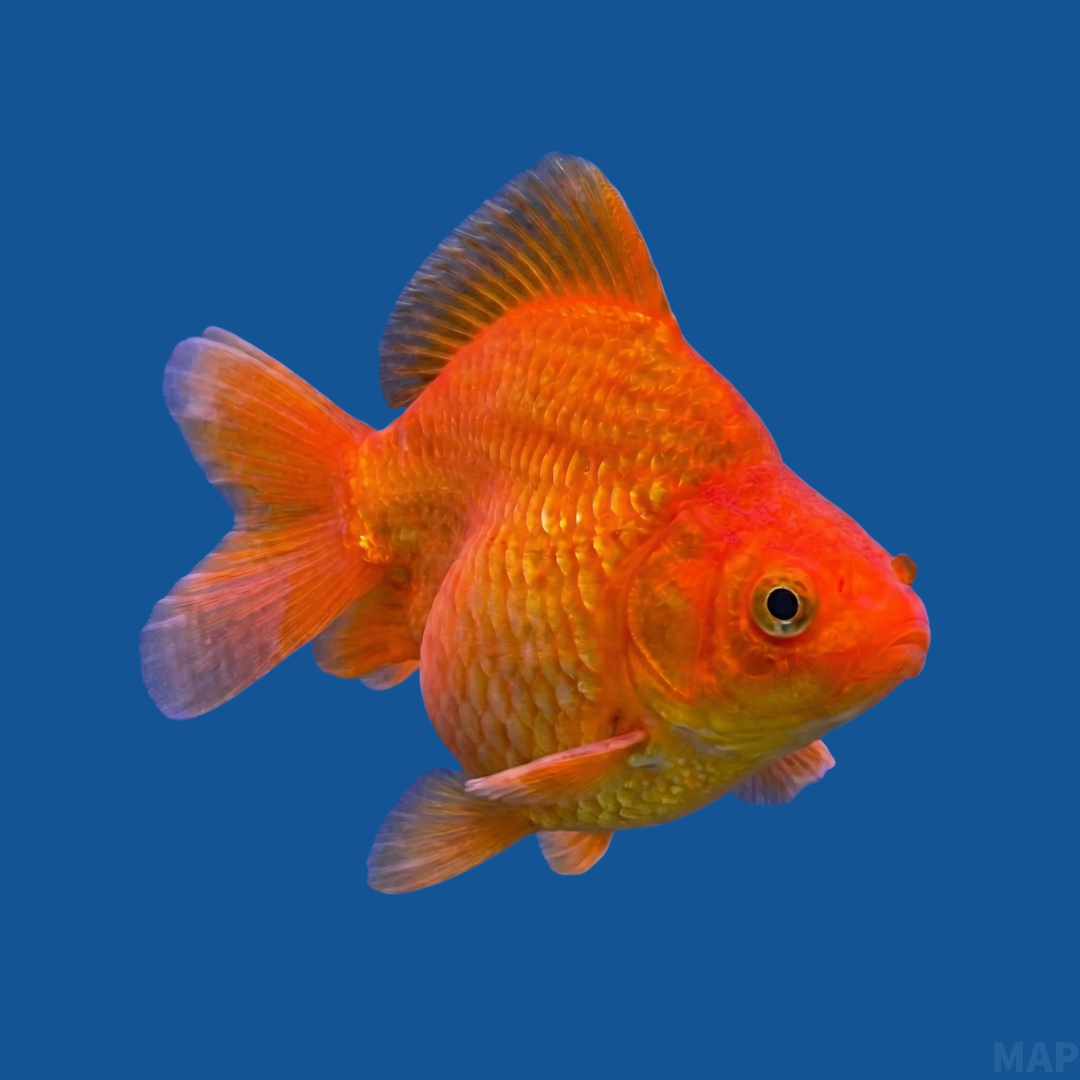
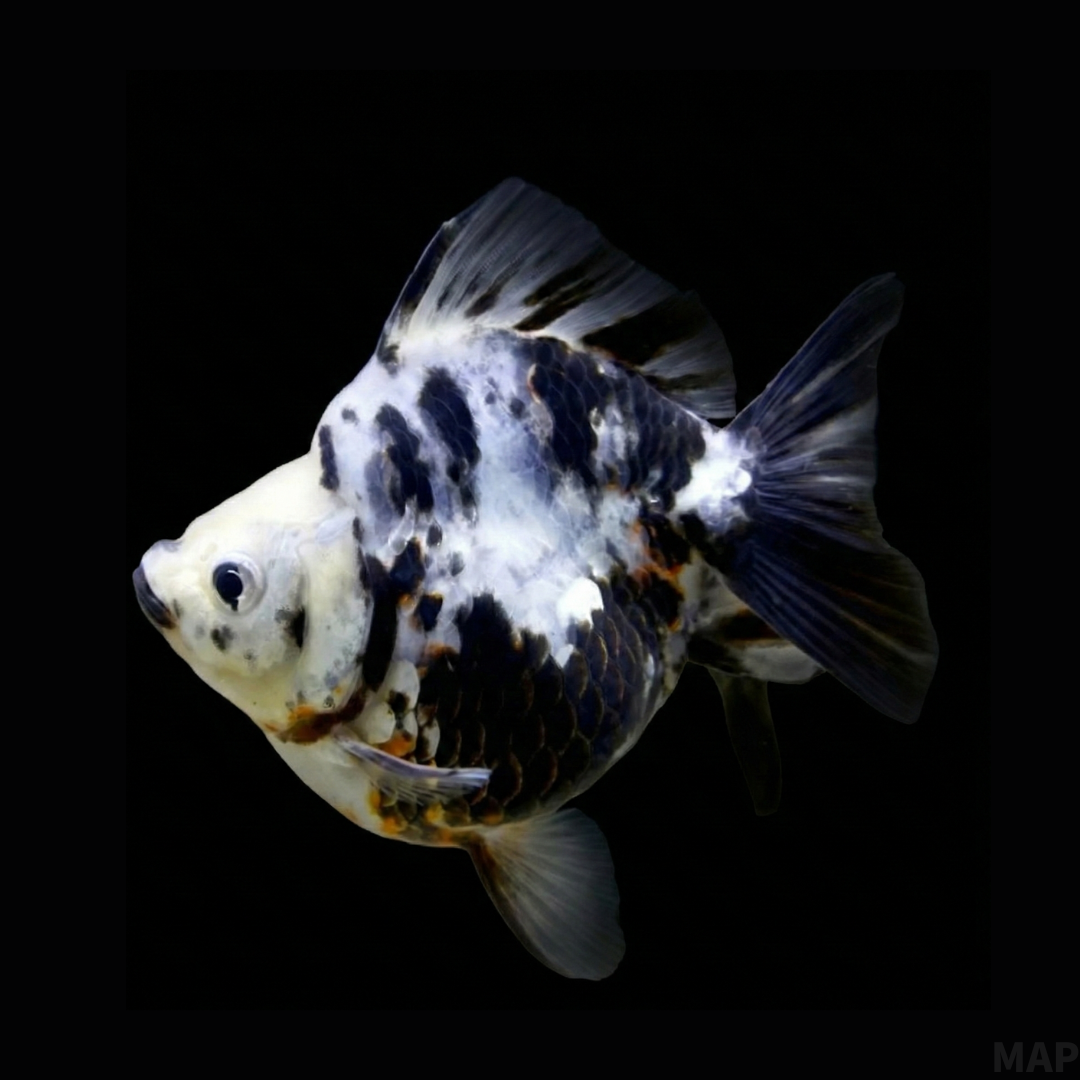
だるま琉金は、人間が求める「丸み」という美学を生物学的な限界まで追求した、金魚の改良品種における一つの到達点です。琉金(Ryukin)の特徴である優雅な各ヒレと「キャメルバック」と呼ばれる背中の盛り上がりを維持しつつ、脊椎を短縮させることで、横から見るとまるで「達磨(だるま)」のように円形に近い体型を持っています。その愛らしい姿は、見る者に癒やしと幸福感を与えますが、その特殊な体型ゆえに泳ぎは得意ではなく、消化器官や鰾(うきぶくろ)の構造もデリケートです。飼育には繊細な配慮が必要ですが、手をかけた分だけ愛着が湧く、日本的な「守りの美学」を体現する品種と言えるでしょう。The Daruma Ryukin represents a pinnacle in goldfish breeding, pushing the aesthetic of “roundness” to its biological limits. Maintaining the elegant fins and “camelback” hump characteristic of Ryukins, this variety has a shortened spine that gives it a nearly circular body profile when viewed from the side, resembling a traditional Japanese “Daruma” doll. While their adorable appearance brings joy and healing to observers, their unique body shape means they are not strong swimmers and have delicate digestive systems and swim bladders. Rearing them requires careful attention, but they are a rewarding variety that embodies a protective aesthetic.
改良品種(主な生産地:中国、タイ、日本)Breeding variety (Mainly produced in China, Thailand, and Japan)
最大体長 / Max Size
15cm前後(体高も同程度に成長する)Approx. 15cm (Body height grows to a similar ratio)
寿命 / Lifespan
5年〜8年(適切な管理下では10年以上)5-8 years (Over 10 years with proper care)
飼育環境 / Aquarium Environment
水槽サイズ / Tank Size
60cm規格水槽(約60L)以上推奨。成魚1匹あたり30Lの水量を確保するのが理想的です。Standard 60cm tank (approx. 60L) or larger recommended. Ideally, secure 30L of water per adult fish.
水温 / Temperature
22℃ – 28℃
水質 / Water Quality
中性〜弱アルカリ性(pH 7.0〜8.0)。硝酸塩濃度の蓄積に注意が必要です。Neutral to slightly alkaline (pH 7.0-8.0). Be careful of nitrate accumulation.
レイアウト / Layout
泳ぎが苦手なため、強い水流は厳禁です。水深は30〜36cm程度が負担が少なく適しています。ベアタンクあるいは薄く底砂を敷くスタイルが管理しやすいでしょう。Strong currents are strictly prohibited as they are poor swimmers. A water depth of about 30-36cm is suitable. Bare tanks or a thin layer of substrate are easier to manage.
注意点 / Precautions
消化機能が弱いため、冬場でもヒーターを使用して水温を一定(22℃以上)に保つことが、転覆病予防の最も効果的な手段です。Due to weak digestion, using a heater to maintain a constant temperature (above 22°C) even in winter is the most effective way to prevent Swim Bladder Disorder.
餌と給餌 / Feeding
餌の種類 / Diet
消化の良い「沈下性」の人工飼料、植物質の餌(低タンパク・高繊維)、茹でたグリーンピースなど。Digestible “sinking” artificial feed, plant-based food (low protein, high fiber), boiled green peas, etc.
給餌のポイント / Feeding Tips
浮上性の餌は空気と一緒に飲み込んで転覆の原因になるため避けます。「腹八分目」を徹底し、消化不良を防ぐために控えめに与えるのが長期飼育のコツです。Avoid floating food as swallowing air can cause flipping. The key to long-term care is to feed moderately, keeping them “80% full” to prevent indigestion.
性格と混泳 / Temperament and Tank Mates
性格 / Temperament
温和で人懐っこい性格です。しかし、泳ぎが下手なため、素早い魚と一緒だと餌が取れずにストレスを感じることがあります。Gentle and friendly. However, being poor swimmers, they may get stressed if kept with fast fish as they cannot compete for food.
混泳の相性 / Compatibility
基本的には単独飼育、または同じだるま琉金同士の混泳が推奨されます。泳ぎの能力が同等な「らんちゅう」や「ピンポンパール」とも混泳可能ですが、過密飼育は避けてください。Ideally kept alone or with other Daruma Ryukins. Compatible with Ranchu or Pearlscales which have similar swimming abilities, but avoid overcrowding.
病気と対策 / Diseases and Prevention
かかりやすい病気 / Common Diseases
転覆病(Swim Bladder Disorder)、消化不良、エロモナス感染症など。Swim Bladder Disorder, indigestion, Aeromonas infections, etc.
対策と予防 / Prevention
転覆病は一度発症すると完治が難しいため、予防が全てです。「水温の維持(加温)」「消化の良い餌」「適切な水換え(硝酸塩の除去)」の3点を徹底してください。初期症状にはココア浴や塩浴が有効な場合があります。Prevention is key for Swim Bladder Disorder. Strictly maintain water temperature, feed digestible food, and perform proper water changes. Cocoa baths or salt baths may be effective for early symptoms.
増やし方(繁殖) / Breeding
繁殖形態 / Reproduction
卵生。春先など水温が上昇する時期に産卵します。Oviparous. They spawn when water temperatures rise, such as in early spring.
繁殖のポイント / Breeding Tips
繁殖自体は可能ですが、美しい「だるま体型」を持つ個体を作出するには、稚魚の段階から厳しい選別(Culling)が必要です。背骨の曲がり具合や尾の開きなどを見極める、熟練の眼が求められます。Breeding is possible, but producing fish with the beautiful “Daruma shape” requires strict culling from the fry stage. A skilled eye is needed to judge spine curvature and tail spread.
雑学と豆知識 / Trivia and Fun Facts
1. 「だるま」の名の由来と伝説 / 1. Origin of the Name “Daruma”
この名称は、禅宗の開祖・達磨大師(Bodhidharma)の伝説に由来します。修行により手足がなくなったとされる達磨大師の丸い姿と、尾が短く球体に近い金魚の形状が重なり、日本独自の「だるま琉金」という呼称が生まれました。日本では「七転び八起き」の縁起物としても親しまれています。The name comes from the legend of Bodhidharma. The round shape of the goldfish, with its short tail, resembled the limbless Daruma doll, leading to this unique Japanese name. In Japan, they are cherished as symbols of good luck and resilience.
だるま琉金は脊椎が短縮されているため内臓スペースが狭く、少しの消化不良や便秘で鰾(うきぶくろ)が圧迫され、ひっくり返る「転覆病」になりやすい体質です。日本には、純ココアを飼育水に溶かす「ココア浴」という独自の民間療法があります。ココアの食物繊維やポリフェノールが整腸と殺菌に働きかけ、症状を緩和すると言われています。Due to their shortened spines, they are prone to flipping over. In Japan, there is a unique folk remedy called “Cocoa Bath” using pure cocoa powder. The fiber and polyphenols are believed to aid digestion and reduce inflammation.
3. 「上見」と「横見」の二刀流 / 3. Viewing from Top and Side
金魚には、らんちゅうのように上から見る「上見(Uwami)」、琉金のように横から見る「横見(Yokomi)」という鑑賞スタイルの違いがあります。しかしだるま琉金は、横から見れば円形の迫力を、上から見ればコロコロとしたボールのような愛らしさを楽しめる、稀有な「二刀流」の品種として愛好されています。Goldfish are typically viewed from the top (“Uwami”) or side (“Yokomi”). Daruma Ryukins are rare in that they are enjoyed both ways: their impressive circular profile from the side and their ball-like cuteness from above.
4. 中国産とタイ産の違い / 4. Chinese vs. Thai Lineages
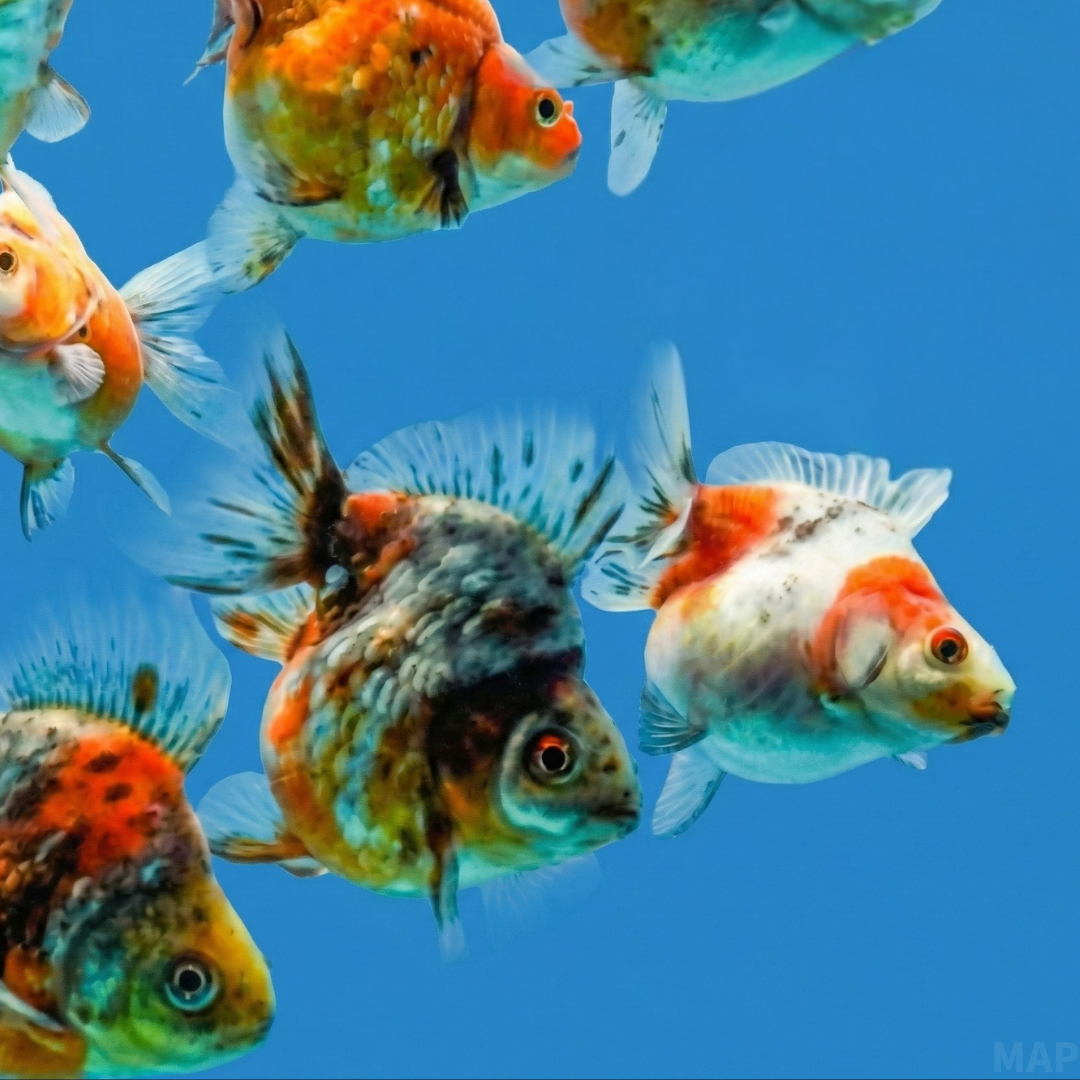
市場に流通する個体には主に中国産とタイ産があります。本場である中国産は、肩の筋肉が盛り上がり迫力ある体型が特徴です。一方、近年台頭しているタイ産は、日本の美意識を研究して作出されており、丸さと尾のバランスが良く、比較的安価で入手しやすい傾向があります。Chinese varieties are known for their powerful, muscular humps. Thai varieties, which have gained popularity recently, are bred with Japanese aesthetics in mind, offering good balance and roundness at more accessible prices.
まとめ / Conclusion
だるま琉金の飼育は、「温度への投資」と「引き算の給餌」が成功の鍵です。彼らの愛らしい姿は、生物学的なハンディキャップと隣り合わせの奇跡的なバランスの上に成り立っています。冬場でもヒーターで暖かく保ち、餌を与えすぎないという「守りの飼育」を心がけることで、この生きた縁起物は長くあなたの目を楽しませてくれるでしょう。Successful care of Daruma Ryukins relies on “investing in temperature” and “subtractive feeding.” Their adorable appearance balances on a biological edge. By keeping them warm with a heater and avoiding overfeeding, you can enjoy these living lucky charms for years to come.
その丸い体で一生懸命に泳ぐ姿は、日々の生活に安らぎと笑顔をもたらしてくれるはずです。Their diligent swimming with such round bodies will surely bring peace and smiles to your daily life.



 アイのアクアグッズ案内水槽用浄水器の選び方|水換えを楽にするタイプとROの違い道具の特徴や使い方、選ぶときのポイントをアイが紹介します。記事はコチラ →
 アイのアクアグッズ案内水槽フィルターの選び方|外掛け・外部・上部から小型オーバーフローまで道具の特徴や使い方、選ぶときのポイントをアイが紹介します。記事はコチラ →




コメント