

解説 / Description
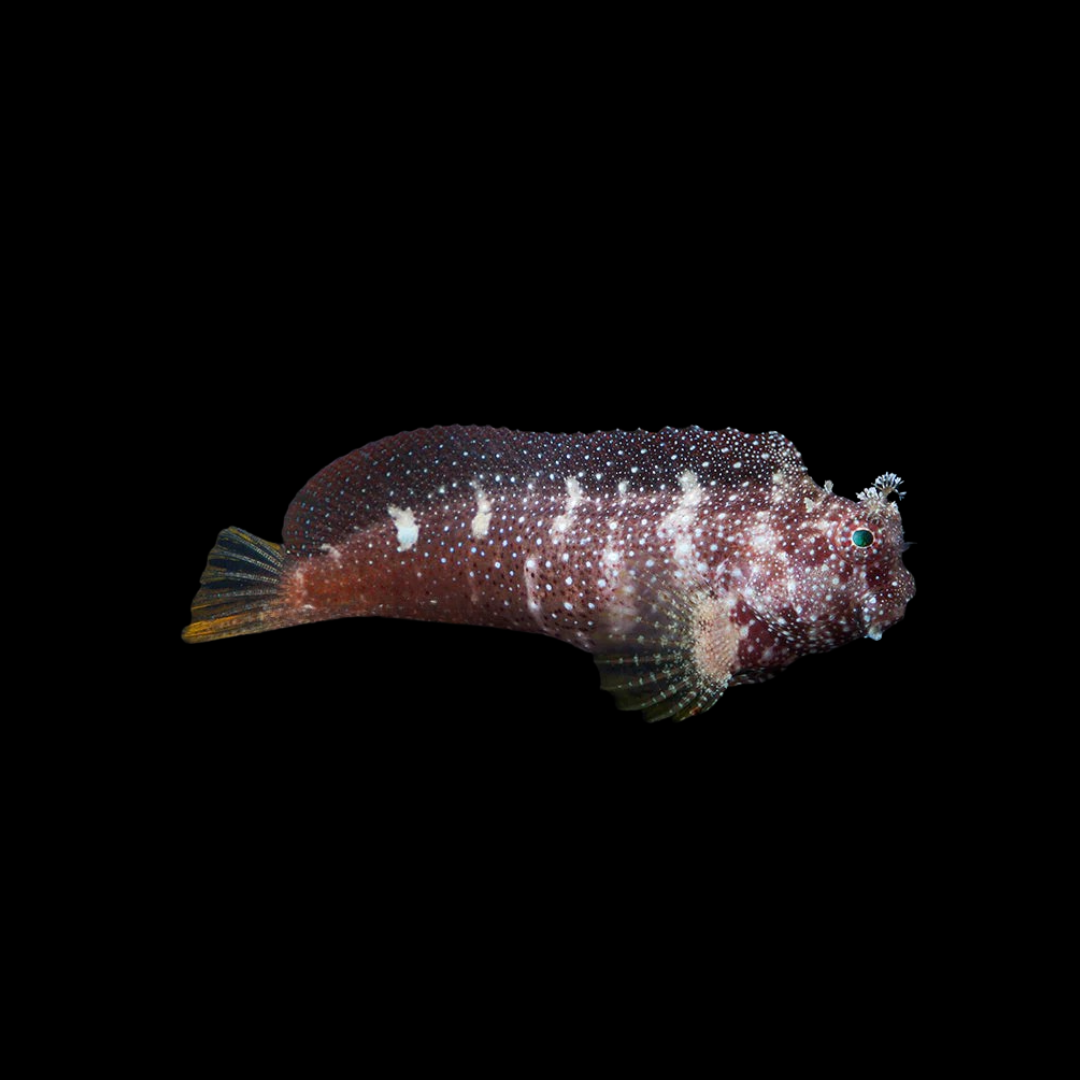
スターリーブレニーは、暗褐色から赤褐色の体に白い星状の斑点を散りばめた、海水水槽で人気の高いイソギンポ科の魚です。ライブロックやガラス面の藻類をよくついばむため、リーフタンクではコケ取り役として導入されることがあります。ただし、本種の魅力は実用性だけではありません。岩の上にちょこんと座る姿、周囲を見回すような眼の動き、環境に合わせた体色変化など、観察する楽しさも大きい魚です。 The Starry Blenny is a popular marine combtooth blenny with a dark brown to reddish-brown body covered in white star-like spots. It is often kept in reef aquariums as an algae-grazing fish that picks at growth on live rock and glass. Its appeal is not only practical: its perching posture, alert eye movements, and ability to adjust its coloration also make it an engaging fish to observe.
基本情報 / Basic Information
| 学名 / Scientific Name | Salarias ramosus Bath, 1992 |
|---|---|
| 通称 / Common Name | スターリーブレニー、スノーフレークブレニーStarry Blenny, Snowflake Blenny |
| 分類 / Family | 条鰭綱、スズキ目、イソギンポ科、サラリアス属。資料によってはギンポ類を別体系で扱う場合があります。Actinopterygii; Perciformes; Blenniidae; Salarias. Some sources may treat blennies under a different higher-level arrangement. |
| 英名 / English Name | Starry Blenny |
| 分布 / Distribution | 西部中央太平洋。フィリピンからオーストラリア北西部にかけて記録されています。浅い保護された沿岸のサンゴ礁、河口域、岩礁や砂地に海藻が混じる場所などに見られます。Western Central Pacific, recorded from the Philippines to northwestern Australia. It occurs in shallow protected inshore reefs, estuaries, rocky outcrops, and sand-weed areas. |
| 最大体長 / Max Size | 約14cmAbout 14 cm total length |
| 寿命 / Lifespan | 本種単独の寿命について、標準的な公開データは多くありません。飼育下では安定した水質と十分な給餌により、数年単位での長期飼育を目指す魚と考えるのが現実的です。Public, species-specific lifespan data are limited. In aquariums, it is best regarded as a fish that can be maintained for several years when water quality is stable and feeding is adequate. |
飼育環境 / Aquarium Environment
| 水槽サイズ / Tank Size | 小売系の飼育情報では30ガロン前後を最低目安とする例がありますが、自然藻類の供給量と縄張りを考えると、日本の規格水槽では最低でも60cm規格水槽以上、余裕を持つなら90cm規格水槽以上が扱いやすいです。特にコケの少ない清潔な水槽では、広さよりも人工飼料への餌付きが重要になります。Some retail care guides list around 30 gallons as a minimum, but considering grazing area and territory, at least a standard 60 cm aquarium is preferable, and a standard 90 cm aquarium is easier to manage. In very clean systems with little algae, successful feeding on prepared foods becomes more important than tank size alone. |
|---|---|
| 水温 / Temperature | 24〜27℃前後が目安です。急激な変化を避け、安定を優先します。 Around 24 to 27°C is a practical target. Stability is more important than chasing a single exact number. |
| 水質 / Water Quality | 一般的な海水魚・リーフタンクに準じ、比重1.020〜1.026程度、pH8.0〜8.5程度を目安に管理します。清浄な水質は大切ですが、極端に低栄養塩へ寄せると藻類が不足しやすくなるため、給餌で補います。Maintain typical marine or reef aquarium conditions, roughly 1.020 to 1.026 specific gravity and pH 8.0 to 8.5. Clean water is important, but very low-nutrient systems may not provide enough algae, so supplemental feeding is needed. |
| レイアウト / Layout | ライブロックを安定して組み、隠れ家、休息場所、見張り台になる場所を複数作ります。岩肌やガラス面をついばむため、藻類やバイオフィルムが育つ面を確保できる、立ち上がった水槽に向いています。Build stable live rock structures with hiding places, resting spots, and perches. Because it grazes on rock and glass surfaces, it is best suited to a mature aquarium with surfaces that can support algae and biofilm. |
| 注意点 / Precautions | 飛び出しやすい魚として扱い、フタやジャンプガードを設置してください。また、コケ取り能力に頼りすぎると、藻類が減った後に痩せることがあります。導入初期から体型を観察し、人工飼料へ慣らす準備をしておきます。Treat this species as a potential jumper and use a lid or jump guard. Do not rely solely on its algae-cleaning ability; after natural algae decline, it can lose weight. Monitor body condition from the beginning and prepare to train it onto prepared foods. |
餌と給餌 / Feeding
| 餌の種類 / Diet | 自然下では岩やサンゴ礁周辺の表面に付着した糸状藻類、珪藻、微細な有機物などをついばむ藻類食傾向の強い魚です。飼育下では、スピルリナ配合の植物性人工飼料、海水魚用の植物質フレークやペレット、乾燥海苔、岩に貼り付けられるペースト状の餌などを組み合わせます。補助的に冷凍ブラインシュリンプや冷凍コペポーダを少量与えることもありますが、主軸は植物質に置きます。In nature it grazes on surface growth such as filamentous algae, diatoms, and fine organic material. In captivity, offer spirulina-rich herbivore foods, marine vegetable flakes or pellets, dried seaweed sheets, and paste foods that can be pressed onto rock. Small amounts of frozen brine shrimp or copepods may be used as supplements, but plant-based foods should remain the core. |
|---|---|
| 給餌のポイント / Feeding Tips | 導入直後にコケをよく食べていても、水槽内の藻類は短期間で減ることがあります。お腹がへこむ前に、植物性人工飼料や乾燥海苔へ慣らしてください。岩をかじるように食べる習性を利用し、ペースト状の餌をライブロックに付けると反応しやすい場合があります。Even if a new fish grazes well at first, aquarium algae can be depleted quickly. Train it onto plant-based prepared foods and dried seaweed before the belly becomes sunken. Paste foods applied to live rock may encourage feeding because they match its natural scraping behavior. |
性格と混泳 / Temperament and Tank Mates
| 性格 / Temperament | 多くの場合は温和ですが、同じような生活圏や食性を持つ魚に対しては縄張り意識を見せることがあります。岩の上に座って周囲を観察する行動がよく見られます。Usually peaceful, but it may become territorial toward fishes with similar habits or diets. It is often seen perching on rocks and watching its surroundings. |
|---|---|
| 混泳の相性 / Compatibility | 同種や近縁のギンポ類とは争う可能性があるため、基本は1水槽に1匹が安全です。ハゼ、スズメダイ、ハナダイなど、体形や遊泳層が異なる魚とは比較的合わせやすいです。ハギ類やアイゴ類などの草食魚とは餌場が競合する場合があります。リーフタンク向きとされることが多い魚ですが、極端な空腹や個体差によってサンゴ周辺を強くついばむことがあるため、十分な給餌と観察を続けます。Keeping one per aquarium is safest because it may fight with the same species or closely related blennies. It often mixes better with fishes of different shapes and swimming zones, such as gobies, damselfish, and anthias. Herbivorous tangs and rabbitfish may compete for grazing space. It is commonly considered reef-compatible, but hunger or individual behavior can lead to persistent picking around corals, so steady feeding and observation are important. |
病気と対策 / Diseases and Prevention
| かかりやすい病気 / Common Diseases | 特定の病気に極端に弱い魚ではありませんが、輸送直後、導入初期、水温変化、栄養不足によって白点病などの一般的な海水魚のトラブルが出ることがあります。新着個体では外部寄生虫にも注意します。It is not known as an especially fragile species, but shipping stress, early acclimation stress, temperature swings, and poor nutrition can lead to common marine fish problems such as marine ich. Newly imported fish should also be observed for external parasites. |
|---|---|
| 対策と予防 / Prevention | 購入時は、お腹が極端にへこんでいない個体、目が澄み、体表に傷や白点が目立たない個体を選びます。水合わせを丁寧に行い、可能であれば隔離水槽で観察してから本水槽へ入れると安全です。安定した水質、飛び出し防止、植物質中心の十分な給餌が予防の基本です。Choose a fish with a reasonably full belly, clear eyes, and no obvious wounds or white spots. Acclimate carefully, and if possible observe it in quarantine before adding it to the display. Stable water quality, jump prevention, and adequate plant-based feeding are the foundation of prevention. |
増やし方(繁殖) / Breeding
| 雌雄の判別 / Sexing | 通常時の雌雄判別は難しい魚です。近縁のイソギンポ類では繁殖期のオスに頭部や臀鰭周辺の特徴が出る例がありますが、本種の一般飼育下で安定して使える判別法としては限定的に考えるのが安全です。Sexing is difficult under normal conditions. Related blennies may show male features around the head and anal-fin area during breeding, but this should be treated as a limited clue rather than a reliable everyday method for this species in home aquariums. |
|---|---|
| 繁殖形態 / Reproduction | 卵生です。卵は沈性で粘着性を持ち、基質に付着するとされています。ふ化した仔魚はしばらく浮遊生活を送ります。Oviparous. The eggs are demersal and adhesive, attaching to the substrate. The larvae enter a planktonic stage after hatching. |
| 繁殖のポイント / Breeding Tips | 家庭水槽での繁殖は一般的ではありません。ペアの相性、産卵基質、安定した環境に加え、ふ化後の小さな仔魚を育てるための微細な餌と専用管理が必要になります。繁殖例があっても、仔魚の育成まで安定させる難度は高い魚です。Breeding in home aquariums is not common. It requires a compatible pair, suitable spawning surfaces, a stable environment, and specialized larval rearing with very small foods. Even when spawning occurs, raising the larvae successfully is difficult. |
雑学と豆知識 / Trivia and Fun Facts
| 1. 学名表記で注意したいポイント / 1. A note on the scientific name | 本種は1992年にBathによって記載された種で、現在の表記は一般に Salarias ramosus Bath, 1992 とされます。命名者名を括弧で囲む表記は、記載時とは別の属へ移された場合に使われるのが基本です。本種の命名者名に括弧が付かないのは、この命名規約によるものです。This species was described by Bath in 1992 and is generally written as Salarias ramosus Bath, 1992. Parentheses around the authority are normally used when a species has been moved from its original genus. This naming convention explains why the authority for this species is written without parentheses. |
|---|---|
| 2. 浅い環境に暮らす、隠れ上手な魚 / 2. A shallow-water fish that hides well | スターリーブレニーは、水深1〜15mほどの浅い沿岸環境で記録される魚です。浅い場所にいるから発見しやすい、とは限りません。白い斑点、頭部のフリル状の突起、岩の隙間に入る行動は、サンゴ礁や岩礁の複雑な背景に体の輪郭を紛れ込ませます。水槽で見ると美しい星模様も、自然界では身を守るための実用的なデザインです。The Starry Blenny is recorded from shallow coastal habitats, roughly 1 to 15 m deep. Shallow water does not necessarily mean easy visibility. Its white spotting, frilly head structures, and habit of slipping among rocks help break up its outline against complex reef backgrounds. The beautiful star-like pattern seen in aquariums is also a practical camouflage design in nature. |
| 3. コケ取り役でも、食事管理が必要 / 3. An algae grazer that still needs managed feeding | スターリーブレニーは頼れるコケ取り役ですが、よく働く魚ほど水槽内の藻類を早く食べ尽くしてしまいます。プロテインスキマーやろ過がよく効いた水槽では、見た目がきれいになるほど本種の食べ物が少なくなることもあります。お腹の丸みを日々観察し、乾燥海苔や植物性人工飼料に早めに慣らすことが、長期飼育の大きな分かれ道になります。The Starry Blenny is a useful algae grazer, but an efficient grazer can quickly consume the available algae in a closed aquarium. In a strongly filtered system, a cleaner-looking tank may actually mean less food for the fish. Watching the belly and training it early onto dried seaweed and plant-based prepared foods are key to long-term success. |
| 4. 岩の上に座る行動の魅力 / 4. The charm of perching behavior | 本種を含むギンポ類は、広い中層を泳ぎ回るというより、岩や底面を拠点に暮らす魚です。胸鰭や腹鰭を支えのように使って岩の上に座り、左右の眼を動かしながら周囲を見渡す姿は、まるで水槽の中から飼育者を観察しているようにも見えます。この表情豊かなふるまいが、単なる掃除役を超えた人気につながっています。Blennies such as this species are fishes of rocks and bottom surfaces rather than constant open-water swimmers. They perch with their fins acting like supports and watch their surroundings with alert eye movements. This expressive behavior is one reason they are appreciated as more than just aquarium cleaners. |
まとめ / Conclusion
スターリーブレニーは、星空のような斑点、岩の上での愛嬌ある行動、藻類をついばむ実用性を併せ持つ、海水水槽向きの魅力的な魚です。分布や最大体長、繁殖形態などの基本情報は比較的確認しやすい一方、寿命や細かな飼育条件には資料差があるため、断定しすぎず安全側に見た管理が大切です。 The Starry Blenny is an appealing marine aquarium fish with star-like spots, charming perching behavior, and useful algae-grazing habits. Basic facts such as distribution, maximum size, and reproduction are well documented, while lifespan and some care recommendations vary among sources, so conservative husbandry is the safest approach.
長期飼育の鍵は、飛び出し防止と痩せの予防です。フタやジャンプガードを用意し、自然発生する藻類だけに頼らず、植物性人工飼料や乾燥海苔へ早めに慣らしておくことで、本種らしい丸みのある体型と活発な行動を維持しやすくなります。 The keys to long-term care are preventing jumping and avoiding weight loss. Provide a lid or jump guard, and do not rely only on natural algae. Early training onto plant-based prepared foods and dried seaweed helps maintain the fish’s healthy body shape and active behavior.

気になる道具や飼い方を見つけてみませんか?
 アイのアクアグッズ案内水槽のエアーポンプの選び方|水深・音・泡で選ぶおすすめ用品道具の特徴や使い方、選ぶときのポイントをアイが紹介します。記事はコチラ →
 アイのアクアグッズ案内プレコ飼育に必要なもの|餌・流木・ろ過・隠れ家・掃除用品道具の特徴や使い方、選ぶときのポイントをアイが紹介します。記事はコチラ →
 アイのアクアグッズ案内コリドラスのもふもふ時間を楽しむ|餌・底砂・お掃除用品の選び方コリドラスのもふもふする食事風景を楽しむために。沈む餌2種類の違い、口元に配慮した底砂、食べ残しを回収する道具を、アクアグッズナビゲーターのアイが紹介します。記事はコチラ →
 アイのアクアグッズ案内カルキ抜き・水質調整剤の選び方|水換えと水槽の種類に合わせて選ぶ道具の特徴や使い方、選ぶときのポイントをアイが紹介します。記事はコチラ →
さまざまな飼育テーマをご紹介。リンク先の記事には広告・商品紹介が含まれます。
案内・紹介記事一覧へ →参考文献・参照資料
この記事では、店舗・通販ページ・個人ブログ・まとめサイトを参考文献から除外し、分類、分布、生息環境、飼育管理、繁殖、病気や注意点を確認できる資料に絞って参照しています。
-
World Register of Marine Species. Salarias ramosus Bath, 1992.
分類、学名、命名者表記の確認に使用。海産生物の分類情報を確認するための基礎資料として参照しました。 -
GBIF Secretariat. Salarias ramosus Bath, 1992. GBIF Backbone Taxonomy.
分類階級、学名、原記載文献情報の確認に使用。Bathによる1992年の記載情報を確認する補助資料として参照しました。 -
Froese, R. and D. Pauly. Editors. FishBase. Salarias ramosus, Starry blenny.
分布、最大体長、生息水深、生息環境、卵生、粘着性沈性卵、仔魚の浮遊生活など、記事の生態・繁殖情報の中心資料として参照しました。 -
Ocean Biodiversity Information System. Salarias ramosus.
分布記録や分類データの照合に使用。WoRMS由来の分類情報と海洋生物多様性データを確認する補助資料として参照しました。 -
Museums Victoria. Fishes of Australia. Starry Blenny, Salarias ramosus Bath 1992.
体色、白斑、眼上部の皮弁など、外部形態の説明を確認するために参照しました。 -
Yanong, R. P. E. 2021. Cryptocaryon irritans Infections Marine White Spot Disease in Fish. University of Florida IFAS Extension.
海水魚の白点病、Cryptocaryon irritansの概要、発症リスク、隔離や管理上の注意点を支える資料として参照しました。 -
Merck Veterinary Manual. Management of Aquarium Fish.
観賞魚の健康管理、環境管理、寄生虫対策、隔離管理の一般原則を確認するために参照しました。 -
University of Florida IFAS Extension. 4-H Marine Aquarium Project Book.
熱帯性海水魚・リーフ水槽における水温維持、海水水槽の基本設備、安定した飼育環境の考え方を確認するために参照しました。 -
Food and Agriculture Organization of the United Nations. Procedures for the Quarantine of Live Aquatic Animals.
輸入・導入時の隔離、検疫、病原体リスク管理の考え方を支える資料として参照しました。 -
Ornamental Aquatic Trade Association. Biosecurity and the Ornamental Aquatic Industry.
観賞魚の取り扱いにおけるバイオセキュリティ、疾病リスク、外来生物リスク、放流防止の注意喚起を支える資料として参照しました。




コメント