

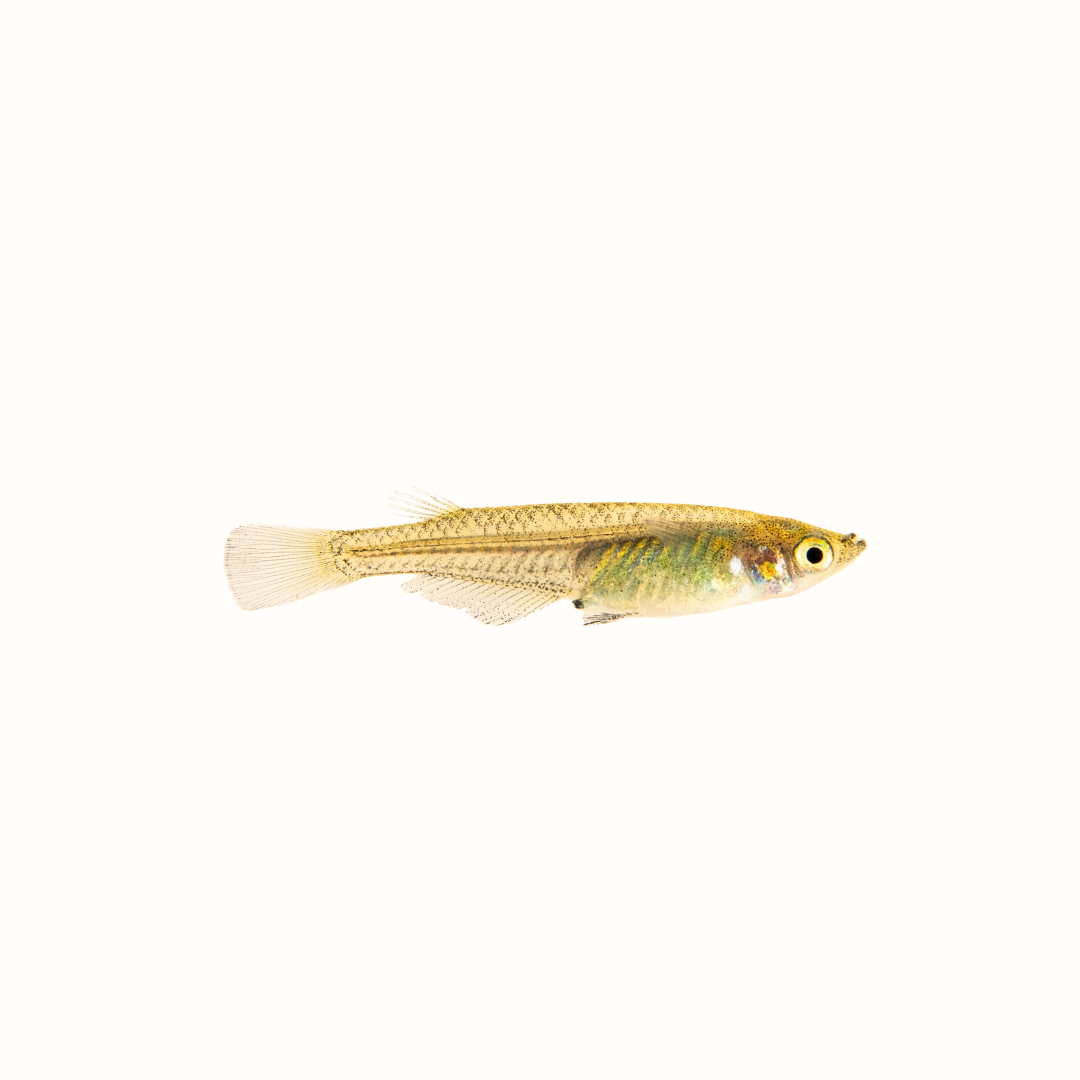
解説 / Description
クロメダカは、日本の水田、用水路、池、河川の流れの緩やかな場所などに暮らしてきた、野生型のメダカを指す通称です。小さな体に控えめな黒褐色の色彩をまとい、上から眺める水鉢や屋外ビオトープとの相性がとても良い魚です。現在、日本の在来メダカは主にミナミメダカとキタノメダカに分けて扱われ、さらに地域ごとに細かな遺伝的まとまりが知られています。見た目は素朴でも、ひとつの水系ごとの長い自然史を背負った魚といえます。 Kuromedaka is the common Japanese name for wild-type medaka that have long lived in rice fields, irrigation channels, ponds, and slow-moving freshwater habitats in Japan. With a small body and modest dark brown coloration, it is especially well suited to outdoor biotopes and traditional top-view water bowls. Native Japanese medaka are now mainly treated as Southern Japanese medaka and Northern Japanese medaka, with additional regional genetic groups recognized within them. Although they look simple, each local population reflects a long natural history of its watershed.
飼育そのものは丈夫で始めやすい一方、自然界への放流は避けなければなりません。地域集団の交雑による遺伝的攪乱や、特定外来生物であるカダヤシとの混同は、日本の水辺の生物多様性に影響を与えるおそれがあります。家庭では終生飼育を前提に、十分な水量、安定した水質、適切な給餌、夏場の高水温対策を意識して育てると、本来の落ち着いた美しさを楽しめます。 Although they are hardy and beginner-friendly, they must not be released into natural waters. Mixing regional lineages or confusing them with the invasive mosquitofish can affect Japan’s freshwater biodiversity. In the home aquarium or outdoor container, they should be kept for life, with attention to sufficient water volume, stable water quality, appropriate feeding, and protection from excessive summer heat.
基本情報 / Basic Information
| 学名 / Scientific Name | Oryzias latipes、Oryzias sakaizumii |
|---|---|
| 通称 / Common Name | クロメダカ、野生型メダカ、黒メダカ、ミナミメダカ、キタノメダカWild-type medaka, Japanese rice fish, Southern Japanese medaka, Northern Japanese medaka |
| 分類 / Family | ダツ目メダカ科メダカ亜科メダカ属Order Beloniformes, family Adrianichthyidae, subfamily Oryziinae, genus Oryzias |
| 英名 / English Name | Japanese Rice Fish, Medaka, Wild-type Medaka |
| 分布 / Distribution | 北海道を除く日本各地の淡水域に在来分布するとされます。ミナミメダカは主に太平洋側を含む東日本・西日本・南日本の淡水域、キタノメダカは主に日本海側北部沿岸域などに分布します。地域や水系により遺伝的背景が異なるため、産地不明個体の放流や移動は避けます。Native Japanese medaka are considered to occur in freshwater habitats across Japan except Hokkaido. Southern Japanese medaka are mainly associated with freshwater habitats in eastern, western, and southern Japan, including the Pacific side, while Northern Japanese medaka mainly occur along northern coastal areas of the Sea of Japan side. Because genetic backgrounds differ among regions and watersheds, fish of unknown origin should not be released or moved between localities. |
| 最大体長 / Max Size | 約3〜4cm。大きい個体では4cmを少し超えることがあります。About 3–4 cm. Large individuals may slightly exceed 4 cm. |
| 寿命 / Lifespan | 飼育下の目安は一般的に1〜3年ほどです。屋外で季節変化を受けながら安定して飼育する場合は、2年前後をひとつの目安に考えるとよいです。In captivity, a general guideline is about 1–3 years. In stable outdoor care with seasonal changes, around two years is a practical expectation. |
飼育環境 / Aquarium Environment
| 水槽サイズ / Tank Size | 少数なら20L前後、30cm規格水槽から飼育可能です。ただし水温と水質を安定させるには、40cm水槽、45cm規格水槽、60cm規格水槽、または同程度の水量を持つ屋外の睡蓮鉢やプラ舟の方が扱いやすいです。A small group can be kept in around 20 L or a standard 30 cm aquarium. For better temperature and water-quality stability, a 40 cm tank, standard 45 cm tank, standard 60 cm tank, or an outdoor water bowl or tub with comparable volume is easier to manage. |
|---|---|
| 水温 / Temperature | 通常飼育は15〜28℃前後が扱いやすく、繁殖を狙う場合は26〜28℃前後が目安です。30℃前後でも活動することはありますが、真夏の直射日光による過度な高水温、急激な水温変化、冬季の凍結には注意します。 For general care, about 15–28°C is convenient, while around 26–28°C is a useful target for breeding. They may remain active around 30°C, but avoid excessive summer overheating in direct sun, sudden temperature changes, and winter freezing. |
| 水質 / Water Quality | 中性付近から弱アルカリ性を目安に、急変の少ない水で管理します。アンモニアと亜硝酸が検出されない、よく立ち上がった水が理想です。屋外飼育ではグリーンウォーターが稚魚の餌と水質安定に役立つ場合がありますが、濃くなりすぎた場合は換水で調整します。Manage them in stable water from near neutral to slightly alkaline. Mature water with no detectable ammonia or nitrite is ideal. In outdoor culture, green water can help provide food for fry and support water stability, but overly dense green water should be moderated with water changes. |
| レイアウト / Layout | 泳ぎやすい水面スペースを残しつつ、マツモ、アナカリス、ホテイアオイ、産卵床などを入れると落ち着きます。伝統的な水鉢で上から眺める飼育にもよく合います。ろ過を使う場合は水流を弱め、吸い込み事故を防ぐ工夫をします。屋外飼育では魚だけでなく水草も自然水域へ流出させないようにします。Leave open surface space for swimming while adding plants such as hornwort, Egeria, water hyacinth, or spawning mops. They are also well suited to traditional top-view bowl culture. If filtration is used, keep the current gentle and prevent fish from being drawn into the intake. Outdoors, do not allow fish or aquatic plants to escape into natural waters. |
| 注意点 / Precautions | 飼育個体は、どのような理由があっても自然界へ放流しないでください。地域ごとに異なる遺伝的背景を持つため、見た目が同じクロメダカでも別水系へ放すと遺伝的攪乱につながるおそれがあります。また、野外採集個体ではカダヤシとの混同に注意が必要です。判断に迷う個体は持ち帰らず、地域の専門家や自治体の情報を確認するのが安全です。Never release captive individuals into the wild for any reason. Because wild medaka have distinct regional genetic backgrounds, even similar-looking fish can cause genetic disturbance if released into another watershed. Wild-caught fish must also be carefully distinguished from invasive mosquitofish. If identification is uncertain, do not take the fish home; consult local experts or municipal information. |
餌と給餌 / Feeding
| 餌の種類 / Diet | メダカ用の人工飼料を主食に、ミジンコ、ゾウリムシ、ブラインシュリンプ幼生、冷凍アカムシなどを補助的に与えられます。稚魚にはパウダー状の稚魚用フード、ゾウリムシ、グリーンウォーター中の植物プランクトンが適しています。Use medaka pellets or flakes as the staple diet, supplemented with daphnia, infusoria, newly hatched brine shrimp, and frozen bloodworms. Fry do best with powdered fry food, infusoria, and phytoplankton in green water. |
|---|---|
| 給餌のポイント / Feeding Tips | 成魚には1日1〜2回、数分で食べきれる量を与えます。食べ残しは水質悪化の原因になるため控えめが基本です。稚魚は孵化後しばらく卵黄嚢の栄養で過ごしますが、その後は餓死を防ぐため、少量をこまめに与えることが重要です。屋外では自然発生する微生物も助けになりますが、餌不足にならないよう観察します。Feed adults once or twice daily, only as much as they finish within a few minutes. Uneaten food quickly worsens water quality, so modest feeding is best. Newly hatched fry rely briefly on their yolk sac, but afterward they need frequent small feedings to prevent starvation. Outdoor microfauna can help, but fry should still be observed for signs of food shortage. |
性格と混泳 / Temperament and Tank Mates
| 性格 / Temperament | 温和で、水面付近を群れながら泳ぐことが多い魚です。大きな縄張り争いは少ないものの、繁殖期にはオス同士が軽く追い合うことがあります。They are peaceful fish that often swim in loose groups near the water surface. Serious territorial aggression is uncommon, although males may chase one another lightly during the breeding season. |
|---|---|
| 混泳の相性 / Compatibility | 同じメダカ同士、小型のエビ類、石巻貝などの穏やかな生体とは比較的相性がよいです。口に入る稚魚は食べられるため、繁殖を狙う場合は卵や稚魚を分けます。大型魚、強く追い回す魚、ヒレをかじる魚との混泳は避けます。産地や系統を守りたい場合は、別系統のメダカとも混ぜない方が安全です。They generally do well with other medaka, small shrimp, and peaceful snails such as nerite snails. Fry small enough to fit in an adult’s mouth may be eaten, so eggs and fry should be separated when breeding. Avoid large fish, aggressive chasers, and fin-nipping species. If preserving locality or lineage matters, do not mix them with medaka from other lines. |
病気と対策 / Diseases and Prevention
| かかりやすい病気 / Common Diseases | 白点病、水カビ病、尾ぐされ病、痩せ、腹水症状などが見られることがあります。急な水温変化、過密飼育、食べ残しによる水質悪化、導入時のストレスが引き金になりやすいです。Possible problems include white spot disease, fungal infections, fin rot, wasting, and dropsy-like swelling. Sudden temperature changes, overcrowding, uneaten food, poor water quality, and stress during introduction are common triggers. |
|---|---|
| 対策と予防 / Prevention | 適正な密度を保ち、アンモニアをためない水量と水換えを意識します。新しく迎えた個体は可能なら隔離観察し、体表の白点、ヒレの欠け、泳ぎ方の異常を確認します。屋外では急な豪雨による水質変化、真夏の水温上昇、冬季の凍結にも注意します。調子を崩した個体を見つけたら、早めに隔離して水質と水温を確認します。Maintain proper stocking density and use enough water volume and water changes to prevent ammonia buildup. New fish should ideally be observed separately, checking for white spots, damaged fins, and abnormal swimming. Outdoors, watch for water-quality shifts after heavy rain, summer overheating, and winter freezing. If a fish appears unwell, isolate it early and check water quality and temperature. |
増やし方(繁殖) / Breeding
| 雌雄の判別 / Sexing | オスは背ビレに切れ込みが入り、尻ビレが大きく長く見えます。メスは体に丸みがあり、腹部がふっくらしやすく、尻ビレは比較的短めです。成熟した個体では体形とヒレの違いを合わせて確認します。Males have a notch in the dorsal fin and a larger, longer-looking anal fin. Females are rounder-bodied, often fuller in the abdomen, and have a relatively shorter anal fin. In mature fish, body shape and fin shape should be considered together. |
|---|---|
| 繁殖形態 / Reproduction | 卵生です。条件が整うと朝方に産卵し、メスが腹部に卵を付けたまま泳いだ後、水草や産卵床に粘着性の卵を付着させます。They are egg layers. Under suitable conditions, spawning often occurs in the morning. The female may swim with eggs attached to her abdomen before depositing the adhesive eggs on plants or spawning mops. |
| 繁殖のポイント / Breeding Tips | 水温26〜28℃前後、十分な日照または長めの照明時間、栄養状態のよい親魚が繁殖の基本です。卵や稚魚は親に食べられることがあるため、産卵床ごと別容器へ移すと成功率が上がります。稚魚は2Lあたり孵化直後で最大20匹程度、1cm前後に育ったら10匹程度を目安にし、グリーンウォーターや微細な餌を利用して餓死とアンモニア中毒を防ぎます。増えた個体の行き先も飼育前に考えておくと安心です。A temperature around 26–28°C, sufficient sunlight or a long photoperiod, and well-conditioned adults are the basics. Eggs and fry may be eaten by adults, so moving the spawning mop to a separate container improves success. For fry, a rough guideline is up to about 20 newly hatched fry per 2 L, or about 10 once they reach around 1 cm. Green water and fine foods help prevent starvation and ammonia poisoning. It is wise to plan responsibly for surplus offspring before breeding. |
雑学と豆知識 / Trivia and Fun Facts
| 1. 「クロメダカ」はひとつの名前に見えて、地域の歴史を背負った魚 / 1. A single name with many regional histories | かつて日本のメダカは、まとめてひとつの種として扱われていました。しかし研究が進むにつれて、北日本集団と南日本集団には深い遺伝的・形態的な違いがあることが示され、現在ではキタノメダカとミナミメダカを分けて考えることが一般的になっています。さらにミナミメダカの中にも、九州、瀬戸内、山陰、琉球など地域ごとの遺伝的なまとまりが知られます。見た目は似ていても、その小さな体には水系ごとの長い時間が刻まれているのです。Japanese medaka were once broadly treated as a single species. As research progressed, deep genetic and morphological differences between northern and southern Japanese populations were shown, and it is now common to distinguish Northern Japanese medaka from Southern Japanese medaka. Even within Southern Japanese medaka, regional genetic groups are known from areas such as Kyushu, the Seto Inland Sea region, San’in, and the Ryukyus. Although they may look similar, each small fish carries the history of its local watershed. |
|---|---|
| 2. 江戸時代から親しまれた「上見」の魚 / 2. A top-view fish loved since the Edo period | メダカは、江戸時代にはすでに水鉢や陶器の容器で楽しまれていたとされます。現代のガラス水槽のように横から眺めるのではなく、水面近くを泳ぐ姿を上から見る「上見」の文化が中心でした。クロメダカの落ち着いた体色は、水草の緑、鉢の質感、太陽の光とよくなじみます。派手な改良品種とは違う、昔ながらの日本の水辺を切り取ったような魅力があります。Medaka are thought to have been enjoyed in water bowls and ceramic containers as early as the Edo period. Rather than viewing them from the side through glass, people mainly appreciated them from above as they swam near the surface. The calm coloration of Kuromedaka blends beautifully with aquatic plants, the texture of a bowl, and sunlight. Its charm is not flamboyant, but it evokes a small piece of a traditional Japanese waterside scene. |
| 3. 小さな体で世界の遺伝学に貢献 / 3. A small fish with a large role in genetics | メダカは透明な卵を産み、世代交代が早く、飼育や系統維持がしやすいことから、生命科学のモデル生物として重要な役割を果たしてきました。相田龍雄博士は1921年に体色遺伝と伴性遺伝に関する大規模な研究を発表し、メダカを遺伝学の世界へ押し上げました。後には体色に関わるslc45a2遺伝子や、性決定遺伝子DMYの研究にもつながり、身近な魚でありながら、脊椎動物の遺伝と性決定を考えるうえで大切な存在となっています。Medaka became an important model organism because they lay transparent eggs, have a short generation time, and are relatively easy to maintain in laboratory lines. In 1921, Dr. Tatsuo Aida published a large-scale study on body-color inheritance and sex-linked inheritance, helping bring medaka into the world of genetics. Later work on genes such as slc45a2, related to pigmentation, and DMY, a sex-determining gene, made this familiar little fish important for understanding vertebrate genetics and sex determination. |
| 4. 宇宙で命をつないだメダカ / 4. Medaka that reproduced in space | 1994年、スペースシャトル・コロンビア号のSTS-65ミッションで行われたIML-2実験では、メダカが微小重力下での生殖と発生の研究に使われました。選ばれた4匹の親メダカは宇宙空間で交尾・産卵し、卵は発生を進めて孵化しました。「宇宙メダカ」という言葉は、身近な水辺の魚が宇宙生物学にも関わったことを伝える、印象的な物語になっています。In 1994, during the IML-2 experiment aboard the Space Shuttle Columbia’s STS-65 mission, medaka were used to study reproduction and development under microgravity. The four selected parent fish mated and laid eggs in space, and the eggs developed and hatched. The phrase “space medaka” remains a memorable reminder that a familiar freshwater fish also played a role in space biology. |
| 5. いちばん大切な保全は「放さないこと」 / 5. The most important conservation rule is not to release them | クロメダカを飼うと、増えた個体を自然に返したくなることがあるかもしれません。しかし、それは保全ではなく、地域固有の遺伝的なまとまりを壊す行為になる可能性があります。特にヒメダカや他地域産のクロメダカを放すと、見た目には分かりにくい遺伝的攪乱が起こり得ます。また、野外ではメダカに似たカダヤシが混じることがあり、こちらは特定外来生物として扱われます。飼育者にできる最も確実な保全は、最後まで責任を持って飼い、自然の水辺へ持ち込まないことです。When Kuromedaka breed well, it may be tempting to “return” surplus fish to nature. However, this is not conservation; it may damage the unique genetic structure of local populations. Releasing Himedaka or Kuromedaka from another region can cause genetic disturbance that is difficult to recognize by appearance alone. In the wild, medaka may also be confused with mosquitofish, which is treated as an invasive alien species in Japan. The most reliable conservation action for keepers is to care for their fish responsibly for life and never introduce them into natural waters. |
まとめ / Conclusion
クロメダカは、派手な色彩ではなく、日本の水辺をそのまま映したような自然な美しさを味わう魚です。十分な水量と安定した水質、控えめな給餌、夏の高水温対策、稚魚期のこまめな餌管理を意識すれば、屋外の水鉢やビオトープでも落ち着いた姿を長く楽しめます。 Kuromedaka is a fish appreciated not for flashy color, but for the natural beauty of Japan’s watersides. With sufficient water volume, stable water quality, modest feeding, summer heat management, and careful fry feeding, its calm presence can be enjoyed for a long time in outdoor bowls or biotopes.
この魚でいちばん大切なのは、飼育のしやすさだけでなく、地域の自然史を背負った生き物として扱う視点です。産地や系統を大切にし、カダヤシなど似た魚との混同を避け、飼育個体を自然界へ放さないこと。小さなクロメダカを家庭の水槽や水鉢で大切に見守ることが、日本の水辺の多様性を尊重する飼育の締めくくりになります。 The most important point is not only that this fish is easy to keep, but that it should be treated as a living part of local natural history. Respect locality and lineage, avoid confusion with similar fish such as mosquitofish, and never release captive fish into the wild. Caring for a small Kuromedaka responsibly in a home aquarium or water bowl is a fitting way to honor the diversity of Japan’s freshwater habitats.

気になる道具や飼い方を見つけてみませんか?
 アイのアクアグッズ案内ラスボラ・ボララスの群泳を楽しむ飼育用品|水槽・ろ過・ヒーター・餌・水草道具の特徴や使い方、選ぶときのポイントをアイが紹介します。記事はコチラ →
 アイのアクアグッズ案内コケを食べるコイの仲間に合わせる飼育用品|フライングフォックス・アルジイーター・ガラ道具の特徴や使い方、選ぶときのポイントをアイが紹介します。記事はコチラ →
さまざまな飼育テーマをご紹介。リンク先の記事には広告・商品紹介が含まれます。
案内・紹介記事一覧へ →参考文献・確認資料
この記事では、分類、分布、生息環境、飼育条件、繁殖、病気や注意点を確認するため、以下の公的機関、研究機関、学術論文、専門データベースを参照しました。店舗、通販ページ、個人ブログ、まとめサイトは含めていません。
分類・分布・生息環境
-
Taxonomic revision of Oryzias latipes complex, “Medaka” in Far-East Asia
日本産メダカの北日本集団と南日本集団、ミナミメダカとキタノメダカの分類整理、形態差、分布境界の確認に使用しました。
-
FishBase: Oryzias latipes, Japanese rice fish
ミナミメダカの低地の池、湿地、水田、小流れ、緩やかな流れ、汽水域への適応、雑食性など、生息環境と基本生態の確認に使用しました。
-
FishBase: Oryzias sakaizumii, Northern medaka
キタノメダカの分布域と基礎分類情報の確認に使用しました。
-
環境省:絶滅のおそれのある野生動植物種の生息域外保全|メダカ
メダカ科であること、環境省レッドリストでの扱い、水環境の悪化や農村環境の開発、外来魚類の捕食、地域集団と遺伝的攪乱に関する注意点の確認に使用しました。
飼育条件・繁殖
-
Sasado et al. “The National BioResource Project Medaka”
メダカの実験動物としての基礎特性、卵生、胚発生、温度耐性、14時間明期・10時間暗期、28℃前後での産卵、世代時間などの確認に使用しました。
-
Niwa “A Manual for Breeding of Medaka in Large Scale Using Aquatic Habitats System”
飼育水の安定、pH、アンモニウム、亜硝酸、硝酸、硬度の確認、水温25〜28℃、14時間明期・10時間暗期、100ルクス以上、給餌、隔離管理など、飼育条件と健康管理の根拠として使用しました。
-
Koger, Teh & Hinton “Variations of Light and Temperature Regimes and Resulting Effects on Reproductive Parameters in Medaka”
日照時間と水温の変化が産卵数、繁殖間隔、繁殖状態に影響することを確認し、繁殖期に長い明期と適温を重視する記述の根拠として使用しました。
病気・寄生虫・放流に関する注意点
-
Nagasawa “A synopsis of the parasites of medaka (Oryzias latipes) of Japan (1929–2017)”
日本産メダカで報告された寄生虫の整理、研究施設で重要視される寄生虫の情報を確認し、病気と予防、導入時の観察や隔離の必要性を補強する資料として使用しました。
-
国立環境研究所 侵入生物データベース:カダヤシ
カダヤシの分類、形態、卵胎生、国内移入分布、特定外来生物としての扱い、メダカとの競合や仔魚・稚魚の捕食リスクの確認に使用しました。
-
環境省 中国四国地方環境事務所:あなたが飼っている魚を放流しないでください
飼育魚の放流が生態系や地域個体群に与える影響、在来種であっても別水域へ移すと問題になること、終生飼育の必要性を確認するために使用しました。





コメント