

解説 / Description
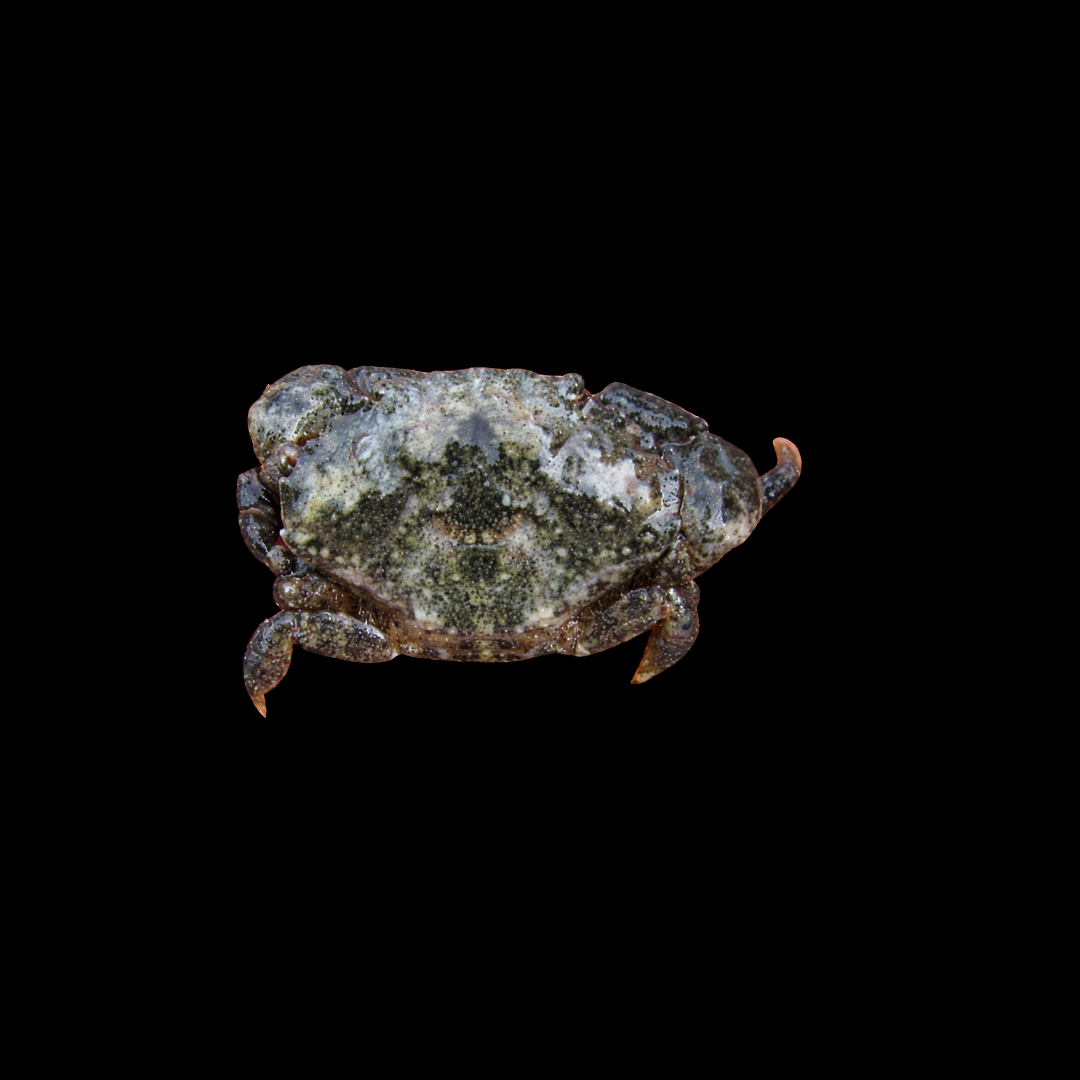
オウギガニは、磯の石の下や岩の隙間に暮らす小型の海水性のカニです。横に広い扇形の甲羅、甲羅の表面を区切る溝、黒褐色のハサミの先端が特徴で、左右のハサミの大きさが異なる個体も見られます。潮だまりで石をそっと持ち上げると、脚を縮めてじっとしている姿に出会うことがあります。水槽では、岩陰から出て餌をハサミで扱う様子や、脱皮による成長が観察の楽しみになります。ただし、小魚や貝、ほかの甲殻類を傷つけるおそれがあるため、単独飼育を基本にすると安心です。 Leptodius affinis is a small marine crab that lives beneath stones and in rocky crevices. It has a broad, fan-shaped carapace divided by grooves, with dark brown or black claw tips. Its claws may differ in size. Gently lifting a stone in a tide pool may reveal a crab sitting still with its legs tucked in. In an aquarium, watching it emerge from shelter, handle food, and grow through molting can be rewarding. A dedicated aquarium is the safer starting point because it may injure small fish, mollusks, and other crustaceans.
基本情報 / Basic Information
| 学名 / Scientific Name | Leptodius affinis (De Haan, 1835) |
|---|---|
| 通称 / Common Name | オウギガニ。「磯ガニ」「岩ガニ」という呼び名にも含まれることがありますが、これらは複数の種類を指す総称です。Ougi-gani in Japanese. It may be included under Japanese names meaning “shore crab” or “rock crab,” but these terms cover multiple species. |
| 分類 / Family | 節足動物門・軟甲綱・十脚目・短尾下目・オウギガニ科・オウギガニ属。Phylum Arthropoda; class Malacostraca; order Decapoda; infraorder Brachyura; family Xanthidae; genus Leptodius. |
| 英名 / English Name | 種を確実に示す場合は、学名の Leptodius affinis を用います。英語の一般名は資料によって扱いが異なります。Use Leptodius affinis when an unambiguous species name is needed. English common-name usage varies among sources. |
| 分布 / Distribution | 東部インド洋から西太平洋。日本では房総半島以南の沿岸などに見られます。潮間帯から浅い海の岩礁に生息し、転石の下、潮だまり、サンゴ礁の隙間などを利用します。Eastern Indian Ocean and western Pacific. In Japan, it occurs along coasts including the Boso Peninsula and areas farther south. It occupies intertidal and shallow rocky habitats, including spaces beneath stones, tide pools, and reef crevices. |
| 最大体長 / Max Size | 甲幅約3cmが大きさの目安です。これは厳密な最大値ではありません。カニの大きさは、脚やハサミを含めず、甲羅の幅で示しています。Approximately 3 cm in carapace width is a useful size guide, rather than a confirmed maximum. This measurement refers to the width of the shell and excludes the legs and claws. |
| 寿命 / Lifespan | 本種の寿命について、確かな年数を示せる情報はありません。採集された個体は年齢も分からないため、飼育できる期間を一律には示せません。A reliable lifespan figure cannot be given for this species. The age of collected animals is usually unknown, so a fixed expected period in captivity cannot be specified. |
飼育環境 / Aquarium Environment
| 水槽サイズ / Tank Size | 1匹を飼う場合、60cm規格水槽(約60L)は、水質の安定と隠れ家の配置を考えた余裕のある選択肢です。本種の最低必要サイズとして確立された数値ではありません。底面には隠れ家と給餌場所を確保し、フタは通気を保ちながら脱走できる隙間を塞ぎます。For one crab, a standard Japanese 60 cm aquarium, holding roughly 60 L, offers generous space for shelters and helps maintain stable water conditions. This is not an established minimum requirement for the species. Provide shelter and a feeding area on the bottom, and close escape gaps while maintaining ventilation. |
|---|---|
| 水温 / Temperature | 23~26℃は、暖かい海域の生物を飼う海水水槽での管理目安です。本種固有の最適水温として確認された範囲ではないため、採集地や入荷時の水温も確認して調整します。特に温帯の海で採集された個体は、急に高い水温へ移さず、温度変化を緩やかにしてください。A range of 23–26°C is a general aquarium guideline for warm-water marine animals, not a confirmed optimum for this species. Consider the collection location and arrival temperature when making adjustments. In particular, avoid abruptly warming animals collected in temperate waters. |
| 水質 / Water Quality | 海水で飼育します。一般的な海水水槽の管理目安は、塩分約33~35‰、pH8.0~8.3です。比重で管理する場合は、25℃付近でおおむね1.024~1.026を目安とし、測定器の仕様に従ってください。生物ろ過を十分に立ち上げ、アンモニアと亜硝酸が検出されない状態を維持します。換水は1~2週間に10~20%程度を出発点に、水質の測定結果や汚れ方に合わせて調整します。蒸発した分は淡水で補います。Keep the crab in seawater. General marine aquarium targets are approximately 33–35 ppt salinity and pH 8.0–8.3. When using specific gravity, roughly 1.024–1.026 near 25°C is a guide; follow the measuring instrument’s specifications. Establish biological filtration and maintain undetectable ammonia and nitrite. Water changes of around 10–20% every one to two weeks provide a starting point, with adjustments based on water tests and waste accumulation. Replace evaporated water with freshwater. |
| レイアウト / Layout | 海水水槽用の岩やライブロックで、体全体を隠せる暗い隙間を設けます。岩は砂が動いても崩れないよう、底面に安定して設置してください。必要に応じて海水水槽用の固定材を使います。底砂は清掃しやすい厚さにし、隠れ家の周囲にも穏やかな水流が届くようにします。照明を当てる場所だけでなく、日中も暗い場所を残すことが大切です。Use marine-safe rocks or live rock to create dark crevices large enough for the entire crab. Position rocks securely so that movement of the sand cannot destabilize them, using marine aquarium fixing materials when necessary. Keep the substrate easy to clean and provide gentle circulation around shelters. Retain shaded areas even while the aquarium lights are on. |
| 注意点 / Precautions | コードや配管が脱走の足場にならないか、フタと配線口を点検します。移動には容器などを使い、手でつかんで挟まれないようにしてください。銅を含む魚病薬は甲殻類に有害となるため、カニのいる水槽では使用しません。ヨウ素、ストロンチウム、カルシウム添加剤の定期投入を、本種の飼育に必須とする根拠は確認されていません。適切に調製した人工海水と換水を基本とし、測定せずに添加剤を使い続けないでください。飼育個体は食用にしません。Check the lid and cable openings for escape routes involving cables or plumbing. Use a container to move the crab rather than grasping it by hand. Copper-based fish medications can harm crustaceans and should not be used in its aquarium. Routine iodine, strontium, or calcium dosing has not been established as essential for this species. Base care on correctly prepared marine saltwater and water changes, and avoid continued supplementation without measurements. Do not eat the captive animal. |
餌と給餌 / Feeding
| 餌の種類 / Diet | 雑食性で、動物質の餌や藻類などを利用します。飼育下では、海水性甲殻類向けの沈下性配合飼料を基本に、無調味のエビ、魚、アサリなどを少量ずつ与えます。藻類を含む飼料も選択肢になります。ひとつの餌だけに偏らず、実際に食べているかを確認してください。This crab is omnivorous, using animal food and algae. In captivity, sinking food formulated for marine crustaceans can form the basis of feeding, with small portions of unseasoned shrimp, fish, or clam. Foods containing algae are another option. Offer variety and check that the crab is actually eating. |
|---|---|
| 給餌のポイント / Feeding Tips | 夕方から消灯前に、隠れ家の近くへ少量を置くと食べる様子を確認しやすくなります。量と頻度は、食べ残しや活動状況を見ながら調整してください。傷みやすい切り身や貝肉の食べ残しは回収します。脱皮前後には食欲が落ちることがあるため、餌を追加し続けず、水質と個体の様子を確認して静かに見守ります。Place a small portion near the shelter in the evening or shortly before lights out to make feeding easier to observe. Adjust quantity and frequency according to leftovers and activity. Remove uneaten perishable seafood. Appetite may decline around molting; check water conditions and the animal’s condition rather than repeatedly adding food. |
性格と混泳 / Temperament and Tank Mates
| 性格 / Temperament | 岩陰に隠れることが多く、暗い時間帯に活動を観察しやすいカニです。刺激を受けると脚を縮めて静止したり、ハサミで身を守ったりします。普段は動きが少なくても、小さな生き物を捕らえるおそれがあります。複数飼育では、隠れ家や餌をめぐる争いに加え、脱皮直後の個体が襲われる危険にも注意が必要です。This crab often stays in rocky shelters and is easier to observe after dark. When disturbed, it may tuck in its legs and remain still or defend itself with its claws. Limited activity does not rule out the capture of small animals. Keeping several together introduces competition for shelters and food, along with the risk of attacks on freshly molted individuals. |
|---|---|
| 混泳の相性 / Compatibility | 単独飼育を基本とし、同じ水槽で管理する場合は、ほかの生物と接触できない隔離区画を設けます。小型ハゼ、タツノオトシゴ、エビ、貝類などは負傷や捕食の対象になり得ます。クマノミ、ハギ、ヤッコなども、よく泳ぐという理由だけで安全とは判断できません。一方、ウツボ、モンガラカワハギ、大型フグなどは、カニを捕食するおそれがあります。サンゴ水槽で見つけたカニも、種類や行動を確認するまでは、ほかの生物に影響しないと決めつけないでください。Use a dedicated aquarium as the default, or provide a separate compartment that prevents contact with other animals. Small gobies, seahorses, shrimp, and mollusks may be injured or eaten. Active swimming alone does not establish that clownfish, tangs, or angelfish are safe companions. Conversely, moray eels, triggerfish, and large puffers may eat the crab. Do not assume that a crab discovered in a reef aquarium is harmless before identifying it and observing its behavior. |
病気と対策 / Diseases and Prevention
| かかりやすい病気 / Common Diseases | 本種について、かかりやすい病気やその発生頻度を示す十分な情報はありません。飼育上は、脱皮が途中で止まる状態、争いによる脚やハサミの損傷、水質悪化や酸素不足による衰弱に注意します。殻の変色や傷が広がる場合も、見た目だけで原因を断定せず、水質と個体の状態を確認してください。脚を縮めた静止姿勢や抜け殻を、死亡と取り違えないようにします。There is insufficient information to identify common diseases or their frequency specifically in this species. In captivity, watch for incomplete molts, injuries to legs or claws, and weakness associated with poor water quality or insufficient oxygen. If shell discoloration or lesions spread, check water conditions and the animal rather than diagnosing the cause from appearance alone. Defensive immobility and empty molts should not be mistaken for death. |
|---|---|
| 対策と予防 / Prevention | 水温と塩分の急変を避け、十分な酸素、生物ろ過、偏りの少ない給餌、落ち着ける隠れ家を維持します。脱皮中に古い殻を引っ張って外そうとせず、脱皮直後も触ったり移動させたりしないでください。抜け殻はカニが食べることがあるため、水質に問題がなければしばらく残して構いません。汚れがたまる場合は回収します。脱皮の問題を微量元素の不足と決めつけず、まず水質や飼育環境を確認することが大切です。Maintain stable temperature and salinity, adequate oxygenation, biological filtration, varied feeding, and secure shelter. Do not pull away the old shell during a molt, and avoid handling or moving the crab immediately afterward. The crab may eat its shed shell, so it can remain temporarily if water conditions permit; remove it if it becomes fouled. Check water conditions and husbandry before attributing molting problems to trace-element deficiency. |
増やし方(繁殖) / Breeding
| 雌雄の判別 / Sexing | 腹面に折り畳まれた腹部の形で見分けます。成熟したオスの腹部は細く、メスは卵を抱えるため幅広くなります。ハサミの大きさだけでは確実に判別できません。確認するときも、腹部を無理に開いたり、長時間裏返したりしないでください。Examine the abdomen folded beneath the body. Mature males have a narrow abdomen, while females have a broader abdomen for carrying eggs. Claw size alone is not a reliable indicator. Avoid forcing the abdomen open or keeping the animal overturned for prolonged examination. |
|---|---|
| 繁殖形態 / Reproduction | 卵生で、メスが腹部の腹肢に卵を付けて保護します。孵化後は水中を浮遊するゾエア幼生となり、メガロパ期を経て、海底で暮らす稚ガニへ移行します。つまり、孵化した直後から親と同じように底で暮らすわけではなく、幼生の段階に合わせた管理が必要です。繁殖時期については、近縁種や旧学名による海外の記録を、日本の本種にもそのまま当てはめることはできません。Females carry and protect eggs on their abdominal pleopods. After hatching, the young become planktonic zoeal larvae, pass through a megalopal stage, and then become bottom-dwelling juvenile crabs. They therefore need care appropriate to the larval stages rather than immediately living and feeding like their parents. Overseas breeding records involving related species or older scientific names should not automatically be applied to Japanese populations. |
| 繁殖のポイント / Breeding Tips | 家庭水槽で増やすには、孵化後の幼生を育てることが課題になります。抱卵したメスを得ても、稚ガニまで育つとは限りません。幼生を育てる場合は、成体とは別の容器で、清浄な海水、穏やかな通気、発育段階に合う微小な餌を用意する必要があります。ただし、本種の具体的な給餌量や育成条件を、家庭向けの確実な方法として示せる情報はありません。まずは成体の飼育環境を安定させることを優先してください。Raising the larvae after hatching is a key challenge in home breeding. Obtaining an egg-bearing female does not ensure that juveniles will develop. Larval rearing requires a separate vessel, clean seawater, gentle aeration, and small foods suited to each developmental stage. Specific feeding quantities and rearing conditions cannot be presented as a dependable home protocol for this species. Stable adult care should take priority. |
雑学と豆知識 / Trivia and Fun Facts
| 1. 江戸時代から続く学名の物語 / 1. A Name with Roots in Nineteenth-Century Japan | 学名の後ろにある「De Haan, 1835」は、デ・ハーンが1835年に本種を記載したことを示します。当初の名前は Cancer (Xantho) affinis で、シーボルトの日本の自然史研究と結びつく『日本動物誌』に登場しました。その後、よく似た Leptodius exaratus と同じ種類として扱われたため、古い日本の図鑑にはその学名が残っています。2013年の再検討では、オスの生殖肢など、標本の細かな形態を比較し、東部インド洋・西太平洋の個体群を Leptodius affinis として区別しました。日本で見られるオウギガニの学名が変わったのは、似た姿のカニを詳しく調べ直し、別の種類として整理したためです。“De Haan, 1835” identifies the author and year of the original description. The species appeared as Cancer (Xantho) affinis in Fauna Japonica, associated with Siebold’s natural-history work in Japan. It was later treated as the same species as Leptodius exaratus, a name retained in older Japanese guides. A 2013 reassessment compared detailed morphology, including male gonopods, and distinguished eastern Indian Ocean and western Pacific populations as Leptodius affinis. The change reflects closer examination of similar-looking crabs and recognition of separate species. |
|---|---|
| 2. 小石のように動かなくなる姿 / 2. Becoming Still Like a Pebble | オウギガニは、刺激を受けると脚とハサミを体に寄せ、動かなくなることがあります。「死んだふり」と紹介される行動ですが、その姿だけで捕食者への効果や仕組みまで断定することはできません。脚を縮めると体がコンパクトになり、普段の姿とは違って小石のように見えます。観察するときは繰り返し刺激を与えず、自然に動き始めるのを待つと、隠れ家へ戻る様子なども見守れます。When disturbed, this crab may draw its legs and claws close to its body and remain motionless. This is often described as playing dead, but the posture alone does not establish its mechanism or effectiveness against predators. With its appendages tucked in, the crab looks compact and pebble-like. Avoid repeated disturbance and wait for it to resume moving naturally. |
| 3. 岩陰で暮らす雑食者 / 3. An Omnivore Among the Rocks | 磯の岩の隙間には、藻類、有機物のかけら、小さな動物などがあります。オウギガニは、こうした食物を利用する雑食者として沿岸の食物網に加わっています。ただし、水槽で残餌を食べても、掃除が不要になるわけではありません。カニ自身も排泄し、餌を岩陰へ持ち込むことがあります。給餌場所を決めておくと、食べた量と残った餌を確認しやすくなり、日々の観察にも役立ちます。Rocky crevices contain algae, organic fragments, and small animals. By using these resources, the crab participates in coastal food webs. Eating leftovers in an aquarium does not remove the need for cleaning, however. The crab produces waste and may carry food into its shelter. A consistent feeding spot helps the keeper monitor consumption and leftovers. |
| 4. 食用の安全性は外見では分からない / 4. Appearance Cannot Establish Food Safety | オウギガニ科には、麻痺性貝毒やテトロドトキシンを持つ種類が知られています。この事実だけで本種のすべての個体が有毒とは言えませんが、本種が食用として安全だと判断する根拠にもなりません。また、ハサミの先端が黒いかどうかで毒の有無を見分けることはできません。観賞用・釣り餌用の個体や、磯で見つけた種類の分からないカニは食べず、観察を楽しんでください。Some xanthid crabs contain paralytic shellfish toxins or tetrodotoxin. This does not establish that every individual of Leptodius affinis is toxic, but it also provides no basis for treating the species as safe to eat. Dark claw tips cannot be used to determine whether a crab contains toxins. Crabs obtained for aquaria or bait, and unidentified crabs found on rocky shores, should be observed rather than eaten. |
| 5. ライブロックと一緒にやってくるカニ / 5. A Crab Arriving with Live Rock | 小型の岩礁性のカニは、ライブロックの穴に隠れたまま水槽へ入ることがあります。日中は姿を見せず、夜になって初めて見つかることもあります。ただし、ライブロックから出てきたカニが、すべてオウギガニとは限りません。体色や黒いハサミだけで種類を決めず、甲羅や脚の形も確認する必要があります。国内で釣り餌として扱われる「磯ガニ」「岩ガニ」も複数の種類を含む呼び名なので、販売名だけでは種を特定できません。Small rocky-shore crabs may enter aquaria while hidden in live-rock cavities and remain unnoticed until they appear at night. Not every crab discovered this way is Leptodius affinis. Identification requires examination of the carapace and appendages, rather than color or dark claw tips alone. Japanese bait names meaning “shore crab” or “rock crab” also cover multiple species and cannot identify a species by themselves. |
| 6. 脱皮は成長と再生の節目 / 6. Molting Connects Growth and Regeneration | カニは硬い外骨格に包まれているため、成長するときに古い殻を脱ぎます。失った脚も、脱皮を重ねる中で再生することがあります。脱皮直後の新しい殻は柔らかく、この時期は傷つきやすくなります。飼育者ができる手助けは、水質を安定させ、邪魔されずに過ごせる隠れ家を用意することです。殻が硬くなるまで静かに見守ることが、次の成長を支えます。A crab grows by shedding its rigid external skeleton. Lost legs may also regenerate over successive molts. Immediately afterward, the new shell is soft and the animal is vulnerable to injury. Stable water conditions and an undisturbed shelter are useful forms of support. Allowing the crab to remain quiet while its shell hardens helps it through this stage of growth. |
まとめ / Conclusion
オウギガニは、岩陰から姿を現し、ハサミで餌を扱い、脱皮を重ねて成長する小さな磯の住人です。安定した海水環境と落ち着ける隠れ家を整えると、磯では見過ごしがちな日々の暮らしをじっくり観察できます。 Leptodius affinis is a small inhabitant of rocky shores that emerges from shelter, handles food with its claws, and grows through successive molts. Stable seawater conditions and secure hiding places allow a close look at everyday behaviors that are easily missed on the coast.
ほかの生き物を傷つけるおそれがあるため、飼育は単独を基本にします。食べる様子や岩陰で過ごす姿を静かに見守るうちに、身近なカニの暮らしが少しずつ分かってきます。 A dedicated aquarium is the starting point because the crab may injure other animals. Quietly observing its feeding and sheltering gradually reveals the life of this familiar coastal crab.

気になる道具や飼い方を見つけてみませんか?
 アイのアクアグッズ案内エーハイムはおもちゃから始まった? 小さな噴水から水槽へ、アイとコタロウの探訪道具の特徴や使い方、選ぶときのポイントをアイが紹介します。記事はコチラ →
 アイのアクアグッズ案内ダニオの仲間に合わせる飼育用品|ゼブラダニオから超小型種まで水槽・ろ過・餌を選ぶ道具の特徴や使い方、選ぶときのポイントをアイが紹介します。記事はコチラ →
 アイのアクアグッズ案内エンゼルフィッシュの飼育用品|高さのある水槽・ろ過・水草・餌の選び方道具の特徴や使い方、選ぶときのポイントをアイが紹介します。記事はコチラ →
 アイのアクアグッズ案内お魚を撮ったのに、ボクが写ってる! スマホで楽しむ水槽撮影と便利な道具道具の特徴や使い方、選ぶときのポイントをアイが紹介します。記事はコチラ →
さまざまな飼育テーマをご紹介。リンク先の記事には広告・商品紹介が含まれます。
案内・紹介記事一覧へ →分布マップ
オウギガニ(Leptodius affinis)は、東部インド洋から西太平洋に分布します。日本では房総半島以南の沿岸などに見られ、潮間帯から浅い海の岩礁に生息します。
地図は分布地域を見渡すための概略表示です。表示範囲内のすべての場所に生息することを示すものではなく、正確な分布境界も表していません。マーカーは表示用の代表地点(北緯20°・東経130°)で、実際の採集地点や生息確認地点ではありません。Google Earthのリンクも同じ代表地点を中心に開きます。
参考文献
-
Lee, S.-K., Mendoza, J. C. E., Ng, P. K. L. & Kim, W.(2013)On the identity of the Indo-West Pacific littoral xanthid crab, Leptodius exaratus (H. Milne Edwards, 1834) (Crustacea: Decapoda: Brachyura: Xanthidae).
The Raffles Bulletin of Zoology, 61(1), 189–204。オウギガニの分類、学名の変遷、形態による近縁種との区別、東部インド洋から西太平洋の分布を扱う分類学論文。
-
千葉県立中央博物館分館 海の博物館「オウギガニ」
甲羅の特徴、甲幅約3cm、房総半島以南の分布、潮だまりの石の下で見られることを紹介する博物館資料。掲載学名は、従来日本のオウギガニに用いられていた Leptodius exaratus。
-
佐波征機(1976)「オウギガニ Leptodius exaratus H. Milne-Edwards の後期発生について」
甲殻類の研究、第7巻、57–67頁・図版。DOI: 10.18353/rcustacea.7.0_57。三重県紀伊長島で採集した抱卵個体から、ゾエア期とメガロパ期を観察した幼生育成研究。日本のオウギガニを旧学名で扱った資料として、繁殖と幼生発育の背景を支える。
-
Ornamental Aquatic Trade Association(OATA)How to look after marine crustaceans
獣医専門家の確認を受けた、業界団体による海水性甲殻類の飼育資料。一般的な水質管理、ろ過、隠れ家、給餌、混泳、脱皮時の保護、健康状態の観察、浮遊幼生の育成を扱う。本種固有の最適飼育条件ではなく、海水性甲殻類に共通する管理の参考資料。
-
Yanong, R. P. E. — Use of Copper in Marine Aquaculture and Aquarium Systems
University of Florida, IFAS Extension, FA165。海水水槽で使われる銅の作用と、無脊椎動物への毒性を解説する大学の普及資料。甲殻類のいる水槽で銅を含む魚病薬を使用しないという注意点を支える。
-
厚生労働省「自然毒のリスクプロファイル:二枚貝:麻痺性貝毒」
ウモレオウギガニの食中毒事例や、スベスベマンジュウガニなどからの麻痺性貝毒の検出を記載する公的資料。オウギガニ科の一部に毒を持つ種類があることを示す資料であり、Leptodius affinis 自体の毒性を証明するものではない。




コメント