

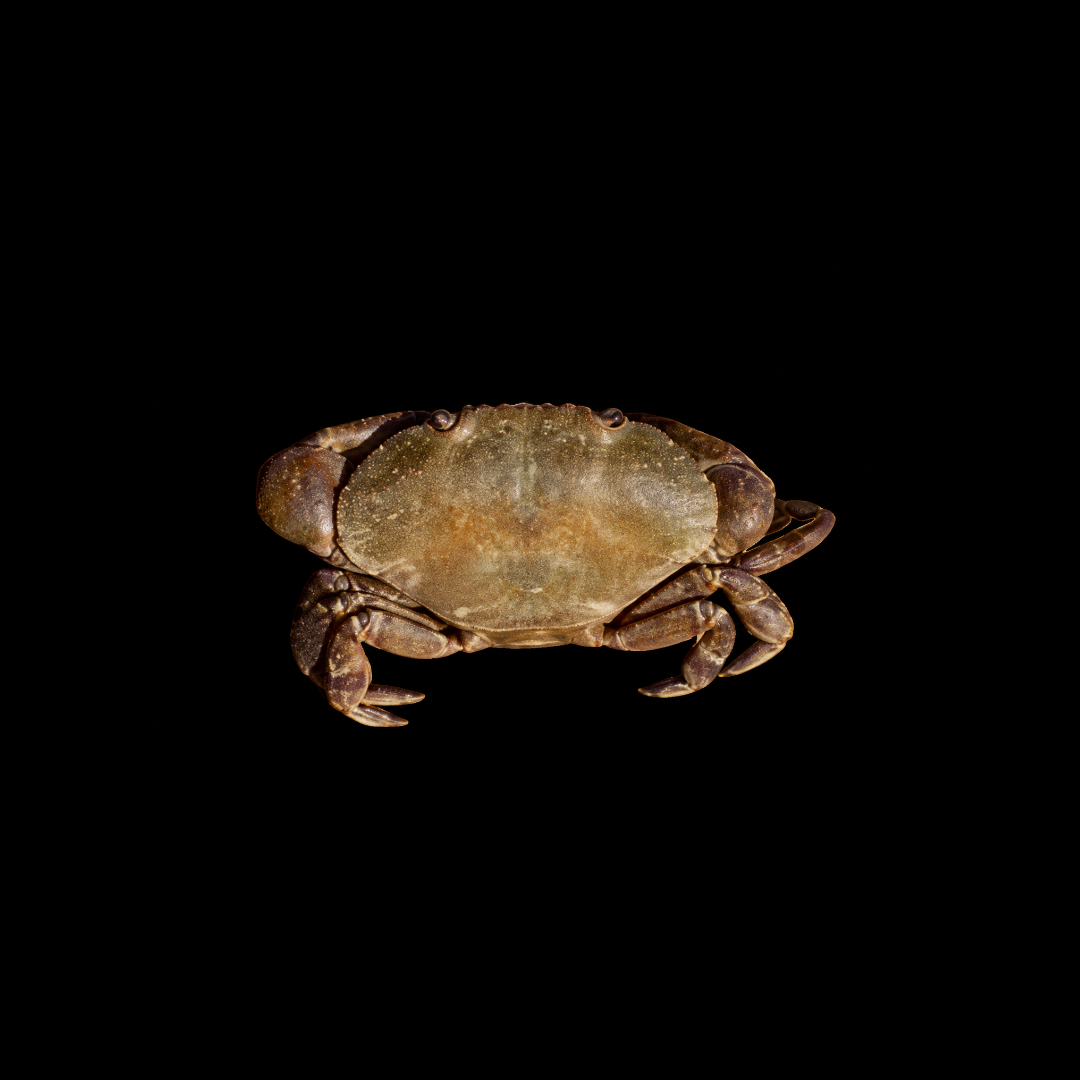
解説 / Description
セビロオウギガニは、暖かい海の潮間帯で、海岸に転がる石の下や岩の隙間に暮らす海産のカニです。横に広く扁平な甲と、がっしりしたハサミを持ち、甲やハサミの表面は肉眼では比較的滑らかに見えます。華やかな色彩よりも、岩陰に身を収める姿や、ハサミで餌を扱う動きをじっくり観察する楽しみがあります。飼育では、安定した海水環境と落ち着ける隠れ家を優先し、小魚やエビと同居させる「お掃除役」ではなく、単独で飼育する対象として考えるのが慎重な選択です。本種の長期飼育に関する情報は限られているため、一般的な海産甲殻類の管理を参考にしながら、食欲や脱皮、活動の変化に合わせて飼育方法を調整します。 Epixanthus frontalis is a marine crab that lives beneath loose stones and in rocky crevices in the intertidal zone of warm coastal waters. It has a broad, flattened carapace and robust claws, with surfaces that appear relatively smooth to the naked eye. Its appeal lies less in bright coloration than in watching it shelter among rocks and manipulate food with its claws. In captivity, stable seawater and secure hiding places should take priority. Keeping it alone is a more cautious approach than introducing it as a cleanup animal alongside small fish or shrimp. Information on its long-term captive care is limited, so general marine crustacean husbandry should serve as a starting point, with adjustments guided by changes in feeding, molting and activity.
基本情報 / Basic Information
| 学名 / Scientific Name | Epixanthus frontalis (H. Milne Edwards, 1834) |
|---|---|
| 通称 / Common Name | セビロオウギガニ。「オウギガニの仲間」などの大まかな呼び名だけでは、似た種類との区別はできません。 Sebiro-ougigani is its Japanese name. A broad label for a group of similar-looking crabs is not sufficient to identify this species. |
| 分類 / Family | 節足動物門・甲殻亜門・軟甲綱・十脚目・短尾下目・イワオウギガニ上科(Eriphioidea)・イソオウギガニ科(Oziidae)・セビロオウギガニ属(Epixanthus)。古い文献では、オウギガニ科に含められている場合があります。 Phylum Arthropoda; subphylum Crustacea; class Malacostraca; order Decapoda; infraorder Brachyura; superfamily Eriphioidea; family Oziidae; genus Epixanthus. Older publications may place it in the family Xanthidae. |
| 英名 / English Name | 広く定着した英名は確認できていません。海外の情報との照合や問い合わせには、学名の Epixanthus frontalis を用います。 A widely established English common name has not been confirmed. Use the scientific name Epixanthus frontalis when consulting overseas information or making international enquiries. |
| 分布 / Distribution | 紅海や東アフリカ沿岸から、インド洋、西太平洋にかけての暖かい沿岸域に分布します。日本では南西諸島や小笠原諸島で記録されています。潮間帯の転石下や岩の隙間など、身を隠せる場所を利用します。 Its range extends from the Red Sea and eastern Africa through the Indian Ocean to warm coastal waters of the western Pacific. Japanese records include the Ryukyu and Ogasawara islands. It occupies sheltered places such as the undersides of loose stones and rocky crevices in the intertidal zone. |
| 最大体長 / Max Size | 最大サイズを示す十分な情報はありません。インドのゴアで行われた研究では、甲幅約1.9〜3.8cmの標本が調べられていますが、これは調査された個体の範囲であり、成長の上限ではありません。大きさを確認する際は、脚を広げた幅と、甲の横幅を測る「甲幅」を区別してください。 Information is insufficient to establish a species-wide maximum size. A study from Goa, India, examined specimens approximately 1.9–3.8 cm in carapace width, but this is the range of the sampled animals, not a growth limit. Distinguish carapace width, measured across the shell, from the span across the extended legs. |
| 寿命 / Lifespan | 野外での寿命や飼育下での平均寿命について、確かな目安となる情報は不足しています。採集個体では年齢が分からないことも多く、体の大きさだけで残りの寿命を判断することはできません。 Reliable estimates of wild longevity and average captive lifespan are insufficient. Wild-collected animals are often of unknown age, and body size alone cannot establish their remaining lifespan. |
飼育環境 / Aquarium Environment
| 水槽サイズ / Tank Size | 甲幅数cmの個体を1匹で飼育する設計例としては、45cm規格水槽(幅45×奥行30×高さ30cm、寸法から計算した容積は約40L)が挙げられます。水量に余裕を持たせるなら、60cm規格水槽(幅60×奥行30×高さ36cm、同約65L)も選択肢です。実際の水量は、ガラスの厚さ、水位、岩や底砂の量によって少なくなります。いずれも本種で検証された最低水槽サイズではなく、隠れ家と移動空間を確保するための設計上の目安です。個体の大きさや成長に応じて見直してください。 For one animal measuring a few centimetres across the carapace, a possible setup is a Japanese-standard 45 cm aquarium measuring 45 × 30 × 30 cm, with a volume of approximately 40 L calculated from those dimensions. A standard 60 cm aquarium measuring 60 × 30 × 36 cm, approximately 65 L by the same calculation, offers more water-volume capacity. Actual water volume will be lower because of glass thickness, water level, rocks and substrate. These are layout examples intended to provide shelter and movement space, not experimentally established minimum tank sizes for this species. Reassess the enclosure as the animal grows. |
|---|---|
| 水温 / Temperature | 本種の長期飼育に適した水温範囲は、十分に検証されていません。導入時には採集地と入荷前の管理水温を確認し、急な温度差を避けます。飼育中は温度計で実測し、直射日光による過熱や大きな温度変動を防いでください。低温で到着した個体も、一律の昇温速度を当てはめるのではなく、個体と輸送水の状態を踏まえて、取り扱い店に導入方法を確認しましょう。 A temperature range suitable for long-term care of this species has not been adequately established. Before introduction, confirm the collection locality and previous holding temperature, and avoid abrupt temperature differences. Measure the temperature during routine care and prevent overheating from direct sunlight or large fluctuations. For an animal arriving cold, discuss acclimation with the supplier in light of both the animal’s condition and the transport water, rather than applying a universal rate of warming. |
| 水質 / Water Quality | 海水で飼育し、塩分とpHを定期的に測って、急な変化を避けます。比重は塩分濃度そのものではなく、測定温度や器具の基準にも左右されるため、海水用の測定器を説明書に従って使用してください。十分に立ち上がった生物濾過を用い、アンモニアや亜硝酸が検出されない状態を目指すとともに、通気や水面の動きで酸素を確保します。プロテインスキマーは有機物除去の補助であり、生物濾過の代わりにはなりません。蒸発分は適切に処理した淡水で補い、換水には水槽と温度・塩分を合わせた海水を使用します。サンゴ砂だけにpHの維持を任せず、実測値を確認することが大切です。 Keep the crab in seawater, monitor salinity and pH regularly, and avoid abrupt changes. Specific gravity is not identical to salinity and is affected by measurement temperature and instrument reference conditions, so use suitable marine testing equipment according to its instructions. Provide established biological filtration, aim for undetectable ammonia and nitrite, and maintain oxygen through aeration and surface movement. A protein skimmer assists with organic-waste removal but does not replace biological filtration. Replace evaporation with appropriately treated freshwater; use seawater matched to the aquarium’s temperature and salinity for water changes. Check pH rather than assuming that coral sand alone will keep it stable. |
| レイアウト / Layout | 体全体を隠せる岩陰や、水槽用の丈夫なシェルターを複数設けます。底床は小石や粗めの砂などを薄く敷き、食べ残しを回収しやすい構成にすると管理しやすくなります。重い岩を底砂の上に不安定に積み重ねず、水槽用の固定材などを使って、掘られたり押されたりしても崩れないようにしてください。水面付近に足場を設ける場合は、水中へ容易に戻れる構造にします。照明は観察に必要な程度にとどめ、点灯中も暗い隠れ場所を残します。夜間まで照らし続けず、昼夜の区別をつけましょう。 Provide several secure rock crevices or sturdy aquarium shelters large enough to conceal the entire animal. A shallow layer of small pebbles or coarse sand can make leftover food easier to remove. Do not balance heavy rocks on loose substrate; use suitable aquarium materials to secure them against digging or pushing. Any ledge near the surface should allow easy access back into the water. Use only as much lighting as needed for observation, preserve shaded retreats while the lights are on, and maintain a day–night cycle rather than illuminating the enclosure continuously. |
| 注意点 / Precautions | 隙間の少ない蓋を設置し、配管やコードを伝った脱走にも備えます。移動には容器を使い、ハサミで挟まれないように注意してください。脚やハサミをつかんで、隠れ場所から無理に引き出してはいけません。脱皮直後は体が軟らかく、接触や攻撃に弱い時期なので、隠れ家を動かさずに見守ります。また、潮間帯に暮らすことは、酸欠や汚れた輸送水に強いことの保証にはなりません。小容器での長期保管や、安全性を確かめていない少水量での輸送は避けてください。 Fit a secure lid and consider escape routes along pipes and cables. Use a container when moving the crab and take care to avoid being pinched. Never pull it from a refuge by a leg or claw. Newly molted animals have a soft body and are vulnerable to contact and attack, so leave their shelter undisturbed. Intertidal life does not guarantee tolerance of oxygen depletion or fouled transport water. Avoid prolonged storage in tiny containers and low-water shipping methods whose safety has not been established. |
餌と給餌 / Feeding
| 餌の種類 / Diet | 飼育時の餌の候補は、無調味のエビ、アサリなどの貝の身、イカ、冷凍オキアミなどです。食べやすい大きさに切り、単一の餌に偏らないように組み合わせます。受け付ける個体には、海産甲殻類に使用できる沈下性の配合飼料も取り入れられます。これらは肉食傾向のある海産カニの管理を参考にした給餌案で、本種に必要な栄養をすべて満たす組み合わせとして検証されたものではありません。水槽内の残餌や藻類だけに頼らず、与えた餌を実際に食べていることを確認してください。 Possible captive foods include unseasoned shrimp, clam or other mollusc flesh, squid and frozen krill. Cut them into manageable pieces and vary the foods rather than relying on a single ingredient. Animals that accept it may also receive a sinking formulated feed suitable for marine crustaceans. These suggestions draw on the care of carnivorous marine crabs; they are not a diet demonstrated to meet all of this species’ nutritional requirements. Do not rely solely on aquarium scraps or algae, and verify that the animal actually consumes the food offered. |
|---|---|
| 給餌のポイント / Feeding Tips | まずは消灯前後の落ち着いた時間に少量を与え、反応を観察します。毎日決まった量を入れるのではなく、食欲、食べ残し、脱皮前後の状態を見ながら、量と間隔を調整してください。餌皿や決まった給餌場所を使うと、残餌の有無を確認しやすくなります。食べ残しは放置せず、摂餌が終わったら早めに回収します。脱皮前後に食欲が落ちたときも、無理に食べさせたり餌を追加し続けたりせず、水質と隠れ家の安全を優先しましょう。 Start with a small portion during a quiet period around lights-out and observe the response. Adjust the amount and interval according to appetite, leftovers and the molting cycle rather than adding a fixed amount every day. A feeding dish or consistent feeding location makes uneaten food easier to check. Remove leftovers promptly once feeding has finished. If appetite declines around molting, do not force-feed or keep adding food; prioritize clean water and a safe, undisturbed refuge. |
性格と混泳 / Temperament and Tank Mates
| 性格 / Temperament | 石の下などに身を隠して暮らすため、水槽でも姿が見えない時間を無理に減らそうとしないことが大切です。野外では、石を取り除かれて露出した際に、隠れ場所へ逃げ込むほか、その場で静止する行動も記録されています。動かないことや、導入直後におとなしいことだけで、混泳相手に安全だとは判断できません。観察のために何度も隠れ家を動かすより、落ち着いて姿を現せる環境を整えましょう。 This crab lives in concealed places such as the undersides of stones, so it should not be repeatedly disturbed simply to keep it visible in an aquarium. Field observations record both retreating into shelter and remaining motionless when exposed by the removal of a stone. Stillness or apparent calm after introduction does not establish that it is safe with tank mates. Provide conditions in which it can emerge without disturbance rather than repeatedly moving its refuge. |
|---|---|
| 混泳の相性 / Compatibility | 捕食や負傷のリスクを避けるため、単独飼育を基本に考えます。小魚、エビ、小型の貝などとは分け、同種同士でも、隠れ家の取り合いや脱皮時の接触に注意が必要です。中型魚や大型ヤドカリなら安全だと保証できるわけではなく、逆に脱皮中のカニが攻撃される可能性も考慮します。サンゴ水槽にも、ほかの生体に影響を与えないことを前提として導入しないでください。 Individual housing is the more conservative approach to avoiding predation and injury. Separate it from small fish, shrimp and small molluscs. Even animals of the same species may encounter problems over shelter or during molting. Medium-sized fish and large hermit crabs are not guaranteed to be safe companions and may themselves threaten a molting crab. Do not introduce it into a coral aquarium on the assumption that it will have no effect on other inhabitants. |
病気と対策 / Diseases and Prevention
| かかりやすい病気 / Common Diseases | 本種に多い病気や、確立された治療法については十分な情報がありません。一般的な海産甲殻類の管理上の問題として、脱皮不全、脚やハサミの損傷、水質悪化や酸素不足に伴う衰弱などに注意します。食欲低下、動きの鈍さ、体表の変色だけで、特定の感染症と判断することはできません。脱皮前後の変化や、飼育環境の異常も含めて状態を確認する必要があります。 Information on diseases particularly common in this species and validated treatments is insufficient. General marine crustacean concerns include unsuccessful molting, injuries to legs or claws, and deterioration associated with poor water quality or inadequate oxygen. Loss of appetite, reduced movement or surface discoloration alone cannot identify a specific infection. Assess these signs alongside the molting cycle and possible problems in the aquarium environment. |
|---|---|
| 対策と予防 / Prevention | 導入時はほかの生体と分けて観察し、摂餌、欠損、脱皮、水温、塩分、水質検査の結果を記録します。異変があれば、まず水質、通気、温度、機器の動作を確認してください。魚の治療に使われる銅系薬剤は無脊椎動物に有害となるため、カニのいる水槽には使用しません。淡水浴や薬浴、脱皮を促す目的の添加剤も、本種への安全性を確認せずに使わないでください。脱皮中の殻を引っ張るなどの処置は避け、異常が続く場合は、甲殻類の取り扱いに詳しい専門家に相談しましょう。 Observe new arrivals separately and record feeding, missing appendages, molting, temperature, salinity and water-test results. When problems appear, first check water quality, aeration, temperature and equipment operation. Copper medications used for fish can harm invertebrates and must not be used in an aquarium containing the crab. Do not apply freshwater dips, medicated baths or additives intended to stimulate molting without confirming their safety for this species. Avoid pulling at the old exoskeleton during a molt, and seek advice from a professional experienced with crustaceans if abnormalities persist. |
増やし方(繁殖) / Breeding
| 雌雄の判別 / Sexing | 腹側に折り畳まれた腹部や、腹部にある付属肢の形を手掛かりにします。雌は腹肢に卵を付けて抱え、雄には交尾に使う生殖肢があります。抱卵していれば雌と分かりますが、未成熟個体や腹側が見えない写真では、判別が難しいことがあります。体色やハサミの大きさだけで決めつけず、透明な容器の底越しに観察するなど、個体に負担をかけない方法を選びましょう。 The folded abdomen and abdominal appendages provide clues to sex. Females carry eggs on the pleopods, while males possess gonopods used in mating. An egg-bearing animal is female, but immature individuals or photographs that do not show the underside may be difficult to assess. Do not rely on color or claw size alone. Use a low-stress method, such as observing through the base of a transparent container, rather than forcibly turning the animal over. |
|---|---|
| 繁殖形態 / Reproduction | 雌が腹部に卵を抱え、孵化した幼生は「ゾエア」と呼ばれる姿で浮遊生活を送ります。ゾエアは脱皮するたびに体のつくりが変わり、その違いによって発育段階が区別されます。2014年の室内飼育研究では、ゾエアI〜IVの4段階に加えて追加のゾエア段階と、メガロパが記載されています。メガロパは、浮遊生活から底生生活へ移る途中の段階です。本種は親と同じ姿で孵化するのではなく、こうした幼生の段階を経て稚ガニになります。発育段階の数や所要日数を、すべての個体に共通する固定の予定表として扱わないことが大切です。 Females brood eggs beneath the abdomen, and the hatchlings begin a planktonic life as zoeae. Their body structures change with successive molts, allowing different developmental stages to be distinguished. A laboratory study published in 2014 described zoeae I–IV, an additional zoeal stage and a megalopa. The megalopa is a transitional stage between planktonic and bottom-dwelling life. Rather than hatching as miniature adults, these crabs pass through larval forms before becoming juveniles. The number and duration of stages should not be treated as a fixed timetable shared by every individual. |
| 繁殖のポイント / Breeding Tips | 親ガニを飼育することと、孵化した幼生を稚ガニまで育てることは、別の課題です。繁殖を試みる場合は、抱卵雌を落ち着いて管理する設備に加え、幼生を成体や濾過装置から分けて扱う育成容器が必要になります。海産カニ類の幼生飼育では、発育段階に合った大きさの生き餌、穏やかな通気、清浄な海水の維持が重要ですが、本種を家庭水槽で安定して育てる方法については情報が限られています。ワムシや孵化直後のブラインシュリンプなどを試す際も、幼生が実際に捕らえて食べているかを確認します。抱卵や孵化だけでなく、各段階の脱皮、生残、稚ガニへの移行まで記録することが大切です。 Maintaining adults and raising newly hatched larvae to juvenile crabs are separate challenges. A breeding attempt requires suitable facilities for the brooding female and a larval container that separates hatchlings from adults and filtration hazards. General marine crab larviculture depends on appropriately sized live food, gentle aeration and clean seawater, but information on reliably raising this species in a home aquarium is limited. When trying foods such as rotifers or newly hatched brine shrimp, verify that the larvae actually capture and consume them. Record molting, survival and progression to juvenile crabs, not just egg production and hatching. |
雑学と豆知識 / Trivia and Fun Facts
| 1. 学名に残る、1834年からの分類の歴史 / 1. A Taxonomic History Dating to 1834 | セビロオウギガニは、1834年に H. Milne Edwards によって Ozius frontalis として記載されました。その後、Epixanthus 属へ移され、現在の学名になっています。学名の後ろで記載者名と年が括弧に入っているのは、最初に記載された属から所属が変わったことを示す約束です。また、1861年に別種として記載された Epixanthus kotschii は、現在では本種と同じ種を指す「同物異名」として扱われています。一つのカニに複数の学名が見つかる背景には、標本を比較しながら分類が見直されてきた歴史があります。 H. Milne Edwards described this crab in 1834 as Ozius frontalis. Its later transfer to Epixanthus produced the scientific name used today. The parentheses around the author and year indicate that the species is no longer placed in its original genus. Epixanthus kotschii, described as a separate species in 1861, is now treated as a synonym: a different name referring to the same species. The presence of several scientific names reflects a history of classification being revised through comparisons of specimens. |
|---|---|
| 2. 滑らかな甲だけでは、種を決められない / 2. A Smooth Carapace Is Not Enough for Identification | 本種の甲やハサミは肉眼では滑らかに見えますが、細部には小さな凹凸があり、甲の前側縁にも区切れが認められます。カノコセビロガニなどの同属種と見分ける際は、滑らかさだけでなく、甲の輪郭や縁の形、ハサミの表面などを組み合わせて確認します。さらに分類学では、雄の腹側にある交尾のための器官、「第1生殖肢(G1)」の形も手掛かりになります。本種でも電子顕微鏡による観察が行われ、細かな棘などの構造が記録されています。よく似たカニを区別するには、目に見える全体の形と、拡大して初めて分かる特徴の両方が役立つのです。 The carapace and claws appear smooth to the unaided eye, but finer details include small surface irregularities and divisions along the anterolateral margins. Distinguishing this crab from congeners such as Epixanthus dentatus requires a combination of carapace outline, marginal shape and claw surfaces, not smoothness alone. Taxonomists also examine the first male gonopod, or G1, an abdominal structure used in mating. Electron microscopy has documented fine features such as its spines in this species. Both the overall appearance and details visible only under magnification help distinguish similar crabs. |
| 3. ハサミの左右差を観察する楽しみ / 3. Observing Differences Between the Claws | セビロオウギガニのハサミは、左右で大きさや形が異なります。カニ類では、太く頑丈なハサミと細めのハサミが、餌を砕く、つかんで扱うといった異なる動作に使われることがあります。ただし、見た目の左右差だけで、本種全体の「右利き」の割合や、その進化上の理由まで説明することはできません。水槽では、どちらのハサミで餌をつかみ、どのように口へ運ぶのかに注目すると、その個体の使い分けが見えてきます。写真や動画で記録すると、一度の観察では気付きにくい動きも確かめられます。 The claws of Epixanthus frontalis differ in size and shape. In crabs, a robust claw and a narrower claw may be used differently when crushing or handling food. However, visible asymmetry alone cannot establish the proportion of right-handed individuals throughout this species or explain its evolutionary cause. In an aquarium, watching which claw grasps food and how the food is moved toward the mouth can reveal the individual’s use of its claws. Photographs or video can help capture movements that are easy to miss during a single observation. |
| 4. 小さな体に収められた15,993塩基対の情報 / 4. A Mitochondrial Sequence of 15,993 Base Pairs | Epixanthus frontalis の名で、15,993塩基対からなるミトコンドリアゲノムが登録されています。登録番号は NC_039110 で、カニ類の系統関係を比較する研究にも使われています。ミトコンドリアは細胞内にある構造の一つで、核とは別にDNAを持ちます。この配列は体の全遺伝情報ではありませんが、ほかのカニの配列と比べることで、外見だけでは分からない近縁関係を考える手掛かりになります。ただし、この配列を用いた研究では、元の個体の種同定を再確認する必要も指摘されています。DNAを比べる際にも、どの種から得られた情報なのかを確かめ、形態などの証拠と照らし合わせることが大切です。 A mitochondrial genome of 15,993 base pairs is registered under the name Epixanthus frontalis as NC_039110 and has been used in comparative studies of crab relationships. Mitochondria are structures within cells that contain DNA separate from the nuclear DNA. This sequence is not the animal’s entire genetic complement, but comparisons with other crabs can provide clues to relationships that are not apparent from external appearance alone. A study using this sequence has also called for authoritative reassessment of the species identification. Genetic comparisons therefore depend on confirming which species the data represent and checking the results against evidence such as morphology. |
| 5. ライブロックの「同乗者」は、まず正体を確認 / 5. Identify Live-Rock Hitchhikers Before Judging Them | ライブロックの隙間から、導入時には気付かなかったカニが現れることがあります。こうした偶然の「同乗者」を見つけても、暗い体色や黒っぽいハサミだけでセビロオウギガニと判断することはできません。必要に応じて傷付けない方法で別容器へ移し、甲や脚、ハサミの形を確認します。岩の奥に隠れている個体を無理に引き抜くことは避けてください。本種と分かった場合も、ほかの生体への影響を避けるために隔離することと、そのカニを適切に飼育することは両立できます。思いがけない出会いが、岩陰に暮らす生き物の観察につながることもあります。 A crab may emerge from live rock after going unnoticed during introduction. Dark coloration or dark claws alone cannot identify such an accidental hitchhiker as Epixanthus frontalis. When separation is necessary, transfer it without injury and examine the carapace, legs and claws. Avoid pulling an animal forcibly from deep within the rock. If it is identified as this species, separating it to protect other inhabitants is compatible with providing proper care for the crab itself. An unexpected arrival can become an opportunity to observe an animal that lives in rocky refuges. |
| 6. 観賞するカニと、食べられるカニは別の話 / 6. Aquarium Interest Does Not Establish Edibility | オウギガニ科には、スベスベマンジュウガニなど、麻痺性貝毒が検出される種類が知られています。一方、セビロオウギガニはイソオウギガニ科であり、別の種類で確認された毒性を、そのまま本種の性質として扱うことはできません。反対に、本種の毒性に関する情報が十分でないことも、食べて安全であるという保証にはなりません。名前や姿が似ていることと、食品としての安全性は別の問題です。野外で見つけた個体や観賞用に入手した個体は、食用にせず、観察を楽しむ対象として扱いましょう。 Some members of Xanthidae, including Atergatis floridus, are known to contain paralytic shellfish toxins. Epixanthus frontalis belongs to Oziidae, and toxicity documented in another species cannot simply be assigned to it. Conversely, insufficient information about its toxicity does not establish that it is safe to eat. Similar names or appearances are not evidence of food safety. Wild-found or aquarium-traded individuals should be treated as animals for observation, not as food. |
| 7. 入手から終生飼育までをつなぐ、責任ある流通 / 7. Responsible Acquisition and Lifelong Care | 購入時には販売名だけでなく、現物写真、採集地域、入荷後に食べた餌、欠損や脱皮の状態を確認します。取り扱い業者の間でも、これらの記録を引き継ぎ、個別に状態を確認できる保管と、安全性を確かめた輸送方法を組み合わせることが大切です。幼生の飼育研究があることと、安定した養殖供給が確立していることは同じではありません。採集や輸入に関する規則は地域や経路ごとに確認し、飼育個体は国内産でも野外へ放さないでください。日本に在来の生き物でも、本来の分布域を越えて人が移動させれば、国内由来の外来種となり得ます。飼い続けることが難しくなった場合は、放流ではなく、適切な設備を持つ引き取り先に相談しましょう。 Before acquisition, check photographs of the actual animal, its collection locality, foods accepted after arrival, and information about injuries and molting, rather than relying on the trade name alone. Suppliers should pass these records along and use holding arrangements that allow individual animals to be checked, together with transport methods whose safety has been established. Published larval research is not the same as an established, reliable aquaculture supply. Check collection and import requirements for the relevant locality and route, and never release captive animals into the wild, even if they originated in Japan. A species native to Japan can still become a domestic alien species when people move it outside its natural range. If continued care becomes impossible, seek an appropriately equipped recipient rather than releasing it. |
まとめ / Conclusion
セビロオウギガニは、横に広い甲とがっしりしたハサミを持ち、潮間帯の石の下や岩陰に暮らすカニです。飼育では、安定した海水環境、崩れない隠れ家、食欲に合わせた給餌と残餌の回収が基本になります。ほかの生体との同居は慎重に考え、単独で落ち着いて過ごせる環境を整えることが大切です。 Epixanthus frontalis is a broad-carapaced crab with robust claws that lives beneath stones and in rocky refuges in the intertidal zone. Its care should center on stable seawater, secure shelter, feeding adjusted to appetite and prompt removal of leftovers. Compatibility requires caution, and an enclosure in which the animal can live undisturbed on its own is the more conservative choice.
長期飼育について分かっていることはまだ限られますが、食欲や脱皮、活動の変化を記録することで、その個体の状態を捉えやすくなります。隠れている時間も暮らしの一部として尊重しながら観察すると、岩陰に収まる姿やハサミの細かな動きに、このカニならではの魅力が見えてきます。 Knowledge of its long-term captive care remains limited, but records of feeding, molting and activity make changes in an individual easier to recognize. Respecting the time it spends hidden allows observation without unnecessary disturbance. Its sheltered posture and the fine movements of its claws offer a quiet, distinctive glimpse into the life of a rocky-shore crab.

気になる道具や飼い方を見つけてみませんか?
 アイのアクアグッズ案内アカヒレの仲間に合わせる飼育用品|無加温・混泳・繁殖の水槽とろ過道具の特徴や使い方、選ぶときのポイントをアイが紹介します。記事はコチラ →
 アイのアクアグッズ案内水槽ライトの選び方|魚の見え方・水草・海水で選ぶおすすめ照明道具の特徴や使い方、選ぶときのポイントをアイが紹介します。記事はコチラ →
 アイのアクアグッズ案内おとひめ物語|養殖生まれの餌を、わが家の魚に合う一粒へ道具の特徴や使い方、選ぶときのポイントをアイが紹介します。記事はコチラ →
 アイのアクアグッズ案内ベタの一匹飼いを楽しむ|水槽・ヒーター・ふた・フィルターの選び方ベタの一匹飼いに向く水槽容量、ふたと空気層、ヒーターと水温計、弱い水流のフィルターを、コタロウとアイの会話で分かりやすく解説します。記事はコチラ →
さまざまな飼育テーマをご紹介。リンク先の記事には広告・商品紹介が含まれます。
案内・紹介記事一覧へ →分布マップ
セビロオウギガニ(Epixanthus frontalis)は、紅海や東アフリカ沿岸から、インド洋、西太平洋にかけての暖かい沿岸域に分布します。日本では南西諸島や小笠原諸島で記録されています。
この地図は、分布地域の位置関係を示す概略表示です。表示範囲全体での生息や、厳密な分布境界を示すものではありません。マーカーは地図上の参照用に設定した代表地点(北緯10度・東経95度)であり、実際の採集地点や生息確認地点ではありません。Google Earthのリンクも、この代表地点を開きます。
参考文献・参考資料
分類・分布・生息環境・繁殖
-
World Register of Marine Species(WoRMS)/DecaNet:Epixanthus frontalis (H. Milne Edwards, 1834)
AphiaID:209157。現在の有効学名、記載者、原記載時の学名、同物異名を確認できる分類データベース。
-
海洋研究開発機構(JAMSTEC)BISMaL:Epixanthus frontalis セビロオウギガニ
和名と学名の対応、イワオウギガニ上科・イソオウギガニ科への所属、分類階層と同物異名。
-
New records of Epixanthus frontalis and Heteropanope glabra (Decapoda: Brachyura: Oziidae, Pilumnidae) for Goa, India, with identification keys of their respective genera
Kaullysing, D., Padate, V. P. & Rivonker, C. U.(2015). Indian Journal of Geo-Marine Sciences, 44(8), 1191–1199. ゴア大学機関リポジトリ。
ゴアでの採集記録、転石下の生息環境、外部形態、標本の計測値、雄の第1生殖肢(G1)、露出時の行動を扱う研究。
-
Updated Checklist of the Crabs (Crustacea: Decapoda: Brachyura) from the Sea around the Ogasawara Islands, Japan
Takeda, M. & Komatsu, H.(2023). Bulletin of the National Museum of Nature and Science, Series A, Zoology, 49(4), 161–178. 国立科学博物館。
小笠原諸島のカニ類の記録を整理した目録。セビロオウギガニは表1の165ページに掲載。
-
Complete larval development of the Brachyuran crab (Epixanthus frontalis H. Milne Edwards, 1834) (Crustacea, Decapoda, Eriphioidea, Oziidae) under laboratory conditions
Al-Aidaroos, A. M., Al-Haj, A. E. & Kumar, A. A. J.(2014). Zootaxa, 3815(1), 29–50. Magnolia Press。
本種の抱卵雌から得た幼生を室内で飼育し、ゾエアI〜IV、追加のゾエア段階、メガロパの形態を記載した研究。
飼育・水質・健康管理の一般資料
-
Mud crab aquaculture – A practical manual(PDF)
Shelley, C. & Lovatelli, A.(2011). FAO Fisheries and Aquaculture Technical Paper, No. 567, 78 pp. 国連食糧農業機関(FAO)。
ノコギリガザミ属(Scylla)を対象とした養殖技術書。幼生の生き餌、水質管理、共食い対策、個別飼育、脱皮時の保護を考えるための比較資料。
-
4-H Marine Aquarium Project Book: Youth Project Guide to Starting and Maintaining a Saltwater Aquarium System
Caskey, P. フロリダ大学 UF/IFAS Extension. 資料番号:4H433。
海水水槽の立ち上げ、濾過、水流、塩分測定、換水など、飼育設備と日常管理の基礎資料。
-
Ammonia in Aquatic Systems
Francis-Floyd, R., Watson, C., Petty, D. & Pouder, D. B. フロリダ大学 UF/IFAS Extension. 資料番号:FA16/FA031。
アンモニアの発生と毒性、生物濾過、水温・pHとの関係、過剰給餌や有機物の蓄積を避ける水質管理。
-
Fish Health Management Considerations in Recirculating Aquaculture Systems—Part 3: General Recommendations and Problem-Solving Approaches
Yanong, R. P. E. フロリダ大学 UF/IFAS Extension. 資料番号:Cir 122/FA101。
魚類の循環飼育を対象に、導入時の隔離、観察・記録、水質や機器の確認、衛生管理を解説した疾病予防の一般資料。
-
Use of Copper in Marine Aquaculture and Aquarium Systems
Yanong, R. P. E. フロリダ大学 UF/IFAS Extension. 資料番号:FA165。
魚類の治療に用いる銅の、無脊椎動物や生物濾過への毒性を解説した資料。
毒性・野外放出に関する資料
-
厚生労働省「自然毒のリスクプロファイル:二枚貝:麻痺性貝毒」詳細版
スベスベマンジュウガニなど、オウギガニ科の一部で確認されている麻痺性貝毒を扱う一般資料。
-
環境省「日本の外来種対策:侵略的な外来種」/「用語集」
国内由来の外来種の考え方と、外来種被害予防三原則「入れない・捨てない・拡げない」を説明する公的資料。
ウェブ資料閲覧日:




コメント