

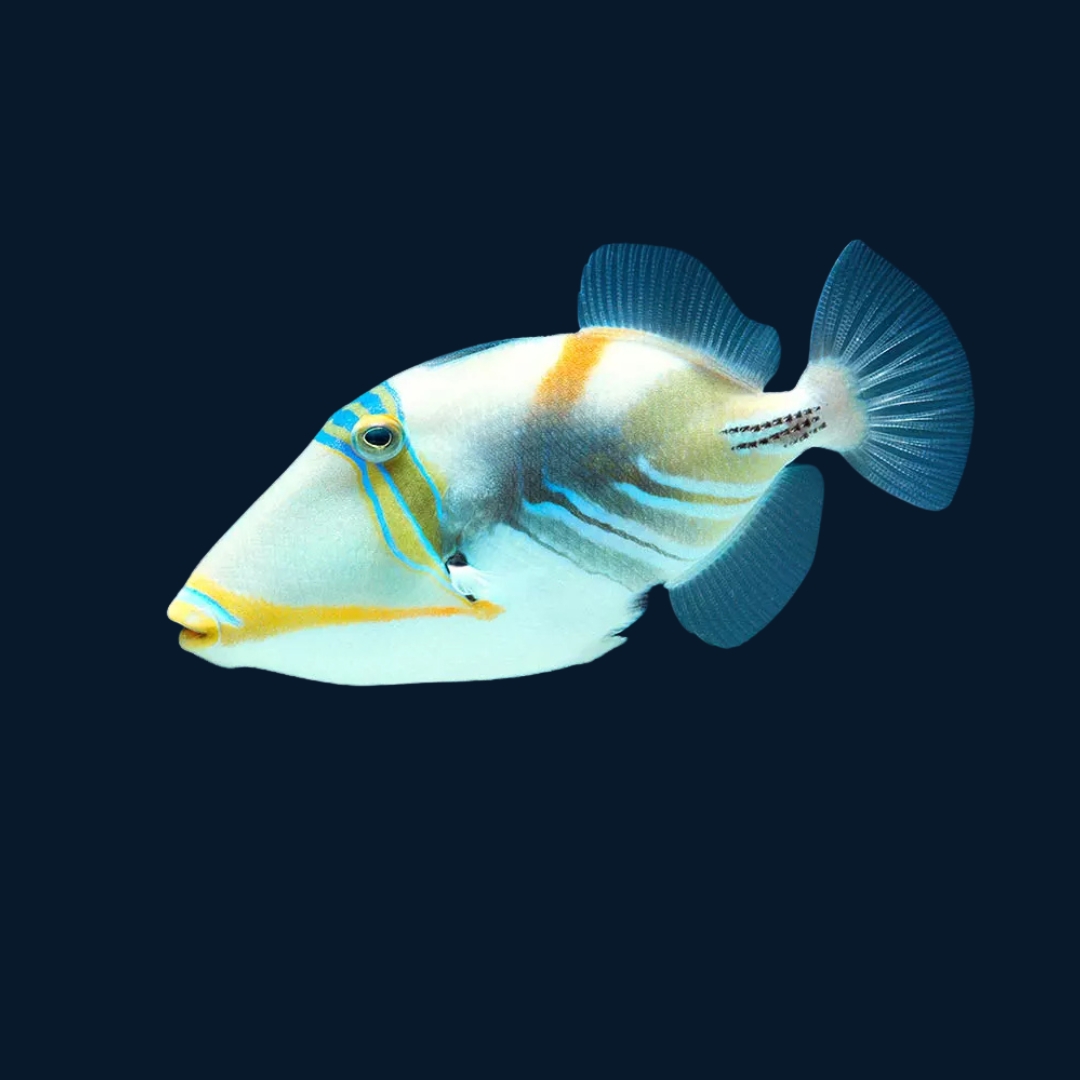
解説 / Description
ムラサメモンガラは、フグ目モンガラカワハギ科に属する海水魚です。黒、青、黄色、橙色を直線的に組み合わせた独特の模様から、英名では Lagoon triggerfish や Picasso triggerfish と呼ばれます。丈夫で餌付きやすい一方、成長すると約30cmに達し、顎の力が強く、縄張り意識も強いため、小型水槽やリーフタンク向けの魚ではありません。長期飼育では、大型水槽、強力なろ過、頑丈なレイアウト、硬い餌を含めた給餌管理が重要になります。 The lagoon triggerfish, also known as the Picasso triggerfish, is a marine fish in the family Balistidae. Its bold geometric pattern of black, blue, yellow, and orange lines gives it a striking appearance. Although it is hardy and usually adapts well to prepared foods, it can reach about 30 cm, has powerful jaws, and becomes territorial. For long-term care, it requires a large aquarium, strong filtration, a secure rock layout, and a diet that includes hard-shelled foods to help maintain normal tooth wear.
基本情報 / Basic Information
| 学名 / Scientific Name | Rhinecanthus aculeatus |
|---|---|
| 通称 / Common Name | ムラサメモンガラ、ピカソトリガー、ピカソフィッシュLagoon triggerfish, Picasso triggerfish, blackbar triggerfish, Picassofish |
| 分類 / Family | フグ目 モンガラカワハギ科Order Tetraodontiformes, family Balistidae |
| 英名 / English Name | Lagoon triggerfish / Picasso triggerfish |
| 分布 / Distribution | 主にインド太平洋のサンゴ礁域、礁湖、浅い岩礁域に広く分布します。紅海・東アフリカ周辺から日本、ハワイ、仏領ポリネシア周辺まで記録されます。Widely distributed mainly in Indo-Pacific coral reefs, lagoons, and shallow rocky reef habitats, from the Red Sea and East Africa to Japan, Hawaii, and parts of French Polynesia. |
| 最大体長 / Max Size | 約30cmAbout 30 cm |
| 寿命 / Lifespan | 飼育下では10年前後を目安に長期飼育を想定します。寿命は個体差、水槽サイズ、水質、食事内容に大きく左右されます。A well-kept specimen should be treated as a long-term commitment, often around 10 years or more depending on aquarium size, water quality, diet, and individual condition. |
飼育環境 / Aquarium Environment
| 水槽サイズ / Tank Size | 幼魚期は90cm規格水槽前後で一時飼育されることもありますが、成長が早く遊泳力もあるため、長期飼育では最低でも120cmワイド水槽以上、できれば150cmから180cmクラスの大型水槽を推奨します。水量の目安は470L前後以上、余裕を持つなら680L前後以上です。Juveniles may be temporarily kept in a medium-sized marine aquarium, but adults need much more space. For long-term care, use at least a large 120 cm wide aquarium, preferably a 150 to 180 cm class system. A water volume of roughly 470 L or more is recommended, with around 680 L or more being preferable. |
|---|---|
| 水温 / Temperature | 24から26℃前後を中心に安定させます。短期的には22から28℃程度に耐えることがありますが、急変は避けます。日本の夏は水槽用クーラー、冬はヒーターによる安定管理が重要です。 Keep the water stable around 24 to 26°C. It may tolerate a broader short-term range of about 22 to 28°C, but sudden changes should be avoided. In Japan, a chiller in summer and a heater in winter are often necessary. |
| 水質 / Water Quality | 比重は1.020から1.025、pHは8.1から8.4を目安にします。アンモニアと亜硝酸は0を維持し、硝酸塩はできるだけ低く、目安として20ppm未満を意識します。大食漢で排泄量が多いため、強力なろ過、プロテインスキマー、定期換水が欠かせません。Maintain a specific gravity of 1.020 to 1.025 and a pH of about 8.1 to 8.4. Ammonia and nitrite must remain at 0, while nitrate should be kept as low as practical, ideally below about 20 ppm. Because this fish eats heavily and produces a high bioload, strong filtration, a protein skimmer, and regular water changes are essential. |
| レイアウト / Layout | ライブロックや人工岩で、体を固定して休める洞窟や割れ目を作ります。モンガラカワハギ類は背鰭の棘を立てて岩陰に体を固定するため、安心できる寝床が重要です。ただし、砂を掘ったり岩片を動かしたりするため、岩組みは接着剤やアクリル棒などで崩れないように固定し、ガラス面を傷つけない配置にします。Provide caves and crevices using live rock or artificial rock so the fish can wedge itself securely when resting. Triggerfishes can lock their dorsal spine into a crevice, so secure sleeping spots are important. Because this species may dig and move small rocks, the aquascape must be firmly fixed with aquarium-safe adhesive or rods and arranged so it cannot collapse or damage the glass. |
| 注意点 / Precautions | ガラスヒーターや電源コードをかじることがあるため、ヒーターはサンプ内に設置するか、チタンヒーターや保護カバーを使用します。サンゴ、エビ、カニ、貝、ケヤリなどは捕食・破壊されやすく、リーフタンクには基本的に不向きです。観賞魚としては丈夫ですが、設備破損と混泳トラブルへの備えが必要な魚です。It may bite glass heaters, power cords, and small equipment. Place heaters in a sump when possible, or use a titanium heater or protective guard. Corals, shrimp, crabs, snails, feather dusters, and similar invertebrates are likely to be eaten or damaged, so this species is generally unsuitable for reef aquariums. It is hardy, but its destructive potential and compatibility issues must be planned for. |
餌と給餌 / Feeding
| 餌の種類 / Diet | 雑食性ですが、動物質を好みます。海水魚用の人工飼料を基本に、殻付きエビ、アサリ、ムール貝、カキ、イカ、タコ、クリル、海苔や植物質を含む配合飼料などを組み合わせます。淡水魚の活餌は脂質や栄養バランスが海水魚に合いにくいため、常用は避けます。This species is omnivorous but strongly favors animal-based foods. Offer quality marine pellets as a staple, supplemented with shell-on shrimp, clams, mussels, oysters, squid, octopus, krill, nori, and herbivore or omnivore marine preparations. Avoid regular use of freshwater feeder fish because their fat and nutrient profile is not suitable for marine predators. |
|---|---|
| 給餌のポイント / Feeding Tips | 柔らかい餌だけでは歯の摩耗が不足し、歯の伸長や噛み合わせの問題につながることがあります。殻付きの餌や硬さのある餌を定期的に与え、自然な噛み砕き行動を引き出します。食べ残しは水質悪化の原因になるため、食べ切れる量を観察しながら与えます。A diet made only of soft foods may lead to insufficient tooth wear and possible dental overgrowth or bite problems. Regularly include hard-shelled or firm foods to encourage natural crushing behavior. Remove uneaten food and adjust portions carefully, as leftovers can quickly degrade water quality. |
性格と混泳 / Temperament and Tank Mates
| 性格 / Temperament | 好奇心が強く、賢く、縄張り意識も強い魚です。幼魚期は比較的おとなしく見えることがありますが、成長とともに攻撃性や存在感が増します。繁殖期の野生個体は卵を守るために強く防衛行動を示すことが知られています。It is curious, intelligent, and territorial. Juveniles may appear relatively manageable, but aggression and dominance often increase with size. In the wild, adults can show strong nest-defense behavior when guarding eggs. |
|---|---|
| 混泳の相性 / Compatibility | 小型魚、細長い魚、臆病な魚、無脊椎動物との混泳には向きません。混泳させる場合は、本種の口に入らないサイズで、ある程度気が強く、遊泳スペースを共有できる大型ヤッコ、ハギ、大型ベラ、ハタ類などが候補になります。ただし個体差が大きく、同種や近縁のモンガラカワハギ類との混泳は激しい争いになる可能性があるため、原則として単独飼育が最も安全です。It is not suitable with small fish, slender fish, timid species, or invertebrates. Possible tank mates include robust fish that are too large to swallow, such as larger angelfish, tangs, large wrasses, or groupers, provided the aquarium is spacious enough. Individual temperament varies greatly. Keeping it with the same species or similar triggerfishes can lead to severe conflict, so single-specimen keeping is usually the safest approach. |
病気と対策 / Diseases and Prevention
| かかりやすい病気 / Common Diseases | 比較的丈夫な海水魚ですが、導入直後のストレスや水質悪化により、白点病、ウーディニウム症、細菌感染、外傷からの二次感染が起こることがあります。岩組みに体をこすった傷や、他魚との争いによる傷にも注意します。It is generally hardy, but stress after introduction or poor water quality can lead to marine ich, velvet, bacterial infections, or secondary infection from wounds. Watch for scratches from rockwork and injuries caused by aggression. |
|---|---|
| 対策と予防 / Prevention | 購入後は可能であれば隔離水槽で観察し、餌食い、呼吸、体表、ヒレの状態を確認してから本水槽に導入します。安定した水質、十分な隠れ家、急な比重・水温変化を避ける水合わせが基本です。薬浴は病気の種類を見極めて行い、サンゴや無脊椎動物のいる水槽で銅系薬剤を使用しないよう注意します。Quarantine is recommended whenever possible. Observe feeding response, respiration, body surface, and fin condition before introducing the fish to the display aquarium. Stable water quality, secure hiding places, and careful acclimation are the foundation of prevention. Use medication only after identifying the likely disease, and never use copper-based treatments in aquariums containing corals or invertebrates. |
増やし方(繁殖) / Breeding
| 雌雄の判別 / Sexing | 外見だけでの雌雄判別は難しく、一般的な観賞魚飼育では確実な判別法はほとんど利用されていません。体格や行動に差が出る場合もありますが、個体差と重なるため断定は避けます。Sexing by appearance is difficult, and reliable methods are rarely available in the aquarium trade. Size or behavior may differ in some cases, but individual variation makes visual sexing unreliable. |
|---|---|
| 繁殖形態 / Reproduction | 野生下では砂地やサンゴ礫上に卵を産み、親魚が卵を守る行動が知られています。卵保護中は縄張り性が強まり、近づく魚やダイバーに対して威嚇・攻撃することがあります。In the wild, eggs are laid on sand or coral rubble, and parental egg guarding is known. During egg care, territorial aggression increases and the fish may threaten or attack approaching fish or divers. |
| 繁殖のポイント / Breeding Tips | 家庭水槽での繁殖は現実的には非常に困難です。広い縄張り、安定したペア形成、産卵床、仔魚育成用の餌、専用の育成設備が必要になるため、一般的な飼育では観賞と長期維持を主目的に考えます。Breeding in a home aquarium is extremely difficult. It would require large territories, stable pair formation, suitable spawning substrate, larval foods, and dedicated rearing systems. For most aquarists, the realistic goal is long-term maintenance rather than captive breeding. |
雑学と豆知識 / Trivia and Fun Facts
| 1. ピカソの名を持つ魚 / 1. A fish named after Picasso-like patterns | ムラサメモンガラの英名として使われる Picasso triggerfish という呼び名は、体に走る黒、青、黄色、橙色の直線的な模様に由来します。自然のサンゴ礁で進化した配色でありながら、まるで抽象画のように見える点が、この魚を観賞魚として特別な存在にしています。The name Picasso triggerfish comes from its striking black, blue, yellow, and orange geometric markings. Although these patterns evolved in the reef environment, they look almost like abstract art, which is one reason the species is so memorable in marine aquariums. |
|---|---|
| 2. ハワイ州の魚との混同に注意 / 2. Not the same as Hawaii’s official state fish | ハワイ語名 Humuhumunukunukuāpuaʻa はモンガラカワハギ類に関連して語られることが多く、ムラサメモンガラも近い仲間として紹介されることがあります。ただし、ハワイ州の公式魚として指定されているのは、一般にタスキモンガラ Rhinecanthus rectangulus です。ムラサメモンガラ Rhinecanthus aculeatus は近縁でよく似た文化圏に登場する魚ですが、州の魚そのものとして断定しないのが正確です。The Hawaiian name Humuhumunukunukuāpuaʻa is often associated with triggerfishes, and the lagoon triggerfish is sometimes mentioned alongside similar species. However, Hawaii’s official state fish is generally the reef triggerfish, Rhinecanthus rectangulus. The lagoon triggerfish, Rhinecanthus aculeatus, is a close relative but should not be presented as the official state fish itself. |
| 3. 名前の由来と体のロック機構 / 3. The trigger mechanism behind the name | モンガラカワハギ類は、背鰭の棘を立てて岩の割れ目に体を固定できます。この棘を別の小さな棘でロックする構造が、英名 triggerfish の由来です。水槽内でも安心して眠れる割れ目や洞窟を好むため、単に泳ぐ空間だけでなく、体を預けられる立体的な隠れ家が重要になります。Triggerfishes can raise a dorsal spine and lock it in place with a smaller secondary spine, allowing them to wedge securely into crevices. This locking mechanism is the origin of the English name triggerfish. In the aquarium, this means the fish needs not only swimming space but also secure three-dimensional hiding places for resting. |
| 4. 食用には慎重な判断が必要 / 4. Caution as a food fish | 熱帯・亜熱帯のサンゴ礁性魚類では、シガテラ毒を蓄積した個体による食中毒が問題になります。シガテラ毒は味や臭いで判別できず、通常の加熱調理でも安全化できないとされます。ムラサメモンガラを釣獲した場合でも、観賞魚として知られる魚を安易に食用へ回すことは避けるのが安全です。Ciguatera poisoning is a risk with some tropical and subtropical reef fishes. Ciguatoxins cannot be detected by taste or smell and are not reliably destroyed by normal cooking. Even if a lagoon triggerfish is caught, it is safer not to casually treat this aquarium species as a food fish. |
| 5. 丈夫さと飼いやすさは同じではない / 5. Hardy does not always mean easy | ムラサメモンガラは水質変化に比較的強く、餌付きも良いことから、丈夫な魚として紹介されることがあります。しかし、成長後のサイズ、強い顎、混泳制限、設備破損のリスクを考えると、初心者向けの小型海水魚とは言えません。長期飼育では、魚の購入価格よりも大型水槽と維持設備の準備が重要になります。The lagoon triggerfish is often described as hardy because it adapts well and usually feeds readily. However, its adult size, powerful jaws, compatibility limits, and ability to damage equipment mean it is not a simple beginner fish. Long-term success depends far more on proper aquarium size and equipment than on the initial purchase price of the fish. |
まとめ / Conclusion
ムラサメモンガラは、ピカソの名を連想させる美しい模様と、モンガラカワハギらしい力強い行動が魅力の海水魚です。丈夫で存在感があり、人工飼料にも慣れやすい一方、成魚では大型化し、無脊椎動物や小型魚を捕食し、機材をかじることもあります。 The lagoon triggerfish is a striking marine fish with Picasso-like markings and the bold behavior typical of triggerfishes. It is hardy, charismatic, and usually adapts well to prepared foods, but adults become large, may prey on invertebrates and small fish, and can damage equipment by biting.
飼育する場合は、150cm級以上を見据えた大型水槽、強力なろ過、固定された岩組み、保護された機材、殻付き餌を含む食事を用意しましょう。生体価格の手頃さだけで選ぶ魚ではなく、終生飼育の設備と責任を準備できる飼育者に向いた、個性の強い海水魚です。 Anyone keeping this species should plan for a large aquarium, ideally in the 150 cm class or larger, strong filtration, securely fixed rockwork, protected equipment, and a diet that includes hard-shelled foods. It should not be chosen only because it is affordable; it is a distinctive marine fish best suited to aquarists prepared for its long-term space, equipment, and behavioral needs.

気になる道具や飼い方を見つけてみませんか?
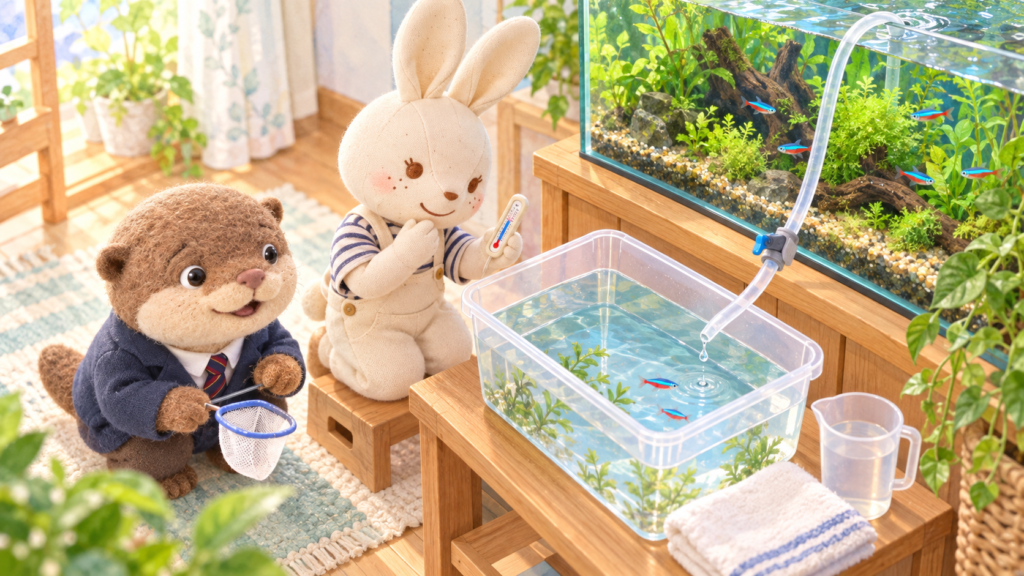 アイのアクアグッズ案内水合わせの道具とやり方|魚を迎える前にそろえたい容器・点滴キット・ネット買ってきた魚はすぐ水槽に入れていい? 水温合わせと水合わせの違いから、透明ケース・点滴キット・ネットの選び方、時間をかけすぎない注意点まで、アイとコタロウが紹介します。記事はコチラ →
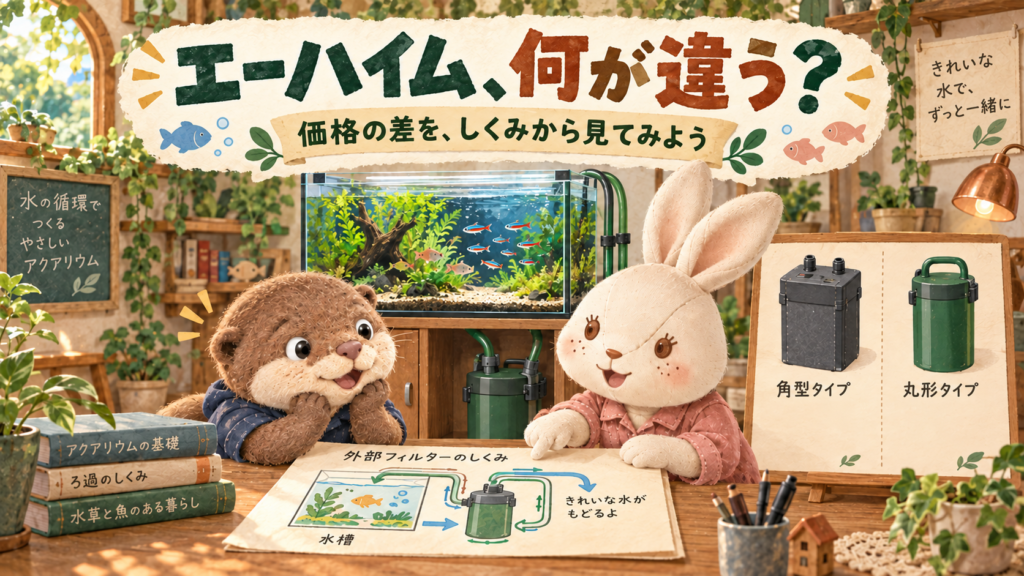 アイのアクアグッズ案内エーハイム、安いのと高いのは何が違う? コタロウと見比べる外部フィルター道具の特徴や使い方、選ぶときのポイントをアイが紹介します。記事はコチラ →
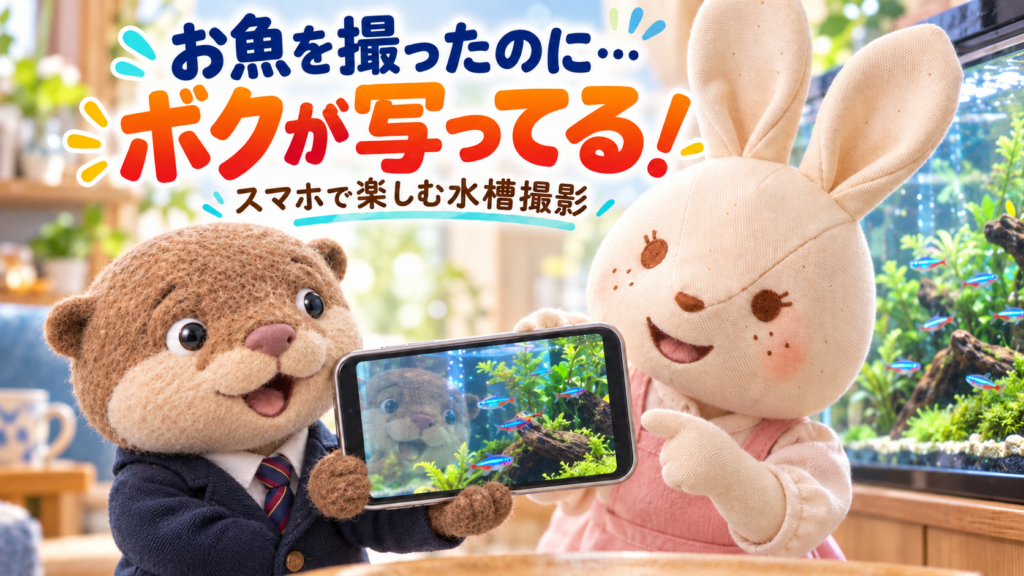 アイのアクアグッズ案内お魚を撮ったのに、ボクが写ってる! スマホで楽しむ水槽撮影と便利な道具道具の特徴や使い方、選ぶときのポイントをアイが紹介します。記事はコチラ →
 アイのアクアグッズ案内マジックリーフ物語|一枚の葉がアクアリウム用品になるまで道具の特徴や使い方、選ぶときのポイントをアイが紹介します。記事はコチラ →
さまざまな飼育テーマをご紹介。リンク先の記事には広告・商品紹介が含まれます。
案内・紹介記事一覧へ →参考文献・参照資料
本記事の分類、分布、生息環境、飼育条件、繁殖、病気・毒性に関する記述を支えるため、店舗・通販サイト、個人ブログ、まとめサイトを除外し、学術データベース、大学・研究機関、公的機関、査読論文を中心に選定しています。
-
Froese, R. and Pauly, D. (eds.). FishBase: Rhinecanthus aculeatus (Lagoon triggerfish).
FishBase 種情報ページ
分類、学名、英名、最大体長、分布、水深・生息環境などの基礎情報を確認するための中核資料です。 -
World Register of Marine Species (WoRMS). Rhinecanthus aculeatus (Linnaeus, 1758).
WoRMS taxon details
海産生物の分類・命名情報を確認するための国際的データベースです。学名の有効性、シノニム、分類階級の裏取りに使用できます。 -
Schaffer, K. 2000. Rhinecanthus aculeatus. Animal Diversity Web, University of Michigan Museum of Zoology.
Animal Diversity Web 種解説
分類、インド太平洋域を中心とした分布、サンゴ礁・礁湖での生息、背鰭棘による防御、食性、繁殖、行動、生息水温・比重の確認に有用です。 -
Kuwamura, T. 1997. Evolution of female egg care in haremic triggerfish, Rhinecanthus aculeatus. Ethology, 103(12), 1015-1023.
論文 DOI
産卵、卵保護、なわばり、繁殖期の防衛行動を支える査読論文です。記事内の繁殖・攻撃性に関する記述の根拠として適しています。 -
Ziadi-Künzli, F. and Tachihara, K. 2016. Female defence polygyny and plasticity in the mating system of the demersal triggerfish Rhinecanthus aculeatus from Okinawa Island. Marine Biology, 163, 27.
論文 DOI
沖縄個体群を対象に、なわばり、配偶システム、底生性モンガラ類としての繁殖生態を扱う資料です。日本周辺での生態説明に関連性が高い文献です。 -
Randall, J. E. and Millington, J. T. 1990. Triggerfish bite: a little-known marine hazard. Journal of Wilderness Medicine, 1(2), 79-85.
モンガラカワハギ類による咬傷リスクや、産卵期の防衛行動に関する注意点を支える査読文献です。ダイバー・採集時の安全注意の補強に使えます。 -
Colorni, A. and Burgess, P. 1997. Cryptocaryon irritans Brown 1951, the cause of ‘white spot disease’ in marine fish: an update. Aquarium Sciences and Conservation, 1, 217-238.
論文 DOI
海水魚の白点病原因生物である Cryptocaryon irritans の生活環、症状、管理上の注意を扱うレビューです。病気と予防の根拠資料として使用できます。 -
National Research Council. 2011. Guide for the Care and Use of Laboratory Animals, 8th ed. National Academies Press.
National Academies Press DOI
水生動物を含む飼育動物の福祉、環境管理、観察、適切な設備管理の一般原則を確認する資料です。退避場所、ストレス低減、長期飼育責任に関する考え方の補強に使えます。 -
CDC Yellow Book. Food Poisoning from Marine Toxins.
CDC Yellow Book
シガテラ中毒の原因、症状、熱帯・亜熱帯のリーフフィッシュとの関連、予防上の注意を確認するための公的機関資料です。 -
U.S. Food and Drug Administration. Fish and Fishery Products Hazards and Controls Guidance.
FDA ガイダンス
シガテラ魚毒など水産食品ハザードの管理に関する公的資料です。シガテラ毒が外見・味・通常調理で判別、除去しにくいという注意喚起の裏付けに使用できます。
参照日:2026年6月8日




コメント