


解説 / Description
ホワイトキューバパールグラスは、キューバパールグラスの白葉系として流通する、小さな丸葉が印象的な前景草です。クリーム色から白に近い葉が集まる姿は、緑の水草とはひと味違う、やわらかな明るさを水景に添えてくれます。石の足元に小さく植えるだけでも目を引き、細かな葉の重なりが、水槽の中に繊細な奥行きを生み出します。 White Cuba pearl grass is traded as a white-leaved form of Cuba pearl grass, a foreground plant with tiny, rounded leaves. Its cream to nearly white foliage brings a gentle brightness to an aquascape. Even a small patch at the base of a stone makes an appealing focal point, while the fine texture of its leaves adds a delicate sense of depth.
一方で、植物の白い葉は葉緑素が少なく、緑色の葉に比べて光合成の働きが弱い場合があります。白葉系の育成では、培養カップで見られた葉色が水中でも続くと決めつけず、新芽の色と成長の勢いを確かめることが大切です。まずは小さな区画で定着を見守り、健やかに育つことを確かめながら植栽範囲を広げていくと、この水草の変化をじっくり楽しめます。 White foliage can contain less chlorophyll and have a lower photosynthetic capacity than green foliage. When growing this form, do not assume that the color seen in a tissue culture cup will persist unchanged underwater. Watch both the color of new shoots and the strength of their growth. Begin with a small patch, then expand the planting as healthy growth becomes established.
基本情報 / Basic Information
| 学名 / Scientific Name | Micranthemum callitrichoides キューバパールグラスの種としての学名。シノニムは Hemianthus callitrichoides で、水草の流通ではこちらも広く使われています。白葉系は「White」「Cuba White」などの名称を添えて販売されますが、これらは独立した種名ではありません。白葉系の由来や葉色の安定性は、流通名だけでは判断できません。The species name of Cuba pearl grass. Its synonym, Hemianthus callitrichoides, remains widely used in the aquarium trade. White-leaved stock is sold with designations such as “White” or “Cuba White”; these do not identify a separate species. A trade name alone does not establish the origin of the white form or the stability of its coloration. |
|---|---|
| 通称 / Common Name | ホワイトキューバパールグラス、キューバパールグラス・ホワイト。通常の緑葉のキューバパールグラスや、ホワイトニューラージパールグラスとは区別して選びます。White Cuba pearl grass, HC Cuba White, white dwarf baby tears. Distinguish it from ordinary green Cuba pearl grass and white forms of Monte Carlo. |
| 分類 / Family | アゼナ科・ミクランテムム属。古い文献や流通表記では、ゴマノハグサ科・ヘミアントゥス属として紹介されることもあります。Family Linderniaceae, genus Micranthemum. Older literature and trade labels may place it in Scrophulariaceae and the genus Hemianthus. |
| 分布 / Distribution | 種としてはキューバを含むカリブ海の島々に分布します。アクアリウムで親しまれるキューバ由来の株は、河川の岩場などで見いだされています。白葉系は栽培下で流通するもので、野生株の分布とは分けて考えます。The species occurs on Caribbean islands, including Cuba. Cuban stock associated with the aquarium hobby has been found in rocky river habitats. White-leaved forms are traded in cultivation and should be distinguished from the distribution of wild plants. |
| 育成難易度 / Difficulty | 上級者向け。十分な照明、安定したCO2供給、偏りのない栄養管理をそろえ、水中への適応と新芽の状態を見守ります。緑葉のキューバパールグラスを育てた経験があると、成長や葉色の違いを判断しやすいでしょう。Advanced. Provide adequate lighting, stable CO2 delivery, and balanced nutrition, then monitor adaptation to submerged conditions and the development of new shoots. Experience with green Cuba pearl grass helps when assessing differences in growth and coloration. |
育成環境 / Cultivation Environment
| 光量 / Light | 底床まで十分に光が届く、明るい環境を用意します。背の高い水草や石の陰は避けましょう。導入時は点灯時間を1日6時間程度から始め、新芽やコケの様子を見ながら調整する方法が取りやすいでしょう。ただし、白い葉に極端な強光を当てれば育つわけではありません。葉緑素が少ないことによる制約は光量だけでは補えず、急な増光は葉の傷みやコケの増加につながることがあります。Provide bright lighting that reaches the substrate, avoiding shade from tall plants and stones. An initial photoperiod of around six hours a day is a practical starting point; adjust it according to new growth and algae. Extreme illumination does not necessarily improve the growth of white leaves. More light alone cannot overcome the limitations of low chlorophyll content, and sudden increases may damage foliage or encourage algae. |
|---|---|
| CO2添加 / CO2 Injection | 水中育成ではCO2添加を基本に考えます。点灯中に安定して供給し、穏やかな水流で底床付近まで行き渡らせましょう。気泡の滴数だけでは水中のCO2濃度を判断できないため、濃度の目安を示すドロップチェッカーと、魚やエビの様子も確認します。成長が止まったときは、添加量を急に増やさず、まず拡散器の状態や水の巡りを点検してください。Treat CO2 injection as a standard part of submerged cultivation. Maintain a consistent supply during the photoperiod and use gentle circulation to distribute it near the substrate. Bubble counts alone do not indicate dissolved CO2 concentration, so use a drop checker as a guide and observe fish and shrimp as well. If growth stalls, inspect the diffuser and circulation before increasing the supply gradually. |
| 水質 / Water Quality | 淡水で育成します。水温20〜26℃、pH6.0〜7.0前後は、管理を始める際の目安です。白葉系の生育を保証する範囲ではないため、数値だけでなく新芽や根の状態も確かめ、急な水質変化を避けます。カルシウムやマグネシウムも必要ですが、軟水であることだけを理由に硬度を上げる必要はありません。GH(総硬度)が極端に低い場合は、使用水と肥料の成分を確認し、必要に応じてミネラルを少しずつ補います。石灰質の石を使う場合も、GH・KH・pHの変化を測りながら管理しましょう。Grow it in freshwater. A temperature of 20–26°C and a pH around 6.0–7.0 are starting guidelines rather than a range that guarantees success with white forms. Observe new shoots and roots as well as measurements, and avoid abrupt changes. Calcium and magnesium are necessary, but soft water alone is not a reason to raise hardness. If GH, or general hardness, is extremely low, check the water and fertilizer composition and supplement minerals gradually when needed. Monitor GH, KH, and pH when using calcareous stones. |
| 底床 / Substrate | 細かな根を植え込みやすい、小粒の水草用ソイルが扱いやすい選択です。砂や細粒の砂利を使う場合は、根元への施肥と水中の栄養供給を組み合わせます。ソイルから初期に溶け出す養分には水換えで対応し、液肥は窒素・リン・カリウムと微量元素の不足を偏りなく補うように使います。白葉では葉色だけで栄養不足を見分けにくいため、新芽の大きさや展開の速さも観察し、鉄だけを多量に加えることは避けてください。Fine-grained planted aquarium soil is convenient for anchoring the delicate roots. If using sand or fine gravel, combine suitable root fertilization with water-column nutrients. Manage the initial nutrient release from soil through water changes, and use liquid fertilizers to address shortages of nitrogen, phosphorus, potassium, and trace elements in balance. Since white foliage makes deficiencies harder to assess by color alone, observe the size and development of new shoots rather than adding large amounts of iron indiscriminately. |
レイアウト / Layout
| 配置 / Positioning | 光の届く前景や、石の手前の小さな区画に向いています。暗い色の石や緑葉の前景草と組み合わせると、淡い葉色が際立ちます。初めから全面を白い絨毯にしようとせず、アクセントとして植え、成長を確かめながら面積を広げると管理しやすいでしょう。細かな葉の質感を生かして、石組みの足元をやわらかくつなぐ使い方も楽しめます。Use it in a well-lit foreground or a small patch in front of stones. Dark rocks and green carpeting plants bring out its pale foliage. Begin with an accent patch and expand it as growth allows, rather than planning a complete white carpet from the outset. Its fine texture can also soften the transition around the base of an Iwagumi hardscape. |
|---|---|
| 注意点 / Precautions | 組織培養株は培地をやさしく洗い落とし、根と茎を傷めないよう小さな束に分けて、数cm間隔で植えます。根元を底床に差し込み、葉を深く埋めないようにしてください。根付くまでは強い水流や底床を掘る魚を避け、浮いた束は早めに植え直します。隣の水草が覆いかぶさると光が不足するため、周囲にも余裕を残しましょう。Gently rinse away the culture medium, divide the plants into small clumps without damaging the stems and roots, and plant them a few centimeters apart. Anchor the bases without burying the foliage deeply. Avoid strong currents and substrate-digging fish until the plants root, and replant floating clumps promptly. Leave enough space around neighboring plants to prevent shading. |
増やし方(トリミング) / Propagation & Trimming
| 増やし方 / Propagation | 底床を横に這う茎が枝分かれし、節から根を出して広がります。十分に根付いた部分を分けて植え直すほか、健全な茎を切って差し戻すことでも増やせます。白葉系では、早く増やすことよりも、新しい株が継続して育つことを優先しましょう。定着前の株を細かく分けすぎると傷めやすいため、根と茎が残る大きさで扱います。Creeping stems branch and root at their nodes, gradually extending the patch. Propagate by dividing established sections or replanting healthy stem cuttings. With white forms, prioritize sustained growth over rapid multiplication. Avoid dividing unestablished plants too finely; keep enough roots and stems intact in each portion. |
|---|---|
| トリミング / Trimming | 根付いて新芽が安定して出るようになってから、重なった上部を少しずつ刈り込みます。厚いマットになる前に整えると、下の葉まで光と水が届きやすくなり、下層の傷みや浮き上がりを防ぎやすくなります。弱った白葉系の茂みを一度に深く刈ることは避け、健全な葉と茎を残してください。切りくずは細かな網やホースで回収し、株の間にためないことも大切です。Once the plants are rooted and producing new shoots consistently, trim overlapping upper growth in small amounts. Keeping the patch from becoming thick improves light penetration and circulation, helping reduce lower-layer decay and lifting. Avoid cutting a weakened white patch back severely; retain healthy leaves and stems. Collect the fine trimmings with a net or siphon so they do not accumulate within the carpet. |
病気と対策(コケなど) / Pests & Algae
| かかりやすい病気 / Common Issues | 導入後に葉が透明になって溶ける、成長が止まる、葉に糸状のコケが絡むといったトラブルが見られます。厚く重なった部分では、下葉が傷んでマットが浮き上がることもあります。これらは感染症とは限らず、水中への移行、光・CO2・栄養の不足や偏り、環境の変化などが関係します。もともとの白葉と栄養不足による白化も、色だけでは判別できません。Problems include leaves turning translucent and melting after planting, stalled growth, and filamentous algae caught in the foliage. Thick patches may decay underneath and lift from the substrate. These symptoms are not necessarily infectious diseases; they can be associated with adaptation to submerged conditions, imbalances in light, CO2, or nutrients, and environmental changes. Natural white coloration and deficiency-related chlorosis cannot be distinguished by color alone. |
|---|---|
| 対策と予防 / Prevention | 傷んだ葉や堆積物をやさしく吸い出し、照明、CO2、水流、施肥の状態を点検します。一度にいくつも条件を変えず、定期的な水換えと安定した管理を続け、新芽の状態が改善するかを見守りましょう。コケはできる範囲で手作業で取り除き、株が弱っている間は強い薬剤処理を避けます。適切に生産された組織培養株は、巻貝やコケなどを持ち込みにくい利点がありますが、開封後も無菌の状態が続くわけではありません。導入時は培地と傷んだ部分を取り除き、エビを飼う水槽では農薬使用に関する表示も確認してください。Gently siphon out damaged leaves and debris, then check lighting, CO2, circulation, and fertilization. Avoid changing several conditions at once. Maintain regular water changes and consistent care while watching for improvement in new growth. Remove algae manually where possible, and avoid harsh chemical treatments on weakened plants. Properly produced tissue culture stock reduces the risk of introducing snails and algae, but sterility does not continue after opening. Remove the medium and damaged material before planting, and check pesticide information when introducing plants to a shrimp aquarium. |
雑学と豆知識 / Trivia and Fun Facts
| 1. 白い葉と、培養カップの中の暮らし / 1. White Leaves and Life in a Culture Cup | 植物の白葉は、葉緑素の量が少ないことや、光合成を行う葉緑体が十分に発達しないことなどによって生じます。緑と白が混在する斑入り植物では、緑の部分でつくられた糖が白い部分の維持を助けることもあります。一方、葉緑素をほとんど持たない植物は、光を強くしても十分な光合成ができません。糖を含む培地を使う組織培養では、その糖を利用して、光合成の働きが弱い組織を育てられる場合があります。つまり、カップの中で育っていることと、水槽で自力で成長を続けられることは同じではないのです。これは白葉植物に共通する生理の話であり、ホワイトキューバパールグラスのすべての株が糖に依存しているという意味ではありません。水槽では、白さとともに新芽が続いて出ているかを見守ることが大切です。White foliage can result from reduced chlorophyll or insufficient development of chloroplasts, the structures responsible for photosynthesis. In variegated plants, sugars produced by green areas may help support white areas. Plants with almost no chlorophyll, however, cannot achieve adequate photosynthesis simply through stronger illumination. In tissue culture using sugar-containing media, supplied sugars can support tissues with limited photosynthetic capacity. Growth in a culture cup therefore does not necessarily mean a plant can sustain itself in an aquarium. This is a general principle of white-leaved plants, not evidence that every White Cuba plant depends on supplied sugar. In the tank, watch for continued new growth as well as pale coloration. |
|---|---|
| 2. 組織培養から生まれる多様性 / 2. Diversity in Tissue Culture | 組織培養は、小さな植物片から同じ性質の株を増やすために使われますが、その過程で遺伝的な変化などが生じることもあります。こうした培養に伴う変異は「ソマクローナル変異」と呼ばれ、園芸植物の新しい葉色や姿につながる場合があります。ただし、組織培養で販売される白葉の水草が、すべてこの仕組みで生まれたとは限りません。見た目が白いことだけでは、遺伝的な変異や、性質の異なる細胞が混在する「キメラ」であると断定できないのです。白葉の成り立ちを知ることは育成の理解に役立ちますが、ホワイトキューバパールグラスについても、流通名から特定の変異の仕組みを決めつけず、実際の葉色と成長を観察することが基本になります。Tissue culture is used to multiply plants with similar characteristics, but genetic and other changes can occur during the process. Such culture-associated changes are known as somaclonal variation and can sometimes produce new colors or forms in horticulture. Not every white aquatic plant sold in tissue culture necessarily arose this way. White appearance alone does not establish a genetic mutation or a chimera, in which cells with different characteristics coexist. Understanding the origin of white foliage can help explain cultivation behavior, but the trade name White Cuba does not establish a particular mechanism. Observing its actual coloration and growth remains essential. |
| 3. 「キューバ」という名前と学名の歩み / 3. The Name “Cuba” and Its Botanical History | キューバパールグラスは、キューバ由来の小さな前景草としてアクアリウムに広まりました。ただ、種としての分布はキューバだけに限られず、カリブ海のほかの島々にも及びます。流通名は、植物の分布全体ではなく、水草として紹介された株の来歴を伝えていることがあるのです。また、親しまれてきた Hemianthus callitrichoides は、現在の分類では Micranthemum callitrichoides のシノニムとして扱われます。どちらも同じ種を指すため、ラベルの属名が違っていても、それだけで別の水草とはいえません。小さな葉を眺める楽しみのそばには、名前を通して分類の歴史をたどる楽しみもあります。Cuba pearl grass became familiar to aquarists as a tiny foreground plant associated with Cuba. The species itself, however, also occurs on other Caribbean islands. A trade name may describe the history of aquarium stock rather than the full natural distribution of a species. The familiar name Hemianthus callitrichoides is now treated as a synonym of Micranthemum callitrichoides. Both refer to the same species, so a different genus name on a label does not by itself indicate a different plant. Its names offer a glimpse into botanical history alongside the pleasure of observing its miniature leaves. |
| 4. 葉に宿る気泡は、小さな観察の入り口 / 4. Leaf Bubbles as a Window into the Aquarium | 光合成によって生じた酸素が葉の表面などで気泡として見える現象は「パーリング」と呼ばれ、水草水槽の楽しみのひとつです。周囲の水の酸素濃度が高いと、放出された酸素が水に溶け込みにくくなり、気泡として現れやすくなります。淡い葉の上に輝く銀色の粒は、思わず目を近づけたくなる光景です。ただし、気泡の見え方は水流にも左右され、水換え直後には光合成とは別に、水に溶けていたガスが気泡となって葉に付くこともあります。気泡がないから不調、たくさんあるから万全とは言い切れません。数日から数週間の新芽の伸びや根付きも合わせて眺めると、一瞬の輝きと、長く続く健やかさの両方を楽しめます。The appearance of oxygen bubbles produced through photosynthesis on leaves and other surfaces is often called pearling, a familiar pleasure in planted aquariums. When surrounding water has a high oxygen concentration, newly released oxygen dissolves less readily and may become visible as bubbles. Silvery beads against pale foliage invite a closer look. Their appearance also depends on circulation, and gases released from the water after a water change can attach to leaves independently of photosynthesis. An absence of bubbles does not prove poor health, nor does abundant pearling guarantee it. Observe new growth and rooting over days and weeks to appreciate both the sparkle and the plant’s lasting condition. |
まとめ / Conclusion
ホワイトキューバパールグラスの魅力は、小さな葉がつくる細やかな質感と、水景をそっと明るくする淡い色合いにあります。石の足元に添えたひと群れでも、緑の水草との組み合わせに新しい表情が生まれます。葉色の変化だけでなく、茎が這い、根が張り、新芽が開く過程にも目を向けたい前景草です。 White Cuba pearl grass offers a finely textured foreground and pale colors that gently brighten an aquascape. Even a small group at the base of a stone brings a fresh character to a planting of green foliage. Its appeal extends beyond color to the gradual progress of creeping stems, developing roots, and unfolding new leaves.
十分な光、安定したCO2供給、偏りのない栄養管理を整え、株の状態に合わせて手入れすることが育成の基本です。健やかな新芽を確かめながら少しずつ育てることで、繊細な茂みが水槽の一角になじんでいく様子を楽しめます。 Adequate light, stable CO2 delivery, balanced nutrition, and maintenance suited to the plant’s condition form the basis of cultivation. Let healthy new growth guide your care, and enjoy watching a delicate patch gradually settle into its corner of the aquarium.

気になる道具や飼い方を見つけてみませんか?
 アイのアクアグッズ案内プレコ飼育に必要なもの|餌・流木・ろ過・隠れ家・掃除用品道具の特徴や使い方、選ぶときのポイントをアイが紹介します。記事はコチラ →
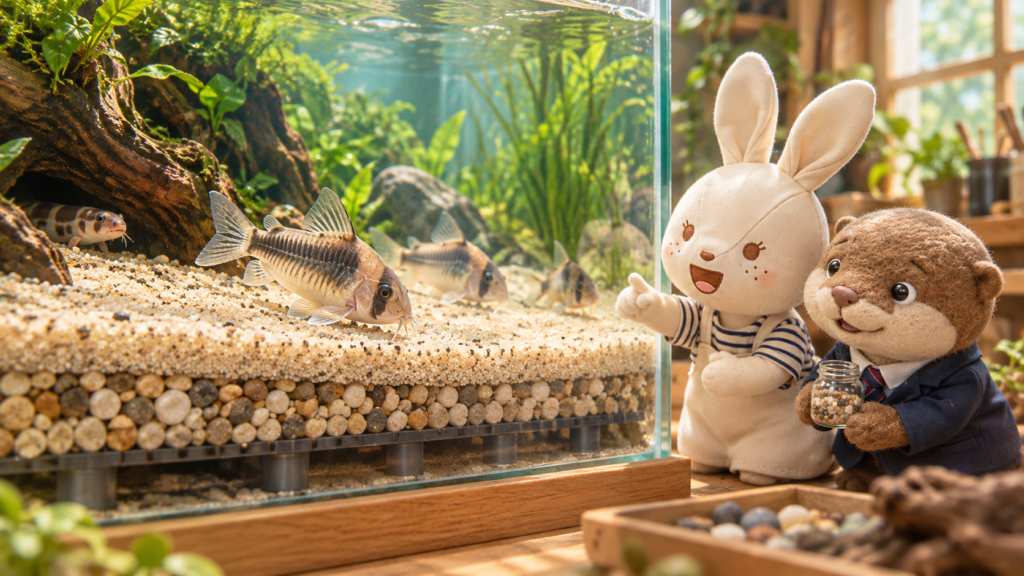 アイのアクアグッズ案内水槽の底砂の選び方|砂・砂利の違いとおすすめ商品道具の特徴や使い方、選ぶときのポイントをアイが紹介します。記事はコチラ →
さまざまな飼育テーマをご紹介。リンク先の記事には広告・商品紹介が含まれます。
案内・紹介記事一覧へ →分布マップ
キューバパールグラス(Micranthemum callitrichoides)は、キューバを含むカリブ海の島々に分布します。地図は種としての分布地域を概略で示しており、栽培下で流通するホワイト系統の自生分布を示すものではありません。
※地図は分布地域全体を見渡すための概略表示です。表示範囲内のすべての場所に自生することを意味しません。マーカーはキューバの概略位置を示す代表地点で、実際の採集地点や自生地点ではありません。
参考文献
- Royal Botanic Gardens, Kew. Micranthemum callitrichoides (Griseb.) C.Wright — Plants of the World Online. 学名、シノニム、アゼナ科への分類、カリブ海の島々における自然分布。
- Acevedo-Rodríguez, P. & Strong, M. T.(編). 2012. Catalogue of Seed Plants of the West Indies. Smithsonian Contributions to Botany, 98. Smithsonian Institution. 西インド諸島の植物相と種の分布を支える分類学的資料。
- Tropica Aquarium Plants. Micranthemum callitrichoides ‘Cuba’. 緑葉のキューバパールグラスについて、微小な葉と匍匐する草姿、光・CO2・水流・施肥の必要性、小分けでの植栽、茂みの拡大、下層の枯れを防ぐトリミングを説明する生産者資料。
- Tropica Aquarium Plants. Care. 水草水槽全般の維持管理。定期的な水換え、枯れた植物体の除去、機器の点検、植物の反応に合わせた施肥、コケの早期発見。
- Larkin, P. J. & Scowcroft, W. R. 1981. Somaclonal variation — a novel source of variability from cell cultures for plant improvement. Theoretical and Applied Genetics, 60: 197–214. 組織培養に伴うソマクローナル変異の基礎となる論文。植物組織培養全般の変異を扱います。
- Hung, C.-Y. et al. 2021. Transformation of Long-Lived Albino Epipremnum aureum ‘Golden Pothos’ and Restoring Chloroplast Development. Frontiers in Plant Science, 12: 647507. 白化したポトスを対象に、葉緑体の発達、糖を含む培地での維持、光条件への反応を調べた研究。白葉植物の生理と培養環境を理解するための資料。



コメント