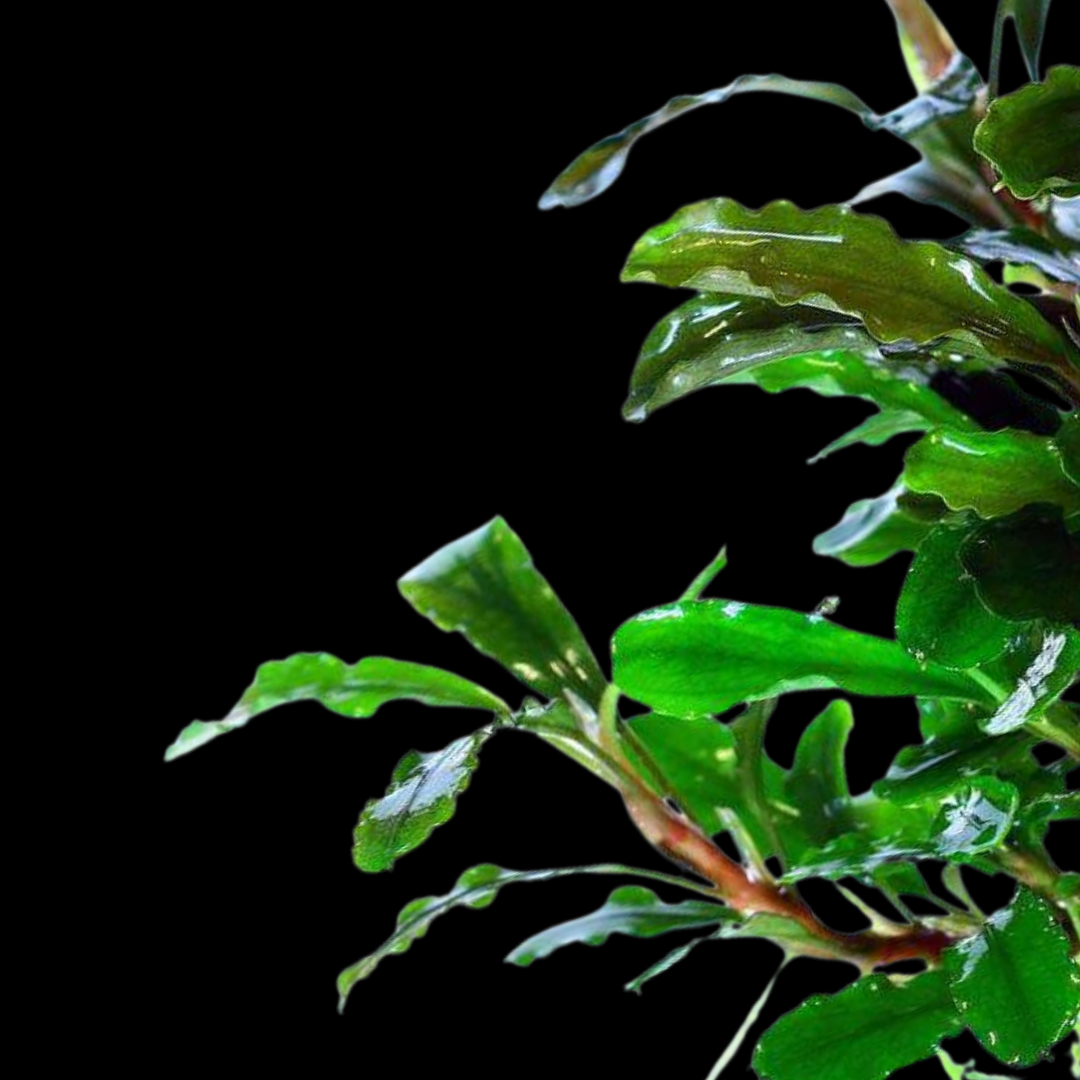
ブセファランドラ・ピグマエア・ブキットクラムは、ボルネオ島原産のサトイモ科植物であり、アクアリウム界で最も愛されている陰性水草の一つです。かつてはウェイビーリーフやグリーンウェイビーの名で親しまれてきましたが、現在の流通上では、ブセファランドラ・ピグマエア系統として扱われることが一般的です。本種の最大の特徴は、波打つように縁取られた深緑色の葉と、光の当たり方で真珠のような光沢を放つ美しい外観にあります。渓流の岩場に張り付いて生きるレオファイト(渓流沿生植物)としての性質を持ち、流木や石に根を張らせることで水槽内に自然感豊かな景観を作り出します。非常に強健で成長が緩やかなため、初心者の方でも長期維持が可能な入門種としても最適です。Bucephalandra pygmaea ‘Bukit Kelam’ is an Araceae plant native to Borneo and is one of the most beloved low-light aquatic plants in the aquarium hobby. Formerly known as ‘Wavy Leaf’ or ‘Green Wavy,’ it is currently generally treated as part of the Bucephalandra pygmaea group in the trade. Its most distinctive features are the deep green leaves with wavy margins and a pearl-like metallic luster that shines under light. As a rheophyte that lives clinging to rocks in mountain streams, it creates a highly natural look in aquariums when attached to driftwood or stones. Being very hardy and slow-growing, it is an ideal introductory species that even beginners can maintain long-term.
基本情報 / Basic Information
学名 / Scientific Name
Bucephalandra pygmaea (Becc.) P.C. Boyce & S.Y. Wong
通称 / Common Name
ブセファランドラ・ピグマエア・ブキットクラム、グリーンウェイビー、ウェイビーリーフBucephalandra ‘Bukit Kelam’, Green Wavy, Wavy Leaf
分類 / Family
サトイモ科(Araceae)ブセファランドラ属Araceae, Bucephalandra genus
分布 / Distribution
インドネシア(ボルネオ島 西カリマンタン州 シンタン地域)Indonesia (Sintang region, West Kalimantan, Borneo)
育成難易度 / Difficulty
容易(初心者の方にもおすすめの強健な種です)Easy (A hardy species highly recommended for beginners)
育成環境 / Cultivation Environment
光量 / Light
低光量から中光量。60cm規格水槽であれば、20W型LED1〜2灯程度で十分に育ちます。Low to medium light. For a standard 60cm tank, one or two 20W LED lights are sufficient.
CO2添加 / CO2 Injection
必須ではありませんが、添加することで成長速度が上がり、本来の美しい光沢がより強く現れます。Not mandatory, but injection increases growth speed and enhances its natural beautiful luster.
水質 / Water Quality
pH 5.0〜7.5。日本では比較的軟水地域が多いですが、中程度の硬度(GH 5〜7)を保つとより安定します。pH 5.0 to 7.5. While many regions in Japan have relatively soft water, maintaining moderate hardness (GH 5 to 7) ensures stability.
底床 / Substrate
ソイル、大磯砂など。基本的には石や流木への活着育成が推奨されます。Soil, gravel, etc. Generally recommended to be attached to rocks or driftwood.
レイアウト / Layout
配置 / Positioning
中景から前景。30cmキューブ水槽から90cm規格水槽まで、石や流木に固定して配置するのが一般的です。Midground to foreground. Commonly fixed to stones or driftwood in tanks ranging from 30cm cubes to 90cm standards.
注意点 / Precautions
根茎(リゾーム)を完全に底床に埋めないでください。埋めると酸素が不足し、根茎が腐敗する原因となります。Do not bury the rhizome completely in the substrate. Lack of oxygen can cause the rhizome to rot.
増やし方(トリミング) / Propagation & Trimming
増やし方 / Propagation
株分けによる増殖が一般的です。健康な根茎を適度な長さにカットして、新しい流木や石に固定します。Commonly propagated by division. Cut a healthy rhizome into appropriate lengths and fix them to new driftwood or stones.
トリミング / Trimming
古くなって色が褪せた葉や、コケが付着した葉を根本からカットします。伸びすぎた根茎の整理も有効です。Cut old, faded, or algae-covered leaves from the base. Trimming overgrown rhizomes is also effective.
病気と対策(コケなど) / Pests & Algae
かかりやすい病気 / Common Issues
急激な水質変化による葉の溶けや、成長が遅いために黒髭苔(BBA)やスポット状のコケが付着しやすいです。Leaf melting due to sudden water quality changes, and susceptibility to Black Brush Algae (BBA) or spot algae due to slow growth.
対策と予防 / Prevention
ヤマトヌマエビやオトシンクルスなどのお掃除役を導入し、適度な換水で水中の有機物を減らすことが予防に繋がります。Introducing utility creatures like Amano shrimp or Otocinclus and reducing organic matter through regular water changes helps prevention.
雑学と豆知識 / Trivia and Fun Facts
1. ピグマエアの名と記載の歴史1. The name ‘Pygmaea’ and the history of description
種小名のピグマエアはラテン語で小人のようなを意味します。1879年にイタリアの植物学者オドアルド・ベッカーリによって記載された際は、草丈わずか2.5cmほどの極小の植物として報告されました。しかし、現在アクアリウムで育成されているブキットクラムは、栄養環境の良さから葉が5cmを超えることも珍しくありません。自生地で見せていた微小な姿は、厳しい自然環境に適応するための最小限の姿だったと考えられています。The species name ‘pygmaea’ means ‘dwarf-like’ in Latin. When described by Odoardo Beccari in 1879, it was reported as a tiny plant only 2.5cm tall. However, in aquariums with rich nutrients, it is not uncommon for leaves to exceed 5cm. Its miniature form in the wild is thought to have been an adaptation to the harsh natural environment.
2. 巨大な岩山ブキット・クラムの生態系2. Ecosystem of the monolithic Bukit Kelam
通称の由来となったブキット・クラム(インドネシア語で暗い山)は、平原に突如として現れる標高約1,000メートルの巨大な花崗岩のモノリスです。インドネシア有数の巨大な岩山として知られ、周辺は極めて湿度が高く、独特の動植物が進化してきました。本種はこの山麓を流れる渓流において、雨季の濁流にも負けず、岩に強固に張り付いてマット状の群落を形成しています。The common name comes from Bukit Kelam (meaning ‘Dark Mountain’ in Indonesian), a massive 1,000-meter granite monolith rising from the plains. Known as one of Indonesia’s largest rock formations, the area is extremely humid and home to unique flora and fauna. This species forms dense mats on rocks in streams at the foot of the mountain, withstanding torrential flows during the rainy season.
3. 葉に輝く光沢の謎3. The mystery of the leaf’s luster
ブセファランドラの葉に見られる美しい白い点や金属的な光沢の発生メカニズムは、まだ十分に解明されていません。一説には水孔(すいこう)と呼ばれる組織と関連があると考えられていますが、その詳細については議論が続いています。現在では、葉の表皮構造や内部組織による光の反射が関係していると考えられており、水中での乱反射が、宝石を散りばめたような独特の輝きを生み出しています。The mechanism behind the white dots and metallic luster on Bucephalandra leaves is not yet fully understood. While some theories link it to organs called hydathodes, the details remain a subject of debate. It is currently thought that the light reflection caused by the epidermal structure or internal leaf tissues creates the unique, jewel-like brilliance observed underwater.
4. 組織培養(イン・ビトロ)技術の恩恵4. Benefits of Tissue Culture (In-Vitro) technology
ブキットクラムは組織培養製品としても供給されています。トロピカ社は「1-2-Grow!」シリーズを、農薬・藻類・巻貝を含まない製品として説明しています。この特性は対象製品のものであり、すべての流通株に当てはまる保証ではありません。植え付け前には培地を洗い流します。栽培で増殖された株は、野外採集株と区別して選べる導入方法の一つです。Bukit Kelam is also supplied as a tissue culture product. Tropica describes its 1-2-Grow! range as free of pesticides, algae and snails. These properties apply to that product range rather than every specimen in circulation. Rinse off the growing medium before planting. Cultivated plants provide an option that can be distinguished from wild-collected specimens.
5. 根茎に秘められた不屈の生命力5. The indomitable vitality hidden in the rhizome
導入時のストレスなどで葉が全て溶けて無くなってしまっても、決して諦めないでください。ブセファランドラの根茎(リゾーム)に弾力があり、緑色を保っていれば、そこにはまだ命が宿っています。根茎が健全であれば、新芽が出ることがあります。再生を保証するものではないため、腐敗の有無も確認しながら環境を安定させて観察します。Do not give up even if all leaves melt away due to initial stress. As long as the rhizome remains elastic and green, it is still alive. New shoots may develop if the rhizome remains healthy, but recovery is not guaranteed. Check for decay and observe the plant under stable conditions.
まとめ / Conclusion
ブセファランドラ・ピグマエア・ブキットクラムは、その美しい波状縁の葉と真珠のような光沢により、水草レイアウトに気品と深みを与えてくれる特別な存在です。育成自体は容易ですが、その背景にはボルネオの巨大な岩山や、長い進化の過程で渓流環境に適応してきた歴史が刻まれています。Bucephalandra pygmaea ‘Bukit Kelam’ is a special presence that brings elegance and depth to aquascapes with its beautiful wavy leaves and pearl-like luster. While easy to grow, it carries the history of Borneo’s massive monoliths and its long evolutionary adaptation to rapid streams.
適切な水質管理、特に硬度の調整と定期的な換水を心がけることで、この美しい植物は期待に応える素晴らしい姿を見せてくれます。組織培養株を選び、環境に配慮しながら楽しむことは、このボルネオの至宝を未来へと繋ぐ大切な一歩となります。育成中には、葉の色や光の当たり方による見え方も観察できます。By focusing on proper water management, especially hardness adjustment and regular changes, this beautiful plant will show its magnificent form. Choosing tissue-cultured plants and enjoying them sustainably is an important step in preserving this Bornean treasure for the future. Leaf colour and its appearance under different lighting can be observed during cultivation.
Boyce, P. C., & Wong, S. Y. (2012).
Studies on Schismatoglottideae (Araceae) of Borneo XX: Beccari’s “La Più piccola delle Aracee” (Microcasia pygmaea) recollected and transferred to Bucephalandra Schott.
Webbia: Journal of Plant Taxonomy and Geography, 67(2), 139–146. (Microcasia pygmaea の再発見と Bucephalandra 属への転属に関する重要文献)
Beccari, O. (1879).
La più piccola delle Araceae: Microcasia pygmaea Becc.
Bullettino della R. Società Toscana di Orticultura, 4: 179–181. (Microcasia pygmaea の原記載)
Bogner, J., & Hay, A. (2000).
Schismatoglottideae in Malesia II: Aridarum, Bucephalandra, Phymatarum and Piptospatha.
Telopea, 9(1), 179–222. (ブセファランドラ属を含むサトイモ科の分類学的基礎を築いた重要文献)
Wong, S. Y., & Boyce, P. C. (2014).
Studies on Schismatoglottideae (Araceae) of Borneo XXX – New species and combinations for Bucephalandra.
Willdenowia, 44(2), 149–199. (ボルネオ産サトイモ科の広範な系統分類と新種記載に関する研究)



 アイのアクアグッズ案内水槽フィルターの選び方|外掛け・外部・上部から小型オーバーフローまで道具の特徴や使い方、選ぶときのポイントをアイが紹介します。記事はコチラ →
 アイのアクアグッズ案内旅行中、お魚のごはんはどうする? 自動給餌器・使える餌・スマート水槽の選び方旅行中の魚の餌やりを助ける自動給餌器を、アイとコタロウが紹介。時間指定、おかわり給餌、対応するフレークや顆粒、設置台、スマホ管理、一体型水槽、留守番フードまで、使いどころと選び方を案内します。記事はコチラ →
コメント