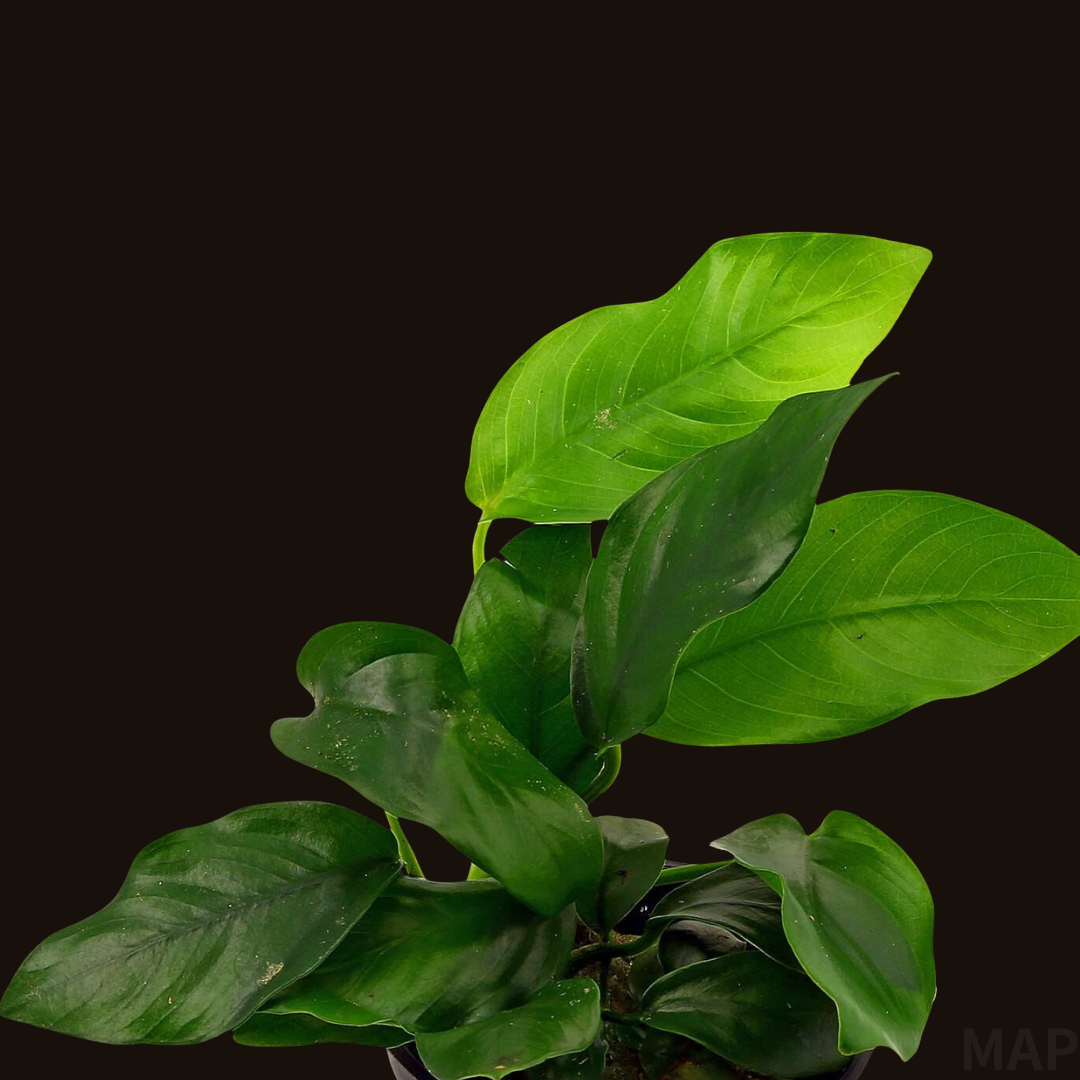
アヌビアス・ナナは、西アフリカのカメルーン周辺を原産とするサトイモ科の水生植物です。熱帯雨林の薄暗い河川や湿地帯に生息し、岩や流木に根を張って生きる着生植物としての性質を持っています。その最大の特徴は驚異的な強健さにあり、光が乏しい環境や二酸化炭素の添加がない水槽でも美しく育ちます。深緑色の肉厚な葉は、どんなレイアウトにも調和し、アクアリウム初心者から上級者まで、世界中のアクアリストに愛され続けている定番中の定番種です。Anubias barteri var. nana is an aquatic plant in the family Araceae, native to the regions around Cameroon in West Africa. It thrives in the dim rivers and wetlands of tropical rainforests, exhibiting epiphytic characteristics by rooting onto rocks and driftwood. Its most notable feature is its incredible hardiness, allowing it to grow beautifully even in low-light environments without CO2 injection. The dark green, leathery leaves harmonize with any layout, making it a timeless staple loved by aquarists worldwide, from beginners to experts.
基本情報 / Basic Information
学名 / Scientific Name
Anubias barteri var. nana
通称 / Common Name
アヌビアス・ナナAnubias Nana
分類 / Family
サトイモ科(Araceae)アヌビアス属Araceae, Genus Anubias
分布 / Distribution
西アフリカ(カメルーンなど)West Africa (Cameroon, etc.)
育成難易度 / Difficulty
容易Easy
育成環境 / Cultivation Environment
光量 / Light
低光量でも可(20W型LED1灯程度から)Low light is acceptable (from approximately one 20W LED).
pH 5.5〜8.0、弱酸性〜弱アルカリ性、硬度は中程度までpH 5.5–8.0, slightly acidic to slightly alkaline, up to moderate hardness.
底床 / Substrate
不問(ソイル、砂、砂利など)。活着させるため、底床そのものの栄養は不要Not specified (soil, sand, gravel, etc.). As it is epiphytic, nutrients in the substrate are not required.
レイアウト / Layout
配置 / Positioning
前景〜中景。流木や石への活着が基本。Foreground to midground. Ideally attached to driftwood or stones.
注意点 / Precautions
根茎(太い茎の部分)を底床に完全に埋めないこと。埋めると酸素欠乏により腐敗する恐れがあります。Do not fully bury the rhizome (the thick part of the stem) in the substrate. Doing so may cause it to rot due to lack of oxygen.
増やし方(トリミング) / Propagation & Trimming
増やし方 / Propagation
株分け。根茎を清潔なハサミなどで切断し、それぞれを別の場所に活着させます。Division. Cut the rhizome with clean scissors and attach each part to a new location.
トリミング / Trimming
古い葉やコケが付着した葉を、付け根から切り取ります。成長が遅いため、切りすぎに注意。Remove old leaves or those covered in algae by cutting them at the base. Be careful not to over-trim as growth is slow.
病気と対策(コケなど) / Pests & Algae
かかりやすい病気 / Common Issues
根茎腐敗病(アヌビアス・ロット)、黒髭苔、緑斑藻。Rhizome rot (Anubias rot), Black Brush Algae (BBA), and Green Spot Algae (GSA).
対策と予防 / Prevention
腐敗した部分は即座に切除し、隔離。コケ対策にはヤマトヌマエビやオトシンクルスの導入、光量の調整が有効です。Immediately cut off and isolate any rotting parts. For algae, introducing Yamato Numasubushi (Amano Shrimp) or Otocinclus and adjusting light levels are effective.
雑学と豆知識 / Trivia and Fun Facts
1. 学名の由来と「冥界の神」 / 1. Etymology and the “God of the Underworld”
属名の Anubias は、古代エジプトの神アヌビスに由来しています。アヌビスは冥界や死者の守護神であり、この植物が熱帯雨林の太陽がほとんど届かない「暗い場所」でひっそりと群生する様子から、この名が与えられました。学術的な記載は1857年にハインリヒ・ショットによって行われ、その後1979年の再編を経て、現在の Anubias barteri var. nana という名称が確定しました。The genus name Anubias is derived from the ancient Egyptian god Anubis, the guardian of the underworld. This name was chosen because the plant thrives in the “dark places” of tropical rainforests where sunlight barely reaches. It was first scientifically described by Heinrich Schott in 1857, and through a taxonomic revision in 1979, the current name Anubias barteri var. nana was established.
2. 遺伝子レベルでの光への適応 / 2. Genetic Adaptation to Light
近年のゲノム解析により、アヌビアス属は ccsA や matK といった特定の遺伝子において強い正の選択を受けていることが判明しています。これらの遺伝子は葉緑体の光化学系に関与しており、水中での極端な低照度と、陸上での強い光の両方に適応するための「表現型可塑性」を獲得する鍵となっています。この進化の軌跡こそが、初心者向けと言われるほどの強健さを支えているのです。Recent genomic analysis has revealed that the genus Anubias has undergone strong positive selection in specific genes such as ccsA and matK. These genes are involved in the chloroplast photosystem and are key to acquiring “phenotypic plasticity,” allowing the plant to adapt to both extremely low light underwater and bright light on land. This evolutionary trajectory supports the hardiness that makes it so suitable for beginners.
3. 幻想的な水中開花 / 3. Mystical Underwater Flowering
被子植物の多くは水没下での開花を避けますが、アヌビアス・ナナは完全な水中で頻繁に開花します。サトイモ科特有の「仏炎苞(ぶつえんほう)」を伴う白い肉穂花序を展開する様子は、非常に神秘的です。自然界では水流によって運ばれる微小な水生動物相が受粉を媒介している可能性が示唆されていますが、一般的な水槽内では受粉が困難なため、やがてバイオフィルムに包まれて組織が崩壊していきます。While many angiosperms avoid flowering while submerged, Anubias nana frequently blooms completely underwater. The sight of its white spadix within a spathe—typical of the Araceae family—is truly mystical. In nature, tiny aquatic fauna carried by water currents may act as pollinators, but in a standard aquarium, pollination is difficult, and the flowers eventually decay as they become covered in biofilm.
4. 組織培養による無菌栽培 / 4. Sterile Cultivation via Tissue Culture
従来の現地採取苗では混入生物のリスクがありましたが、近年は寒天培地を用いた組織培養による無菌栽培株が普及しています。無菌状態で大量生産が可能であり、敏感な甲殻類生体との共存も容易なため、特にクリーンな水槽環境を重視する栽培者に支持されています。培地を洗浄するだけで植栽可能な手軽さも利点です。While conventional field-collected seedlings carried risks of introducing unwanted organisms, sterile cultivars grown through tissue culture using agar media have become widespread in recent years. These are mass-produced in sterile environments and can easily coexist with sensitive crustaceans, gaining strong support from growers who prioritize a clean aquarium environment. Another advantage is the ease of planting, as the growth medium can be simply washed away.
5. スノー・ホワイト品種のジレンマ / 5. The Dilemma of the ‘Snow White’ Cultivar
純白の葉を持つ「スノー・ホワイト」は、非常に高価で希少な品種です。しかし、この白さは葉緑素が欠乏している「生理学的障害」の結果でもあります。強光下では葉が焼け、弱光下では生存のために葉緑素を生成して緑色に戻ってしまうというジレンマを抱えています。美しい白さを維持しつつ生存させるには、熟練のアクアリストによる極めて精密な光量と水質の管理が要求されます。The ‘Snow White’ cultivar, with its pure white leaves, is a highly expensive and rare variety. However, this whiteness is the result of a “physiological disorder”—a lack of chlorophyll. It presents a dilemma: strong light causes the tissue to burn, while weak light triggers the plant to produce chlorophyll for survival, turning the leaves green. Keeping it alive while maintaining its beauty requires extremely precise management of light and water quality by expert aquarists.
まとめ / Conclusion
アヌビアス・ナナは、その神秘的なルーツと科学的な強靭さを併せ持つ、まさにアクアリウムの宝物のような存在です。西アフリカの過酷な環境が生んだ進化の成果は、現代の私たちの水槽に、静かな美しさと癒しを与えてくれます。特に根茎を埋めないという一点さえ守れば、長くその生命を維持することができるでしょう。Anubias barteri var. nana is truly a treasure of the aquarium world, combining mystical roots with scientific resilience. The result of evolution in the harsh environments of West Africa, it brings quiet beauty and serenity to our modern tanks. As long as you remember the single crucial rule—do not bury the rhizome—this plant will grace your aquarium with its life for many years to come.
もしあなたが、これから新しい水槽を立ち上げるのであれば、ぜひこの「神聖なる植物」をレイアウトの仲間に加えてみてください。組織培養による無菌株を選べば安全性も高く、流木に括り付けるだけで、あなたの水槽は瞬時に熱帯の森の一部へと変貌するはずです。If you are starting a new aquarium, consider adding this “divine plant” to your layout. Choosing a sterile tissue culture specimen ensures safety, and by simply attaching it to driftwood, your aquarium will instantly transform into a piece of a tropical forest.
Schott, H. W. (1857). Aroideae Maximilianae. (Anubias afzelii に関する初期的記載)
Engler, A. (1899). Botanische Jahrbucher fur Systematik, Pflanzengeschichte und Pflanzengeographie. (Anubias nana の種としての記載)
Crusio, W. E. (1979). A revision of Anubias Schott (Araceae). (Primitiae Africanae XII). Mededelingen Landbouwhogeschool Wageningen. (アヌビアス属の包括的な再編および変種 Anubias barteri var. nana の定義)
Liu, Y., et al. (2020). Complete chloroplast genome of Anubias barteri var. nana. (葉緑体ゲノム解析および ccsA, matK 遺伝子等の適応的進化に関する研究)
Aquasabi. Plant Database: Anubias barteri var. nana ‘Snow White’. (スノー・ホワイト等の栽培品種に関する生理学的知見)
Dennerle. Plant Archive: Anubias barteri var. nana ‘Pangolino’. (パンゴリーノ等の矮性品種の選別と命名に関する資料)
Murashige, T., and Skoog, F. (1962). A Revised Medium for Rapid Growth and Bio Assays with Tobacco Tissue Cultures. (組織培養に用いる MS培地の基礎理論)



 アイのアクアグッズ案内ショップで見かけるカラフルなバケツ。いったい何が入ってる?道具の特徴や使い方、選ぶときのポイントをアイが紹介します。記事はコチラ →
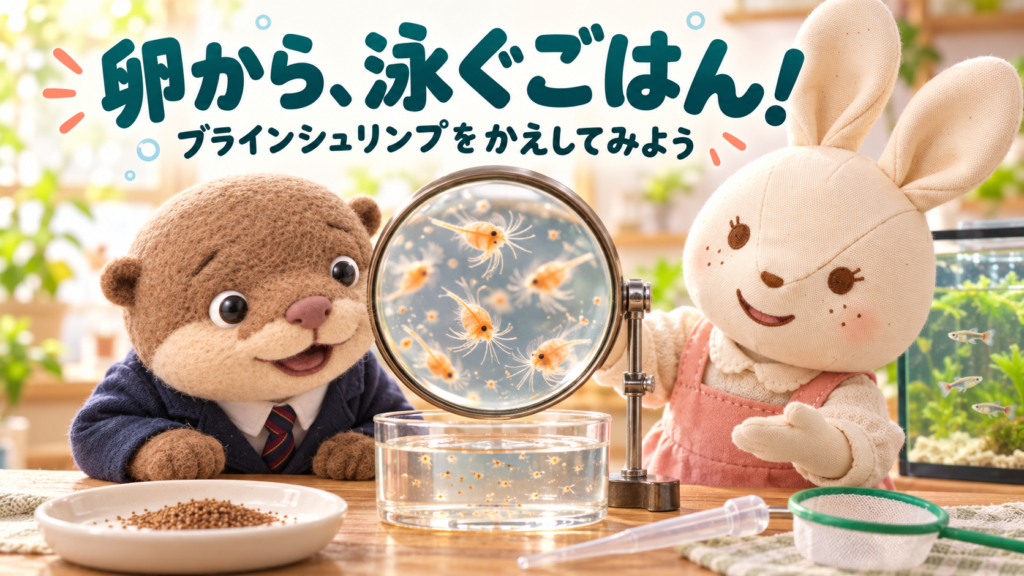 アイのアクアグッズ案内そのごはん、泳いでる! 卵から始めるブラインシュリンプの孵化と道具選び道具の特徴や使い方、選ぶときのポイントをアイが紹介します。記事はコチラ →



コメント