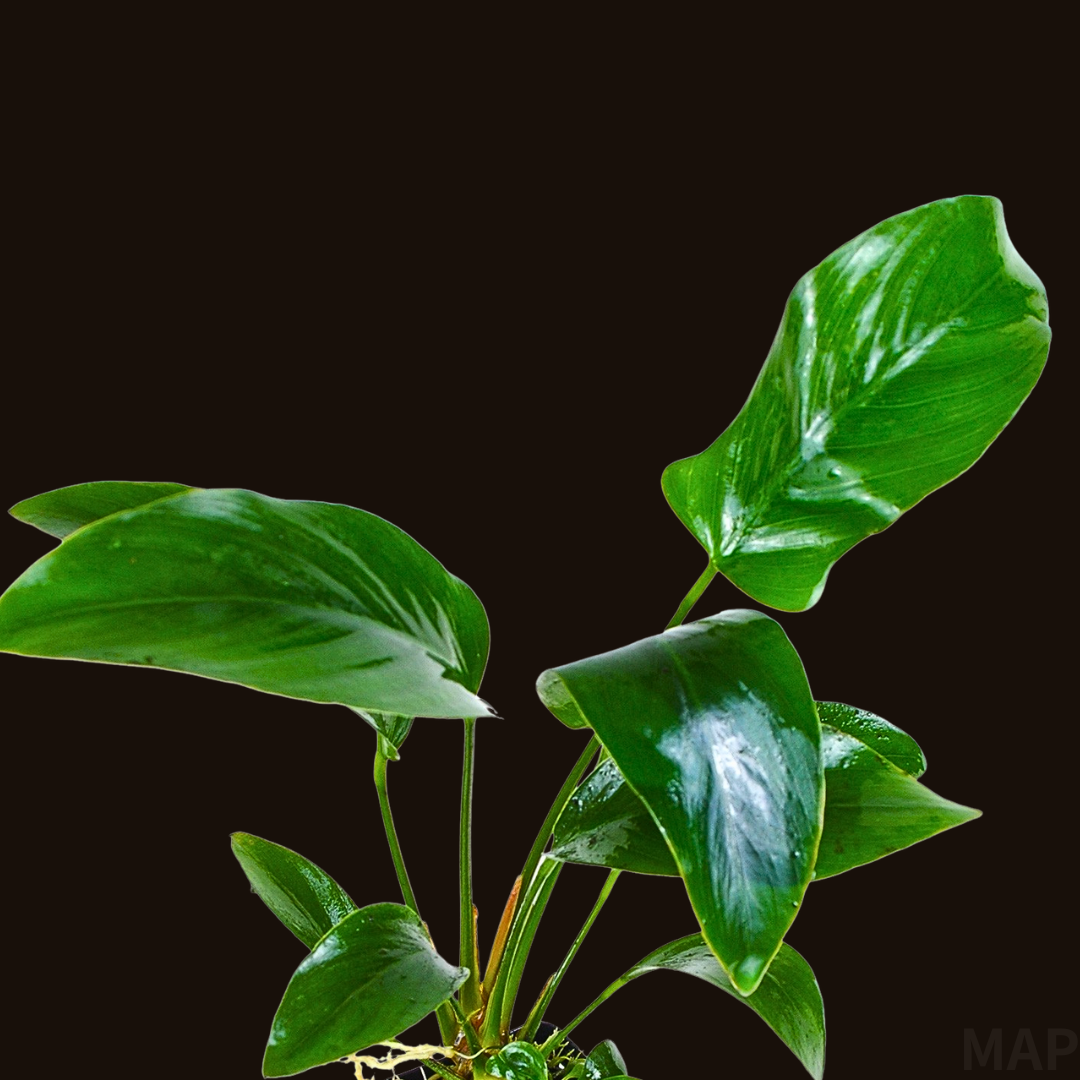
アヌビアス・ハスティフォリアは、西アフリカの熱帯雨林に自生するアヌビアス属の中でも、特にドラマチックな葉の造形を持つ種です。最大の特徴は、その名が示す通りの矛(ほこ)や槍を思わせる独特な葉の形状にあります。成長するにつれて葉の基部が左右に張り出し、矢じりのような鋭いシルエットを形成します。他のアヌビアス種と同様に極めて強健で、低光量や幅広い水質に適応する能力を持っていますが、本種はそのダイナミックな草姿から、中型から大型水槽のセンタープランツとして、あるいは水上葉を楽しむパルダリウムの主役として非常に高い人気を誇っています。Anubias hastifolia is a species with particularly dramatic leaf morphology among the genus Anubias, native to the tropical rainforests of West Africa. Its most striking feature, as its name suggests, is the unique hastate or spear-shaped leaves. As it matures, the base of the leaf expands laterally, forming a sharp, arrowhead-like silhouette. Like other Anubias species, it is extremely robust and can adapt to low light and a wide range of water conditions. Due to its dynamic appearance, it is highly popular as a center plant in medium to large aquariums or as a centerpiece in paludariums where its emersed leaves can be appreciated.
基本情報 / Basic Information
学名 / Scientific Name
Anubias hastifolia
通称 / Common Name
アヌビアス・ハスティフォリアAnubias hastifolia
分類 / Family
サトイモ科(Araceae)Araceae
分布 / Distribution
西アフリカ(ガーナ、ナイジェリア、カメルーン、ガボン、コンゴ等)West Tropical Africa (Ghana, Nigeria, Cameroon, Gabon, Congo, etc.)
育成難易度 / Difficulty
容易(ただし成長は非常に緩やか)Easy (but growth is very slow)
育成環境 / Cultivation Environment
光量 / Light
低光量から中光量(60cm規格水槽で1000ルーメン程度のLED照明で十分)Low to Moderate (Around 1000 lumens LED for a standard 60cm tank is sufficient)
CO2添加 / CO2 Injection
必須ではないが、1滴/3秒程度の添加で水中適応と健康な成長が促進されるNot required, but injection at about 1 drop every 3 seconds promotes submersed adaptation and healthy growth.
水質 / Water Quality
水温 20~28度、弱酸性から中性(pH 5.0~7.5)、軟水(0~6 dGH)Temperature: 20-28°C, pH: 5.0-7.5 (slightly acidic to neutral), Soft Water (0-6 dGH)
底床 / Substrate
砂利、ソイル、あるいは流木や石への活着(根茎を埋めないこと)Gravel, Soil, or attachment to driftwood and stones (Do not bury the rhizome)
レイアウト / Layout
配置 / Positioning
中景から後景(大型水槽やパルダリウムに最適)Mid-ground to Background (Ideal for large tanks or paludariums)
注意点 / Precautions
非常に大きくなるため、60cm規格水槽(約60リットル)以上の余裕を持ったサイズでの育成が推奨されます。成長が遅いため、レイアウトの変更は控えめにします。Since it grows quite large, cultivation in a standard 60cm tank (approx. 60 liters) or larger is recommended. Because growth is slow, minimize layout changes.
増やし方(トリミング) / Propagation & Trimming
増やし方 / Propagation
株分けによる増殖が一般的です。根茎(匍匐茎)を鋭利なカッターなどでカットして増やします。Commonly propagated by rhizome division. Cut the rhizome with a sharp blade to create new plants.
トリミング / Trimming
古くなった葉やコケが付着した葉を、付け根からカットします。根茎を傷つけないように注意してください。Cut old or algae-covered leaves from the base. Be careful not to damage the rhizome.
病気と対策(コケなど) / Pests & Algae
かかりやすい病気 / Common Issues
根茎の腐敗、黒髭苔の付着Rhizome rot, Black brush algae
対策と予防 / Prevention
根茎を底床に埋めないことで腐敗を予防します。コケ対策にはオトシンクルスやヤマトヌマエビ等のクリーナー生体を導入し、適度な水流を確保します。Prevent rot by not burying the rhizome in the substrate. For algae control, introduce cleanup crews like Otocinclus or Yamato shrimp, and ensure adequate water flow.
雑学と豆知識 / Trivia and Fun Facts
1. 死後の世界の神と矛の葉 / 1. The God of the Underworld and the Spear Leaf
属名の「アヌビアス」は、古代エジプトの神「アヌビス」に由来します。これは、直射日光の届かない暗いジャングルの水辺にひっそりと自生する姿を、冥界の神になぞらえたものです。また、種小名の「ハスティフォリア」はラテン語で「矛(ハスタ)のような葉(フォリア)」を意味しており、その名の通り、私たちを魅了する槍状のシルエットを的確に表現しています。The genus name Anubias comes from the ancient Egyptian god Anubis. This is because the plant’s habit of growing quietly in the dark shadows of the jungle near water was compared to the god of the underworld. The species name hastifolia means spear-like (hasta) leaf (folia) in Latin, accurately describing the captivating lance-shaped silhouette that fascinates us.
2. 激流を生き抜くための進化:渓流植物としての知恵 / 2. Evolution to Survive Torrents: Wisdom of a Rheophyte
ハスティフォリアが持つ独特の矛形の葉は、単なる美しさのためだけではありません。自生地である西アフリカの河川では、雨季に激しい鉄砲水が発生します。この水の抵抗を最小限に抑え、流木や岩から植物体が引き剥がされないよう、流体力学的に洗練された形状へと進化した「渓流植物(リョウフィート)」としての証なのです。また、物理的な摩擦や乾燥から身を守るために発達した厚い革質の葉も、この過酷な環境への適応の結果です。The unique spear-shaped leaves of hastifolia are not just for beauty. In its native West African rivers, intense flash floods occur during the rainy season. This shape is proof of its identity as a rheophyte, evolved through fluid dynamics to minimize water resistance and prevent the plant from being torn from driftwood or rocks. The thick, leathery leaves developed to protect against physical friction and desiccation are also results of adaptation to this harsh environment.
3. 分類学の歴史と「アマウリエラ」の謎 / 3. Taxonomic History and the Mystery of Amauriella
1893年にアドルフ・エングラーによって記載された本種ですが、過去には「アマウリエラ(Amauriella)」という別の属として分類されていた時期もありました。多くの植物学者が異なる標本に別名を付けたため、多くのシノニム(同物異名)が存在します。1979年にクルシオによる再分類が行われるまで、分類学的には非常に複雑な歴史を歩んできた種でもあります。Described by Adolf Engler in 1893, this species was once classified under a different genus called Amauriella. Because many botanists gave different names to various specimens, numerous synonyms exist. It is a species that has walked a very complex taxonomic history until the revision by Crusio in 1979.
4. 清潔で安全な「組織培養株」の普及 / 4. Popularity of Clean and Safe Tissue Culture Plants
かつてはアフリカからの野生採集株が主流でしたが、現在日本で流通しているものの多くは組織培養(in vitro)技術によって生産されたものです。これにより、農薬や害虫、コケの胞子を水槽に持ち込むリスクが劇的に減少しました。特に残留農薬に敏感なエビ類を飼育しているアクアリストにとって、組織培養のハスティフォリアは安心して導入できる貴重な選択肢となっています。While wild-harvested plants from Africa were once mainstream, most of those distributed in Japan today are produced via tissue culture (in vitro). This has drastically reduced the risk of introducing pesticides, pests, or algae spores into the aquarium. For aquarists keeping sensitive shrimp, tissue culture hastifolia has become a valuable and safe option.
まとめ / Conclusion
アヌビアス・ハスティフォリアは、その圧倒的な造形美と強健さを兼ね備えた、まさにアクアリウムの至宝とも呼べる水草です。矛形の葉が水景にもたらす立体感と野生味は、他の種では決して代替できない魅力を持っています。成長が緩やかであるため、長期維持を目的としたレイアウトに最適であり、時間とともに深みを増していくその姿は、飼育者の忍耐に応える美しさを見せてくれます。Anubias hastifolia is a true gem of the aquarium world, combining overwhelming structural beauty with robustness. The three-dimensional feel and wild aesthetics that its spear-shaped leaves bring to a waterscape have a charm that no other species can replace. Because of its slow growth, it is ideal for layouts intended for long-term maintenance, and its appearance, which gains depth over time, reveals a beauty that rewards the keeper’s patience.
もしあなたが、流木を使った本格的なレイアウトや、水上の緑を楽しむパルダリウムに挑戦したいと考えているなら、このハスティフォリアは最高のパートナーになってくれるはずです。根茎を埋めないという基本さえ守れば、日本の軟水環境は彼らにとって理想的なゆりかごとなります。ぜひ、このアフリカの槍をあなたの水槽に迎え、進化の歴史を感じてみてください。If you are thinking of challenging yourself with a serious driftwood layout or a paludarium to enjoy emersed greenery, this hastifolia will surely be your best partner. As long as you follow the basic rule of not burying the rhizome, Japan’s soft water environment will be an ideal cradle for them. We encourage you to welcome this African spear into your aquarium and feel the history of evolution for yourself.
Crusio, W. (1979). A revision of Anubias Schott (Araceae). (Primitiae Africanae XII). Mededelingen Landbouwhogeschool Wageningen, 79(14), 1-48.
Engler, A. (1893). Beiträge zur Flora von Afrika. VI. Araceae. africanae. I. Botanische Jahrbücher für Systematik, Pflanzengeschichte und Pflanzengeographie, 15, 447-466.
Rendle, A. B. (1913). Catalogue of the plants collected by Mr. and Mrs. P. A. Talbot in the Oban District South Nigeria. British Museum (Natural History), London.
IUCN (2020). The IUCN Red List of Threatened Species. Anubias hastifolia. Version 2020-3.
Kasselmann, C. (2020). Aquarium Plants (Revised and Expanded Edition). T.F.H. Publications.



 アイのアクアグッズ案内ダニオの仲間に合わせる飼育用品|ゼブラダニオから超小型種まで水槽・ろ過・餌を選ぶ道具の特徴や使い方、選ぶときのポイントをアイが紹介します。記事はコチラ →
 アイのアクアグッズ案内エンゼルフィッシュの飼育用品|高さのある水槽・ろ過・水草・餌の選び方道具の特徴や使い方、選ぶときのポイントをアイが紹介します。記事はコチラ →



コメント