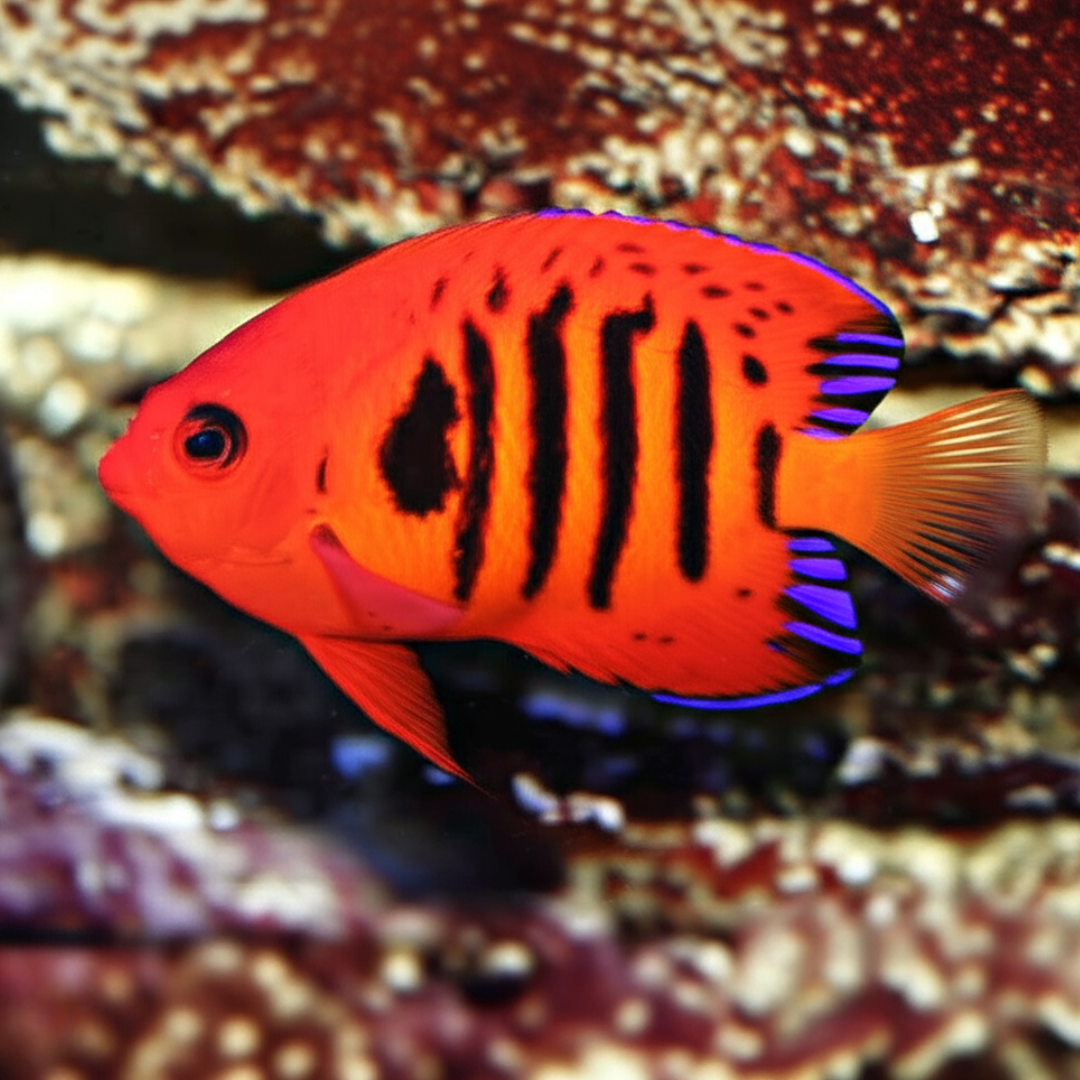
フレームエンゼルは、太平洋のサンゴ礁を彩る最も美しい海水魚のひとつとして知られています。その名の通り、燃え盛る炎(フレーム)のような鮮烈な赤色とオレンジ色の体色が最大の特徴であり、世界中のアクアリストから絶大な人気を誇ります。体側には数本の黒い垂直なバンドが刻まれ、背鰭と臀鰭の縁を彩る鮮やかな青紫色のストライプが、その色彩美をさらに際立たせています。アブラヤッコ属のなかでも商業的に最も成功している種のひとつであり、日本国内でもその美しさと、水槽環境への適応性の高さから、海水魚飼育の入門からベテランまで幅広く愛され続けている特別な存在です。The Flame Angelfish is known as one of the most beautiful marine fish coloring the coral reefs of the Pacific. As its name suggests, its most striking feature is its vivid red and orange body color, reminiscent of a blazing flame. The body is marked with several black vertical bands, and the brilliant blue-violet stripes edging the dorsal and anal fins further accentuate its colorful beauty. One of the most commercially successful species among the Centropyge genus, it remains a special presence in Japan, loved by everyone from beginners to experienced marine aquarists for its beauty and high adaptability to aquarium environments.
基本情報 / Basic Information
学名 / Scientific Name
Centropyge loricula
通称 / Common Name
フレームエンゼルFlame Angelfish, Flame Pygmy Angelfish
分類 / Family
キンチャクダイ科 アブラヤッコ属Pomacanthidae, Centropyge genus
英名 / English Name
Flame Angelfish
分布 / Distribution
太平洋諸島(マーシャル諸島、クリスマス島、ハワイ諸島、タヒチなど)Pacific Islands (Marshall Islands, Christmas Island, Hawaiian Islands, Tahiti, etc.)
最大体長 / Max Size
約10cmから15cm(水槽内では7cmから10cm程度)Approximately 10cm to 15cm (reaches 7cm to 10cm in aquariums)
寿命 / Lifespan
5年から7年以上5 to 7 years or more
飼育環境 / Aquarium Environment
水槽サイズ / Tank Size
60cm規格水槽(約60L)以上推奨60cm standard tank (approx. 60L) or larger recommended
水温 / Temperature
22度から26度22 to 26 degrees Celsius
水質 / Water Quality
pH 8.1から8.4、比重 1.020から1.024(海水環境)pH 8.1-8.4, Specific Gravity 1.020-1.024 (Marine environment)
レイアウト / Layout
ライブロックを複雑に組み上げ、迷路のような隠れ家を多く設けた環境を好みます。Prefers an environment with complex live rock structures and many maze-like hiding places.
注意点 / Precautions
導入直後は白点病などの寄生虫にかかりやすいため、殺菌灯の使用や厳格なトリートメントが推奨されます。Since they are prone to parasites like marine white spot disease right after introduction, UV sterilizers and strict quarantine are recommended.
餌と給餌 / Feeding
餌の種類 / Diet
人工飼料(ペレット・フレーク)、海藻、冷凍のイサザアミ(マイシス)など。Dry food (pellets/flakes), seaweed, frozen mysis shrimp, etc.
給餌のポイント / Feeding Tips
野生下では藻類や小甲殻類を好むため、植物性成分(スピルリナなど)を含む餌を定期的に与えることが長期飼育の鍵となります。In the wild, they feed on algae and small crustaceans, so regularly providing food containing vegetable components like spirulina is key to long-term success.
性格と混泳 / Temperament and Tank Mates
性格 / Temperament
縄張り意識が強く、やや気が強い一面があります。Possesses strong territorial instincts and can be somewhat aggressive.
混泳の相性 / Compatibility
同属・同種間では激しく争うため、基本は単独飼育。ハギ類やベラ類とは混泳可能です。サンゴを突く可能性があるため注意が必要です。Will fight fiercely with the same species or genus, so single keeping is basic. Compatible with tangs and wrasses. Caution is needed as they may nip at corals.
病気と対策 / Diseases and Prevention
かかりやすい病気 / Common Diseases
海水白点病、ウーディニウム病、ハダムシなどの外部寄生虫。Marine white spot disease, Amyloodinium, and external parasites like flukes.
対策と予防 / Prevention
ショップでのトリートメント済み個体を選び、水温・水質の急変を避けることが最善の予防です。Choosing quarantined individuals and avoiding sudden changes in temperature and water quality is the best prevention.
増やし方(繁殖) / Breeding
雌雄の判別 / Sexing
オスはメスよりも体格が大きく、背鰭と臀鰭の後端にある青紫色のストライプがより太く、広範囲に広がります。Males are larger than females, and the blue-violet stripes on the trailing edges of the dorsal and anal fins are thicker and more extensive.
繁殖形態 / Reproduction
雌性先熟の雌雄同体。群れのなかの優位なメスがオスへと性転換します。Protogynous hermaphrodite. The dominant female in a group changes sex to become a male.
繁殖のポイント / Breeding Tips
近年、人工繁殖技術が確立されましたが、孵化直後の仔魚の初期餌料の確保が極めて難しいため、一般家庭での繁殖は困難です。In recent years, aquaculture techniques have been established, but breeding at home is difficult due to the extreme challenge of providing initial feed for larvae.
雑学と豆知識 / Trivia and Fun Facts
1. 捕食者の胃袋から発見された新種 / 1. A New Species Found in a Predator’s Stomach
フレームエンゼルの発見は、まるで冒険小説のようなエピソードから始まりました。1860年頃、博物学者のアンドリュー・ギャレットがオセアニアの海で、釣り上げたハタの胃の中から、これまでに見たこともない鮮やかな赤い魚の死骸を見つけ出したのです。この損傷を伴った「奇跡の一匹」が、後に新種として記載されることとなりました。The discovery of the Flame Angelfish began with an episode straight out of an adventure novel. Around 1860, naturalist Andrew Garrett found the remains of a brilliantly red fish he had never seen before inside the stomach of a grouper he caught in Oceania. This single, damaged “miracle fish” was later described as a new species.
2. 学名をめぐる「小さなコルセット」論争 / 2. The “Small Corset” Scientific Name Controversy
種小名の「loricula」は、ラテン語で「小さなコルセット」を意味します。体側の黒いバンドがコルセットの編み紐に見えたことから命名されました。実はこの学名、文法的には「loriculus」が正しいとする学術的な議論があり、現在でも一部の専門データベースではオリジナルの綴りが維持されていますが、市場では女性形の「loricula」が広く定着しています。The specific name “loricula” means “small corset” in Latin. It was named because the black bands on the side looked like corset laces. Interestingly, there is a scholarly debate that “loriculus” is grammatically correct, and some databases maintain the original spelling, but the feminine form “loricula” is widely accepted in the trade.
3. なぜか「日本の小型ヤッコ」と呼ばれた過去 / 3. Why It Was Once Called the “Japanese Pygmy Angelfish”
フレームエンゼルは日本近海には生息していませんが、かつて英語圏では「Japanese Pygmy Angelfish」という誤った俗称で呼ばれることがありました。これは日本固有のレンテンヤッコと情報が混同されたためと考えられており、一度定着した情報の誤認が修正される難しさを示す、興味深い歴史のエラーと言えます。While Flame Angelfish are not found in Japanese waters, they were once erroneously referred to as “Japanese Pygmy Angelfish” in English-speaking regions. This is thought to be due to confusion with the Japanese native Centropyge interruptus, serving as an interesting historical error that shows how difficult it is to correct misinformation once established.
4. 産地で異なる「炎」の表情 / 4. Different Expressions of “Flame” by Region
広い太平洋の島々に分布する本種は、産地によってその体色が劇的に異なります。マーシャル産は赤が濃くバンドが太いのが特徴。クリスマス島産はややオレンジがかり、タヒチ産は「ブラッドレッド」と呼ばれる深い赤一色になります。こうした地理的変異は、日本のアクアリストの間でも「こだわり」のポイントとして楽しまれています。Distributed across the vast islands of the Pacific, this species shows dramatic differences in color depending on its origin. Marshall Islands specimens have deep red and thick bands. Christmas Island specimens are slightly more orange, and Tahiti specimens are a solid deep red called “Blood Red.” These geographical variations are enjoyed by Japanese aquarists as a point of specialization.
5. 持続可能な未来「ブリード個体」の時代へ / 5. Toward a Sustainable Future: The Era of Captive-Bred Specimens
長年、難しいとされてきた本種の人工繁殖ですが、2011年頃から海外の養殖施設で成功例が相次ぎ、現在では日本でも「ブリード個体」が流通するようになりました。これらは野生環境への負荷を減らすだけでなく、最初から人工飼料に慣れており病気にも強いという、飼育者にとっても非常に大きなメリットを持っています。For many years, captive breeding of this species was considered difficult, but success stories began emerging from overseas aquaculture facilities around 2011. Today, captive-bred specimens are available in Japan. Not only do they reduce pressure on wild environments, but they also offer great benefits to keepers, being acclimated to artificial feed and resistant to diseases from the start.
まとめ / Conclusion
フレームエンゼルは、その圧倒的な存在感で海水水槽を一気に華やかにしてくれる、まさに「海の至宝」です。飼育にあたっては、導入時の丁寧なトリートメントと、植物性成分を含んだバランスの良い給餌を心がけることで、その美しい色彩を長期間維持することができます。The Flame Angelfish is truly a “Treasure of the Sea” that instantly brightens up a marine aquarium with its overwhelming presence. In keeping them, careful quarantine at introduction and a well-balanced diet including vegetable components will allow you to maintain their beautiful colors for a long time.
産地ごとの個性を楽しみ、人工繁殖個体という選択肢を選ぶことで、この美しい魚との共生をより持続可能なものにしていきましょう。彼らが水槽のライブロックの間から姿を現す瞬間、あなたはきっと、海が育んだ色彩の魔法に改めて驚かされるはずです。By enjoying the individuality of each region and choosing captive-bred specimens, let’s make coexistence with this beautiful fish more sustainable. When they emerge from the gaps in the live rock, you will surely be amazed once again by the magic of colors nurtured by the ocean.



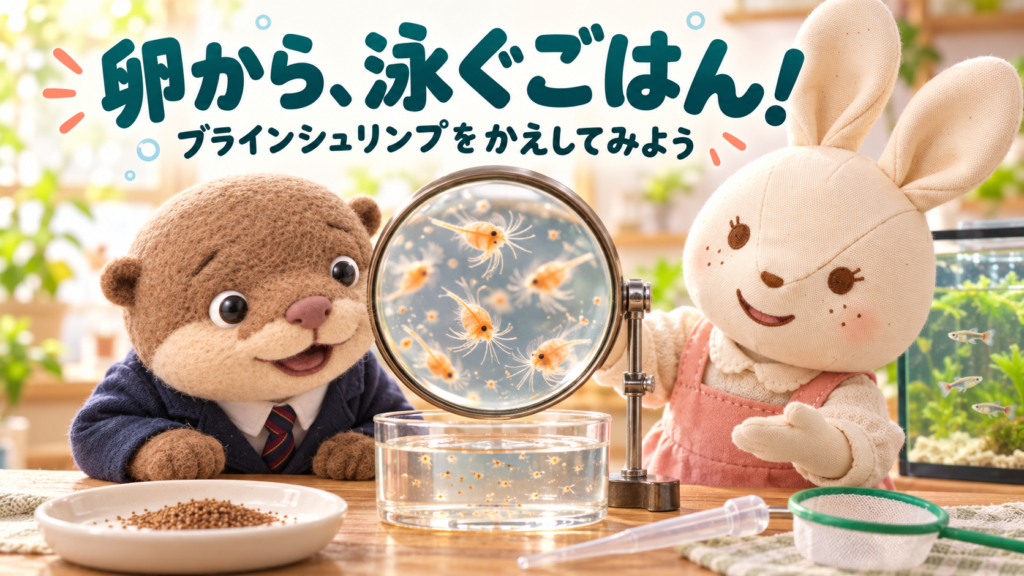 アイのアクアグッズ案内そのごはん、泳いでる! 卵から始めるブラインシュリンプの孵化と道具選び道具の特徴や使い方、選ぶときのポイントをアイが紹介します。記事はコチラ →
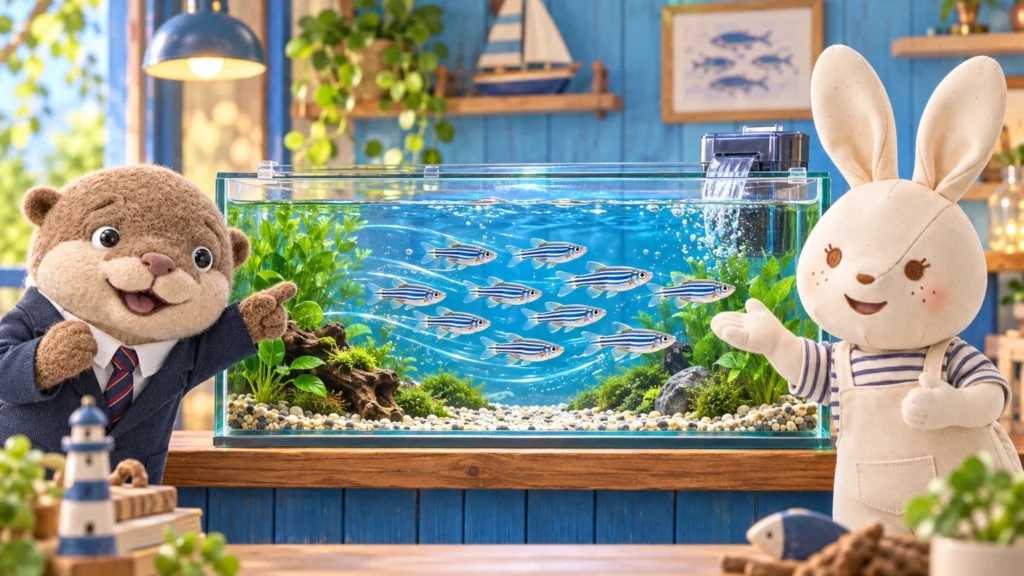 アイのアクアグッズ案内ダニオの仲間に合わせる飼育用品|ゼブラダニオから超小型種まで水槽・ろ過・餌を選ぶ道具の特徴や使い方、選ぶときのポイントをアイが紹介します。記事はコチラ →
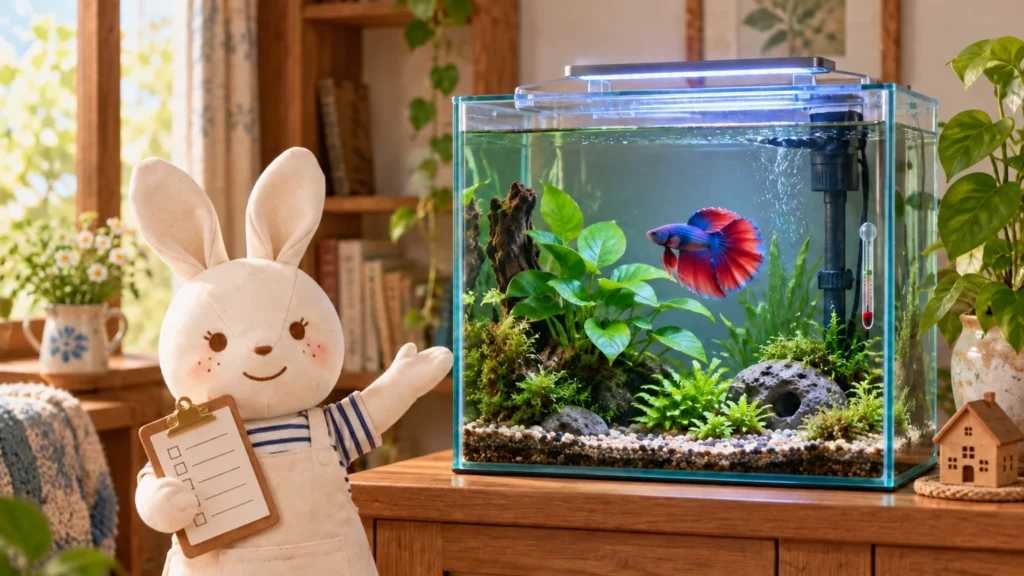 アイのアクアグッズ案内ベタの一匹飼いを楽しむ|水槽・ヒーター・ふた・フィルターの選び方ベタの一匹飼いに向く水槽容量、ふたと空気層、ヒーターと水温計、弱い水流のフィルターを、コタロウとアイの会話で分かりやすく解説します。記事はコチラ →
 アイのアクアグッズ案内海水魚の底砂の選び方|サンゴ砂・ライブサンドとおすすめ商品道具の特徴や使い方、選ぶときのポイントをアイが紹介します。記事はコチラ →



コメント