

解説 / Description
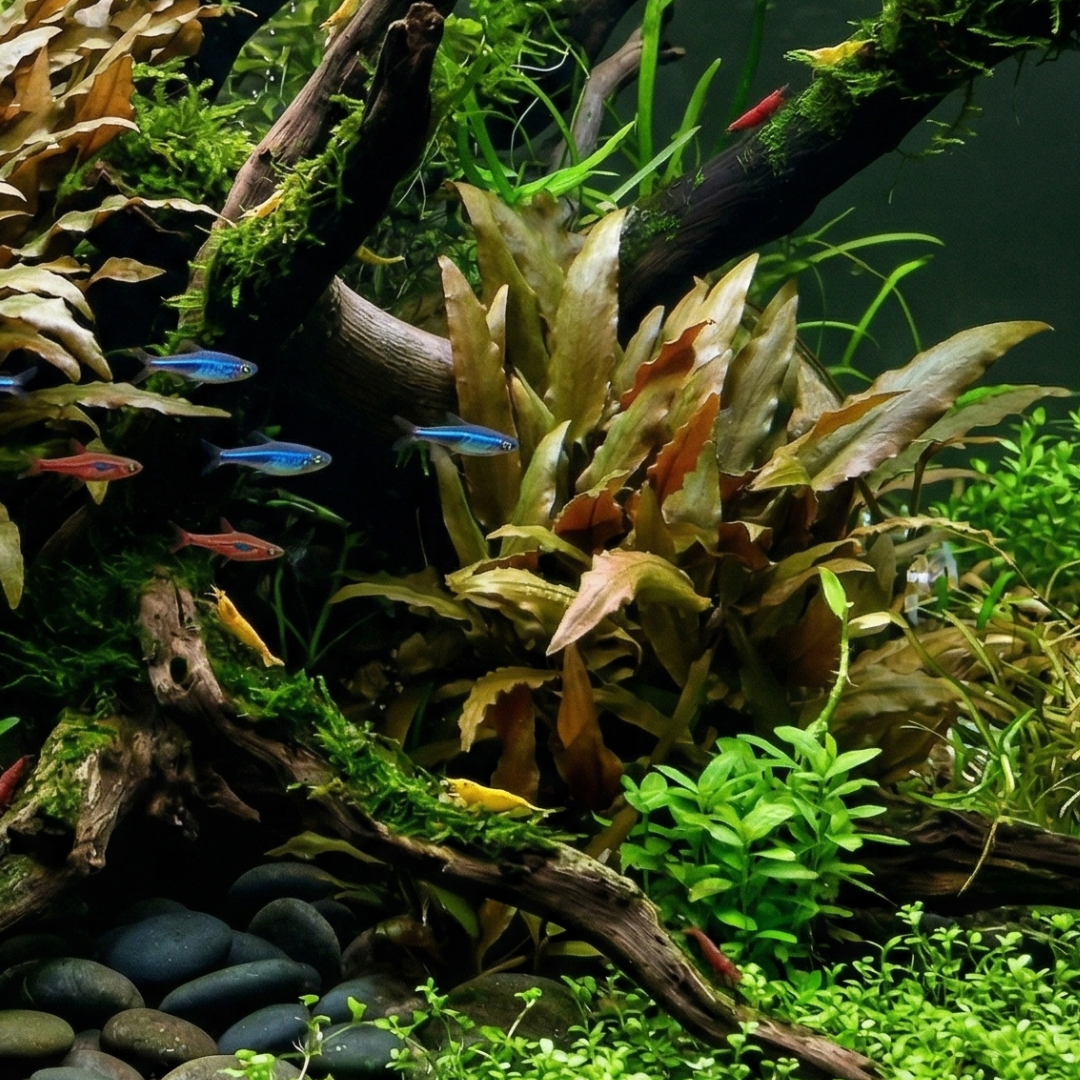
クリプトコリネ・ワルケリーは、中央スリランカを原産とするサトイモ科クリプトコリネ属の水辺性植物で、アクアリウムでは水草として親しまれています。水中ではロゼット状に葉を広げ、暗いオリーブグリーンから赤褐色、ブロンズ系の落ち着いた色合いを見せることがあります。派手に伸びる有茎草とは違い、ゆっくりと株を充実させながら水景の中景を支えるタイプの水草で、石や流木の根元、前景草と後景草のつなぎ役として扱いやすい種類です。 Cryptocoryne walkeri is a helophytic plant in the family Araceae, native to central Sri Lanka and commonly grown as an aquarium plant. In aquariums, it forms a rosette and may develop subdued olive-green, bronze, or reddish-brown leaves. Rather than growing rapidly like stem plants, it slowly establishes a stable clump, making it especially useful as a midground plant around stones, driftwood, and transitions between foreground and background planting.
基本情報 / Basic Information
| 学名 / Scientific Name | Cryptocoryne walkeri Schott |
|---|---|
| 通称 / Common Name | クリプトコリネ・ワルケリー、ワルケリーWalker’s Cryptocoryne, Water trumpet |
| 分類 / Family | サトイモ科クリプトコリネ属Araceae, genus Cryptocoryne |
| 分布 / Distribution | 中央スリランカ。現在の植物分類データベースでは、湿潤な熱帯環境に生育する水辺性の多年草として扱われています。Central Sri Lanka. Current botanical databases treat it as a helophyte or perennial that grows primarily in the wet tropical biome. |
| 育成難易度 / Difficulty | やさしい〜普通。環境が安定すれば丈夫ですが、導入直後や大きな環境変化のあとに葉が溶けることがあるため、植え替え後は根を動かさずに落ち着かせることが大切です。Easy to moderate. It is hardy once established, but the leaves may melt after introduction or major environmental changes, so it is important to avoid disturbing the roots after planting. |
育成環境 / Cultivation Environment
| 光量 / Light | 低光量から中光量で育成できます。強めの照明では赤褐色やブロンズ系の発色が出やすくなる一方、コケも出やすくなるため、光量を上げる場合はCO2や栄養バランスも合わせて整える必要があります。It can be grown under low to moderate light. Stronger lighting may enhance bronze or reddish tones, but it can also encourage algae, so CO2 and nutrient balance should be adjusted when using high light. |
|---|---|
| CO2添加 / CO2 Injection | 必須ではありませんが、添加すると活着後の成長や葉の厚み、発色が安定しやすくなります。CO2なしでも育成できますが、成長はゆっくりになるため、長期維持向きの水草と考えると扱いやすいです。CO2 injection is not essential, but it helps stabilize growth, leaf thickness, and coloration after the plant is established. Without CO2, growth is slower, so it is best regarded as a plant for long-term layouts. |
| 水質 / Water Quality | 弱酸性から弱アルカリ性まで幅広く適応します。日本の水道水のような軟水でも育成できますが、極端にミネラルが少ない環境では成長が鈍ることがあります。葉が小さいまま停滞する場合は、魚やエビへの影響を見ながら、底床やろ材で緩やかにミネラルを補うと安心です。It tolerates a wide range from slightly acidic to slightly alkaline water. It can grow in soft tap water, but growth may slow in extremely mineral-poor conditions. If the plant remains stunted, minerals can be gently supplemented through substrate or filter media while monitoring livestock carefully. |
| 底床 / Substrate | 根から養分を吸収する性質が強いため、栄養を含んだ水草用ソイルとの相性が良い水草です。大磯砂や川砂でも育成できますが、その場合は根元付近に固形肥料を補い、根が落ち着いて張れる環境を作ることが重要です。As a heavy root feeder, it grows well in nutrient-rich aquatic soil. It can also be grown in inert gravel or sand, but root tabs should be placed near the roots to provide a stable nutrient source. |
レイアウト / Layout
| 配置 / Positioning | 主に中景向きです。前景草の明るい緑と、後景の有茎草や流木の暗い影との間を自然につなぐ役割に向いています。小型水槽ではやや前寄りに置き、60cm規格水槽以上では石や流木の根元に数株まとめて植えると、落ち着いた群落感を出しやすくなります。It is mainly suited to the midground. It works well as a transition between bright foreground plants and darker driftwood, stones, or background stems. In small aquariums it can be placed slightly forward, while in standard 60 cm aquariums or larger, planting several individuals around hardscape creates a natural clump. |
|---|---|
| 注意点 / Precautions | 成長が遅いため、植栽直後から完成した茂みを期待するよりも、数か月単位で株が充実していく水草として使うと失敗が少なくなります。強光環境では葉色が濃くなる反面、成長の遅さからコケに覆われやすいことがあるため、周囲の有茎草や浮き草で光を和らげる工夫も有効です。Because it grows slowly, it should be used as a plant that matures over several months rather than one that creates an instant thicket. Under strong light, the leaves may darken, but slow growth can make them prone to algae, so shading with nearby stem plants or floating plants can be useful. |
増やし方(トリミング) / Propagation & Trimming
| 増やし方 / Propagation | 地下茎やランナーから子株を出して増えます。子株が十分に葉と根を展開してから切り離すと、その後の立ち上がりが安定しやすくなります。無理に早い段階で株分けすると成長が止まりやすいため、焦らず親株の周囲で育てることが大切です。It propagates by producing daughter plants from rhizomes or runners. Separating young plants after they have developed enough leaves and roots improves establishment. Dividing them too early can slow growth, so patience is important. |
|---|---|
| トリミング / Trimming | 有茎草のように切り戻す水草ではありません。古くなった葉、コケが強く付いた葉、溶け始めた葉を根元から切り取る管理が基本です。葉だけを途中で切ると見た目が悪くなりやすいため、不要な葉は株元に近い位置から取り除くと自然に仕上がります。It is not trimmed like a stem plant. Maintenance mainly consists of removing old leaves, heavily algae-covered leaves, or melting leaves from the base. Cutting leaves halfway often looks unnatural, so unwanted leaves should be removed close to the crown. |
病気と対策(コケなど) / Pests & Algae
| かかりやすい病気 / Common Issues | 代表的なトラブルは、クリプトコリネ類に見られる「溶け」です。導入直後、急な換水、水質や光量の変化、植え替えによる根のダメージなどをきっかけに、葉が半透明になって崩れることがあります。また、成長が遅いため、黒髭ゴケや糸状ゴケが葉に付着することもあります。The most common issue is Cryptocoryne melt. After introduction, sudden water changes, changes in light or water chemistry, or root disturbance can cause leaves to become translucent and break down. Because it grows slowly, black beard algae or filamentous algae may also attach to the leaves. |
|---|---|
| 対策と予防 / Prevention | 一度植えたら頻繁に動かさず、水質と光量を急変させないことが基本です。溶けた葉は水質悪化の原因になりやすいため、早めに根元から取り除きます。根茎が生きていれば新しい環境に合った葉を出すことが多いので、葉が落ちてもすぐに処分せず、底床内の株を落ち着かせて待つことが重要です。The basic prevention is to avoid moving the plant after planting and to keep water quality and light conditions stable. Melted leaves should be removed from the base before they degrade water quality. If the rhizome remains healthy, the plant often produces new leaves adapted to the new environment, so it is important to wait rather than discard it immediately. |
雑学と豆知識 / Trivia and Fun Facts
| 1. 属名に込められた「隠れた棍棒」 / 1. The “hidden club” in the genus name | クリプトコリネという属名は、ギリシャ語で「隠れた」を意味する言葉と「棍棒」を意味する言葉に由来するとされます。これは、サトイモ科に見られる肉穂花序が仏炎苞の中に隠れるように収まる構造を表したものです。普段の水槽では葉姿に目が向きますが、分類の決め手になるのは花の構造であり、クリプトコリネが単なる水草以上に植物学的な面白さを持つ理由でもあります。The genus name Cryptocoryne is generally understood to come from Greek words meaning “hidden” and “club.” It refers to the spadix being enclosed within the spathe, a typical aroid floral structure. In aquariums we mostly notice the leaves, but the flowers are important for classification, which is one reason Cryptocoryne is botanically fascinating. |
|---|---|
| 2. ワルケリー、ルテア、レグロイの関係 / 2. The relationship between walkeri, lutea, and legroi | 流通名ではクリプトコリネ・ルテアやクリプトコリネ・レグロイとして扱われることがありますが、専門的な整理ではワルケリーに近い形態群として広く扱われることがあります。スリランカ産クリプトコリネは地域差や水上葉・水中葉の違いが大きく、葉だけで明確に判断しにくい場合があります。図鑑や販売名を見るときは、名前が固定された絶対的なものというより、系統や形態を示す目安として受け止めると理解しやすいです。Plants sold as Cryptocoryne lutea or Cryptocoryne legroi are often treated by specialists as forms closely related to C. walkeri. Sri Lankan Cryptocoryne show strong regional variation and can differ greatly between emersed and submerged growth. Rather than seeing trade names as absolute, it is often more practical to view them as indicators of a form or lineage. |
| 3. 組織培養株が選ばれる理由 / 3. Why tissue-cultured plants are popular | 近年のアクアリウムでは、クリプトコリネ類も組織培養カップで流通する機会が増えています。組織培養株は農薬やスネールの混入リスクを避けやすく、エビを入れた水槽にも導入しやすい点が大きな利点です。ただし、カップ内のゲルを残したまま植えると水質悪化やコケの原因になることがあるため、植栽前に丁寧に洗い落としておくと安心です。In modern aquariums, Cryptocoryne are increasingly available as tissue-cultured cup plants. These plants reduce the risk of pesticide residues and hitchhiking snails, making them attractive for shrimp aquariums. However, the culture gel should be carefully rinsed away before planting, as leftover gel can degrade water quality and encourage algae. |
まとめ / Conclusion
クリプトコリネ・ワルケリーは、派手さよりも落ち着いた存在感で水景を支える水草です。低光量でも育てやすく、CO2添加がなくても維持できますが、根から養分を吸う性質が強いため、底床環境を整えることが長期維持の鍵になります。 Cryptocoryne walkeri supports an aquascape with a calm, understated presence rather than flashy growth. It can be maintained under low light and without CO2 injection, but because it relies strongly on root feeding, a stable and nutrient-rich substrate is key to long-term success.
導入直後の溶けに驚くことがありますが、根茎が健全であれば再生する可能性は十分にあります。一度植えた場所でじっくり落ち着かせ、数か月かけて群落を育てるつもりで向き合うと、ワルケリーらしい深みのある葉色と自然な中景を楽しめる水草です。 Leaf melt after introduction can be alarming, but if the rhizome remains healthy, recovery is very possible. By leaving the plant undisturbed and allowing the clump to mature over several months, aquarists can enjoy the deep coloration and natural midground texture that make C. walkeri appealing.

気になる道具や飼い方を見つけてみませんか?
 アイのアクアグッズ案内あい先生のアクアグッズ深堀り!|泡で汚れを取り出す? プロテインスキマーの歴史と仕組み道具の特徴や使い方、選ぶときのポイントをアイが紹介します。記事はコチラ →
 アイのアクアグッズ案内水槽のろ材の選び方|ウール・リング・活性炭の違いとおすすめ商品フィルターの中の綿や石は何をしている? アイとコタロウが、ウール・スポンジ・セラミック・焼結ガラス・活性炭・ゼオライトを比較。機種との相性、入れ方、洗い方と交換まで商品とともに紹介します。記事はコチラ →
さまざまな飼育テーマをご紹介。リンク先の記事には広告・商品紹介が含まれます。
案内・紹介記事一覧へ →参考文献
本記事では、クリプトコリネ・ワルケリーの分類、分布、形態、育成上の特徴を確認するため、以下の資料を参考にしました。販売店・通販サイト由来の情報は参考文献から除外しています。
- Plants of the World Online. “Cryptocoryne walkeri Schott.” Royal Botanic Gardens, Kew. 参照日:2026年5月20日。
- GBIF Secretariat. “Cryptocoryne walkeri Schott.” GBIF Backbone Taxonomy. 参照日:2026年5月20日。
- Plants of the World Online. “Cryptocoryne walkeri var. lutea (Alston) Rataj.” Royal Botanic Gardens, Kew. 参照日:2026年5月20日。
- Plants of the World Online. “Cryptocoryne legroi de Wit.” Royal Botanic Gardens, Kew. 参照日:2026年5月20日。
- Bastmeijer, Jan D. “Cryptocoryne walkeri Schott.” The Crypts Pages. 参照日:2026年5月20日。
- Bastmeijer, Jan D. “Structures in Cryptocoryne: the spathe.” The Crypts Pages. 参照日:2026年5月20日。
- Bastmeijer, Jan D. “Structures in Cryptocoryne: inside the kettle.” The Crypts Pages. 参照日:2026年5月20日。
- Petch, T. “Notes on Cryptocoryne.” 1928. The Crypts Pages 掲載PDF. 参照日:2026年5月20日。
- Kasselmann, Christel. Aquarium Plants. Krieger Publishing Company, 2003.





コメント