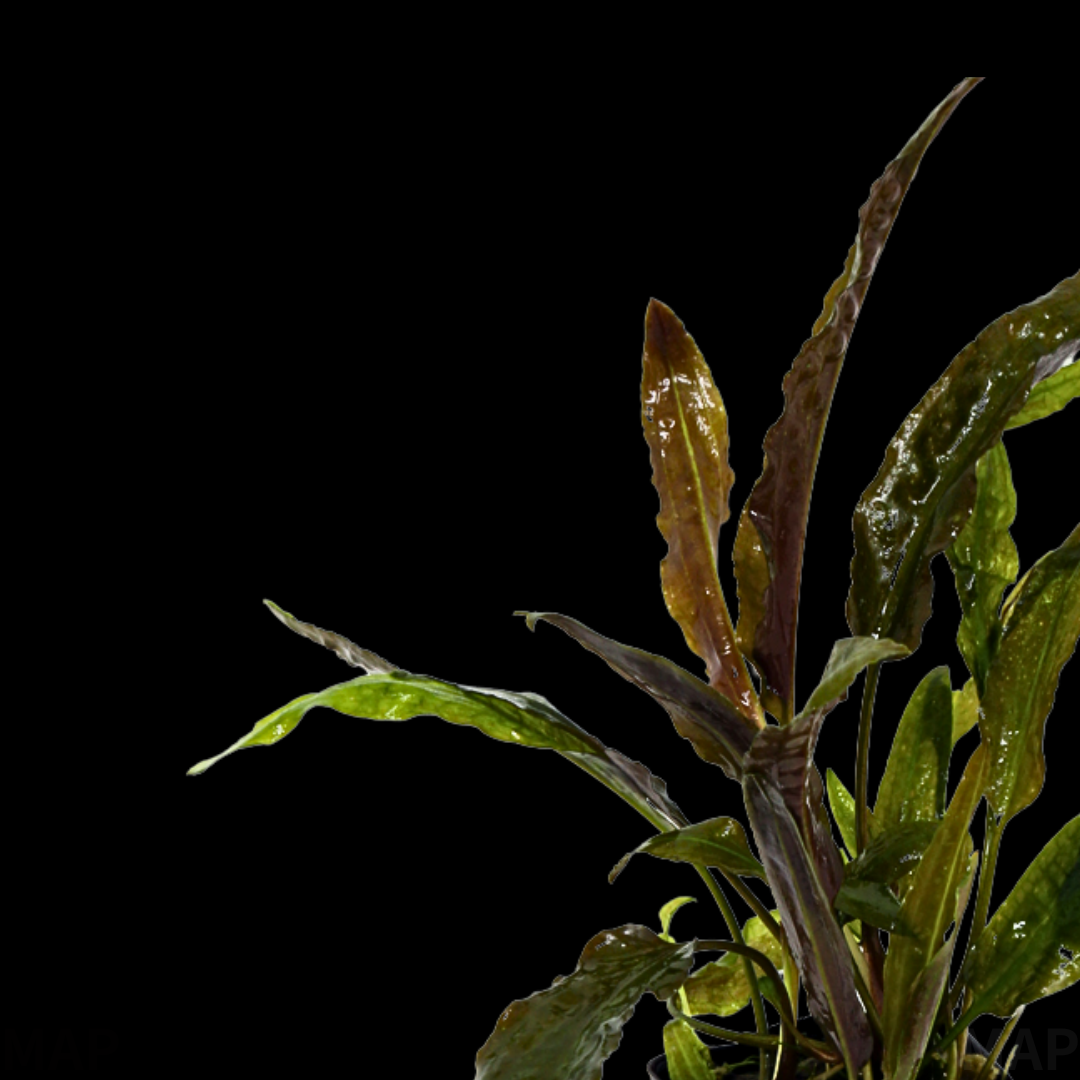
クリプトコリネ・ウステリアーナは、フィリピン群島の島々にのみ自生する極めて希少な固有種であり、クリプトコリネ属の中でも最大級の草姿を誇る水草です。最大の特徴は、長さ50センチメートルから70センチメートルに達する長大な葉と、その表面に刻まれた力強い凹凸(ブッレート構造)にあります。葉の表面は深い緑色からブロンズ色を呈し、一方で裏面は鮮やかな赤紫色(バーガンディレッド)に染まるという、劇的なコントラストが観賞上の大きな魅力となっています。石灰岩質の河川に適応しているため、日本の水道水のような中硬水環境でも非常に健やかに育ち、大型水槽の後景を彩るフォーカルポイントとして圧倒的な存在感を放ちます。Cryptocoryne usteriana is an extremely rare endemic species found only in the Philippine archipelago and is one of the largest species in the genus Cryptocoryne. Its most striking feature is the long leaves reaching 50 to 70 centimeters, adorned with a powerful hammered (bullate) texture. The upper surface of the leaves displays a deep green to bronze color, while the underside contrasts sharply with a brilliant burgundy red. Adapted to limestone rivers, it grows healthily in moderately hard water environments like Japanese tap water, making it an imposing focal point for the background of large aquariums.
容易(ただし環境急変には注意が必要)Easy (though sensitive to sudden environmental changes)
育成環境 / Cultivation Environment
光量 / Light
低光量から中光量(0.5W/L程度)。強すぎる光はコケの誘発や葉焼けの原因となります。Low to medium light (approx. 0.5W/L). Excessive light may cause algae issues or leaf burn.
CO2添加 / CO2 Injection
必須ではありませんが、添加することで成長速度が向上し、葉裏の赤みがより鮮明になります。Not mandatory, but injection increases growth speed and enhances the burgundy red color of the leaf undersides.
水質 / Water Quality
水温:22度から28度。pH:6.0から8.0。中硬水から硬水の環境を特に好みます。Temperature: 22-28 degrees Celsius. pH: 6.0-8.0. Prefers moderately hard to hard water environments.
底床 / Substrate
ソイル、大磯砂。根からの養分吸収が強いため、底床肥料の定期的な使用が極めて有効です。Soil or river gravel. As a heavy root feeder, regular use of root fertilizers is highly effective.
レイアウト / Layout
配置 / Positioning
後景。90cm規格水槽(約160L)以上の大型水槽での使用が推奨されます。Background. Recommended for large aquariums such as 90cm standard tanks (approx. 160L) or larger.
注意点 / Precautions
植え替えを極端に嫌います。一度配置を決めたら動かさないことが、美しい草姿を維持する秘訣です。It extremely dislikes being replanted. Once positioned, avoid moving it to maintain its beautiful form.
増やし方(トリミング) / Propagation & Trimming
増やし方 / Propagation
地下茎(ランナー)を伸ばして子株を増やします。株分けは親株が十分に成長してから行います。It propagates by sending out runners (rhizomes). Divide the plant only after the mother plant is well-established.
トリミング / Trimming
古くなった葉や傷んだ葉を根元からハサミでカットします。一度に多くの葉を切りすぎないよう注意してください。Trim old or damaged leaves from the base with scissors. Be careful not to cut too many leaves at once.
病気と対策(コケなど) / Pests & Algae
かかりやすい病気 / Common Issues
「クリプト病(融解)」:環境の急変により葉が溶け落ちることがあります。また、成長が遅いため葉面に黒髭苔が付着しやすいです。“Crypt Melt”: Leaves may dissolve due to sudden environmental changes. Also prone to Black Brush Algae due to its slow growth rate.
対策と予防 / Prevention
葉が溶けても根茎さえ無事なら復活するため、環境を安定させて見守ります。コケ対策にはヤマトヌマエビなどのお掃除役を導入しましょう。If leaves melt, wait patiently as long as the rhizome is healthy. Introduce algae-eaters like Amano shrimp to manage algae issues.
雑学と豆知識 / Trivia and Fun Facts
1. 発見から80年間の「分類学的暗黒期」 / 1. 80 Years of Taxonomic Dark Age
1902年にアルフレッド・ウステリによって発見されて以来、本種は長い間、近縁種のアポノゲティフォリアの別名であると誤解されてきました。この論争に終止符を打ったのは1983年のこと。ヨゼフ・ボグナーがタイプ産地で採取した株が、栽培下で「鮮やかな黄色の花(仏炎苞)」を咲かせたことで、クリーム色の花を持つアポノゲティフォリアとは明確に異なる別種であることが証明されたのです。Since its discovery by Alfred Usteri in 1902, this species was long misunderstood as a synonym for C. aponogetifolia. The controversy ended in 1983 when a plant collected by Josef Bogner bloomed a brilliant yellow spathe under cultivation, proving it a distinct species from the cream-colored C. aponogetifolia.
2. モンスーンが生んだ生存戦略「メルトダウン」 / 2. Survival Strategy “Meltdown” Born from Monsoons
自生地のフィリピンでは、乾季になると河川が完全に干上がることがあります。この過酷な乾燥から生き延びるため、本種はあえて葉を自ら溶かし、全てのエネルギーを強靭な根茎に凝縮して休眠状態に入ります。水槽内で環境が変わった際に葉が溶ける「クリプト病」は、実はこの太古から受け継がれた自己防衛メカニズムが発動している姿なのです。In its native Philippines, rivers can dry up completely during the dry season. To survive, this species deliberately dissolves its leaves and concentrates all energy into its tough rhizome for dormancy. The “Crypt Melt” seen in aquariums is actually this ancient self-defense mechanism in action.
3. 石灰岩の河川が育む「硬水への愛」 / 3. Love for Hard Water Cultivated in Limestone Rivers
多くの水草が軟水を好む中、ウステリアーナは石灰岩が豊富な河川で進化を遂げたため、カルシウムやマグネシウムが豊富な硬水を非常に好みます。そのため、日本の「龍王石」など水質をアルカリ性に傾ける石を使ったレイアウトでも成長が止まらず、むしろ生き生きとした姿を見せてくれるという、アクアスケーパーにとって非常に心強い特性を持っています。While many aquatic plants prefer soft water, Usteriana evolved in limestone-rich rivers and thrives in hard water rich in calcium and magnesium. This makes it a reliable choice for aquascapers using rocks like Ryuo stones that lean water quality toward alkalinity.
4. ポッティング技術による長期維持の極意 / 4. Longevity through Potting Techniques
本種は一度定着した場所から動かされることを極度に嫌うため、海外の専門家の間では「鉢植え(ポッティング)」での育成が推奨されています。鉢の中に腐葉土やドロマイト(苦灰石)の砂利を仕込み、鉢ごと水槽に沈めることで、根系を傷つけることなくレイアウトの微調整が可能になります。この工夫が、数十年という長い年月を共に過ごすための鍵となります。Because this species hates being moved, international experts recommend “potting.” By preparing a pot with leaf mold and dolomite gravel, aquarists can make minor layout adjustments without damaging the root system, which is the key to enjoying its presence for decades.
まとめ / Conclusion
クリプトコリネ・ウステリアーナは、その重厚な質感と深みのある色彩、そしてフィリピンの過酷な自然が育んだ強靭な生命力を併せ持つ、水草界の重鎮とも言える存在です。育成自体は決して難しくありませんが、環境の安定を保ち、彼らの持つ「動かざること山の如し」という性質を尊重することが、美しい水中景観を長く維持するための唯一の近道です。Cryptocoryne usteriana is a prominent figure in the world of aquatic plants, combining heavy texture, deep colors, and the resilient vitality nurtured by the harsh nature of the Philippines. While cultivation is not inherently difficult, maintaining environmental stability and respecting their preference for being left undisturbed is the only shortcut to sustaining a beautiful underwater landscape for the long term.
流通量は決して多くはありませんが、もし良質な株に出会うことができれば、それはあなたのアクアリウムライフにおいて特別な財産となるでしょう。ゆっくりと時間をかけて成長し、水中で鮮やかな黄色の花を咲かせるその姿は、育てる者に代えがたい感動と満足感を与えてくれます。Although it is not commonly available, encountering a high-quality specimen will become a special asset to your aquarium life. Watching it grow slowly and eventually bloom its brilliant yellow flower underwater provides a sense of accomplishment and emotion that is truly irreplaceable.
Bastmeijer, J.D. (n.d.). The Cryptocoryne Pages. 本属の分類と分布に関する世界的なデータベース。Bastmeijer, J.D. (n.d.). The Cryptocoryne Pages. A global database for the genus taxonomy and distribution.
Bogner, J. (1984). Cryptocoryne usteriana Engl. und Cryptocoryne aponogetifolia Merrill. Aqua Planta, 9(4), 7-13. 本種の再発見と分類学的独立を証明した論文。Bogner, J. (1984). Cryptocoryne usteriana Engl. und Cryptocoryne aponogetifolia Merrill. Aqua Planta, 9(4), 7-13. The paper that proved the taxonomic independence of the species.
Kasselmann, C. (2020). Aquarium Plants. 水草の生理学および育成環境に関する国際的な標準教本。Kasselmann, C. (2020). Aquarium Plants. International standard textbook on aquatic plant physiology and environments.
IUCN Red List of Threatened Species. Cryptocoryne usteriana. 野生個体群の保全状況および準絶滅危惧(NT)の指定に関する評価。IUCN Red List of Threatened Species. Cryptocoryne usteriana. Assessment of conservation status and Near Threatened (NT) designation.
Usteri, A. (1905). Beiträge zur Kenntnis der Philippinen und ihrer Vegetation. アルフレッド・ウステリによるフィリピン植生の初期調査報告書。Usteri, A. (1905). Beiträge zur Kenntnis der Philippinen und ihrer Vegetation. Early survey report of Philippine vegetation by Alfred Usteri.




 アイのアクアグッズ案内水槽の中に陸地がある!? コタロウと探るアクアテラリウムのメカニズム滝の水はどこから来るの? 白い霧の正体は? アイとコタロウが、水の循環、隠れたポンプ、霧の装置、陸上の植物と水草の葉の変化から、アクアテラリウムのメカニズムを探ります。記事はコチラ →
 アイのアクアグッズ案内エンゼルフィッシュの飼育用品|高さのある水槽・ろ過・水草・餌の選び方道具の特徴や使い方、選ぶときのポイントをアイが紹介します。記事はコチラ →



コメント