

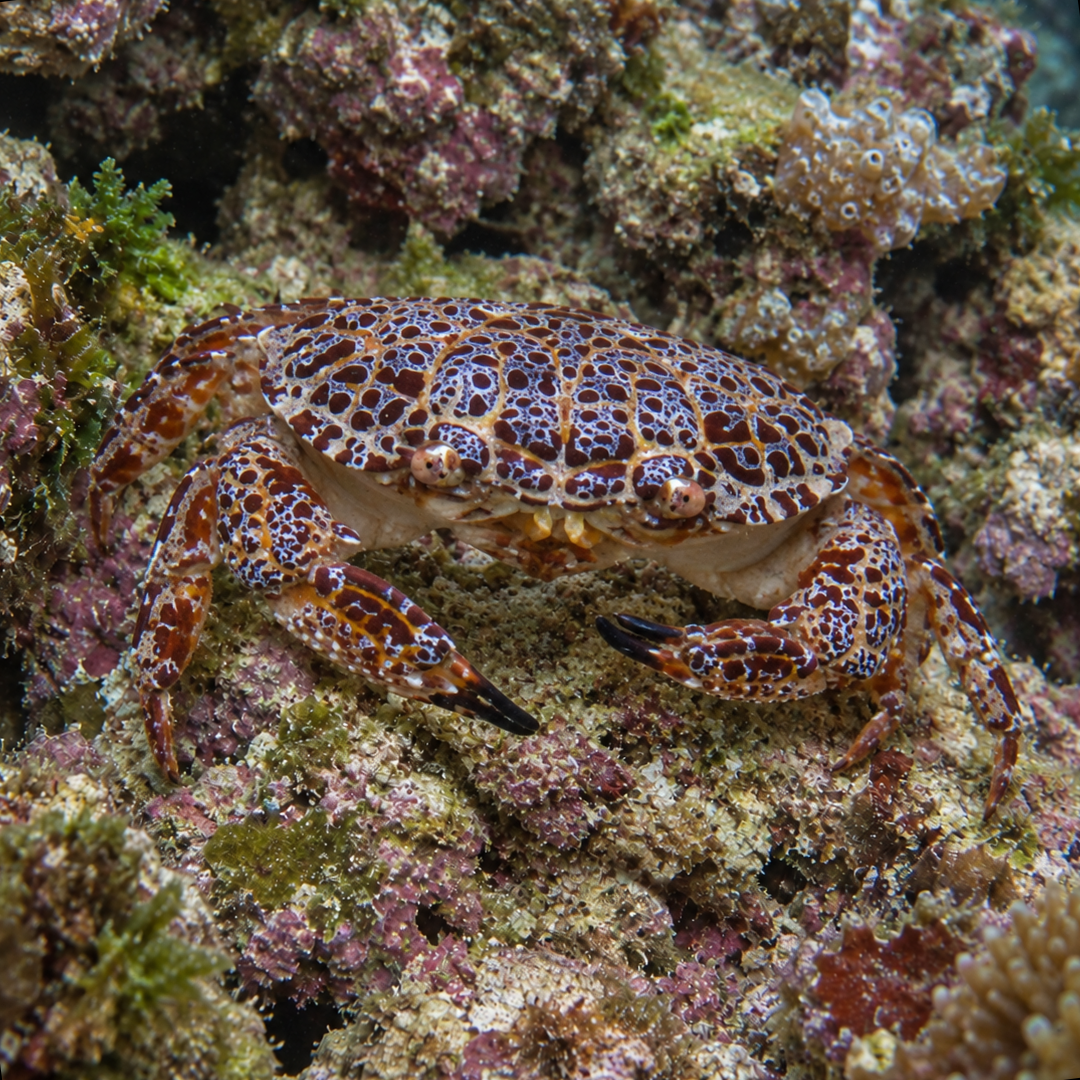
解説 / Description
ウモレオウギガニは、インド・太平洋の熱帯から亜熱帯のサンゴ礁域に分布するオウギガニ科のカニです。横に広い甲羅には赤褐色や紫褐色などが入り混じる複雑な模様が現れ、独特の美しさを持っています。日中は岩陰などに隠れ、夜間に活動する夜行性の種類です。一方で、体内からテトロドトキシンやサキシトキシン類などの強い神経毒が検出されることで知られています。ただし、毒の種類や量はすべての個体で一定ではなく、採集地域や個体によって大きく異なることが研究で確認されています。日本で「ウモレオウギガニ」と呼ばれる種の学名は Zosimus aeneus であり、同じ Zosimus 属の Zosimus maculatus とは別種です。 Zosimus aeneus is a xanthid crab distributed on tropical and subtropical coral reefs throughout the Indo-Pacific. Its broad carapace bears complex reddish-brown, purplish and other contrasting markings that give the species a distinctive appearance. Adults typically hide beneath rocks during the day and become active at night. The species is also known for the presence of powerful neurotoxins, including tetrodotoxin and saxitoxin-related paralytic shellfish toxins. However, toxin composition and concentration are not uniform among all individuals and can vary considerably by locality and specimen. The Japanese common name Umore-ogigani refers to Zosimus aeneus, which is a separate species from the related Zosimus maculatus.
基本情報 / Basic Information
| 学名 / Scientific Name | Zosimus aeneus (Linnaeus, 1758) |
|---|---|
| 通称 / Common Name | デビルクラブ、トキシックリーフクラブなどの英名由来の呼び方があります。Devil crab, toxic reef crab |
| 分類 / Family | 節足動物門・軟甲綱・十脚目・オウギガニ科・Zosimus属Phylum Arthropoda, Class Malacostraca, Order Decapoda, Family Xanthidae, Genus Zosimus |
| 英名 / English Name | Devil Crab / Toxic Reef Crab |
| 分布 / Distribution | 紅海からインド洋、西太平洋、南太平洋の島々、ハワイまで広く分布し、日本では沖縄など南方の島々を中心に記録されています。主にサンゴ礁や岩礁の浅い海域で見られます。Widely distributed from the Red Sea and Indian Ocean across the western and central Pacific to Hawaii. In Japan it has been recorded mainly from southern islands, including Okinawa. It inhabits shallow coral reef and rocky environments. |
| 最大体長 / Max Size | 大型個体では甲幅約9cmに達する記録があります。カニ類では全長ではなく、甲羅の幅や長さを大きさの指標として示すことがあります。Large specimens have been recorded with a carapace width of approximately 9 cm. Crab size is commonly expressed using carapace width or carapace length rather than overall body length. |
| 寿命 / Lifespan | 本種の寿命を明確に示した信頼できる飼育データは確認されておらず、具体的な年数は不明です。Reliable species-specific longevity data are not available, and a precise lifespan has not been established. |
飼育環境 / Aquarium Environment
| 水槽サイズ / Tank Size | ウモレオウギガニについて、種固有の推奨水槽サイズを示した信頼できる飼育資料は確認されていません。飼育する場合は、単独で安全に隔離でき、個体が移動できる底面積と隠れ場所を確保できる設備が必要です。水槽の大きさそのものよりも、確実に隔離できる構造と脱走防止を優先します。No reliable species-specific minimum aquarium size has been established for Zosimus aeneus. If maintained in captivity, the enclosure should allow secure solitary isolation, adequate floor space and suitable hiding places. A secure enclosure and effective escape prevention are more important than assigning an unsupported minimum tank volume. |
|---|---|
| 水温 / Temperature | 本種専用の飼育適温として確立された数値は確認されていません。熱帯から亜熱帯の浅いサンゴ礁に生息する海産種であることを踏まえ、急激な温度変化を避け、安定した海水環境を維持することが重要です。 A species-specific captive temperature range has not been firmly established. As a marine crab from tropical and subtropical shallow reefs, it should be maintained under stable marine conditions while avoiding sudden temperature changes. |
| 水質 / Water Quality | 種固有の水質条件を示す十分な飼育資料はありません。一般的な海産甲殻類と同様に、急激な塩分や水温の変化を避け、アンモニアなどが蓄積しない安定した海水環境を維持します。根拠のない細かな数値を固定するより、水質を安定させることを優先します。Detailed species-specific water parameters are not well established. As with marine crustaceans generally, sudden changes in salinity or temperature should be avoided and stable seawater conditions should be maintained without accumulation of harmful nitrogenous waste. Stability is more important than assigning unsupported narrow numerical values. |
| レイアウト / Layout | 自然下では日中に岩の下などへ隠れることが知られているため、体全体を隠せるシェルターを用意します。岩などを使用する場合は、カニが動かしても崩れないよう安定させることが大切です。また、個体の所在を確認できなくなるほど複雑な構造は、安全管理の面では避けた方がよいでしょう。In the wild, adults are known to hide beneath rocks during the day, so shelters large enough to conceal the entire animal should be provided. Any rockwork should be stable enough that it cannot collapse if moved by the crab. From a safety standpoint, excessively complicated structures that make it impossible to confirm the crab’s location are best avoided. |
| 注意点 / Precautions | 最も重要なのは、誤食と不用意な取り扱いを防ぐことです。本種による重篤な中毒や死亡例は、カニを食べたことによって発生しています。通常の皮膚接触だけで同様の中毒が起こることを示す十分な資料はありませんが、毒性のある生体をあえて素手で扱う必要はありません。移動が必要な場合は網や長いトングなどを使用し、口に入れたり食用にしたりしないでください。また、脱走した個体を子供やペットが誤って口にする事故を防ぐため、フタや配線周辺の隙間まで確認し、確実に脱走を防止します。The main safety priorities are preventing accidental ingestion and unnecessary direct handling. Severe and fatal poisonings documented for this species have followed consumption of the crab. There is insufficient evidence that ordinary skin contact alone causes the same form of poisoning, but there is no reason to handle a toxic animal with bare hands. Use a net or long tongs when movement is necessary, and never treat the crab as food. The enclosure should also be secured against escape so that children or pets cannot accidentally ingest the animal. |
餌と給餌 / Feeding
| 餌の種類 / Diet | 自然下で調べられた胃内容物からは、藻類、動物組織、サンゴ片、砂などさまざまなものが確認されています。ただし、これらの内容物と毒化の関係については明確な結論が得られていません。また、観賞飼育下での標準的な餌を定められるほどの種固有の資料も乏しいため、特定の人工飼料を「適正な主食」と断定できる状況ではありません。Studies of wild specimens have found a variety of material in the stomach, including algae, animal tissues, coral material and sand. However, no firm conclusion has been reached regarding a direct relationship between these stomach contents and toxin accumulation. Species-specific captive-feeding data are also limited, so no particular commercial diet can confidently be described as the established staple food for this crab. |
|---|---|
| 給餌のポイント / Feeding Tips | 夜行性であるため、飼育下で給餌する場合は夜間の活動時間に合わせると行動を確認しやすくなります。給餌や残餌の回収には長いピンセットやトングを利用し、直接手で個体を扱う必要がない管理方法を選びます。また、無毒の餌を与え続ければ一定期間で無毒化する、と判断できるだけの根拠はありません。飼育期間にかかわらず、毒性を持つ可能性がある個体として扱ってください。Because the species is nocturnal, feeding during its active period at night may make feeding behavior easier to observe. Long forceps or tongs can be used for feeding and removing leftovers so that direct handling is unnecessary. There is no established evidence allowing a captive specimen to be considered non-toxic after being fed non-toxic foods for a particular length of time. It should therefore continue to be treated as potentially toxic regardless of how long it has been kept. |
性格と混泳 / Temperament and Tank Mates
| 性格 / Temperament | 自然下では日中に岩陰などへ隠れ、夜間に活動することが確認されています。一方、飼育下での性格や行動を体系的に記録した資料は少なく、一般的な観賞用カニと同じ感覚で性格を断定することはできません。観察時には夜間に所在や行動を確認しやすい種類と考えるとよいでしょう。In the wild, adults hide beneath rocks during the day and become active at night. Systematic information on temperament under aquarium conditions is limited, so its behavior should not simply be generalized from that of commonly kept ornamental crabs. Its location and activity are generally easier to observe during the night. |
|---|---|
| 混泳の相性 / Compatibility | ウモレオウギガニについて、魚やサンゴ、エビなどとの混泳安全性を十分に検証した飼育資料は確認されていません。そのため、他の生体に対して安全であるとは判断せず、毒性を持つ個体を確実に管理する意味でも単独で隔離して飼育する方が適しています。一般的なリーフタンクへ、お掃除役として導入する種類ではありません。Reliable aquarium data demonstrating safe compatibility with fish, corals, shrimps or other livestock are lacking. It should therefore not be assumed to be harmless toward other aquarium inhabitants. Solitary isolation is the more appropriate approach, both because compatibility is uncertain and because a potentially toxic animal needs to remain securely accounted for. It should not be introduced as a conventional reef-tank cleanup animal. |
病気と対策 / Diseases and Prevention
| かかりやすい病気 / Common Diseases | ウモレオウギガニに特有の好発疾病をまとめた信頼できる飼育資料はほとんどありません。したがって、特定の病名を挙げて「かかりやすい」とすることはできません。海産甲殻類では、環境の急変や長期的な水質悪化が状態の悪化につながるため、まず安定した環境を保つことが基本となります。There is little reliable captive information identifying diseases that are specifically common in Zosimus aeneus. It is therefore not appropriate to list particular diseases as established species-specific problems. As with marine crustaceans generally, maintaining stable conditions and avoiding prolonged deterioration of water quality are basic priorities. |
|---|---|
| 対策と予防 / Prevention | 水質や水温の急変を避け、摂餌状況、活動量、脚やハサミの状態、脱皮の様子などを目視で確認します。本種に対する薬剤の安全性や治療法について十分な情報はないため、魚類向けの薬を安易に使用することは避けます。異常が見られた場合も、必要以上に個体を直接つかんで確認しないことが安全管理上重要です。Avoid sudden changes in water conditions and monitor feeding, activity, limb condition and molting visually. Information on medication safety and treatment protocols for this species is inadequate, so medications intended for fish should not be used indiscriminately. Even when abnormalities are observed, unnecessary direct handling should be avoided. |
増やし方(繁殖) / Breeding
| 雌雄の判別 / Sexing | 一般的なカニ類と同様に、腹側へ折り畳まれた腹部の形状が雌雄判別の手掛かりになります。雄では腹部が比較的細く、雌では幅広くなる形態が知られています。ただし、安全のために生体を素手で裏返して確認する方法は避け、判別が必要な場合も直接接触しない方法を優先します。As in many true crabs, the shape of the abdomen folded beneath the body provides a useful clue for sexing. Males have a relatively narrow abdomen, whereas females have a broader one. For safety, however, a live specimen should not be turned over by hand simply for sex determination, and methods that avoid direct contact should be preferred. |
|---|---|
| 繁殖形態 / Reproduction | 雌は腹部に卵を抱え、ふ化後はゾエアと呼ばれる浮遊性の幼生期を経ます。本種では幼生形態について研究例がありますが、家庭の観賞水槽で安定して繁殖させるための方法が確立されているわけではありません。Females carry eggs beneath the abdomen, and newly hatched offspring enter a planktonic larval stage known as a zoea. Larval morphology has been studied in this species, but this does not mean that a reliable home-aquarium breeding method has been established. |
| 繁殖のポイント / Breeding Tips | 観賞飼育下で繁殖を成功させるための具体的な手順は確立されていません。浮遊幼生には成体とは異なる飼育条件や餌が必要になるため、通常の海水水槽で自然に増えることを期待できる種類ではありません。また、有毒個体を複数管理することになるため、一般家庭では繁殖よりも確実な単独管理を優先する方が安全です。A practical protocol for reliably breeding this species in ornamental aquariums has not been established. Planktonic larvae require husbandry conditions and foods different from those of adults, so reproduction cannot be expected to proceed successfully in an ordinary marine aquarium. Maintaining multiple potentially toxic adults would also complicate safe management, making secure solitary keeping the more practical priority in home aquaria. |
雑学と豆知識 / Trivia and Fun Facts
| 1. 18世紀から続く分類学の歴史 / 1. A Taxonomic History Dating Back to the 18th Century | ウモレオウギガニは、カール・フォン・リンネが1758年に Cancer aeneus として記載した種です。その後の分類学的な整理によって現在の Zosimus 属へ移され、学名は Zosimus aeneus となりました。学名の命名者と年が「(Linnaeus, 1758)」と括弧に入っているのは、最初に記載されたときとは現在の属が異なることを表しています。現在も Zosimus aeneus は独立した種として扱われています。Zosimus aeneus was originally described by Carl Linnaeus in 1758 as Cancer aeneus. Later taxonomic revisions transferred the species to the genus Zosimus, resulting in its present name, Zosimus aeneus. The parentheses around “Linnaeus, 1758” indicate that the species is now placed in a genus different from the one in which it was originally described. It continues to be recognized as a distinct species. |
|---|---|
| 2. Zosimus maculatusとは別種 / 2. A Different Species from Zosimus maculatus | ウモレオウギガニの学名に Zosimus maculatus が当てられることがありますが、現在の分類では Zosimus aeneus と Zosimus maculatus は同じ属に属する別種です。したがって、「ウモレオウギガニ Zosimus maculatus」と両者を同じ種として扱う表記は避けた方が正確です。似た仲間を扱うときほど、和名だけでなく学名まで確認することが大切です。Zosimus maculatus is sometimes associated with the Japanese name Umore-ogigani, but current taxonomy recognizes Zosimus aeneus and Zosimus maculatus as separate species within the same genus. Treating “Umore-ogigani Zosimus maculatus” as a single species is therefore misleading. Scientific names are particularly useful when distinguishing closely related crabs. |
| 3. 毒性は「すべての個体で同じ」ではない / 3. Toxicity Is Not Identical in Every Individual | ウモレオウギガニは有毒ガニとして知られていますが、「どの個体も同じ毒を同じ量だけ持つ」と考えるのは正確ではありません。日本各地や海外で行われた調査では、サキシトキシン類が主体となる個体群もあれば、テトロドトキシン類が多く検出される個体群もあり、毒力そのものにも大きな地域差や個体差が確認されています。石垣島では、同じサンゴ礁の中でも採集地点によって毒組成が異なることが報告されています。つまり、「毒性にばらつきがある」ことと「安全な個体を外見で選べる」ことはまったく別の話です。Although Zosimus aeneus is well known as a toxic crab, it is inaccurate to assume that every individual contains exactly the same toxins at the same concentrations. Studies in Japan and other regions have found populations dominated by saxitoxin-related compounds and others in which tetrodotoxin-related compounds are prominent, together with substantial differences in overall toxicity. Research on Ishigaki Island has even demonstrated differences in toxin profiles among collection sites within a single reef. Variability in toxicity therefore does not mean that a safe individual can be identified by appearance. |
| 4. なぜ毒を持つのかは、まだ単純には説明できない / 4. The Origin of Its Toxins Is Not Yet Explained by One Simple Pathway | 有毒なオウギガニ類の毒は、周囲の生物や餌を通じて外部から取り込まれ、体内に蓄積すると考えられてきました。しかし、ウモレオウギガニの胃内容物を調べた研究では、藻類や動物組織などさまざまなものが見つかった一方、それだけで毒化の仕組みを説明することはできませんでした。近年の研究でも特定のホヤ類などが毒の供給源候補として検討されていますが、すべての地域や個体を一つの経路で説明できる段階にはありません。「餌から毒を得る可能性が高いが、その詳しい経路には未解明な部分が残っている」と理解するのが適切です。Toxins in poisonous xanthid crabs have long been thought to originate outside the crab and to accumulate through interactions with surrounding organisms and food. However, studies of stomach contents in Zosimus aeneus found algae, animal tissues and other material without establishing a simple relationship that fully explained toxification. More recent work has investigated organisms such as certain ascidians as possible toxin sources, but a single pathway capable of explaining every population and individual has not been demonstrated. The most accurate interpretation is that dietary or environmental accumulation is strongly suspected, while important details remain unresolved. |
| 5. テトロドトキシンとサキシトキシン類は神経の信号を止める / 5. Tetrodotoxin and Saxitoxins Block Nerve Signaling | 本種から検出されるテトロドトキシンやサキシトキシン類は、神経や骨格筋の細胞膜にある電位依存性ナトリウムチャネルの働きを妨げます。ナトリウムイオンの流入が阻害されると神経の信号が正常に伝わらなくなり、重い中毒では麻痺や呼吸障害につながります。ウモレオウギガニを食べた後に死亡した事例も報告されており、日本でも本種による食中毒が記録されています。一般的な加熱調理によって安全に食べられるようになる毒ではありません。Tetrodotoxin and saxitoxin-related compounds detected in this species interfere with voltage-gated sodium channels in nerves and skeletal muscles. Blocking sodium entry prevents normal electrical signaling and, in severe poisoning, can lead to paralysis and respiratory failure. Fatal poisoning after consumption of Zosimus aeneus has been documented, and food poisoning involving the species has also been recorded in Japan. These toxins cannot be assumed to become safe through ordinary cooking. |
| 6. 見た目だけでは毒の強さは分からない / 6. Appearance Does Not Reveal the Level of Toxicity | ウモレオウギガニには特徴的な色彩や模様がありますが、それらから個体の毒量を判断することはできません。毒性の調査では、同じ種でも採集場所や個体によって毒量や毒組成が異なっています。そのため、色が薄い、長く飼育している、元気そうに見えるといった外見や飼育履歴を理由に、安全な個体だと判断することはできません。種類の同定と毒性の有無は、分けて考える必要があります。Zosimus aeneus has distinctive coloration and patterns, but these features do not reveal how much toxin an individual contains. Toxicity studies have demonstrated differences in both toxin concentration and composition among individuals and locations. An animal therefore cannot be considered safe because its coloration is pale, because it has been kept for a long time, or because it appears healthy. Identification of the species and assessment of toxin content are separate issues. |
| 7. 死亡個体でも「無毒になった」とは考えない / 7. Death Does Not Mean the Toxins Have Disappeared | 毒を持つ個体が死亡しても、それだけで体内の毒素が失われたと考えることはできません。死亡個体を他の生体に食べさせたり、人が食用にしたりすることは避け、網やトングなどを使って速やかに回収します。一方で、「死ぬと毒が大量に飼育水へ放出され、水槽全体がただちに有毒になる」といった具体的な現象については、ウモレオウギガニで確認された十分な資料がありません。死亡時には、毒性について推測を重ねるよりも、死骸を安全に除去し、通常の水質悪化を防ぐ管理を優先します。The death of a toxic specimen does not demonstrate that toxins within its tissues have disappeared. A dead crab should not be allowed to be eaten by other animals or used as food, and it should be removed promptly with a net or tongs. At the same time, there is insufficient species-specific evidence for claims that a dead Zosimus aeneus necessarily releases enough toxin into aquarium water to make the entire tank immediately poisonous. The practical priority is safe carcass removal and prevention of ordinary water-quality deterioration rather than assuming an unverified toxin-release scenario. |
まとめ / Conclusion
ウモレオウギガニは、複雑な模様を持つ幅広い甲羅と、日中は岩陰に潜み夜になると活動する生態が印象的なサンゴ礁性のカニです。同時に、テトロドトキシンやサキシトキシン類が検出され、人の食中毒も記録されていることから、観賞する場合にも毒性を正しく理解して管理する必要があります。毒の種類や量には地域差や個体差がありますが、それを外見から見分けることはできません。 Zosimus aeneus is a distinctive coral-reef crab characterized by a broad, intricately patterned carapace and a nocturnal lifestyle in which it hides beneath rocks during the day. At the same time, tetrodotoxin and saxitoxin-related compounds have been detected in the species, and human food-poisoning cases have been documented. Its toxicity therefore needs to be understood even when the animal is kept only for observation. Toxin composition and concentration vary among locations and individuals, but this variation cannot be judged from appearance.
飼育に関する種固有の情報は限られているため、根拠のない細かな数値や「この方法なら無毒になる」といった判断に頼らず、安定した海水環境と確実な隔離を基本に考えることが大切です。直接触れる必要のない管理方法を選び、脱走や誤食を防ぎながら、安全な距離からその姿や夜間の行動を観察することが、この特異なカニとの付き合い方として適しています。 Because species-specific husbandry information remains limited, care should not depend on unsupported narrow numerical parameters or assumptions that a particular captive diet will make the crab non-toxic. Stable marine conditions and secure isolation are the appropriate foundations for management. Using methods that avoid unnecessary direct handling and preventing escape or accidental ingestion allow its appearance and nocturnal behavior to be observed from a suitably safe distance.
気になる道具や飼い方を見つけてみませんか?
 アイのアクアグッズ案内おとひめ物語|養殖生まれの餌を、わが家の魚に合う一粒へ道具の特徴や使い方、選ぶときのポイントをアイが紹介します。記事はコチラ →
 アイのアクアグッズ案内ラスボラ・ボララスの群泳を楽しむ飼育用品|水槽・ろ過・ヒーター・餌・水草道具の特徴や使い方、選ぶときのポイントをアイが紹介します。記事はコチラ →
 アイのアクアグッズ案内ショップで見かけるカラフルなバケツ。いったい何が入ってる?道具の特徴や使い方、選ぶときのポイントをアイが紹介します。記事はコチラ →
 アイのアクアグッズ案内水草用ソイルの選び方|土・砂の違いとおすすめ商品道具の特徴や使い方、選ぶときのポイントをアイが紹介します。記事はコチラ →
さまざまな飼育テーマをご紹介。リンク先の記事には広告・商品紹介が含まれます。
案内・紹介記事一覧へ →分布マップ
ウモレオウギガニ(Zosimus aeneus)は、紅海からインド洋、西太平洋、南太平洋の島々を経てハワイまで広く分布し、日本では沖縄など南方の島々を中心に記録されています。下の地図は、この広いインド・太平洋域を概略的に示したものです。
この地図は分布地域全体を把握するための概略表示です。マーカーは分布域を示すために設定した代表地点であり、実際の採集地点や個体の確認地点を示すものではありません。
参考文献
- DecaNet editors. “Zosimus aeneus (Linnaeus, 1758).” World Register of Marine Species (WoRMS). https://www.marinespecies.org/aphia.php?p=taxdetails&id=209076
- 税所俊郎・牛尾嘉宏(1969)「南西諸島における有毒ガニの分布と生態に関する研究」『鹿児島大学水産学部紀要』18: 47–63. https://ir.kagoshima-u.ac.jp/record/4833/files/AN00040498_v18_p47-63.pdf
- Saisho, T., Noguchi, T., Koyama, K., Uzu, A., Kikuta, T. & Hashimoto, K. (1983). “Examination of Stomach Contents in Xanthid Crabs.” Nippon Suisan Gakkaishi, 49(6): 939–947. https://doi.org/10.2331/suisan.49.939
- Tanaka, H., Saruwatari, T. & Minami, T. (2009). “Redescription of the first zoea of Zosimus aeneus (Linnaeus, 1758) (Decapoda, Xanthidae).” Crustacean Research, 38: 64–69. https://doi.org/10.18353/crustacea.38.0_64
- Sagara, T., Taniyama, S., Takatani, T., Nishibori, N., Nishio, S., Noguchi, T. & Arakawa, O. (2009). “Toxicity and toxin profiles of xanthid crabs collected around Nakanoshima in the Tokara Islands, Japan.” Shokuhin Eiseigaku Zasshi, 50(5): 237–242. https://pubmed.ncbi.nlm.nih.gov/19897950/
- Zhang, Y., Tsutsui, H., Yamawaki, N., Morii, Y., Nishihara, G. N., Itoi, S., Arakawa, O. & Takatani, T. (2021). “Geographic Variations in the Toxin Profile of the Xanthid Crab Zosimus aeneus in a Single Reef on Ishigaki Island, Okinawa, Japan.” Marine Drugs, 19(12): 670. https://doi.org/10.3390/md19120670
- Llewellyn, L. E., Dodd, M. J., Robertson, A., Ericson, G., de Koning, C. & Negri, A. P. (2002). “Post-mortem analysis of samples from a human victim of a fatal poisoning caused by the xanthid crab, Zosimus aeneus.” Toxicon, 40(10): 1463–1469. https://pubmed.ncbi.nlm.nih.gov/12368116/
- 厚生労働省「自然毒のリスクプロファイル:二枚貝:麻痺性貝毒」 https://www.mhlw.go.jp/stf/seisakunitsuite/bunya/kenkou_iryou/shokuhin/syokuchu/poison/animal_det_09.html




コメント