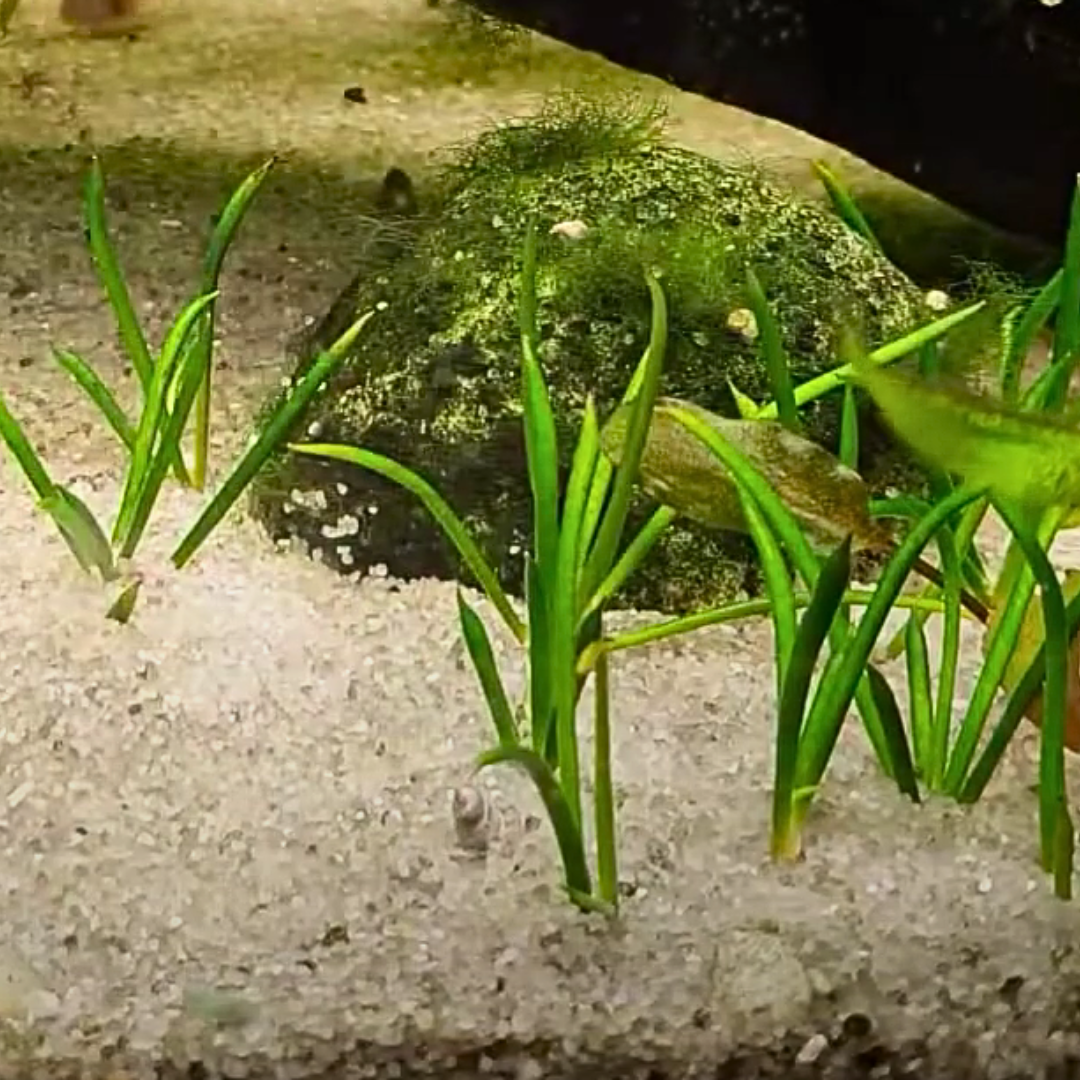
リトレラ・ウニフローラは、肉厚で針のような鋭い葉がロゼット状に広がる、非常にユニークな外観を持つ植物です。本来はヨーロッパの貧栄養な湖の岸辺などに自生する抽水性・湿地性の植物ですが、アクアリウムでは前景草として活用されます。一般的な水草とは異なるその質感は、石組みレイアウトなどに野生味あふれる自然なアクセントを加えてくれます。育成はやや難易度が高い部類に入りますが、環境が整えばランナーを伸ばして広がり、見る人を惹きつける独自の景観を作り出します。Littorella uniflora is a unique plant characterized by its fleshy, needle-like leaves forming a stiff rosette. Originally an emergent and wetland plant native to the shores of oligotrophic lakes in Europe, it is used as a foreground plant in aquariums. Its distinct texture sets it apart from common aquatic plants, adding a wild and natural accent to Iwagumi layouts. While it is considered somewhat challenging to cultivate, it spreads via runners to create a captivating and original landscape once established in favorable conditions.
基本情報 / Basic Information
学名 / Scientific Name
Littorella uniflora
通称 / Common Name
リトレラ・ウニフローラ、ショアウィードLittorella uniflora, Shoreweed
分類 / Family
オオバコ科 リトレラ属Plantaginaceae, Genus Littorella
分布 / Distribution
ヨーロッパ(主に北欧・西欧)Europe (Mainly Northern and Western Europe)
育成難易度 / Difficulty
高い(中・上級者向け)High (Intermediate to Advanced)
育成環境 / Cultivation Environment
光量 / Light
強い光(60cm規格水槽で3灯以上、2400から3000ルーメン以上を推奨)High (Recommended 2400-3000lm+ for a standard 60cm tank)
CO2添加 / CO2 Injection
必須(安定した供給が重要。1秒に1滴程度を目安に水質に合わせて調整)Essential (Stable supply is important. Approx. 1 bubble per second, adjust based on water quality)
栄養系ソイル(推奨)、または粒の細かい砂Aquasoil (Recommended) or fine-grained sand
レイアウト / Layout
配置 / Positioning
前景から中景のアクセントForeground or midground accent
注意点 / Precautions
植栽時に中心の生長点(クラウン)を埋めないように注意してください。埋没させると腐敗しやすくなります。Be careful not to bury the central growth point (crown) when planting. Burying it may lead to rotting.
増やし方(トリミング) / Propagation & Trimming
増やし方 / Propagation
水中では主にランナー(地下茎)を伸ばして子株を増やします。Primarily spreads through runners (stolons) underwater.
トリミング / Trimming
成長が遅いため頻繁な作業は不要ですが、古くなった葉や増えすぎたランナーを適宜カットします。Rarely needs trimming due to its slow growth, but old leaves or excess runners should be removed as needed.
病気と対策(コケなど) / Pests & Algae
かかりやすい病気 / Common Issues
高水温による衰弱、成長の遅さに起因する葉面へのコケ(緑藻、黒髭苔など)の付着。Weakening due to high water temperatures and algae growth (green algae, black brush algae) on leaf surfaces due to slow growth.
対策と予防 / Prevention
水温を低めに保ち、ヤマトヌマエビなどのお掃除役の生体を導入してコケの定着を予防します。Maintain cooler water temperatures and introduce utility animals like Amano shrimp to prevent algae build-up.
雑学と豆知識 / Trivia and Fun Facts
1. 特徴的な「根からの炭素吸収」1. Unique “Root Carbon Uptake”
多くの水草は主に葉から二酸化炭素(CO2)を吸収しますが、リトレラ・ウニフローラは根からの炭素吸収が極めて重要な役割を果たしていることが報告されています。彼らが自生する貧栄養な環境では、水中よりも底泥の中の方がCO2濃度が高いため、発達した根系を通じて底泥中の資源を効率よく利用する戦略をとっていると考えられています。While most aquatic plants primarily absorb CO2 through their leaves, it has been reported that root carbon uptake plays a crucial role for Littorella uniflora. In the oligotrophic environments where they grow, CO2 concentrations are higher in the sediment than in the water, and it is thought that they have a strategy to efficiently utilize resources from the substrate through their developed root system.
リトレラ・ウニフローラは、いわゆる「イソエチッド植物」として知られ、夜間に酸を蓄える「CAM様の炭素固定戦略」を持つことが報告されています。この代謝により、水中での炭素供給が制限されやすい環境下でも効率的な光合成を維持している可能性が示唆されており、過酷な自然界を生き抜くための高度な生理機能といえます。Littorella uniflora is known as an “isoetid” plant and has been reported to possess a “CAM-like carbon fixation strategy” where it accumulates acid at night. This metabolism suggests that it can maintain efficient photosynthesis even in environments where carbon supply is limited, representing a sophisticated physiological function for survival in the wild.
3. 底質環境への影響3. Influence on Substrate Environment
リトレラは根から酸素を放出することで、周囲の底泥の化学的な状態や栄養塩の動態に影響を与えていると考えられています。このような底質の酸化還元状態への干渉は、他の生物との競争や共生関係、さらには水環境全体の物質循環において重要な意味を持っている可能性が研究者によって指摘されています。It is thought that Littorella influences the chemical state and nutrient dynamics of the surrounding sediment by releasing oxygen from its roots. Researchers have pointed out that this interference with the redox state of the substrate may have significant implications for competition and symbiotic relationships with other organisms, as well as for the overall nutrient cycling in the water environment.
4. 水環境の指標としての側面4. Aspect as an Indicator of Water Quality
リトレラ・ウニフローラは清冽で貧栄養な水を好む性質があるため、一部の地域では湖の健全さを示す指標生物(バイオインジケーター)として注目されることがあります。自然の湖での指標としての位置づけは、水槽全体の水質が適切であることを本種の生育だけで判定できるという意味ではありません。Due to its preference for clear, oligotrophic water, Littorella uniflora is sometimes regarded as a bio-indicator of lake health in certain regions. Its role as an indicator in natural lakes does not mean that its growth alone can establish whether overall aquarium water quality is suitable.
まとめ / Conclusion
リトレラ・ウニフローラは、単なる前景草という枠を超えた、興味深い生理生態を持つ水草です。根からの炭素利用や独自の代謝経路といった適応戦略は、彼らが厳しい自然環境の中でいかにして生き抜いてきたかを物語っています。Littorella uniflora is an aquatic plant with fascinating physiological and ecological characteristics that go beyond being a simple foreground plant. Its adaptive strategies, such as root carbon utilization and unique metabolic pathways, tell the story of how it has survived in harsh natural environments.
育成には強光や安定したCO2供給、適切な温度管理といった条件が求められますが、その壁を乗り越えた先には、他では見られない肉厚で美しいグリーンの景観が待っています。清冽な水辺の情景を再現したいアクアリストにとって、挑戦しがいのある魅力的な種といえるでしょう。Cultivation requires conditions such as intense lighting, a stable CO2 supply, and proper temperature management. However, overcoming these challenges rewards the aquarist with a beautiful, thick green landscape unlike any other. For those seeking to recreate a pristine waterside scene, it is truly a captivating species worth the challenge.
Sand-Jensen, K., et al. (1982)
Oxygen release from roots of submerged aquatic macrophytes. Oikos, 38(3), 349-354.
(水生植物の根からの酸素放出に関する研究)
Walstad, D. L. (1999)
Ecology of the Planted Aquarium. Echinodorus Publishing.
(底床依存型植物の栄養吸収メカニズムに関する解説)
Shipunov, A. (2019)
Plantago and Littorella. In: Freeman, C. and Rabeler, R. (eds.), Flora of North America. Vol. 17, pp. 280–293. Oxford University Press.
(北米のPlantago・Littorellaの分類資料。本種のヨーロッパでの生理生態を直接示す資料ではありません)




 アイのアクアグッズ案内旅行中、お魚のごはんはどうする? 自動給餌器・使える餌・スマート水槽の選び方旅行中の魚の餌やりを助ける自動給餌器を、アイとコタロウが紹介。時間指定、おかわり給餌、対応するフレークや顆粒、設置台、スマホ管理、一体型水槽、留守番フードまで、使いどころと選び方を案内します。記事はコチラ →
 アイのアクアグッズ案内小型カラシンの群れを楽しむ|餌と水換えから考える飼育用品ガイド小型カラシンの群れを眺める時間を、もっと楽しく。泳ぐ余白、餌の食べ方、続けやすい水換えを軸に、日本で揃えやすい用品の選び方を紹介します。記事はコチラ →



コメント