

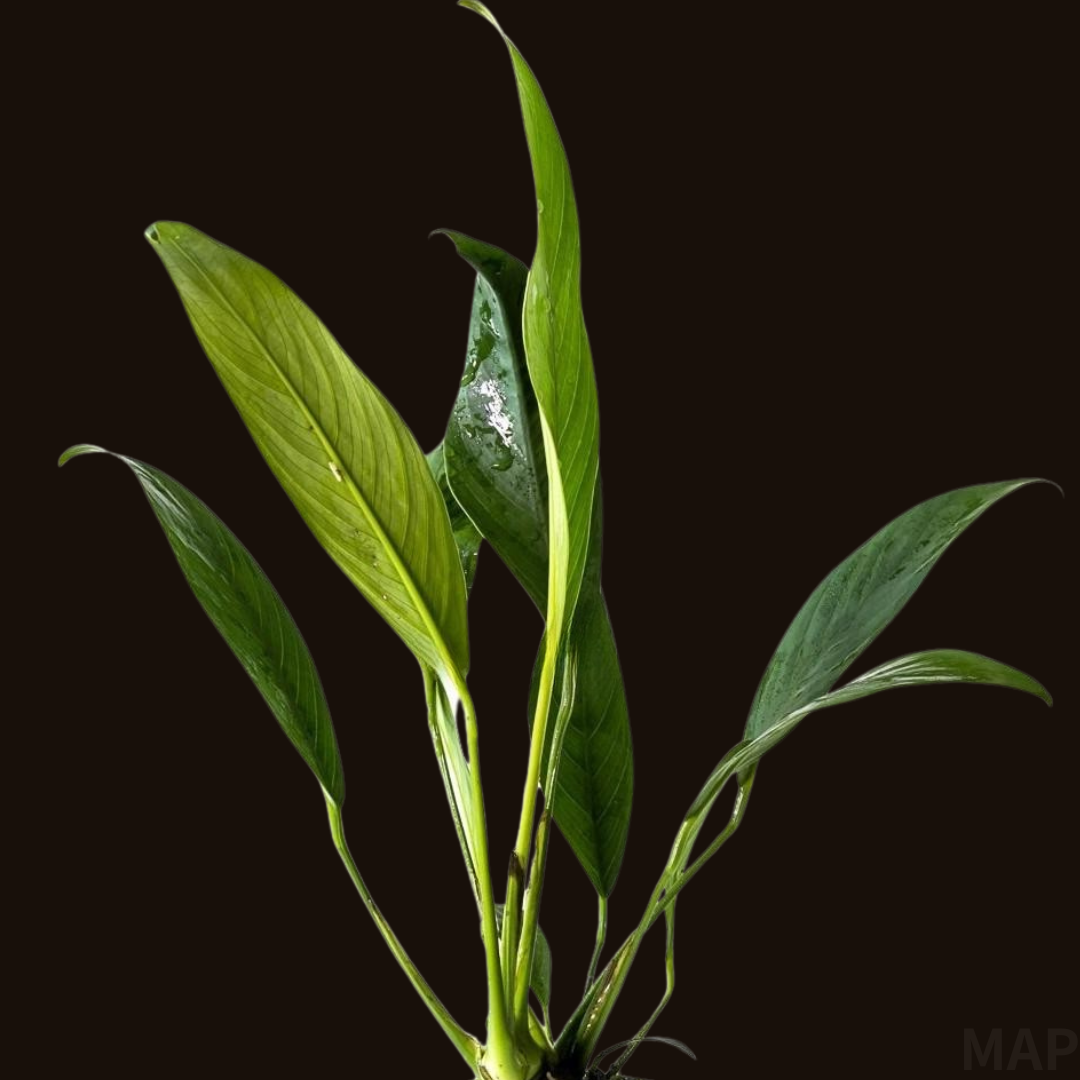
解説 / Description
アヌビアス・アフゼリーは、細長い葉をすっと伸ばす、西アフリカ原産の水草です。丸みのある葉で親しまれるアヌビアス・ナナに比べ、葉の輪郭がシャープで、育った株にはゆったりとした存在感があります。厚みのある緑の葉は、流木や石の質感ともよくなじみ、水槽に落ち着いた雰囲気を添えてくれます。成長はゆっくりですが、強い照明やCO2添加を必須としないため、時間をかけて株を育てたい方にも向いています。 Anubias afzelii is a West African aquatic plant with elongated leaves that give it a graceful, upright appearance. Compared with the rounded foliage of Anubias nana, its sharper leaf outlines and larger mature form create a more substantial presence. Thick green leaves complement the textures of wood and stone, bringing a calm atmosphere to an aquarium. Growth is slow, but neither intense lighting nor injected CO2 is essential, making it a rewarding choice for aquarists who enjoy watching a plant develop over time.
自然では、湿った川岸や湿地に生育し、水に覆われることもある植物です。水槽での水中育成に加え、湿度を保ったパルダリウムでも葉の姿を楽しめます。ただし、小さな販売株の姿が完成形とは限りません。アフゼリーは大型になる種類なので、葉が広がる空間を見込んで迎えると、持ち味を生かしやすくなります。 In nature, it grows on moist riverbanks and in wetlands, where it may also become submerged. Its foliage can be enjoyed both underwater in an aquarium and above water in a humid paludarium. A small plant offered for sale may look quite different from a mature specimen, however. Anubias afzelii can become large, so allowing room for its foliage helps reveal its full character.
基本情報 / Basic Information
| 学名 / Scientific Name | Anubias afzelii Schott アヌビアス属のタイプ種。アヌビアス・バルテリーとは別種で、細葉のバルテリー類との流通名の混同に注意が必要です。The type species of the genus Anubias. It is distinct from Anubias barteri, although trade names have sometimes been confused with those of narrow-leaved barteri forms. |
|---|---|
| 通称 / Common Name | アヌビアス・アフゼリー、アヌビアス・アフゼリィなど。流通時の表記には揺れがあります。Anubias afzelii; generally sold under its scientific name. |
| 分類 / Family | サトイモ科・アヌビアス属。太い根茎から葉と根を伸ばす多年草です。Family Araceae, genus Anubias. A perennial that produces leaves and roots from a thick rhizome. |
| 分布 / Distribution | 西アフリカ。セネガル、ギニアビサウ、ギニア、シエラレオネ、リベリア、マリに分布し、川岸や湿地などの湿った場所に生育します。West Africa: Senegal, Guinea-Bissau, Guinea, Sierra Leone, Liberia, and Mali. It grows in moist habitats such as riverbanks and wetlands. |
| 育成難易度 / Difficulty | 比較的容易。強い光を必要とせず、CO2無添加でも育てられます。成長が遅いため、葉へのコケの付着と根茎の傷みに気を配りましょう。Relatively easy. It does not require intense lighting and can grow without injected CO2. Its slow growth makes algae on older leaves and deterioration of the rhizome the main concerns. |
育成環境 / Cultivation Environment
| 光量 / Light | 低〜中光量で育成できますが、光を弱くするほどよいわけではありません。適度な明るさを確保し、強い照明を使う水槽では、流木や背の高い水草で光がやわらぐ場所に配置します。点灯時間はまず1日6〜8時間程度を目安にし、新葉の展開とコケの発生を見ながら調整してください。ほとんど光の届かない場所は避けましょう。It can grow under low to moderate light, but dimmer conditions are not always better. Provide adequate light; in intensely lit aquariums, place it where wood or taller plants soften the illumination. Start with roughly six to eight hours of lighting per day, then adjust according to new leaf growth and algae development. Avoid positions that receive almost no light. |
|---|---|
| CO2添加 / CO2 Injection | 必須ではありません。CO2添加は、光や栄養の条件が整っていれば成長を助けますが、もともと成長の遅い種類です。成長を急がせようと添加量を増やすより、ほかの水草や魚に合わせて安定した環境を保つことが大切です。CO2 injection is optional. It can support growth when light and nutrients are adequate, but this is naturally a slow-growing species. Rather than increasing CO2 to accelerate growth, maintain stable conditions suited to the aquarium’s other plants and animals. |
| 水質 / Water Quality | 淡水で育成します。水温22〜28℃、pH6.0〜8.0、総硬度GH2〜15°dGH程度を管理の目安にできます。これらは育成時の目安であり、耐えられる水質の限界を示す数値ではありません。数値を厳密に合わせるより、急変を避けることを優先しましょう。高温が続く時期は水温と株の状態を確認し、穏やかな水流で葉や根茎の周囲に汚れがたまるのを防ぎます。Grow it in freshwater. Practical maintenance guidelines are 22–28°C, pH 6.0–8.0, and a general hardness of approximately 2–15 dGH. These are working guidelines, not the limits of its tolerance. Avoiding sudden changes matters more than matching an exact value. During prolonged warm weather, monitor temperature and plant condition, and provide gentle circulation to keep debris from accumulating around leaves and the rhizome. |
| 底床 / Substrate | 流木や石に固定する場合、専用の底床は必要ありません。砂や砂利に植えることもできますが、埋めるのは根だけにし、葉の付け根が並ぶ太い根茎は底床の上に出しておきます。成長が遅いため、多量の施肥は必要ありません。長期育成で新葉の色が薄くなったり、成長が鈍ったりした場合は、光や水質も含めて環境を確認し、栄養不足が考えられるときに水草用液体肥料を少量から調整します。No special substrate is needed when the plant is attached to wood or stone. It can also be planted in sand or gravel, provided only the roots are buried and the thick rhizome bearing the leaf bases remains above the substrate. Slow growth means heavy fertilization is unnecessary. If new leaves become pale or growth declines during long-term cultivation, review lighting and water conditions as well as nutrition. If a nutrient shortage seems likely, adjust an aquatic plant fertilizer gradually, starting with a small dose. |
レイアウト / Layout
| 配置 / Positioning | 株の大きさに応じて中景〜後景に配置します。流木の根元や石の間から葉を立ち上げると、細長い葉の輪郭が際立ちます。小さな株を置く場合も、成長後に葉が広がる余白を残しましょう。パルダリウムでは根元を湿らせ、葉が乾燥しない湿度を保ちながら、適度に換気して育てます。Place it in the midground or background according to the size of the specimen. Leaves rising from the base of wood or between stones emphasize its elongated outlines. Even when starting with a small plant, leave room for its mature foliage. In a paludarium, keep the root zone moist and maintain enough humidity to prevent the leaves from drying out, with suitable ventilation. |
|---|---|
| 注意点 / Precautions | 根茎は底床に埋め込まず、固定する際も糸や結束バンドで強く締めつけないようにします。水草用接着剤を使う場合は、製品の説明に従って少量で固定し、成長点を覆わないでください。根が流木や石に付着して株が安定したら、固定具の食い込みがないか確認します。葉は丈夫ですが、草食性の魚による食害や大型魚による引き抜きを完全に防げるわけではありません。購入時は名前だけでなく、株の大きさや葉の形、根茎が硬く傷んでいないかも確かめましょう。Keep the rhizome above the substrate, and avoid tightening thread or cable ties enough to crush it. If using aquarium plant adhesive, follow the product instructions, use a small amount, and leave growing tips uncovered. Once roots have attached to the wood or stone, check that any ties are not cutting into the plant. Tough leaves do not make it completely resistant to grazing or uprooting by large fish. When buying a specimen, check its size, leaf shape, and whether the rhizome is firm and undamaged, as well as the label. |
増やし方(トリミング) / Propagation & Trimming
| 増やし方 / Propagation | 十分に育った株の根茎を分けて増やします。清潔でよく切れる刃物を使い、それぞれに成長点または脇芽と、数枚の健康な葉、根が残る位置で切り分けましょう。葉1枚と葉柄だけを切り離しても、通常は新しい株にはなりません。小さな株や導入直後の株は分割せず、新葉が安定して出るまで待ちます。Propagate by dividing the rhizome of a well-established plant. Use a clean, sharp blade and choose sections that retain a growing tip or side shoot, several healthy leaves, and roots. A single detached leaf with its stalk will not normally produce a new plant. Avoid dividing small or newly introduced specimens; wait until they are producing new foliage reliably. |
|---|---|
| トリミング / Trimming | 頻繁な刈り込みは不要です。傷んだ葉や景観を遮る古い葉を、根茎を傷つけないように葉柄の根元付近で切り取ります。葉の先だけを切っても元の形には戻らないため、形を整えるときは葉ごと間引くのが基本です。一度に多くの葉を落とさず、新葉と根茎の成長を見ながら少しずつ調整してください。Frequent trimming is unnecessary. Remove damaged or obstructive older leaves by cutting their stalks close to the base without injuring the rhizome. Cutting off a leaf tip does not restore its original shape, so thin whole leaves when adjusting the outline. Remove only a few at a time, allowing new foliage and rhizome growth to guide further trimming. |
病気と対策(コケなど) / Pests & Algae
| かかりやすい病気 / Common Issues | 長く残る葉には、緑色の斑点状のコケや黒ひげ状のコケが付着することがあります。また、根茎が褐色になって軟らかくなり、葉が付け根から外れるような腐敗が起こる場合もあります。導入後に古い葉が傷むこともありますが、葉の傷みだけで株全体が腐っているとは限りません。根茎の硬さと新芽の状態を併せて観察しましょう。腐敗の原因となる病原体は、見た目だけでは特定できません。Long-lived leaves may accumulate green spot algae or black beard algae. Another concern is rhizome decay, in which the rhizome becomes brown and soft and leaves detach at their bases. Older leaves may also deteriorate after introduction, but damaged foliage alone does not mean the entire plant is rotting. Check rhizome firmness and the condition of new growth as well. Any pathogen responsible for decay cannot be identified from appearance alone. |
|---|---|
| 対策と予防 / Prevention | コケが増えたら、照明の強さや点灯時間、汚れの蓄積を見直し、葉を傷つけない範囲で付着物を取り除きます。コケ取り生体は種類によって食べるコケが異なるため、それだけに頼らず環境も調整しましょう。根茎が腐り始めた株は取り出して確認し、健全な部分が残っていれば、清潔な刃物で軟化・変色した部分を切り除きます。残した部分は別容器で経過を見ますが、必ず回復するとは限りません。導入時はポットやロックウールを丁寧に外し、付着物を洗い流してください。エビ水槽に入れる場合は、農薬使用歴やエビ水槽への導入可否を販売店に確認します。洗浄や処理剤だけで残留農薬を確実に除去できるとは限らないため、処理剤を使う場合も指定の濃度と時間を守りましょう。If algae increase, review light intensity, lighting duration, and debris accumulation, then remove deposits without damaging the leaves. Algae-eating animals have different feeding preferences, so adjust the environment rather than relying on them alone. Remove a plant with a deteriorating rhizome for inspection. If healthy tissue remains, cut away softened or discolored areas with a clean blade and monitor the remaining section in a separate container; recovery is not guaranteed. Before introduction, carefully remove the pot and rock wool and rinse away debris. For shrimp aquariums, ask the seller about pesticide use and suitability for introduction. Washing or pretreatment products may not remove all pesticide residues; always follow the stated concentration and treatment time. |
雑学と豆知識 / Trivia and Fun Facts
| 1. アヌビアス属の名前を支える植物 / 1. The Species That Anchors the Genus | アフゼリーは、植物学者ショットが1857年にアヌビアス属を記載した際に、その唯一の種として記載した植物です。属のタイプ種でもあり、分類上、アヌビアスという属名をどの植物群に結びつけるかの基準となっています。タイプ種は「最も典型的な姿の種」や「ほかの種の祖先」を意味するものではありません。丸葉や細葉など、さまざまなアヌビアスが親しまれる現在も、この植物が属の名前のよりどころになっています。When the botanist Schott established the genus Anubias in 1857, Anubias afzelii was its only described species. It is also the genus’s type species, anchoring the application of the name Anubias to a particular group of plants. A type species does not necessarily have the most typical appearance, nor does it mean that the species is the ancestor of the others. Amid the many round-leaved and narrow-leaved Anubias enjoyed today, this plant still anchors the name of the genus. |
|---|---|
| 2. 種小名に残る、西アフリカの植物採集 / 2. A Botanical Collector Remembered in Its Name | 種小名の「afzelii」は、スウェーデンの植物学者アダム・アフセリウスにちなみます。リンネに学び、シエラレオネで植物の採集に取り組んだ人物です。学名は特徴や産地を表すだけでなく、その植物が科学の世界に知られるまでの人の歩みを伝えることもあります。水槽の一株に付いた短い名前にも、西アフリカの水辺と植物学の歴史を結ぶ背景があるのです。The epithet “afzelii” honors the Swedish botanist Adam Afzelius, a student of Linnaeus who collected plants in Sierra Leone. Scientific names do more than describe features or places: they can preserve the human history behind a plant’s introduction to science. The short name attached to an aquarium specimen carries a connection to West African watersides and the history of botany. |
| 3. 細長い葉だけでは決められない / 3. Narrow Leaves Do Not Tell the Whole Story | 細葉のアヌビアスには似た姿のものがあり、細葉のバルテリー類がアフゼリーの名で扱われてきた例もあります。アフゼリーが成熟すると大型になることは、両者の違いを理解する手がかりです。ただし、若い株では特徴が十分に出ていないことがあり、育成条件によって姿も変わるため、葉の幅や葉柄の色だけで確実に見分けられるとは限りません。購入時には生産者の学名表記や成熟株の姿も確かめると、将来の大きさを見込んだレイアウトに役立ちます。Several narrow-leaved Anubias resemble one another, and narrow-leaved barteri forms have sometimes been sold as Anubias afzelii. The larger mature size of A. afzelii is a useful distinction. Young plants may not yet show their full characteristics, however, and growing conditions influence their appearance, so leaf width or stalk color alone does not always provide a reliable identification. Checking the producer’s scientific label and images of mature plants also helps when planning space in a layout. |
| 4. 水辺に育つ、長く楽しめる葉 / 4. A Waterside Plant with Long-Lived Leaves | アフゼリーは湿った水辺に育ち、ときには完全に水に覆われることもあります。自然でのこうした姿を知ると、水槽でもパルダリウムでも育てられる性質を理解しやすくなります。また、成長の遅い株では、一枚の葉が長く景観を支えます。そのぶん葉にコケが蓄積しやすいため、新葉を急いで増やすより、今ある葉をきれいに保つことが長期維持につながります。新しい葉が開いたときの小さな変化を楽しめるのも、この水草らしい魅力です。Anubias afzelii grows in moist waterside habitats and may sometimes become completely submerged. This natural setting helps explain why it can be cultivated both underwater in an aquarium and above water in a paludarium. In a slow-growing plant, each leaf contributes to the scene for a long time. That also gives algae more time to accumulate, so keeping existing foliage clean is an important part of long-term care. The unfolding of a single new leaf becomes a small change worth enjoying. |
まとめ / Conclusion
アヌビアス・アフゼリーの魅力は、細長い葉の端正な姿と、ゆっくり育つ株の落ち着いた存在感にあります。流木や石に添えた株が少しずつ葉を重ね、水槽に水辺らしい奥行きをつくっていきます。成長後の大きさを見込んで配置することで、その持ち味を長く楽しめます。 Anubias afzelii combines elegant, elongated foliage with the quiet presence of a slow-growing plant. A specimen placed beside wood or stone gradually adds leaves and brings waterside depth to the aquarium. Allowing space for its mature form helps preserve that character over time.
根茎を埋めず、適度な光と安定した水質を保つことが育成の基本です。葉の汚れや株の傷みに目を配りながら、必要な手入れを少しずつ行うと、ゆっくり開く新葉まで楽しみになります。時間をかけて育つ緑が、景観に穏やかな存在感を添えてくれる水草です。 Keep the rhizome exposed and provide adequate light and stable water conditions. With attention to leaf cleanliness and plant health, small, occasional maintenance tasks make the unfolding of each new leaf part of the enjoyment. Its gradually developing greenery brings a calm presence to the scene.

気になる道具や飼い方を見つけてみませんか?
 アイのアクアグッズ案内ローチの仲間に合わせる飼育用品|クーリー・流水性・ボーシャの水槽と底砂道具の特徴や使い方、選ぶときのポイントをアイが紹介します。記事はコチラ →
 アイのアクアグッズ案内水槽のろ材の選び方|ウール・リング・活性炭の違いとおすすめ商品フィルターの中の綿や石は何をしている? アイとコタロウが、ウール・スポンジ・セラミック・焼結ガラス・活性炭・ゼオライトを比較。機種との相性、入れ方、洗い方と交換まで商品とともに紹介します。記事はコチラ →
 アイのアクアグッズ案内水槽ライトの選び方|魚の見え方・水草・海水で選ぶおすすめ照明道具の特徴や使い方、選ぶときのポイントをアイが紹介します。記事はコチラ →
 アイのアクアグッズ案内水換え・底砂掃除の道具の選び方|砂利・砂・ソイルに合うクリーナーとポンプ道具の特徴や使い方、選ぶときのポイントをアイが紹介します。記事はコチラ →
さまざまな飼育テーマをご紹介。リンク先の記事には広告・商品紹介が含まれます。
案内・紹介記事一覧へ →分布マップ
アヌビアス・アフゼリー(Anubias afzelii)は、西アフリカのセネガル、ギニアビサウ、ギニア、シエラレオネ、リベリア、マリに分布し、川岸や湿地などの湿った場所に生育します。
※地図は分布が記録されている国々を見渡せる概略表示であり、表示範囲全域に生育することを示すものではありません。マーカーは分布地域内の代表地点(ギニア付近、北緯10度・西経11度)に便宜的に置いたもので、実際の採集地点や自生地を示していません。
参考文献
-
分類・分布・生息環境
Royal Botanic Gardens, Kew. Plants of the World Online:Anubias afzelii Schott.
学名・分類・分布 / 形態・生息環境の記載 -
アヌビアス属の分類・種の識別
Crusio, W. E.(1979). A revision of Anubias Schott (Araceae). (Primitiae Africanae XII). Mededelingen Landbouwhogeschool Wageningen, 79(14): 1–48.
ワーゲニンゲン大学の文献情報 / 論文全文(PDF) -
水草の生育環境・育成条件・繁殖
Kasselmann, C.(2020). Aquarium Plants. Christel Kasselmann, Teltow. 640 pp. ISBN: 978-3-00-064912-7.
ドイツ国立図書館の書誌情報 -
水草水槽の照明・CO2・施肥・維持管理
Ornamental Aquatic Trade Association(OATA). How to set up a planted aquarium.
水草水槽の管理ガイド -
水上・水中育成、栄養繁殖、コケと衛生管理
Cassiano, E. J. & Gettys, L. A. Freshwater Ornamental Aquatic Plant Production in Florida. University of Florida, IFAS Extension. FA251.
フロリダ大学の観賞用水草栽培資料 -
アヌビアス属の近縁種における病害研究
Garibaldi, A., Minuto, G., Nicoletti, R. & Gullino, M. L.(2003). First Report of a Blight Caused by Rhizoctonia solani on Anubias heterophylla in Italy. Plant Disease, 87(8): 1005. DOI: 10.1094/PDIS.2003.87.8.1005C.
学術論文 -
淡水エビへの農薬の影響
Siregar, P. et al.(2021). Exploiting the Freshwater Shrimp Neocaridina denticulata as Aquatic Invertebrate Model to Evaluate Nontargeted Pesticide Induced Toxicity by Investigating Physiologic and Biochemical Parameters. Antioxidants, 10(3): 391. DOI: 10.3390/antiox10030391.
学術論文





コメント