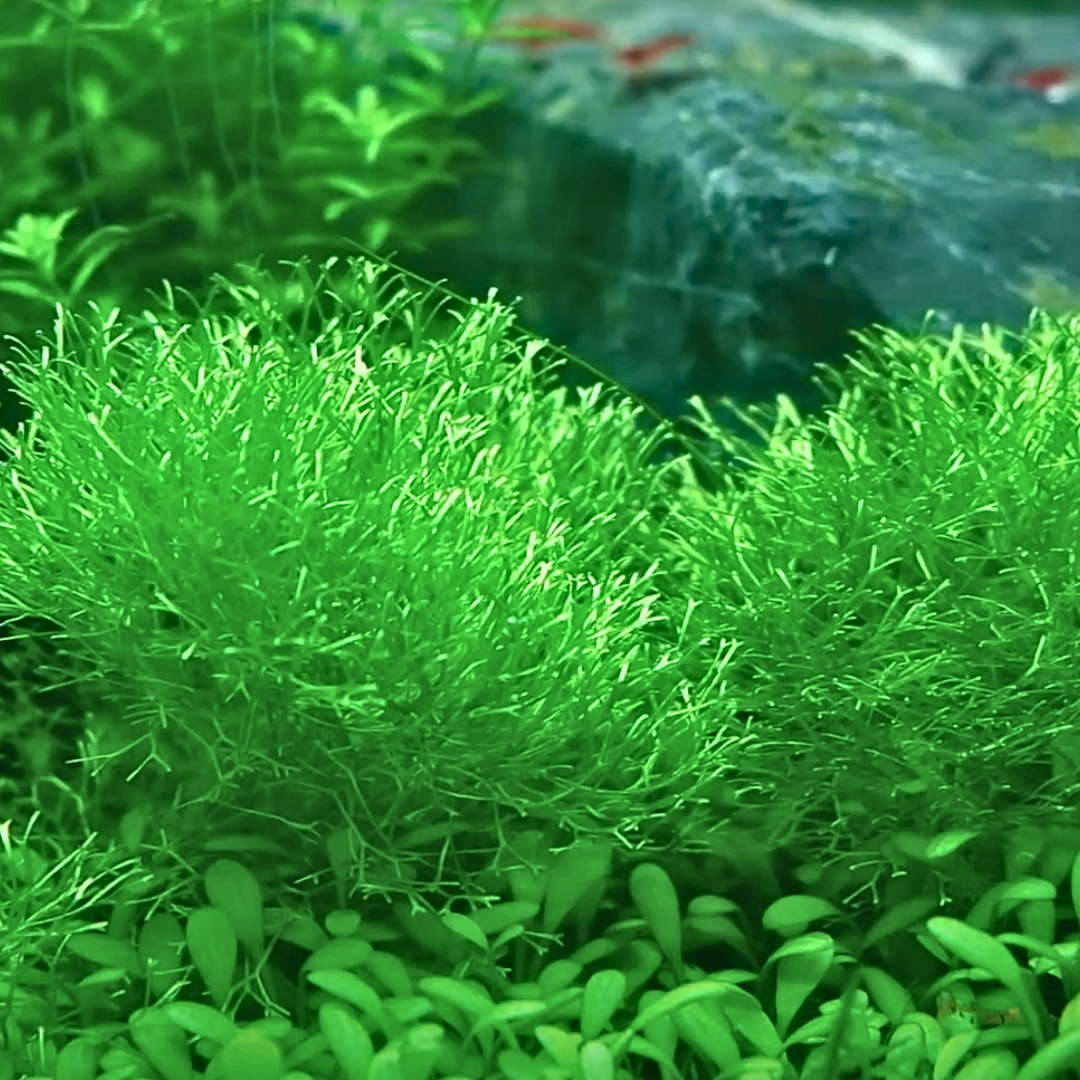
リシア(学名:Riccia fluitans)は、明るい黄緑色の葉状体が美しい、アクアリウムにおける代表的な前景用素材です。和名ではウキゴケと呼ばれ、本来は水面を漂う浮遊性のコケ植物(苔類)ですが、石や流木にテグスで巻きつけて沈める手法が確立されたことで、前景草として広く親しまれるようになりました。最大の魅力は、十分な光と二酸化炭素(CO2)がある環境下で見せる活発な光合成です。葉の先端に無数の透明な酸素の気泡を纏う姿は非常に美しく、水槽内にキラキラとした光の絨毯を作り出します。Riccia (Scientific name: Riccia fluitans) is a representative foreground material in the aquarium hobby, known for its beautiful bright lime-green thalli. Commonly called Crystalwort, it is naturally a floating liverwort. However, it has become widely popular as a foreground plant thanks to the technique of tying it to stones or driftwood with fishing line to sink it. Its greatest charm is the vigorous photosynthesis it performs under sufficient light and CO2. The sight of countless transparent oxygen bubbles (pearling) clinging to its leaf tips is breathtaking, creating a sparkling carpet of light within the aquarium.
高(60cm規格水槽でLEDライト2灯以上を推奨)High (at least two high-power LED lights for a standard 60cm tank are recommended).
CO2添加 / CO2 Injection
条件付き推奨(沈水育成や強い気泡を得る場合はほぼ必須)Conditionally recommended; almost essential for submerged growth or achieving strong pearling effects.
水質 / Water Quality
弱酸性〜中性(pH 5.5〜7.5、弱酸性寄りが安定しやすい)Slightly acidic to neutral (pH 5.5-7.5; stability is better in slightly acidic conditions).
底床 / Substrate
ソイル、砂、大磯砂(底床材を選ばず適応可能)Soil, sand, or gravel (adaptable to various substrates).
レイアウト / Layout
配置 / Positioning
前景(石や流木に固定)、または水面に浮かせるForeground (fixed to stones or wood) or floating on the surface.
注意点 / Precautions
活着能力がないため、リシアストーン等にテグスやネットで薄く固定して配置します。成長が早く厚みが出やすいため、下層への光を確保できるよう適切な管理が求められます。Since it cannot attach itself, it must be thinly fixed to stones with fishing line or net. Its fast growth can lead to thick layers, so proper management is needed to ensure light reaches the lower parts.
増やし方(トリミング) / Propagation & Trimming
増やし方 / Propagation
分枝によって増えます。ちぎれた小さな破片からでも環境が良ければ容易に再生し、増殖します。It propagates through branching. Even small fragments can easily regenerate and grow if environmental conditions are favorable.
トリミング / Trimming
伸びすぎた表面をハサミで刈り取るか、一度剥がして新しく巻き直します。厚みが出すぎると浮力でベースごと浮いてしまうため、早めのトリミングが有効です。Trim the surface with scissors or remove and re-tie fresh fragments. Early trimming is effective, as excessive thickness can cause the entire base to float due to buoyancy.
病気と対策(コケなど) / Pests & Algae
かかりやすい病気 / Common Issues
高水温による白化、アオミドロ等の糸状藻類の絡みつき。Bleaching due to high temperatures and infestation by filamentous algae like hair algae.
対策と予防 / Prevention
水温は30度を超えないよう管理し、ヤマトヌマエビ等の掃除役の生き物を導入します。繊細な構造のため、一度コケが絡むと手作業での除去が非常に困難です。Keep the water temperature below 30°C and introduce cleanup crews like Amano Shrimps. Due to its delicate structure, manually removing algae once it gets entangled is extremely difficult.
雑学と豆知識 / Trivia and Fun Facts
1. 沈めて気泡を楽しむ逆転の発想 / 1. Reversal of Thought: Submerging for Pearling
リシアは本来、水面付近を漂う浮き草です。しかし、アクアリウムの先駆者たちは、この強い浮力を持つ植物をあえて沈めて固定することで、その光合成の過程で生じる酸素の気泡を観賞するという新しい美学を生み出しました。この手法は、水草レイアウトの表現力を劇的に向上させた歴史的なアイデアとして知られています。Riccia is naturally a floating plant. However, aquarium pioneers created a new aesthetic by intentionally sinking and fixing this buoyant plant to enjoy the oxygen bubbles produced during photosynthesis. This technique is recognized as a historic idea that dramatically improved the expressive power of aquascaping.
2. 環境への柔軟な適応能力 / 2. Flexible Adaptability to the Environment
リシアは環境の変化に対して非常に柔軟な適応力を持っています。水深の変化などにより泥の上に定着すると、比較的短期間で「水中型」から「陸生型」へと形態を移行させることがあります。陸上の環境では、乾燥から組織を守るために構造を変化させ、異なる質感を持ちます。このような両生的な性質は、太古の植物が水から陸へと進出した進化の過程を感じさせてくれます。Riccia exhibits great adaptability to environmental changes. When it settles on mud due to changing water levels, it can transition from its “Water Form” to a “Land Form” in a relatively short period. In terrestrial environments, it alters its structure to protect its tissues from drying, resulting in a different texture. This amphibious nature hints at the evolutionary journey of ancient plants moving from water to land.
3. 野生下での現状と保全の意識 / 3. Wild Status and Conservation Awareness
観賞用として世界中で大量に流通しているリシアですが、日本国内の野生個体(ウキゴケ)については、一部の地域で絶滅危惧種としてレッドリストに指定されています。農薬の使用や水田環境の変化などにより、かつて当たり前だった生息地が失われつつあります。ショップで見かけるリシアの背景には、守るべき自然の姿があることを知っておくことも、アクアリストとしてのたしなみと言えるでしょう。While Riccia is widely available for ornamental use, wild populations in Japan (Crystalwort) are listed as endangered on some regional Red Lists. Habitat loss due to pesticide use and changes in rice paddy environments is ongoing. Recognizing that the Riccia in shops represents a nature that needs protection is part of an aquarist’s responsibility.
4. 苔類が持つ水質への影響 / 4. The Influence of Liverworts on Water Quality
苔類を含むコケ植物には、水中の微量な成分を吸着する性質が知られており、重金属などの物質を保持する能力についても研究が進められています。また、リシアは成長の過程で水中の硝酸塩などを積極的に吸収するため、水質の浄化に寄与する側面もあります。さらに、その緻密な茂みには微生物が発生しやすく、稚魚やエビの初期の栄養源となることも期待されています。Bryophytes, including liverworts, are known for their ability to adsorb trace elements in water, and research continues into their capacity to hold substances like heavy metals. Riccia also contributes to water purification by actively absorbing nitrates during growth. Furthermore, its dense thickets facilitate the growth of microorganisms, which are expected to serve as an initial food source for fish fry and shrimp.
まとめ / Conclusion
リシアは、その鮮やかな色彩と美しい気泡によって、アクアリウムに「生命の輝き」を与えてくれる素晴らしい素材です。育成には手間がかかる面もありますが、それに応えて見せてくれる銀色の気泡の絨毯は、何物にも代えがたい達成感を与えてくれます。Riccia is a wonderful material that brings the “glow of life” to an aquarium with its vibrant colors and beautiful pearling. While it requires effort to maintain, the silver carpet of bubbles it provides in return offers an irreplaceable sense of accomplishment.
定期的なメンテナンスや水質の管理を通じてリシアと向き合うことは、水槽内の生態系をより深く理解することにも繋がります。ぜひこの小さなコケ植物が持つ驚異的な適応力と、水中での宝石のような輝きを、あなたの水槽でも楽しんでみてください。Engaging with Riccia through regular maintenance and water quality management leads to a deeper understanding of the aquarium’s ecosystem. We hope you enjoy the incredible adaptability of this small liverwort and its jewel-like brilliance in your own tank.



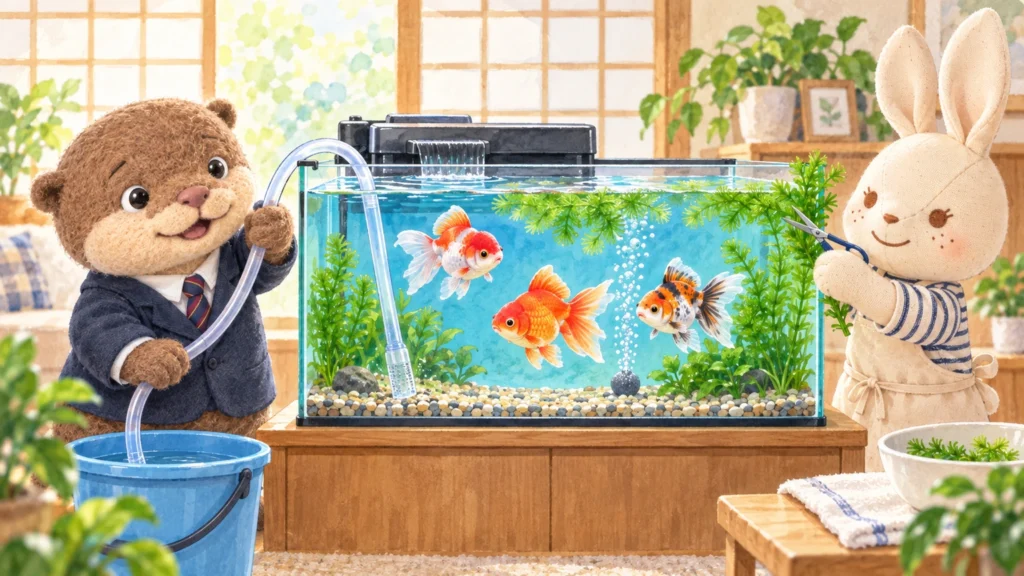 アイのアクアグッズ案内金魚を長く楽しむ飼育用品|水槽・フィルター・エアレーション・水換え道具の特徴や使い方、選ぶときのポイントをアイが紹介します。記事はコチラ →
 アイのアクアグッズ案内お魚を撮ったのに、ボクが写ってる! スマホで楽しむ水槽撮影と便利な道具道具の特徴や使い方、選ぶときのポイントをアイが紹介します。記事はコチラ →
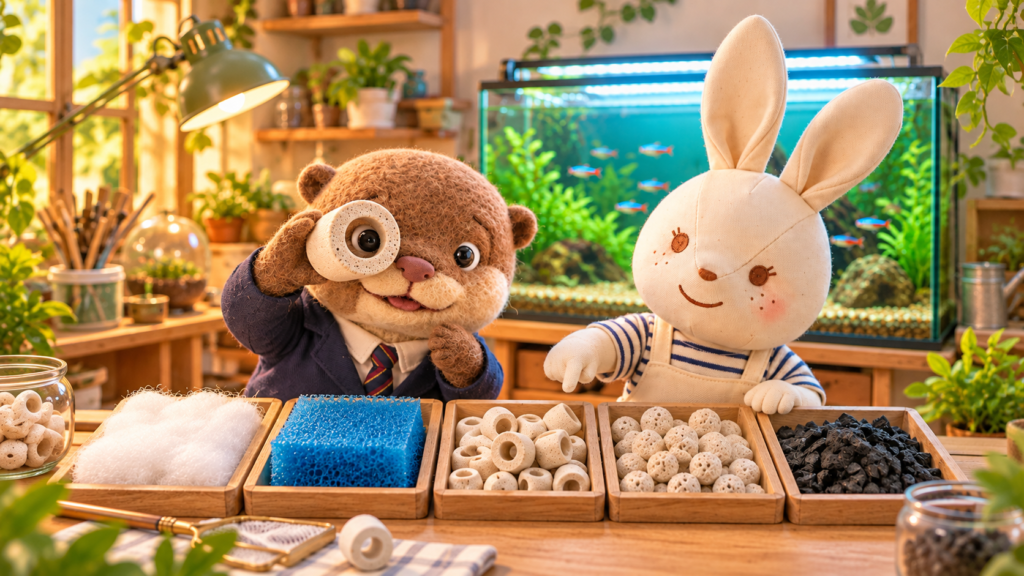 アイのアクアグッズ案内水槽のろ材の選び方|ウール・リング・活性炭の違いとおすすめ商品フィルターの中の綿や石は何をしている? アイとコタロウが、ウール・スポンジ・セラミック・焼結ガラス・活性炭・ゼオライトを比較。機種との相性、入れ方、洗い方と交換まで商品とともに紹介します。記事はコチラ →
 アイのアクアグッズ案内旅行中、お魚のごはんはどうする? 自動給餌器・使える餌・スマート水槽の選び方旅行中の魚の餌やりを助ける自動給餌器を、アイとコタロウが紹介。時間指定、おかわり給餌、対応するフレークや顆粒、設置台、スマホ管理、一体型水槽、留守番フードまで、使いどころと選び方を案内します。記事はコチラ →



コメント