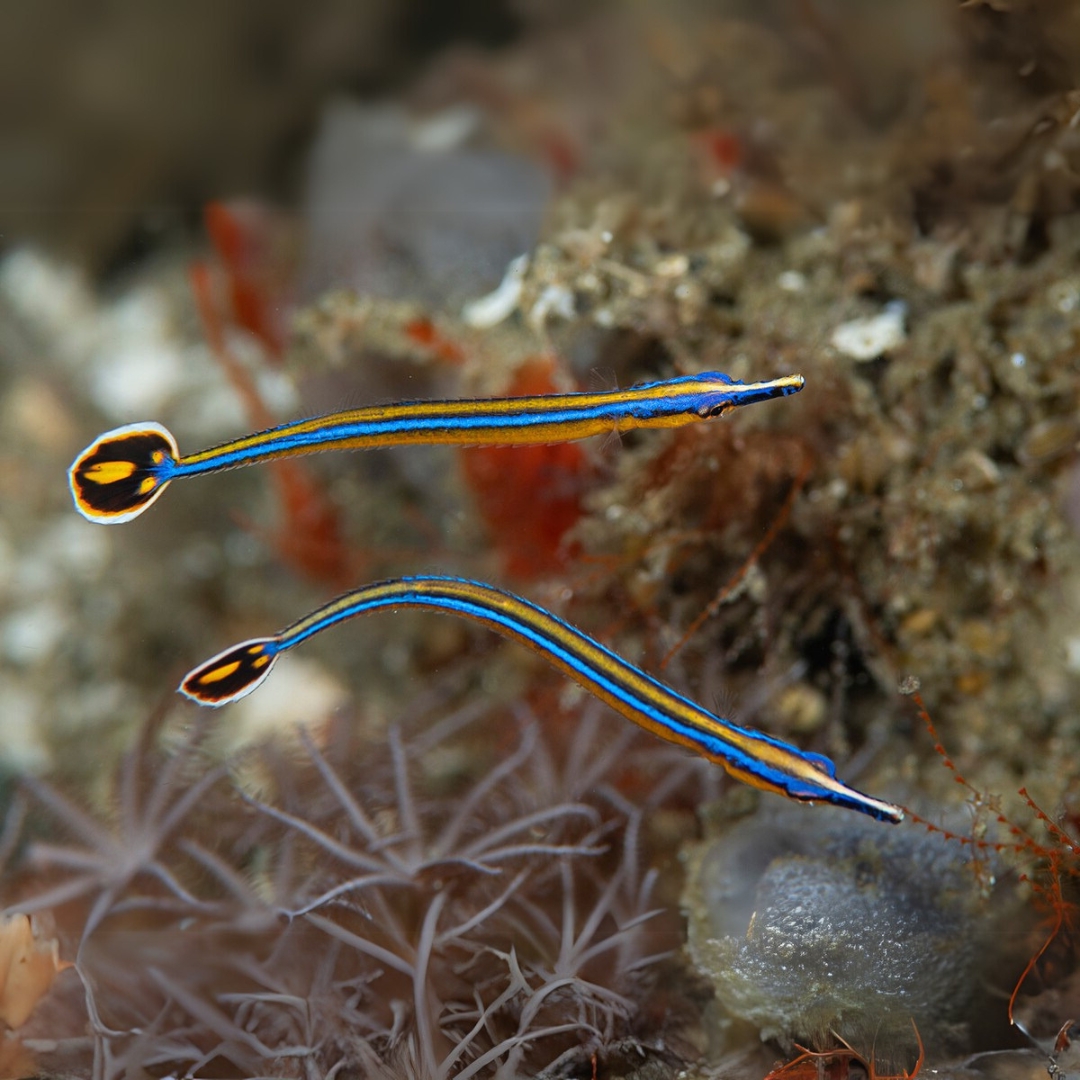
ヒバシヨウジは、鮮やかなオレンジ色の体に青い縦縞が走る、小型で美しい海水性のヨウジウオです。サンゴ礁や岩礁の暗がりでホバリングするように暮らし、自然下ではウツボ類など大型魚の体表や口元についた寄生虫をついばむ「クリーナー」としても知られています。非常に魅力的な魚ですが、泳ぎが遅く、餌への競争力も弱いため、飼育には安定した水質、穏やかな混泳相手、そしてこまめな給餌管理が欠かせません。近年は冷凍餌に慣れたCB個体も流通し始めており、適切な準備を行えば、以前より長期飼育を目指しやすくなっています。The bluestripe pipefish is a small and striking marine syngnathid with a vivid orange body and a bright blue lateral stripe. In the wild it often hovers in shaded reef crevices and is known as a cleaner, picking parasites and tiny crustaceans from larger fishes such as moray eels. It is a captivating species, but it is also delicate: it swims slowly, competes poorly for food, and requires stable water quality, gentle tank mates, and frequent targeted feeding. Captive-bred specimens that are already accustomed to frozen foods are becoming increasingly available, making long-term aquarium care more realistic when the system is properly prepared.
トゲウオ目 ヨウジウオ科 ヨウジウオ亜科 ヒバシヨウジ属Order Syngnathiformes, family Syngnathidae, subfamily Syngnathinae, genus Doryrhamphus
英名 / English Name
Bluestripe pipefish
分布 / Distribution
ペルシャ湾、インド洋、西部太平洋、熱帯東太平洋などのサンゴ礁・岩礁域。日本では南西諸島周辺の個体が観賞魚として知られています。Coral and rocky reefs from the Persian Gulf and Indian Ocean to the western Pacific and tropical eastern Pacific. In Japan, specimens from the Ryukyu region are especially familiar in the aquarium trade.
最大体長 / Max Size
およそ5〜7cm。非常に細長く、体高の低い小型種です。Approximately 5 to 7 cm. It is a very slender, low-bodied small pipefish.
寿命 / Lifespan
明確な飼育下寿命の統一データは多くありませんが、安定した環境と十分な給餌が維持できれば数年単位の飼育が期待されます。Reliable standardized data for captive lifespan are limited, but with stable conditions and adequate feeding, multi-year care may be possible.
飼育環境 / Aquarium Environment
水槽サイズ / Tank Size
目安は30ガロン前後、約110L以上です。日本の規格水槽では60cmワイド水槽以上を基準にすると管理しやすく、可能であれば90cm規格水槽程度の安定したリーフタンクが理想的です。A practical guideline is around 30 gallons, or at least about 110 L. In Japanese standard tank sizes, a 60 cm wide tank or larger is easier to manage, while a stable reef system around a 90 cm standard tank is ideal when space allows.
水温 / Temperature
23〜27℃、できれば24℃前後で安定させます。高水温には弱いため、夏季は水槽用クーラーで急激な上昇を防ぎます。Keep the temperature stable at 23 to 27°C, ideally around 24°C. It is sensitive to heat, so an aquarium chiller is strongly recommended in hot seasons.
水質 / Water Quality
比重1.020〜1.025、pH8.1〜8.4、アルカリ度8〜12dKHを目安にします。アンモニアと亜硝酸は0ppm、硝酸塩は10ppm未満、できるだけ低く保ちます。立ち上げ直後ではなく、6か月以上安定した成熟水槽への導入が安心です。Aim for a specific gravity of 1.020 to 1.025, pH 8.1 to 8.4, and alkalinity of 8 to 12 dKH. Ammonia and nitrite must remain at 0 ppm, and nitrate should be kept below 10 ppm, preferably lower. A mature system that has been stable for at least six months is strongly preferred.
レイアウト / Layout
ライブロックを複雑に組み、洞窟、割れ目、オーバーハングなど暗い隠れ場所を多く作ります。自然下では岩陰やサンゴの枝間に潜むため、開けた水槽よりも、安心してホバリングできる陰影のあるレイアウトが向いています。Build a complex rock structure with caves, crevices, and overhangs. Because this species naturally shelters in shaded reef cracks and coral branches, a layout with many calm, dim areas is better than a bare open tank.
注意点 / Precautions
強い水流は避け、ゆるやかな流れにします。細長い体が排水スリット、ストレーナー、パワーヘッドに吸い込まれる事故があるため、すべての吸い込み口には細かいスポンジやメッシュガードを取り付けます。飛び出し防止のフタも有効です。Avoid strong current and provide gentle flow. Its very slender body can be drawn into overflow slots, filter strainers, or powerheads, so all intakes should be protected with fine sponge or mesh guards. A tight-fitting lid is also useful.
餌と給餌 / Feeding
餌の種類 / Diet
冷凍イサザアミを細かく刻んだもの、冷凍ベビーブラインシュリンプ、冷凍コペポーダなどを主食にします。生きたコペポーダやヨコエビが自然に供給されるリフジウムを併設できると、補助的な餌場として非常に有効です。WC個体は生き餌への依存が強いことが多く、冷凍餌に慣れたCB個体のほうが導入しやすいです。Use finely chopped frozen mysids, frozen baby brine shrimp, and frozen copepods as staple foods. A refugium that continually produces live copepods and amphipods is extremely useful as a supplementary food source. Wild-caught specimens often depend heavily on live foods, while captive-bred individuals already trained onto frozen foods are generally easier to introduce.
給餌のポイント / Feeding Tips
胃が小さく一度に多く食べられないため、1日2〜3回の少量給餌を行います。水流ポンプを一時的に止め、スポイトやターキーバスターで口元の数cm先へ静かに餌を届けるターゲットフィーディングが基本です。体色のオレンジや青い縞がくすむ場合は、栄養不足、水質悪化、混泳魚からのストレスを疑います。Because the stomach is small, feed small portions two to three times per day. Temporarily stop the pumps and use a pipette or turkey baster to gently place food a few centimeters in front of the fish. Fading orange color or dull blue stripes can indicate nutritional deficiency, poor water quality, or stress from tank mates.
性格と混泳 / Temperament and Tank Mates
性格 / Temperament
温和で臆病、遊泳はゆっくりです。岩陰でホバリングしながら過ごすことが多く、環境に慣れるまでは姿を隠しがちです。ただし雄同士は争うため、複数飼育する場合は雌雄構成に注意します。It is peaceful, shy, and a slow swimmer. It often spends time hovering in shaded rockwork and may hide frequently until settled. However, males can fight, so sex ratio must be considered when keeping more than one.
混泳の相性 / Compatibility
最も安心なのは単独飼育、またはペアを中心にした種別専用水槽です。混泳する場合は、タツノオトシゴ、マンダリンフィッシュ、小型の温和なハゼ類など、餌を奪い合いにくい穏やかな魚に限ります。スズメダイ、ベラ、ヤッコ、ハギ、チョウチョウウオのように動きが速く食欲旺盛な魚、フグやモンガラカワハギ類のような捕食性の強い魚は避けます。大型のカニやヤドカリ、刺胞毒の強いイソギンチャク、大型LPSとの同居も危険です。The safest setup is a species-focused tank with a single fish or a pair. Suitable tank mates are limited to calm, slow-feeding species such as seahorses, mandarins, and small peaceful gobies. Avoid fast and competitive feeders such as damsels, wrasses, angelfish, tangs, and butterflyfish, as well as predatory puffers and triggerfish. Large crabs, large hermit crabs, stinging anemones, and large-polyp stony corals with strong tentacles can also be dangerous.
病気と対策 / Diseases and Prevention
かかりやすい病気 / Common Diseases
ヒバシヨウジ特有の病名として定番化したものは多くありませんが、輸送ストレスや餓死、体力低下に伴う細菌感染、白点病などの外部寄生虫、吸い込み事故や混泳魚による外傷に注意が必要です。痩せ、退色、呼吸の荒さ、隠れっぱなしの状態は早期の警告サインです。There are few well-established diseases unique to this species in aquarium care, but shipping stress, starvation, secondary bacterial infections, marine ich and other external parasites, intake injuries, and wounds from tank mates are important risks. Emaciation, faded color, rapid breathing, and continuous hiding are early warning signs.
対策と予防 / Prevention
導入前に水槽を十分に成熟させ、アンモニア・亜硝酸が検出されない状態を維持します。購入時は痩せていない個体、餌を追う個体、できれば冷凍餌に慣れたCB個体を選びます。隔離水槽での観察、こまめな少量給餌、穏やかな混泳、吸い込み口の保護が予防の中心です。薬浴はヨウジウオ類に負担となる場合があるため、症状と薬剤の適合性を慎重に確認してから行います。Prepare a mature aquarium and maintain undetectable ammonia and nitrite. When purchasing, choose a well-filled fish that actively responds to food, preferably a captive-bred individual trained to frozen foods. Quarantine observation, frequent small feedings, peaceful tank mates, and protected intakes are the core preventive measures. Medication can be stressful for pipefishes, so treatment should be chosen carefully according to symptoms and drug tolerance.
増やし方(繁殖) / Breeding
雌雄の判別 / Sexing
雄は吻部の上側に小さな隆起やフック状の突起が見られ、雌の吻部は比較的なめらかです。また雄は腹部に育児嚢を持ち、成熟すると抱卵する姿で判別できることがあります。Males have small bumps or hook-like projections along the upper snout, while females have a smoother snout. Males also possess a brood pouch on the abdomen and may be identified when carrying eggs.
繁殖形態 / Reproduction
ヨウジウオ科らしく、雄が卵を育児嚢で保護する「雄の妊娠」を行います。雌が雄の育児嚢に卵を預け、雄が孵化まで胚を守ります。水槽内でも条件が整えばペアを形成し、産卵することがあります。Like other syngnathids, this species shows male pregnancy. The female deposits eggs into the male brood pouch, where the male protects the embryos until hatching. Under suitable aquarium conditions, pairs may form and spawn.
繁殖のポイント / Breeding Tips
親魚の産卵自体よりも、仔魚の育成が非常に難しい魚です。孵化直後の仔魚にはワムシや通常のブラインシュリンプでは大きすぎる場合があり、Parvocalanus属など微小な浮遊性コペポーダのノープリウス幼生が重要になります。仔魚はクライゼル水槽のように角へ滞留しにくい専用容器で育て、親水槽とは分けて水質を厳密に管理します。着底後は少しずつ大きな餌や冷凍餌へ慣らしていきます。The greatest challenge is not spawning itself, but raising the larvae. Newly hatched larvae may be too small for rotifers or standard baby brine shrimp, so tiny planktonic copepod nauplii such as Parvocalanus are especially important. Larvae should be raised in a dedicated vessel such as a kreisel-style tank that prevents them from collecting in corners, with water quality managed separately from the parent tank. After settlement, they can gradually be weaned onto larger and frozen foods.
雑学と豆知識 / Trivia and Fun Facts
1. 「火箸」の名を持つ小さな海水魚 / 1. A tiny fish named after traditional fire tongs
標準和名のヒバシヨウジは、尾鰭の形が日本の伝統的な火箸の持ち手やリング部分を連想させることに由来すると考えられています。ただし実際の体長はわずか5〜7cmほどで、名前の印象よりもはるかに小さく繊細な魚です。この「道具の名を借りた和名」と、宝石のような体色とのギャップも本種の面白い魅力です。The Japanese name Hibashi-youji is thought to refer to the fan-like tail, which resembles part of traditional Japanese fire tongs. In reality, the fish is only about 5 to 7 cm long, far smaller and more delicate than the name might suggest. The contrast between its tool-inspired name and jewel-like coloration is part of its charm.
2. 派手な色は「クリーニング店の看板」 / 2. Bright colors as a cleaner’s signboard
暗い岩陰に暮らす魚でありながら、ヒバシヨウジは鮮やかなオレンジと青い縞、白く縁取られた黒い尾鰭を持ちます。これは隠れるための色というより、顧客となる魚に「ここに掃除屋がいる」と知らせる視覚的な合図として働いていると考えられています。ウツボのような大型魚の口元へ近づけるのは、この小さな体と細い吻、そしてクリーナーとしての役割があってこそです。Although it lives in shaded reef crevices, the bluestripe pipefish has vivid orange and blue markings and a black tail edged in white. Rather than serving purely as camouflage, these colors likely act as a visual signal advertising its role as a cleaner. Its tiny body, tubular snout, and cleaner behavior allow it to approach the mouths and bodies of much larger fishes such as moray eels.
3. ヨウジウオ科を象徴する「雄の妊娠」 / 3. Male pregnancy, a hallmark of syngnathids
タツノオトシゴの仲間として知られるヨウジウオ科では、雌ではなく雄が卵を保護します。ヒバシヨウジの雄も腹部の育児嚢で卵を抱え、孵化まで守ります。見た目の美しさだけでなく、繁殖生理の面でも非常に特殊な進化を遂げた魚だといえます。In the family Syngnathidae, which also includes seahorses, males rather than females protect the eggs. Male bluestripe pipefish carry eggs in a brood pouch on the abdomen until they hatch. This species is therefore remarkable not only for its appearance, but also for its unusual reproductive biology.
4. CB個体が変えつつある飼育難易度 / 4. Captive-bred fish are changing the difficulty of care
かつてヒバシヨウジは、野生採集個体が冷凍餌に慣れにくいことから、非常に難しい魚とされてきました。近年は人工環境で育ち、冷凍ベビーブラインシュリンプや細かい冷凍イサザアミなどに慣れたCB個体が流通し始めています。もちろん水質や給餌の難しさは残りますが、CB個体は飼育の入口を大きく広げる存在として期待されています。This species was once considered extremely difficult because wild-caught individuals often refused frozen foods. Recently, captive-bred individuals raised in aquaculture systems and trained onto foods such as frozen baby brine shrimp and finely chopped frozen mysids have become available. Careful water quality and feeding are still essential, but captive-bred fish have made this species more approachable for prepared aquarists.
5. 仔魚育成の鍵は小さなコペポーダ / 5. Tiny copepods are the key to larval rearing
水槽内で産卵しても、孵化した仔魚を育てるには極小サイズの餌が必要です。ワムシや通常のアルテミア幼生だけでは合わないことがあり、Parvocalanus属のような微小な浮遊性コペポーダが重要になります。つまりヒバシヨウジの繁殖は、親魚だけでなく、目に見えにくいプランクトンの世界まで水槽内で支える挑戦でもあります。Even if a pair spawns in the aquarium, the newly hatched larvae require extremely small prey. Rotifers or ordinary Artemia nauplii may not be suitable, making tiny planktonic copepods such as Parvocalanus especially important. Breeding this species therefore means supporting not only the parent fish, but also a miniature planktonic food web.
まとめ / Conclusion
ヒバシヨウジは、青い縞模様とクリーニング行動、そして雄が卵を守る繁殖形態まで、見た目にも生態にも強い個性を持つ海水魚です。一方で、痩せやすく、餌への競争に弱く、水流や吸い込み事故にも注意が必要なため、一般的なコミュニティ水槽向きの魚ではありません。The bluestripe pipefish is a marine fish with striking individuality, from its blue stripe and cleaner behavior to its male brooding reproductive system. At the same time, it is not suited to an ordinary busy community tank because it can lose weight easily, competes poorly for food, and is vulnerable to strong flow and intake accidents.
飼育するなら、成熟した安定水槽、穏やかな混泳相手、吸い込み口の保護、1日複数回のターゲットフィーディングを準備しましょう。初めて挑戦する場合は、冷凍餌に慣れたCB個体を選ぶことで成功率を高めやすくなります。美しさだけでなく、サンゴ礁の小さな共生関係まで水槽で感じられる、上級者向けの魅力的な一種です。For successful care, prepare a mature and stable aquarium, peaceful tank mates, protected intakes, and multiple targeted feedings each day. For a first attempt, choosing a captive-bred fish already trained to frozen foods greatly improves the chance of success. This is an advanced but deeply rewarding species that lets aquarists observe not only beauty, but also a small piece of reef symbiosis.
Dawson, C. E. (1985). Indo-Pacific Pipefishes (Red Sea to the Americas). Gulf Coast Research Laboratory, Ocean Springs, Mississippi.
インド太平洋から東太平洋にかけてのヨウジウオ類の分類、亜種、形態、生息域の専門的確認に使用。
Stiller, J., Short, G., Hamilton, H., Saarman, N., Longo, S., Wainwright, P., Rouse, G. W. and Simison, W. B. (2022). Phylogenomic analysis of Syngnathidae reveals novel relationships, origins of endemic diversity and variable diversification rates. BMC Biology, 20, 75.
https://bmcbiol.biomedcentral.com/articles/10.1186/s12915-022-01271-8 ヨウジウオ科全体の系統関係、亜科・系統的位置づけ、進化的背景の補強に使用。
Lin, Q. et al. (2016). The seahorse genome and the evolution of its specialized morphology. Nature, 540, 395–399.
https://www.nature.com/articles/nature20595 ヨウジウオ科に共通する特殊形態、歯の喪失、腹鰭喪失に関わる遺伝子欠失、育児嚢関連遺伝子の記述確認に使用。
Whittington, C. M., Griffith, O. W., Qi, W., Thompson, M. B. and Wilson, A. B. (2020). The evolution and physiology of male pregnancy in syngnathid fishes. Biological Reviews, 95(5), 1252–1272.
https://doi.org/10.1111/brv.12607 雄の妊娠、育児嚢、胚への酸素・栄養供給、浸透圧調節、免疫調節などの繁殖生理の確認に使用。
Støttrup, J. G. (2000). The elusive copepods: their production and suitability in marine aquaculture. Aquaculture Research, 31, 703–711.
https://doi.org/10.1046/j.1365-2109.2000.318488.x 仔魚育成におけるコペポーダ類の餌料価値、サイズ適合性、栄養面の重要性の確認に使用。
Drillet, G., Frouël, S., Sichlau, M. H., Jepsen, P. M., Højgaard, J. K., Joarder, A. K. and Hansen, B. W. (2011). Status and recommendations on marine copepod cultivation for use as live feed. Aquaculture, 315(3–4), 155–166.
https://doi.org/10.1016/j.aquaculture.2011.02.027 コペポーダ培養、海産仔魚用生餌としての実用性、培養管理の考え方を補強するために使用。
Noga, E. J. (2010). Fish Disease: Diagnosis and Treatment, 2nd ed. Wiley-Blackwell.
水質悪化、ストレス、栄養不良、外傷、感染症・寄生虫症など、病気予防と異常時対応の基本的な考え方の確認に使用。
Roberts, R. J. (ed.). (2012). Fish Pathology, 4th ed. Wiley-Blackwell.
観賞魚を含む魚類の疾病、ストレス要因、病理・予防管理の一般原則確認に使用。



 アイのアクアグッズ案内水槽の底砂の選び方|砂・砂利の違いとおすすめ商品道具の特徴や使い方、選ぶときのポイントをアイが紹介します。記事はコチラ →
 アイのアクアグッズ案内コードもホースもないのに酸素が出る? アイとコタロウのオキシデーター探訪道具の特徴や使い方、選ぶときのポイントをアイが紹介します。記事はコチラ →



コメント