
解説 / Description
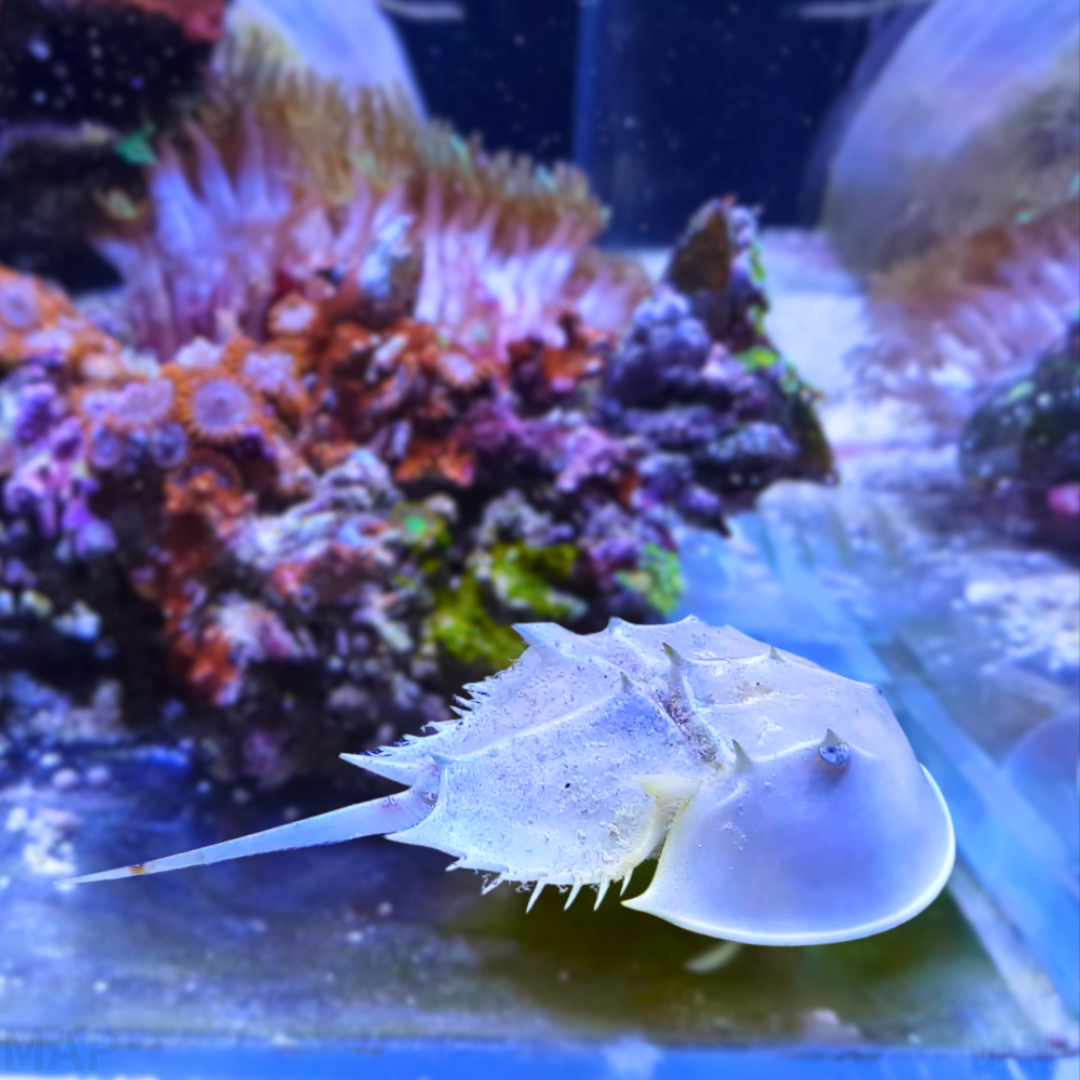
アメリカカブトガニは、北米の大西洋岸やメキシコ湾周辺の浅い海に暮らす、独特な姿の海洋節足動物です。丸みを帯びた硬い甲羅と長い尾剣が目を引きますが、分類上はカニの仲間ではなく、クモやサソリと同じ鋏角類に属します。砂に潜り、腹面の脚で小さな底生動物を探す姿には、魚とは違った観察の楽しさがあります。青い血液に備わる防御機構が、医薬品の検査に利用されてきたことでも知られています。日本でも観賞用の幼体が流通しますが、成長後には広い底面積が必要です。十分な海水飼育設備と長期的な飼育計画を用意できる、経験のある飼育者に向いています。 The American horseshoe crab is a distinctive marine arthropod inhabiting shallow coastal waters along the Atlantic coast of North America and around the Gulf of Mexico. Its rounded carapace and long telson are striking, but it belongs to the chelicerates, alongside spiders and scorpions, rather than to the true crabs. Watching it burrow into sand and search for small bottom-dwelling animals offers a different experience from keeping fish. It is also known for the defensive mechanism in its blue blood, which has been used in pharmaceutical testing. Juveniles are sold for aquariums in Japan, but growing animals require a substantial bottom area. This species is suited to experienced keepers who can provide suitable marine equipment and a long-term care plan.
基本情報 / Basic Information
| 学名 / Scientific Name | Limulus polyphemus (Linnaeus, 1758) |
|---|---|
| 通称 / Common Name | アメリカカブトガニ。「カブトガニ」とだけ表記されている場合は、学名と原産地を確認してください。American horseshoe crab. If an animal is labeled simply as a horseshoe crab, check its scientific name and origin. |
| 分類 / Family | 節足動物門・鋏角亜門・剣尾類・カブトガニ科・アメリカカブトガニ属。剣尾類の分類階級は、分類体系によって異なります。甲殻類には属しません。Phylum Arthropoda, subphylum Chelicerata, Xiphosura, family Limulidae, genus Limulus. The taxonomic rank assigned to Xiphosura varies among classifications. This species is not a crustacean. |
| 英名 / English Name | American horseshoe crab / Atlantic horseshoe crab |
| 分布 / Distribution | 北米大西洋岸のメイン州からフロリダ州、メキシコ湾沿岸の一部、メキシコのユカタン半島周辺に分布します。分布域は連続しておらず、地域ごとに遺伝的な違いのある個体群が存在します。沿岸の砂泥底や河口域で生活し、産卵時には砂浜へ集まります。It occurs along the Atlantic coast of North America from Maine to Florida, in parts of the Gulf coast, and around Mexico’s Yucatán Peninsula. Its distribution is discontinuous, with genetically differentiated regional populations. It inhabits sandy and muddy coastal bottoms and estuaries, gathering on beaches to spawn. |
| 最大体長 / Max Size | 大型のメスでは、尾剣を含む全長が約60cm、前体の甲幅が約30cmに達することがあります。一般にオスはメスより小型です。飼育設備を選ぶ際は、尾剣を含む「全長」と甲羅の横幅である「甲幅」を区別して考えます。Large females may reach approximately 60 cm in total length, including the telson, and about 30 cm across the prosomal carapace. Males are generally smaller. When choosing accommodation, distinguish total length, including the telson, from carapace width. |
| 寿命 / Lifespan | 自然下ではおおむね15〜20年とされますが、推定には幅があります。家庭水槽での寿命を一律に示せる情報は十分ではありません。成熟までにも長い年月を要するため、幼体から飼う場合は十数年以上を見据えた計画が必要です。A lifespan of roughly 15–20 years is commonly estimated in the wild, although estimates vary. Evidence is insufficient to give a reliable lifespan for home aquariums. Its lengthy maturation period calls for a care plan extending well beyond a decade when starting with a juvenile. |
飼育環境 / Aquarium Environment
| 水槽サイズ / Tank Size | 甲幅数cmの幼体1匹を育てる設備の例として、60cm規格水槽(60×30×36cm、総容量約65L)が挙げられます。ただし、成長に合わせた拡張が前提であり、終生飼育用のサイズではありません。成長に応じて120〜150cmワイド水槽を検討し、大型成体には180cm級の幅広水槽や専用飼育槽を計画します。例えば180×90×60cmの総容量は約970Lですが、こうした寸法は設備を考えるための目安で、本種に共通する最低水槽サイズが確立されているわけではありません。尾剣まで含めて無理なく旋回でき、砂に潜れる底面積を優先してください。水量は満水時の概算で、実際には底砂や水位によって少なくなります。A standard Japanese 60 cm aquarium measuring 60 × 30 × 36 cm, with a gross capacity of about 65 L, is an example of accommodation for rearing one small juvenile with a carapace only a few centimeters wide. Expansion as it grows is essential; this is not lifelong accommodation. Consider wide 120–150 cm aquariums as the animal grows and a broad 180 cm-class aquarium or dedicated holding tank for a large adult. A 180 × 90 × 60 cm tank has a gross capacity of approximately 970 L. These dimensions are planning examples, rather than established universal minimum sizes for this species. Prioritize sufficient bottom area for burrowing and unobstructed turning with the entire telson. Capacities assume a full tank; substrate and operating water level reduce the actual volume. |
|---|---|
| 水温 / Temperature | 日常管理の目安は20〜25℃です。適応できる温度は産地や成長段階によって異なり、この範囲だけが生存可能な温度というわけではありません。ただし、自然下での温度耐性を、そのまま水槽での管理基準にしないことが大切です。日本の夏には水槽用クーラーなどで高水温を防ぎ、温度の安定と十分な酸素供給を保ちます。ヒーターを使用する場合は、接触による損傷を防ぐカバーを取り付けます。A practical routine target is 20–25°C. Temperature tolerance varies with origin and life stage, and this is not the species’ only survivable range. However, natural tolerance should not be treated as a routine aquarium management target. During Japanese summers, use an aquarium chiller or other suitable temperature control to prevent overheating while maintaining stability and adequate oxygenation. Fit a protective guard to any heater to prevent contact injuries. |
| 水質 / Water Quality | 人工海水を使用し、通常の海水環境で飼う場合は塩分30〜35‰、pH7.8〜8.4を管理の目安にします。比重は25℃付近でおよそ1.022〜1.026ですが、計器の基準温度や表示方式を確認し、校正した屈折計などで測定してください。アンモニアと亜硝酸は検出されない状態を保ち、硝酸塩や有機物の蓄積も定期換水で抑えます。成熟した生物ろ過と十分なガス交換を確保し、大型設備ではプロテインスキマーも活用します。蒸発分は真水で補い、海水を足して塩分を上げないようにします。カルシウムやマグネシウムなどは、適切に調製した人工海水と換水を基本に管理し、測定せずに添加剤を重ねないようにしてください。Use a marine salt mix. For routine full-strength seawater husbandry, practical targets are 30–35 ppt salinity and pH 7.8–8.4. Specific gravity is approximately 1.022–1.026 near 25°C, but check the instrument’s reference temperature and scale, and use a calibrated refractometer or equivalent meter. Keep ammonia and nitrite undetectable and control nitrate and organic accumulation through regular water changes. Provide established biological filtration and effective gas exchange; a protein skimmer is useful in larger systems. Replace evaporated water with fresh water rather than salt water. Manage calcium, magnesium, and other seawater constituents primarily through correctly mixed salt water and water changes, avoiding unmeasured additions. |
| レイアウト / Layout | 腹面や書鰓を傷つけにくい、粒の角が丸い細かな海水用砂を敷き、広い砂地を中心に構成します。砂の厚さは個体の大きさに合わせ、体を埋められる程度に調整します。一律に厚く敷くのではなく、潜りやすさと清潔に管理できることの両方を重視してください。鋭い岩、狭い隙間、不安定な積み石は避けます。岩を置く場合は、底砂を掘られても崩れないように固定します。吸水口を保護し、強い水流が体に直接当たらない配置で、水槽全体の酸素供給を確保します。Provide fine, rounded marine sand that will not abrade the underside or book gills, with a broad open sand bed. Adjust substrate depth to the animal’s size so it can bury itself. Rather than applying a fixed deep bed, balance burrowing opportunities with the ability to keep the substrate clean. Avoid sharp rocks, narrow gaps, and unstable stacks. Secure any rockwork so burrowing cannot undermine it. Protect filter intakes and provide oxygenation without directing concentrated flow at the animal. |
| 注意点 / Precautions | 砂に潜っているからといって、十分に食べているとは限りません。「砂の掃除役」として扱わず、個体ごとの摂餌を確認してください。購入前には、成長後の設備を用意できるか、長期間にわたって世話を続けられるかを検討します。移動が必要な場合は尾剣をつかまず、甲羅の左右を持って体全体を支えます。脱皮中は殻を引っ張ったり、無理に持ち上げたりしません。ヨウ素添加が本種の脱皮を確実に促すという根拠は十分ではなく、予防目的での無計画な添加は避けます。購入した個体を、日本の海や河口へ放してはいけません。Burrowing does not mean that an animal is receiving enough food. Do not treat it simply as a sand cleaner; confirm feeding for each individual. Before purchase, consider whether you can provide adult accommodation and maintain care over many years. When movement is necessary, never lift it by the telson; hold the sides of the carapace and support the whole body. Do not pull at the shell or forcibly move an animal during molting. Evidence that routine iodine additions reliably promote molting in this species is insufficient, so avoid unmeasured preventive dosing. Never release purchased animals into Japanese coastal waters or estuaries. |
餌と給餌 / Feeding
| 餌の種類 / Diet | 自然下では、ゴカイなどの環形動物、二枚貝、小型甲殻類などを食べます。飼育下では、味付けをしていないアサリなどのむき身、エビ、少量のイカ、海水生物向けの沈下性配合飼料を組み合わせます。個体が食べられる大きさに刻み、一種類の餌だけに偏らないようにしてください。配合飼料を使う場合も、実際に食べていることを確認します。Natural prey includes polychaete worms, bivalves, and small crustaceans. In captivity, offer a varied combination of unseasoned clam meat, shrimp, small amounts of squid, and suitable sinking formulated foods for marine animals. Cut food into manageable pieces and avoid relying on a single item. When using formulated foods, confirm that the animal actually eats them. |
|---|---|
| 給餌のポイント / Feeding Tips | 脚の付け根にある顎基で餌を処理するため、餌は底砂の上に置き、脚で取り込んでいるか観察します。夕方から夜など、活動している時間に少量ずつ与えると、摂餌を確認しやすくなります。給餌量と頻度は一律に決めず、成長段階、食欲、食べ残しに合わせて調整してください。底砂中の生物だけを餌として当てにせず、継続して食べていることを確かめます。アサリやエビなどの残りは水を汚しやすいため、食べ終えたら回収します。Food is processed by the gnathobases at the bases of the legs, so place it on the substrate and observe whether the animal takes it in. Small portions offered during active periods, such as the evening or night, make feeding easier to monitor. Adjust quantity and frequency to life stage, appetite, and leftovers rather than following a fixed schedule. Do not rely on organisms in the substrate as the sole food supply; confirm continued feeding. Remove uneaten clam, shrimp, and similar foods after feeding because they can quickly degrade water quality. |
性格と混泳 / Temperament and Tank Mates
| 性格 / Temperament | 魚を追い回すような攻撃性は目立ちませんが、底生の小動物を捕食します。砂を掘りながら移動し、ときには腹面を上にして泳ぐこともあります。移動中に底砂上の物を動かすため、穏やかに見える外観だけで活動量を判断しないことが大切です。It generally does not pursue fish aggressively, but it preys on small bottom-dwelling animals. It moves while digging through sand and may occasionally swim upside down. Because it can shift objects on the substrate, its quiet appearance should not be mistaken for inactivity. |
|---|---|
| 混泳の相性 / Compatibility | 摂餌と健康状態を確認しやすい単独飼育を基本に考えます。混泳させる場合は、水温と水質の条件が合い、腹面をつつかない穏やかな遊泳魚を慎重に選びます。フグ、モンガラカワハギ、タコ、大型のカニやヤドカリなど、脚や書鰓を傷つけるおそれのある相手は避けてください。小型の貝やゴカイ類は捕食される可能性があります。底砂上のサンゴやイソギンチャクは掘り返されたり位置を変えられたりするため、繊細なリーフレイアウトには向きません。A dedicated aquarium is preferable because it makes feeding and health easier to monitor. If companions are included, carefully select peaceful swimming fish that share the same temperature and water requirements and do not peck at the underside. Avoid puffers, triggerfish, octopuses, and large crabs or hermit crabs that may injure the legs or book gills. Small mollusks and worms may be eaten. Corals and anemones placed on the sand can be disturbed or displaced, making this species unsuitable for delicate reef layouts. |
病気と対策 / Diseases and Prevention
| かかりやすい病気 / Common Diseases | 長期飼育では、甲羅の変色、侵食、潰瘍などの病変や、書鰓への付着物・微生物の増殖が問題になることがあります。腹面や書鰓にヒラムシ類などが付着する場合もありますが、その影響は種類や付着数によって異なります。感染症以外にも、栄養不足、低酸素、水質悪化、物理的な損傷、脱皮不全が衰弱の原因になります。Long-term captive animals may develop shell lesions involving discoloration, erosion, or ulceration, as well as fouling and microbial growth on the book gills. Flatworms and other organisms may occur on the underside or gills, with effects varying by organism and abundance. In addition to infectious disease, poor nutrition, low oxygen, deteriorating water quality, physical injury, and failed molts can cause decline. |
|---|---|
| 対策と予防 / Prevention | 導入時は別の管理水槽で摂餌と外観を観察し、日頃から甲羅の状態、歩行、潜砂、食欲の変化を記録します。底砂の食べ残しや汚れは部分的に吸い出し、深い層を一度に大きくかき混ぜないようにしてください。食欲や動きに異常があれば、まず水温、塩分、アンモニア、亜硝酸、酸素供給を確認します。甲羅の病変が広がる、書鰓に異常がある、衰弱が続く場合は、水生無脊椎動物を診療できる獣医師に相談します。魚用の銅系薬剤や駆虫薬、淡水浴を自己判断で流用せず、脱皮中の殻も無理にはがさないでください。Observe new arrivals in a separate holding system and routinely record shell condition, movement, burrowing, and appetite. Siphon waste and uneaten food from sections of the substrate without deeply disturbing the entire bed at once. If appetite or movement changes, first check temperature, salinity, ammonia, nitrite, and oxygenation. Seek a veterinarian experienced with aquatic invertebrates if lesions spread, gills appear abnormal, or weakness persists. Do not independently apply copper-based fish treatments, dewormers, or freshwater baths, and never forcibly remove the shell during a molt. |
増やし方(繁殖) / Breeding
| 雌雄の判別 / Sexing | 成熟したオスでは、最前方の小さな鋏角のすぐ後ろにある一対の付属肢が、メスにつかまるための形に変化します。先端はボクシンググローブのように膨らみ、鉤のような構造を備えます。メスの対応する付属肢は、通常のはさみ状です。一般にメスのほうが大きいものの、サイズだけでの判別は確実ではありません。幼体の外見による判別は難しく、確認のために繰り返し裏返すことは避けます。In mature males, the pair of appendages immediately behind the small, foremost chelicerae becomes modified for grasping a female. Their ends are enlarged like boxing gloves and include a hook-like structure. The corresponding appendages in females retain ordinary pincers. Females are generally larger, but size alone is unreliable. Juveniles are difficult to sex externally, and repeated overturning for inspection should be avoided. |
|---|---|
| 繁殖形態 / Reproduction | 雌雄異体の卵生で、体外受精を行います。産卵時にはオスがメスの後方につかまり、メスが潮間帯の砂に産んだ卵に精子を放出します。メスにつかまらず、周囲から受精に参加するオスもいます。繁殖時期は地域によって異なり、北部では春から初夏、温暖な地域では秋にも盛んになる場合があります。ふ化直後は尾剣を持たない三葉虫型幼生で、成長と脱皮に伴って成体に近い姿になります。The sexes are separate, and reproduction involves egg laying and external fertilization. A male commonly attaches behind a female and releases sperm over the eggs she lays in intertidal sand. Unattached males may also participate. Spawning seasons vary geographically, typically peaking in spring and early summer in northern areas and sometimes again in autumn in warmer regions. Newly hatched trilobite larvae lack a telson and acquire a more adult-like appearance through growth and molting. |
| 繁殖のポイント / Breeding Tips | 家庭水槽での繁殖は難しく、成熟したペアを入れるだけで安定して増やせる生体ではありません。成熟までにはおおむね約9〜12年を要し、繁殖を目指す場合は、十分な飼育空間に加えて、産卵に適した砂地や季節・潮汐に関わる環境条件を検討する必要があります。まずは成体の健康維持を優先し、卵や幼生の管理には専門施設の助言を得ることが望まれます。ふ化直後は卵黄を栄養源としますが、その後は発育段階に合った餌が必要です。ブラインシュリンプ幼生などを与える際も、実際に摂餌しているか確認し、清浄な水と穏やかな流れを保ちます。Home breeding is difficult; simply housing a mature pair does not provide reliable reproduction. Maturation generally takes about 9–12 years. Breeding requires consideration of suitable nesting sand and environmental conditions associated with seasonal and tidal cycles, alongside ample space. Prioritize adult health and seek specialist guidance for egg and larval care. Newly hatched larvae initially use yolk reserves, then require appropriately sized food as they develop. When offering foods such as newly hatched brine shrimp, confirm actual feeding while maintaining clean water and gentle circulation. |
雑学と豆知識 / Trivia and Fun Facts
| 1. 「生きた化石」にも続いている進化 / 1. Evolution within a “Living Fossil” | カブトガニ類の古い化石には、約4億4500万年前の地層から見つかったルナタスピスが知られています。恐竜よりはるかに古い系譜と聞くと、目の前のアメリカカブトガニも、その時代から同じ種のまま生きてきたように感じられるかもしれません。しかし、古い化石種と現生の本種は別の生物です。絶滅したカブトガニ類にはさまざまな姿の仲間がいて、現生種の遺伝子にも長い進化の歴史が刻まれています。「生きた化石」という呼び名は、古い系譜を思わせる体の特徴を伝える表現であり、進化が止まったことを意味するものではありません。Ancient horseshoe crab fossils include Lunataspis from rocks approximately 445 million years old. Such a lineage, far older than dinosaurs, can make today’s American horseshoe crab seem like the same species surviving from that time. Yet those fossil species and the living species are different organisms. Extinct horseshoe crabs included diverse forms, and living species carry a long evolutionary history in their genes. “Living fossil” describes features that evoke an ancient lineage, rather than an absence of evolution. |
|---|---|
| 2. 四つの現生種と、学名に残る分類の歴史 / 2. Four Living Species and a Name with History | 現生のカブトガニ類は4種で、アメリカカブトガニ以外の3種はアジアに分布します。日本にも生息するカブトガニはタキプレウス属の別種であり、アメリカカブトガニとは区別する必要があります。本種を1758年に記載したリンネは、当初これをMonoculus polyphemusと名付けました。その後、所属する属が変更されたため、現在の学名では命名者と年が括弧に入っています。学名の末尾にある小さな括弧にも、生物の分類を見直してきた歴史が残っているのです。There are four living horseshoe crab species; the three other than the American species occur in Asia. The horseshoe crab native to Japan belongs to Tachypleus and must be distinguished from the American species. Linnaeus originally described the latter in 1758 as Monoculus polyphemus. Its subsequent transfer to another genus is indicated by the parentheses around the author and year in its current name. Even these small parentheses preserve part of the history of taxonomic revision. |
| 3. 青い血が支えてきた医薬品の検査 / 3. Blue Blood and Pharmaceutical Testing | 血液が青く見えるのは、酸素を運ぶヘモシアニンに銅が含まれ、酸素と結びつくと青色を示すためです。一方、医薬品の検査に利用される凝固反応は、青い色素そのものではなく、血液中の細胞に備わる防御機構によって起こります。細菌由来のエンドトキシンを感知すると酵素の反応が連鎖し、細菌などを閉じ込めるゲルが形成されます。この仕組みを利用するLAL試薬は、注射剤などにエンドトキシンが混入していないかを調べるため、広く使われてきました。ただし、あらゆる病原体や発熱物質を検出できる検査ではありません。現在は、組換えC因子や組換えカスケード試薬を使って必要な反応を再現する方法も整備され、野生個体からの採血に依存する負担の軽減が期待されています。The blue color comes from copper-containing hemocyanin, which turns blue when bound to oxygen. The clotting reaction used in pharmaceutical testing, however, depends on defensive machinery in blood cells rather than on the blue pigment itself. Detection of bacterial endotoxin triggers an enzyme cascade that produces a gel capable of trapping bacteria and other material. LAL reagents harness this mechanism to test injectable products and other materials for endotoxin contamination. They do not detect every pathogen or fever-producing substance. Methods using recombinant factor C or recombinant cascade reagents can reproduce the relevant reactions and offer ways to reduce dependence on bleeding wild animals. |
| 4. 視覚研究の窓になった複眼 / 4. Compound Eyes as a Window into Vision | 甲羅の左右にある複眼に加え、アメリカカブトガニには複数の小さな眼があり、尾剣にも光を感じる細胞があります。その独特な外観の内側には、さまざまな方法で光を受け取る仕組みが備わっています。ハートラインらは、神経の活動を調べやすい複眼を使い、強く刺激された受容器が周囲の受容器の応答を抑える「側方抑制」を研究しました。つまり、明るい部分と暗い部分の境目を、より際立たせる仕組みです。この研究は、視覚が明暗の違いをどのように処理するかを理解するうえで重要な役割を果たしました。ハートラインは視覚の生理学的研究により、1967年のノーベル生理学・医学賞を共同受賞しています。砂底を歩く海の生き物が、人間の「見る」という感覚を理解する手がかりにもなったのです。Alongside the compound eyes on either side of the carapace, the American horseshoe crab has several smaller eyes and light-sensitive cells in its telson. Its distinctive body contains multiple ways of detecting light. Hartline and colleagues used its compound eyes, whose neural activity was accessible for study, to investigate lateral inhibition: strongly stimulated receptors suppress responses in neighboring receptors. This helps enhance boundaries between light and dark regions. The work contributed to understanding how visual systems process differences in brightness. Hartline shared the 1967 Nobel Prize in Physiology or Medicine for research into visual physiology. An animal walking across coastal sand thus helped illuminate aspects of human sight. |
| 5. 尾剣は毒針ではなく、起き上がるための支え / 5. A Telson for Righting, Not a Venomous Sting | 細長く尖った尾剣は、サソリの毒針のようにも見えますが、毒を注入する器官ではありません。ひっくり返ったときに底へ突き立て、体勢を戻すための支えとして働きます。腹面には、本のページのように薄い膜が重なった5対の書鰓があり、呼吸だけでなく泳ぐ際の動きにも関わります。硬い甲羅だけを見ると頑丈そうですが、その下には繊細な器官が隠れています。尾剣をつかんで持ち上げず、体全体を支えて扱うことは、こうした器官と働きを守るために大切です。The long, pointed telson may resemble a scorpion’s sting, but it is not a venom-injecting organ. It braces against the bottom when the animal needs to right itself. Underneath are five pairs of book gills, with thin layers resembling pages, involved in both respiration and swimming movements. The hard upper shell can hide how delicate the organs below it are. Supporting the whole body rather than lifting by the telson helps protect these structures and their functions. |
| 6. 小さな卵がつなぐ、海岸と北極圏 / 6. Small Eggs Linking the Coast to the Arctic | 春のデラウェア湾では、繁殖のために集まるアメリカカブトガニと、北極圏へ向かう渡り鳥が出会います。コオバシギのルファ亜種は、砂浜で食べられるカブトガニの卵を重要な栄養源として利用し、長い旅で失ったエネルギーを補います。鳥が利用できる卵の量は、カブトガニの産卵数だけでなく、水温や砂浜の状態、鳥の到着と産卵の時期が重なるかどうかにも左右されます。そのため、カブトガニの個体数を守ることと、産卵できる海岸を残すことは切り離せません。水槽では一匹の底生動物に見える本種も、自然界では遠く離れた繁殖地へ向かう鳥を支える食物網の一部を担っています。In spring, Delaware Bay brings together spawning horseshoe crabs and shorebirds traveling toward Arctic breeding grounds. Rufa red knots use accessible horseshoe crab eggs as an important food source, replenishing energy lost during migration. The amount of food available depends not only on spawning abundance but also on water temperature, beach conditions, and whether the birds’ arrival coincides with spawning. Protecting crab populations therefore goes hand in hand with preserving suitable spawning shores. An animal that appears to be a solitary bottom-dweller in an aquarium is part of a food web supporting birds bound for distant breeding grounds. |
| 7. 古い姿の内側にある、ゲノムの変化 / 7. Genomic Change beneath an Ancient Appearance | カブトガニ類のゲノム研究では、過去に全ゲノム重複が起きた痕跡が見つかっています。全ゲノム重複とは、遺伝情報一式が重複する大きな変化のことです。その後の進化で遺伝子の一部が失われても、体づくりなどに関わる遺伝子が複数のコピーとして残る場合があります。重複の回数や時期、種ごとの違いについては研究が続いています。ただし、この変化だけで、カブトガニ類が長く存続してきた理由や免疫の特徴を説明できるわけではありません。古い形を受け継いでいるように見える体の内側にも、遺伝子が増えたり失われたりしてきた歴史があります。ゲノムを調べることで、外見だけでは分からない進化の過程が少しずつ明らかになっています。Genome studies have found evidence of ancient whole-genome duplications in horseshoe crabs. Such events duplicate an entire genetic complement. Even when some genes are subsequently lost, multiple copies of genes involved in development and other functions may remain. The number, timing, and differences among species continue to be investigated. These events alone, however, do not explain the lineage’s long persistence or its immune characteristics. Beneath an apparently ancient body form lies a history of genetic gains and losses. Genome research is gradually revealing evolutionary processes that appearance alone cannot show. |
まとめ / Conclusion
アメリカカブトガニの魅力は、古い系譜を感じさせる姿だけではありません。砂を探りながら餌を取り込む脚、体勢を立て直す尾剣、呼吸を支える書鰓には、沿岸で生きるための仕組みが備わっています。その動きを丁寧に観察すると、魚を眺めるときとは違う海の暮らしが見えてきます。 The American horseshoe crab offers more than an appearance that evokes an ancient lineage. Its food-handling legs, righting telson, and respiratory book gills reveal adaptations to coastal life. Careful observation opens a view of marine life different from watching fish.
長く健やかに飼うためには、成長に見合う広い砂地、安定した海水、十分な酸素、そして摂餌を確かめる日々の世話が欠かせません。小さな幼体を迎えるときから将来の大きさを見据え、最後まで飼い続けられる環境を整えることが大切です。砂を歩き、潜り、餌を探す姿を見守る時間が、この生き物への理解と親しみを深めてくれます。 Long-term health requires a spacious sand bed appropriate to the animal’s growth, stable seawater, adequate oxygen, and daily attention to feeding. From the moment a small juvenile arrives, plan for its adult size and lifelong accommodation. Time spent watching it walk, burrow, and search for food can deepen both understanding and appreciation of this animal.
気になる道具や飼い方を見つけてみませんか?
 アイのアクアグッズ案内そのごはん、泳いでる! 卵から始めるブラインシュリンプの孵化と道具選び道具の特徴や使い方、選ぶときのポイントをアイが紹介します。記事はコチラ →
 アイのアクアグッズ案内テトラミンって、こんなにあるの? アイとコタロウのごはん探究旅道具の特徴や使い方、選ぶときのポイントをアイが紹介します。記事はコチラ →
さまざまな飼育テーマをご紹介。リンク先の記事には広告・商品紹介が含まれます。
案内・紹介記事一覧へ →分布マップ
アメリカカブトガニ(Limulus polyphemus)は、北米大西洋岸のメイン州からフロリダ州、メキシコ湾沿岸の一部、メキシコのユカタン半島周辺に分布します。分布域は連続しておらず、主に沿岸の砂泥底や河口域で暮らします。
注:地図は分布地域全体を見渡すための概略表示であり、表示範囲のすべてに生息することを示すものではありません。マーカーは代表地点として設定したデラウェア湾周辺を示し、実際の採集地点ではありません。Google Earthのリンクも同じ代表地点を開きます。
参考文献
-
World Register of Marine Species(WoRMS):Limulus polyphemus (Linnaeus, 1758)
学名、分類、原記載名、異名。
-
Florida Fish and Wildlife Conservation Commission:American (Atlantic) Horseshoe Crab
分布、生息環境、体の特徴、雌雄差、産卵行動、尾剣の機能。
-
Donnarumma, L. A., Scharf, B. J., Hill, J. E. & Ohs, C. L.(2022).Candidate Species for Florida Aquaculture: American Horseshoe Crab Limulus polyphemus.
University of Florida, IFAS Extension, FA254. DOI: 10.32473/edis-FA254-2022。分布、食性、成熟と寿命、体外受精、幼生の発育、飼育管理。
-
Carmichael, R. H. & Brush, E.(2012).Three decades of horseshoe crab rearing: a review of conditions for captive growth and survival.
Reviews in Aquaculture, 4(1), 32–43。水温、塩分、底質、餌と給餌管理、成長段階による飼育条件の違い。
-
Nolan, M. W. & Smith, S. A.(2009).Clinical Evaluation, Common Diseases, and Veterinary Care of the Horseshoe Crab, Limulus polyphemus.
Tanacredi, J. T., Botton, M. L. & Smith, D. R. 編,Biology and Conservation of Horseshoe Crabs, Springer, pp. 479–499。飼育設備、給餌、健康評価、感染症、寄生生物、水質に起因する障害、外傷。
-
Friel, A. D. ほか(2020).Microbiome Shifts Associated With the Introduction of Wild Atlantic Horseshoe Crabs (Limulus polyphemus) Into a Touch-Tank Exhibit.
Frontiers in Microbiology, 11, 1398。水族館での水温・塩分・底砂・給餌の管理例と、飼育に伴う微生物群集の変化、甲羅の病変。



コメント