

解説 / Description
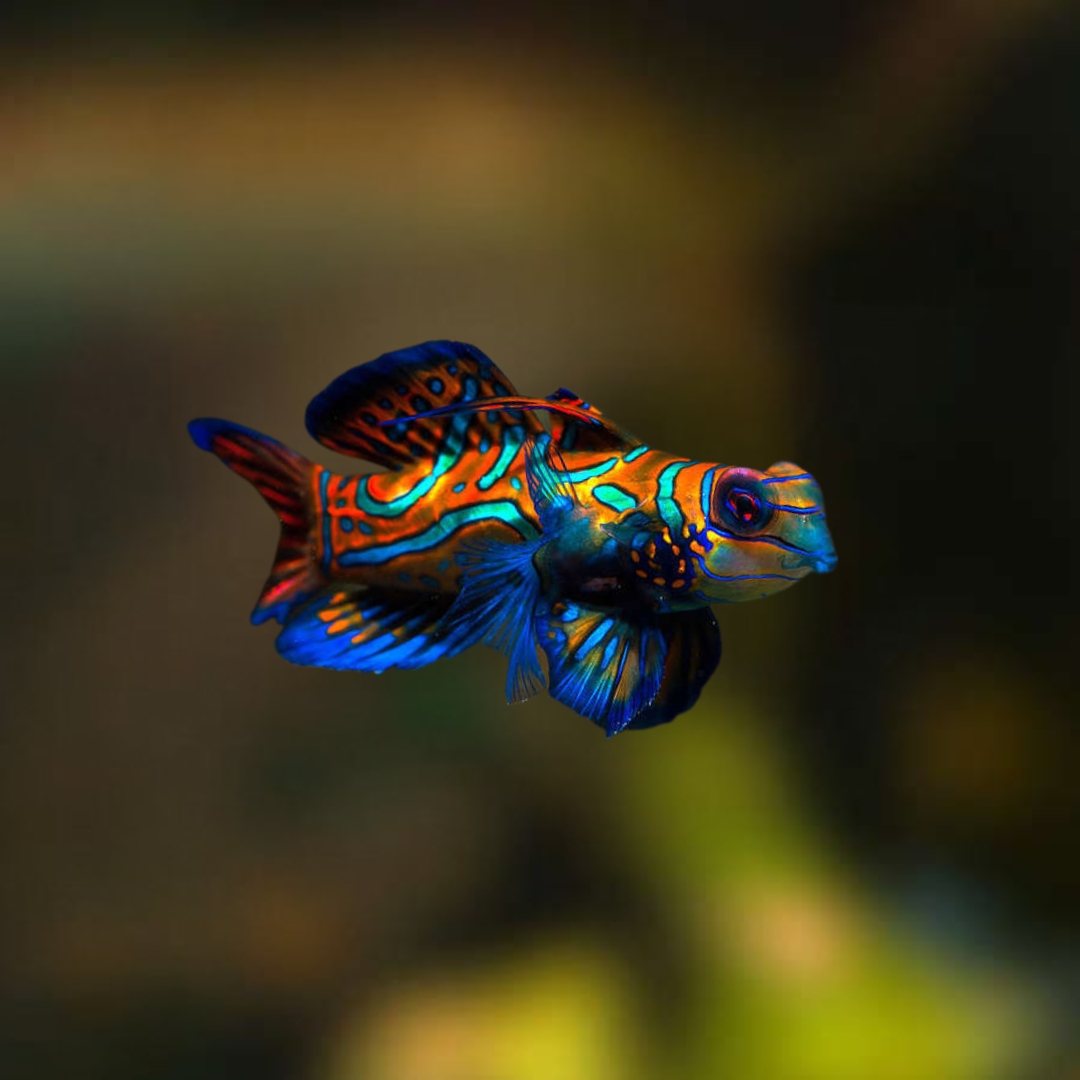
ニシキテグリは、サンゴ礁の岩陰をゆっくり移動しながら微小な甲殻類をついばむ、小型で非常に美しい海水魚です。青、橙、緑が複雑に入り混じる模様から「マンダリンフィッシュ」とも呼ばれ、海水魚図鑑やリーフアクアリウムの世界では特に人気があります。一方で、見た目の華やかさに反して飼育は容易ではありません。野生採集個体は人工飼料に餌付きにくく、成熟したライブロックやコペポーダが豊富な水槽環境が長期飼育の鍵になります。 The mandarinfish is a small, brilliantly colored marine fish that moves slowly among reef crevices while grazing on tiny crustaceans. Its intricate blue, orange, and green pattern has made it one of the most admired fishes in reef aquariums. Despite its jewel-like appearance, it is not an easy beginner fish. Wild-caught specimens often refuse prepared foods, so long-term success depends on a mature aquarium with abundant live rock and a steady supply of copepods and other microfauna.
基本情報 / Basic Information
| 学名 / Scientific Name | Synchiropus splendidus |
|---|---|
| 通称 / Common Name | ニシキテグリ、マンダリンフィッシュ、マンダリンドラゴネットMandarinfish, Mandarin dragonet, Green mandarin |
| 分類 / Family | 条鰭綱・ネズッポ目またはスズキ目として扱われることがあり、ネズッポ科に分類されます。分類体系は資料によって表記が異なるため、本記事ではネズッポ科のドラゴネット類として扱います。A ray-finned fish in the dragonet family Callionymidae. The order-level placement may differ among references, so this guide treats it as a dragonet in Callionymidae. |
| 英名 / English Name | Mandarinfish / Mandarin Dragonet |
| 分布 / Distribution | 西部太平洋。琉球列島周辺からフィリピン、インドネシア、ニューギニア周辺、オーストラリア方面にかけてのサンゴ礁域に分布します。Western Pacific reefs, ranging broadly from the Ryukyu Islands through the Philippines, Indonesia, New Guinea region, and toward Australia. |
| 最大体長 / Max Size | 全長約6〜7cm。一般に流通する個体はそれより小さいことも多く、オスの方がやや大きく見える傾向があります。About 6–7 cm total length. Aquarium specimens are often smaller, and males tend to appear larger than females. |
| 寿命 / Lifespan | 飼育下では2〜4年程度とされることが多く、環境と給餌が安定すると5年前後を目指せます。長期飼育例もありますが、一般的な目安としては水槽内の餌資源とストレス管理が寿命を大きく左右します。Often reported at around 2–4 years in captivity, with about 5 years being a realistic goal under stable conditions. Longer-lived individuals are possible, but lifespan strongly depends on food availability and stress control. |
飼育環境 / Aquarium Environment
| 水槽サイズ / Tank Size | 単独飼育でも60cm規格水槽以上を推奨します。ワイルド個体やペア飼育では、餌となる微小生物の維持を考えて90cm規格水槽以上、またはリフジウムを備えた成熟したリーフ水槽が安心です。A 60 cm standard tank or larger is recommended even for a single fish. For wild-caught specimens or pairs, a mature reef tank around 90 cm or larger, preferably with a refugium, is safer because it can support more natural microfauna. |
|---|---|
| 水温 / Temperature | 24〜26℃前後を基本に、急変を避けて管理します。夏場の高水温や冬場の低水温を防ぐため、ヒーターと必要に応じた冷却設備を用意します。 Keep the temperature around 24–26°C and avoid sudden fluctuations. Use a heater and, when necessary, cooling equipment to prevent seasonal temperature stress. |
| 水質 / Water Quality | 一般的なリーフタンク向けの海水条件、pH8.0〜8.4前後、比重1.020〜1.025前後を目安にします。アンモニアや亜硝酸が検出される未成熟な水槽への導入は避け、硝酸塩や有機物の蓄積も抑えます。Use typical reef-aquarium marine conditions, roughly pH 8.0–8.4 and specific gravity 1.020–1.025. Do not introduce the fish to an immature tank with detectable ammonia or nitrite, and keep nitrate and dissolved organics under control. |
| レイアウト / Layout | 多孔質のライブロックを多めに組み、岩陰、サンゴ砂、コーラルラブルなど、ついばみながら移動できる複雑な足場を作ります。強い直線的な水流は苦手なため、魚が落ち着いて底面付近を探索できる緩やかな流れを残します。Use plenty of porous live rock and create a complex layout with caves, reef rubble, and grazing surfaces. Avoid strong direct flow; leave calmer areas where the fish can comfortably forage near the bottom. |
| 注意点 / Precautions | 購入直後は痩せ具合を必ず確認します。腹部が極端にへこんでいる個体、呼吸が荒い個体、岩をつつく行動が乏しい個体は立て直しが難しい場合があります。導入後は照明を落とし、隠れ家を確保し、他魚に追われない環境で落ち着かせます。Check body condition before purchase. Severely sunken bellies, heavy breathing, or lack of grazing behavior can indicate a difficult recovery. After introduction, dim the lights, provide shelter, and keep the fish away from harassment. |
餌と給餌 / Feeding
| 餌の種類 / Diet | 自然下ではコペポーダ、ヨコエビ類、小型の多毛類、原生動物などの微小生物を主に食べます。飼育下では、水槽内に湧くコペポーダを基本に、活ブラインシュリンプ幼生、冷凍コペポーダ、冷凍ブラインシュリンプ、細かい冷凍餌、沈下性の微粒ペレットなどを個体の反応に合わせて使います。ブリード個体は冷凍餌や人工飼料に慣れていることがありますが、到着直後は少量を複数回に分けて与えます。In nature, it feeds mainly on tiny organisms such as copepods, amphipods, small worms, and protozoans. In aquariums, provide natural copepod populations, newly hatched brine shrimp, frozen copepods, frozen brine shrimp, finely chopped frozen foods, and tiny sinking pellets according to the fish’s response. Captive-bred fish may be accustomed to frozen or prepared foods, but new arrivals should still be fed small amounts several times a day. |
|---|---|
| 給餌のポイント / Feeding Tips | 一度に大量に食べる魚ではなく、一日中少しずつついばむタイプです。ワイルド個体では「水槽内に常に食べ物がある状態」を作ることが重要です。混泳魚に餌を奪われる場合は、スポイトでのターゲット給餌や、細い口だけが入る穴を開けた専用フィーダーを使うと成功率が上がります。人工飼料への移行は、生餌や冷凍餌に少しずつ混ぜ、無理な絶食は避けて行います。This fish does not eat large meals; it grazes little by little throughout the day. For wild-caught fish, the goal is to keep food available continuously. If tank mates steal the food, use target feeding with a pipette or a dedicated mandarin feeder with small openings. When transitioning to prepared foods, mix them gradually with live or frozen foods and avoid harsh fasting methods. |
性格と混泳 / Temperament and Tank Mates
| 性格 / Temperament | 温和で臆病、遊泳力は高くありません。水槽の前面を活発に泳ぎ回るというより、岩や底面をゆっくり移動しながら探索します。環境に慣れると日中も姿を見せますが、導入直後は隠れがちです。Peaceful, shy, and not a strong swimmer. Rather than cruising in open water, it slowly explores rocks and the bottom. Once settled, it may appear during the day, but new arrivals often hide. |
|---|---|
| 混泳の相性 / Compatibility | カクレクマノミ、マンジュウイシモチ、小型ハゼ類など、温和で餌を独占しにくい魚と相性が良いです。スズメダイ類の一部、大型ヤッコ、ベラ類など、動きが速く攻撃的または大食いの魚とは相性が悪い場合があります。同種のオス同士は争いやすいため、基本は単独飼育、または十分な広さを確保した明確なオスメスのペア飼育が無難です。Good tank mates include peaceful species such as clownfish, pajama cardinalfish, and small gobies that do not monopolize food. Fast, aggressive, or very competitive feeders such as some damselfish, large angelfish, and certain wrasses can be problematic. Two males often fight, so keep one fish or a clear male-female pair in a sufficiently large tank. |
病気と対策 / Diseases and Prevention
| かかりやすい病気 / Common Diseases | 白点病、外部寄生虫、輸送ストレスによる食欲不振、痩せが問題になります。ニシキテグリはウロコを持たず、厚い粘液で体表を守る魚として知られているため、体表トラブルや薬剤への反応には注意が必要です。Marine ich, external parasites, appetite loss after shipping, and weight loss are common concerns. Because mandarinfish lack scales and rely on a thick mucus layer, skin problems and medication sensitivity require special care. |
|---|---|
| 対策と予防 / Prevention | 治療より予防を重視します。水温と比重の急変を避け、過密飼育を控え、導入前の観察や隔離を丁寧に行います。銅系薬剤や強い薬浴は安全域が狭いと扱われることが多いため、使用する場合はサンゴや無脊椎動物の有無を含め、薬剤の説明と専門的な手順を必ず確認してください。UV殺菌灯、安定した水質、十分な栄養状態は発症リスクを下げる助けになります。Focus on prevention rather than rescue treatment. Avoid rapid changes in temperature and salinity, do not overcrowd, and observe or quarantine new fish carefully. Copper-based medications and strong baths are often treated as risky for scaleless fishes, so always follow expert procedures and product instructions, especially if corals or invertebrates are present. UV sterilization, stable water quality, and good nutrition can help reduce disease risk. |
増やし方(繁殖) / Breeding
| 雌雄の判別 / Sexing | オスはメスより大きくなりやすく、第一背ビレの棘条が長く伸びることが多いです。メスは比較的小柄で、背ビレの伸長が控えめです。ただし若い個体では判別が難しいことがあります。Males are often larger and commonly have an elongated first dorsal spine. Females are usually smaller with a shorter dorsal spine, although juveniles can be difficult to sex. |
|---|---|
| 繁殖形態 / Reproduction | 浮遊卵を放出するペラジックスポーナーです。夕方から消灯前後の薄暗い時間帯に、ペアが寄り添って水面方向へ上昇し、上昇の頂点付近で放卵・放精します。親は卵や仔魚を保護しません。It is a pelagic spawner. Around dusk or near lights-out, the pair rises together into the water column and releases eggs and sperm near the top of the spawning ascent. The parents do not guard the eggs or larvae. |
| 繁殖のポイント / Breeding Tips | 水槽内で産卵行動が観察されることはありますが、仔魚育成は非常に難易度が高い分野です。微小な初期餌料、安定した止水に近い育成環境、卵や仔魚を傷めない回収方法が必要になります。家庭水槽では、繁殖そのものよりも、ペアの健康維持と日没に近い照明サイクルの観察を楽しむ姿勢が現実的です。Spawning can occur in aquariums, but larval rearing is highly challenging. It requires extremely small first foods, a carefully controlled low-flow rearing environment, and gentle egg or larval collection. In home aquariums, it is more realistic to maintain a healthy pair and enjoy observing dusk-related courtship behavior. |
雑学と豆知識 / Trivia and Fun Facts
| 1. 青色の秘密 / 1. The secret behind the blue | 魚の青色は、色素そのものではなく、微細な結晶構造が光を反射して見える「構造色」であることが多いとされます。ところがニシキテグリと近縁のスポッテッドマンダリンでは、青色の色素胞に関する報告があり、シアノフォアという名称で紹介されることがあります。図鑑的には「魚類の青色の中でも特に珍しい例」と覚えておくとよいでしょう。In many fishes, blue coloration is structural rather than pigment-based, produced by microscopic light-reflecting structures. Mandarinfish and the closely related spotted mandarin have been reported to possess unusual blue chromatophores called cyanophores. For aquarium readers, it is best understood as an especially unusual case of blue coloration in fishes. |
|---|---|
| 2. ハゼではなくドラゴネット / 2. Not a goby, but a dragonet | 「マンダリンゴビー」と呼ばれることがありますが、ニシキテグリはハゼ科ではなくネズッポ科の魚です。底面を歩くように移動する姿がハゼ類に似て見えるため、流通名として混同されやすいのです。正確にはドラゴネットの仲間と考えると、食性や行動の理解もしやすくなります。It is sometimes sold as a “mandarin goby,” but it is not a true goby. It belongs to the dragonet family Callionymidae. The confusion comes from its bottom-dwelling habits and goby-like appearance. Understanding it as a dragonet helps explain its feeding style and behavior. |
| 3. 派手な体色と粘液 / 3. Bright colors and mucus | ニシキテグリはウロコを持たず、厚い粘液で体表を守っています。この粘液には不快な味やにおい、捕食者を遠ざける働きがあるとされ、派手な体色も警戒色として機能している可能性が示唆されています。ただし、色彩の意味をひとつに断定するのではなく、求愛、個体識別、隠れ場所での視覚効果など、複数の役割が重なっていると考えるのが自然です。Mandarinfish lack scales and protect their skin with a thick mucus layer. This mucus is reported to have unpleasant taste and odor and may help deter predators, while the bright coloration may function partly as a warning signal. However, the meaning of the colors should not be reduced to a single purpose; courtship, individual recognition, and visual effects in reef crevices may all play roles. |
| 4. ブリード個体が変える飼育の難しさ / 4. How captive-bred fish change the challenge | 近年は、人工繁殖されたブリード個体も流通するようになりました。ブリード個体は冷凍餌や人工飼料に慣れている場合が多く、ワイルド個体より導入後の餓死リスクを下げられる可能性があります。ただし、どの個体も到着直後は痩せやすく、少量を複数回与える丁寧な管理が必要です。ブリード個体だから絶対に簡単、ではなく「成功率を上げやすい選択肢」と捉えるのが安全です。Captive-bred mandarinfish have become more available in recent years. They are often accustomed to frozen or prepared foods, which can reduce the starvation risk compared with wild-caught fish. Still, new arrivals can lose weight quickly and need careful, frequent small feedings. Captive-bred does not mean effortless; it means a better starting point for success. |
まとめ / Conclusion
ニシキテグリは、海水魚の中でもひときわ美しい存在ですが、長期飼育の成否は「餌を食べるかどうか」に大きく左右されます。ワイルド個体では、成熟したライブロック、豊富なコペポーダ、落ち着いた混泳環境が不可欠です。購入時には体型をよく観察し、痩せた個体を避けることが最初の大きなポイントになります。 The mandarinfish is one of the most beautiful marine aquarium fishes, but long-term success depends heavily on whether it can feed reliably. For wild-caught specimens, mature live rock, abundant copepods, and a calm community setup are essential. Careful selection at purchase, especially avoiding emaciated individuals, is one of the most important first steps.
初心者が衝動的に選ぶ魚ではありませんが、環境を整え、給餌を観察し、個体のペースに合わせて管理できる飼育者にとっては、サンゴ礁の小さな生態を水槽内で感じられる魅力的な魚です。より安定したスタートを重視するなら、人工飼料や冷凍餌に慣れたブリード個体を選ぶことも有力な選択肢になります。 It is not a fish for impulse purchases, but for aquarists who can prepare the right environment, observe feeding closely, and manage the fish at its own pace, it offers a wonderful glimpse into reef ecology. If a more stable start is the priority, a captive-bred specimen already accustomed to frozen or prepared foods is a strong option.

気になる道具や飼い方を見つけてみませんか?
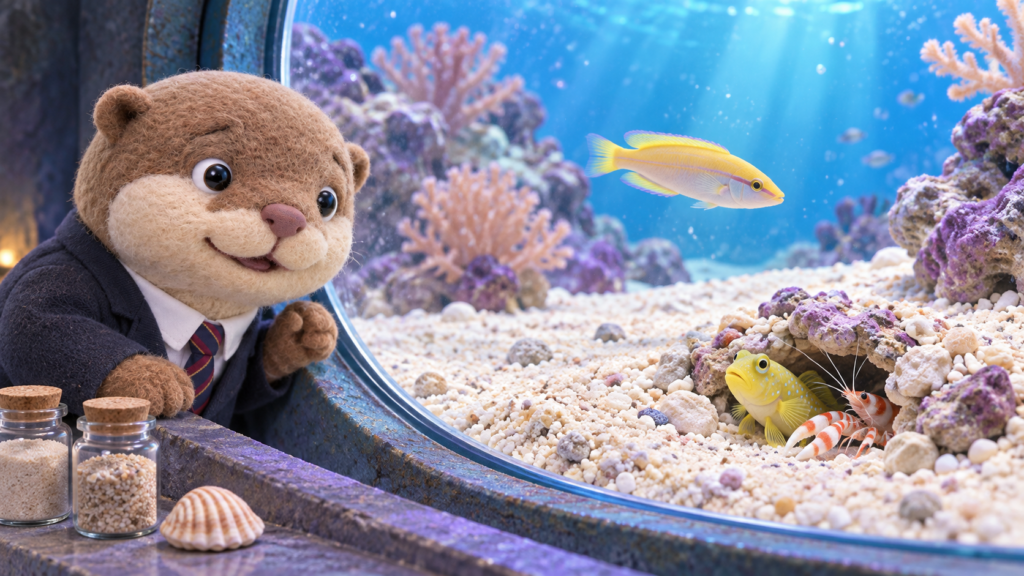 アイのアクアグッズ案内海水魚の底砂の選び方|サンゴ砂・ライブサンドとおすすめ商品道具の特徴や使い方、選ぶときのポイントをアイが紹介します。記事はコチラ →
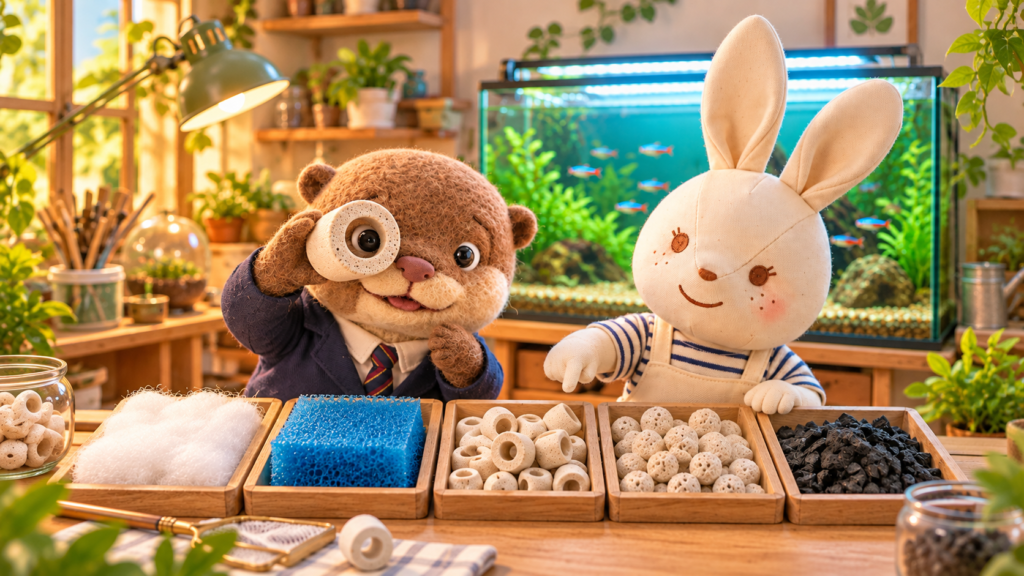 アイのアクアグッズ案内水槽のろ材の選び方|ウール・リング・活性炭の違いとおすすめ商品フィルターの中の綿や石は何をしている? アイとコタロウが、ウール・スポンジ・セラミック・焼結ガラス・活性炭・ゼオライトを比較。機種との相性、入れ方、洗い方と交換まで商品とともに紹介します。記事はコチラ →
さまざまな飼育テーマをご紹介。リンク先の記事には広告・商品紹介が含まれます。
案内・紹介記事一覧へ →本記事では、分類、分布、生息環境、飼育条件、繁殖、疾病・注意点に関わる記述を確認するため、店舗、通販、個人ブログ、まとめサイトを除外し、学術論文、公的・大学系資料、分類データベース、魚類データベースを中心に参照しました。
-
WoRMS Editorial Board. “Synchiropus splendidus (Herre, 1927).” World Register of Marine Species.
分類、学名、命名者、シノニム確認の基礎資料として参照。
https://www.marinespecies.org/aphia.php?id=273264&p=taxdetails -
Froese, R. and D. Pauly, Editors. “Synchiropus splendidus, Mandarinfish.” FishBase.
分布、最大体長、水深、生息環境、IUCN評価、観賞魚としての基礎情報を確認。
https://www.fishbase.se/summary/Synchiropus-splendidus.html -
Museums Victoria / Fishes of Australia. “Mandarinfish, Pterosynchiropus splendidus (Herre 1927).”
オーストラリア周辺での分類表記、最大体長、水深、リーフ関連種であることのクロスチェックに使用。
https://fishesofaustralia.net.au/home/species/4112 -
Animal Diversity Web. “Synchiropus splendidus (Mandarin-fish).” University of Michigan Museum of Zoology.
生息水温、底生性、サンゴ礁・ラグーンでの生活、食性、飼育難易度、粘液、繁殖行動の補助資料として参照。
https://animaldiversity.org/accounts/Synchiropus_splendidus/ -
Sadovy, Y., Mitcheson, G. and Rasotto, M. B. 2001. “Early Development of the Mandarinfish, Synchiropus splendidus (Callionymidae), with Notes on Its Fishery and Potential for Culture.” Aquarium Sciences and Conservation, 3:253–263.
浮遊卵、初期発生、幼生期、観賞魚採集と養殖可能性に関する記事内の繁殖・育成記述を支える資料。
https://doi.org/10.1023/A:1013168029479 -
Sadovy de Mitcheson, Y. J. 2022. “Mating system in a small pelagic spawner: field case study of the mandarinfish Synchiropus splendidus.” Environmental Biology of Fishes.
日没前後の産卵、ペア形成、体サイズと繁殖行動など、繁殖生態の確認に使用。
https://doi.org/10.1007/s10641-022-01281-1 -
Zeng, C., Shao, L., Ricketts, A. and Moorhead, J. A. 2018. “The importance of copepods as live feed for larval rearing of the green mandarin fish Synchiropus splendidus.” Aquaculture.
コペポーダなど微小生物の重要性、幼生飼育、ブリード・養殖技術に関する記述の根拠として参照。
https://doi.org/10.1016/j.aquaculture.2018.03.011 -
CMFRI. “Marine Ornamental Fish Culture.” Central Marine Fisheries Research Institute Special Publication.
海産観賞魚飼育・繁殖における水温、pH、塩分、アンモニア・亜硝酸管理など、飼育条件の一般的な裏付けとして参照。
https://eprints.cmfri.org.in/8395/1/CMFRI%20SP%20101.pdf -
Yanong, R. P. E. 2021. “Cryptocaryon irritans Infections (Marine White Spot Disease in Fish).” University of Florida IFAS Extension.
海水魚の白点病、生活環、治療選択肢、隔離治療、銅・低比重処理など疾病対策の確認に使用。
https://ask.ifas.ufl.edu/publication/FA164 -
Colorni, A. and Burgess, P. 1997. “Cryptocaryon irritans Brown 1951, the cause of ‘white spot disease’ in marine fish: an update.” Aquarium Sciences and Conservation.
白点病の病原体、生活環、病原性、アクアリウム内での被害に関する基礎レビューとして参照。
https://doi.org/10.1023/A:1018360323287
確認日:2026年6月11日




コメント