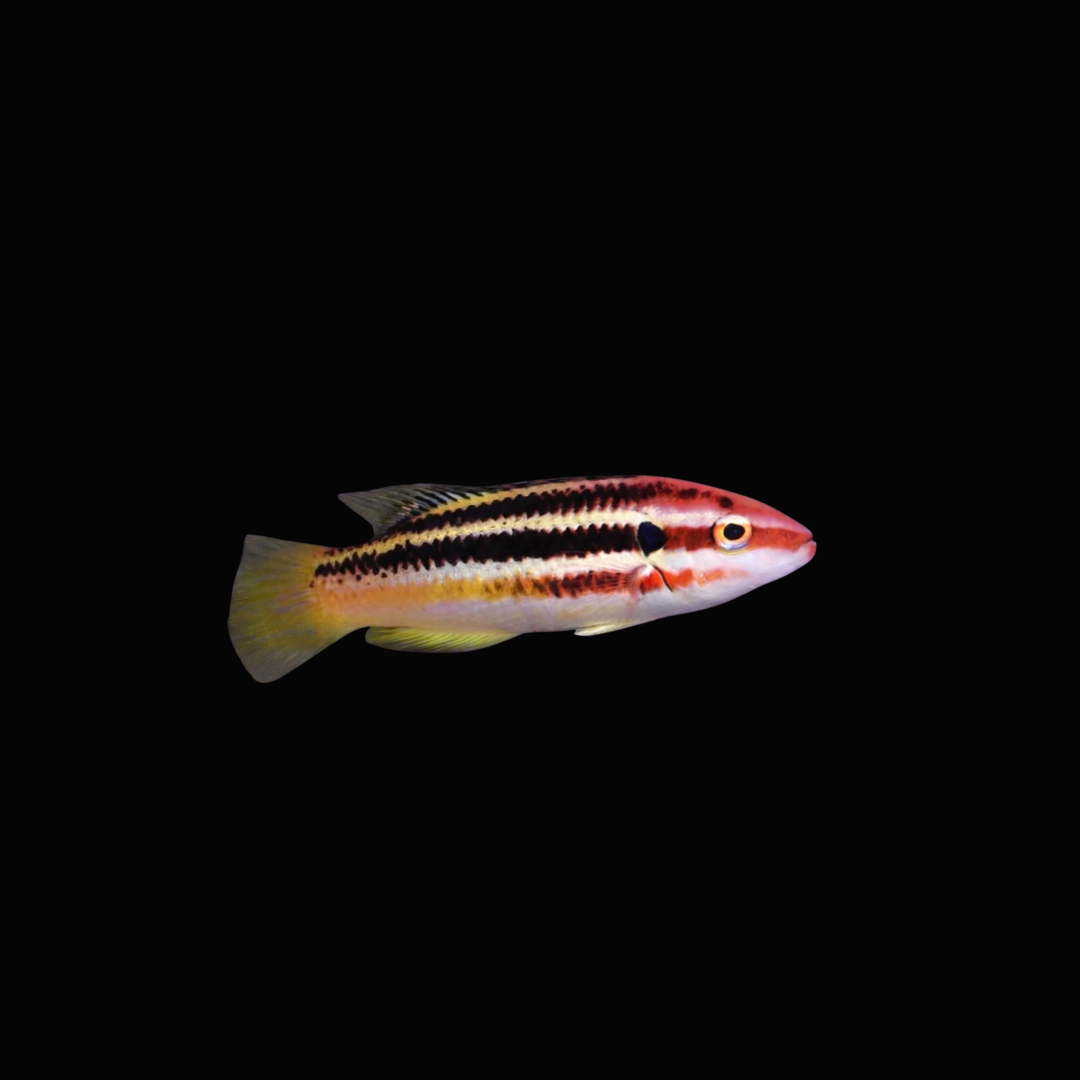
タヌキベラ(Bodianus izuensis)は、ベラ科タキベラ属に分類される海水魚で、主に水深30メートルから70メートル前後のやや深い岩礁域に生息しています。1975年に日本の伊豆海洋公園沖で発見・記載された歴史を持ち、白地に走る赤と黒の鮮やかな3本の縦帯が最大の特徴です。成長すると鰓蓋に大きな黒斑が現れ、より威厳のある姿へと変貌します。深場由来の魚としては比較的丈夫で、人工飼料にも慣れやすいですが、その活発な遊泳性と砂を掘り返す特異な生態から、専門的な飼育設備と管理が求められる「アクアリスト憧れのプレミアムフィッシュ」と言える存在です。The Striped Pigfish (Bodianus izuensis) is a saltwater fish in the family Labridae, primarily inhabiting rocky reef areas at depths of 30 to 70 meters. First described in 1975 from the waters off Izu Oceanic Park in Japan, its most striking feature is the three bold red and black longitudinal stripes on a white body. As they mature, a large black spot develops on the operculum, giving them a more majestic appearance. While relatively hardy for a deep-water species and easily acclimated to artificial food, their active swimming nature and unique habit of digging in the substrate make them a premium species that requires specialized equipment and management.
基本情報 / Basic Information
学名 / Scientific Name
Bodianus izuensis
通称 / Common Name
タヌキベラStriped Pigfish
分類 / Family
スズキ目ベラ科タキベラ属Perciformes, Labridae, Bodianus
英名 / English Name
Striped Pigfish / Izu Hogfish
分布 / Distribution
伊豆諸島、三浦半島、高知県柏島周辺などの日本沿岸。海外では台湾、オーストラリア、ニューカレドニアなど。Coastal waters of Japan (Izu Islands, Miura Peninsula, Kashiwajima), as well as Taiwan, Australia, and New Caledonia.
最大体長 / Max Size
約30cm(飼育下では10〜15cm程度の個体が多く流通します)Approx. 30 cm (Individuals of 10-15 cm are most common in the hobby).
寿命 / Lifespan
約5年〜10年(飼育環境に依存します)Approx. 5 to 10 years (depending on the environment).
飼育環境 / Aquarium Environment
水槽サイズ / Tank Size
最低でも90cm規格水槽(約190L)。将来的な成長を見越すと120cm〜150cm以上の大型水槽が推奨されます。Minimum 90cm standard tank (approx. 190L). A 120cm to 150cm or larger tank is recommended for long-term care as they grow.
水温 / Temperature
23度 〜 28度(26度前後が理想的。高水温に弱いため、夏季の水槽用クーラーは必須です。)23°C – 28°C (74-82°F). 26°C is ideal. A chiller is essential during summer as they are sensitive to high temperatures.
岩礁斜面を再現し、隠れ家となるライブロックを複雑に配置します。底砂を掘り返すため、砂を敷く場合はデトリタスの蓄積に注意してください。Replicate rocky slopes with complex live rock structures for hiding. Be cautious of detritus accumulation if using substrate, as they will dig.
注意点 / Precautions
非常に飛び出しやすいため、水槽には隙間のない蓋が絶対条件です。また、深場採集個体は減圧症のリスクがあるため、購入時の状態確認が重要です。A secure lid without gaps is mandatory as they are notorious jumpers. Also, verify the condition at purchase as deep-caught specimens may suffer from barotrauma.
餌と給餌 / Feeding
餌の種類 / Diet
肉食性。冷凍のイサザアミ(マイシスシュリンプ)、クリル、ブラインシュリンプ、細かく刻んだ生餌。人工飼料にも比較的容易に餌付きます。Carnivorous. Frozen mysis shrimp, krill, brine shrimp, and finely chopped fresh seafood. They acclimate easily to dry pellets and flakes.
給餌のポイント / Feeding Tips
底砂の中の獲物を探す習性があるため、沈下性の餌も効果的です。鮮やかな赤色を維持するため、ビタミンやカロチノイドを含む栄養バランスの良い給餌を心がけてください。Since they naturally hunt for prey in the substrate, sinking foods are effective. Provide a balanced diet rich in vitamins and carotenoids to maintain their vibrant red coloration.
性格と混泳 / Temperament and Tank Mates
性格 / Temperament
大胆で自己主張の強い性格です。極端に臆病ではありませんが、同種間や似た体型のベラには攻撃的になることがあります。Bold and assertive. While not extremely shy, they can be aggressive toward the same species or wrasses with similar body shapes.
混泳の相性 / Compatibility
大型のヤッコやハギとは好相性ですが、小型のエビや貝類、小型のハゼなどは捕食対象となるため注意が必要です。サンゴには無害ですが、無脊椎動物との共存は難しい「条件付きリーフセーフ」です。Compatible with larger angels and tangs. Use caution with small shrimp, snails, and gobies as they may be eaten. They are “reef safe with caution” — harmless to corals but predatory toward small invertebrates.
病気と対策 / Diseases and Prevention
かかりやすい病気 / Common Diseases
ハダムシやエラムシなどの単生類による寄生虫感染、および白点病。Parasitic infections by monogeneans (skin/gill flukes) and marine ich (Cryptocaryon irritans).
対策と予防 / Prevention
導入前の検疫が最も重要です。吸虫類には過酸化水素浴(150ppmで30分)やプラジカンテルによる薬浴が非常に効果的です。Quarantine before introduction is crucial. Hydrogen peroxide baths (150ppm for 30 mins) or Praziquantel treatments are highly effective against flukes.
増やし方(繁殖) / Breeding
雌雄の判別 / Sexing
外見での判別は困難ですが、側頭部の黒斑の縁取りや体格差で推測されることがあります。Difficult to distinguish visually, though some suggest differences in the edging of head spots or overall body size.
繁殖形態 / Reproduction
浮遊性卵を産むバラマキ型の繁殖形態をとると推測されます。Presumed to be pelagic spawners (broadcast spawners).
繁殖のポイント / Breeding Tips
家庭用水槽での繁殖例は極めて稀です。広大な遊泳スペースと深場の環境再現が必要となるため、非常に難易度が高いです。Breeding in home aquaria is extremely rare. It is highly challenging due to the need for vast swimming space and deep-water conditions.
雑学と豆知識 / Trivia and Fun Facts
1. 「タヌキ」と「キツネ」の面白い対比 / 1. The Playful Contrast of “Tanuki” and “Fox”
日本の魚類分類には、時折遊び心が反映されます。本種が含まれるタキベラ属には、スマートな体型の「キツネベラ」が存在します。それに対し、太い縦帯と目の周りの模様が愛嬌のあるタヌキの顔立ちを連想させることから、対照的に「タヌキベラ」と名付けられました。日本古来の民話に登場するライバル関係が、深海の魚たちの名前にも息づいているのは非常にユニークな点です。Japanese fish taxonomy often reflects a sense of playfulness. In the same genus (Bodianus), there is a sleek species called the “Kitsunebera” (Fox Wrasse). In contrast, this species was named “Tanukibera” because its bold stripes and markings around the eyes evoke the charming face of a “Tanuki” (Raccoon Dog). It is fascinating to see the rivalry from ancient Japanese folklore reflected in the names of deep-sea fish.
2. 英名「Hogfish」に見る文化的な視点 / 2. The Cultural Perspective in the Name “Hogfish”
日本語では見た目の特徴から「タヌキ」とされましたが、英語では「Pigfish(豚魚)」や「Hogfish」と呼ばれます。これは彼らが突き出した吻を使って豚のように砂を掘り返し、獲物を探す「行動」に注目して名付けられたためです。同じ魚を見ても、文化によって「姿」を重んじるか「動き」を重んじるかという違いが表れている面白い事例と言えます。While the Japanese name focuses on visual appearance (“Tanuki”), the English name “Pigfish” or “Hogfish” focuses on behavior. These fish use their protruding snouts to root through the sand for prey, much like a pig. This is a great example of how different cultures emphasize either morphology or behavior when naming the same creature.
3. 深海での高度な迷彩戦略 / 3. Advanced Camouflage Strategy in the Deep Sea
タヌキベラの鮮やかな赤色のストライプは、水槽内では非常に目立ちますが、彼らの生息する深場では全く異なる見え方をします。水深が深くなると赤い光の波長は吸収され、赤色は「黒」に見えるようになります。つまり、深い海の中ではこの赤と黒の模様が岩陰のコントラストに完全に溶け込み、捕食者から身を守る高度な迷彩(分断色)として機能しているのです。The vibrant red stripes of the Striped Pigfish are highly visible in an aquarium, but they look very different in their deep-sea habitat. At depth, red wavelengths are absorbed, making red appear black. In the deep ocean, this red and black pattern blends perfectly with the high-contrast shadows of the reef, acting as advanced camouflage (disruptive coloration) against predators.
4. 生態系のエンジニアとしての役割 / 4. A Role as an Ecosystem Engineer
彼らが砂を掘り返す行動は、単なる摂餌以上の意味を持ちます。底砂を撹拌することでデトリタスを巻き上げ、砂の中に住む微生物を露出させます。自然界では、タヌキベラが掘り起こした「おこぼれ」を狙って、他の小さな魚たちが彼らの後を追尾する姿が観察されます。彼らは小規模ながらも、他の生物の採餌機会を創出するエコシステム・エンジニアの役割を果たしているのです。Their habit of digging in the sand serves a purpose beyond feeding. By stirring the substrate, they lift detritus and expose tiny organisms living in the sand. In the wild, smaller fish are often observed following the Striped Pigfish to catch the “leftovers” they unearth. In this way, they act as miniature ecosystem engineers, creating foraging opportunities for other species.
まとめ / Conclusion
タヌキベラは、その独特の色彩パターンと「タヌキ」という愛称にふさわしい愛嬌のある行動で、多くの海水魚ファンを魅了してやまない魚です。伊豆の深海からやってくるこのプレミアムな魚を飼育することは、海洋の神秘を自宅の水槽に迎え入れることに他なりません。The Striped Pigfish captivates marine enthusiasts with its unique color pattern and charming behaviors befitting its nickname “Tanuki.” Keeping this premium species, which hails from the deep waters of Izu, is like bringing a piece of ocean mystery into your own home aquarium.
しかし、その美しさを維持し、健康に長生きさせるためには、強力な濾過システム、徹底した飛び出し防止、そして深場環境に配慮した水温管理が欠かせません。適切な準備と深い愛情を持って接することで、タヌキベラはあなたの水槽の中で、唯一無二の輝きを放ち続けてくれることでしょう。However, maintaining their beauty and ensuring a long, healthy life requires a robust filtration system, strict jumping prevention, and temperature control tailored to their deep-water origins. With the right preparation and care, the Striped Pigfish will remain a unique and radiant presence in your aquarium.
・Masuda, H., Araga, C., & Yoshino, T. (1975). Coastal Fishes of Southern Japan. Tokai University Press.(タヌキベラの原記載を含む基礎資料)
・Gomon, M. F. (2006). A revision of the labrid fish genus Bodianus with descriptions of eight new species. Records of the Australian Museum, Supplement 30.(タキベラ属の世界的再検討論文)
・Peristiwady, T., et al. (2010). First record of Bodianus izuensis (Perciformes: Labridae) from Indonesia. Marine Research in Indonesia.(分布域および生態記録の更新資料)
補助資料・データベース
・Froese, R. and D. Pauly. Editors. (2024). FishBase. World Wide Web electronic publication.(種情報のデジタルアーカイブ)
・国立科学博物館 FishPix.(標本写真および画像記録データベースの参照)
・California Academy of Sciences. Research Archive / Catalog of Fishes.(有効名および分類状況の確認)



 アイのアクアグッズ案内ローチの仲間に合わせる飼育用品|クーリー・流水性・ボーシャの水槽と底砂道具の特徴や使い方、選ぶときのポイントをアイが紹介します。記事はコチラ →
 アイのアクアグッズ案内水槽用ヒーターの選び方|固定式・温度調節式と、水量に合うW数の考え方水槽の魚は冬に寒くない? アイとコタロウが水温計から固定式・温度調節式・分離式ヒーターまで比較。水量と室温に合うW数、設置場所、水換えや交換の注意点を、国内メーカーの商品とともに紹介します。記事はコチラ →
 アイのアクアグッズ案内コリドラスのもふもふ時間を楽しむ|餌・底砂・お掃除用品の選び方コリドラスのもふもふする食事風景を楽しむために。沈む餌2種類の違い、口元に配慮した底砂、食べ残しを回収する道具を、アクアグッズナビゲーターのアイが紹介します。記事はコチラ →
 アイのアクアグッズ案内カルキ抜き・水質調整剤の選び方|水換えと水槽の種類に合わせて選ぶ道具の特徴や使い方、選ぶときのポイントをアイが紹介します。記事はコチラ →



コメント