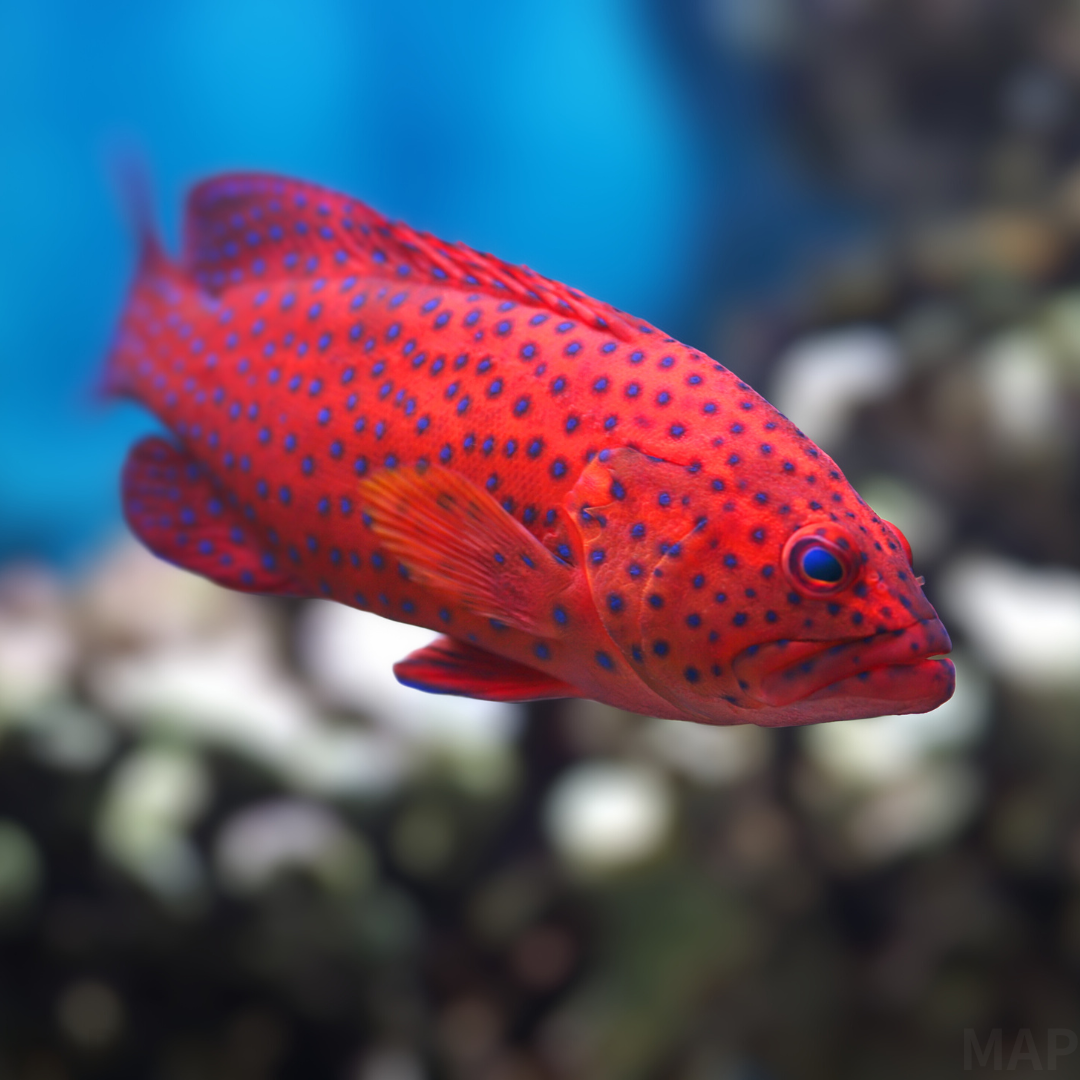
ユカタハタは、インド洋から太平洋のサンゴ礁域に広く分布する、鮮やかな橙赤色の体色に美しい青色斑が散りばめられたハタ科の魚類です。その圧倒的な色彩美から、水族館の大型展示や熟練アクアリストのメインフィッシュとして絶大な人気を誇ります。野生下ではサンゴ礁の頂点捕食者の一角を担い、待ち伏せ型の狩りを行うことで知られています。観賞魚としては非常に頑健で、大型の設備さえ整えれば長期飼育が可能ですが、その強力な捕食本能と成長の早さから、計画的な飼育が求められる知的な魚種でもあります。The Jewel Grouper (Cephalopholis miniata) is a stunning member of the Serranidae family, widely distributed across the coral reefs of the Indo-Pacific. Known for its vivid reddish-orange body adorned with brilliant blue spots, it is a centerpiece species for public aquaria and experienced hobbyists alike. In the wild, it acts as an apex predator on the reef, employing ambush hunting tactics. While highly hardy and capable of living for decades in captivity with proper large-scale equipment, its predatory nature and rapid growth demand careful planning and responsible ownership.
基本情報 / Basic Information
学名 / Scientific Name
Cephalopholis miniata
通称 / Common Name
ユカタハタJewel Grouper, Coral Grouper
分類 / Family
スズキ目ハタ科ハタ亜科ユカタハタ属Order Perciformes, Family Serranidae, Subfamily Epinephelinae
英名 / English Name
Jewel grouper, Coral hind
分布 / Distribution
紅海、インド洋、中西部太平洋(日本南部のサンゴ礁域を含む)Red Sea and Indo-Pacific region, including southern Japan.
最大体長 / Max Size
約45cmから50cm程度Approximately 45cm to 50cm (18-20 inches).
寿命 / Lifespan
約25年以上(飼育下でも長寿となる傾向があります)Approximately 25 years or more.
飼育環境 / Aquarium Environment
水槽サイズ / Tank Size
最低でも150cmから180cm以上の大型規格水槽(総水量700Lから1100L以上推奨)A large tank of at least 150cm to 180cm (approx. 180-290 gallons or more) is required.
水温 / Temperature
22度から26度22°C to 26°C (72°F to 80°F).
水質 / Water Quality
pH 8.1から8.4、比重 1.020から1.025。清浄で安定した水質。pH 8.1-8.4, Specific Gravity 1.020-1.025. Clean and stable water conditions.
レイアウト / Layout
強固に固定されたライブロックによる洞窟や隠れ家。砂を掘る習性があるため岩組みの安定性が不可欠。Securely fixed live rock caves and crevices. Stable structures are vital as they are known to excavate sand.
注意点 / Precautions
膨大な排泄量による硝酸塩の蓄積を防ぐため、大型プロテインスキマーと大容量のろ過システムが必要です。Requires a high-performance protein skimmer and large filtration system to handle significant biological loads.
餌と給餌 / Feeding
餌の種類 / Diet
肉食性。イカ、エビ、アサリ、海洋性魚類の切り身、クリル。人工飼料への餌付けも可能。Carnivorous. Squids, shrimp, clams, marine fish fillets, and krill. Can be acclimated to pellets.
給餌のポイント / Feeding Tips
1日おき、または週に3から5回程度の頻度。淡水産の活餌(金魚等)は脂肪肝の原因となるため避けてください。Feed every other day or 3-5 times a week. Avoid freshwater live feeders like goldfish to prevent fatty liver disease.
性格と混泳 / Temperament and Tank Mates
性格 / Temperament
非常に強い縄張り意識を持ち、同種や似た体色の魚には激しく攻撃します。Highly territorial and aggressive towards conspecifics and similarly shaped/colored species.
混泳の相性 / Compatibility
単独飼育が基本。他種とは口に入らないサイズの大型ヤッコやハギ、タフな魚種に限定されます。Best kept singly. Can only coexist with large angelfish, tangs, or other tough species that cannot fit in its mouth.
病気と対策 / Diseases and Prevention
かかりやすい病気 / Common Diseases
海水白点病、ウーディニウム病、ハダムシ、栄養不良による側線びらん。Cryptocaryon irritans (Marine White Spot), Velvet, Flukes (Benedenia), and Lateral Line Erosion.
対策と予防 / Prevention
導入前の検疫が重要。ハダムシには低比重療法が極めて有効。ビタミン添加剤で栄養バランスを整えてください。Quarantine before introduction. Hyposalinity is effective for flukes. Use vitamin supplements to prevent nutritional issues.
増やし方(繁殖) / Breeding
雌雄の判別 / Sexing
外見での判別は困難ですが、ハレム内で最も大きく優位な個体がオスとなります。Difficult to distinguish visually; however, the largest dominant individual in a group typically becomes the male.
繁殖形態 / Reproduction
雌性先熟の連続的雌雄同体。メスからオスへと性転換を行う社会構造を持ちます。Protogynous successive hermaphrodite. They function first as females and can later transition into males.
繁殖のポイント / Breeding Tips
家庭用水槽での繁殖は空間的な制約から極めて困難ですが、広大な商業施設等の水槽では自然産卵の事例があります。Breeding in home aquaria is extremely difficult due to space requirements, though natural spawning has occurred in large facilities.
雑学と豆知識 / Trivia and Fun Facts
1. 「浴衣」を纏った美しきハタ / 1. The “Yukata” Pattern
標準和名であるユカタハタの由来は、赤地に青い斑点が散らばるその優美な模様が、日本の伝統的な夏の衣服である「浴衣(ゆかた)」の柄を連想させることから名付けられました。また、「ハタ」という名前自体も、彼らが岩の端(はた)に潜むことや、ヒレが旗(はた)のように見えることなど、その生態を捉えた由来が複数存在します。The Japanese name “Yukata-hata” comes from its beautiful pattern, which resembles the traditional Japanese summer garment, the “Yukata.” The word “Hata” (grouper) is thought to originate from their habit of lurking at the edges (hata) of rocks or their flag-like (hata) fins.
2. 悲劇の探検隊と学名の誕生 / 2. A Tragic Expedition and the Scientific Name
本種は1775年、ペール・フォルスコールによって記載されました。これはデンマーク王国による伝説的な「アラビア探検」の成果ですが、フォルスコールを含む隊員のほとんどが熱帯の過酷な環境下で病死するという悲劇的な結末を迎えました。唯一生き残った隊員が命懸けで持ち帰った記録の中に、この美しい赤い魚が記されていたのです。This species was described in 1775 by Peter Forsskål during the ill-fated Danish Expedition to Arabia. Most members, including Forsskål, died of disease during the journey. The record of this fish was brought back to Europe by the sole survivor, Carsten Niebuhr.
3. 緻密な社会構造「ハレム」 / 3. The Complex Social Structure “Harem”
ユカタハタは、1匹のオスが最大12匹のメスを囲い込む「ハレム」を形成して生活します。興味深いのは、メスたちもそれぞれ自分専用の小さな縄張り(二次的縄張り)を持っており、オスはそれらを巡回して管理するという、極めて組織的な社会生活を営んでいる点です。They live in harems consisting of one dominant male and up to 12 females. Interestingly, each female maintains her own “secondary territory,” which the male patrols and supervises, showing a highly organized social life.
4. 深海での色の魔法 / 4. Color Magic in the Deep
水槽内では目立つ鮮やかな赤色ですが、太陽光の赤い波長が届かなくなる水深の深いサンゴ礁では、この色は黒に近い暗色に見えます。これにより、周囲の岩影に完璧に溶け込み、獲物である小魚に気づかれることなく接近する「ステルス機能」を果たしています。While vivid red in a tank, this color appears dark and almost black in deep water where red light waves don’t reach. This acts as a “stealth mode,” allowing them to blend into shadows and ambush prey unnoticed.
まとめ / Conclusion
ユカタハタは、その美しさ、歴史的背景、そして知的な行動様式により、アクアリウムにおける「究極のハタ」の一角と言える存在です。しかし、その魅力を十分に引き出し、本来の寿命である25年を全うさせるためには、大型の設備と適切な管理、そして何よりこの魚の生態に対する深い敬意が欠かせません。The Jewel Grouper is arguably one of the “ultimate groupers” in the aquarium hobby, thanks to its beauty, history, and intelligent behavior. However, to truly appreciate its splendor and ensure it lives out its 25-year lifespan, one must provide large-scale facilities, proper management, and above all, a deep respect for the species’ natural ecology.
もしあなたが、サンゴ礁の真の美しさと迫力を自宅に再現したいと願うなら、ユカタハタは最高のパートナーとなってくれるでしょう。適切なシッパーから輸入された健康な個体を選び、大海原を模した豊かな環境で、この「海を泳ぐ浴衣」の優雅な姿をぜひ堪能してください。If you wish to recreate the true beauty and power of a coral reef in your home, the Jewel Grouper will be an unparalleled companion. By choosing a healthy specimen from a reputable source and providing a rich environment, you can enjoy the graceful presence of this “swimming kimono” for many years to come.
学術的初記載 / Original DescriptionForsskal, P. (1775). Descriptiones animalium, avium, amphibiorum, piscium, insectorum, vermium; quae in itinere orientali observavit Petrus Forsskal. Post mortem auctoris edidit Carsten Niebuhr. Hauniae.
FAO 種カタログ / FAO Species CatalogueHeemstra, P.C. and J.E. Randall. (1993). FAO Species Catalogue. Vol. 16. Groupers of the world (family Serranidae, subfamily Epinephelinae). An annotated and illustrated catalogue of the grouper, rockcod, hind, coral grouper and lyretail species known to date. Rome: FAO.
魚類データベース / FishBaseFroese, R. and D. Pauly. Editors. (2024). FishBase. Cephalopholis miniata (Forsskal, 1775) Coral hind. World Wide Web electronic publication. www.fishbase.org
IUCN レッドリスト / Conservation StatusThe IUCN Red List of Threatened Species. (2018). Cephalopholis miniata. Assessment by Fennessy, S., Myers, R.F., Choat, J.H., et al.
日本国内の分類・分布 / Japanese Ichthyology中坊徹次 編. (2013). 日本産魚類検索 全種の同定 第三版. 東海大学出版会.(ハタ科ユカタハタ属の記述に基づく)
病理・飼育技術 / Pathology & HusbandryMichael, S. W. (2001). Basslets, Dottybacks & Hawkfishes: Plus Seven More Aquarium Fish Families with Expert Captive Care Advice. T.F.H. Publications.



 アイのアクアグッズ案内ラスボラ・ボララスの群泳を楽しむ飼育用品|水槽・ろ過・ヒーター・餌・水草道具の特徴や使い方、選ぶときのポイントをアイが紹介します。記事はコチラ →
 アイのアクアグッズ案内テトラミンって、こんなにあるの? アイとコタロウのごはん探究旅道具の特徴や使い方、選ぶときのポイントをアイが紹介します。記事はコチラ →
 アイのアクアグッズ案内おとひめ物語|養殖生まれの餌を、わが家の魚に合う一粒へ道具の特徴や使い方、選ぶときのポイントをアイが紹介します。記事はコチラ →
 アイのアクアグッズ案内そのごはん、泳いでる! 卵から始めるブラインシュリンプの孵化と道具選び道具の特徴や使い方、選ぶときのポイントをアイが紹介します。記事はコチラ →



コメント