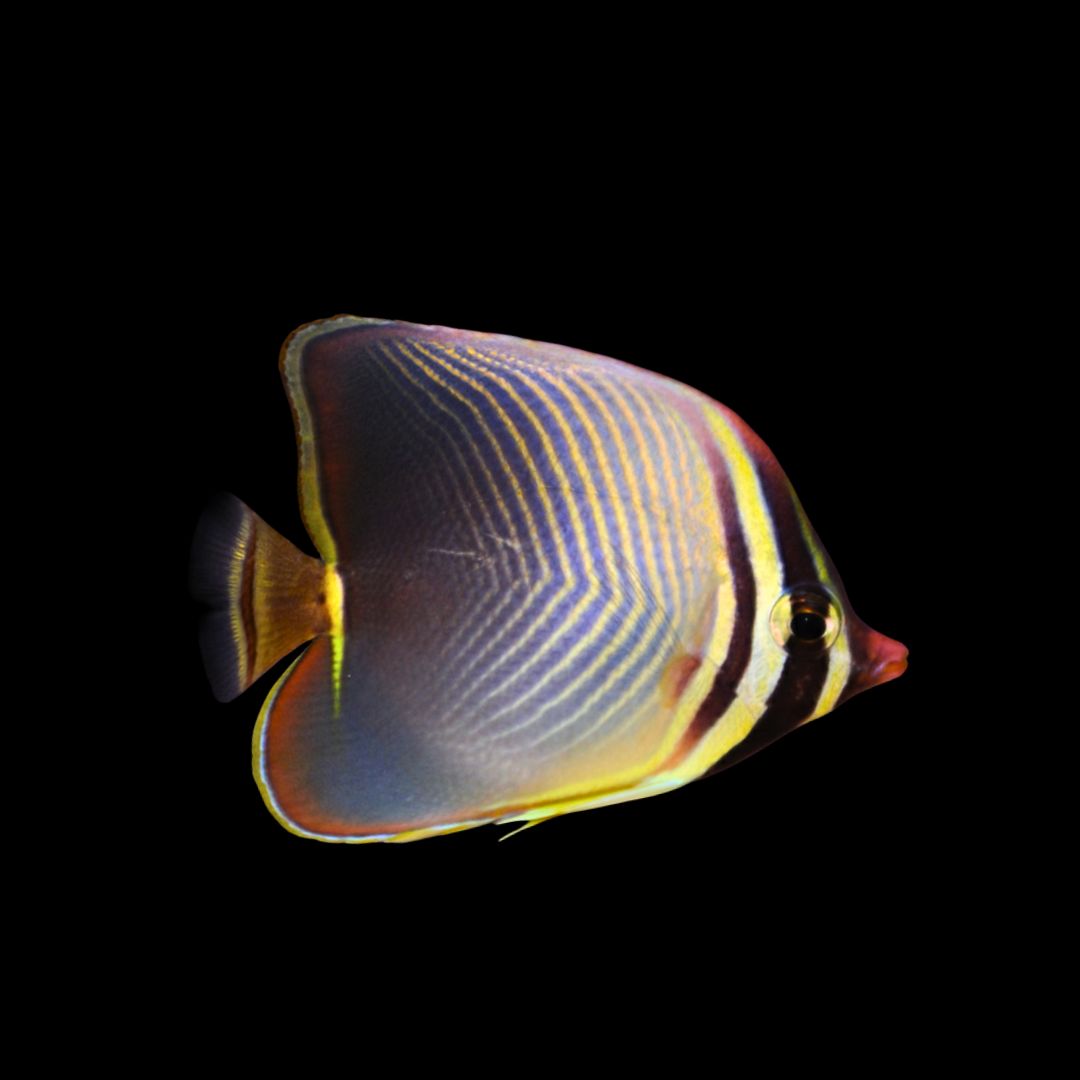
ミカドチョウチョウウオは、その名の通り「帝」のような気品と、幾何学的な三角形のシルエットが特徴的なチョウチョウウオの仲間です。西太平洋のサンゴ礁に広く分布し、体側には「シェブロン模様」と呼ばれる美しいV字型のヘリンボーン柄が緻密に刻まれています。彼らはミドリイシ属などのサンゴのポリプに強く依存する「絶対的サンゴ食」という極めて特殊な食性を持っており、サンゴ礁生態系において非常に専門化された地位を占めています。その美しさから観賞魚として人気がある一方で、人工環境での餌付けは最高難易度を誇り、飼育者の情熱と高度な技術が試される「憧れの魚」でもあります。The Eastern Triangle Butterflyfish is characterized by its dignified presence and a distinct geometric triangular silhouette. Widely distributed across the coral reefs of the Western Pacific, its body features a beautiful V-shaped herringbone pattern known as the “chevron pattern.” They possess an extremely specialized diet as “obligate corallivores,” relying heavily on coral polyps, including Acropora. While their beauty makes them popular in the aquarium trade, they are considered one of the most challenging species to transition to captive diets, making them a dream fish that demands passion and advanced skills from aquarists.
西太平洋(日本の琉球列島からインドネシア、オーストラリア、フィジー、トンガなど)Western Pacific: from the Ryukyu Islands of Japan to Indonesia, Australia, Fiji, and Tonga.
最大体長 / Max Size
約16cmApproximately 16 cm (TL)
寿命 / Lifespan
約5年〜10年(自然下。飼育下では環境に依存)Approx. 5-10 years (in the wild; captive lifespan depends heavily on environment)
飼育環境 / Aquarium Environment
水槽サイズ / Tank Size
300L以上を検討する場合は、幅だけでなく奥行き・高さも確認してください。例えば120×60×60cmの容積は約432Lですが、実際の水量は水位やライブロックで減ります。一般的な90×45×45cmは約182Lで、300Lには届きません。水量だけで本種の難しい餌付けを解決できるわけではありません。When planning for 300 liters or more, check depth and height as well as length. A 120 × 60 × 60 cm aquarium has a nominal volume of about 432 liters; working volume is lower because of the water level and rockwork. A typical 90 × 45 × 45 cm aquarium is about 182 liters, not 300 liters. Water volume alone does not solve this species’ difficult feeding requirements.
水温 / Temperature
25℃〜28℃(26℃前後が理想的)25°C to 28°C (26°C is ideal)
水質 / Water Quality
pH 8.1〜8.4、比重 1.020〜1.024。硝酸塩やリン酸塩が極めて少ない、サンゴを育成できるレベルの清浄な水質。pH 8.1-8.4, Specific Gravity 1.020-1.024. Pristine water quality with minimal nitrates and phosphates, suitable for keeping SPS corals.
レイアウト / Layout
ライブロックで複雑な隠れ家を作り、広い遊泳スペースを確保します。神経質なため、心理的安心感を与える構造が必要です。Create complex hiding spots using live rock while ensuring ample swimming space. Since they are nervous, the structure must provide psychological security.
注意点 / Precautions
観賞用のミドリイシを食べてしまうため、サンゴ水槽(リーフタンク)での混泳には向きません。水質変化に敏感で、導入初期のストレス管理が重要です。Not suitable for reef tanks with ornamental Acropora corals as they will consume them. They are sensitive to water quality changes, so stress management during the initial introduction is crucial.
餌と給餌 / Feeding
餌の種類 / Diet
野生下ではミドリイシなどのサンゴのポリプを食べます。代替餌を食べるかは個体差が大きく、人工飼料へ順調に移行できることを前提に購入するのは避けてください。The wild diet consists of coral polyps, including Acropora. Acceptance of substitute foods varies; do not purchase an individual on the assumption that it can readily be switched to pellets or flakes.
給餌のポイント / Feeding Tips
「アサリの擦り込み」が有効です。サンゴの骨格の隙間にアサリのミンチを詰め込み、本能的な採餌行動を誘発しながら人工飼料を混ぜていきます。The “clam-rubbing” technique is effective. Stuff minced clams into the crevices of coral skeletons to trigger natural foraging behavior while gradually mixing in prepared foods.
性格と混泳 / Temperament and Tank Mates
性格 / Temperament
非常に神経質で臆病ですが、同種間では強い縄張り意識を持ちます。自然界では雌雄のペアで行動します。Highly nervous and timid, yet strongly territorial toward conspecifics. In nature, they are usually found in male-female pairs.
混泳の相性 / Compatibility
攻撃的な魚種(スズメダイ等)との混泳は避け、単独または安定したペアでの飼育が推奨されます。他種の温和な魚とは混泳可能です。Avoid housing with aggressive species like damselfishes. Keeping them solitary or in a stable pair is recommended. They can coexist with other peaceful species.
病気と対策 / Diseases and Prevention
かかりやすい病気 / Common Diseases
白点病、ウーディニウム病、肌荒れ(細菌性感染症)。特に絶食による体力低下時は発病しやすくなります。Cryptocaryon irritans (white spot), Oodinium, and bacterial skin infections. They are particularly susceptible when weakened by lack of food.
対策と予防 / Prevention
導入前の隔離観察、水質の維持、摂餌状態の確認を基本にします。殺菌灯は設備条件によって補助になりますが、設置だけで感染や病気を防げるものではありません。症状があるときは原因を確認し、むやみに薬剤を組み合わせないようにします。Prioritize observation in quarantine, water quality and confirmation of feeding. A UV sterilizer may be a supplementary tool depending on the system, but installation alone does not prevent infection or disease. Investigate symptoms rather than combining medications indiscriminately.
増やし方(繁殖) / Breeding
雌雄の判別 / Sexing
外見での判別は極めて困難です。成熟した個体において、腹部の膨らみやペア行動から推察するしかありません。Extremely difficult to distinguish by appearance. It can only be inferred from abdominal swelling in mature individuals or observed pair bonding behavior.
繁殖形態 / Reproduction
浮遊性卵産卵(漂泳性産卵)。夕暮れ時にペアが上昇しながら放精・放卵を行います。Pelagic spawners. Pairs rise toward the surface at dusk to release eggs and sperm.
繁殖のポイント / Breeding Tips
飼育下での繁殖例は非常に稀です。「トリクチス期」と呼ばれる特殊な幼生期を過ごすため、家庭環境での育成は現在の技術では困難です。Breeding in captivity is extremely rare. Due to their unique larval stage called “Tholichthys,” raising them in a home aquarium is currently near impossible.
雑学と豆知識 / Trivia and Fun Facts
1. 英名にも表れる三角形のシルエット / 1. A Triangular Silhouette Reflected in Its English Name
英名のEastern triangle butterflyfishは、背ビレと尻ビレが張り出した三角形の輪郭を連想させます。日本語ではミカドチョウチョウウオと呼ばれますが、和名を「三角形」と結び付ける語源説は確認できません。名前の由来を想像する楽しさと、資料で確かめられる由来は分けて考えましょう。The English name Eastern triangle butterflyfish evokes its triangular outline, accentuated by the dorsal and anal fins. Its Japanese name is Mikado-chouchou-uo, but a proposed derivation connecting Mikado with a triangle is not substantiated here. An appealing interpretation of a name should be distinguished from a documented etymology.
ミカドチョウチョウウオは、サンゴのポリプへの依存度が高い魚です。近年の地球温暖化によるサンゴの白化現象は、彼らにとって死活問題です。食料源であるサンゴの減少は、そのまま本種の生存を脅かすため、環境変動に対して非常に脆弱な一面も持っています。The Eastern Triangle Butterflyfish depends strongly on coral polyps. Recent coral bleaching caused by global warming is a matter of life and death. The decline of their food source directly threatens their survival, making them highly vulnerable to environmental changes.
3. 顔の帯と体側のV字模様 / 3. Facial Bands and a Chevron Pattern
顔の帯と体側に連なるV字形の模様は、本種を観察する際の見どころです。模様が身を守る働きを持つ可能性と、本種でその効果が実証されたことは別です。捕食者を何秒遅らせる、特定の魚を欺くといった説明を加えずとも、見る角度で輪郭や模様の印象が変わる姿を楽しめます。The facial bands and repeated V-shaped body markings are distinctive features to observe. A possible protective function of a pattern is different from a demonstrated effect in this species. There is no need to claim that these markings delay a predator by a specific amount of time or deceive a particular fish to appreciate their appearance.
まとめ / Conclusion
ミカドチョウチョウウオは、サンゴ礁という過酷ながらも美しい環境に、極限まで適応したスペシャリストです。その三角形のシルエットとシェブロン模様は、自然界が作り出した最高のアートと言っても過言ではありません。飼育においては、その特殊な食性ゆえに「サンゴを犠牲にする」あるいは「根気強く代替餌に慣れさせる」という覚悟が必要となりますが、一度水槽環境に馴染んだ彼らがペアで優雅に泳ぐ姿は、他の何物にも代えがたい感動をアクアリストに与えてくれます。The Eastern Triangle Butterflyfish is a specialist that has adapted to the extreme in the harsh yet beautiful environment of the coral reef. Its triangular silhouette and chevron pattern are truly masterpieces of nature’s art. While keeping them requires the resolve to either sacrifice live corals or patiently transition them to alternative diets, the sight of a stable pair swimming gracefully in an aquarium offers an unparalleled sense of reward to any aquarist.
この「男爵夫人」を自身の水槽に招くことは、海洋生物学への深い理解と、生命に対する真摯な向き合い方を学ぶ旅でもあります。彼らが象徴するサンゴ礁の豊かさを守るためにも、私たちは正しい知識を持って、この高貴な魚と接していくべきでしょう。もしあなたがこの最高難易度の挑戦に挑むなら、それはあなたのアクアリウム人生において、最も忘れがたい経験の一つになるはずです。Inviting this “Baroness” into your aquarium is a journey of deepening your understanding of marine biology and your commitment to life itself. To protect the richness of the coral reefs they symbolize, we must engage with these noble fish armed with correct knowledge. Should you choose to take on this ultimate challenge, it will surely become one of the most unforgettable experiences in your life as an aquarist.


 アイのアクアグッズ案内お魚を撮ったのに、ボクが写ってる! スマホで楽しむ水槽撮影と便利な道具道具の特徴や使い方、選ぶときのポイントをアイが紹介します。記事はコチラ →
 アイのアクアグッズ案内小型カラシンの群れを楽しむ|餌と水換えから考える飼育用品ガイド小型カラシンの群れを眺める時間を、もっと楽しく。泳ぐ余白、餌の食べ方、続けやすい水換えを軸に、日本で揃えやすい用品の選び方を紹介します。記事はコチラ →



コメント