

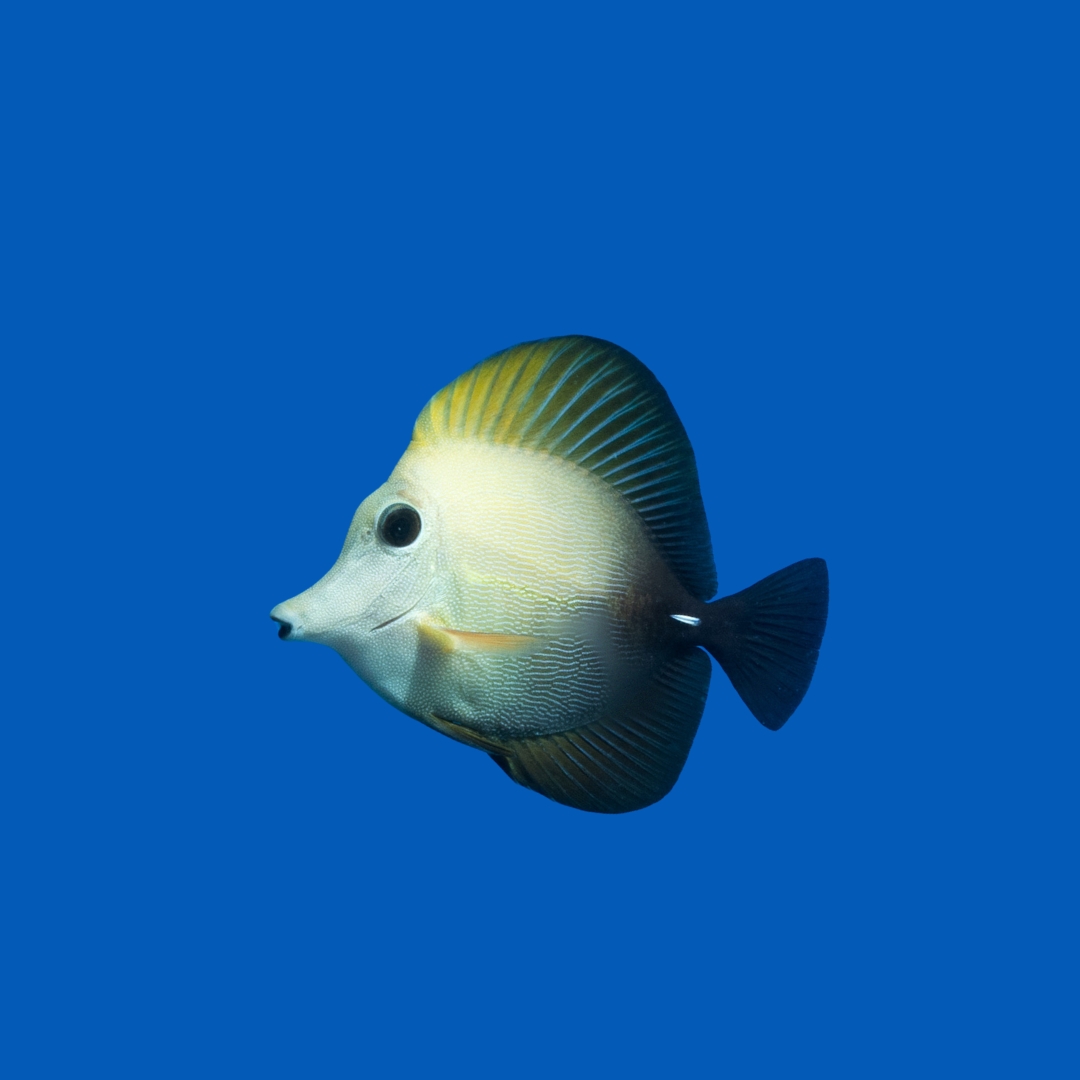
解説 / Description
ゴマハギは、インド太平洋のサンゴ礁域に広く分布するニザダイ科ヒレナガハギ属の海水魚です。暗褐色から黒褐色の体に細かな淡色の線や斑点が入り、和名のとおり胡麻をまぶしたような印象を与えます。水槽内では岩面やガラス面の藻類をついばむため、リーフタンクのお掃除役としても親しまれます。一方で、ハギ類らしい縄張り意識、導入時の白点病リスク、尾柄棘によるけがの危険があるため、広い水槽、安定した水温、植物質中心の餌、慎重な導入管理が長期飼育の鍵になります。 The Brown Tang, Zebrasoma scopas, is a marine surgeonfish widely distributed across Indo-Pacific coral reefs. Its dark brown to almost black body shows fine pale lines and spots, giving the impression of a sesame-speckled fish reflected in its Japanese name, Gomahagi. In aquariums it grazes algae from rockwork and glass, making it a useful reef-tank algae grazer. At the same time, its territorial behavior, risk of marine white spot during introduction, and sharp caudal spine mean that long-term success depends on a spacious aquarium, stable temperature, a plant-based diet, and careful introduction management.
基本情報 / Basic Information
| 学名 / Scientific Name | Zebrasoma scopas (Cuvier, 1829) |
|---|---|
| 通称 / Common Name | ゴマハギ、ブラウンタン、ツートンタン、ブラシテールタンBrown Tang, Twotone Tang, Brushtail Tang, Brown Sailfin Tang |
| 分類 / Family | ニザダイ科、ヒレナガハギ属。近年のデータベースではニザダイ目 Acanthuriformes として扱われることがありますが、資料によっては従来のスズキ目 Perciformes として掲載される場合もあります。Family Acanthuridae, genus Zebrasoma. Some current databases place it in the order Acanthuriformes, while some references still list it under the traditional order Perciformes. |
| 英名 / English Name | Brown Tang / Twotone Tang / Brushtail Tang / Brown Sailfin Tang |
| 分布 / Distribution | インド洋から西部・中部太平洋に広く分布し、東アフリカ方面からトゥアモト諸島方面、北は南日本、南はロードハウ島やラパ島方面まで記録されています。日本では黒潮の影響を受ける南日本から琉球列島、小笠原諸島周辺で見られる魚として扱うのが安全です。It is broadly distributed across the Indo-Pacific, from the East African region toward the Tuamotu Islands, north to southern Japan and south toward Lord Howe and Rapa Islands. In Japan, it is safest to describe it as occurring in warm southern waters influenced by the Kuroshio Current, including the Ryukyu and Ogasawara regions. |
| 最大体長 / Max Size | 文献上の最大記録は標準体長で約40cmです。ただし、一般的な流通個体や家庭水槽では20cm前後を目安に考え、十分な遊泳スペースを確保します。The maximum published size is about 40 cm standard length. In the aquarium trade and in typical home aquariums, planning around a fish of about 20 cm is practical, while still allowing generous swimming room. |
| 寿命 / Lifespan | データベース上では最長33年の報告があります。家庭水槽では個体差が大きいものの、大型水槽、安定した水質、植物質中心の餌を維持できれば10年以上の長期飼育も期待できます。A maximum reported age of 33 years is listed in species databases. In home aquariums, individual variation is large, but with a large tank, stable water quality, and a plant-focused diet, keeping one for more than 10 years is a realistic goal. |
飼育環境 / Aquarium Environment
| 水槽サイズ / Tank Size | 最低でも90cm規格水槽、水量約160L以上を目安にします。成長後の余裕、遊泳量、混泳時のストレス軽減を考えると、120cm規格水槽から120cmワイド水槽、水量約240Lから500L前後の環境がより安心です。Use at least a standard 90 cm aquarium of about 160 L or more. For adult comfort, swimming activity, and reduced stress in community setups, a standard or wide 120 cm aquarium, roughly 240 to 500 L depending on dimensions, is preferable. |
|---|---|
| 水温 / Temperature | 24℃から27℃前後が扱いやすい範囲です。自然下では25℃から28℃程度の熱帯サンゴ礁域に多く、家庭水槽では急な水温変化を避けることが重要です。 A practical aquarium range is about 24 to 27°C. In nature it is associated with tropical reef waters around 25 to 28°C, and in aquariums sudden temperature changes should be avoided. |
| 水質 / Water Quality | 比重は1.020から1.025、pHは8.1から8.4を目安にします。よく食べて排泄量も多い魚なので、プロテインスキマーを含む強めのろ過、定期的な換水、硝酸塩の蓄積管理が大切です。Aim for a specific gravity of 1.020 to 1.025 and a pH of 8.1 to 8.4. Because it feeds actively and produces considerable waste, strong filtration including a protein skimmer, regular water changes, and nitrate management are important. |
| レイアウト / Layout | ライブロックで隠れ家やアーチ状の通り道を作りつつ、前面には直線的に泳げるオープンスペースを残します。造波ポンプでよどみを減らし、岩面に自然な藻類が少し育つ環境にすると、本種らしいついばみ行動を観察しやすくなります。Build shelters and arch-like passages with live rock while keeping open swimming space at the front. Use circulation pumps to reduce stagnant areas, and allow some natural algal growth on rock surfaces so its grazing behavior can be observed. |
| 注意点 / Precautions | 尾柄部には鋭い格納式の棘があり、網で強く追い回したり素手で触ったりすると魚にも飼育者にも危険です。また、同種やキイロハギ、パープルタンなど体型の似たハギ類には強く反応することがあるため、一般的な家庭水槽ではハギ類を1匹に絞るのが安全です。It has sharp retractable caudal spines, so rough netting or bare-handed handling can injure both the fish and the keeper. It may also react strongly to conspecifics and similarly shaped tangs such as Yellow Tangs or Purple Tangs, so in most home aquariums keeping only one tang is the safer approach. |
餌と給餌 / Feeding
| 餌の種類 / Diet | 主食はスピルリナや海藻粉末を含む草食性海水魚用の人工飼料が向いています。補助的に、味付けや焼き加工のない乾燥海苔、海藻系フード、軽く湯通ししたホウレンソウやブロッコリーなどを少量使えます。自然下では岩面の微細藻類や糸状藻類を中心についばむ藻食性の魚です。Herbivorous marine fish pellets or flakes containing spirulina and marine algae make a suitable staple. Plain dried nori, algae-based foods, and small amounts of lightly blanched spinach or broccoli can be used as supplements. In nature it is an algal grazer that feeds mainly on fine and filamentous algae on reef surfaces. |
|---|---|
| 給餌のポイント / Feeding Tips | 植物質を中心に、少量を1日3回から5回ほどに分けて与える多頻度少量給餌が理想です。給餌クリップで海苔を固定し、好きな時についばめる場所を作ると自然な摂食に近づきます。動物性の餌だけに偏ると栄養バランスを崩しやすいため、植物質を切らさないことが大切です。Small, frequent feedings three to five times a day are ideal, with plant-based foods forming the core. Fixing nori to a feeding clip creates a grazing station and encourages natural feeding behavior. Avoid relying only on animal-based foods, as this can unbalance nutrition; plant matter should always be available regularly. |
性格と混泳 / Temperament and Tank Mates
| 性格 / Temperament | 丈夫で活発に泳ぐ一方、藻類を食べる場所を守ろうとする縄張り意識があります。成魚は自然下で小群になることもありますが、水槽では逃げ場が限られるため、似た相手に対する攻撃が強く出ることがあります。It is hardy and active, but it has territorial instincts related to grazing areas. Adults may occur in small groups in nature, but in aquariums limited escape space can make aggression toward similar fish much stronger. |
|---|---|
| 混泳の相性 / Compatibility | 体型や食性が大きく異なるチョウチョウウオ、スズメダイ、小型ヤッコ、ハゼ、ギンポ類などとは比較的合わせやすい魚です。サンゴのポリプを食害しにくく、リーフタンク向きといえます。ただし、同種、同属、体高の高い円盤型のハギ類との混泳は激しい争いに発展しやすく、慎重な判断が必要です。It can often be kept with fish of different body shape and feeding style, such as butterflyfish, damselfish, dwarf angelfish, gobies, and blennies. It is generally reef-safe because it is unlikely to damage coral polyps. However, mixing it with conspecifics, other Zebrasoma species, or similarly deep-bodied tangs can lead to severe fighting and requires great caution. |
病気と対策 / Diseases and Prevention
| かかりやすい病気 / Common Diseases | ニザダイ科の魚らしく、導入時の海水魚の白点病、ウーディニウム病、頭部や側線まわりのびらんには注意が必要です。輸送直後、導入直後、水温変化、水質悪化、混泳ストレスが重なると体調を崩しやすくなります。痩せが進むと背中の肉が落ちるナイフバック状態になり、回復が難しくなります。As with many surgeonfish, marine white spot disease, marine velvet, and head and lateral line erosion require attention, especially around introduction. Shipping stress, new-tank introduction, temperature swings, poor water quality, and social stress can all contribute to decline. Severe weight loss can lead to a razorback appearance that is difficult to reverse. |
|---|---|
| 対策と予防 / Prevention | 購入時は背肉がふっくらし、呼吸が荒くなく、体表に白点や傷がない個体を選びます。導入前の隔離水槽での観察、安定した水温、清浄な水質、栄養価の高い植物質フードが予防の基本です。尾柄棘による外傷は二次感染につながるため、捕獲時は網で無理に絡めず、透明な容器などを使って静かに移動させます。Choose individuals with a full body, calm breathing, and no visible white spots or wounds. Observation in a quarantine tank, stable temperature, clean water, and nutritious plant-based foods are the foundation of prevention. Injuries from the caudal spine can lead to secondary infection, so move the fish gently with a clear container rather than tangling it roughly in a net. |
増やし方(繁殖) / Breeding
| 雌雄の判別 / Sexing | 外見だけで雌雄を確実に見分けるのは難しい魚です。明確な体色差は知られておらず、成熟個体では雄がやや大きくなる可能性が示されていますが、家庭水槽での判別材料としては十分ではありません。Reliable sexing by appearance alone is difficult. Clear sexual color differences are not known, and while mature males may become somewhat larger, this is not a practical sexing method for home aquariums. |
|---|---|
| 繁殖形態 / Reproduction | 自然下では産卵場所に集まり、ペア産卵を基本としながら、条件によっては複数個体によるグループ産卵も観察されています。卵は水中へ放たれ、仔魚はしばらく浮遊生活を送ります。In nature it forms spawning aggregations. Pair spawning is typical, and group spawning has also been observed under some conditions. Eggs are released into the water column, and the larvae spend time in the plankton. |
| 繁殖のポイント / Breeding Tips | 家庭水槽での繁殖は非常に難しく、採卵、初期餌、仔魚の長期管理が大きな壁になります。ゴマハギ単独種としての一般流通レベルの完全養殖は、確認できる情報が限られます。一方で、ヒレナガハギ属ではキイロハギやパープルタンの人工繁殖、ゴマハギを含む可能性のある交雑個体の作出が進んでおり、今後の養殖技術の発展が期待されます。Breeding in a home aquarium is extremely difficult because egg collection, first foods, and long-term larval care are major challenges. Widely available captive-bred pure Brown Tangs are not well documented. However, captive breeding of Yellow Tangs and Purple Tangs, as well as production of some Zebrasoma hybrids that may involve Brown Tang, shows that aquaculture techniques for the group continue to advance. |
雑学と豆知識 / Trivia and Fun Facts
| 1. 名前に隠れた体の特徴 / 1. The body features hidden in its name | 属名の Zebrasoma は、シマウマを思わせる模様と体を意味する語に由来します。種小名の scopas は箒を意味し、尾柄部の棘の前方に見られる剛毛状の部分を連想させる名前です。和名のゴマハギは、体側から頭部に散る細かな淡色斑を胡麻の粒に見立てたもので、学名も和名も、この魚をよく観察した人々の視点を今に伝えています。The genus name Zebrasoma refers to a zebra-like pattern and body, while the specific name scopas means broom, evoking the bristle-like patch near the caudal spine. The Japanese name Gomahagi compares the fine pale spots on the head and sides to sesame seeds. Both the scientific and Japanese names preserve the careful observations of earlier naturalists. |
|---|---|
| 2. キイロハギとの近すぎる関係 / 2. Its unusually close relationship with the Yellow Tang | ゴマハギとキイロハギは見た目の色こそ大きく異なりますが、形や暮らし方はよく似ています。DNAバーコーディングの紹介では両者の差が非常に小さいとされ、分布が重なる地域では自然交雑個体が知られています。現在も多くのデータベースでは別種として扱われますが、観賞魚として見ると、色彩の違いだけでは語りきれない進化上の近さが魅力になっています。The Brown Tang and Yellow Tang differ strongly in color, yet their shape and ecological role are very similar. DNA barcoding reports describe very small divergence between them, and natural hybrids are known where their ranges overlap. Most databases still treat them as separate species, but for aquarists their appeal lies in an evolutionary closeness that cannot be explained by color alone. |
| 3. 地味な魚に見えて、色彩変異のスター / 3. A modest-looking fish with remarkable color variants | 通常のゴマハギは落ち着いた褐色の魚ですが、まれに白、黄色、黒などが複雑に入るトリカラー個体、黄色味の強い個体、黒みの強い個体などが流通することがあります。こうした個体は観賞魚市場で注目されますが、色彩の由来が突然変異なのか、交雑なのか、個体ごとの判断が難しい場合もあります。由来がはっきりしない個体でも、目の前の色や模様の違いを観察する楽しみがあります。Typical Brown Tangs are subdued brown fish, but rare tricolor, yellowish, or very dark individuals sometimes appear in the trade. These specimens attract attention, yet it can be difficult to determine whether a color pattern results from mutation, hybrid origin, or another cause. It is best to enjoy the visible traits without overstating rarity or certainty. |
| 4. サンゴ礁と水槽を支える藻食性 / 4. Algae grazing that supports reefs and aquariums | 自然のサンゴ礁では、藻類が増えすぎるとサンゴの成長場所を奪ってしまうことがあります。ゴマハギのような藻食性魚類は、岩やサンゴ礫に生える細かな藻類を食べることで、そのバランスを支えています。水槽内でも同じ性質が役立ち、ライブロックをついばむ姿は、見た目の美しさだけでなく生態的な働きも感じさせてくれます。On coral reefs, excessive algal growth can compete with corals for space. Algae-grazing fish such as the Brown Tang help maintain balance by feeding on fine algae on rocks and coral rubble. The same trait is useful in aquariums, where its grazing on live rock shows both practical value and ecological meaning. |
| 5. 尾柄棘は毒よりも切れ味に注意 / 5. The caudal spine is dangerous mainly because it cuts | ニザダイ科の魚が外科医の魚と呼ばれる理由は、尾びれの付け根に鋭い棘を持つためです。ゴマハギは人に対して有害な魚として扱われる種ではありませんが、棘そのものは非常に鋭く、深い切り傷や二次感染の原因になります。飼育者にとっては毒を怖がるより、魚を驚かせない扱い方と、素手で捕まえないことが何より大切です。Surgeonfish get their name from the sharp spines near the base of the tail. The Brown Tang is not generally treated as dangerous to humans, but the spine itself is very sharp and can cause deep cuts and secondary infection. For keepers, calm handling and avoiding bare-handed capture are more important than worrying about venom. |
| 6. 保全状況と日本での流通確認 / 6. Conservation status and import notes in Japan | 国際的な種データベースでは、ゴマハギは低懸念の評価として扱われ、観賞魚としての利用も記録されています。ただし、輸入や販売では常に最新の法令確認が必要です。日本の関税分類では、観賞用活魚のうち海水魚は淡水魚以外の区分、つまり0301.19系に整理されるため、資料にある0301という大枠だけでなく、実務では最新の統計品目番号や関係法令を確認する必要があります。International species databases treat the Brown Tang as Least Concern and record aquarium use. Even so, import and sale should always be checked against current regulations. In Japan’s tariff classification, live ornamental saltwater fish fall under the non-freshwater ornamental fish category, the 0301.19 line, so practical import work requires checking the current statistical code and related laws rather than relying only on the broad 0301 heading. |
まとめ / Conclusion
ゴマハギは、褐色の落ち着いた体色、胡麻のような斑点、そして頼もしい藻類食性を持つ、リーフタンク向きの実用性と観察の面白さを兼ね備えた海水魚です。丈夫な部類ではありますが、狭い水槽や不安定な水温、動物性に偏った給餌、ハギ類同士の混泳は大きな失敗要因になります。 The Brown Tang is a reef-friendly marine fish combining a calm brown body, sesame-like speckles, and useful algae-grazing behavior. It is relatively hardy, but cramped tanks, unstable temperature, overly animal-based feeding, and mixing multiple tangs are major causes of failure.
90cm規格水槽以上を基本に、できれば120cmクラスの余裕ある環境を用意し、植物質中心の餌をこまめに与え、導入時の病気対策を丁寧に行えば、長く付き合える魅力的な一匹になります。地味に見える通常個体も、分類や進化、近縁種との関係まで知ると、非常に奥深い魚として楽しめます。 Start with at least a standard 90 cm tank, and ideally provide a roomier 120 cm-class setup. Offer plant-based foods frequently and manage disease risk carefully during introduction, and this species can become a long-lived and rewarding aquarium resident. Even ordinary brown individuals become fascinating when viewed through their taxonomy, evolution, and relationship with close relatives.

気になる道具や飼い方を見つけてみませんか?
 アイのアクアグッズ案内旅行中、お魚のごはんはどうする? 自動給餌器・使える餌・スマート水槽の選び方旅行中の魚の餌やりを助ける自動給餌器を、アイとコタロウが紹介。時間指定、おかわり給餌、対応するフレークや顆粒、設置台、スマホ管理、一体型水槽、留守番フードまで、使いどころと選び方を案内します。記事はコチラ →
 アイのアクアグッズ案内コケを食べるコイの仲間に合わせる飼育用品|フライングフォックス・アルジイーター・ガラ道具の特徴や使い方、選ぶときのポイントをアイが紹介します。記事はコチラ →
さまざまな飼育テーマをご紹介。リンク先の記事には広告・商品紹介が含まれます。
案内・紹介記事一覧へ →参考文献・参照資料
この記事の分類、分布、生息環境、飼育条件、繁殖、病気や注意点を支える資料として、学術論文、公的・準公的データベース、大学・専門機関の解説資料を中心に選定しました。店舗、通販サイト、個人ブログ、まとめサイトは除外しています。
分類・学名・シノニム
- WoRMS Editorial Board. Zebrasoma scopas (Cuvier, 1829). World Register of Marine Species.
学名の受容状況、分類階級、同物異名の確認に使用。 - Fricke, R., Eschmeyer, W. N. & Van der Laan, R. eds. Eschmeyer’s Catalog of Fishes. California Academy of Sciences.
原記載、分類学的な扱い、魚類名の確認用。本文ではWoRMSおよびFishBaseと照合して使用。
分布・生息環境・形態・基本生態
- Froese, R. & Pauly, D. eds. FishBase: Zebrasoma scopas, Twotone tang.
分布、深度、水温、最大体長、最長報告年齢、藻食性、群れ・単独行動、産卵行動、IUCN評価、CITES欄、人への危険性の確認に使用。 - Bray, D. J. 2019. Zebrasoma scopas, Fishes of Australia.
体色、尾柄部の白い棘とブラシ状構造、オーストラリア周辺を含む分布、サンゴの多い礁湖・外礁での生息、藻類食の説明に使用。 - Abesamis, R., Choat, J. H., McIlwain, J., Clements, K. D., Myers, R., Rocha, L. A., Nanola, C., Russell, B. & Stockwell, B. 2012. Zebrasoma scopas. The IUCN Red List of Threatened Species 2012: e.T178005A1518420.
保全状況、広域分布、サンゴ礁性魚類としての生息環境の確認に使用。
摂食行動・繁殖・社会行動
- Robertson, D. R., Polunin, N. V. C. & Leighton, K. 1979. The behavioral ecology of three Indian Ocean surgeonfishes (Acanthurus lineatus, A. leucosternon and Zebrasoma scopas): their feeding strategies, and social and mating systems. Environmental Biology of Fishes 4, 125–170.
ゴマハギを含むニザダイ類の藻類食、縄張り、社会行動、繁殖行動の学術的根拠として使用。
飼育条件・水質管理
- Ornamental Aquatic Trade Association. How to test for water quality in a marine tank / aquarium.
海水水槽における塩分、温度、pH、アンモニア、亜硝酸、硝酸、安定した水質管理の重要性を支える補助資料として使用。
病気・白点病・導入時の注意点
- Yanong, R. P. E. Cryptocaryon irritans Infections (Marine White Spot Disease) in Fish. University of Florida IFAS Extension.
海水魚の白点病の症状、生活環、隔離期間、治療・予防、バイオセキュリティの根拠として使用。 - Colorni, A. & Burgess, P. 1997. Cryptocaryon irritans Brown 1951, the cause of “white spot disease” in marine fish: an update. Aquarium Sciences and Conservation 1, 217–238.
白点病の原因生物、生活環、感染・病理に関する総説として使用。
参照日:2026年6月14日。リンク先の内容や分類体系は更新される場合があります。





コメント