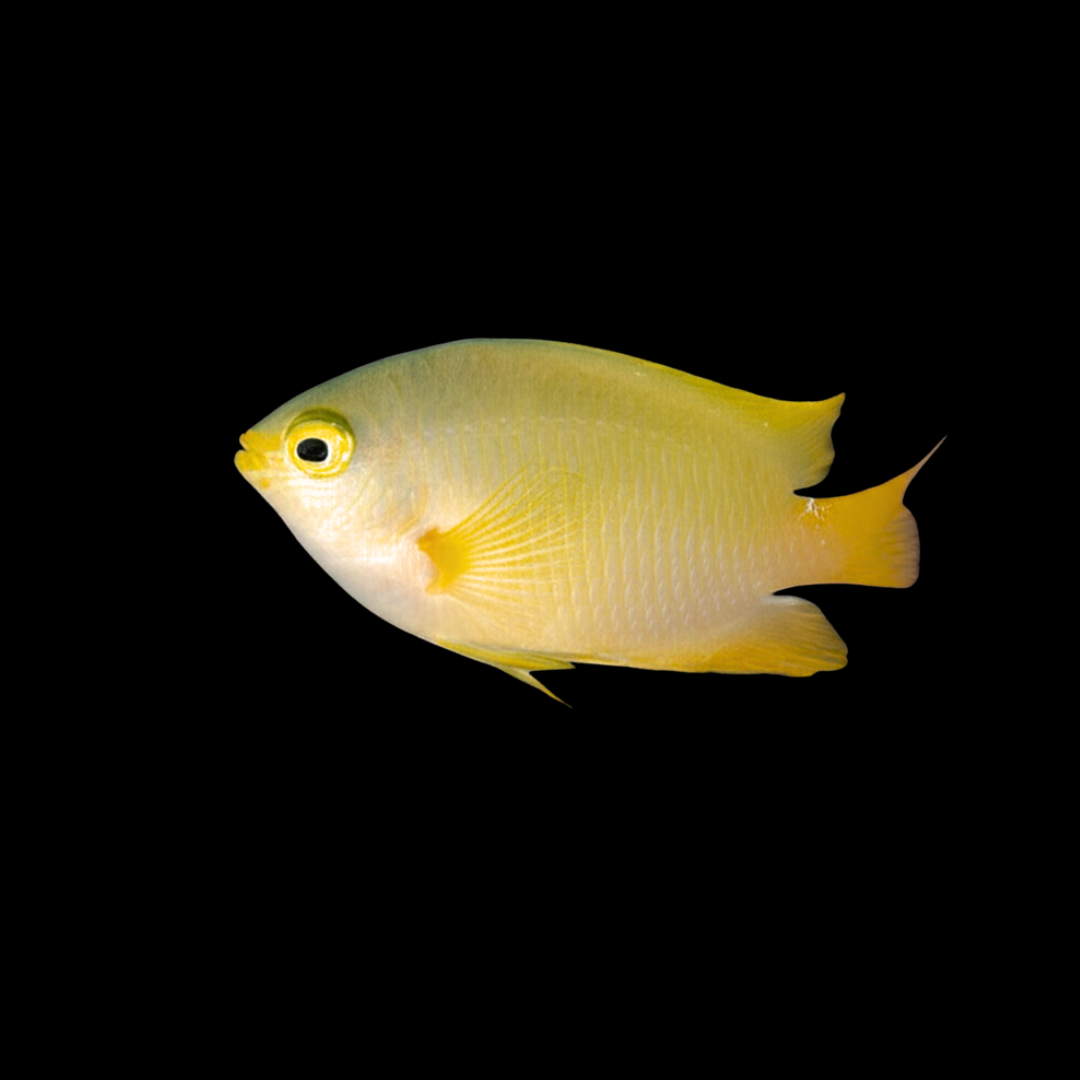
ネッタイスズメダイは、西部太平洋のサンゴ礁でごく普通に見られる、鮮やかな全身イエローの色彩が特徴的な魚類です。観賞魚としてはレモンスズメダイの名称で親しまれ、その頑健さと入手しやすさから、マリンアクアリウムにおける代表的な入門種の一つとされています。野生では枝状サンゴの隙間をシェルターとして巧みに利用し、複雑な三次元構造を持つサンゴ礁生態系の一員として重要な役割を担っています。近年の研究では、紫外線(UV)を用いた視覚情報のやり取りや、サンゴの白化に対する行動の変化など、興味深い生態的側面が徐々に解明されつつあります。The Lemon Damselfish is a vibrant, all-yellow fish commonly found in the coral reefs of the Western Pacific. Known in the aquarium trade as the Lemon Damsel, it is considered a classic entry-level species due to its hardiness and availability. In the wild, they skillfully use branching corals as shelters and play an important role in the complex three-dimensional coral reef ecosystem. Recent studies are gradually uncovering interesting ecological aspects, such as visual communication using ultraviolet (UV) light and behavioral changes in response to coral bleaching.
西部太平洋から東インド洋(琉球列島からオーストラリア北部、フィジーなど)Western Pacific to Eastern Indian Ocean (Ryukyu Islands to Northern Australia, Fiji, etc.)
最大体長 / Max Size
約8〜9cmApprox. 8-9cm (3-3.5 inches)
寿命 / Lifespan
約3〜5年以上(飼育下では環境により長命になることもあります)Approx. 3-5+ years (can be longer in captivity depending on environment).
飼育環境 / Aquarium Environment
水槽サイズ / Tank Size
単独なら60cm規格水槽(約60L)程度から可能ですが、混泳には90cm水槽以上が望ましいA 60cm standard tank (approx. 60L) is suitable for a single specimen, but 90cm or larger is better for community tanks.
水温 / Temperature
22〜28℃(年間を通じて安定した水温管理が健康維持の鍵となります)22-28 degrees Celsius (stable temperature management throughout the year is key).
水質 / Water Quality
比重 1.020〜1.025、pH 8.1〜8.4。清浄な水を好みますが、適応範囲は比較的広めですSalinity 1.020-1.025, pH 8.1-8.4. Prefers clean water but is relatively adaptable.
レイアウト / Layout
枝状のサンゴやライブロックを配置し、複雑な隠れ家を作ることがストレス緩和に繋がりますProviding complex hiding spots with branching corals or live rock helps reduce stress.
注意点 / Precautions
水槽からの飛び出しを完全に防ぐため、隙間のない蓋の設置が推奨されますInstalling a tight lid is recommended to prevent accidental jumping out of the tank.
餌と給餌 / Feeding
餌の種類 / Diet
雑食性。付着藻類、デトリタス、小型無脊椎動物などを幅広く摂食しますOmnivorous. Consumes a wide range of benthic algae, detritus, and small invertebrates.
スズメダイ特有の縄張り意識があり、成長とともに気が強くなる傾向が見られますDisplays typical damselfish territoriality, often becoming more assertive as they mature.
混泳の相性 / Compatibility
大型の魚種とは概ね良好ですが、似た色彩の小型種とは激しい争いを起こす可能性がありますGenerally fine with larger species, but may fight intensely with small fishes of similar coloration.
病気と対策 / Diseases and Prevention
かかりやすい病気 / Common Diseases
白点病、ウーディニウム症、ビブリオ属等による細菌感染症Ich, Marine Velvet, and bacterial infections such as Vibrio.
対策と予防 / Prevention
新入個体の導入時の検疫が重要です。ストレスを抑え、殺菌灯の使用などで環境中の菌密度を下げることが有効ですQuarantine for new arrivals is crucial. Reducing stress and using UV sterilizers to manage pathogen density is effective.
増やし方(繁殖) / Breeding
雌雄の判別 / Sexing
外見上の差異はほとんどなく、繁殖行動中のペアの役割から判断するのが一般的ですThere is little visual difference; identification is usually based on roles during spawning behavior.
繁殖形態 / Reproduction
岩の表面などに産卵する基質産卵型。典型的にはオスが卵の保護を担いますSubstrate spawners that lay eggs on surfaces. Typically, the male takes responsibility for guarding the eggs.
繁殖のポイント / Breeding Tips
水槽内での産卵例は多いですが、初期餌料の確保など稚魚の育成には専門的な設備が必要となりますWhile spawning occurs often in aquaria, raising the larvae requires specialized equipment and initial feed.
雑学と豆知識 / Trivia and Fun Facts
1. UV視覚の活用:種を識別する独自の波長 / 1. UV Vision: A Unique Wavelength for Recognition
ネッタイスズメダイを含む一部のスズメダイ類は、人には見えない紫外線(UV)を反射する独自のパターンを顔面に持っています。このパターンは、主に同種同士の種認識や性的シグナルに利用されていると考えられています。かつては「捕食者には見えない秘密の通信」と捉えられていましたが、現在では多くの浅海魚がUV感受性を持つことも分かっており、環境に応じて一部の捕食者から視認されにくくする効果など、より多面的な役割が検討されています。Some damselfishes, including the Lemon Damsel, have UV-reflective patterns on their faces used for species recognition and signaling. While once thought to be a secret channel invisible to predators, it’s now known many shallow-water fish perceive UV, suggesting a more complex role in their environment.
2. 白化サンゴと「生態学的な罠」の議論 / 2. Debating “Ecological Traps” and Bleached Corals
サンゴへの依存度が高い本種にとって、海水温上昇によるサンゴの白化は重大な脅威です。一部の研究では、稚魚が白化したサンゴを回避できずに定着してしまい、その後の生存率が下がる「生態学的な罠」の現象が報告されています。ただし、種や状況によっては白化を回避する行動を見せることもあり、環境変化に対する彼らの適応能力や限界については、現在も慎重に調査が進められています。For this coral-dependent species, bleaching is a threat. Some studies report an “ecological trap” where juveniles settle on bleached corals, lowering survival. However, responses can vary by situation, and ongoing research carefully investigates their adaptability and limits.
3. 共通の進化史:スズメダイ科の系統放散 / 3. Shared Evolutionary History: Radiation of Pomacentridae
スズメダイ科全体の系統解析によれば、このグループの多くの種は中新世から鮮新世にかけて、インド・オーストラリア多島海を中心に劇的な多様化を遂げたと考えられています。ネッタイスズメダイもその放散の流れを汲む一種であり、その進化の歴史を紐解くことは、熱帯海域における生物多様性がどのように形成されてきたのかを知る上で、学術的にも重要な意味を持っています。Phylogenetic analysis suggests the family Pomacentridae underwent dramatic radiation during the Miocene and Pliocene. The Lemon Damsel is part of this lineage, and its history provides insights into how biodiversity formed in the Indo-Australian Archipelago.
まとめ / Conclusion
ネッタイスズメダイは、その鮮やかな色彩で私たちを楽しませてくれるだけでなく、サンゴ礁生態系の複雑さを物語る多くのエピソードを持った魚です。身近な入門種であっても、その背後には研究者たちが今なお探求を続ける奥深い科学の世界が広がっています。The Lemon Damselfish not only delights us with its color but also tells a story of the complexity of coral reef ecosystems. Even as a common beginner species, it embodies a deep world of science that researchers continue to explore today.
飼育にあたっては、彼らの野性的な本能と、環境変化に対する脆弱性の両面を理解することが大切です。適切な水質管理と植物性成分を含む質の高い給餌を通じて、この小さなレモンイエローの住人がサンゴの隙間で健やかに暮らせる環境を整えてあげましょう。When keeping them, it’s vital to understand both their wild instincts and their vulnerability to environmental shifts. By providing proper water management and quality algae-based food, you can create a healthy sanctuary for these small lemon-yellow inhabitants.
Bleeker, P. (1853). Diagnostische beschrijvingen van nieuwe of weinig bekende vischsoorten van Amboina, bij gelegenheid van een verblijf op dat eiland in het najaar van 1852. Natuurkundig Tijdschrift voor Nederlandsch Indië, 4(3), 451-516.
Siebeck, U. E., Parker, A. N., Sprenger, D., Mäthger, L. M., & Wallis, G. (2010). A species of reef fish that uses ultraviolet patterns as a secret communication channel. Current Biology, 20(5), 407-410.
Feary, D. A., Almany, G. R., McCormick, M. I., & Jones, G. P. (2007). Habitat choice, recruitment and the response of coral reef fishes to coral degradation. Oecologia, 153, 727-737.
Litsios, G., & Salamin, N. (2014). Hybridization and adaptive radiation in the radiation of damselfishes (Terrapomacentrus). Royal Society Open Science. (Mitochondrial genome and phylogeny context).
Froese, R. and D. Pauly. Editors. (2024). FishBase. World Wide Web electronic publication. www.fishbase.org, version (02/2024).
IUCN Red List of Threatened Species. (2024). Pomacentrus moluccensis. https://www.iucnredlist.org/



 アイのアクアグッズ案内カルキ抜き・水質調整剤の選び方|水換えと水槽の種類に合わせて選ぶ道具の特徴や使い方、選ぶときのポイントをアイが紹介します。記事はコチラ →
 アイのアクアグッズ案内ベタの一匹飼いを楽しむ|水槽・ヒーター・ふた・フィルターの選び方ベタの一匹飼いに向く水槽容量、ふたと空気層、ヒーターと水温計、弱い水流のフィルターを、コタロウとアイの会話で分かりやすく解説します。記事はコチラ →
 アイのアクアグッズ案内マジックリーフ物語|一枚の葉がアクアリウム用品になるまで道具の特徴や使い方、選ぶときのポイントをアイが紹介します。記事はコチラ →
 アイのアクアグッズ案内ラスボラ・ボララスの群泳を楽しむ飼育用品|水槽・ろ過・ヒーター・餌・水草道具の特徴や使い方、選ぶときのポイントをアイが紹介します。記事はコチラ →



コメント