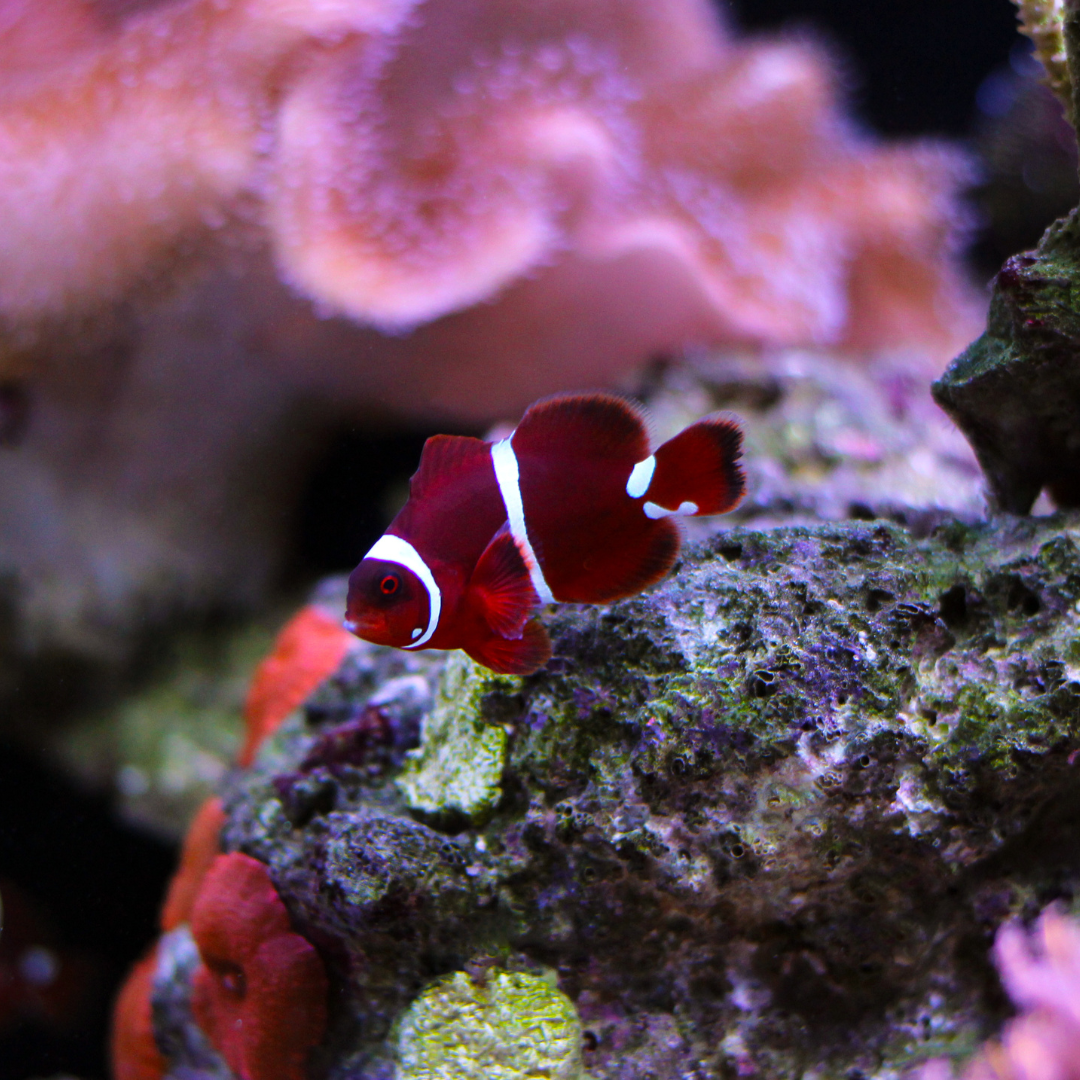
スパインチークアネモネフィッシュは、熱帯のサンゴ礁で圧倒的な存在感を放つスズメダイ科の海水魚です。深い暗赤色からマルーンレッドの体色に、鮮やかな3本のバンドが入る美しい姿が特徴ですが、その最大の特徴はエラ蓋にある鋭い棘にあります。クマノミ類の中でも特に極端な性的二型(オスとメスの差)を持ち、メスはオスの3倍から4倍もの大きさに成長し、サンゴ礁の暴君とも呼ばれるほど非常に強い縄張り意識を持ちます。単なる観賞魚としての魅力だけでなく、近年の分子系統学による分類の再編や、複雑な社会性、そして歴史的な突然変異個体「ライトニングマローン」の誕生など、アクアリウムの世界において非常に高い注目を集め続けている種です。The Spinecheek Anemonefish is a saltwater fish in the Pomacentridae family that commands an overwhelming presence in tropical coral reefs. It is characterized by its beautiful deep maroon body color with three vivid bands, but its most defining feature is the sharp spines located on its gill covers. Among clownfishes, it exhibits extreme sexual dimorphism; females can grow three to four times larger than males and possess such strong territorial instincts that they are often called the tyrants of the reef. Beyond its appeal as an aquarium fish, it remains a subject of great interest due to recent taxonomic reorganizations based on molecular phylogenetics, its complex social structures, and the birth of the legendary “Lightning Maroon” mutation.
メス:最大15〜17cm、オス:4〜5cmFemale: up to 15-17 cm, Male: 4-5 cm
寿命 / Lifespan
約10年〜15年以上(飼育下ではさらに長期生存の記録あり)Approx. 10-15+ years (longer lifespans recorded in captivity)
飼育環境 / Aquarium Environment
水槽サイズ / Tank Size
単独飼育であれば60cm規格水槽(約60L)から可能ですが、巨大化するメスやペア、混泳を考慮すると90cm規格水槽(約160L)以上が推奨されます。While a 60cm standard tank (approx. 60L) is possible for solitary keep, a 90cm standard tank (approx. 160L) or larger is recommended for pairs or community setups due to the female’s size.
水温 / Temperature
23℃〜27℃(24℃〜26℃付近で安定させることが理想です)23°C – 27°C (Ideally stabilized around 24°C – 26°C)
水質 / Water Quality
比重1.020〜1.026、pH 8.1〜8.4。硝酸塩は20ppm未満を維持するよう、プロテインスキマー等の濾過システムが推奨されます。Specific gravity 1.020-1.026, pH 8.1-8.4. Efficient filtration like protein skimmers is recommended to keep nitrates below 20ppm.
レイアウト / Layout
ライブロックで十分な隠れ家と縄張りの境界を作ります。宿主としてサンゴイソギンチャクを導入すると、縄張りがそこに限定されやすくなり、心理的な安定に繋がります。Create ample hiding spots and territorial boundaries with live rock. Introducing a host like the Bubble-tip anemone can help centralize their territory and provide psychological stability.
注意点 / Precautions
エラ蓋にある棘が非常に鋭いため、網(ネット)を使うと絡まって大怪我をさせる恐れがあります。移動の際は必ず水ごとプラスチックケース等で掬うようにしてください。The spines on the gill covers are very sharp and can get caught in nets, causing severe injury. Always use a plastic container to scoop them along with water when moving them.
餌と給餌 / Feeding
餌の種類 / Diet
人工飼料(粒状、フレーク)によく慣れます。補助食としてイサザアミやブラインシュリンプ、細かく刻んだ魚肉などの冷凍フードも有効です。They adapt well to artificial foods (pellets, flakes). Frozen foods like mysis shrimp, brine shrimp, and finely chopped seafood are also effective supplements.
給餌のポイント / Feeding Tips
1日2回〜3回、数分で食べ切れる量を与えます。混泳させている場合は、本種の攻撃性により他の魚が餌を食べられないことがないよう、水槽全体に広がるように与える工夫が必要です。Feed 2-3 times daily in amounts they can finish in a few minutes. If housed with other fish, ensure food is distributed throughout the tank so others can eat despite the Spinecheek’s aggressive presence.
性格と混泳 / Temperament and Tank Mates
性格 / Temperament
クマノミ類の中で最も攻撃的です。強い縄張り意識を持ち、特に同種や他のクマノミ類、自分より小さな臆病な魚に対しては非常に排他的に振る舞います。Most aggressive among clownfishes. They possess a strong territorial sense and are highly exclusionary toward their own kind, other clownfishes, and smaller, timid fish.
混泳の相性 / Compatibility
本種を最後に導入するのが鉄則です。相性が良いのは大型のヤッコやハギ、アイゴ類など、自身の身を守れる強健な種に限られます。無脊椎動物(サンゴ、エビ、貝類)には無関心なため、リーフタンクへの導入は安全です。The golden rule is to introduce this species last. Compatible tank mates are limited to robust species that can defend themselves, such as large Angelfish, Tangs, and Rabbitfish. They are safe in reef tanks as they ignore invertebrates like corals, shrimp, and snails.
病気と対策 / Diseases and Prevention
かかりやすい病気 / Common Diseases
白点病、ウーディニウム病、ブルックリネラ病(クマノミ病)にかかりやすい傾向があります。特に導入初期のストレス下では注意が必要です。Prone to Ich, Velvet, and Brooklynella (Clownfish Disease). Particular care is needed under stress, especially during the initial introduction.
対策と予防 / Prevention
殺菌灯の設置や、適切な換水による水質の安定が最大の予防です。新規導入個体はトリートメントタンクで隔離・観察を行い、病気を持ち込まないように徹底してください。Installing a UV sterilizer and stabilizing water quality through regular water changes are the best preventions. Isolate and observe new individuals in a treatment tank to ensure no diseases are introduced.
増やし方(繁殖) / Breeding
雌雄の判別 / Sexing
一目瞭然です。メスは巨大(15cm以上)で色が暗く、オスは非常に小型(5cm以下)で明るい赤色をしています。雄性先熟の雌雄同体であり、群れの頂点の個体がメスに性転換します。The difference is obvious: females are huge (15cm+) and darker, while males are very small (under 5cm) and bright red. They are protandrous hermaphrodites, where the dominant individual changes into a female.
繁殖形態 / Reproduction
岩の表面などを掃除して卵を産み付ける「基質産卵型」です。一度の産卵で150〜2,000個以上の卵を産みます。They are substrate spawners, cleaning a rock surface to lay eggs. A single spawn can result in 150 to over 2,000 eggs.
繁殖のポイント / Breeding Tips
オスが卵を献身的に世話し、新鮮な水を送ります。孵化後の稚魚にはS型ワムシなどの微小な初期飼料が必要です。国内の水族館(伊勢シーパラダイス等)でも長期育成の成功例が報告されています。The male devotedly cares for the eggs, fanning them with fresh water. Newly hatched larvae require microscopic initial feeds like S-type rotifers. Successful long-term rearing has been reported in Japanese public aquariums.
雑学と豆知識 / Trivia and Fun Facts
1. 分類学のドラマ:プレムナス属からクマノミ属への「統合」 / 1. Taxonomic Drama: Integration from Premnas to Amphiprion
かつて本種は、その鋭い棘という特異な形態から、独自の「プレムナス(Premnas)属」として扱われてきました。しかし、2021年や2024年の大規模な系統解析により、『Premnas』属はクマノミ属(Amphiprion)の一部に統合され、現在は正式に Amphiprion biaculeatus とされています。見た目が大きく異なっていても、DNAの系統ではカクレクマノミなどと同じグループに属することを示す、進化の不思議を物語る事例と言えるでしょう。For a long time, this species was placed in its own genus, Premnas, due to its unique spines. However, large-scale phylogenetic analyses in 2021 and 2024 demonstrated that Premnas should be integrated into the genus Amphiprion, and it is now formally classified as Amphiprion biaculeatus. Despite their distinct appearance, the fact that they belong to the same lineage as Ocellaris clownfish is a fascinating example of evolutionary history.
2. 「ピアプレッシャー」が魚の模様を変える? / 2. Does “Peer Pressure” Change Fish Patterns?
最新の研究によると、本種の稚魚にある予備のバンド(白い縞)が消えるタイミングは、遺伝子だけでなく「周りの大人の視線」で決まることが判明しました。成魚がいる環境に稚魚を入れると、攻撃を避けるために「自分はまだ未熟です」という合図として、通常より早く大人の模様へと変化するのです。社会的な圧力が魚の表現型にまで影響を与えるという、驚くべき処世術です。According to recent research, the timing for the disappearance of extra bands in juveniles is determined not just by genes, but by the presence of adult fish. In an environment with adults, juveniles change to adult patterns faster to signal that they are not a threat, thereby avoiding aggression. This is a remarkable survival tactic where social pressure influences phenotype.
3. 奇跡の突然変異「ライトニングマローン」の功績 / 3. The Legacy of the “Lightning Maroon” Mutation
2008年にパプアニューギニアで発見された、全身にイナズマのような模様を持つ「ライトニングマローン」。この個体は持続可能な漁業プログラムを通じて保護・輸出され、ブリーダーのマット・ペダーセン氏によって繁殖に成功しました。この歴史的快挙は、野生個体への採集圧力を減らしつつ、新しい観賞価値を創造する「ブリード個体」の重要性を世界に知らしめるきっかけとなりました。Discovered in Papua New Guinea in 2008, the Lightning Maroon features lightning-like patterns across its body. Protected and exported via a sustainable fishing program, it was successfully bred by Matt Pedersen. This historic feat highlighted the importance of captive-bred fish in creating new aesthetic value while reducing collection pressure on wild populations.
4. 独立種か、地域変異か:ゴールドストライプの謎 / 4. Independent Species or Regional Variant: The Gold Stripe Mystery
バンドが黄金色に輝く「ゴールドストライプ」個体群。これらは単なる色違いではなく、スマトラ島周辺で独自に分化した独立種(Amphiprion epigrammata)ではないかという議論が現在も続いています。ホワイトストライプとの交雑において中間的な個体が安定して出現しないという指摘もあり、進化の途上にある「新しい種」を私たちは目にしているのかもしれません。The Gold Stripe population, whose bands shine golden, is at the center of an ongoing debate over whether it should be classified as an independent species (Amphiprion epigrammata). Observations that hybrids with the White Stripe do not consistently produce intermediate patterns suggest we might be witnessing a “new species” in the midst of evolutionary divergence.
まとめ / Conclusion
スパインチークアネモネフィッシュは、その鮮烈な赤色と強烈な個性、そして最新のゲノム科学によって紐解かれた深い背景を持つ、まさにアクアリウムの王者にふさわしい魚です。その攻撃性の高さゆえに飼育には知識と経験が求められますが、ペアで仲睦まじく、あるいは威風堂々と泳ぐ姿は、一度魅了されると忘れられないほどのインパクトを与えてくれます。The Spinecheek Anemonefish is a fish truly worthy of being called a king of the aquarium, possessing striking red color, an intense personality, and a deep background revealed by modern genomic science. While its high aggression requires knowledge and experience to manage, the sight of a harmonious pair or a majestic individual swimming proudly leaves an unforgettable impact on anyone captivated by them.
私たちはこの美しい魚を通じて、サンゴ礁の生態系の複雑さや、持続可能なアクアリウム文化の重要性を学ぶことができます。適切なハンドリングと環境を提供することで、彼らはあなたの水槽内で10年以上にわたる素晴らしいドラマを見せてくれることでしょう。Through this beautiful fish, we can learn about the complexity of coral reef ecosystems and the importance of sustainable aquarium culture. By providing the appropriate handling and environment, they will reward you with over a decade of wonderful biological drama within your tank.
ArticleTang et al. (2021) / Genome Biology and Evolution (2023)「クマノミ類の系統ゲノミクスと共生関係の進化」:Premnas属をAmphiprion属のシノニムとして再定義し、単系統群としての分類を確定させた原著論文。“Phylogenomics of anemonefishes and the rise of anemonefish mutualisms”: The primary paper redefining Premnas as a synonym of Amphiprion.DOI: 10.1101/2022.05.12.491701 / 10.1093/gbe/evad103
ArticleMitchell et al. (2026) / eLife「社会的階層がサンゴ礁魚類の表現型可塑性と生活史移行を加速させる」:成魚からの社会的圧力(ピアプレッシャー)が稚魚のバンド消失を早めるメカニズムの解明。“Social hierarchy accelerates phenotypic plasticity and life-history transitions in coral reef fishes”: Research on how social pressure influences juvenile pattern changes.
News / ArticleOIST (Okinawa Institute of Science and Technology) (2024)「イソギンチャクの識別における化学シグナルと粘液の役割」:クマノミ類が宿主を特定する高精度な感覚器官の機能に関する研究成果。“Role of chemical cues and mucus in anemonefish host recognition”: Research on the sensory mechanisms for specific host identification.Source: OIST Marine Climate Change Unit Research News
Project / MagazineMatt Pedersen / The Lightning Project (CORAL Magazine)「ライトニングマローン・プロジェクト:突然変異個体の遺伝的固定と商業的ブリードの確立」:優性遺伝の証明と養殖個体群の系譜記録。“The Lightning Project: Genetic fixation and establishment of commercial breeding”: Records of inheritance and pedigrees of the Lightning Maroon.
Exhibition Data伊勢シーパラダイス (UOASIS) 飼育記録「スパインチークアネモネフィッシュ(Amphiprion biaculeatus)の産卵から孵化、長期育成までの観察データ」:日本国内における最新の繁殖事例。“Observation data on spawning, hatching, and long-term rearing of A. biaculeatus”: Current breeding records in Japanese aquariums.
DatabaseWoRMS (World Register of Marine Species)海洋生物の国際標準データベース。Amphiprion biaculeatus を有効名(Accepted Name)として認定。The World Register of Marine Species. Certified Amphiprion biaculeatus as the currently accepted scientific name.Source: WoRMS Taxon Details



 アイのアクアグッズ案内水槽フィルターの選び方|外掛け・外部・上部から小型オーバーフローまで道具の特徴や使い方、選ぶときのポイントをアイが紹介します。記事はコチラ →
 アイのアクアグッズ案内水槽ライトの選び方|魚の見え方・水草・海水で選ぶおすすめ照明道具の特徴や使い方、選ぶときのポイントをアイが紹介します。記事はコチラ →
 アイのアクアグッズ案内そのごはん、泳いでる! 卵から始めるブラインシュリンプの孵化と道具選び道具の特徴や使い方、選ぶときのポイントをアイが紹介します。記事はコチラ →
 アイのアクアグッズ案内海水魚初心者の必需品|水槽・人工海水・比重計・水質検査道具の特徴や使い方、選ぶときのポイントをアイが紹介します。記事はコチラ →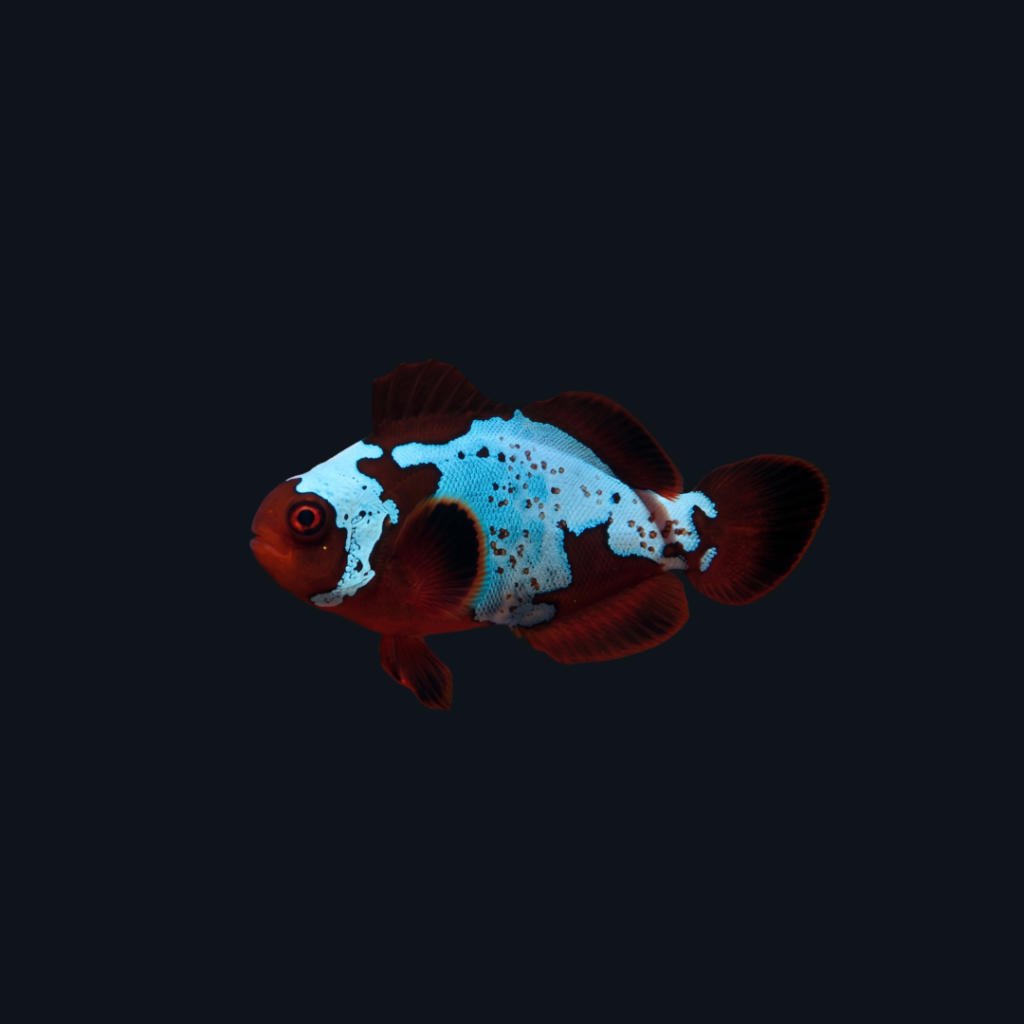




コメント