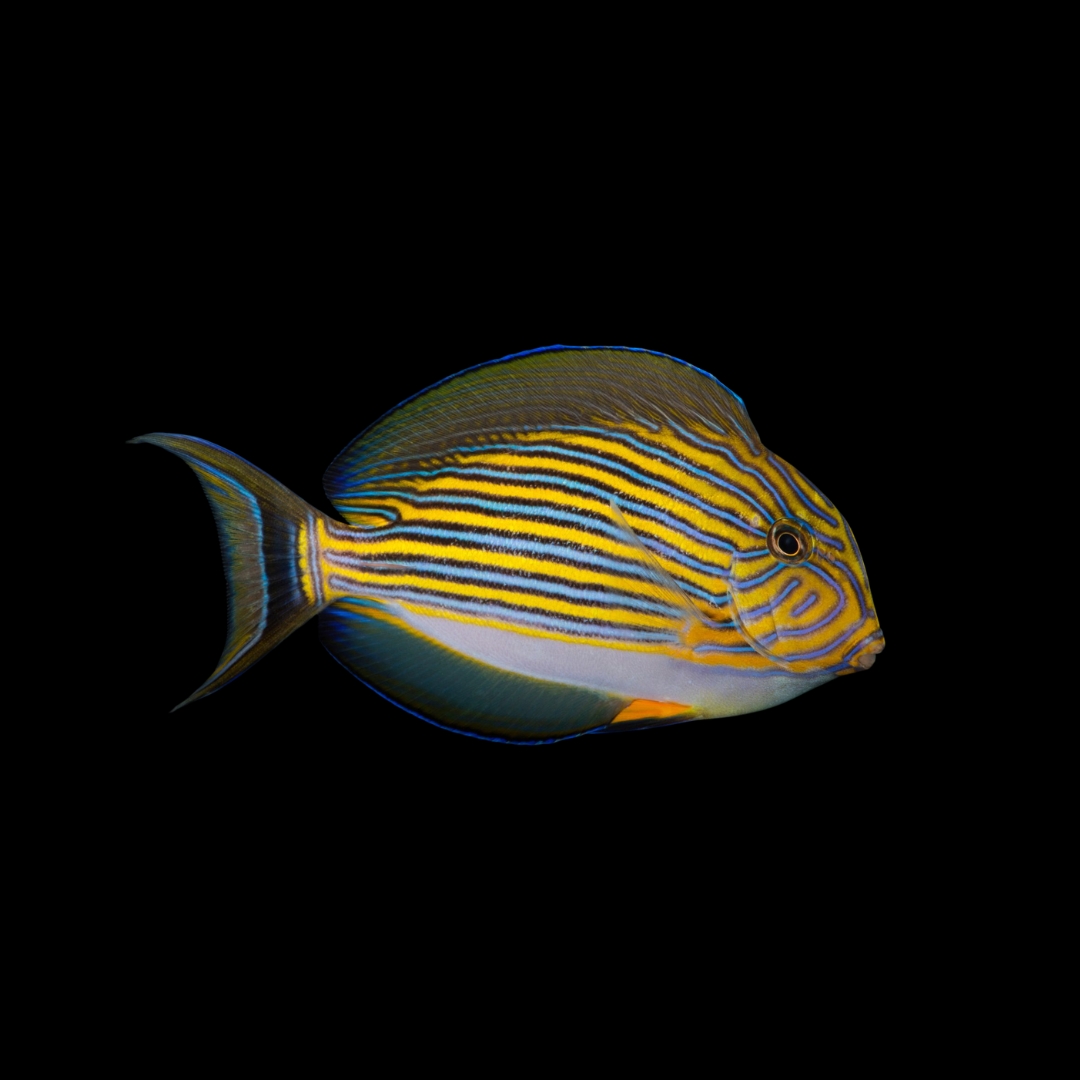
ニジハギは、黄色と青色の細い縞模様が全身を走る、インド太平洋のサンゴ礁を代表する美しいニザダイ科魚類です。自然界では浅い外礁部や波の影響を強く受ける場所でよく見られ、岩や死サンゴの表面に生える藻類をついばみながら活発に泳ぎ続けます。観賞魚として非常に華やかですが、成長すると大きくなり、遊泳力と縄張り意識が強いため、家庭水槽では上級者向けの海水魚です。長期飼育には大型水槽、強い水流、十分な酸素、安定した水質、植物質を中心にした給餌、そして混泳相手の慎重な選定が欠かせません。The lined surgeonfish is a striking Indo-Pacific surgeonfish with fine yellow and blue stripes running across the body. In nature it is often found on shallow reef fronts and wave-influenced reef areas, where it remains highly active while grazing algae from rocks and dead coral. It is a spectacular marine aquarium fish, but it grows large, swims strongly, and can be very territorial. For long-term care, it should be treated as an advanced-level species that requires a large aquarium, strong water movement, high oxygen, stable water quality, a plant-rich diet, and careful selection of tank mates.
東アフリカ沿岸からインド洋、西部・中部太平洋にかけて広く分布します。記録される範囲は、ハワイ、マルキサス諸島、トゥアモトゥ諸島、北は南日本、南はグレートバリアリーフやニューカレドニア周辺までです。紅海では近縁のソハールサージョンフィッシュに置き換わるとされています。It is widely distributed across the Indo-Pacific, from East Africa through the Indian Ocean to the western and central Pacific. Its recorded range includes Hawaii, the Marquesas Islands, the Tuamotu Islands, southern Japan in the north, and the Great Barrier Reef and New Caledonia in the south. In the Red Sea it is considered to be replaced by the closely related Sohal surgeonfish.
最大体長 / Max Size
最大で全長約38cm。一般的に見られる個体は全長約25cm前後です。Up to about 38 cm in total length, with commonly observed individuals around 25 cm.
寿命 / Lifespan
野外記録では最長46年が報告されています。家庭水槽では、設備規模、水質、栄養状態、ストレス管理によって大きく左右されます。A maximum reported age of 46 years is recorded in the wild. In aquariums, lifespan depends strongly on tank size, water quality, nutrition, and stress management.
飼育環境 / Aquarium Environment
水槽サイズ / Tank Size
長期飼育では最低でも150cm以上の大型海水水槽を目安にし、可能であれば180cm級以上の水槽が望ましいです。日本の一般的な60cm規格水槽や90cm規格水槽では、成長後の遊泳量と攻撃性を受け止めるには不足します。大型オーバーフロー水槽と強力なプロテインスキマーを組み合わせると管理しやすくなります。For long-term care, a marine aquarium of at least 150 cm in length should be considered the minimum guideline, and a 180 cm class or larger aquarium is preferable. Standard 60 cm or 90 cm home aquariums are not adequate for the swimming activity and aggression of an adult. A large overflow system with a powerful protein skimmer is strongly recommended.
水温 / Temperature
24から28℃前後を安定して維持します。自然分布域では熱帯性ですが、高水温では酸素不足が起こりやすくなるため、夏場は水槽用クーラーや十分な水面攪拌が重要です。Maintain a stable temperature of about 24 to 28°C. Although this is a tropical species, high temperatures can reduce dissolved oxygen, so aquarium chillers and strong surface agitation are important in summer.
水質 / Water Quality
比重1.020から1.025、pH8.1から8.4、アルカリ度8から12dKH前後を目安に安定させます。排泄量が多く、給餌回数も増えやすいため、硝酸塩やリン酸塩の蓄積を抑える水換えと濾過能力が大切です。Aim for a specific gravity of 1.020 to 1.025, pH 8.1 to 8.4, and alkalinity around 8 to 12 dKH. Because this fish produces substantial waste and benefits from frequent feeding, regular water changes and strong filtration are important to limit nitrate and phosphate buildup.
レイアウト / Layout
ライブロックや人工岩で隠れ場所を作りつつ、前面と中央には長く泳げる空間を確保します。自然界の浅い外礁部を意識し、複数の水流ポンプでランダムかつ強めの水流を作るとよいでしょう。サンゴ水槽に入れる場合も、魚体が大きく泳ぎが強いため、サンゴの転倒や接触に注意します。Provide hiding places with live rock or artificial rock, while keeping a long, open swimming space in the front and center. To imitate shallow reef-front conditions, use multiple circulation pumps to create strong, varied water movement. In reef aquariums, take care that the fish’s size and swimming power do not knock over or damage corals.
注意点 / Precautions
尾柄部には鋭い棘があり、取り扱い時に痛みを伴う傷を負うことがあります。ネットで追い回すと魚も人も傷つきやすいため、移動時は容器を使って落ち着いて誘導します。また、強い縄張り意識を示すため、導入は水槽内の魚の中で最後にするのが基本です。The caudal peduncle has sharp spines that can cause painful wounds. Chasing the fish with a net can injure both the fish and the handler, so guide it calmly with a container when moving it. Because of its strong territorial behavior, it is usually best added as the final fish in the aquarium.
餌と給餌 / Feeding
餌の種類 / Diet
主食は植物質を中心にします。スピルリナ配合の海水魚用フード、海藻系フード、無添加の乾燥海苔、乾燥海藻、植物質を多く含むペレットを組み合わせます。補助的にイサザアミやブラインシュリンプなどの動物質も食べますが、動物質だけに偏らせないことが大切です。The diet should be centered on plant-based foods. Offer spirulina-based marine fish food, algae-based preparations, additive-free dried nori, dried seaweed, and plant-rich pellets. It may also accept animal-based foods such as mysid shrimp and brine shrimp as supplements, but the diet should not be dominated by animal protein.
給餌のポイント / Feeding Tips
自然界では日中に長時間ついばみ続けるため、少量を複数回に分けて与えます。海苔や海藻をクリップに挟んで、時間をかけて食べられるようにすると、空腹による攻撃性の軽減にも役立ちます。痩せやすい個体では、餌付きと腹部の張りを毎日確認します。In the wild, this fish grazes for long periods during the day, so feed small amounts several times daily. Offering nori or seaweed in a feeding clip allows prolonged grazing and can help reduce hunger-related aggression. For individuals that lose weight easily, check feeding response and belly condition every day.
性格と混泳 / Temperament and Tank Mates
性格 / Temperament
非常に活動的で、縄張り意識が強い魚です。大型の個体ほど自己主張が強く、餌場や遊泳スペースを守ろうとします。水槽が狭いほど攻撃性が出やすく、同じニザダイ科や体型の似た魚には特に厳しく当たることがあります。It is a highly active and strongly territorial fish. Larger individuals tend to be more assertive and may defend feeding areas and swimming space. Aggression becomes more likely in cramped aquariums, especially toward other surgeonfishes or similarly shaped fishes.
混泳の相性 / Compatibility
同種同士の混泳は一般家庭の水槽では避けます。他のハギ類、特に体型や食性が近い種類との混泳も難易度が高いです。混泳させる場合は、十分な水槽サイズを確保し、先に温和な魚を落ち着かせ、ニジハギは最後に導入します。小型魚や動きの遅い魚、餌取りの弱い魚は標的になる可能性があります。Keeping multiple individuals together should be avoided in typical home aquariums. Compatibility with other tangs and surgeonfishes, especially similarly shaped or similarly feeding species, is difficult. If kept with other fish, provide ample tank space, allow more peaceful fish to settle first, and introduce the lined surgeonfish last. Small, slow, or poor-feeding fish may become targets.
病気と対策 / Diseases and Prevention
かかりやすい病気 / Common Diseases
海水魚の白点病、ウーディニウム病、外部寄生虫、輸送後の拒食、痩せ、側線や頭部のびらんに注意します。ハギ類は環境変化やストレス、栄養の偏りが体表トラブルとして現れやすい魚です。Watch for marine ich, velvet disease, external parasites, post-shipping refusal to feed, weight loss, and head or lateral-line erosion. Surgeonfishes often show environmental stress and nutritional imbalance through skin and body-condition problems.
対策と予防 / Prevention
導入前の隔離観察を行い、餌付きと呼吸、体表を確認してから本水槽へ移します。急な水温や比重の変化を避け、強い水流と高い酸素量を保ちます。ビタミンや植物質を含む餌を継続的に与え、活性炭を使う場合は粉じんの少ない高品質品をよくすすいで使うと安心です。Quarantine and observe new arrivals before moving them to the display aquarium, confirming feeding response, respiration, and skin condition. Avoid sudden changes in temperature or salinity, and maintain strong water movement and oxygenation. Feed vitamin-rich and plant-based foods consistently. If activated carbon is used, choose a high-quality, low-dust product and rinse it thoroughly.
増やし方(繁殖) / Breeding
雌雄の判別 / Sexing
外見だけで雌雄を正確に判別するのは困難です。自然界では大型のオスが餌場を含む縄張りをもち、複数のメスを含む社会構造を示すことがあります。Reliable sexing by appearance alone is difficult. In nature, large males may hold feeding territories and show a social structure that includes multiple females.
繁殖形態 / Reproduction
サンゴ礁で産卵群を形成することが知られていますが、実際の産卵はペアで行われるとされています。卵と仔魚は浮遊生活を送り、海流によって広い範囲へ分散します。It is known to form spawning aggregations on reefs, but spawning itself is reported to occur in pairs. Eggs and larvae are pelagic and can disperse widely with ocean currents.
繁殖のポイント / Breeding Tips
家庭水槽での計画的な繁殖は現実的ではありません。大型水槽、複数個体の維持、産卵行動の再現、微小な仔魚への初期餌料の供給など、非常に高度な設備と技術が必要です。観賞目的では、状態のよい個体を選び、長期飼育を目標にするのが現実的です。Planned breeding in a home aquarium is not realistic. It would require very large systems, maintenance of multiple individuals, reproduction of spawning behavior, and specialized first foods for tiny larvae. For aquarium keeping, selecting a healthy individual and focusing on long-term care is the practical goal.
雑学と豆知識 / Trivia and Fun Facts
1. 名前に込められた「尾の棘」 / 1. The tail spine hidden in the name
属名のAcanthurusは、ギリシャ語由来の「棘」と「尾」を組み合わせた名前とされます。ニザダイ科の魚は尾柄部に鋭い棘をもち、ニジハギではこの棘が特に長く、深い溝に折りたたまれるように収まっています。美しい縞模様ばかりに目を奪われますが、手で扱うときはこの棘に十分注意する必要があります。The genus name Acanthurus is derived from Greek roots meaning thorn and tail. Surgeonfishes have sharp spines on the caudal peduncle, and in the lined surgeonfish this spine is especially long and folds into a deep groove. Its striped beauty is eye-catching, but the tail spine requires real caution when handling the fish.
2. 鮮やかな体色はサンゴ礁でのサイン / 2. Bright color as a reef signal
ニジハギの黄色と青色のラインは、単なる装飾ではありません。複雑な光が差し込むサンゴ礁では、体色や模様が同種同士の認識、威嚇、距離感の調整に役立つと考えられます。水槽内でも、追い払いや緊張が強いときには体色や尾びれの印象が変わって見えることがあり、観察者にとってはストレス状態を読む手がかりになります。The yellow and blue lines are more than decoration. In the complex light environment of coral reefs, body color and pattern are thought to help with recognition, threat displays, and spacing between individuals. In aquariums, changes in body color or the appearance of the tail during chasing or tension can provide useful clues about stress.
3. サンゴ礁を支える藻食魚 / 3. An algae grazer that supports reefs
ニジハギは主に藻類を食べる魚です。サンゴ礁では、藻類が増えすぎるとサンゴの成長場所を覆ってしまいます。ニジハギのような藻食魚が岩や死サンゴの表面をついばみ続けることで、サンゴが成長する余地が保たれます。水槽で植物質の餌が重要なのも、この自然界での役割を考えると理解しやすくなります。The lined surgeonfish is mainly an algae grazer. On coral reefs, excessive algal growth can cover the space where corals need to grow. By continually grazing rock and dead coral surfaces, herbivorous fishes like this one help maintain open space for coral growth. This ecological role also explains why plant-based foods are so important in aquarium care.
4. 流通魚でも「飼いやすい魚」ではない / 4. Available in the trade, but not easy to keep
観賞魚として流通することがある魚ですが、入手できることと飼いやすいことは同じではありません。最大体長、遊泳力、攻撃性、餌の要求を考えると、ニジハギは「大型海水水槽を安定して維持できる人向け」の魚です。購入時は痩せていないこと、呼吸が速すぎないこと、体表に白点や濁りがないこと、海藻系の餌に反応することをよく確認しましょう。This species may appear in the marine aquarium trade, but availability does not mean ease of care. Considering its maximum size, swimming strength, aggression, and feeding needs, it is best suited to aquarists who can maintain a large, stable marine system. When choosing one, check that it is not thin, is not breathing too rapidly, has no white spots or cloudy patches, and responds to algae-based foods.
まとめ / Conclusion
ニジハギは、サンゴ礁の荒い波の中を泳ぐための体力と、藻類を食べ続ける生活に適応した口をもつ、非常に魅力的な海水魚です。色彩は美しく、行動もダイナミックですが、その魅力を家庭水槽で長く楽しむには、一般的な小型海水魚よりもはるかに大きな設備と丁寧な管理が必要です。The lined surgeonfish is a highly attractive marine fish built for life in wave-swept reefs, with the stamina to swim constantly and a mouth adapted for grazing algae. Its colors are beautiful and its behavior is dynamic, but enjoying it long term in an aquarium requires much larger equipment and more careful management than most small marine fishes.
飼育を検討する場合は、十分な水槽サイズを最初に確保し、植物質中心の給餌、強い水流、安定した水質、混泳相手の相性を総合的に整えることが大切です。条件が合えば主役級の存在感を見せてくれますが、無理な小型水槽での飼育は避け、魚の成長後の姿まで見据えて迎えたい種類です。If you plan to keep this species, secure adequate tank size first, then prepare a plant-centered feeding plan, strong water movement, stable water quality, and suitable tank-mate choices. Under the right conditions it can become a centerpiece fish, but it should not be kept in an undersized aquarium. Plan for its adult size and behavior before bringing it home.







コメント