

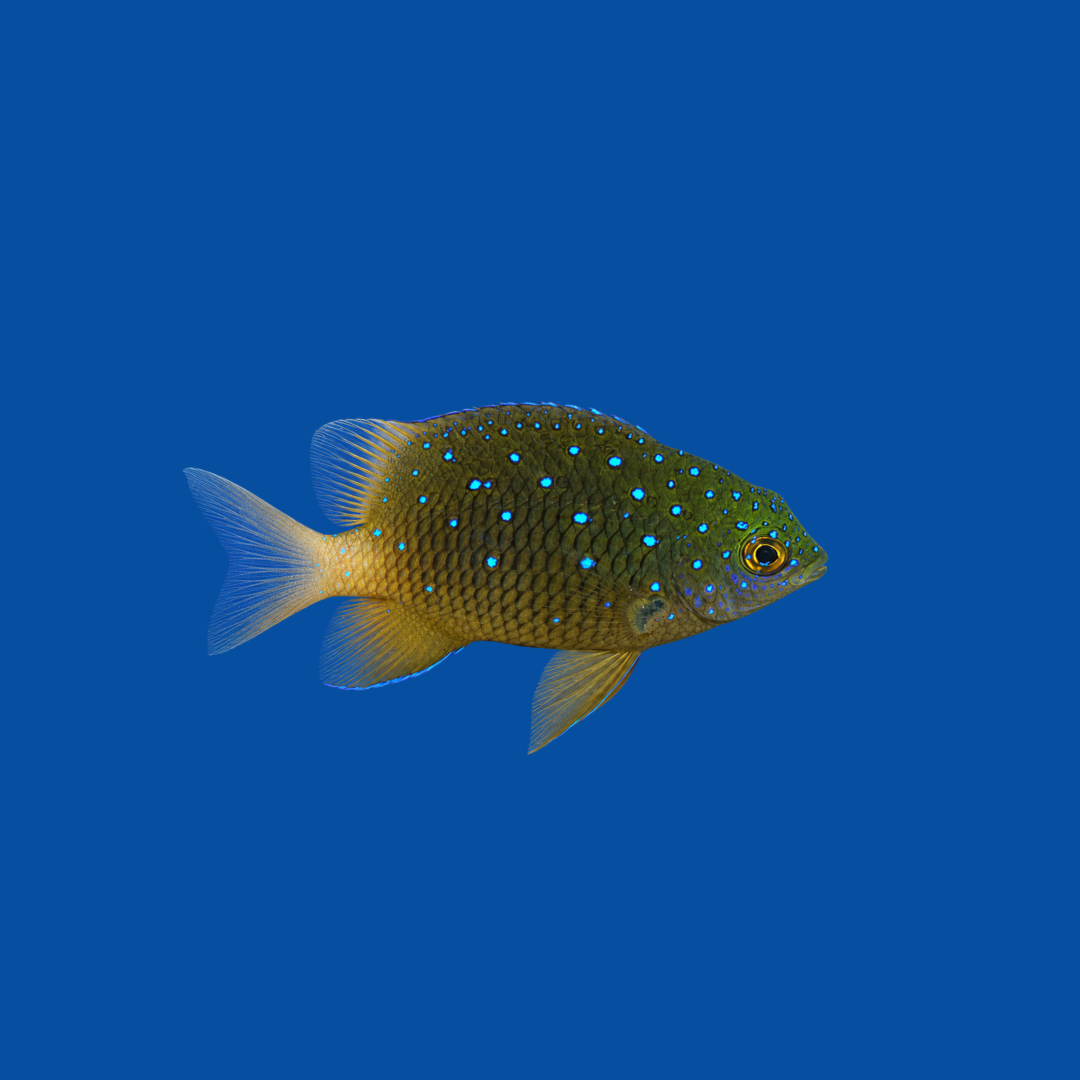
解説 / Description
ルリホシスズメダイは、暗色の体に小さな青い斑点を散りばめた姿が印象的な、インド太平洋のサンゴ礁域にすむ小型の海水魚です。観賞魚としては丈夫で餌付きやすく、海水魚飼育の入門種として紹介されることもあります。ただし、見た目の美しさとは対照的に、成長した個体は強い縄張り性を示し、同種や温和な小型魚を激しく追うことがあります。飼いやすさだけで選ぶのではなく、性格と混泳リスクまで理解して迎えたい魚です。 The whitespotted devil is a small marine damselfish from Indo-Pacific coral reef habitats, recognizable by its dark body sprinkled with small blue spots. In aquariums, it is hardy and usually quick to accept prepared foods, so it is sometimes introduced as a beginner-friendly marine fish. However, its attractive appearance contrasts with a strong territorial nature, especially as it matures, and it may chase its own kind or peaceful small fishes. It is best chosen with a clear understanding of its temperament and community-tank risks, not merely for its hardiness.
基本情報 / Basic Information
| 学名 / Scientific Name | Stegastes lacrymatus (Quoy & Gaimard, 1825) |
|---|---|
| 通称 / Common Name | ルリホシスズメダイWhitespotted devil, jewel damselfish |
| 分類 / Family | スズメダイ科(Pomacentridae)、Microspathodontinae亜科。上位分類はデータベースにより表記が異なるため、ここでは科と亜科を中心に扱います。Family Pomacentridae, subfamily Microspathodontinae. Higher-level placement may be presented differently among databases, so this guide emphasizes family and subfamily. |
| 英名 / English Name | Whitespotted devil, white-spotted devil, jewel damselfish |
| 分布 / Distribution | 紅海・東アフリカからマーシャル諸島・ソシエティ諸島方面までのインド太平洋に広く分布し、北限側では琉球列島、南限側ではオーストラリア周辺まで記録されています。透明度の高い礁湖や外洋側リーフの、サンゴ礫や死サンゴが混じる場所で見られます。Widely distributed in the Indo-Pacific, from the Red Sea and East Africa to the Marshall and Society Islands, north to the Ryukyu Islands and south to Australia. It is found in clear lagoons and seaward reefs, especially around mixed coral rubble and dead coral rock. |
| 最大体長 / Max Size | 約10cmAbout 10 cm |
| 寿命 / Lifespan | 本種単独の明確な飼育下寿命データは多くありません。安定した海水環境と適切な混泳管理ができれば、数年単位での長期飼育を目指せる小型スズメダイです。Clear aquarium lifespan data specific to this species is limited. With stable marine conditions and careful social management, it can be treated as a small damselfish suitable for multi-year care. |
飼育環境 / Aquarium Environment
| 水槽サイズ / Tank Size | 単独飼育なら30cmキューブ水槽でも飼育は可能ですが、水質安定と行動範囲を考えると45cm以上が扱いやすくなります。混泳を考える場合は最低でも60cm規格水槽、理想的には90cm規格水槽以上を用意し、縄張りが水槽全体に及びにくい空間を確保します。A single specimen can be kept in a 30 cm cube tank, although 45 cm or larger is easier for stable water quality and natural activity. For community setups, at least a standard 60 cm tank is recommended, with a standard 90 cm tank or larger being preferable to prevent the fish from treating the entire aquarium as one territory. |
|---|---|
| 水温 / Temperature | 24〜29℃を目安にし、家庭水槽では25℃前後で安定させると管理しやすいです。夏は水槽用クーラーや冷却ファン、冬はヒーターを使い、急激な水温変化を避けます。 Aim for 24 to 29°C, with around 25°C being easy to manage in home aquariums. Use an aquarium chiller or cooling fan in summer and a heater in winter, while avoiding rapid temperature changes. |
| 水質 / Water Quality | 比重は1.023〜1.025、pHは8.1〜8.4を目安にします。丈夫な魚ですが、アンモニアと亜硝酸が検出されない安定した海水環境を維持してください。サンゴと同居させる場合は、硝酸塩やリン酸塩の蓄積にも注意します。Specific gravity should be around 1.023 to 1.025, with pH around 8.1 to 8.4. Although hardy, it should still be kept in stable marine water with undetectable ammonia and nitrite. In reef tanks, also watch nitrate and phosphate accumulation. |
| レイアウト / Layout | ライブロックやサンゴ礫を使い、隠れ家と視線を遮る構造を作ります。単調で見通しのよいレイアウトでは、攻撃対象を追い込みやすくなります。サンゴ水槽にも導入できますが、泳ぐ空間と逃げ場の両方を用意することが大切です。Use live rock and coral rubble to create hiding places and visual barriers. In a plain, open layout, the fish can more easily corner tank mates. It can be kept in reef aquariums, but both swimming space and escape routes should be provided. |
| 注意点 / Precautions | パイロットフィッシュとして最初に入れると、水槽全体を縄張りとして覚え、後から追加した魚を強く攻撃することがあります。混泳水槽では最後に導入するのが基本です。小型水槽で複数匹を入れると、弱い個体に攻撃が集中しやすいため注意が必要です。If introduced first as a cycling or test fish, it may learn the entire tank as its territory and strongly attack later additions. In community tanks, it is generally best introduced last. Keeping several individuals in a small tank can lead to the weakest fish being repeatedly targeted. |
餌と給餌 / Feeding
| 餌の種類 / Diet | 野生下では底生藻類を中心に、小型無脊椎動物や魚卵なども食べます。飼育下では海水魚用の人工飼料、植物質を含むフレークや顆粒、冷凍ブラインシュリンプ、コペポーダなどに慣れやすいです。植物質を含む餌を主軸にすると、自然な食性に合わせやすくなります。In the wild it feeds mainly on benthic algae, along with small invertebrates and fish eggs. In aquariums it usually adapts readily to marine prepared foods, flakes or pellets containing plant matter, frozen brine shrimp, and copepods. A diet built around foods with marine plant ingredients better matches its natural feeding habits. |
|---|---|
| 給餌のポイント / Feeding Tips | 1日1〜2回、数分で食べ切れる量を与えます。餌付きはよい魚ですが、与えすぎると水質悪化につながります。混泳水槽では餌場を複数に分け、他魚を追い払いながら独占しないように観察します。Feed once or twice a day, offering only what is eaten within a few minutes. It usually feeds well, but overfeeding can quickly degrade water quality. In community aquariums, spread food over more than one area and watch that it does not monopolize feeding by chasing tank mates away. |
性格と混泳 / Temperament and Tank Mates
| 性格 / Temperament | 非常に縄張り意識が強く、成長とともに気の強さが目立ちやすくなります。自分のすみかと決めた岩組み周辺を守り、侵入してきた魚を追い払う行動が見られます。小型であっても、性格はかなり強い魚として扱います。It is strongly territorial, and its assertiveness often becomes more obvious with age. It may defend the rockwork it has chosen as its home and chase fish that enter that area. Even though it is small, it should be treated as a notably aggressive fish. |
|---|---|
| 混泳の相性 / Compatibility | 単独飼育が最も安全です。同種を少数で飼うと弱い個体が攻撃されやすく、温和なハゼ、テンジクダイ、デバスズメダイなども追われることがあります。混泳させる場合は、本種より大きく気の強い魚を先に定着させ、十分な水槽サイズと複雑なレイアウトを用意します。Keeping it singly is the safest option. Small groups of the same species often result in the weakest fish being targeted, and peaceful gobies, cardinalfishes, or blue-green chromis may be chased. If kept in a community, larger and more assertive tank mates should be established first, with enough tank space and a complex layout. |
病気と対策 / Diseases and Prevention
| かかりやすい病気 / Common Diseases | 本種だけが特にかかりやすい病気は知られていませんが、海水魚に一般的な白点病、ウーディニウム病、外傷からの細菌感染には注意します。混泳トラブルが起きると、追う側にも追われる側にもスレやヒレ裂け、慢性的なストレスが出ることがあります。No disease is known to be especially specific to this species, but it can suffer from common marine fish problems such as marine ich, marine velvet, and bacterial infections following injuries. When aggression becomes a problem, both the chaser and the chased fish may show abrasions, torn fins, or chronic stress. |
|---|---|
| 対策と予防 / Prevention | 導入前に体表、呼吸、ヒレの状態を観察し、可能であれば隔離飼育で様子を見ます。水温と比重の急変を避け、隠れ家を多く作ってストレスを減らします。攻撃が続く場合は、レイアウト変更や隔離ケースで一時的に落ち着くこともありますが、最終的には別水槽への移動が必要になることもあります。Before introduction, check the body surface, breathing, and fins, and use quarantine when possible. Avoid rapid changes in temperature and salinity, and provide many hiding places to reduce stress. Rearranging the layout or using an isolation box may help temporarily, but persistent aggression may ultimately require moving the fish to another tank. |
増やし方(繁殖) / Breeding
| 雌雄の判別 / Sexing | 外見だけでの雌雄判別は難しく、色彩による明瞭な性的二型はあまり目立ちません。成熟した優位なオスはやや大きくなることがあり、繁殖時には産卵床を守る行動が見られます。Sexing by appearance is difficult, and clear color-based sexual dimorphism is not obvious. A dominant mature male may be somewhat larger and may be seen defending a spawning site during breeding activity. |
|---|---|
| 繁殖形態 / Reproduction | 卵生で、岩や死サンゴなどの基質に付着する底生卵を産みます。繁殖時にはつがいを作り、オスが卵を守りながら胸鰭で水を送って新鮮な海水を当てます。It is an egg-laying species that deposits demersal eggs attached to rock, dead coral, or similar substrates. It forms pairs during breeding, and the male guards and aerates the eggs by fanning them with his fins. |
| 繁殖のポイント / Breeding Tips | 家庭水槽で産卵行動が見られる可能性はありますが、仔魚育成は一般的な混泳水槽では非常に困難です。ふ化後の仔魚を育てるには、専用水槽、微細な初期餌、安定した水質、捕食を避ける管理が必要になります。Spawning behavior may occur in home aquariums, but raising larvae is very difficult in ordinary community tanks. Larval rearing requires a dedicated tank, tiny first foods, stable water conditions, and protection from predation. |
雑学と豆知識 / Trivia and Fun Facts
| 1. 学名に残る「涙」の響き / 1. The “tearful” sound of the name | 種小名の lacrymatus は、「涙を帯びた」「涙ぐんだ」という意味を持つ語として解釈されています。ただし、原記載の著者が語源を明確に説明しているわけではないため、由来については断定しすぎないことが大切です。美しい青い斑点を持つ小魚でありながら、名前には19世紀の博物学的な記載史を感じさせる余韻があります。The species name lacrymatus is interpreted as meaning “tearful” or “with tears.” However, the original authors did not clearly explain the etymology, so the origin should not be stated too strongly. Although this is a small fish with beautiful blue spots, its name carries a quiet echo of 19th-century natural history. |
|---|---|
| 2. 分類が見直されたスズメダイ / 2. A damselfish with a revised classification | ルリホシスズメダイは、かつて Plectroglyphidodon lacrymatus として扱われることが多かった魚です。現在は Stegastes lacrymatus が有効学名として用いられ、旧来の組み合わせはシノニムとして扱われています。古い図鑑や飼育情報で別属名が出てくることがあるため、学名で調べる際はこの点に注意すると情報を追いやすくなります。This species was often treated in the past as Plectroglyphidodon lacrymatus. Today, Stegastes lacrymatus is used as the accepted scientific name, while the older combination is treated as a synonym. Older field guides or aquarium information may still use the previous genus, so knowing this helps when searching for information. |
| 3. 縄張りを守る理由 / 3. Why it defends its territory | ルリホシスズメダイの強い性格は、水槽内だけで突然現れるものではありません。野生下ではサンゴ礁の岩やサンゴ礫の周辺で底生藻類を食べ、ほかの魚の侵入を防ぎながら生活しています。スズメダイ類には、縄張り内の藻類を守るように利用する種が多く、本種の攻撃性も食べ物とすみかを守る行動として理解すると見方が変わります。The fish’s strong temperament does not appear only in aquariums. In the wild, it feeds around reef rock and coral rubble, relying heavily on benthic algae and defending its living area from intruders. Many damselfishes use and defend algal resources within their territories, and this species’ aggression is easier to understand as a behavior for protecting food and shelter. |
| 4. 幼魚の輝きと成魚の渋さ / 4. Bright juveniles and subdued adults | 幼魚は青い斑点がよく目立ち、観賞魚店でも強く目を引きます。成長すると体色は暗くなり、大型個体では青い斑点が近くで見ないと分かりにくくなることもあります。購入時の姿だけで判断せず、成魚の落ち着いた色合いと強い縄張り性まで含めて迎えることが、長く付き合うための大切な視点です。Juveniles show conspicuous blue spots and easily attract attention in aquarium shops. As they grow, the body becomes darker, and in large individuals the blue spots may be difficult to see unless viewed closely. Choosing this fish with the adult coloration and strong territorial behavior in mind is important for long-term care. |
| 5. 威嚇音を出す魚 / 5. A fish that produces threat sounds | 旧学名 Plectroglyphidodon lacrymatus として行われた研究では、威嚇や縄張り争いの場面で低いポップ音を出すことが報告されています。サンゴ礁の入り組んだ環境では、音は相手に存在を知らせる手段になります。水槽では聞き取る機会が少なくても、この魚の行動には視覚だけでは見えないコミュニケーションが隠されています。A study conducted under the older name Plectroglyphidodon lacrymatus reported low pop sounds during threat and territorial interactions. In the complex structure of coral reefs, sound can help signal presence to other fish. Even if aquarists rarely hear it in the tank, the fish’s behavior includes communication that is not always visible. |
まとめ / Conclusion
ルリホシスズメダイは、幼魚の青い斑点が美しく、丈夫で餌付きやすいことから、海水魚として目にする機会の多い種類です。しかし、成長後の姿や縄張り性まで含めて理解すると、単純な入門魚ではなく、飼育環境を選ぶ個性の強いスズメダイであることが分かります。 The whitespotted devil is a familiar marine aquarium fish, valued for the blue-spotted beauty of juveniles and for its hardy, easy-feeding nature. Once its adult appearance and territorial behavior are considered, however, it is best understood not simply as an easy beginner fish, but as a strong-willed damselfish that needs a suitable environment.
単独飼育を基本に、混泳させる場合は水槽サイズ、導入順、岩組みの複雑さを慎重に整えることで、本種の魅力を落ち着いて観察しやすくなります。サンゴ礁で小さな縄張りを守るたくましさと、成長に伴って変わる色彩の表情を知るほど、水槽内での存在感がより深く感じられる一匹です。 Keeping it singly is the safest foundation, and when it is kept with other fish, tank size, introduction order, and a complex rock layout must be planned carefully. The more one understands its toughness as a reef territory holder and the way its coloration changes with age, the more character this small fish brings to the aquarium.

気になる道具や飼い方を見つけてみませんか?
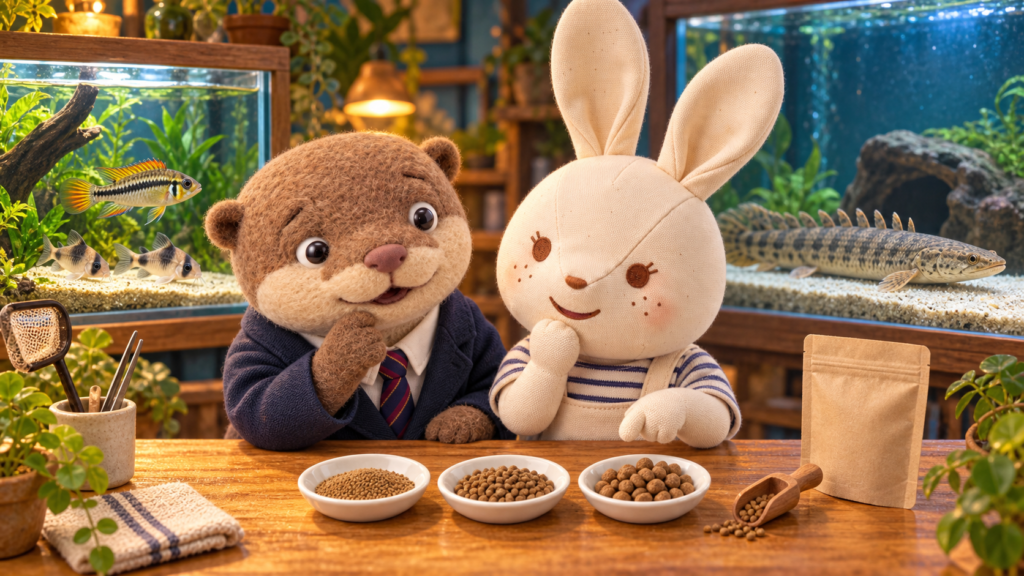 アイのアクアグッズ案内おとひめ物語|養殖生まれの餌を、わが家の魚に合う一粒へ道具の特徴や使い方、選ぶときのポイントをアイが紹介します。記事はコチラ →
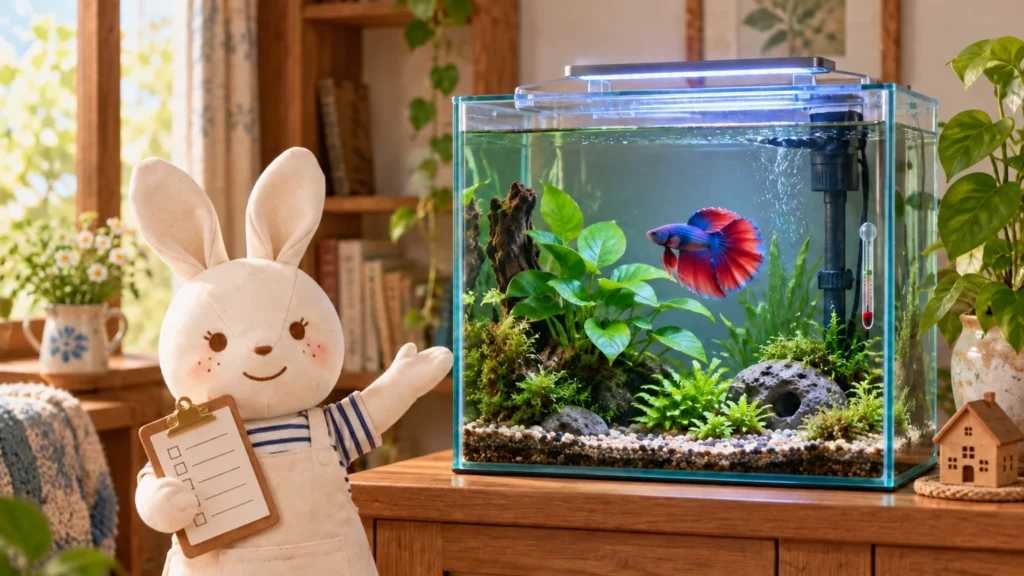 アイのアクアグッズ案内ベタの一匹飼いを楽しむ|水槽・ヒーター・ふた・フィルターの選び方ベタの一匹飼いに向く水槽容量、ふたと空気層、ヒーターと水温計、弱い水流のフィルターを、コタロウとアイの会話で分かりやすく解説します。記事はコチラ →
さまざまな飼育テーマをご紹介。リンク先の記事には広告・商品紹介が含まれます。
案内・紹介記事一覧へ →分布マップ
ルリホシスズメダイは、紅海・東アフリカからマーシャル諸島・ソシエティ諸島方面までのインド太平洋に広く分布し、北は琉球列島、南はオーストラリア周辺まで記録されています。
この地図のプロットは、分布イメージを示すための概略代表地点です。実際の採集地点や厳密な生息範囲を示すものではありません。
参考文献・参照資料
この記事では、店舗・通販サイト・個人ブログ・まとめサイトを参考文献から除外し、分類、分布、生息環境、飼育条件、繁殖、病気や注意点を確認しやすい学術データベース、研究論文、公的・専門機関の資料を中心に選定しています。
-
World Register of Marine Species (WoRMS). Stegastes lacrymatus (Quoy & Gaimard, 1825).
有効学名、原記載名、旧学名・シノニム、日本語名・英名、海産種であることの確認に使用。
https://www.marinespecies.org/aphia.php?p=taxdetails&id=1551095 -
Eschmeyer’s Catalog of Fishes, California Academy of Sciences. Stegastes lacrymatus related catalog entry.
現在の分類上の扱い、PomacentridaeおよびMicrospathodontinaeの確認、旧分類名との関係整理に使用。
https://researcharchive.calacademy.org/research/ichthyology/catalog/fishcatget.asp?spid=39361 -
Froese, R. and Pauly, D. (eds.). FishBase. Stegastes lacrymatus, Whitespotted devil.
分布、最大体長、サンゴ礁性・水深、礁湖や外洋側リーフでの生息環境、底生藻類を中心とした食性、底生卵と雄の保護行動、観賞魚としての流通区分の確認に使用。
https://www.fishbase.se/summary/Stegastes-lacrymatus.html -
Reef Life Survey. Stegastes lacrymatus – White-spotted devil.
熱帯インド太平洋での分布、水温レンジ、水深、岩礁・サンゴ礁周辺での観察情報、成長に伴う体色や強い縄張り防衛の補足確認に使用。
https://reeflifesurvey.com/species/stegastes-lacrymatus/ -
McCord, C. L. et al. (2021). Phylogeny of the damselfishes (Pomacentridae) and patterns of asymmetrical diversification in body size and feeding ecology. PLOS ONE, 16(10): e0258889.
スズメダイ科全体の分子系統、サンゴ礁魚類としての位置づけ、強い縄張り性や藻類をめぐる行動を含むスズメダイ類の生態的背景の確認に使用。
https://journals.plos.org/plosone/article?id=10.1371/journal.pone.0258889 -
Tang, K. L. et al. (2021). Systematics of Damselfishes. Ichthyology & Herpetology, 109(1): 258-318.
近年のスズメダイ科分類体系の見直し、属や亜科レベルの整理、旧学名から現在の扱いへ読み替える際の補助資料として使用。
https://bioone.org/journals/ichthyology-and-herpetology/volume-109/issue-1/i2020105/Systematics-of-Damselfishes/10.1643/i2020105.full -
Merck Veterinary Manual. Parasitic Diseases of Fish.
観賞魚で問題になりやすい外部寄生虫症、海水魚の白点病に類似する症状、病魚の観察・隔離・感染拡大防止の考え方を支える資料として使用。
https://www.merckvetmanual.com/exotic-and-laboratory-animals/aquarium-fish/parasitic-diseases-of-fish -
Yanong, R. P. E. University of Florida IFAS Extension. Cryptocaryon irritans Infections (Marine White Spot Disease) in Fish.
海水魚の白点病、発症時の注意点、海水魚飼育や養殖で重要な寄生虫症としての位置づけ、隔離観察の必要性を補強する資料として使用。
https://ask.ifas.ufl.edu/publication/FA164
確認日:2026年7月9日。リンク先の分類体系やデータベース表示は更新される場合があります。





コメント