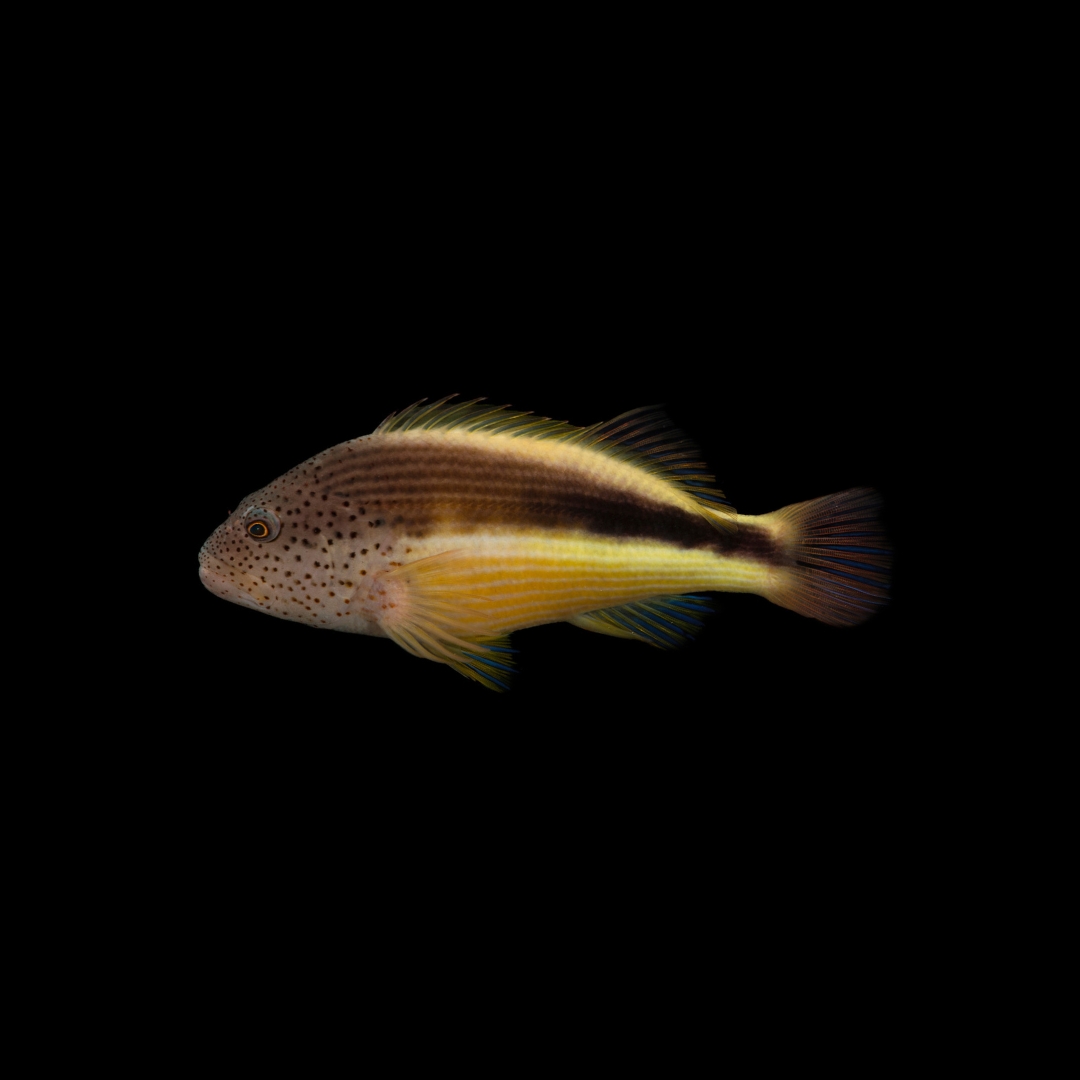
ホシゴンベは、頭部から体の前半にかけて散る赤褐色の小斑点が印象的なゴンベ科の海水魚です。サンゴやライブロックの上にちょこんと止まり、周囲を見渡しながら小型甲殻類や小魚を狙う待ち伏せ型の生活をしています。丈夫で人工飼料にも慣れやすく、サンゴを直接食べる魚ではないためリーフタンクにも導入しやすい一方、口に入るサイズの魚やエビ類は捕食対象になりやすく、同種や近縁のゴンベ類に対しては強く縄張りを主張します。可愛らしい見た目と、肉食魚としての性質の両方を理解して飼うことが大切です。Forster’s hawkfish is a marine hawkfish recognized by the reddish-brown freckles scattered over its head and front half of the body. It spends much of its time perched on coral branches or live rock, watching its surroundings before lunging at small crustaceans or fish. It is hardy, usually accepts prepared foods readily, and does not directly feed on corals, so it can work well in reef aquariums. However, small fish and ornamental shrimps may be treated as prey, and it can be territorial toward its own species and related hawkfishes. Successful care depends on respecting both its charming personality and its predatory nature.
ゴンベ科、ホシゴンベ属。従来は広義のスズキ目として扱われることが多い魚ですが、近年のデータベースではCentrarchiformesに置かれる場合もあります。Family Cirrhitidae, genus Paracirrhites. It has often been treated within a broad perciform grouping, while some modern databases place it in Centrarchiformes.
紅海・アフリカ東岸からインド洋、東南アジア、日本南部、オーストラリア、ニューカレドニア、ハワイ・ライン諸島・マルキーズ諸島方面までのインド太平洋。日本では南日本のサンゴ礁・岩礁域で見られます。Widely distributed in the Indo-Pacific, from the Red Sea and East Africa across the Indian Ocean and Southeast Asia to southern Japan, Australia, New Caledonia, and the Hawaiian, Line, and Marquesas Islands. In Japan, it occurs in coral and rocky reef habitats of the warmer southern regions.
最大体長 / Max Size
約22cm前後。販売個体は7〜15cm前後が多く、成長後の体格を見越した水槽選びが必要です。Around 22 cm. Aquarium specimens are commonly sold at about 7–15 cm, but tank planning should account for adult size.
寿命 / Lifespan
明確な標準寿命の公開データは限られますが、適切な環境では数年以上の長期飼育が期待できます。Reliable published lifespan data are limited, but with stable husbandry it can be expected to live for several years or longer in captivity.
飼育環境 / Aquarium Environment
水槽サイズ / Tank Size
単独飼育の小さな若魚なら60cm規格水槽から検討できますが、長期飼育や混泳を考えるなら90cm規格水槽以上が安心です。成魚は存在感のある中型魚になるため、体長だけでなく縄張りの広さも考えて水槽を選びます。A small juvenile kept alone may be considered for a standard 60 cm tank, but a standard 90 cm tank or larger is recommended for long-term care or community setups. Adults become substantial medium-sized fish, so tank choice should reflect territorial space as well as body length.
水温 / Temperature
24〜27℃前後を目安に安定させます。夏場は水槽用クーラー、冬場はヒーターを用い、急な温度変化を避けます。Keep the temperature stable at around 24–27°C. Use an aquarium chiller in summer and a heater in winter to avoid sudden temperature swings.
水質 / Water Quality
一般的な海水魚が飼育できる安定した海水環境を保ちます。比重は1.023〜1.025前後、pHは8.0〜8.4前後を目安にし、硝酸塩の蓄積を抑えるため定期換水と十分なろ過を行います。肉食性で餌をよく食べるため、プロテインスキマーの併用も有効です。Maintain stable marine aquarium conditions suitable for reef-associated marine fishes. As a guide, keep specific gravity around 1.023–1.025 and pH around 8.0–8.4, with regular water changes and adequate filtration to control nitrate buildup. Because it is a heavy-feeding carnivore, a protein skimmer is also useful.
レイアウト / Layout
遊泳スペースだけでなく、ライブロック、枝状の岩組み、サンゴ骨格風の構造物など、止まり木になる場所を複数用意します。高低差のあるレイアウトにすると、見張り台のような定位置を選びやすく、ストレス軽減にもつながります。底砂は必須ではありません。Provide several perching sites using live rock, branching rockwork, or coral-skeleton-like structures, rather than leaving only open swimming space. A layout with different heights allows the fish to choose lookout points and helps reduce stress. Sand is not essential for this species.
注意点 / Precautions
餌や物音に反応して急に水面へ飛び出すことがあるため、フタやメッシュカバーで隙間をなくします。サンゴを食害する魚ではありませんが、サンゴの上に止まることでポリプが一時的に閉じることがあります。It may jump suddenly toward food or when startled, so use a tight lid or mesh cover with no gaps. It does not feed on corals, but polyps may temporarily close when the fish perches on them.
餌と給餌 / Feeding
餌の種類 / Diet
肉食性です。主食は海水魚用の沈下性またはゆっくり沈む粒状人工飼料が扱いやすく、補助的に冷凍ブラインシュリンプ、イサザアミ、ホワイトシュリンプ、細かくしたクリルなどを与えるとコンディション維持に役立ちます。This is a carnivorous fish. Sinking or slow-sinking marine fish pellets are convenient as a staple diet, supplemented with frozen brine shrimp, mysid-type foods, white shrimp, or chopped krill to maintain condition.
給餌のポイント / Feeding Tips
1日1〜2回、食べ切れる量を与えます。餌への反応が速く、混泳魚の餌を横取りしやすいため、他魚が食べる場所とホシゴンベの定位置の両方に餌を散らす、またはピンセットで狙って与えると管理しやすくなります。食べ残しは水質悪化につながるため、過給餌は避けます。Feed once or twice daily, offering only what can be eaten promptly. It reacts quickly to food and may steal from tank mates, so distribute food both near other fish and near the hawkfish’s perch, or target-feed with tweezers. Avoid overfeeding because leftovers quickly degrade water quality.
性格と混泳 / Temperament and Tank Mates
性格 / Temperament
人前に出やすく、岩の上から水槽内を観察するような行動が魅力です。一方で、自然界では待ち伏せ型の捕食者であり、縄張り意識もあります。見た目の愛嬌に反して、混泳相手の選定には慎重さが必要です。It is often visible and engaging, watching the aquarium from a perch. However, in nature it is a sit-and-wait predator with territorial tendencies. Despite its charming appearance, tank mate selection requires care.
混泳の相性 / Compatibility
同種同士や近縁のゴンベ類との混泳は、十分に大きな水槽と逃げ場がない限り避けるのが無難です。ヤッコ類、ハギ類、ある程度大きなスズメダイ類など、口に入らず遊泳層が異なる魚とは成立しやすい傾向があります。小型ハゼ、ネズッポ類、幼魚、小型エビ、サンゴヤドカリなどは捕食される可能性が高いため同居に向きません。Keeping more than one of this species, or mixing it with related hawkfishes, is best avoided unless the aquarium is very large with ample retreats. It is more likely to coexist with fish too large to swallow and occupying different swimming zones, such as many angelfishes, tangs, or larger damselfishes. Small gobies, dragonets, juvenile fish, ornamental shrimps, and small hermit crabs may be eaten and are poor companions.
病気と対策 / Diseases and Prevention
かかりやすい病気 / Common Diseases
丈夫な魚ですが、輸送直後や水質悪化時には白点病、ウーディニウム病、擦れ傷からの細菌感染、拒食などが起こることがあります。特に導入直後は体表、呼吸の速さ、餌食いをよく観察します。It is a hardy species, but after shipping or under poor water quality it may develop marine ich, marine velvet, bacterial infections from abrasions, or loss of appetite. Closely observe the skin, breathing rate, and feeding response after introduction.
対策と予防 / Prevention
新規導入魚は可能であれば隔離水槽で観察し、温度合わせと水合わせを丁寧に行います。リーフタンク本水槽では銅系薬剤はサンゴや甲殻類に強い影響を与えるため使用しません。魚病治療で銅を用いる場合は必ず隔離水槽で濃度を測定し、魚の呼吸、粘膜、餌食いを見ながら慎重に扱います。確信が持てない場合は、無理に本水槽で薬浴せず、隔離・淡水浴・低比重療法なども含めて経験者や専門店に相談します。Quarantine new arrivals when possible, and acclimate temperature and salinity carefully. Copper medications should not be used in a reef display because they are harmful to corals and crustaceans. If copper is used for fish disease treatment, it must be in a separate hospital tank with measured concentration, while monitoring breathing, mucus condition, and appetite. When uncertain, avoid medicating the display tank and consult an experienced aquarist or specialist shop about quarantine, freshwater dips, or hyposalinity where appropriate.
増やし方(繁殖) / Breeding
雌雄の判別 / Sexing
外見だけでの確実な雌雄判別は難しい魚です。野外では大型個体が雄としてハレムを持つことがありますが、体色差だけで性別を決めることはできません。Reliable sexing by appearance alone is difficult. In the wild, larger individuals may function as harem males, but sex should not be determined by color alone.
繁殖形態 / Reproduction
雌から雄へ性転換する雌性先熟の性質が知られ、野外では大型雄が複数の雌と関わるハレム型の繁殖行動が報告されています。また、ホシゴンベでは小型雄の存在や、条件によって雄から雌へ戻る双方向の性転換も研究されています。It is known as a protogynous species, with individuals capable of changing from female to male, and field studies have reported haremic reproduction involving a large male and several females. Research on this species has also examined small males and bidirectional sex change under particular social conditions.
繁殖のポイント / Breeding Tips
一般家庭の水槽で繁殖から稚魚育成まで成功させるのは非常に難しい部類です。十分な広さ、安定したペアまたは群れの形成、日没前後の産卵行動を妨げない環境、浮遊性の仔魚に対応する初期餌料と育成設備が必要になります。通常の飼育では観察対象として繁殖生態を楽しむ魚と考えるのが現実的です。Completing breeding and larval rearing in a home aquarium is very difficult. It would require ample space, a stable pair or social group, conditions that do not disturb dusk spawning behavior, and specialized larval foods and rearing equipment for pelagic larvae. In ordinary aquariums, its breeding biology is best appreciated as a natural history topic rather than an expected captive-breeding project.
雑学と豆知識 / Trivia and Fun Facts
1. 「ホシ」と「ゴンベ」という名前 / 1. The Meaning of the Japanese Name
ホシゴンベの「ホシ」は、頭部から体の前半にかけて散る小斑点を星に見立てた呼び名です。「ゴンベ」はゴンベ科魚類に広く使われる呼び名で、背びれの棘の先に小さな糸状の皮弁を持つ仲間が多いことと関係すると説明されます。岩やサンゴの上に腰を据えるように止まる姿も、どこか親しみやすい雰囲気を与えています。The Japanese name Hoshigonbe can be read as “star hawkfish,” referring to the star-like freckles on the head and front body. Gonbe is a Japanese name applied to hawkfishes, often explained in relation to the small cirri on the tips of the dorsal-fin spines. Its habit of sitting firmly on rocks or corals also gives it a friendly, characterful impression.
2. 学名に残る太平洋探検の記憶 / 2. A Scientific Name Linked to Pacific Exploration
本種は1801年にGrammistes forsteriとして記載され、現在はParacirrhites forsteriとして扱われます。種小名forsteriは、ジェームズ・クックの第2回太平洋航海に同行した博物学者ヨハン・ラインホルト・フォルスターにちなむものです。タイプ産地はマルキーズ諸島タフアタ島のヴァイタフとされ、1匹の観賞魚の名前の中に、18世紀の航海と博物学の歴史が残されています。The species was described in 1801 as Grammistes forsteri and is now treated as Paracirrhites forsteri. The specific name forsteri honors the naturalist Johann Reinhold Forster, who accompanied James Cook’s second Pacific voyage. The type locality is Vaitahu on Tahuata Island in the Marquesas, preserving a link between this aquarium fish and the history of eighteenth-century exploration and natural history.
3. 色彩多型と「同じ種類なのに違う姿」 / 3. Color Morphs Within One Species
ホシゴンベは成長や地域によって体色が大きく変わる魚です。紅海の研究では、同じ海域に複数の色彩型が同所的に見られ、体色差が性別だけでは説明できないことが示されています。研究では、色彩型ごとの微妙な生息場所の違いや、低レベルの遺伝的分化が議論されており、サンゴ礁で多様な姿が維持される仕組みを考えるうえで興味深い題材になっています。Forster’s hawkfish can vary markedly in color with growth and geography. Studies in the Red Sea have shown several color morphs living together in the same region, and the differences cannot be explained simply by sex. Research has discussed subtle habitat differences and low-level genetic structure among morphs, making the species a fascinating example for understanding how visual diversity is maintained on coral reefs.
4. 浮き袋を持たない止まり木生活 / 4. A Perching Lifestyle Without a Swim Bladder
ゴンベ類の成魚は浮き袋を欠くことで知られ、ホシゴンベも常に中層を泳ぎ続ける魚ではありません。その代わり、硬く発達した胸びれを使ってサンゴや岩の上に体を支えます。水槽内でライブロックの上に座るように止まり、目だけを動かして周囲をうかがう姿は、この体のつくりと生態がそのまま現れた行動です。Adult hawkfishes are known for lacking a swim bladder, and Forster’s hawkfish is not a fish that constantly cruises in open water. Instead, it uses strong pectoral fins to support itself on corals and rocks. In aquariums, the familiar pose of sitting on live rock and scanning the surroundings is a direct expression of this anatomy and ecology.
5. 性を変えるサンゴ礁の戦略家 / 5. A Sex-Changing Strategist of Coral Reefs
ホシゴンベの繁殖研究では、雌から雄への性転換に加え、社会環境によって雄から雌へ戻る双方向の性転換も報告されています。サンゴ礁では、相手に出会える確率や縄張りの状況が繁殖成功を大きく左右します。性を固定せず、社会環境に応じて繁殖上の役割を変えられることは、広い海で次世代を残すための柔軟な戦略と考えられています。Research on this species has reported not only female-to-male sex change but also bidirectional sex change under certain social conditions. On coral reefs, the chance of encountering mates and the structure of territories can strongly affect reproductive success. The ability to shift reproductive roles in response to social conditions is considered a flexible strategy for leaving offspring in a complex reef environment.
6. 国内市場での位置づけ / 6. Place in the Japanese Aquarium Trade
ホシゴンベは日本の海水魚店やオンラインショップで比較的見かける機会のあるゴンベ類です。価格はサイズ、産地、入荷時期、餌付きやトリートメント状況によって変動しますが、海水観賞魚としては導入しやすい価格帯で販売されることが多い魚です。ただし、安価で丈夫だからといって小型水槽に安易に入れるのではなく、成長後の体格、飛び出し、捕食性を見越して計画することが長期飼育の近道です。Forster’s hawkfish is a hawkfish that appears fairly regularly in Japanese marine fish shops and online stores. Prices vary with size, origin, season, feeding response, and conditioning, but it is often sold in a relatively accessible price range for a marine ornamental fish. Still, being hardy and affordable does not mean it should be placed casually in a small aquarium; long-term success depends on planning for adult size, jumping risk, and predatory behavior.
まとめ / Conclusion
ホシゴンベは、星のような斑点、サンゴの上に止まる独特の姿、そして個体ごとに変化のある体色が魅力の海水魚です。丈夫で人工飼料に慣れやすく、サンゴを直接食害しないため、条件が合えばリーフタンクでも楽しみやすい種類です。Forster’s hawkfish is an appealing marine fish with star-like freckles, a distinctive perching posture, and variable coloration. It is hardy, usually adapts well to prepared foods, and does not directly feed on corals, making it enjoyable in suitable reef aquariums.
一方で、本種は可愛いだけの小型魚ではなく、成長すると約22cmに達する待ち伏せ型の肉食魚です。小型魚やエビ類との混泳、同種・近縁種との縄張り争い、飛び出し事故には十分注意しましょう。90cm規格水槽以上を基本に、止まり木となる岩組み、安定した水質、適切な混泳相手を整えれば、長く付き合える個性豊かな海水魚になります。At the same time, it is not merely a cute small fish; it is a sit-and-wait carnivore that can reach about 22 cm. Pay close attention to predation on small fish and shrimps, territorial conflict with its own kind or related hawkfishes, and jumping accidents. With a standard 90 cm tank or larger, perching structures, stable water quality, and carefully chosen tank mates, it can become a long-lived and characterful marine aquarium resident.
Coker, D. J., Chaidez, V., & Berumen, M. L. 2017. “Habitat Use and Spatial Variability of Hawkfishes with a Focus on Colour Polymorphism in Paracirrhites forsteri.” PLOS ONE 12(1): e0169079. https://journals.plos.org/plosone/article?id=10.1371/journal.pone.0169079 主な裏付け範囲:紅海での生息環境利用、ホシゴンベの色彩多型、モルフ間の生態的差異に関する記述。
Kadota, T., Sakai, Y., Hashimoto, H., & Gushima, K. 2010. “Diel and lunar spawning periodicity of the hawkfish Paracirrhites forsteri (Cirrhitidae) on the reefs of Kuchierabu-jima Island, southern Japan.” Ichthyological Research 57: 102–106. https://link.springer.com/article/10.1007/s10228-009-0124-z 主な裏付け範囲:南日本の口永良部島で観察された産卵時刻、月齢周期、日没後の産卵行動。
Kadota, T., & Sakai, Y. 2016. “Mating system of the freckled hawkfish, Paracirrhites forsteri (Cirrhitidae) on Kuchierabu-jima Island reefs, southern Japan.” Environmental Biology of Fishes 99: 761–769. https://doi.org/10.1007/s10641-016-0520-y 主な裏付け範囲:ハレム型の配偶システム、雄の縄張り、雌の行動、ホシゴンベの繁殖生態。
Kadota, T., Osato, J., Hashimoto, H., & Sakai, Y. 2012. “Reversed Sex Change in the Haremic Protogynous Hawkfish Cirrhitichthys falco in Natural Conditions.” Ethology 118(3): 226–234. https://doi.org/10.1111/j.1439-0310.2011.02005.x 主な裏付け範囲:ゴンベ科近縁種における双方向の性転換。ホシゴンベそのものの直接データではないため、記事中では「ゴンベ科魚類の研究例」として扱うのが適切です。
Yanong, R. P. E. 2021. “Cryptocaryon irritans Infections (Marine White Spot Disease) in Fish.” University of Florida IFAS Extension. https://edis.ifas.ufl.edu/publication/FA164 主な裏付け範囲:海水魚の白点病、隔離治療、銅治療、低比重療法の有効性と限界、予防管理。



 アイのアクアグッズ案内水草水槽のCO₂添加|3つの方式の選び方とおすすめ用品道具の特徴や使い方、選ぶときのポイントをアイが紹介します。記事はコチラ →
 アイのアクアグッズ案内水草トリミングの道具とやり方|ハサミ・ピンセットを水草に合わせて選ぼう伸びすぎた水草は切っていい? 有茎草の差し戻し、前景草の絨毯、流木のモスを整える場面から、水草用ハサミ・ピンセット・ゴミ取りネットの選び方と片付けを紹介します。記事はコチラ →
 アイのアクアグッズ案内ラスボラ・ボララスの群泳を楽しむ飼育用品|水槽・ろ過・ヒーター・餌・水草道具の特徴や使い方、選ぶときのポイントをアイが紹介します。記事はコチラ →
 アイのアクアグッズ案内水合わせの道具とやり方|魚を迎える前にそろえたい容器・点滴キット・ネット買ってきた魚はすぐ水槽に入れていい? 水温合わせと水合わせの違いから、透明ケース・点滴キット・ネットの選び方、時間をかけすぎない注意点まで、アイとコタロウが紹介します。記事はコチラ →



コメント