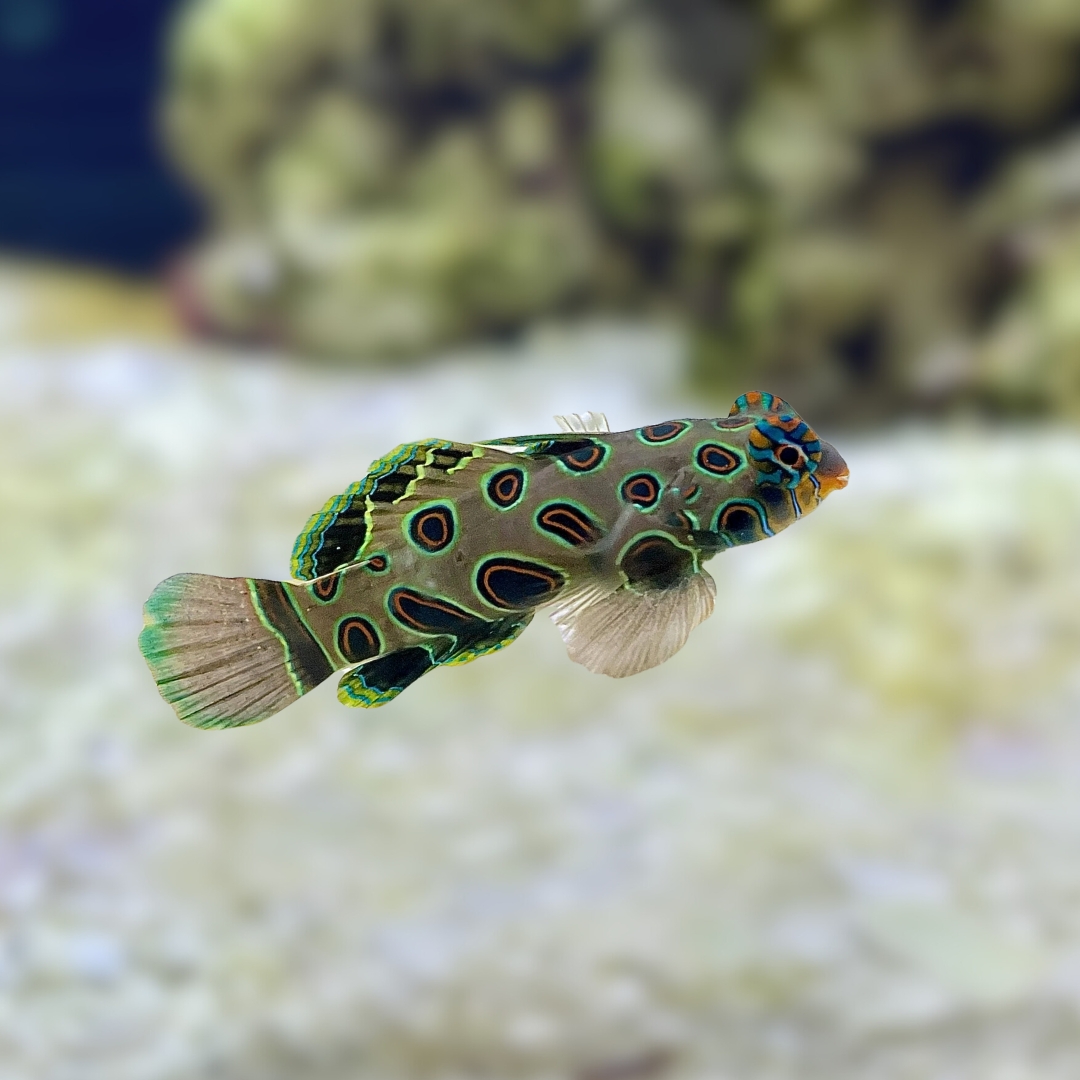
スポテッドマンダリンは、サンゴ礁の岩陰や砂泥底、コーラルラブルの周辺で、微小な底生生物をついばみながら暮らす小型の海水魚です。丸い眼状斑が連なる独特の模様から、英名ではPicturesque dragonetやPsychedelic mandarinなどと呼ばれます。観賞魚として非常に魅力的ですが、餌の要求が特殊なため、飼育は「美しい小型魚を入れる」というよりも、「微小生物が湧く成熟したリーフ環境を用意して迎える」魚と考えるのが安全です。The spotted mandarin is a small marine dragonet that lives around sheltered reef rubble, sandy or muddy bottoms, and crevices while picking at tiny benthic animals. Its round, target-like markings have inspired English names such as picturesque dragonet and psychedelic mandarin. It is a highly attractive aquarium fish, but its feeding needs are specialized. It is best understood not simply as a colorful small fish, but as a species that should be introduced into a mature reef system rich in microfauna.
西部インド太平洋の一部に分布し、フィリピン、東部インドネシア、オーストラリア北西部などから知られます。周辺海域を含めた分布範囲には、資料によって違いがあります。Known from parts of the western Indo-Pacific, including the Philippines, eastern Indonesia, and northwestern Australia. Published range descriptions vary in how broadly they include surrounding areas.
最大体長 / Max Size
約7cm前後。資料によっては6〜8cm程度とされます。Around 7 cm. Some sources describe a range of about 6–8 cm.
寿命 / Lifespan
正確な寿命には幅があります。飼育下では餌の確保、導入時の痩せ、混泳魚との競合に大きく左右され、適切な環境では数年単位の長期飼育が期待できます。Its exact lifespan is variable. In aquariums, longevity depends heavily on food availability, the fish’s condition at introduction, and competition from tank mates. With proper conditions, multi-year care is possible.
飼育環境 / Aquarium Environment
水槽サイズ / Tank Size
体は小さいものの、餌となる微小生物の維持を考えると、総水量100L以上、目安として60cm規格水槽以上を推奨します。より安定を重視するなら90cm規格水槽、オーバーフロー水槽、リフジウムの併設が有利です。小型水槽での単独飼育は、餌付け済み個体を選び、給餌管理に慣れた飼育者向けです。Although the fish is small, maintaining enough microfauna is much easier in a larger system. At least 100 L, roughly a standard 60 cm aquarium or larger, is recommended. A standard 90 cm tank, sump system, and refugium offer more stability. Small single-specimen setups are better suited to experienced keepers using individuals already trained to prepared foods.
水温 / Temperature
24〜27℃前後を目安に安定させます。急激な低温、輸送時の水温低下、短時間での大きな温度変化は避けます。Keep the temperature stable at about 24–27°C. Avoid sudden chilling, transport-related temperature drops, and rapid temperature swings.
水質 / Water Quality
一般的なリーフタンク向けの安定した海水環境が適します。比重は1.023〜1.026、pHは8.1〜8.4前後を目安にし、アンモニアと亜硝酸が検出されない成熟水槽に導入します。硝酸塩やリン酸塩も急上昇させないよう、過密飼育と過剰給餌を避けます。A stable reef-style marine environment is suitable. Aim for a specific gravity of 1.023–1.026 and pH around 8.1–8.4, and introduce the fish only after ammonia and nitrite are undetectable. Avoid overcrowding and overfeeding so nitrate and phosphate do not rise sharply.
レイアウト / Layout
ライブロックを多めに組み、岩陰、クレバス、コーラルラブル状の採餌スペースを作ります。底砂は細目からパウダー状のサンゴ砂が扱いやすく、強すぎる水流は避けます。サンゴ水槽では、魚がゆっくり底面や岩肌を観察しながらついばめる余白を残すとよいでしょう。Use plenty of live rock with caves, crevices, and rubble-like foraging areas. Fine to powder-grade aragonite sand is practical, and overly strong flow should be avoided. In reef aquariums, leave open areas where the fish can slowly inspect and pick at rock surfaces and the substrate.
注意点 / Precautions
最大の注意点は餓死です。ワイルド個体は人工飼料に反応しないことがあり、見た目が元気でも腹部がへこんでいる個体は回復が難しい場合があります。導入前に、ショップで冷凍イサザアミや小粒ペレットへの反応を確認し、可能であれば餌付いたブリード個体を選ぶと失敗を減らせます。The greatest risk is starvation. Wild-caught individuals may ignore prepared foods, and fish with a sunken belly can be difficult to recover even if they appear active. Before purchase, confirm feeding response to frozen mysid shrimp or small pellets, and choose a feeding captive-bred individual when possible.
餌と給餌 / Feeding
餌の種類 / Diet
自然下では小型の底生無脊椎動物を主に食べます。飼育下ではコペポーダ、ヨコエビ類などが湧く成熟したライブロック環境を基本にし、餌付いた個体には冷凍イサザアミ、冷凍ブラインシュリンプ、小粒の肉食魚用ペレットなどを補助的に与えます。In nature it feeds mainly on small benthic invertebrates. In aquariums, a mature live-rock system rich in copepods and small amphipods should form the foundation, with trained individuals also receiving frozen mysid shrimp, frozen brine shrimp, and small carnivore pellets as supplemental foods.
給餌のポイント / Feeding Tips
食べる速度が遅く、泳ぎの速い混泳魚に餌を奪われやすい魚です。給餌時は一時的に水流を弱め、スポイトで目の前に餌を落とすと食べやすくなります。リフジウムや別容器でTisbe属、Apocyclops属、Tigriopus属などのコペポーダを維持できると、日常的な採餌の助けになります。This fish feeds slowly and is easily outcompeted by fast tank mates. Temporarily reducing flow and using a pipette to place food in front of it can help. Maintaining copepods such as Tisbe, Apocyclops, and Tigriopus in a refugium or separate culture can support daily foraging.
性格と混泳 / Temperament and Tank Mates
性格 / Temperament
性格は温和で、サンゴのポリプを積極的に食害する魚ではないため、リーフタンク向きです。一方で、オス同士は背鰭を広げて威嚇し、閉鎖的な水槽内では激しい争いになることがあるため、複数のオスを同居させるのは避けます。It is peaceful and does not normally damage coral polyps, making it suitable for reef aquariums. However, males may display with raised dorsal fins and can fight intensely in confined aquariums, so keeping multiple males together should be avoided.
混泳の相性 / Compatibility
小型で温和なハゼ類、カクレクマノミ類、穏やかな小型魚とは比較的相性がよいです。スズメダイ類、気の強いベラ類、餌取りの速い魚との混泳では、スポテッドマンダリンが十分に食べられないことがあります。ペア飼育を狙う場合は雌雄を確実に選び、採餌場所を広く用意します。It usually does well with peaceful small fishes such as gobies, clownfish, and other calm reef species. Damsels, aggressive wrasses, and very fast feeders may prevent it from eating enough. If keeping a pair, choose a confirmed male and female and provide broad foraging areas.
病気と対策 / Diseases and Prevention
かかりやすい病気 / Common Diseases
鱗を持たず、粘液層に守られた体表をしています。外部寄生虫が付きにくいとされることもありますが、白点病やウーディニウム病に絶対にかからないわけではありません。特に輸送ストレス、急な水温低下、栄養不足、痩せが重なると状態を崩しやすくなります。It has a scaleless body protected by a mucus coat. Although it is sometimes considered less prone to external parasite attachment, it is not immune to marine ich or velvet. Transport stress, sudden chilling, malnutrition, and emaciation can quickly weaken it.
対策と予防 / Prevention
導入前に十分に立ち上がった水槽を用意し、温度と比重を急変させないよう慎重に水合わせします。薬浴が必要な場合は、鱗のない魚であることを考慮し、薬剤の種類と濃度に注意します。予防としては、健康な個体選び、隔離観察、餌不足を起こさない環境づくりが最も重要です。Prepare a fully matured aquarium before introduction and acclimate carefully to avoid sudden changes in temperature or salinity. If medication is required, pay close attention to drug choice and dosage because this is a scaleless fish. The best prevention is selecting a healthy specimen, observing it in quarantine, and preventing chronic food shortage.
増やし方(繁殖) / Breeding
雌雄の判別 / Sexing
オスは第1背鰭の棘条が長く伸び、ディスプレイ時に非常に目立ちます。メスは背鰭が短めで、成熟した個体では腹部がやや丸く見えることがあります。Males have a noticeably elongated first dorsal fin spine, which becomes very conspicuous during display. Females have a shorter dorsal fin and mature individuals may appear slightly rounder in the abdomen.
繁殖形態 / Reproduction
夕方から日没後にかけてペアが上昇し、浮遊性の卵と精子を水中に放出する外部受精を行います。親が卵や仔魚を保護する習性はありません。Around dusk, a pair rises into the water column and releases pelagic eggs and sperm for external fertilization. The parents do not guard the eggs or larvae.
繁殖のポイント / Breeding Tips
水槽内で産卵行動が観察されることはありますが、仔魚は非常に小さく、初期飼料と育成環境の確保が難しいため、一般家庭での繁殖育成は高度です。安定したペア、良好な栄養状態、日没前後の落ち着いた環境が前提になります。Spawning behavior may be observed in aquariums, but the larvae are extremely small and require specialized first foods and rearing conditions, making home rearing difficult. A stable pair, excellent nutrition, and calm dusk conditions are important prerequisites.
雑学と豆知識 / Trivia and Fun Facts
1. 学名に込められた「描かれた魚」という印象 / 1. A fish whose name suggests “painted” beauty
種小名のpicturatusは、ラテン語で「描かれた」という意味に由来します。体に並ぶ丸い斑紋は、自然の模様でありながら、まるで筆で一つひとつ描き込まれた装飾のようです。派手なだけでなく、岩陰やサンゴ片、石灰藻が入り混じる環境では、体の輪郭を分かりにくくする働きもあると考えられます。The species name picturatus is derived from Latin for “painted.” Its round markings look like decorations carefully added with a brush. Beyond their beauty, these patterns may also help break up the body outline among rubble, coralline algae, and shadowed reef crevices.
2. 青色素胞という珍しい発色のしくみ / 2. Cyanophores and an unusual way to make blue
多くの脊椎動物の青色は、細かな構造が光を反射・散乱することで見える構造色です。しかしスポテッドマンダリンや近縁のニシキテグリでは、青色の細胞内小器官を含む青色素胞が報告されています。青い模様は単なる光のいたずらではなく、色素細胞の進化を考えるうえで非常に興味深い特徴です。In many vertebrates, blue is produced by structural coloration, where microscopic structures reflect or scatter light. In the spotted mandarin and close relatives, however, cyanophores containing blue pigmentary organelles have been reported. Its blue markings are therefore especially interesting for understanding the evolution of pigment cells.
3. 安い魚ほど、実は準備が高くつくことがある / 3. An inexpensive fish can require an expensive setup
スポテッドマンダリンは国内でも比較的手に取りやすい価格で流通することがあります。しかし本当に必要なのは、生体価格よりも、成熟したライブロック、安定したリーフタンク、リフジウム、継続的な餌の確保です。魚そのものは小さくても、成功の鍵は水槽全体の生態系にあります。The spotted mandarin may sometimes be sold at a relatively approachable price, but the real requirement is not the price of the fish. Mature live rock, a stable reef system, a refugium, and a continuing food supply are what matter most. The fish is small, but success depends on the whole aquarium ecosystem.
4. ヒラムシ対策としては「補助役」と考える / 4. Think of it as a helper, not a guaranteed flatworm solution
リーフタンクでは、スポテッドマンダリンがヒラムシをついばむことがあります。ただし、すべての個体が必ず積極的に食べるわけではなく、即効性のある駆除魚として扱うのは危険です。サンゴにやさしい穏やかな補助役として期待しつつ、餌不足にならない環境づくりを優先するのが現実的です。In reef aquariums, spotted mandarins may pick at flatworms. However, not every individual will actively eat them, and it should not be treated as a guaranteed rapid control fish. It is more realistic to view it as a gentle coral-safe helper while prioritizing an environment where it will not starve.
5. ブリード個体が飼育の入口を広げている / 5. Captive-bred fish are widening the doorway into keeping this species
近年は人工繁殖個体も流通し、冷凍餌や人工飼料に慣れている個体を選びやすくなっています。価格はワイルド個体より高くなりがちですが、餓死のリスクを下げ、野生個体への採集圧を抑えるという点で価値があります。初めて本種に挑戦するほど、餌付いた個体を選ぶ意味は大きいでしょう。Captive-bred individuals have become available, making it easier to choose fish already accustomed to frozen or prepared foods. They often cost more than wild-caught specimens, but they can reduce starvation risk and help lower collection pressure on wild populations. For first-time keepers, choosing a feeding individual is especially important.
まとめ / Conclusion
スポテッドマンダリンは、極彩色の見た目、ゆっくりとした動き、リーフタンクとの相性のよさを持つ、とても魅力的な海水魚です。一方で、普通の小型魚のように「朝夕に人工飼料を与えればよい」と考えると失敗しやすく、常に微小な底生生物を探し続けるマイクロプレデターとして理解する必要があります。The spotted mandarin is a fascinating marine fish with brilliant colors, gentle movements, and excellent reef compatibility. However, it should not be kept like an ordinary small fish that simply receives prepared food once or twice a day. It must be understood as a micro-predator that naturally spends much of its time searching for tiny benthic animals.
長期飼育を目指すなら、成熟したライブロック、穏やかな混泳環境、継続的なコペポーダ供給、そして可能であれば餌付いたブリード個体の選択が大切です。美しさだけで選ばず、生態に合った準備を整えて迎えることで、スポテッドマンダリンは水槽の中で小さな宝石のような存在になってくれます。For long-term success, provide mature live rock, peaceful tank mates, a continuing supply of copepods, and, when possible, choose a captive-bred individual already accepting prepared foods. When it is selected not only for its beauty but also with its ecology in mind, the spotted mandarin can become a jewel-like presence in the aquarium.
Goda, M. and Fujii, R. (1995). Blue Chromatophores in Two Species of Callionymid Fish. Zoological Science, 12, 811–813. スポテッドマンダリンおよび近縁種の青色が、一般的な構造色ではなく青色素胞に由来するという解説の根拠として使用。 https://doi.org/10.2108/zsj.12.811
Sadovy, Y., Mitcheson, G. and Rasotto, M. B. (2001). Early Development of the Mandarinfish, Synchiropus splendidus (Callionymidae), with notes on its Fishery and Potential for Culture. Aquarium Sciences and Conservation, 3, 253–263. 同属のニシキテグリに関する査読研究。夕刻の浮遊卵産卵、初期発生、飼育下維持の難しさ、養殖可能性を説明する近縁種資料として参照。スポテッドマンダリン固有の数値へ直接転用しないよう注意して使用。 https://doi.org/10.1023/A:1013168029479
Yanong, R. P. E. Cryptocaryon irritans Infections (Marine White Spot Disease) in Fish. University of Florida IFAS Extension. 海水魚の白点病であるCryptocaryon irritansの原因、症状、予防、治療・隔離管理に関する疾病面の根拠として使用。 https://ask.ifas.ufl.edu/publication/FA164
Leis, J. M. and Rennis, D. S. (1983). The Larvae of Indo-Pacific Coral Reef Fishes. University of Hawaii Press. インド太平洋のサンゴ礁魚類の仔魚・浮遊生活史を理解するための基礎文献として参照。記事中の仔魚期や浮遊卵に関する一般的背景を補強。
Kailola, P. J. (1987). The fishes of Papua New Guinea: a revised and annotated checklist. Vol. II. Research Bulletin No. 41, Department of Fisheries and Marine Resources, Papua New Guinea. FishBaseが主要参照として挙げる地域魚類相資料。分布・分類・地域記録の補助資料として選定。



 アイのアクアグッズ案内水草用ソイルの選び方|土・砂の違いとおすすめ商品道具の特徴や使い方、選ぶときのポイントをアイが紹介します。記事はコチラ →
 アイのアクアグッズ案内カルキ抜き・水質調整剤の選び方|水換えと水槽の種類に合わせて選ぶ道具の特徴や使い方、選ぶときのポイントをアイが紹介します。記事はコチラ →
 アイのアクアグッズ案内お魚を撮ったのに、ボクが写ってる! スマホで楽しむ水槽撮影と便利な道具道具の特徴や使い方、選ぶときのポイントをアイが紹介します。記事はコチラ →
 アイのアクアグッズ案内海水魚初心者の必需品|水槽・人工海水・比重計・水質検査道具の特徴や使い方、選ぶときのポイントをアイが紹介します。記事はコチラ →



コメント