
解説 / Description
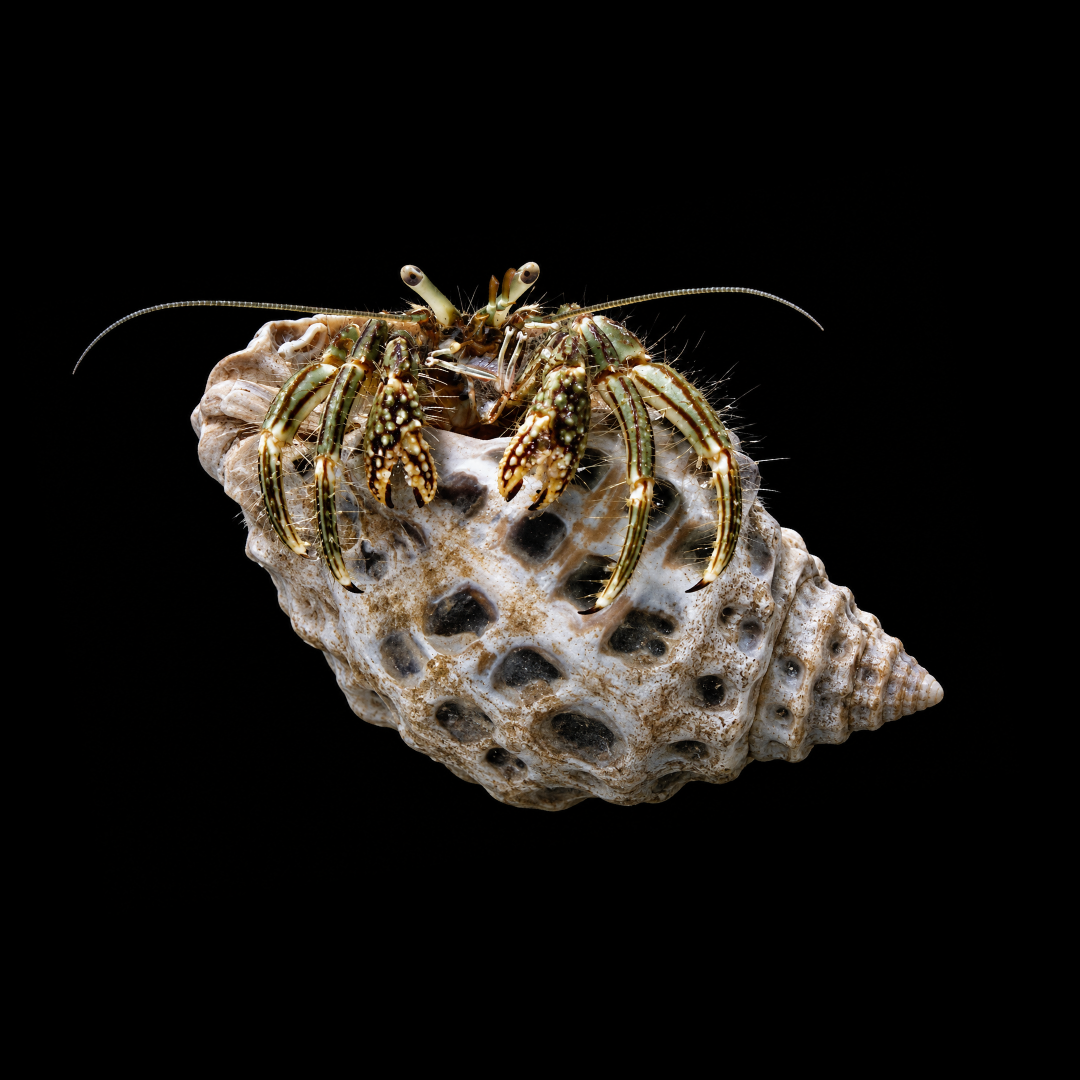
タテジマヨコバサミは、歩くための脚に走る縦縞が特徴の海産ヤドカリです。インド太平洋の暖かな浅海に暮らし、砂泥底などで藻類や有機物のかけらを拾って食べています。巻貝の空き殻を背負い、触角を動かしながら底を探る姿には、小さな生き物ならではの愛らしさがあります。海水水槽では残餌や付着藻類を食べるお掃除役として親しまれますが、ほかの生体と同じように、十分な餌と適切な住まいが必要です。安定した海水環境と、体に合う引っ越し用の貝殻を用意することが、落ち着いた暮らしにつながります。 Clibanarius striolatus is a marine hermit crab characterized by longitudinal stripes on its walking legs. It inhabits warm, shallow waters of the Indo-Pacific, picking algae and organic particles from sandy or muddy bottoms. Its movements are engaging to watch as it carries a borrowed shell and explores with its antennae. In marine aquariums, it is appreciated for eating leftover food and some attached algae, but it needs adequate food and suitable housing just like any other animal. Stable seawater and suitable replacement shells help provide a secure environment.
基本情報 / Basic Information
| 学名 / Scientific Name | Clibanarius striolatus Dana, 1852 |
|---|---|
| 通称 / Common Name | タテジマヨコバサミ。販売時には、ほかの種類とまとめて「海水ヤドカリ」「ヤドカリ」と表示されることもあります。Ribbed hermit crab; sometimes sold with other species under general labels such as marine hermit crab. |
| 分類 / Family | 節足動物門・甲殻亜門・軟甲綱・十脚目・異尾下目・ヤドカリ科・ヨコバサミ属。Arthropoda; Crustacea; Malacostraca; Decapoda; Anomura; family Diogenidae; genus Clibanarius. |
| 英名 / English Name | Ribbed hermit crab, Dana’s hermit crab |
| 分布 / Distribution | インド太平洋の熱帯・亜熱帯沿岸。国内では南西諸島を中心に、南紀や高知などでも確認されています。伊豆諸島の式根島からも成熟個体が記録され、その海域で繁殖できる可能性が示されています。ただし、その記録だけで、世代を重ねて定着しているとまでは判断できません。Tropical and subtropical coasts of the Indo-Pacific. In Japan, it occurs mainly in the Ryukyu Islands, with records from southern Wakayama and Kochi. Mature specimens have also been recorded on Shikine Island in the Izu Islands, suggesting potential local reproduction. That record alone does not establish a population persisting across generations. |
| 最大体長 / Max Size | 信頼できる最大体長の情報は限られており、明確な数値は示せません。ヤドカリ類の大きさは、甲の前方にある硬い部分の長さである「前甲長」で示されることがあります。これは脚や腹部、背負った貝殻を含まないため、殻を含む見かけの大きさとは区別する必要があります。A reliable maximum body length is not established here. Hermit crab size is sometimes reported as shield length, which measures the hardened anterior part of the carapace. It excludes the legs, abdomen, and borrowed shell, and should therefore be distinguished from the animal’s apparent overall size. |
| 寿命 / Lifespan | 本種の飼育下での寿命について、確かな情報は限られています。購入時の年齢も分かりにくいため、寿命を年数で断定することは困難です。日々の管理では、餌の食べ方、活動、脱皮の状態を継続して見守ります。Reliable species-specific information on captive lifespan is limited. Age at purchase is also difficult to determine, making a fixed lifespan estimate uncertain. During routine care, monitor feeding, activity, and molting over time. |
飼育環境 / Aquarium Environment
| 水槽サイズ / Tank Size | 少数を飼う場合でも、水温や塩分を安定させやすい60cm規格水槽(60×30×36cm、容積約65L)が扱いやすいでしょう。45cm規格水槽(45×24×30cm、容積約32L)では、蒸発や水温変化への細かな管理が必要です。これらの水量は寸法から求めた概算で、水位や砂、岩の量によって実際の水量は少なくなります。匹数は水槽の大きさだけで決めず、餌の量、隠れ場所、空き貝殻の数を考えて控えめにします。Even for a few individuals, a standard Japanese 60 cm aquarium measuring 60 × 30 × 36 cm, with a nominal volume of approximately 65 L, makes temperature and salinity easier to stabilize. A standard 45 cm tank measuring 45 × 24 × 30 cm, approximately 32 L, requires closer management of evaporation and temperature changes. These are approximate geometric volumes; actual water volume is lower because of water level, substrate, and rock. Stock conservatively according to food availability, shelter, and spare shells. |
|---|---|
| 水温 / Temperature | 飼育管理の目安は22~26℃です。本種の生存限界や最適水温を示すものではなく、海水水槽で安定した環境を保つための設定として考えてください。急な温度変化を避け、夏は冷却器具、冬はヒーターで管理します。高水温時には酸素不足にも注意が必要です。A practical aquarium target is 22–26°C. This is a management setting for maintaining stable conditions, rather than a demonstrated optimum or a description of the species’ survival limits. Avoid abrupt changes and use cooling equipment or a heater as needed. Pay attention to oxygen availability during warm weather. |
| 水質 / Water Quality | 海水用人工塩で作った海水を使用し、塩分32~35、pH8.1~8.4を管理の目安にします。塩分32~35は、海水1kg当たりの塩類が約32~35gに相当する濃さです。比重の目安はおおむね1.024~1.026ですが、測定器の基準温度や使用方法に従って確認してください。ろ過が十分に機能する水槽で、アンモニアと亜硝酸が検出されない状態を維持します。蒸発した水は、塩分を含まない、カルキを除いた淡水やRO水で補います。汽水の影響を受ける場所にも生息しますが、飼育では塩分を急に変えず、安定した海水を保つことを優先します。Use seawater prepared with a marine salt mix. Practical management targets are salinity 32–35 and pH 8.1–8.4. That salinity corresponds approximately to 32–35 g of dissolved salts per kilogram of seawater. A rough specific-gravity target is 1.024–1.026, but follow the instrument’s temperature reference and operating instructions. Maintain an established biological filter with undetectable ammonia and nitrite. Replace evaporated water with salt-free, dechlorinated freshwater or RO water. Although the species occurs in habitats influenced by brackish water, stable seawater and avoidance of abrupt salinity changes should remain the priority in captivity. |
| レイアウト / Layout | 海水水槽用の砂を薄く敷き、安定させたライブロックや岩で、歩ける場所と隠れ場所を作ります。脱皮時に身を隠せる隙間を確保し、底にも穏やかな水流が届くようにします。空き貝殻は、現在の殻と同程度から少し大きいものまで、入口の形が異なるものを複数用意してください。殻の全長だけでなく、入口の広さや内部の形も重要です。塗装した殻や、金属・洗剤の付着が疑われる殻は使いません。Use a shallow layer of marine aquarium sand and securely positioned live rock or other suitable rock to provide walking surfaces and retreats. Include sheltered crevices for molting and gentle flow across the bottom. Offer several empty shells, from the current size to slightly larger, with different aperture shapes. Opening size and internal shape matter as much as overall shell length. Avoid painted shells or those potentially contaminated with metal or detergents. |
| 注意点 / Precautions | 海産のヤドカリであり、オカヤドカリ用の陸上飼育設備には適しません。導入時は、輸送水と水槽の水温・塩分の差を確認して水合わせを行います。ただし、輸送水が悪化している場合は、長時間その水に置かないようにしてください。銅を含む魚病薬は使用せず、ほかの薬剤も甲殻類に使用できるか確認します。混泳魚の治療は別水槽で行うのが基本です。脱皮前後は触ったり殻から引き出したりせず、岩の崩落やポンプへの巻き込みも防ぎます。This is a marine hermit crab and is unsuitable for a terrestrial land-hermit-crab enclosure. At introduction, check temperature and salinity differences between transport water and aquarium water before acclimation. Avoid prolonged exposure if transport water has deteriorated. Do not use copper-based fish medications in its aquarium, and verify crustacean compatibility before using other treatments. Treat sick tank mates in a separate aquarium. Avoid handling around molts, never pull the crab from its shell, and guard against unstable rockwork and pump intakes. |
餌と給餌 / Feeding
| 餌の種類 / Diet | 藻類や有機物のかけら、動物質を食べる雑食性です。水槽では、沈下性の甲殻類用飼料や海水魚用飼料を基本に、藻類を含む飼料、少量の冷凍ブラインシュリンプ、細かくした魚介類などを組み合わせます。岩の付着藻類や魚の残餌も食べますが、それだけで必要な餌が足りるとは限りません。An omnivore that consumes algae, organic particles, and animal material. Offer sinking crustacean or marine-fish pellets, supplemented with algae-containing foods, small amounts of frozen brine shrimp, or finely chopped seafood. It also grazes attached algae and eats fish leftovers, but these sources do not necessarily provide enough food. |
|---|---|
| 給餌のポイント / Feeding Tips | 毎日様子を確認し、水槽内で自然に得られる餌が少ない場合は、少量ずつ補います。魚に先取りされる場合は、スポイトなどで近くに届けると食べやすくなります。食べ残しは回収し、過剰な給餌による水質悪化を防いでください。巻貝を繰り返し襲うときは、餌と空き貝殻が足りているか確認します。ただし、それらを補えば必ず攻撃が止まるとは限りません。脱皮前後には一時的に食べなくなることがあるため、餌を無理に与えたり、食べないからと量を増やしたりするのは避けます。Observe daily and supplement with small portions when naturally available food is scarce. If fish take the food first, deliver it nearby with a pipette. Remove leftovers to prevent deterioration from overfeeding. Repeated attacks on snails should prompt a check of food and spare-shell availability, although correcting shortages does not guarantee that attacks will stop. Appetite may decline around a molt; avoid forcing food or increasing portions simply because the crab is not eating. |
性格と混泳 / Temperament and Tank Mates
| 性格 / Temperament | 底を歩いて餌を探すことが多く、通常は健康な魚を追い回すことはありません。一方で、餌や貝殻を巡ってほかのヤドカリと争うことがあります。小さな個体でも必ず温和とは限らず、空腹の程度や周囲の生体との体格差にも注意が必要です。It usually searches for food along the bottom and does not normally chase healthy fish. However, it may compete with other hermit crabs over food or shells. Even small individuals are not necessarily peaceful, and hunger and size differences among tank inhabitants deserve attention. |
|---|---|
| 混泳の相性 / Compatibility | 小型で穏やかな海水魚とは組み合わせやすい一方、甲殻類を捕食するフグ類、大型ベラ類、モンガラカワハギ類、肉食性のカニなどは避けます。巻貝は餌や貝殻を狙って襲われる可能性があり、空き殻を用意しても安全を保証できません。サンゴとの飼育では、ポリプを傷つけたり、背負った殻で小さなサンゴを倒したりしていないか観察します。脱皮直後のエビやヤドカリも傷つきやすいため、過密飼育を避け、隠れ場所を十分に設けます。Small, peaceful marine fish are generally suitable companions. Avoid crustacean predators such as puffers, large wrasses, triggerfish, and carnivorous crabs. Snails may be attacked for food or shells, and spare shells do not guarantee their safety. With corals, watch for damage to polyps and accidental displacement of small colonies by the carried shell. Newly molted shrimp and hermit crabs are vulnerable, so avoid crowding and provide ample retreats. |
病気と対策 / Diseases and Prevention
| かかりやすい病気 / Common Diseases | 本種が特にかかりやすい病気について、確かな情報は限られています。飼育中に注意したい不調には、脱皮不全、外傷、餌不足、水質悪化や塩分の急変による衰弱、薬剤による中毒などがあります。動かない、殻から体が垂れる、脚の動きが弱いといった様子だけでは、原因を特定できません。海水魚の白点病などに使う薬を、そのままヤドカリに使用しないでください。Reliable information on diseases particularly common in this species is limited. Problems to watch for include unsuccessful molts, injuries, inadequate food, weakness associated with poor water quality or abrupt salinity changes, and medication toxicity. Inactivity, a body hanging from the shell, or weak leg movements do not identify a specific cause. Medications used for marine fish diseases such as white spot must not simply be applied to a hermit crab. |
|---|---|
| 対策と予防 / Prevention | 水温、塩分、pH、アンモニア、亜硝酸を確認し、適量の給餌と定期的な換水で環境を安定させます。脱皮不全が見られても、原因を確かめずにヨウ素などを添加するのではなく、まず水質、餌、混泳相手を点検してください。銅系薬剤を使った水槽やろ材、底砂、岩には、銅が残っている可能性があります。抜け殻は死体と見間違えることがあるため、すぐに死亡と判断せず、本体の所在を静かに確認します。死体や食べ残しなどの腐敗物があれば、速やかに取り除きます。Monitor temperature, salinity, pH, ammonia, and nitrite, and maintain stable conditions through appropriate feeding and regular water changes. If a molt fails, review water quality, food, and tank mates before adding supplements such as iodine without establishing a cause. Tanks, filter media, substrate, and rock previously exposed to copper treatments may retain copper. A shed exoskeleton can resemble a dead crab, so quietly check the animal’s location before assuming it has died. Remove dead animals and decomposing food promptly. |
増やし方(繁殖) / Breeding
| 雌雄の判別 / Sexing | 体色や大きさだけで、確実に雌雄を見分けることは困難です。ヤドカリ類では通常、ハサミのある脚を第1脚として数えた場合、雌の生殖孔は第3脚、雄の生殖孔は第5脚の付け根にあります。ただし、殻に入った個体では確認しにくい部分です。腹部の付属肢に卵を抱えている個体は雌と分かります。判別のために無理に殻から引き出さないでください。Color and size alone do not reliably distinguish the sexes. In hermit crabs, counting the claw-bearing legs as the first pair, female gonopores generally occur at the bases of the third pair and male gonopores at the bases of the fifth. These are difficult to inspect while the crab occupies a shell. An individual carrying eggs on its abdominal appendages is female. Never pull a crab from its shell to determine its sex. |
|---|---|
| 繁殖形態 / Reproduction | 雌雄が別の卵生です。雌は腹部の付属肢に卵を抱えて保護し、孵化すると浮遊性のゾエア幼生が水中へ出ます。幼生は脱皮を重ね、グラウコトエと呼ばれる段階を経て、海底で暮らす稚ヤドカリへと成長します。その移行の過程で、小さな貝殻を利用するようになります。孵化した直後から、親と同じ姿で貝殻を背負っているわけではありません。The sexes are separate and reproduction is egg-based. Females brood eggs on their abdominal appendages and release planktonic zoea larvae at hatching. The larvae molt through successive stages and pass through a glaucothoe stage before becoming bottom-dwelling juvenile hermit crabs. They begin using small shells during this transition. They do not hatch already carrying shells as miniature copies of the adult. |
| 繁殖のポイント / Breeding Tips | 一般的な混泳水槽で、孵化した幼生を稚ヤドカリまで育てるのは困難です。取り組む場合は、幼生が魚に食べられたり、ろ過装置に吸い込まれたりしない専用容器を用意し、穏やかな通気と安定した海水を保つ必要があります。ただし、本種の幼生に適した餌の種類や大きさ、給餌方法については、家庭で再現できる確かな手順が十分に示されていません。底生生活への移行に備え、ごく小さな空き貝殻も必要になります。ほかの甲殻類で使われる餌や最適水温、塩分を、そのまま本種に適用できるとは限りません。Rearing hatchlings to juvenile hermit crabs is difficult in a community aquarium. A dedicated larval container is needed to prevent predation and filter-intake losses while providing gentle aeration and stable seawater. However, suitable food types, particle sizes, and feeding methods are not sufficiently established as a dependable home-rearing protocol for this species. Extremely small empty shells are also needed for the transition to bottom-dwelling life. Foods and optimal temperature or salinity settings used for other crustaceans cannot automatically be assumed suitable. |
雑学と豆知識 / Trivia and Fun Facts
| 1. 縞模様に刻まれた名前 / 1. A Name Written in Stripes | 種小名の striolatus は、細かな縞を表すラテン語に由来します。脚をよく見ると、長さ方向に走る線が、和名の「タテジマ」ともつながっていることに気づきます。ただし、ヨコバサミ属には、ほかにも縦縞を持つ種類がいます。体色には個体差もあるため、明るいか暗いかだけで判断せず、縞の位置や脚の形、毛や突起の様子を合わせて観察することが大切です。見慣れた縞模様も、細部に目を向けると、仲間ごとの違いを知る手がかりになります。The epithet striolatus derives from Latin referring to fine stripes. Lines running along the legs also explain the Japanese name, which refers to longitudinal striping. Other Clibanarius species share striped patterns, however, and coloration varies among individuals. Identification should therefore consider stripe placement together with leg shape, hairs, and projections, rather than overall lightness or darkness alone. Familiar stripes become more informative when their details are examined. |
|---|---|
| 2. 貝殻は自分では作れない住まい / 2. A Home It Cannot Build | ヤドカリの前半身は硬い外骨格に覆われていますが、腹部の多くは柔らかく、巻貝の殻がその部分を守っています。巻貝は成長に合わせて自分の殻を大きくできますが、ヤドカリには同じことができません。体が成長すれば、それに合う住まいを探す必要があります。空き殻を触角やハサミで調べる姿は、入口や内部の具合を確かめている場面です。形と大きさの異なる殻を水槽に置くことは、単なる飾りではなく、体に合う住まいを選べるようにするための配慮になります。A hermit crab’s front body is protected by a hard exoskeleton, while much of its abdomen remains soft and depends on a borrowed shell. Unlike a snail, it cannot enlarge that shell as it grows. It must find another suitable home. When it examines an empty shell with its antennae and claws, it is assessing the opening and interior. Offering shells of different sizes and shapes is therefore a way to provide suitable housing choices, rather than merely decorating the aquarium. |
| 3. 左右のハサミから見える仲間の違い / 3. What the Claws Reveal | ヤドカリを見比べると、片方のハサミが大きな種類と、左右の大きさが比較的そろった種類がいます。ホンヤドカリ科には右のハサミが大きい種類が多く、ヤドカリ科には左が大きいものや、左右がほぼ同じものが見られます。ヤドカリ科に属するタテジマヨコバサミは、左右のハサミがおおむね同じ大きさです。ただし、ハサミの大小だけで、すべての種類を確実に分類できるわけではありません。餌をつまむ小さなハサミにも、仲間の違いを知る手がかりが隠れています。Comparing hermit crabs reveals species with one enlarged claw and others with relatively similar claws. Many Paguridae have a larger right claw, while Diogenidae include left-handed species and species with nearly equal claws. Clibanarius striolatus belongs to Diogenidae and has broadly similar-sized claws. These proportions are useful clues, but they do not identify every species or family with certainty. Even the small claws used to pick up food reveal differences among these animals. |
| 4. 潮の満ち引きに適応していても、安定した水が大切 / 4. Intertidal Adaptation and Stable Aquarium Conditions | 潮間帯は、潮の満ち引きや雨、日差しによって環境が変わる場所です。そこで暮らすヤドカリ類にとって、殻の中に退避する行動や、体液の塩分・水分のバランスを保つ働きは、生き残るうえで重要です。しかし、環境の変化に耐えられることは、その変化が成長や繁殖に適していることを意味しません。浮遊生活を送る幼生も、成体と同じ条件に耐えられるとは限りません。飼育では丈夫さに頼らず、水温と塩分の変動を小さくすることが、体への負担を減らす基本になります。Intertidal habitats change with tides, rainfall, and sunlight. Retreating into a shell and maintaining the balance of salts and water in the body help hermit crabs survive there. Yet tolerating an environmental change does not mean that change benefits growth or reproduction. Planktonic larvae also cannot be assumed to tolerate the same conditions as adults. In captivity, minimizing temperature and salinity fluctuations reduces unnecessary physiological strain. |
| 5. お掃除役も水槽の物質循環の一員 / 5. A Scavenger Is Part of the Nutrient Cycle | 残餌を食べる姿を見ると、水槽の汚れを消してくれているように感じられます。実際には、食べた物の一部はヤドカリの体を維持し、成長させるために使われ、残りは排泄物などとして水槽内に戻ります。つまり、残餌を食べても、その中に含まれる窒素やリンがすべて水槽の外へ取り除かれるわけではありません。換水やろ過、必要に応じた汚れの回収を続けながら、ヤドカリ自身にも十分な餌を届けることが、お掃除役との上手な付き合い方です。Watching a crab eat leftovers can make it seem as though waste disappears. In reality, some of the food supports maintenance and growth, while the rest returns to the aquarium through excretion and other processes. Eating leftovers therefore does not remove all their nitrogen or phosphorus from the system. Water changes, filtration, and appropriate debris removal remain necessary, alongside enough food for the scavenger itself. |
| 6. 小さなヤドカリが知らせる分布の変化 / 6. A Small Crab and a Changing Distribution | 南の海で見慣れた生き物が、より北の海岸で見つかることがあります。タテジマヨコバサミも伊豆諸島の式根島で成熟個体が確認され、その場所で繁殖できる可能性が示されました。これは、繁殖できる段階まで育った個体がいるという意味であり、実際にそこで子が生まれ、育っていることまで確認されたという意味ではありません。世代を重ねて暮らしているかを知るには、成長段階の異なる個体が継続して見つかるか、冬を越せるかなどを見守る必要があります。小さなヤドカリの記録も、沿岸環境の変化を考える手がかりになります。Animals familiar in southern waters sometimes appear farther north. Mature Clibanarius striolatus have been recorded on Shikine Island, suggesting that local reproduction may be possible. This means individuals capable of reproduction were present; it does not mean that local hatching and successful recruitment were demonstrated. Establishing persistence across generations requires continued observations, including different developmental stages and survival through winter. Records of small hermit crabs can therefore contribute clues about changes in coastal environments. |
まとめ / Conclusion
タテジマヨコバサミは、縦縞の脚で岩や砂を歩き、海水水槽に小さな動きを添えてくれる生き物です。安定した海水環境、十分な餌、体に合う空き貝殻を用意すると、餌を探す姿や住まいを確かめる仕草を、落ち着いて見守れます。 Clibanarius striolatus brings quiet activity to a marine aquarium as it walks over sand and rock on striped legs. Stable seawater, adequate food, and suitable empty shells provide the foundation for observing its foraging and careful inspection of potential homes.
お掃除役としての働きだけでなく、この一匹が安心して暮らせているかにも目を向けてください。脱皮の時期にはそっと見守り、混泳相手との関係に気を配ることで、貝殻を背負った小さな住人との日々を楽しめます。 Alongside appreciating its scavenging, pay attention to whether this individual has a secure place to live. Giving it peace during molts and observing its relationships with tank mates makes everyday life with this small, shell-bearing resident rewarding.
気になる道具や飼い方を見つけてみませんか?
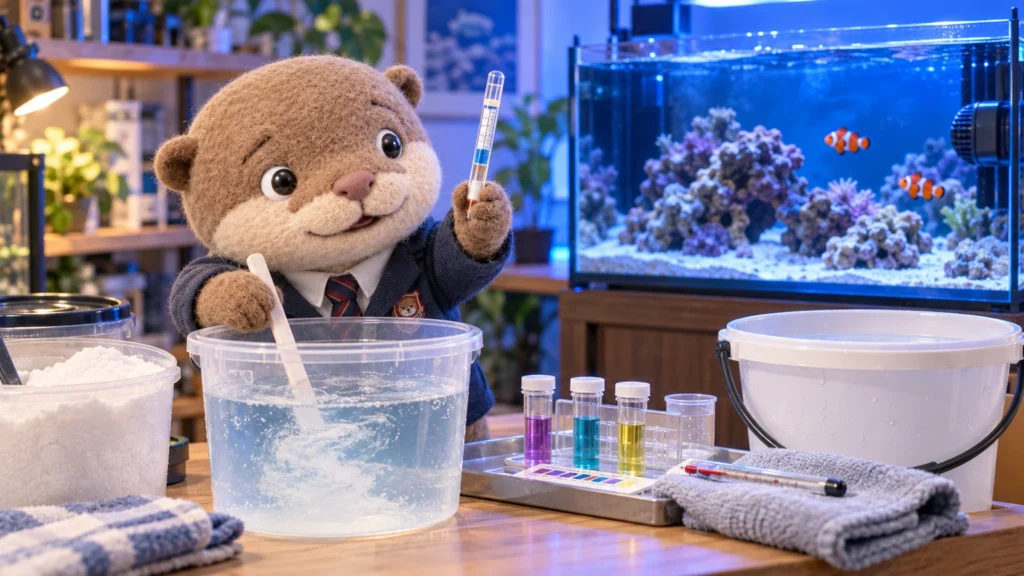 アイのアクアグッズ案内海水魚初心者の必需品|水槽・人工海水・比重計・水質検査道具の特徴や使い方、選ぶときのポイントをアイが紹介します。記事はコチラ →
 アイのアクアグッズ案内コケを食べるコイの仲間に合わせる飼育用品|フライングフォックス・アルジイーター・ガラ道具の特徴や使い方、選ぶときのポイントをアイが紹介します。記事はコチラ →
さまざまな飼育テーマをご紹介。リンク先の記事には広告・商品紹介が含まれます。
案内・紹介記事一覧へ →分布マップ
タテジマヨコバサミ(Clibanarius striolatus)は、インド太平洋の熱帯・亜熱帯沿岸に分布します。国内では南西諸島を中心に、南紀や高知、伊豆諸島の式根島でも記録されています。
この地図は、分布欄に記載された地域を広く見渡すための概略表示です。表示範囲全体に生息していることや、正確な分布の境界を示すものではありません。マーカーとGoogle Earthのリンク先は、表示上の代表地点(北緯10度・東経120度)であり、実際の採集地点ではありません。
参考文献
-
World Register of Marine Species(WoRMS):Clibanarius striolatus Dana, 1852
学名、命名者、記載年、分類上の位置づけ。
-
海洋研究開発機構(JAMSTEC)BISMaL:タテジマヨコバサミ
和名と学名の対応、分類、登録された出現記録。
-
Nugroho, D. A. ほか(2024)Hermit crabs (Decapoda: Anomura: Coenobitidae, Calcinidae, Diogenidae, Paguridae) from Halmahera Island, North Maluku, Indonesia.
Nauplius, 32, e20240507。タテジマヨコバサミの脚の縞模様、分布、マングローブや海草藻場に近い潮間帯の生息環境。
-
滝山直人・山下龍之丞・今孝悦(2025)伊豆諸島式根島で採集された北限記録のヤドカリ科ヨコバサミ属3種。
CANCER, 34, 61–67。式根島での採集記録と、成熟個体の確認に基づく現地での繁殖可能性。
-
Bartilotti, C., Calado, R. & dos Santos, A.(2008)Complete larval development of the hermit crabs Clibanarius aequabilis and Clibanarius erythropus …
Helgoland Marine Research, 62, 103–121。ヨコバサミ属のゾエア期とメガロパ期、幼生の形態変化に関する比較資料。対象は同属の別種で、タテジマヨコバサミの最適飼育条件や繁殖手順を直接示す研究ではありません。
-
Yanong, R. P. E.:Fish Health Management Considerations in Recirculating Aquaculture Systems—Part 3: General Recommendations and Problem-Solving Approaches.
University of Florida, UF/IFAS Extension, Cir 122/FA101。水温、塩分、pH、アンモニア、亜硝酸などの測定、水質の安定、ろ過と換水に関する一般的な管理資料。
-
Yanong, R. P. E.:Use of Copper in Marine Aquaculture and Aquarium Systems.
University of Florida, UF/IFAS Extension, FA165。海水水槽での銅の毒性、無脊椎動物への影響、底砂や貝殻などに結合した銅が再び水中へ放出される可能性。



コメント