

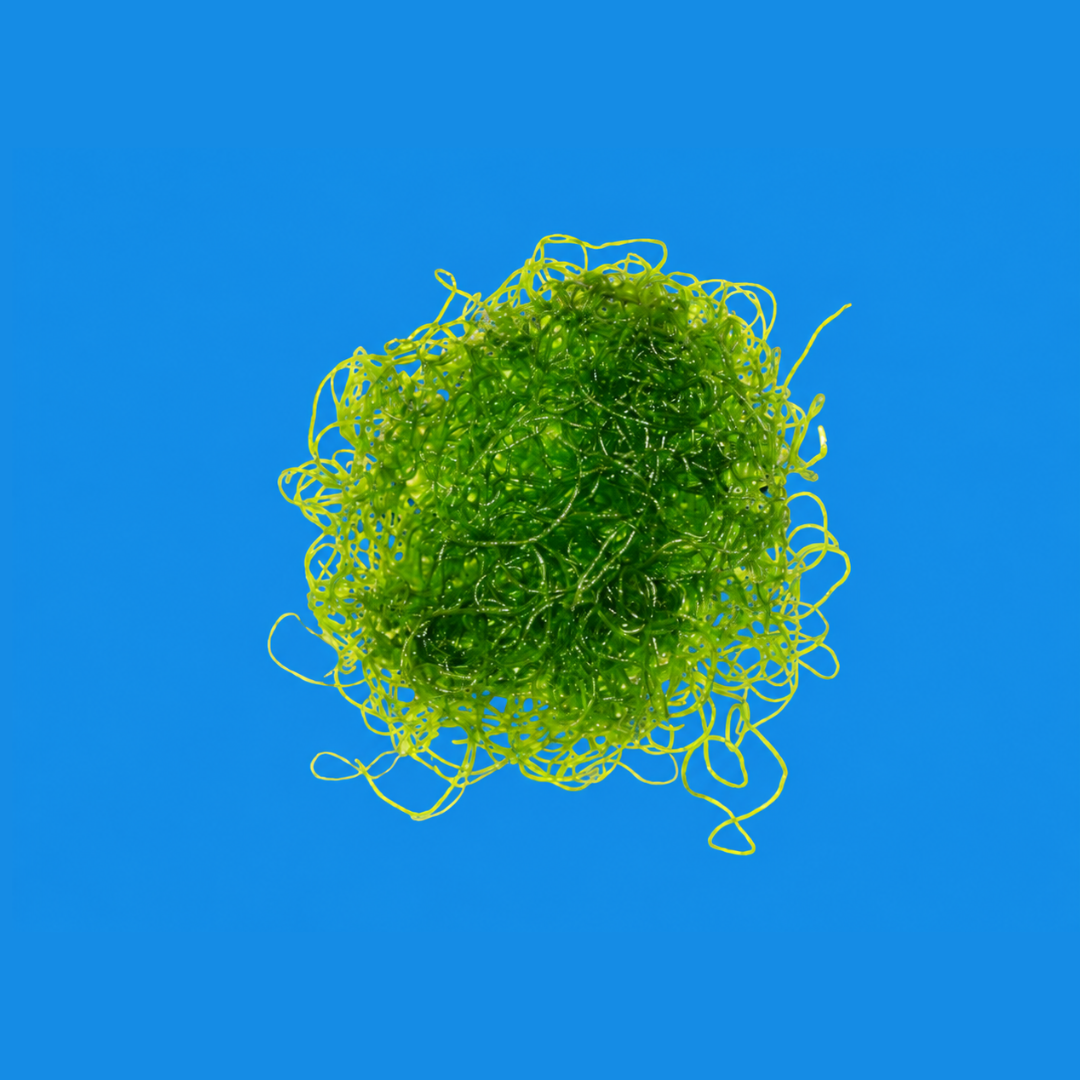
解説 / Description
フトジュズモは、深緑色のしっかりした糸が絡み合う海産の緑藻です。一本一本の糸は枝分かれせず、まとまると緑のたわしのような姿になります。葉のような平たい体を広げる海藻とはひと味違う、素朴で立体感のある表情が魅力です。自然の海では岩に付着したり、ほかの海藻に絡みついたりして育ち、基部付近がコイルのように巻く個体も見られます。 Chaetomorpha spiralis is a marine green alga with firm, deep-green filaments that intertwine into loose masses. Each filament is unbranched, and a dense clump can resemble a green scouring pad. Its simple, textured appearance offers a distinctive alternative to seaweeds with broad, leaflike blades. In the wild, it grows attached to rocks or entangled among other seaweeds, sometimes with a coil near the base.
海水アクアリウムでは、ジュズモ類は観賞用のほか、海藻を育て、小さな生きものを保護する補助区画「リフュジウム」にも用いられます。成長に伴って窒素やリンを取り込み、増えた分を取り出すことで栄養塩の管理を助けます。ただし、流通上の「ジュズモ」や「Chaeto」という名前だけでは種類を特定できません。種類によって育ち方や環境への耐性も異なるため、フトジュズモを入手する際は、販売名に加えて学名や入手元の情報を確認しておくとよいでしょう。 In marine aquariums, Chaetomorpha algae are kept both for display and in refugiums, auxiliary areas used to grow macroalgae and shelter small animals. As the algae grow, they take up nitrogen and phosphorus; harvesting the new growth helps manage nutrient levels. However, trade names such as “Chaeto” do not identify a particular species. Growth and environmental tolerance vary among species, so check the scientific name and provenance when purchasing C. spiralis.
基本情報 / Basic Information
| 学名 / Scientific Name | Chaetomorpha spiralis 命名者・記載年:Okamura, 1903。岡村金太郎によって記載された種です。同属には外見の似た海藻があり、糸の太さや絡み方だけでは見分けにくい場合があります。Authority: Okamura, 1903. The species was described by the Japanese phycologist Kintaro Okamura. Similar-looking species occur within the genus, so filament thickness and the appearance of a clump alone may not be sufficient for identification. |
|---|---|
| 通称 / Common Name | フトジュズモ。ジュズモ、ケトモルファ、Chaetoなどの名称は、同属の海藻をまとめて指す流通名としても使われます。Futo-juzumo in Japanese. Chaetomorpha and “Chaeto” are broader aquarium trade names used for various members of the genus. |
| 分類 / Family | 緑藻植物門・アオサ藻綱・シオグサ目・シオグサ科・ジュズモ属。淡水の水草ではなく、海水中で育つ海藻です。Phylum Chlorophyta; class Ulvophyceae; order Cladophorales; family Cladophoraceae; genus Chaetomorpha. It is a marine alga, rather than a freshwater aquatic plant. |
| 分布 / Distribution | 日本沿岸を含む海域に分布し、国外からも記録されています。潮の満ち引きで水没と露出を繰り返す潮間帯の中部から、その下の浅い海にかけて、岩上やほかの海藻の間で生育します。国内では淡路島周辺などで観察され、同地域では一年を通して見られます。Recorded from Japanese coastal waters and locations outside Japan. It grows on rocks and among other seaweeds from the middle intertidal zone, which is covered and exposed by the tides, into the shallow subtidal zone below. Around Awaji Island in Japan, it can be found throughout the year. |
| 育成難易度 / Difficulty | 基本的な海水管理に慣れた方向けです。光と水流が届き、成長に必要な栄養塩が残る環境を整えることが大切です。導入する藻体の状態によっても育ち方は変わるため、色や新しい伸びを見ながら調整しましょう。Best suited to aquarists familiar with basic marine aquarium care. Provide sufficient light, water movement, and nutrients for growth. The condition of the algae at introduction also affects their performance, so adjust care according to color and new growth. |
育成環境 / Cultivation Environment
| 光量 / Light | 塊の表面だけでなく、内側にも光が届く配置が大切です。白色の水槽用LEDや海藻育成用照明を使い、導入時は控えめな明るさから慣らします。点灯時間を一定にし、成長や表面に付着する藻類の様子を見ながら、明るさと点灯時間を調整してください。光を強くしたり点灯時間を延ばしたりしても、栄養が不足していれば健全な成長にはつながらず、退色することがあります。Arrange the algae so that light reaches more than just the outer surface of the clump. White aquarium LEDs or dedicated macroalgae lights can be used; acclimate new stock under moderate lighting. Keep a consistent lighting schedule and adjust intensity and duration according to growth and surface fouling. Stronger light or longer hours will not promote healthy growth when nutrients are insufficient and may contribute to paling. |
|---|---|
| CO2添加 / CO2 Injection | 通常の海水水槽では、海藻育成のためのCO2添加は基本的に不要です。光合成に必要な炭素は海水中から取り込みます。十分なガス交換を確保し、pHとアルカリ度を安定させる管理を優先してください。CO2 injection is generally unnecessary for growing macroalgae in a typical marine aquarium. The algae obtain the carbon needed for photosynthesis from the seawater. Prioritize adequate gas exchange and stable pH and alkalinity. |
| 水質 / Water Quality | 一般的な海水水槽の管理目安として、水温20〜26℃、pH 8.0〜8.4、塩分約33〜35‰が挙げられます。比重では、25℃を基準とする測定で約1.025〜1.026が目安です。計器の方式や基準温度を確認し、校正したものを使ってください。これらは本種の最適値や耐性限界を示す数値ではありません。導入前の飼育条件と同居生物に配慮し、高水温や急な変化を避けましょう。水流は塊の内部にも水が通る程度に確保します。硝酸塩とリン酸塩は成長に必要なので、どちらかが不足すると育ちが鈍ります。特定の濃度や比率だけを目標にせず、測定値と海藻・同居生物の状態を合わせて判断してください。General marine aquarium guidelines include a temperature of 20–26°C, pH 8.0–8.4, and salinity around 33–35‰. This corresponds approximately to a specific gravity of 1.025–1.026 when referenced to 25°C. Check the instrument’s measurement method and reference temperature, and use a calibrated device. These figures are not established species-specific optima or tolerance limits. Consider the algae’s previous keeping conditions and their tankmates, and avoid excessive heat and sudden changes. Provide enough circulation for water to pass through the clump. Both nitrate and phosphate support growth, and a shortage of either can slow it. Assess test results alongside the condition of the algae and other inhabitants rather than pursuing a fixed concentration or ratio. |
| 底床 / Substrate | ソイルや根肥は不要です。岩に付着した藻体は付着部分を保ち、絡み合った塊は底床に埋めず、水が通る場所で保持します。水中から窒素・リンや微量元素を取り込むため、まずは通常の給餌と換水を続けながら状態を見てください。退色が続く場合も鉄不足と決めつけず、光、水流、塩分、栄養塩を確認します。海藻用の微量元素添加剤を使う際は製品の用法を守り、淡水水草用肥料の安易な流用は避けましょう。Aquasoil and root fertilizers are unnecessary. Preserve the attachment point of rock-attached specimens, and keep tangled clumps above the substrate where water can circulate through them. The algae obtain nitrogen, phosphorus, and trace elements from the water, so begin with normal feeding and water changes. Persistent paling should not automatically be attributed to iron deficiency: check lighting, flow, salinity, and nutrients first. If using a marine macroalgae trace-element supplement, follow its instructions and avoid casually substituting freshwater plant fertilizers. |
レイアウト / Layout
| 配置 / Positioning | 観賞用には、岩組みの脇や中景に小さなまとまりとして置くと、深緑の糸が自然な藻場の雰囲気を添えます。栄養塩管理を主な目的にする場合は、照明を備えたリフュジウムや、水がよく通る専用区画が扱いやすいでしょう。塊で育てる際は、ゆるく広げて全体に水が通るようにし、ときどき向きを変えて光の偏りを減らします。付着していない塊を水流でゆっくり回転させる方法もありますが、回転させなくても、光と通水を確保することが大切です。For display, a small group beside the rockwork or in the midground adds the feel of a natural seaweed bed. For nutrient management, a lit refugium or dedicated compartment with good circulation is convenient. Keep clumps loose enough for water to pass through, and occasionally turn them to distribute light more evenly. Gentle tumbling is an option for unattached clumps, but the main priorities are adequate light and circulation, whether or not they rotate. |
|---|---|
| 注意点 / Precautions | 糸を岩の隙間に強く押し込んだり、密な塊のまま放置したりすると、内側に光と水が届きにくくなります。ポンプの吸水口や排水口に絡まないよう距離を取り、必要に応じてガードを使い、目詰まりを点検してください。草食性の魚やウニなどに食べられる場合は、育成区画を分けます。付着した藻体を扱うときは、基部を無理にはがさないことも大切です。Avoid packing filaments tightly into rock crevices or leaving clumps overly dense, as this limits light and circulation inside. Keep them away from pump intakes and drains, and use guards where necessary, checking regularly for blockages. If herbivorous fish or sea urchins graze on the algae, grow them in a separate compartment. Handle attached specimens carefully without forcibly peeling away their bases. |
増やし方(トリミング) / Propagation & Trimming
| 増やし方 / Propagation | 水槽では、健康な糸状の藻体を一部分け、光と水流が届く場所で育てる方法が実用的です。細かく刻まず、扱いやすいまとまりを残して分けましょう。小石に付着しているものは、無理に引き抜くより、小石ごと移すほうが傷めにくくなります。移した後は、色が保たれているか、新しい伸びが見られるかを確認してください。A practical aquarium method is to separate part of a healthy filament mass and grow it where it receives sufficient light and flow. Divide it into manageable portions rather than chopping it finely. For specimens attached to small stones, moving the stone is gentler than pulling the algae free. After transfer, watch for stable color and new growth. |
|---|---|
| トリミング / Trimming | 塊が厚くなり、内側が暗くなる前に量を減らします。健康な部分を残し、白く傷んだ糸や汚れの多い部分を取り除いてください。取り出した塊は、別容器に取った飼育水の中で軽く揺すり、たまった汚れを落とします。刈り取りは栄養塩を水槽の外へ出す作業でもあるため、成長量と水質を見ながら行いましょう。不要な藻体は海や河川、排水口へ流さず、十分に乾燥させたうえで、自治体の分別に従って処分します。Thin the mass before it becomes thick enough to shade its interior. Retain healthy growth and remove white, damaged, or heavily fouled filaments. Gently swish a removed clump in a separate container of aquarium water to dislodge trapped debris. Harvesting also exports nutrients, so adjust it according to growth and water test results. Do not release unwanted algae into the sea, rivers, or drains; dry them thoroughly, then dispose of them according to local waste rules. |
病気と対策(コケなど) / Pests & Algae
| かかりやすい病気 / Common Issues | 育成中に注意したいのは、退色や成長の停滞、藻体が傷んで崩れることです。光不足、急な強光、栄養塩不足、塩分や水温の急変などが原因になることがあります。密集した部分に魚の排泄物や残餌がたまると、内側が傷みやすくなります。また、表面に珪藻や別の糸状藻、シアノバクテリアが付着し、光を遮る場合もあります。見た目だけで原因を決めつけず、育成環境も合わせて確認しましょう。Watch for paling, stalled growth, and tissue deterioration. Possible causes include insufficient light, sudden exposure to intense light, nutrient depletion, and rapid changes in salinity or temperature. Fish waste and uneaten food trapped in dense areas can contribute to deterioration inside the clump. Diatoms, other filamentous algae, and cyanobacteria may also coat the surface and block light. Check the growing conditions rather than diagnosing the cause from appearance alone. |
|---|---|
| 対策と予防 / Prevention | 導入時は、別容器の海水で藻体を広げ、傷んだ部分や一緒に入ってきた生きものを確認します。必要に応じて隔離して観察し、温度と塩分を合わせてから水槽へ移してください。淡水浴や薬剤処理は藻体も傷めるおそれがあるため、安易に行わないほうがよいでしょう。育成中に退色したら、水温・塩分・栄養塩と塊の内側を点検し、間引きや水流の調整、照明の見直しを行います。崩れた藻体は早めに取り除き、栄養塩が低い場合も、むやみに給餌や添加を増やさず、水槽全体の状態を見て調整してください。Before introduction, spread the algae in a separate container of seawater and inspect for damaged areas and hitchhikers. Observe in isolation when appropriate, then match temperature and salinity before transfer. Avoid casual freshwater dips or chemical treatments, which may damage the algae themselves. If paling develops, check temperature, salinity, nutrients, and the interior of the clump; thin it, improve circulation, or adjust lighting as needed. Remove deteriorating material promptly. When nutrients are low, assess the whole aquarium before increasing feeding or dosing. |
雑学と豆知識 / Trivia and Fun Facts
| 1. 「らせん」の名前と、まっすぐな姿 / 1. A Spiral Name, but Sometimes Straight | 種小名の「spiralis」は、ラテン語で「らせん状の」という意味です。フトジュズモでは、ほかの海藻に絡みついた個体の基部近くに、コイル状の巻きが見られます。一方、岩に付着した個体にはまっすぐ伸びるものもあり、名前のもとになった特徴が、どの個体にも同じように現れるわけではありません。この種を1903年に記載した岡村金太郎は、日本の海藻研究の基礎を築いた研究者の一人です。糸の巻き方に目を向けると、その名前に込められた観察の跡も見えてきます。The specific epithet “spiralis” is Latin for “spiral.” Specimens entangled among other seaweeds may have a coil near the base, while rock-attached specimens can grow straight. The feature behind the name is therefore not equally conspicuous in every individual. Kintaro Okamura, who described the species in 1903, was a pioneering figure in Japanese phycology. Looking closely at the coils reveals the observation preserved in the species name. |
|---|---|
| 2. 一本の糸に並ぶ、数珠のような細胞 / 2. A Filament Made of Beadlike Cells | 「ジュズモ」という名前は、細胞が連なる姿を数珠に見立てたものです。肉眼では一本の緑の糸に見えても、顕微鏡で見ると、細胞が仕切りを挟んで一列につながっています。ジュズモ類には、一つの細胞に複数の核があるという特徴もあります。一本の糸全体が一つの細胞なのではなく、核をいくつも持つ細胞が並んでいるのです。根・茎・葉に分かれる水草とは異なる体のつくりですが、光を受けて成長する点は共通しています。細い糸の中にも、身近な植物とは違う世界が広がっています。The Japanese name “juzumo” refers to cells arranged like beads on a prayer string. What looks like a single green thread to the naked eye is, under a microscope, a row of cells separated by cross walls. Chaetomorpha cells contain multiple nuclei: the filament is not one single cell, but a series of cells, each with several nuclei. Its body is organized differently from an aquatic plant with roots, stems, and leaves, yet both grow by harnessing light. Even a fine filament reveals a form of life quite different from familiar plants. |
| 3. 栄養塩を減らす仕上げは「刈り取り」 / 3. Harvesting Completes Nutrient Export | 海藻は、水中の窒素やリンを取り込み、自分の体をつくる材料にします。ただし、その栄養分は、まだ水槽内の藻体に蓄えられている状態です。そのまま枯れて分解されれば、一部は再び水中へ戻ります。増えた分を刈り取ることで、蓄えられた栄養分を水槽の外へ運び出せるのです。硝酸塩やリン酸塩の数値だけでなく、健康な藻体がどれだけ増えたかにも目を向けると、リフュジウムの働きを捉えやすくなります。Macroalgae absorb nitrogen and phosphorus from the water and use them to build new tissue. Those nutrients remain within the aquarium while stored in the algae. If the algae die and decompose, some nutrients return to the water. Harvesting the new growth carries the stored nutrients out of the system. Watching how much healthy algae develop, alongside nitrate and phosphate readings, helps reveal how the refugium is functioning. |
| 4. 緑の塊は、小さな生きものの住まい / 4. A Green Clump as a Tiny Habitat | 絡み合った糸の間には、カイアシ類やヨコエビ類などの小さな甲殻類が入り込めます。細かな隙間は身を隠す場所になり、表面の微細藻類やたまった有機物は、そこに暮らす生きものの餌にもなります。リフュジウムは海藻を育てる場所であると同時に、こうした小さな生きものを観察できる場所でもあります。ただし、汚れがたまりすぎると海藻の状態が悪くなるため、隠れ場所になる糸の重なりを残しつつ、水が通る余裕を保つことが大切です。The spaces between tangled filaments can shelter small crustaceans such as copepods and amphipods. These gaps provide cover, while microscopic algae on the surface and trapped organic material can supply food. A refugium is therefore both a place to grow macroalgae and a window into small-animal life. Excessive debris can harm the algae, so preserve the shelter provided by the filaments while leaving enough space for water to circulate. |
| 5. 夜に照らすリフュジウムの働き / 5. Why Some Refugiums Are Lit at Night | 本水槽が消灯すると、光合成が止まる一方、魚やサンゴ、微生物などの呼吸は続きます。そのため水中の二酸化炭素が増え、pHが下がりやすくなります。本水槽の消灯中にリフュジウムを照らす「逆点灯」では、海藻が光合成によって二酸化炭素を消費し、夜間のpH低下を和らげる助けになります。効果は海藻の量や成長状態、ガス交換などによって変わるため、逆点灯だけでpHや酸素濃度が一定に保たれるわけではありません。昼と夜のpHを比べながら、点灯時間を調整するとよいでしょう。When the main aquarium lights go out, photosynthesis stops while fish, corals, and microorganisms continue to respire. Carbon dioxide can consequently accumulate and lower pH. Lighting the refugium during the main tank’s dark period allows macroalgae to consume carbon dioxide through photosynthesis, helping moderate the nighttime pH decline. The effect depends on the amount and condition of the algae, as well as gas exchange; reverse lighting alone does not guarantee constant pH or oxygen levels. Compare daytime and nighttime pH when adjusting the lighting schedule. |
まとめ / Conclusion
フトジュズモの魅力は、深緑の糸が重なる独特の姿と、成長を通して海水水槽の栄養塩管理を助けるところにあります。岩組みのそばでは小さな藻場のような景色をつくり、リフュジウムでは糸の間に暮らす生きものも観察できます。一本の糸から塊全体まで、目を向ける場所によって違う表情を楽しめる海藻です。 Chaetomorpha spiralis combines the distinctive texture of intertwined deep-green filaments with a useful role in marine aquarium nutrient management. Beside the rockwork, it evokes a small seaweed bed; in a refugium, it also offers opportunities to observe the animals living among its threads. From a single filament to an entire clump, it rewards observation at different scales.
光と水が内側まで届くように整え、成長に必要な栄養を保ちながら、増えた分を取り出すことが育成の基本です。糸の色や伸びを確かめ、少しずつ量を整える手入れの中で、その変化を楽しめます。深緑のささやかな存在感が、水槽に海辺の景色を添えてくれるでしょう。 The essentials are to let light and water reach inside the clump, maintain enough nutrients for healthy growth, and harvest the excess. Checking the color and extension of the filaments while gently managing their volume makes those changes part of everyday aquarium care. Their understated deep-green presence brings a touch of the coast to the aquarium.

気になる道具や飼い方を見つけてみませんか?
 アイのアクアグッズ案内水換え・底砂掃除の道具の選び方|砂利・砂・ソイルに合うクリーナーとポンプ道具の特徴や使い方、選ぶときのポイントをアイが紹介します。記事はコチラ →
 アイのアクアグッズ案内マジックリーフ物語|一枚の葉がアクアリウム用品になるまで道具の特徴や使い方、選ぶときのポイントをアイが紹介します。記事はコチラ →
 アイのアクアグッズ案内水草トリミングの道具とやり方|ハサミ・ピンセットを水草に合わせて選ぼう伸びすぎた水草は切っていい? 有茎草の差し戻し、前景草の絨毯、流木のモスを整える場面から、水草用ハサミ・ピンセット・ゴミ取りネットの選び方と片付けを紹介します。記事はコチラ →
 アイのアクアグッズ案内ローチの仲間に合わせる飼育用品|クーリー・流水性・ボーシャの水槽と底砂道具の特徴や使い方、選ぶときのポイントをアイが紹介します。記事はコチラ →
さまざまな飼育テーマをご紹介。リンク先の記事には広告・商品紹介が含まれます。
案内・紹介記事一覧へ →分布マップ
フトジュズモ(Chaetomorpha spiralis)は日本沿岸を含む海域に分布し、国外からも記録されています。国内では淡路島周辺などで見られ、岩上やほかの海藻の間で生育します。
地図は分布地域の位置関係を示す概略表示で、生育範囲や分布の境界を示すものではありません。分布欄に座標がないため日本周辺を広く表示し、淡路島周辺に代表地点を設定しています。マーカーは実際の採集地点ではありません。国外の具体的な地域は分布欄に記載されていないため、この地図には反映していません。
参考文献
-
Suzuki, M. & Kitayama, T.(2026).Checklist of Marine Benthic Algae of Japan.National Museum of Nature and Science Monographs, No. 57. 国立科学博物館。
分類・学名・和名。
-
神戸大学 内海域環境教育研究センター.淡路島の海藻:フトジュズモ.神戸大学の海藻図鑑。
日本での生息環境、生育時期、付着や絡み付き、藻体の形と大きさ。
-
千葉大学 海洋バイオシステム研究センター 銚子実験場.海藻図鑑:フトジュズモ.千葉大学制作の海藻図鑑。
形態、国内の分布と生息環境、藻体の長さ、生殖細胞放出後の退色。
-
Coppejans, E., Leliaert, F., Dargent, O., Gunasekara, R. & De Clerck, O.(2009).Sri Lankan Seaweeds: Methodologies and Field Guide to the Dominant Species.Abc Taxa, 6. Belgian National Focal Point to the Global Taxonomy Initiative.
フトジュズモの形態、生息環境、太平洋・インド洋での分布。
-
千原光雄(1958).本邦暖海産緑藻類の生活史に関する研究(6)フトジュズモの生活史について.植物研究雑誌, 33(6), 183–189. DOI: 10.51033/jjapbot.33_6_4268.
フトジュズモの遊走子・配偶子、発生、外見では区別できない生活史の世代。
-
Krause-Jensen, D., McGlathery, K., Rysgaard, S. & Christensen, P. B.(1996).Production within Dense Mats of the Filamentous Macroalga Chaetomorpha linum in Relation to Light and Nutrient Availability.Marine Ecology Progress Series, 134, 207–216. DOI: 10.3354/meps134207.
ジュズモ類の密集による遮光、光・栄養塩・水温と生産活動の関係。研究対象:Chaetomorpha linum。
-
Menéndez, M., Herrera, J. & Comín, F. A.(2002).Effect of Nitrogen and Phosphorus Supply on Growth, Chlorophyll Content and Tissue Composition of the Macroalga Chaetomorpha linum (O.F. Müll), Kütz, in a Mediterranean Coastal Lagoon.Scientia Marina, 66(4), 355–364. DOI: 10.3989/scimar.2002.66n4355.
窒素・リンの吸収と成長、栄養塩不足による成長の制限。研究対象:Chaetomorpha linum。
-
Bartlett, T. C.(2013).Small Scale Experimental Systems for Coral Research: Considerations, Planning, and Recommendations.NOAA Technical Memorandum NOS NCCOS 165 and CRCP 18.
海水水槽全般の塩分・pH・水温・水流・換水・水質測定と、リフジウムの役割。
-
Odom, R. L., Solomon, J. A. & Walters, L. J.(2014).Alternatives to Release: Efficient Methods for Disposal of Excess or Unwanted Aquarium Macroalgae in the Genus Chaetomorpha.Invasive Plant Science and Management, 7(1), 76–83. DOI: 10.1614/IPSM-D-13-00053.1.
水槽で流通するジュズモ類の断片からの増殖、自然水域への放出防止、加熱などによる処分。




コメント