
解説 / Description
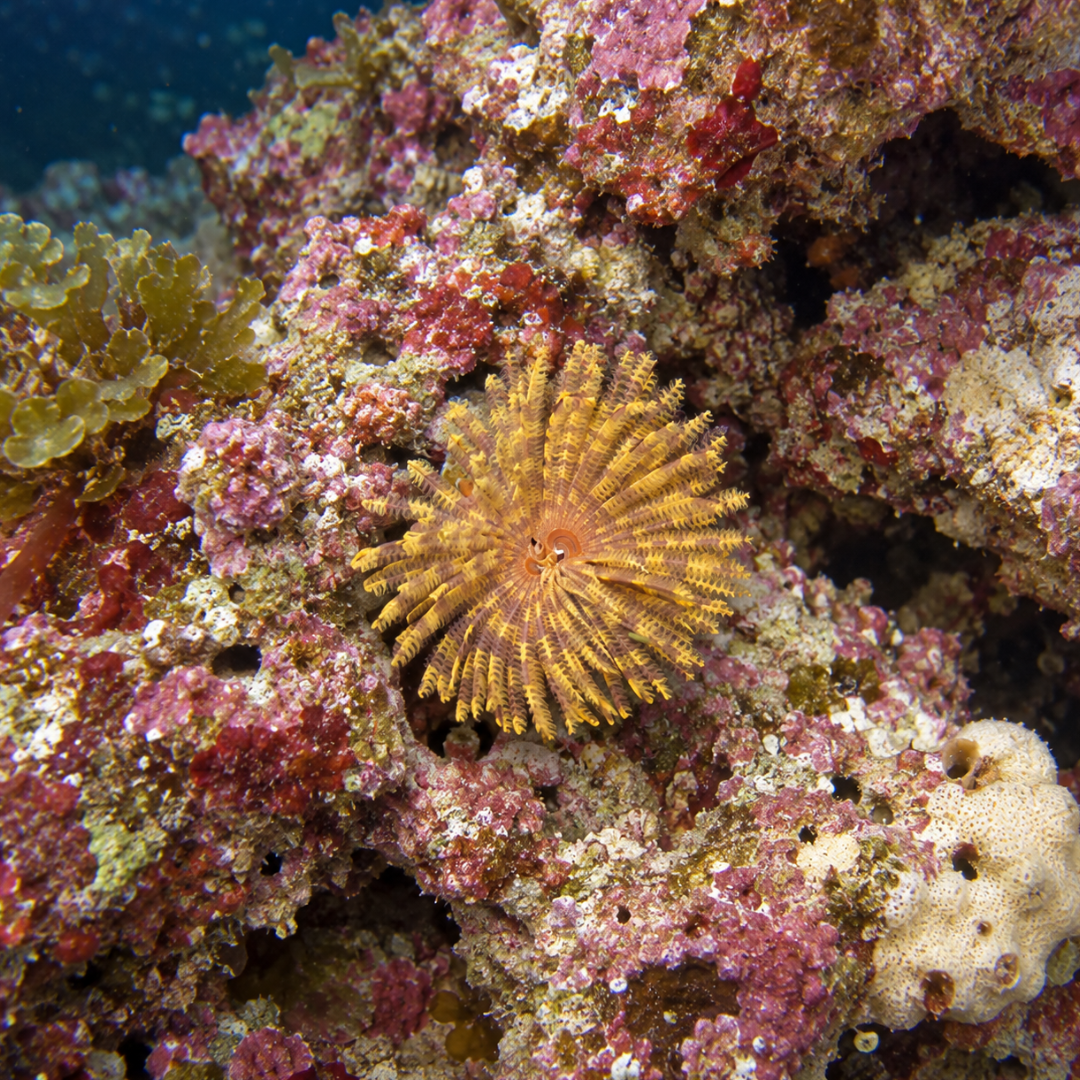
ケヤリムシは、海底や岩の隙間に自ら作った棲管を固定し、そこから羽毛のような鰓冠を広げて暮らす環形動物の仲間です。アクアリウムで「ケヤリムシ」と呼ばれるものの多くはケヤリムシ科(Sabellidae)に属し、特に大型で色彩豊かなSabellastarte属がよく知られています。サンゴの花のように見える部分は触手ではなく、多数のラジオールからなる鰓冠で、呼吸と濾過摂食の両方を担います。光合成には依存しないため強い照明は必須ではありませんが、安定した海水、穏やかな水流、そして水中を漂う微小な餌を継続して確保することが長期飼育の鍵になります。人影や急な水流を感じると一瞬で棲管へ引っ込む反応も魅力のひとつで、華やかな外見の裏側には、定在生活に高度に適応した精巧な生存戦略が隠れています。 Feather duster worms are marine annelids that spend most of their lives inside self-built tubes fixed among rocks, reef crevices, or sediment. Many animals sold in aquariums as “feather duster worms” belong to the family Sabellidae, with large and colorful members of the genus Sabellastarte being especially familiar. The flower-like structure is a branchial crown composed of numerous radioles, and it serves both respiration and suspension feeding. Because these worms do not depend on photosynthesis, intense lighting is unnecessary, but long-term success requires stable seawater, gentle water movement, and a reliable supply of suspended microscopic food. Their lightning-fast withdrawal into the tube when they detect shadows or sudden disturbance is not only fascinating to watch but also reflects a highly specialized survival strategy for a sedentary marine lifestyle.
基本情報 / Basic Information
| 学名 / Scientific Name | Sabellidae spp. |
|---|---|
| 通称 / Common Name | ケヤリムシ、ホンケヤリ、ファンワームなど。流通上は大型のSabellastarte属を指して「ケヤリムシ」と呼ぶことも多い。Feather duster worm, fan worm; aquarium trade names are often applied broadly to large Sabellidae, especially Sabellastarte species. |
| 分類 / Family | 環形動物門・多毛類・定在性環形動物群 Sedentaria・ケヤリムシ目 Sabellida・ケヤリムシ科 SabellidaePhylum Annelida; polychaete annelids; Sedentaria; order Sabellida; family Sabellidae |
| 英名 / English Name | Feather Duster Worm / Fan Worm |
| 分布 / Distribution | 世界各地の海域に広く分布し、沿岸の岩礁、サンゴ礁、港湾、砂泥底など多様な環境に見られます。観賞用で代表的なSabellastarte spectabilisは紅海からインド太平洋、日本、ハワイなどで記録されています。Widely distributed in marine environments around the world, including rocky shores, coral reefs, harbors, and soft-bottom habitats. The ornamental species Sabellastarte spectabilis has been recorded from the Red Sea and Indo-Pacific region, including Japan and Hawaii. |
| 最大体長 / Max Size | 種による差が大きく、小型種は数cm以下ですが、観賞用の大型Sabellastarte属では虫体長8cm以上になる例があります。鰓冠を広げた見た目の大きさは虫体そのものより大きく感じられます。Highly variable among species. Small sabellids may remain only a few centimeters long, while large ornamental Sabellastarte species can exceed about 8 cm in body length. The expanded branchial crown makes the animal appear considerably larger. |
| 寿命 / Lifespan | 種ごとの確立した寿命データは限られており、一律の年数は示しにくい生き物です。飼育下では給餌不足や水質急変が寿命を縮めやすいため、年数よりも安定した環境と継続的な栄養供給を重視します。Reliable species-specific lifespan data are limited, so a single lifespan figure is not appropriate. In aquariums, inadequate feeding and sudden water-quality changes can shorten survival, making environmental stability and continuous nutrition more important than a fixed lifespan estimate. |
飼育環境 / Aquarium Environment
| 水槽サイズ / Tank Size | 大型のケヤリムシを安定して飼育するなら、60cm規格水槽(約55〜65L)以上をひとつの目安とし、より余裕を持たせるなら60cmワイド水槽(約90L)以上が扱いやすいでしょう。遊泳空間よりも、水質の安定性、棲管を安全に固定できる場所、穏やかな水流を作れる余裕が重要です。For large ornamental feather duster worms, a standard 60 cm aquarium of roughly 55–65 L is a practical starting point, while a 60 cm wide tank of around 90 L or more provides greater stability. Swimming space is not the main issue; stable water quality, secure tube placement, and enough room to create gentle indirect flow are more important. |
|---|---|
| 水温 / Temperature | 22〜28℃を目安とし、24〜26℃前後で安定させると管理しやすいでしょう。短時間でも急激な温度変化を避けることが重要です。 A general target range is 22–28°C, with stable conditions around 24–26°C being practical for many tropical ornamental forms. Avoid rapid temperature swings. |
| 水質 / Water Quality | 比重1.023〜1.026、pH8.1〜8.4を目安に、アンモニアと亜硝酸は検出されない状態を維持します。硝酸塩は低めで安定させ、蒸発による比重上昇や急な換水による変化を避けてください。ケヤリムシ科の軟棲管そのものに高カルシウム環境は必須ではありませんが、同じ水槽でサンゴや石灰質のカンザシゴカイ類を飼育する場合は、それらに合わせたカルシウムとKH管理が必要です。Aim for a specific gravity of about 1.023–1.026 and pH 8.1–8.4, with ammonia and nitrite undetectable. Keep nitrate reasonably low and stable, and avoid salinity increases from evaporation or abrupt changes during water changes. Soft-tubed Sabellidae do not require elevated calcium specifically for their tubes, although reef tanks containing corals or calcareous serpulid worms must maintain calcium and alkalinity appropriate for those animals. |
| レイアウト / Layout | 棲管の下部を底砂やライブロックの隙間に安定して固定し、開口部は塞がず、やや上向きにします。ポンプの直撃は避け、鰓冠全体がゆるやかになびく程度の間接的で不規則な水流が理想です。強い照明は不要で、人影や頻繁な作業で何度も引っ込む場所より、落ち着いて鰓冠を展開できる位置を選びます。Secure the lower part of the tube in sand or between live-rock crevices without blocking the opening, preferably with the opening angled slightly upward. Avoid direct jets from pumps and provide gentle, indirect, irregular flow that softly moves the crown. Strong lighting is unnecessary. Choose a calm position where passing shadows and frequent maintenance do not repeatedly trigger withdrawal. |
| 注意点 / Precautions | 購入時や移動時に棲管から虫体を無理に引き抜かないでください。導入時は水温と比重の差を小さくし、時間をかけて水合わせを行います。鰓冠を落とす自切は強いストレスのサインとして起こることがあり、虫体が棲管内で生きていれば再生する場合がありますが、再生には栄養を消耗します。長期間まったく鰓冠を出さない、繰り返し自切する、棲管から出てしまう場合は、水質、水流、給餌量、捕食者の有無を見直します。Never pull the worm forcibly from its tube. During introduction, minimize differences in temperature and salinity and acclimate gradually. Crown shedding can occur as a stress response; if the worm remains alive inside the tube, the crown may regenerate, but regeneration consumes substantial energy. Persistent hiding, repeated crown loss, or abandonment of the tube should prompt a review of water quality, flow, feeding, and possible predators. |
餌と給餌 / Feeding
| 餌の種類 / Diet | 植物プランクトン、微小動物プランクトン、ワムシやコペポーダなどの微細な餌、サンゴ・無脊椎動物用の液体微粒子フード、細かな有機デトリタスなどを利用します。大きな固形餌を丸呑みする生き物ではなく、鰓冠の繊毛と粘液で捕捉できる微小な浮遊粒子が中心です。Suitable foods include phytoplankton, microzooplankton, rotifers, copepod-sized particles, fine liquid foods formulated for corals or marine invertebrates, and suspended organic detritus. These worms do not swallow large solid foods; they rely mainly on microscopic suspended particles that can be captured and transported by the cilia and mucus of the branchial crown. |
|---|---|
| 給餌のポイント / Feeding Tips | 栄養の少ない清浄な水槽では慢性的な餌不足になりやすいため、少量を定期的に補助給餌します。週1〜2回をひとつの目安にしつつ、水槽全体の栄養状態や個体の反応に合わせて調整してください。スポイトで与える場合は、鰓冠へ勢いよく吹きつけず、その少し下流側または下方へ微粒子を静かに流し込みます。給餌後に残餌が水質を悪化させないよう、過剰投与は避けます。In very nutrient-poor aquariums, chronic starvation is a major risk, so provide small supplemental feedings regularly. One or two targeted feedings per week can be used as a starting point, then adjusted to the aquarium’s nutrient level and the animal’s response. When using a pipette, do not blast food directly at the crown; gently release a cloud of fine particles just below or slightly upstream so it drifts across the radioles. Avoid overfeeding, as excess suspended food can degrade water quality. |
性格と混泳 / Temperament and Tank Mates
| 性格 / Temperament | 非常に温和で、他の生体を追い回したり攻撃したりすることはありません。定位置から鰓冠を広げて濾過摂食する定在性の生き物で、危険を感じたときは攻撃ではなく棲管へ素早く退避します。Very peaceful and non-aggressive. Feather duster worms remain in one place and suspension-feed with the crown extended. When threatened, they defend themselves by rapidly retreating into the tube rather than attacking other animals. |
|---|---|
| 混泳の相性 / Compatibility | 小型で温和なリーフセーフの魚や、多くのサンゴ・無脊椎動物とは組み合わせやすい一方、鰓冠をつつく魚は不向きです。特にチョウチョウウオ類、大型ヤッコ類、フグ類、ハコフグ類、カワハギ類などは捕食や執拗なつつきの原因になり得ます。大型の肉食性カニなど、棲管や虫体を傷つける可能性がある生体にも注意します。Generally compatible with small peaceful reef-safe fishes and many corals and invertebrates, but unsuitable tank mates include species that nip or prey on the crown. Butterflyfishes, large angelfishes, puffers, boxfishes, and filefishes can be problematic. Large predatory crabs and other animals capable of damaging the tube or worm should also be treated cautiously. |
病気と対策 / Diseases and Prevention
| かかりやすい病気 / Common Diseases | 観賞魚の白点病のように、ケヤリムシで一般的な特定感染症として整理された飼育情報は多くありません。実際の飼育で問題になりやすいのは、急な水質変化、餌不足、強すぎる水流、外傷、捕食やつつきによる慢性的なストレスで、鰓冠の長期収縮、自切、棲管からの離脱、衰弱などとして現れます。There is relatively little aquarium literature describing a single characteristic infectious disease comparable to common fish diseases such as marine ich. In practice, the major problems are sudden water-quality changes, chronic underfeeding, excessive flow, physical injury, and repeated disturbance or predation. These may appear as prolonged crown retraction, crown loss, abandonment of the tube, or general wasting. |
|---|---|
| 対策と予防 / Prevention | 安定した比重と水温を維持し、急な換水やポンプ直撃を避け、微小餌を継続して供給することが基本です。新しい魚や無脊椎動物を追加した後に引っ込みが増えた場合は、夜間も含めてつつかれていないか確認します。薬剤治療は無脊椎動物に悪影響を与える可能性があるため、魚病薬を本水槽へ安易に投与せず、必要な場合は対象生体を分離して治療します。Prevention centers on stable temperature and salinity, avoiding abrupt water changes and direct pump jets, and providing a steady supply of microscopic food. If hiding increases after new fishes or invertebrates are introduced, check for nipping or predation, including at night. Many fish medications can harm marine invertebrates, so avoid dosing the display aquarium casually; isolate the animal requiring treatment whenever appropriate. |
増やし方(繁殖) / Breeding
| 雌雄の判別 / Sexing | 外見だけでの雌雄判別は通常困難です。種や地域個体群によって生殖様式に違いがあり、Sabellastarte spectabilisではハワイ個体群で雌雄同体個体や性転換を示唆する研究がある一方、別地域では雌雄異体として扱われた例もあります。飼育者が外形から確実に判別する方法は実用化されていません。Sexes are usually difficult to distinguish externally. Reproductive patterns may vary among species and populations. In Sabellastarte spectabilis, Hawaiian populations have included hermaphroditic individuals and evidence consistent with sequential sex change, whereas other populations have been described as gonochoric. There is no practical, reliable external sexing method for aquarists. |
|---|---|
| 繁殖形態 / Reproduction | 大型のケヤリムシ類では、成熟した卵と精子を水中へ放出して受精させる放卵放精型が知られています。受精卵からは繊毛を持つトロコフォア幼生が生じ、プランクトン生活を経て基質へ着底し、棲管を形成する幼若個体へ移行します。一部の小型種では体の分裂と再生を利用した無性生殖も知られています。Many large sabellid worms reproduce by broadcast spawning, releasing eggs and sperm into the water column. Fertilized eggs develop into ciliated trochophore larvae that spend a planktonic period before settling on suitable substrate and forming juvenile tubes. Some smaller sabellid species also reproduce asexually through fragmentation followed by regeneration. |
| 繁殖のポイント / Breeding Tips | 家庭水槽で計画的に繁殖させるのは難しく、通常の濾過装置は卵や幼生を吸い込んでしまいます。Sabellastarte spectabilisの研究では、受精後約20分で卵割が始まり、約7〜8時間で遊泳幼生が現れ、6〜7日ほどで着底する発生過程が報告されています。繁殖を狙う場合は、成熟個体を複数確保し、産卵時には幼生を保護できる別容器、穏やかな通水、微細餌、着底基質を用意する必要があります。Planned breeding in home aquariums is difficult because standard filtration readily removes eggs and larvae. Research on Sabellastarte spectabilis reported cleavage beginning about 20 minutes after fertilization, free-swimming larvae appearing after roughly 7–8 hours, and settlement around days 6–7. Successful culture would require multiple mature adults, a separate larval system with gentle circulation, microscopic food, and suitable settlement surfaces. |
雑学と豆知識 / Trivia and Fun Facts
| 1. 花びらのような部分は「鰓冠」 / 1. The “flower” is a branchial crown | ケヤリムシを初めて見た人の多くは、棲管から咲き出す部分をイソギンチャクの触手やサンゴのポリプのように感じます。しかし、その正体は多数のラジオールが円形や螺旋状に並んだ鰓冠です。ラジオールの側面にはさらに細かな小羽枝が並び、表面の繊毛が水を動かして微小粒子を捕らえます。つまり、あの華やかな「花」は、呼吸器であると同時に食卓でもあり、ケヤリムシの生活そのものを支える複合器官なのです。At first glance, the plume emerging from the tube resembles an anemone’s tentacles or a coral polyp. In reality it is a branchial crown made of numerous radioles arranged in a circular or spiral fan. Each radiole carries fine pinnules whose cilia move water and capture suspended particles. The beautiful “flower” is therefore both a respiratory surface and a feeding apparatus—an organ that supports nearly every visible aspect of the worm’s life. |
|---|---|
| 2. 食べ物と建材を同じ鰓冠で仕分ける / 2. One crown sorts both food and building material | 鰓冠に捕まった粒子は、すべて口へ運ばれるわけではありません。小さな有機粒子やプランクトンは摂食に回され、やや大きな粒子の一部は粘液と混ぜて棲管の増築や補修に利用されます。さらに大きすぎる粒子は放棄されます。ケヤリムシにとって水中の浮遊物は、食料であると同時に建築資材でもあります。濾過摂食という一つの仕組みが、「食べること」と「家を作ること」を巧みに結びつけているのです。Not every particle captured by the crown is sent to the mouth. Fine organic particles and plankton are directed toward feeding pathways, while somewhat larger particles can be incorporated with mucus into the construction and repair of the tube. Material that is too large may simply be rejected. Suspended matter is therefore both food and building material, linking feeding and home construction through a single elegant sorting system. |
| 3. 行き止まりの棲管で暮らすための「反転」 / 3. Anatomical “reversal” solves life in a dead-end tube | ケヤリムシ類では胸部と腹部で剛毛の配置が入れ替わり、排泄物を運ぶ糞溝も体表をねじれるように走って前方へ移ります。この独特な構造は、奥が閉じた棲管の中で暮らす定在生活とよく対応しています。もし排泄物を後方へ送るだけなら、棲管の奥に汚れがたまってしまいます。体の設計そのものを変えることで、前方の開口部から排泄物を外へ運び出せるようになっているのです。In sabellids, the arrangement of chaetae reverses between the thorax and abdomen, and the fecal groove follows a twisting course that brings waste toward the front of the body. This unusual anatomy fits a life spent inside a tube that is closed at the rear. Sending waste backward would foul the deepest part of the home; the body plan instead redirects it toward the open end, allowing the worm to keep its living space functional. |
| 4. ホンケヤリの学名には長い混乱の歴史がある / 4. The ornamental Sabellastarte name has a tangled history | 観賞用として有名なSabellastarte spectabilisは、かつてSabellastarte indica、S. sanctijosephi、S. punctataなど複数の名前で扱われ、流通名と学名が入り混じる状態が長く続きました。2003年のSabellastarte属の再検討では、Sabella indicaという古い名称が同名関係の問題を持つことなどが整理され、Grubeが1878年に記載したSabella spectabilisを基礎とする現在の学名が採用されました。しかもケヤリムシは、正確な種同定に剛毛などの微細形態観察が必要なことが多く、生体の外見だけでは判別しにくいという事情があります。ショップで同じ名前に見える個体にも、分類学的には別種が混じる可能性があるのです。The famous ornamental species Sabellastarte spectabilis has been sold or reported under several names, including S. indica, S. sanctijosephi, and S. punctata. A major revision of Sabellastarte in 2003 clarified this history and supported the currently accepted name based on Sabella spectabilis, described by Grube in 1878. Identification remains difficult because reliable species-level diagnosis often depends on microscopic chaetal and anatomical characters that cannot be evaluated from a living display animal alone. Two worms sold under the same trade name may therefore not always be the same species. |
| 5. 一瞬で消える動きを支える巨大軸索 / 5. Giant axons power the instant escape response | 人影が横切った瞬間、鰓冠が吸い込まれるように消える反応は、ケヤリムシの代表的な防御行動です。この高速反応を支えるのが巨大軸索と呼ばれる太い神経線維です。ケヤリムシ科のMyxicola infundibulumでは巨大軸索の直径が最大約1mmに達し、扱いやすい大きな神経細胞として20世紀の電気生理学研究に利用されました。水槽で見られる「シュッ」とした引き込みは、単なる面白いしぐさではなく、神経科学の歴史にもつながる高度な逃避回路の表れです。When a shadow passes overhead, the crown can vanish into the tube almost instantaneously. This rapid defensive response is supported by unusually large nerve fibers known as giant axons. In the sabellid Myxicola infundibulum, the giant axon can approach about 1 mm in diameter and became an important experimental preparation in twentieth-century electrophysiology. The sudden “snap” seen in an aquarium is therefore more than an amusing behavior—it is the visible outcome of a nervous system that also contributed to the history of neuroscience. |
| 6. 鰓冠を落としても、すぐに死亡とは限らない / 6. Losing the crown does not always mean death | 強いストレスを受けたケヤリムシは、鰓冠を根元から自切することがあります。飼育者には衝撃的な光景ですが、棲管内部の虫体が健全なら再生する場合があります。資料では再生に1〜2か月程度を要する例が示され、再生直後の鰓冠は以前より小さいこともあります。ただし鰓冠は呼吸と摂食の中心器官なので、自切は無害なイベントではありません。繰り返す場合は「再生するから大丈夫」と考えず、環境に継続的なストレスがないかを探る必要があります。Severe stress can cause a feather duster worm to autotomize, or deliberately shed, its crown. The sight can be alarming, but if the body inside the tube remains healthy, a new crown may regenerate over the following weeks. Reports describe recovery taking roughly one to two months in some sabellids, and the replacement crown may initially be smaller. Because the crown is central to both feeding and respiration, however, repeated loss should never be treated as harmless; it is a signal to investigate persistent stress in the aquarium. |
| 7. 幼生期は、見慣れた姿とはまるで違う / 7. The larva looks nothing like the familiar adult | 成体は棲管に定着して動かない印象が強いケヤリムシですが、生活史の最初から定在しているわけではありません。Sabellastarte spectabilisでは、受精後およそ7〜8時間で繊毛を使って泳ぐ幼生が現れ、数日間の発生を経て6〜7日ほどで基質へ着底することが報告されています。水中を漂う小さな幼生が適切な場所を見つけて着底し、そこから棲管を作り始めることで、私たちが知る「動かない花」のような姿へ変わっていきます。Adult feather duster worms seem permanently fixed in place, but they do not begin life that way. In Sabellastarte spectabilis, swimming ciliated larvae have been observed about 7–8 hours after fertilization, followed by several days of development before settlement at roughly day 6 or 7. A tiny drifting larva must first find a suitable surface, settle, and begin tube construction before transforming into the stationary, flower-like animal familiar to aquarists. |
まとめ / Conclusion
ケヤリムシの魅力は、華やかな鰓冠の色彩だけではありません。微小粒子を捕らえて食料と棲管材料に仕分け、影を感じれば巨大軸索を使って瞬時に身を隠し、強い損傷を受けても鰓冠を再生できることがあります。ひとつの場所からほとんど動かない生き物でありながら、その体には定在生活を成立させるための工夫が幾重にも組み込まれています。 The appeal of feather duster worms goes far beyond the colors of their elegant crowns. They sort microscopic particles into food and tube-building material, vanish into shelter through a rapid giant-axon escape response, and in some cases can regenerate a lost crown. Although they spend most of their lives fixed in one place, their bodies contain layer upon layer of adaptations that make such a sedentary existence possible.
飼育では、強い照明よりも安定した海水、穏やかな間接水流、そして目に見えないほど細かな餌を途切れさせないことが大切です。環境が合えば、ゆっくりと鰓冠を広げて水流を受ける姿は、水槽の一角に静かな生命感を生み出します。派手に泳ぎ回る魚とはまったく違う時間の流れを見せてくれることこそ、ケヤリムシと暮らす大きな楽しさです。 Successful care depends less on intense lighting than on stable seawater, gentle indirect flow, and a continuing supply of food particles too small to see individually. When conditions are suitable, a feather duster worm opening its crown into the current brings a quiet sense of life to one corner of the aquarium. Its still, patient rhythm offers a completely different kind of presence from that of constantly swimming fishes.
気になる道具や飼い方を見つけてみませんか?
 アイのアクアグッズ案内ラスボラ・ボララスの群泳を楽しむ飼育用品|水槽・ろ過・ヒーター・餌・水草道具の特徴や使い方、選ぶときのポイントをアイが紹介します。記事はコチラ →
 アイのアクアグッズ案内カルキ抜き・水質調整剤の選び方|水換えと水槽の種類に合わせて選ぶ道具の特徴や使い方、選ぶときのポイントをアイが紹介します。記事はコチラ →
 アイのアクアグッズ案内お魚を撮ったのに、ボクが写ってる! スマホで楽しむ水槽撮影と便利な道具道具の特徴や使い方、選ぶときのポイントをアイが紹介します。記事はコチラ →
 アイのアクアグッズ案内エーハイム、安いのと高いのは何が違う? コタロウと見比べる外部フィルター道具の特徴や使い方、選ぶときのポイントをアイが紹介します。記事はコチラ →
さまざまな飼育テーマをご紹介。リンク先の記事には広告・商品紹介が含まれます。
案内・紹介記事一覧へ →分布マップ
ケヤリムシ科(Sabellidae)は世界各地の海域に広く分布し、沿岸の岩礁、サンゴ礁、港湾、砂泥底など多様な環境で見られます。観賞用として代表的なSabellastarte spectabilisは、紅海からインド太平洋、日本、ハワイなどで記録されています。
この地図は分布地域を把握するための概略表示です。表示範囲は個々の種の正確な生息域や分布境界を示すものではありません。マーカーは広い分布域を地図上で確認しやすくするために設定した代表地点であり、実際の採集地点や標本記録地点を示すものではありません。
参考文献
-
分類・学名
World Polychaeta Database. Sabellastarte spectabilis (Grube, 1878). World Register of Marine Species (WoRMS).
https://www.marinespecies.org/aphia.php?p=taxdetails&id=429077 -
分類・分布
Knight-Jones, P. & Mackie, A. S. Y. (2003). A revision of Sabellastarte (Polychaeta: Sabellidae). Journal of Natural History, 37(19), 2269–2301.
https://doi.org/10.1080/00222930110120629 -
分布・生息環境
Hawaii Biological Survey (2001). Sabellastarte spectabilis — Alien Marine Invertebrates of Hawaii. Bernice Pauahi Bishop Museum.
https://data.bishopmuseum.org/HBS/invertguide/species_pdf/sabellastartespectabilis.pdf -
飼育・給餌
Tamaru, C. S., Ako, H., Baker, A., Bybee, D. R., Brittain, K. & Nguyen, M. (2011). Growth and Survival of Juvenile Feather Duster Worms, Sabellastarte spectabilis, Fed Live and Preserved Algae. Journal of the World Aquaculture Society, 42(1), 12–23.
https://doi.org/10.1111/j.1749-7345.2010.00439.x -
飼育・繁殖
Bybee, D. R. & Murray, J. M. (2017). Polychaetes. In R. Calado, I. Olivotto, M. P. Oliver & G. J. Holt (eds.), Marine Ornamental Species Aquaculture. Wiley-Blackwell.
https://doi.org/10.1002/9781119169147.ch24 -
繁殖・幼生発生
Bybee, D. R., Bailey-Brock, J. H. & Tamaru, C. S. (2006). Larval development of Sabellastarte spectabilis (Grube, 1878) (Polychaeta: Sabellidae) in Hawaiian waters. Scientia Marina, 70(S3), 279–286.
https://doi.org/10.3989/scimar.2006.70s3279 -
雌雄・繁殖
Bybee, D. R., Bailey-Brock, J. H. & Tamaru, C. S. (2006). Evidence for Sequential Hermaphroditism in Sabellastarte spectabilis (Polychaeta: Sabellidae) in Hawai‘i. Pacific Science, 60(4), 541–547.
https://doi.org/10.1353/psc.2006.0025 -
再生・注意点
Licciano, M., Murray, J. M., Watson, G. J. & Giangrande, A. (2012). Morphological comparison of the regeneration process in Sabella spallanzanii and Branchiomma luctuosum (Annelida, Sabellida). Invertebrate Biology, 131(1), 40–51.
https://doi.org/10.1111/j.1744-7410.2012.00257.x -
薬剤・注意点
Yanong, R. P. E. Use of Copper in Marine Aquaculture and Aquarium Systems. University of Florida IFAS Extension, FA165.
https://ask.ifas.ufl.edu/publication/FA165
コメント