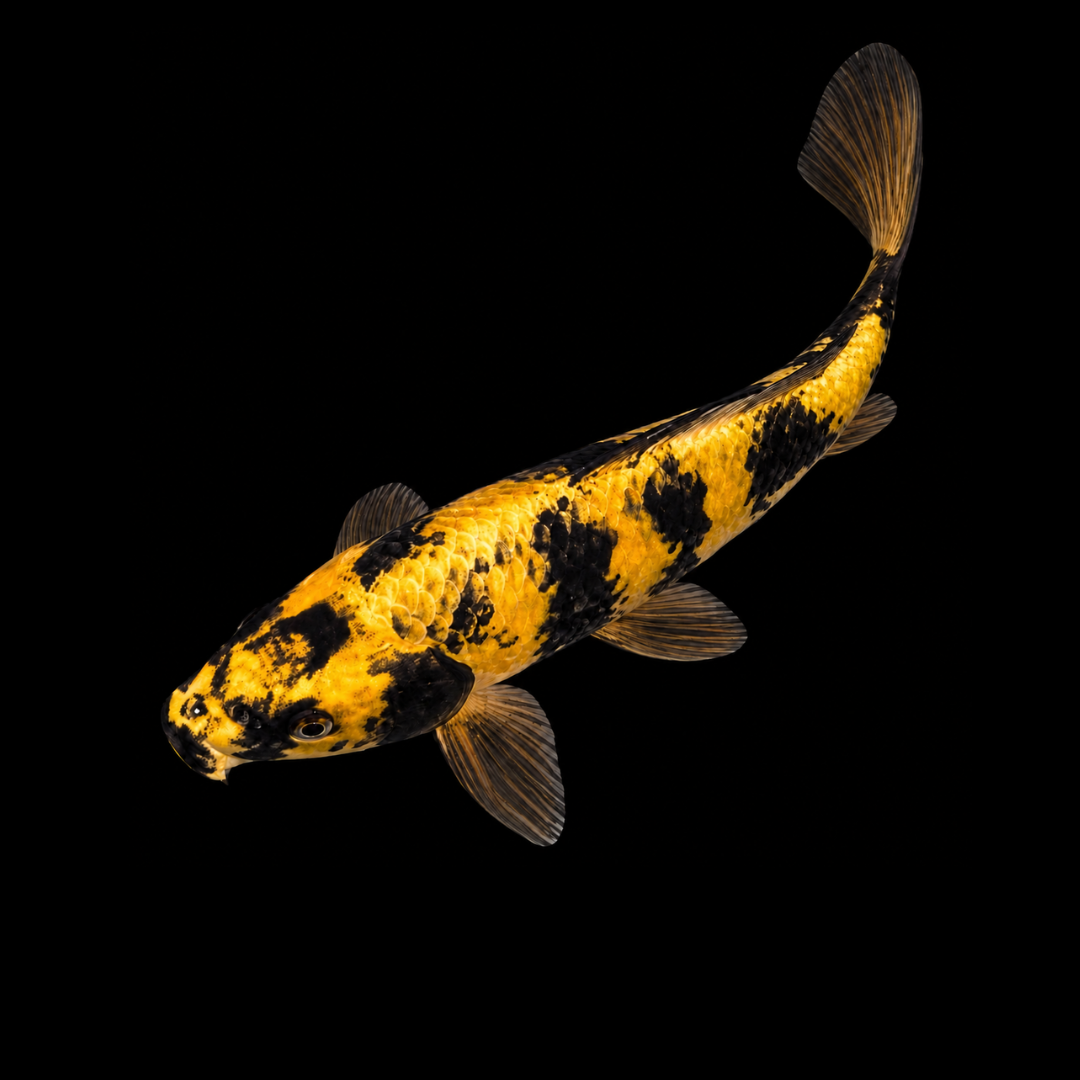
金黄写り(きんきうつり)は、黒地に金色の斑紋が入り、全身が金属的に輝く錦鯉です。光り無地の輝きと写りものの大胆な墨模様を受け継ぐ「光り写り」の一品種で、全身の光沢が高く、模様がはっきりと配置され、頭から尾にかけて豪快な写り墨を見せる個体が高く評価されます。若魚では成長に伴って墨の見え方が変わることがあり、その変化を見守ることも飼育の楽しみです。丈夫なコイではありますが、成魚は大型化し、十分な酸素と強力なろ過を必要とするため、長期飼育には余裕のある池または大型水槽が欠かせません。Kin Ki Utsuri is a Nishikigoi variety with golden markings on a black ground and metallic luster across the body. It belongs to the Hikari Utsuri group, combining the shine of metallic koi with the bold sumi pattern of Utsurimono. Fish with strong overall luster, clearly arranged markings, and powerful Utsuri-style sumi from head to tail are especially valued. The appearance of the sumi may change as a young fish grows, and observing that development is part of its appeal. Although koi are hardy, adults become large and need ample oxygen, powerful filtration, and a spacious pond or large aquarium for permanent care.
基本情報 / Basic Information
学名 / Scientific Name
Cyprinus carpio(観賞用に選抜されたニシキゴイの一品種 / an ornamental Nishikigoi variety)
通称 / Common Name
金黄写り、キンキウツリKin Ki Utsuri
分類 / Family
コイ目コイ科コイ属/錦鯉・光り写り類Order Cypriniformes, family Cyprinidae, genus Cyprinus; Hikari Utsuri variety of Nishikigoi
英名 / English Name
Kin Ki Utsuri
分布 / Distribution
日本で作出された改良品種で、現在は世界各地の錦鯉愛好家によって飼育されています。自然分布を持つ野生種ではありません。A selectively bred variety developed in Japan and now kept by koi enthusiasts worldwide. It is not a wild taxon with a natural geographic range.
最大体長 / Max Size
金黄写りだけを対象にした最大体長の公的な統計は確認されていません。錦鯉は血統や飼育環境による差が大きく、成魚では60~90cm級まで成長することがあります。No authoritative maximum-size figure specific to Kin Ki Utsuri has been established. Size varies greatly with genetics and husbandry, and adult koi may reach the 60–90 cm range.
寿命 / Lifespan
金黄写りだけを対象にした寿命の統計はありません。コイは数十年生きることがある長寿な魚で、飼育下でも20年以上生きる可能性がありますが、実際の寿命は水質、栄養、疾病予防などの管理条件に大きく左右されます。There are no lifespan statistics specific to Kin Ki Utsuri. Carp are long-lived fish that can survive for decades, and koi may live for more than 20 years in captivity, although actual longevity depends strongly on water quality, nutrition, and disease prevention.
飼育環境 / Aquarium Environment
水槽サイズ / Tank Size
幼魚の一時飼育でも120cmワイド水槽(約300~400L)以上を目安とし、成魚の長期飼育には180cm級の大型水槽(1,000L級)または数千L規模の池を検討します。ただし、すべての環境に当てはまる一律の安全水量はありません。個体数、成長後の体格、ろ過能力、実測した水質を基に判断し、成長に合わせて飼育設備を拡張できるようにします。For temporary juvenile care, use at least a 120 cm wide aquarium of roughly 300–400 L. Long-term adult care calls for an approximately 180 cm, 1,000 L-class system or a pond holding several thousand liters. No single volume is safe in every situation; base capacity on stocking level, expected adult size, filtration, and measured water quality, and plan for expansion as the fish grow.
水温 / Temperature
15~25℃を安定して維持すると日常管理がしやすく、給餌量は水温に合わせて調整します。低温には耐えますが、水温10℃前後から給餌を控え、さらに低下した場合は無理に与えません。高水温では水中の酸素が不足しやすいため、28℃前後へ上がる前から曝気と遮光を強化し、急な温度変化を避けます。A stable 15–25°C is practical for routine care, with feeding adjusted to the actual water temperature. Koi tolerate cold conditions, but feeding should be reduced around 10°C and withheld as the water becomes colder. Because warm water holds less oxygen, increase aeration and shade before temperatures approach 28°C, and avoid sudden temperature changes.
水質 / Water Quality
pHは6.8~8.0を目安に安定させ、アンモニアと亜硝酸は検出されない状態を保ちます。十分な溶存酸素、強力な生物ろ過、底の汚れをためない排水設計、定期的な部分換水が重要です。硬度が墨や小墨の出方を直接左右するという因果関係は十分に確認されていないため、色柄を目的に硬度を急変させず、水質の安定と有害物質の抑制を優先します。Keep pH stable at about 6.8–8.0, with ammonia and nitrite undetectable. High dissolved oxygen, robust biological filtration, efficient removal of bottom waste, and regular partial water changes are essential. A direct causal link between hardness and the development of sumi or small black specks has not been adequately established, so do not alter hardness abruptly for color control; prioritize stable water and control of toxic compounds.
レイアウト / Layout
遊泳面積を広く取り、角の鋭い石や露出した配管を避けます。屋外池では、水温の急変を抑えるために1.2m程度以上の水深を一つの目安とし、地域の気候や池の構造に合わせて調整します。底面排水、オーバーフロー、日陰、飛び出し・捕食者対策も組み込みます。鉢植えの丈夫な水生植物は利用できますが、底床へ直接植えると掘り返されやすいため、開けた遊泳空間を優先します。Provide broad, unobstructed swimming space and avoid sharp rocks or exposed plumbing. For outdoor ponds, a depth of about 1.2 m or more is a useful reference for reducing rapid temperature changes, but it should be adjusted for local climate and pond design. Incorporate bottom drainage, overflow protection, shade, and barriers against jumping and predators. Tough aquatic plants in protected pots may be used, but plants rooted directly in the substrate are often disturbed, so prioritize open swimming space.
注意点 / Precautions
見た目の小さな幼魚でも急速に成長し、排泄量が多いため、小型水槽での終生飼育はできません。新しい個体は器具を分けた隔離設備で少なくとも3~4週間観察し、水合わせでは水温とpHの差を小さくします。薬剤、塩分、pH調整剤を自己判断で重ねると水質が急変するため、異常時は測定値を確認してから魚病に詳しい獣医師や専門機関へ相談してください。飼えなくなった個体を河川や池へ放流してはいけません。Even a small juvenile can grow rapidly and produce heavy waste, so a small aquarium is unsuitable for lifelong care. Observe all new fish for at least three to four weeks in a separate quarantine system with dedicated equipment, and minimize temperature and pH differences during acclimation. Combining medications, salt, or pH adjusters without diagnosis can destabilize water; test the water first and consult an aquatic veterinarian or qualified fish-health professional when abnormalities appear. Never release unwanted koi into natural waters.
餌と給餌 / Feeding
餌の種類 / Diet
主食は、成長段階と水温に合う総合栄養食の錦鯉用ペレットです。水温が低い時期には低水温期用と表示された飼料、活発に成長する時期には適正なタンパク質を含む飼料を選びます。スピルリナやアスタキサンチンなどを含む色揚げ飼料は色素成分の補給に使われますが、効果には個体差があります。製品の表示に従い、通常の総合栄養食と組み合わせます。Use a complete koi pellet matched to growth stage and water temperature as the staple. During cooler periods, choose a formula labeled for low-temperature feeding; during active growth, use a diet with appropriate protein. Color-enhancing feeds containing ingredients such as spirulina or astaxanthin are used as sources of pigment-related nutrients, but response varies among individuals. Follow the product directions and combine them with a balanced staple.
給餌のポイント / Feeding Tips
活発に摂餌する時期は1日1~3回を目安に、数分で食べ切る量を少量ずつ与え、残餌は回収します。回数は水温、魚の大きさ、体調、ろ過能力に合わせて調整し、高水温・低水温時、導入直後、体調不良時は量を減らすか休餌します。色揚げ飼料も表示量を超えて与えず、給餌量を増やすときは水質と溶存酸素を同時に確認します。During periods of active feeding, offer one to three small meals a day as a general guide, with only as much as the fish consume within a few minutes, and remove leftovers. Adjust frequency to water temperature, fish size, condition, and filtration capacity; reduce or suspend feeding during temperature extremes, immediately after introduction, or when fish are unwell. Do not exceed the labeled amount of color-enhancing feed, and check water quality and dissolved oxygen whenever total feeding is increased.
性格と混泳 / Temperament and Tank Mates
性格 / Temperament
温和で人に慣れやすく、複数でゆったり泳ぐ社会性のある魚です。口に入る小魚や稚魚、卵は食べることがあり、底を探る習性で植物や底床を動かします。餌場では大型個体が優位になりやすいため、痩せる個体がいないか観察します。Generally peaceful, social, and readily accustomed to people. It may eat small fish, fry, and eggs that fit in its mouth, and its bottom-foraging behavior can disturb plants and substrate. Large individuals may dominate feeding areas, so monitor every fish for adequate body condition.
混泳の相性 / Compatibility
同程度の大きさの錦鯉同士が最も安全です。大型の金魚類と飼育される例もありますが、泳力、餌の競争、水温要求、疾病持ち込みの違いを考慮し、十分な容量と隔離期間を確保します。極端に小さい魚、ヒレをかじる魚、暖水を常に必要とする熱帯魚との混泳は避けます。Other similarly sized koi are the safest companions. Large goldfish are sometimes kept with koi, but differences in swimming ability, feeding competition, temperature needs, and disease risk require generous space and strict quarantine. Avoid very small fish, fin-nipping species, and tropical fish that require continuously warm water.
病気と対策 / Diseases and Prevention
かかりやすい病気 / Common Diseases
日常の飼育で問題になりやすいのは、白点病、トリコディナ症、吸虫類などの寄生虫症、エロモナス菌などが関与する潰瘍・赤斑、鰓障害です。一方、コイヘルペスウイルス病(KHV病)とコイ春ウイルス血症(SVC)は、防疫上重要な伝染病です。KHV病は特に20~25℃前後で発生しやすいとされています。食欲低下、体表をこする、ヒレをたたむ、呼吸が速い、鰓の変色、潰瘍、急な死亡は見逃せない徴候です。Problems commonly encountered in routine care include white spot disease, Trichodina and fluke infestations, ulcers or reddening involving bacteria such as Aeromonas, and gill disorders. Koi herpesvirus disease and spring viraemia of carp, by contrast, are transmissible diseases of major biosecurity importance. KHV disease is particularly associated with outbreaks around 20–25°C. Loss of appetite, flashing, clamped fins, rapid breathing, discolored gills, ulcers, or sudden deaths require prompt attention.
対策と予防 / Prevention
新魚の隔離、網や容器の使い分け、過密防止、十分な曝気、アンモニア・亜硝酸の監視が基本です。症状だけで病名を決めず、皮膚・鰓の検査や水質測定に基づいて治療します。KHV病などが疑われる大量死では、生体の移動、販売、譲渡、放流を止め、都道府県の水産試験場や魚病担当窓口へ速やかに相談します。死亡魚や飼育水を自然水域へ捨てず、設備は専門機関の指示に従って消毒します。Prevention centers on quarantining new fish, dedicating nets and containers, avoiding crowding, providing strong aeration, and monitoring ammonia and nitrite. Do not diagnose from appearance alone; treatment should follow water testing and, where possible, skin and gill examination. If mass mortality suggests KHV disease or another serious infection, stop moving, selling, giving away, or releasing fish and promptly contact the relevant prefectural fisheries or fish-health authority. Never discard dead fish or untreated system water into natural waterways, and disinfect equipment according to professional guidance.
増やし方(繁殖) / Breeding
雌雄の判別 / Sexing
成熟した雌は腹部に幅と丸みが出やすく、生殖孔が大きく丸みを帯びます。雄は比較的細身で、繁殖期には胸びれの親骨や鰓蓋に白い追星が現れることがあります。若魚では外見だけの判別が難しく、体型だけでの断定はできません。Mature females tend to develop a broader, rounder abdomen and a larger, more rounded vent. Males are usually slimmer and may develop white breeding tubercles on the leading rays of the pectoral fins and on the gill covers. Juveniles are difficult to sex reliably, and body shape alone is not conclusive.
繁殖形態 / Reproduction
春から初夏に、粘着性の卵を水草や産卵ブラシへ多数ばらまく卵生魚です。親魚による卵・稚魚の保護はなく、産卵後には自分の卵を食べることがあります。成熟時期は成長条件で変わりますが、一般に雄が雌より早く成熟します。An egg-scattering species that deposits numerous adhesive eggs on plants or spawning brushes from spring into early summer. Parents provide no care and may eat the eggs after spawning. Age at maturity varies with growth conditions, with males generally maturing earlier than females.
繁殖のポイント / Breeding Tips
健康な親魚を別池で整え、水温が18~22℃程度で安定する時期に産卵池へ移します。産卵ブラシを十分に用意し、産卵後は卵を食べる親魚を速やかに分けます。卵には清浄で酸素の豊富な水を緩やかに通し、死卵やカビを除きます。金黄写り同士を交配しても、同じ外観の稚魚が一様に得られるわけではありません。金属光沢、黄金色、写り墨、体型をそろえるには、多数の稚魚から成長に合わせて選別する必要があります。Condition healthy broodfish separately and move them to a spawning pond when the water is stable at about 18–22°C. Provide abundant spawning brushes and remove the adults promptly after spawning because they may eat the eggs. Pass clean, well-oxygenated water gently over the eggs, removing dead or fungused eggs. Even a pairing of Kin Ki Utsuri does not produce uniformly matching offspring. Combining metallic luster, golden color, Utsuri sumi, and sound conformation requires repeated selection from many fry as they grow.
雑学と豆知識 / Trivia and Fun Facts
1. 1958年、新潟で生まれた黄金と墨 / 1. Gold and Sumi, Born in Niigata in 1958
金黄写りの始まりは昭和33年(1958年)です。全日本錦鯉振興会の品種作出年表には、新潟県山古志村の高橋藤蔵が黄金と黄写りを交配して作出したと記録されています。黄金が作出された昭和22年(1947年)から十年余りの時期には、金属光沢を既存品種へ取り入れた光りものが次々に生まれました。金黄写りは、黄金の輝きと黄写りの写り墨が結びついた、当時の品種改良の流れをよく伝える品種です。Kin Ki Utsuri dates to 1958. The variety chronology of the All Japan Nishikigoi Promotion Association records that Tozo Takahashi of Yamakoshi, Niigata, created it by crossing Ogon with Ki Utsuri. In the decade after Ogon was developed in 1947, a succession of metallic varieties appeared as breeders introduced luster into established koi. Kin Ki Utsuri clearly reflects that period of development by combining the shine of Ogon with the Utsuri sumi of Ki Utsuri.
2. 「光り写り」を決める三つの鍵 / 2. Three Keys to Hikari Utsuri Identity
全日本錦鯉振興会の品種データベースでは、光り写りを「黒地」「斑紋」「全身の光り」という要素に、写り墨を備えるものとして整理しています。金黄写りでは、その斑紋が金色です。似た名前の銀鱗黄写りは鱗の一部が反射して見える銀鱗系であり、体表全体の金属光沢を味わう金黄写りとは分類上の見どころが異なります。The All Japan Nishikigoi Promotion Association describes Hikari Utsuri through a black ground, colored pattern, whole-body luster, and Utsuri-style sumi. In Kin Ki Utsuri, the colored pattern is gold. The similarly named Ginrin Ki Utsuri belongs to the sparkling-scale Ginrin group; its appeal differs from the continuous metallic sheen expected across the body of Kin Ki Utsuri.
3. 金色は色素と光の共同作品 / 3. Gold Is a Collaboration Between Pigment and Light
魚の体色は、色素を持つ細胞と光を反射する細胞の組み合わせによって見え方が決まります。一般に、黄色系の色素胞が色をつくり、グアニン結晶を含む虹色素胞が光を反射することで、金属的な輝きが生まれます。金黄写りを観賞するときは背の色だけでなく、頭部、肩口、鱗の並び、胸びれの親骨まで光りが途切れず回っているかを見ると、光り写りならではの質が分かりやすくなります。The visible color of a fish depends on the combination of pigment-containing cells and light-reflecting cells. In general, yellow chromatophores provide color, while iridophores containing guanine crystals reflect light and create a metallic sheen. When appreciating Kin Ki Utsuri, look beyond the dorsal color: continuous luster across the head, shoulders, scale rows, and leading rays of the pectoral fins makes the quality of Hikari Utsuri easier to recognize.
4. 墨は完成してからも動いて見える / 4. Sumi Can Appear to Move Even After It Develops
写りものの墨は、成長に伴って濃さや輪郭の見え方が変わることがあります。季節、体調、照明などによっても印象が変わるため、短期間の見え方だけで模様が移動した、あるいは完成したと判断することはできません。同じ条件で定期的に写真を残すと、一時的な変化と成長に伴う変化を比べやすくなり、一尾がたどる時間の物語をより丁寧に追うことができます。In Utsuri varieties, the apparent depth and edges of sumi may change as the fish grows. Season, condition, and lighting can also alter its appearance, so a brief change does not prove that the pattern has moved or fully finished. Photographs taken regularly under similar conditions make it easier to compare temporary changes with long-term development and to follow the story of an individual fish more carefully.
5. 影金黄写りという渋い派生 / 5. The Subtle Kage Kin Ki Utsuri
金黄写りの黄色い斑紋に、鱗目に沿う淡い網目状の墨が現れるものは影金黄写りと呼ばれます。強い二色対比を楽しむ通常の金黄写りに対し、影墨は薄い布を一枚重ねたような奥行きを加えます。派手さだけでは語れない陰影があり、見る距離や光の角度によって印象が変わるところに、愛好家が惹かれる理由があります。A Kin Ki Utsuri with a faint, net-like black pattern following the scales within the yellow areas is known as Kage Kin Ki Utsuri. Whereas the standard form emphasizes a forceful two-color contrast, kage sumi adds depth like a translucent layer of cloth. Its appeal lies in nuanced shadow rather than brilliance alone, changing character with viewing distance and the angle of light.
6. 大型の優品に求められる条件 / 6. The Demands of a Large, High-Quality Specimen
金黄写りの優品には、整った体型、均一な光沢、濁りの少ない金色、深い墨、釣り合いのよい模様が求められます。成長後もこれらの要素を同時に保つ必要があるため、養鯉場では幼い段階から成長に合わせて選別が重ねられます。黄金と墨という二色の構成は一見単純ですが、体が大きくなっても全体の調和を保つには、複数の条件がそろわなければなりません。A high-quality Kin Ki Utsuri is expected to combine sound conformation, even luster, clean gold, deep sumi, and a balanced pattern. Because these qualities must remain in harmony as the fish grows, breeders repeat their selections through successive stages of development. The two-color design of gold and black may look simple, but a large fish requires several qualities to remain balanced at the same time.
7. 鑑賞するときの見方 / 7. A Practical Way to Appreciate the Fish
鑑賞するときは、まず頭から尾筒までの体型と肉付きを見て、次に全身の光沢と地肌、墨の質、模様の配置へ視線を進めると、全体の調和をつかみやすくなります。近くで色の境界を確かめるだけでなく、少し離れて泳ぐ姿を見ると、腹側から背へ巻く墨が体の印象にどう作用しているかも分かります。静止した一瞬だけでなく、水中で金と黒が交互に現れる動きまで含めて味わえる美しさです。When appreciating the fish, begin with body shape and volume from head to tail tube, then move to whole-body luster and skin, sumi quality, and pattern placement. This order makes the overall balance easier to understand. In addition to checking color boundaries up close, step back and watch the fish swim to see how the sumi rising from the underside influences the impression of the body. Its beauty lies not only in a still moment, but also in the alternating gold and black revealed in motion.
まとめ / Conclusion
金黄写りは、黒地に浮かぶ黄金の光沢と、力強い写り墨の対比を楽しむ錦鯉です。幼魚の姿だけでなく、成長後の大きさまで見据え、余裕のある池や大型水槽、十分な酸素、強力なろ過、新しい個体を隔離できる環境を整えることが、長期飼育の出発点になります。Kin Ki Utsuri is appreciated for the contrast between golden luster and powerful Utsuri sumi on a black ground. Choosing one means looking beyond the juvenile and preparing for the adult: a spacious pond or large aquarium, ample oxygen, powerful filtration, and a proper quarantine system are the foundations of long-term care.
水質の急変を避け、水温と体調に合った量の餌を与え、日々の泳ぎや呼吸を観察することで、金色と墨の魅力を健やかに保ちやすくなります。成長に伴う見え方の変化を一つずつ受け止めながら、長い時間をかけて向き合える存在です。Avoiding sudden water changes, feeding according to temperature and condition, and observing daily swimming and breathing help preserve the health and appeal of its gold and sumi. Kin Ki Utsuri is a fish to appreciate over many years, accepting each change in appearance as part of its growth.






コメント