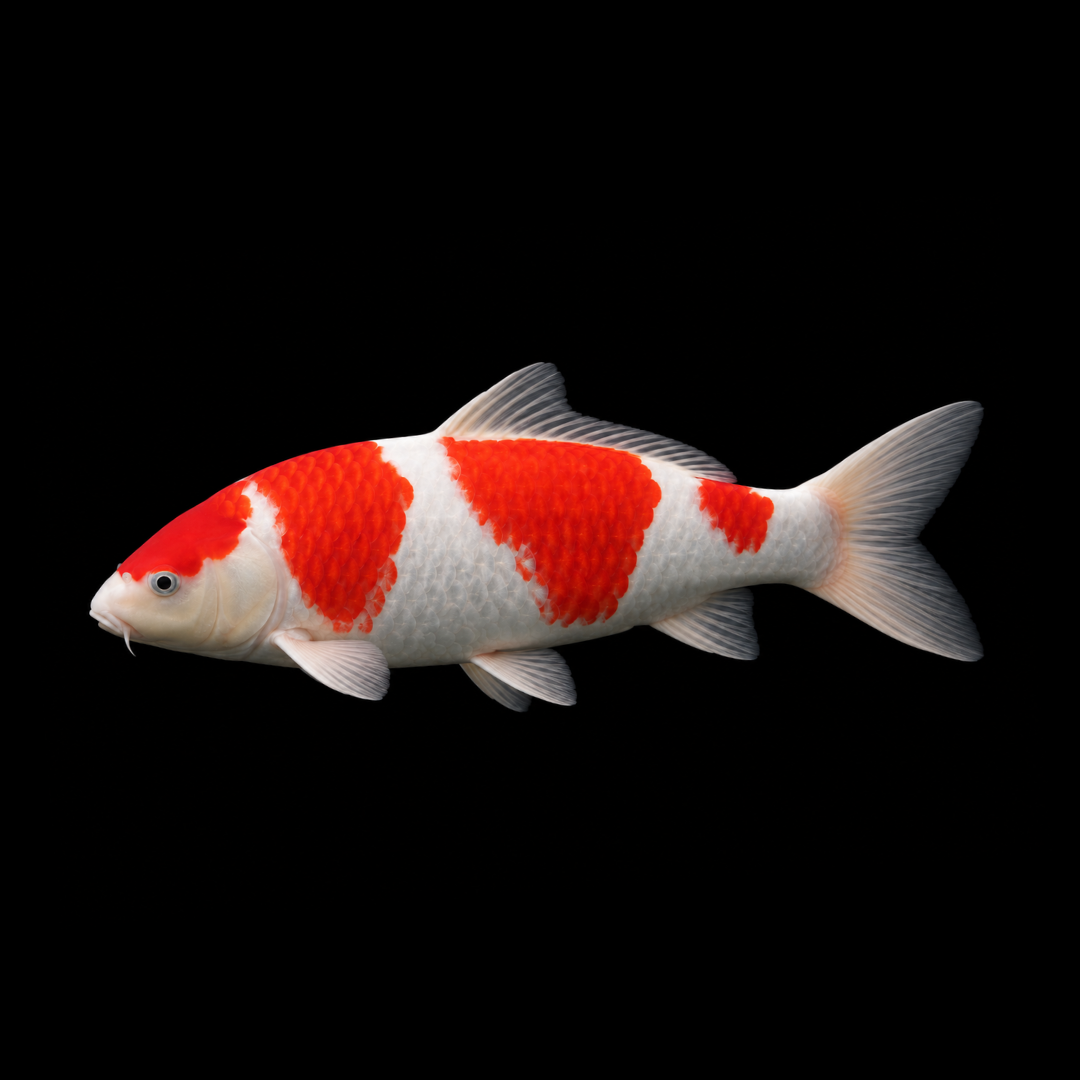
錦鯉は、コイを長い年月にわたって選抜交配し、白地、緋、墨、金銀の光沢などを観賞できるように育成した日本生まれの観賞魚です。紅白、大正三色、昭和三色をはじめ、色彩や鱗の質感が異なる多くの品種があり、ゆったりと泳ぐ姿と成長に伴う模様の変化を楽しめます。人によく慣れる一方、成魚は非常に大きく、排泄量も多いため、十分な水量、強力なろ過、豊富な酸素、そして長期的な飼育計画が欠かせません。小さな幼魚を一般的な水槽で飼い始めることはできますが、終生飼育の基本は広い池または大型の専用設備です。Koi are ornamental forms of the common carp developed in Japan through generations of selective breeding. Their many varieties display white skin, red and black markings, metallic gold or silver, and distinctive scale textures. Kohaku, Taisho Sanshoku, and Showa Sanshoku are among the best-known varieties. Koi become tame and their patterns can change as they mature, but adults grow very large and produce a heavy waste load. Long-term care therefore requires generous water volume, powerful filtration, high dissolved oxygen, and a realistic plan for their adult size. Juveniles can begin life in a conventional aquarium, but a spacious pond or a purpose-built large system is the normal choice for lifelong care.
基本情報 / Basic Information
学名 / Scientific Name
Cyprinus carpio Linnaeus, 1758
通称 / Common Name
ニシキゴイ(錦鯉)。歴史的には「色鯉」「変わり鯉」とも呼ばれました。Nishikigoi, or Japanese ornamental carp; historically also called coloured carp or unusual carp in Japan.
分類 / Family
コイ目コイ科コイ属。野生型・食用系統と同じコイの観賞用品種群Order Cypriniformes, family Cyprinidae, genus Cyprinus. Koi are ornamental strains of the common carp.
英名 / English Name
Koi, Japanese Koi, Ornamental Carp
分布 / Distribution
観賞魚としての発祥地は日本の新潟県中越地方です。現在は日本各地および世界各国で養殖・飼育されています。錦鯉のもとになったコイはユーラシアを中心に広く分布し、人為的な移入によって分布域を大きく広げています。Ornamental koi originated in the Chuetsu region of Niigata Prefecture, Japan, and are now bred and kept worldwide. The common carp from which koi were developed has a broad Eurasian distribution that has been greatly expanded by human introductions.
最大体長 / Max Size
通常は60~80cmほどです。大型個体は90cm前後に達することがあります。Koi commonly grow to about 60–80 cm, while large individuals may reach around 90 cm.
寿命 / Lifespan
一般に20~40年ほどとされます。系統や飼育環境、健康管理によって差があり、良好な条件ではさらに長く生きることがあります。Koi commonly live for about 20–40 years. Lifespan varies with bloodline, environment, and health care, and some fish live longer under favourable conditions.
飼育環境 / Aquarium Environment
水槽サイズ / Tank Size
120cm規格水槽(約240L)は、幼魚を少数・一時的に管理する場合の一例です。成魚の終生飼育には、数千L以上の池や特注の大型水槽が現実的ですが、必要な水量は体長、尾数、ろ過能力によって大きく変わります。成長前に余裕のある設備へ移せる計画を立ててください。A standard 120 cm aquarium of about 240 L is one option only for temporarily managing a small number of juveniles. Lifelong adult care is more realistic in a purpose-built large aquarium or a pond holding several thousand litres or more, although the volume required varies greatly with fish size, number, and filtration capacity. Plan an upgrade before the fish outgrow the available space.
水温 / Temperature
幅広い水温に耐えますが、活発に餌を食べる時期の管理は18~25℃前後が目安です。急変を避け、水温が10~12℃を下回る頃から給餌量を減らし、魚が餌を求めない低水温期は無理に与えません。Koi tolerate a broad range of temperatures, but about 18–25°C is a practical guide during periods of active feeding. Avoid rapid changes, reduce feeding as the temperature falls below roughly 10–12°C, and do not feed when the fish show no interest during cold periods.
水質 / Water Quality
pH 6.8~8.2程度の安定した中性~弱アルカリ性を目安にします。アンモニアと亜硝酸は検出されない状態を維持し、硝酸塩の蓄積を定期換水で抑えます。酸素を多く必要とするため、強いエアレーションと十分に成熟した生物ろ過が欠かせません。数値そのものより、急変を避けることが重要です。Aim for stable neutral to mildly alkaline water around pH 6.8–8.2. Ammonia and nitrite should remain undetectable, while nitrate accumulation should be controlled with regular water changes. Koi have a high oxygen demand, so strong aeration and fully matured biological filtration are essential. Avoiding sudden changes is more important than chasing an exact number.
レイアウト / Layout
広い遊泳空間を優先し、底は掃除しやすい構造にします。池では底排水、スキマー、機械ろ過、生物ろ過を組み合わせ、流れのよどみを減らします。角の鋭い石や粗い装飾は体表や鰭を傷つけるため避け、飛び出し防止策も用意します。柔らかい水草は掘り返したり食べたりしやすいため、植栽する場合は保護が必要です。Prioritize open swimming space and a bottom that is easy to clean. In ponds, combine bottom drains, skimming, mechanical filtration, and biological filtration while minimizing stagnant areas. Avoid sharp rocks and rough decorations that can injure skin or fins, and provide protection against jumping. Soft plants are readily uprooted or eaten and require protection if included.
注意点 / Precautions
小さな幼魚でも短期間で成長するため、現在の体長ではなく成魚サイズで設備を計画します。新しい個体は既存魚と水を共有しない別設備で少なくとも3~4週間観察し、網や容器も共用しません。ただし、観察期間だけで感染症がないとは判断できないため、導入元の検査状況や隔離中の水温も確認します。水温だけでなく水質の差にも注意し、購入袋の水は池や水槽へ入れません。塩や薬剤は濃度、対象病原体、水温、ろ過への影響を確認せずに使用しないでください。Even small juveniles can grow quickly, so plan the system around adult size rather than current length. Observe new fish for at least three to four weeks in a separate system that shares neither water nor equipment with the established collection. An observation period alone cannot prove that a fish is free of infection, so also check the supplier’s test history and the temperature maintained during quarantine. Match water chemistry as well as temperature, and do not pour transport water into the pond. Never use salt or medication without confirming the concentration, target organism, temperature limits, and effects on filtration.
餌と給餌 / Feeding
餌の種類 / Diet
主食は、錦鯉用に栄養設計された良質な浮上性または沈下性の配合飼料です。季節と目的に合わせ、育成用、低水温用、色揚げ用を使い分けます。錦鯉は雑食性ですが、飼育下では配合飼料を中心にします。パンや味付けされた人の食べ物は適しません。Use a high-quality floating or sinking formulated koi food as the staple. Growth, cool-season, and colour-enhancing formulas can be selected according to season and purpose. Although koi are omnivorous, a nutritionally complete formulated food should remain the foundation in captivity. Bread and seasoned human foods are unsuitable.
給餌のポイント / Feeding Tips
活動期は、水温と製品表示に合わせ、数分で食べ切れる量を1日数回に分けて与えます。水温、溶存酸素、魚の動き、糞の状態を見て量を調整し、食べ残しを出さないことが基本です。猛暑で酸素が不足しやすい時間帯や、病気・輸送直後には給餌を控えます。色揚げ飼料も、主食全体の栄養バランスを崩さない範囲で使用してください。During the active season, follow the product directions and water temperature, dividing the ration into several small meals that are consumed within a few minutes. Adjust the amount to dissolved oxygen, activity, and faeces, and avoid leaving uneaten food. Feed sparingly during oxygen-poor hot periods, illness, or immediately after transport. Use colour-enhancing diets without compromising the overall nutritional balance of the staple food.
性格と混泳 / Temperament and Tank Mates
性格 / Temperament
基本的には温和で社会性があり、同程度の大きさの仲間と群れながら泳ぎます。給餌する人を覚えて水面へ寄ってくることも多く、手から餌を受け取るほど慣れる個体もいます。ただし、餌を探して底床や植栽を盛んにつつきます。Koi are generally peaceful and social, often swimming with companions of a similar size. Many learn to approach their keeper at feeding time and some become tame enough to take food from the hand. Their constant foraging, however, can disturb substrates and plants.
混泳の相性 / Compatibility
同程度の大きさの錦鯉同士で飼育するのが基本です。大きな金魚やマゴイと同居できる場合もありますが、必要水量、泳力、給餌量の違いを見ながら管理します。口に入る小魚やエビは食べる可能性があるため、極端に小さい個体との同居は避けてください。Keeping koi with similarly sized koi is the most straightforward choice. Large goldfish or common carp may coexist in some systems, but differences in space, swimming ability, and feeding needs require careful management. Small fish and shrimp may be eaten, so avoid companions that fit into a koi’s mouth.
病気と対策 / Diseases and Prevention
かかりやすい病気 / Common Diseases
白点病、トリコディナ症、コイウオジラミ症、イカリムシ症などの寄生虫性疾患、カラムナリス症や運動性エロモナス症などの細菌性疾患に注意します。さらに、コイヘルペスウイルス病(KHVD)とウイルス性コイ浮腫症(CEVD、通称・眠り病)は、鰓障害、沈底、食欲低下、大量死につながり得る重要な感染症です。外見だけでは原因を特定できないため、自己判断で薬浴を重ねないことが大切です。Watch for parasitic conditions such as white spot disease, trichodiniasis, fish lice, and anchor worm, as well as bacterial diseases including columnaris and motile Aeromonas infections. Koi herpesvirus disease and carp edema virus disease, also called koi sleepy disease, are particularly serious infections that may cause gill damage, bottom-sitting, loss of appetite, and high mortality. Appearance alone cannot reliably identify the cause, so avoid repeated treatment based only on guesswork.
対策と予防 / Prevention
十分な隔離観察、専用器具、適正な収容密度、安定した水質と酸素量が予防の柱です。毎日、食欲、泳ぎ、呼吸、鰓、体表、糞を観察します。急な大量死、鰓の壊死、異常な沈底などが見られた場合は魚の移動や譲渡を止め、販売店、魚病に詳しい獣医師、都道府県の水産担当機関へ相談してください。KHVDには確立した根本治療がなく、生残魚が感染源となる可能性もあります。自己判断で既存の群れへ戻さず、専門機関の指示に従ってください。Prevention rests on adequate quarantine, dedicated equipment, sensible stocking density, stable water quality, and high oxygen. Check appetite, swimming, respiration, gills, skin, and faeces every day. If sudden mass mortality, gill necrosis, or unusual bottom-sitting occurs, stop moving or transferring fish and consult the seller, an aquatic veterinarian, or the responsible fisheries authority. There is no established curative treatment for koi herpesvirus disease, and surviving fish may remain a source of infection. Do not return them to an established group without guidance from the appropriate specialists or authorities.
増やし方(繁殖) / Breeding
雌雄の判別 / Sexing
成熟した雌は産卵期に腹部がふっくらし、体幅が出やすい傾向があります。雄は比較的細身で、繁殖期には胸鰭や鰓蓋に白い追星が現れ、胸鰭の前縁がざらつくことがあります。ただし幼魚や肥満個体では外見だけの判別が難しく、単一の特徴で断定はできません。Mature females tend to develop a fuller abdomen and broader body during the spawning season. Males are often slimmer and may develop white breeding tubercles on the pectoral fins and gill covers, with a roughened leading edge to the pectoral fins. Juveniles and overweight fish can be difficult to sex, so no single external feature is definitive.
繁殖形態 / Reproduction
卵生で、春から初夏に水温が上がると、雄が雌を追尾します。雌が水草や産卵用ブラシへ粘着性の卵を放つと、雄が放精して体外受精します。親魚は卵や仔魚を保護せず、食べてしまうことがあります。ふ化までの日数は水温によって変わります。Koi are egg-layers. As water warms from spring into early summer, males chase females. Females release adhesive eggs onto plants or spawning brushes, and males release sperm for external fertilisation. The parents provide no care and may eat eggs or fry. Incubation time varies with temperature.
繁殖のポイント / Breeding Tips
十分に成熟した健康な親魚を選び、広い繁殖池に柔らかな産卵ブラシを用意します。産卵後は親魚または付着卵を別設備へ移し、強すぎない通水と十分な酸素を確保します。ふ化仔魚には初期餌料から微細な稚魚用飼料へ段階的に切り替えます。多数の稚魚が生まれるため、過密を避ける育成池と選別後の引き取り先まで事前に計画する必要があります。美しい模様は単純に親と同じ形で遺伝せず、観賞価値の高い個体を得るには多数からの継続的な選別が必要です。Select healthy, fully mature broodfish and provide soft spawning brushes in a spacious breeding pond. After spawning, move either the adults or the egg-covered media to a separate system with gentle circulation and ample oxygen. Transition newly hatched fry from suitable first foods to finely sized fry diets. Because a single spawning produces many fry, plan grow-out space, culling, and future homes in advance. Attractive patterns do not pass from parent to offspring in a simple, identical form; producing show-quality koi requires repeated selection from large numbers.
雑学と豆知識 / Trivia and Fun Facts
1. 雪国の食用鯉から始まった色彩の物語 / 1. A Story of Colour That Began with Food Carp in Snow Country
錦鯉の物語は、現在の新潟県長岡市山古志地域と小千谷市周辺の山里から始まります。豪雪で冬の往来が難しかった土地では、棚田のため池で食用のコイが大切に育てられていました。その群れに現れた色の変わった個体を、人々が食料ではなく美の対象として残し、色や模様を見ながら繁殖を重ねたことが品種改良の出発点です。山あいに点在する池と集落の交流が、やがて世界へ広がる観賞文化を育てました。1914年の東京大正博覧会で「越後の変わり鯉」が紹介されると、その存在は全国に知られるようになります。The story of koi began in mountain villages around today’s Yamakoshi area of Nagaoka and neighbouring Ojiya in Niigata Prefecture. In this snowy region, where winter travel was difficult, common carp were raised in irrigation ponds as valuable food. When unusually coloured fish appeared, villagers kept them for beauty rather than the table and bred them selectively for colour and pattern. Scattered ponds and exchanges between villages gradually created an ornamental tradition that would travel worldwide. Their presentation as unusual coloured carp from Echigo at the 1914 Tokyo Taisho Exhibition helped introduce them to the rest of Japan.
2. 御三家は似ていても、色の重なり方が違う / 2. The Big Three Differ in How Their Colours Are Built
紅白、大正三色、昭和三色は「御三家」と呼ばれます。紅白は白地と緋で構成され、大正三色は白地に緋と点在する墨が乗る端正な印象です。昭和三色は黒い素地に緋と白が加わるような力強い構成を見せ、頭部の墨や胸鰭基部の「元黒」が重要な見どころになります。品評会では模様だけでなく、骨格と肉付きがつくる体型、白地の清らかさ、緋や墨の質、肌の艶が総合的に見られます。派手な模様だけで価値が決まらないところに、錦鯉鑑賞の奥深さがあります。Kohaku, Taisho Sanshoku, and Showa Sanshoku are known collectively as the Big Three. Kohaku is composed of white skin and red markings. Taisho Sanshoku adds relatively discrete black markings over a white-and-red foundation, creating a refined impression. Showa Sanshoku presents a more forceful arrangement in which black visually underpins the red and white; black on the head and solid motoguro at the base of the pectoral fins are notable features. At shows, pattern is only part of the judgement. Body structure, skin quality, purity of white, depth of red and black, and overall lustre are considered together, which is why koi appreciation extends far beyond a striking design.
3. 緋は餌だけでは作れない / 3. Red Colour Cannot Be Made by Food Alone
鮮やかな緋を見ると、色揚げ飼料だけで発色が決まるように思えるかもしれません。しかし魚はカロテノイドを餌から得たうえで、吸収、運搬、変換、蓄積という複数の段階を経て皮膚へ色を表します。そこには色素細胞の分布や遺伝的な素質も関わります。脊椎動物では、CYP2J19やBDH1Lなどが黄色系カロテノイドを赤いケトカロテノイドへ変える仕組みに関与することが示されています。ただし、この研究は錦鯉だけを対象にしたものではないため、緋をこれらの遺伝子だけで説明することはできません。つまり、餌は色素の材料を補い、その現れ方は遺伝的素質、色素細胞、飼育環境に左右されます。Brilliant red markings can make colour-enhancing food seem like the whole explanation, but fish first obtain carotenoids from the diet and then absorb, transport, transform, and store them in the skin. The distribution of pigment cells and inherited capacity also matter. In vertebrates, CYP2J19 and BDH1L have been shown to participate in converting yellow carotenoids into red ketocarotenoids. This research was not limited to koi, however, so koi red cannot be explained by these genes alone. In practical terms, food supplies pigment material, while inherited traits, pigment cells, and the rearing environment determine how that colour appears.
4. 銀鱗の輝きは小さな鏡が生む構造色 / 4. Ginrin Sparkle Is a Structural Colour Made by Tiny Mirrors
銀鱗や光り物のきらめきは、絵の具のような色素だけで生まれるものではありません。皮膚や鱗にある虹色素胞の中では、グアニン結晶が小さな反射板のように光を返します。光の当たる角度や魚の動きによって輝きが変わるのは、この微細な構造が光を反射・干渉させるためです。静止画では伝わり切らない美しさが泳ぐたびに現れることこそ、生きた観賞魚ならではの魅力です。The sparkle of Ginrin and metallic koi is not produced by pigment alone. Within reflective cells in the skin and scales, guanine crystals act like minute mirrors. Their microscopic arrangement reflects and interferes with light, so brilliance changes with viewing angle and every movement of the fish. This shifting radiance, impossible to capture fully in a still photograph, is part of the special beauty of a living ornamental fish.
5. ヒレナガニシキゴイは国際交流から生まれた / 5. Longfin Koi Grew from International Exchange
長くたなびく鰭を持つヒレナガニシキゴイは、インドネシア由来のヒレナガゴイと日本の錦鯉を交配する構想から生まれました。埼玉県の研究機関が育種に取り組み、1982年に作出しました。伝統的な錦鯉の色彩と、風を受ける布のように揺れる長い鰭が結びついた姿は、錦鯉文化が固定された過去の遺産ではなく、異なる地域の生物資源と発想を取り込みながら今も展開していることを物語ります。Longfin koi, with fins that trail through the water, arose from the idea of crossing long-finned carp from Indonesia with Japanese koi. A Saitama Prefecture research institute pursued the breeding programme and produced the form in 1982. The union of traditional koi colour with fins that move like cloth in a breeze shows that koi culture is not a fixed relic of the past; it continues to evolve by bringing together biological resources and ideas from different regions.
6. 美しさを守る最初の技術は「混ぜない」こと / 6. The First Technique for Protecting Beauty Is Separation
高度なろ過装置や薬剤に目が向きがちですが、錦鯉の健康を守る最初の技術は、新しく迎えた魚をすぐ既存の群れへ入れないことです。KHVDをはじめとする感染症は、外見に異常が見えない感染魚や、病原体を含む飼育水を介して広がることがあります。別の水、別の網、別の容器で観察するという地道な手順が、長年育てた群れ全体を守ります。日本の輸出養殖施設でも、導入記録、検査、隔離飼育などを組み合わせた管理が求められており、家庭の池でも考え方は同じです。美しい一尾を迎える喜びと、先住魚を守る責任はいつも一組になっています。Sophisticated filters and medicines attract attention, yet the first technique for protecting koi health is simply not to mix a newcomer immediately with the established group. Infections including koi herpesvirus disease can spread through infected fish that show no obvious signs or through contaminated water. The unglamorous routine of separate water, nets, containers, and observation can protect a collection built over many years. Japanese export facilities likewise combine introduction records, testing, and isolation. The same principle applies to a home pond: the joy of welcoming a beautiful new fish always comes with responsibility for those already living there.
まとめ / Conclusion
錦鯉には、雪国の暮らしの中で重ねられた選抜の歴史と、色素細胞や構造色が生み出す生物としての美しさがあります。幼魚の小ささだけで飼育設備を決めず、成長後の体格に見合う水量、ろ過、酸素、隔離環境をあらかじめ整えることが、長期飼育の出発点です。Koi carry a history of selection shaped by life in Japan’s snow country, together with the biological beauty produced by pigment cells and structural colour. Long-term care begins by planning beyond the small size of a juvenile and preparing the water volume, filtration, oxygen, and quarantine space required by an adult.
食欲や泳ぎを日々観察し、季節と水温に応じて給餌を調整し、水質の急変を避けて管理することで、健やかな体つきと肌の艶が育ちます。人の気配に応じて水面へ集まり、年月とともに存在感を増していく姿は、長く向き合うほど深い魅力を見せてくれます。Daily observation of appetite and swimming, feeding adjusted to season and temperature, and protection from sudden water-quality changes support a healthy body and clear skin lustre. Koi that gather at the surface when people approach and gain presence with the passing years reveal a deeper appeal the longer they are cared for.
Andrian, K. N., Wihadmadyatami, H., Wijayanti, N., Karnati, S., and Haryanto, A. 2024. “A comprehensive review of current practices, challenges, and future perspectives in Koi fish (Cyprinus carpio var. koi) cultivation.” Veterinary World 17(8): 1846–1854. https://doi.org/10.14202/vetworld.2024.1846-1854






コメント