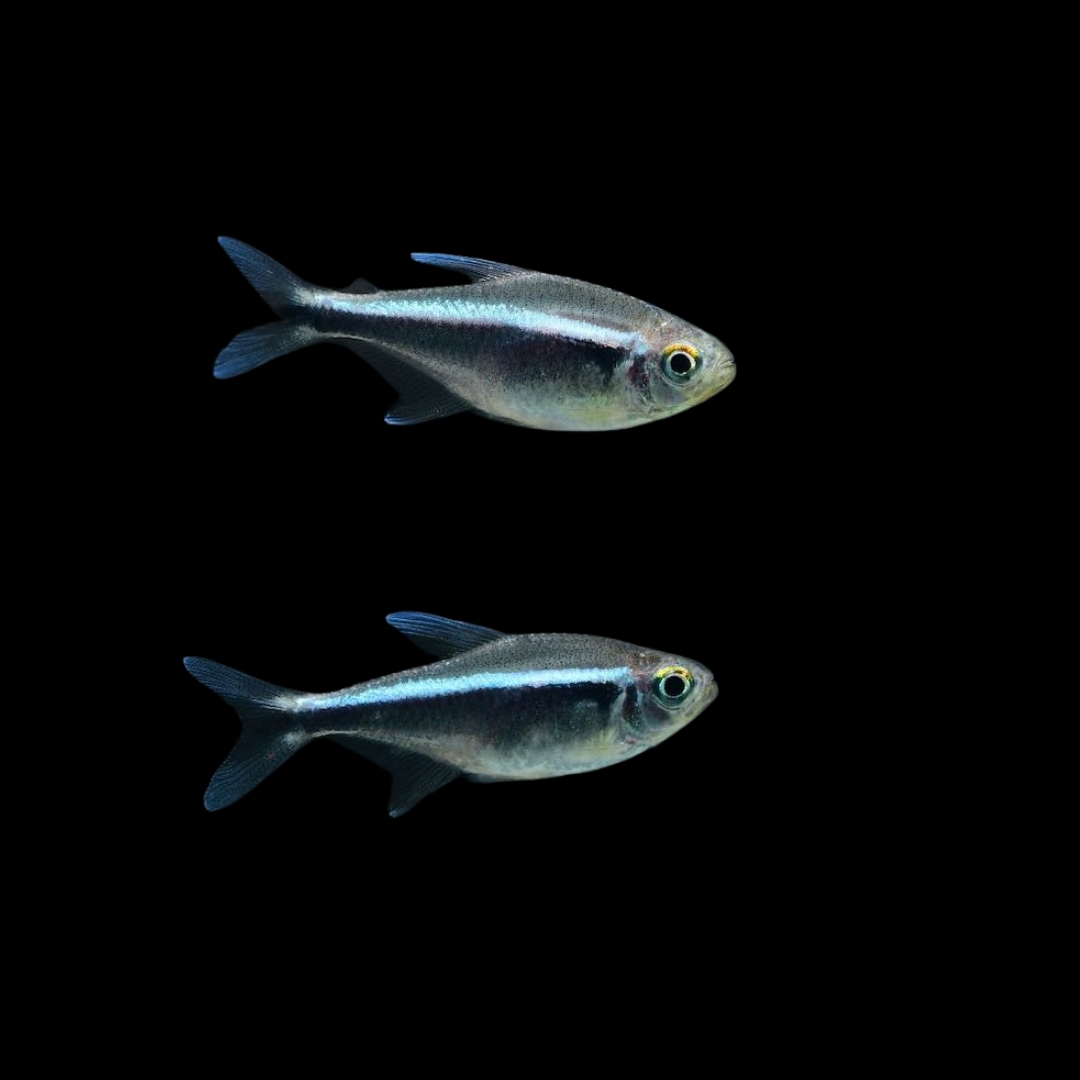
ブラックネオンテトラは、南米パラグアイ川流域に由来する小型のカラシン類です。名前に「ネオンテトラ」と入りますが、ネオンテトラの黒い品種ではなく、ヒフェソブリコン属に分類される独立した別種です。体側には、光を受けて白銀色に輝く細いラインと、その下に走るベルベットのような黒い帯があり、水草水槽の緑や暗い底床の上で落ち着いた美しさを見せます。丈夫で水質への適応力が高く、群れで泳ぐ姿が美しいため、初めての熱帯魚としても、完成度の高いレイアウト水槽の主役としても扱いやすい魚です。The black neon tetra is a small characin native to the Paraguay River basin in South America. Despite its name, it is not a black form of the neon tetra, but a separate species classified in the genus Hyphessobrycon. Its body is marked by a narrow reflective white to silvery stripe and a broad velvet-black band beneath it, creating an elegant contrast against aquatic plants and dark substrates. Hardy, adaptable, and beautiful in groups, it is suitable both for beginners and for refined planted aquariums.
基本情報 / Basic Information
学名 / Scientific Name
Hyphessobrycon herbertaxelrodi
通称 / Common Name
ブラックネオンテトラ、ブラックネオンBlack neon tetra
分類 / Family
カラシン目、アケストロラムフス科、ヒフェソブリコン亜科Order Characiformes, family Acestrorhamphidae, subfamily Hyphessobryconinae
英名 / English Name
Black Neon Tetra
分布 / Distribution
南米のパラグアイ川流域。ブラジルのマットグロッソ周辺を中心とする上流域の小河川、支流、氾濫原などに生息します。South America, especially the Paraguay River basin, including small rivers, tributaries, and floodplain habitats around the upper basin in Brazil.
最大体長 / Max Size
標準体長で約3.0〜3.5cm、全長では約4cm前後。飼育個体では環境によりやや大きく見えることがあります。About 3.0 to 3.5 cm in standard length, or around 4 cm in total length. Aquarium specimens may appear slightly larger depending on condition.
寿命 / Lifespan
一般的には3〜5年ほど。水質が安定し、群れで落ち着いて飼育できる環境では、より長く生きることもあります。Usually around 3 to 5 years. With stable water quality and a calm group environment, individuals may live longer.
飼育環境 / Aquarium Environment
水槽サイズ / Tank Size
本種は小型ですがよく泳ぐため、基本は60cm規格水槽、またはそれ以上の水槽がおすすめです。小型水槽では水質変化や遊泳スペース不足の影響を受けやすいため、長期飼育では無理のない水量を確保します。最低でも5〜6匹以上、できれば10匹以上の群れで泳がせると、本種らしいまとまりのある動きが見られます。Although it is a small species, it is active and is best kept in a 60 cm standard tank or larger. Smaller tanks are more vulnerable to water quality swings and limited swimming space, so a comfortable water volume is recommended for long-term care. Keep at least 5 to 6 individuals, and preferably 10 or more, to show its natural group behavior.
水温 / Temperature
23〜27℃前後が適温です。低温や高温への急な変化は体調を崩す原因になるため、ヒーターや冷却ファンを使い、年間を通してこの範囲に近い水温で安定させます。The ideal range is around 23 to 27°C. Sudden drops or rises can stress the fish, so use heating or cooling equipment to keep the water close to this range throughout the year.
水質 / Water Quality
弱酸性〜中性、pH5.5〜7.5前後、軟水〜中硬水を好みます。東南アジアブリード個体は日本の一般的な水道水にもよく慣れますが、ワイルド個体や繁殖を狙う場合は、やや軟らかい弱酸性の水を意識するとよいでしょう。Prefers slightly acidic to neutral water, around pH 5.5 to 7.5, with soft to moderately hard conditions. Captive-bred fish adapt well to typical tap water, while wild fish and breeding pairs do best in softer, slightly acidic water.
レイアウト / Layout
暗色系の底床、流木、陰性水草、有茎草、浮き草を組み合わせると、体側の白黒ラインがよく映えます。前景から中層には遊泳スペースを確保し、背面や側面に水草の茂みを作ると、群れが安心して前面に出やすくなります。ヤシャブシの実やマジックリーフを使った薄いブラックウォーター風の演出もよく似合います。A dark substrate, driftwood, shade-tolerant plants, stem plants, and floating plants bring out the contrast of the white and black stripes. Keep open swimming space in the front and middle, while providing plant cover at the back and sides. A mild blackwater-style setup with botanicals also suits this species well.
注意点 / Precautions
驚くと水面から飛び出すことがあるため、フタは必ず用意します。白い底床や強すぎる照明では体色が薄く見えやすく、落ち着きも損なわれます。また、少数飼育では隠れがちになったり、同種間で小競り合いが出たりするため、できるだけまとまった数で導入します。Use a secure lid, as startled fish may jump. Very bright lighting or white substrates can make the fish appear pale and less settled. Small groups may become shy or quarrelsome, so a proper group size is important.
餌と給餌 / Feeding
餌の種類 / Diet
雑食性で、フレークフード、小型魚用の顆粒フード、冷凍赤虫、冷凍ミジンコ、ブラインシュリンプなどをよく食べます。自然下では小さな甲殻類、虫、植物質などを利用しているため、人工飼料を主食にしながら、冷凍餌や生き餌を補助的に与えると発色とコンディションが整いやすくなります。Omnivorous. It readily accepts flakes, fine granules, frozen bloodworms, frozen daphnia, and brine shrimp. In nature it feeds on small crustaceans, insects, and plant matter, so a staple prepared food supplemented with frozen or live foods helps maintain color and condition.
給餌のポイント / Feeding Tips
1日1〜2回、数分で食べ切れる量を与えます。小型魚ですがよく食べるため、与えすぎると水質悪化につながります。群れの中で弱い個体にも餌が回るよう、粒の細かい餌を水面から少し広めに散らすとよいでしょう。Feed once or twice a day, only as much as the fish can finish within a few minutes. They are small but eager feeders, so overfeeding can quickly affect water quality. Scatter fine food over a slightly wider area so weaker individuals can feed as well.
性格と混泳 / Temperament and Tank Mates
性格 / Temperament
非常に温和で、他魚を積極的に攻撃することはほとんどありません。群れを作ることで安心し、体色も行動も安定します。水槽に慣れると中層から上層を軽快に泳ぎ、外からの動きに反応してまとまって方向転換する姿が楽しめます。Very peaceful and rarely aggressive toward other fish. It becomes more confident and colorful when kept in a group. Once settled, it swims actively in the middle to upper layers and shows attractive synchronized movements.
混泳の相性 / Compatibility
同程度の大きさで温和な小型魚、コリドラス、オトシンクルス、ラスボラ類、チェリーバルブ、ヤマトヌマエビなどと相性がよいです。エンゼルフィッシュの成魚や中大型魚など、本種を口に入れられる魚とは混泳させないでください。スマトラや気の強いテトラ類のようにヒレをつつきやすい魚も避けた方が安全です。Compatible with similarly sized peaceful fish, Corydoras, Otocinclus, rasboras, cherry barbs, and Amano shrimp. Avoid adult angelfish and larger predatory fish that may swallow it. Fin-nipping species such as tiger barbs or aggressive tetras are also unsuitable.
病気と対策 / Diseases and Prevention
かかりやすい病気 / Common Diseases
特定の病気に極端に弱い魚ではありませんが、白点病、尾ぐされ病、カラムナリス症、輸送直後の体調不良には注意が必要です。水温の急変、過密飼育、餌の与えすぎによる水質悪化、導入直後のストレスが発病のきっかけになりやすいです。It is not especially disease-prone, but ich, fin rot, columnaris, and post-transport stress can occur. Sudden temperature changes, overcrowding, overfeeding, poor water quality, and introduction stress are common triggers.
対策と予防 / Prevention
導入時は水温と水質をゆっくり合わせ、可能であれば数週間のトリートメント期間を設けます。週1回を目安に20〜30%程度の換水を行い、底床の汚れをためないようにします。群れの中で体色が抜ける、呼吸が速い、群れから離れる個体がいる場合は、早めに隔離して水質と水温を確認してください。Acclimate new fish slowly, and quarantine them for a few weeks if possible. Change about 20 to 30% of the water weekly and prevent waste from accumulating in the substrate. If an individual becomes pale, breathes rapidly, or separates from the group, isolate it early and check water quality and temperature.
増やし方(繁殖) / Breeding
雌雄の判別 / Sexing
成熟したメスはオスより体高が出やすく、抱卵すると腹部が丸くふくらみます。オスは比較的スリムで直線的な体型になり、繁殖期にはメスを追うような行動が見られます。ただし若魚では判別が難しいため、複数匹を群れで育てて自然にペア候補を選ぶ方法が現実的です。Mature females are deeper-bodied and become rounder when carrying eggs. Males are usually slimmer and more streamlined, and may chase females during breeding condition. Young fish are difficult to sex, so raising a group and selecting likely pairs is practical.
繁殖形態 / Reproduction
水草や産卵モップの周辺で卵をばらまく、卵散布型の繁殖を行います。親魚には食卵の習性があるため、繁殖を狙う場合は本水槽ではなく、別の小型繁殖水槽を用意するのが基本です。An egg-scattering species that releases eggs among plants or spawning mops. Adults may eat the eggs, so a separate breeding tank is recommended rather than relying on a community aquarium.
繁殖のポイント / Breeding Tips
20〜30cm規格水槽にウィローモスや産卵モップを入れ、底にはビー玉や目の粗いネットを敷いて卵を親から守ります。水は弱酸性で軟らかく、薄暗い環境に整えます。親魚は冷凍赤虫やブラインシュリンプなどでよく仕上げてから夕方に移し、産卵後はすぐに戻します。卵はおよそ24〜30時間で孵化し、自由遊泳後はインフゾリア、パラメシウム、微細な稚魚用フードを経て、ブラインシュリンプベビーへ移行します。Use a 20 to 30 cm breeding tank with Java moss or spawning mops, and protect the eggs with marbles or a coarse mesh on the bottom. Prepare soft, slightly acidic water and dim lighting. Condition adults with foods such as frozen bloodworms and brine shrimp, move them in the evening, and remove them after spawning. Eggs hatch in about 24 to 30 hours; once the fry become free-swimming, start with infusoria, paramecium, or very fine fry food before moving on to newly hatched brine shrimp.
雑学と豆知識 / Trivia and Fun Facts
1. ネオンテトラの黒い品種ではない / 1. Not a black form of the neon tetra
ブラックネオンテトラという名前は、はじめて本種を見る人にとって少し紛らわしいものです。ネオンテトラの黒い改良品種のように聞こえますが、実際には属から異なる別種です。ネオンテトラがパラケイロドン属に置かれるのに対し、本種はヒフェソブリコン属に分類されます。つまり、名前は似ていても、体に走る光るラインを持つ小型テトラという観賞魚上の印象が近いだけで、進化の道筋は別々にたどってきた魚なのです。The name black neon tetra can be misleading. It sounds like a black variety of the neon tetra, but it is a separate species in a different genus. The neon tetra belongs to Paracheirodon, while this species belongs to Hyphessobrycon. Their similar names reflect their aquarium appearance rather than a close identity as color forms of the same fish.
2. 学名に刻まれた観賞魚史 / 2. Aquarium history written into the scientific name
種小名のherbertaxelrodiは、観賞魚出版や熱帯魚文化に大きな影響を与えたハーバート・R・アクセルロッドに献名されたものです。本種を記載したのはフランスの魚類学者ジャック・ジェリーで、1961年に新種として扱われました。小さなテトラの名前の中には、南米の小川だけでなく、20世紀の観賞魚ブームを支えた研究者、出版、輸入の歴史まで詰まっているのです。The species name herbertaxelrodi honors Herbert R. Axelrod, a major figure in aquarium publishing and tropical fish culture. The species was described in 1961 by the French ichthyologist Jacques Géry. In this small tetra’s name, we can glimpse not only a South American stream fish, but also the history of research, publishing, and the global aquarium trade.
3. 黒と白のラインは水槽映えだけの模様ではない / 3. The black and white lines are more than decoration
水草水槽では美しいアクセントになる本種のラインですが、野生では生き残るためのサインとして働いていると考えられます。茶色く染まったブラックウォーターや、雨季で濁った水の中では、仲間の位置を見失わないことが群れの安全に直結します。白銀色のラインは仲間を見つける目印となり、黒い帯は暗い水底や影に溶け込む助けになります。人の目には上品なデザインに見える模様が、魚にとっては群れを保ち、捕食者から逃れるための道具でもあるのです。In a planted aquarium, the stripes are beautiful decoration, but in nature they likely serve survival functions. In tannin-stained blackwater or turbid floodplain water, recognizing nearby companions helps maintain group safety. The pale stripe can act as a visual cue for schooling, while the black band blends with shadows and darker backgrounds. What appears elegant to us may also help the fish stay together and avoid predators.
4. 2024年以降の分類ではアケストロラムフス科へ / 4. Modern classification places it in Acestrorhamphidae
かつて小型テトラの多くは、広い意味でカラシン科にまとめられていました。しかし近年の分子系統解析により、旧来のカラシン科は複数の系統を含むことが示され、分類の整理が進んでいます。ブラックネオンテトラも現在、FishBaseなどではアケストロラムフス科のヒフェソブリコン亜科として扱われています。ただしヒフェソブリコン属そのものは非常に大きく複雑なグループで、将来さらに細かな再分類が行われる可能性があります。図鑑でこの魚を見るときは、見た目の美しさだけでなく、いまも研究が続く南米小型カラシン類の進化史の一部として眺めると、さらに奥行きが感じられます。Many small tetras were once broadly placed in Characidae. Recent molecular phylogenetic studies have shown that the older broad concept of Characidae contained several distinct lineages, leading to taxonomic revision. The black neon tetra is currently treated by sources such as FishBase in the family Acestrorhamphidae, subfamily Hyphessobryconinae. The genus Hyphessobrycon remains large and complex, so further revision may occur. Seen this way, the fish is not only attractive, but also part of an evolving story of South American tetra classification.
5. 日本の水槽文化を支える「基礎の魚」 / 5. A foundational fish in Japanese aquarium culture
現在のブラックネオンテトラは、東南アジアで大量に繁殖されたブリード個体が安定して流通しており、日本ではとても手に取りやすい価格の熱帯魚です。しかし、安価で丈夫だからといって価値が低いわけではありません。暗い底床の60cm規格水槽で20匹ほどを泳がせると、群れ全体がひとつの影のように流れ、その中で白いラインだけが水草の間をすっと走ります。初心者に飼いやすく、上級者のレイアウトにもよく馴染むという意味で、本種は日本のアクアリウム文化を静かに支えてきた基礎的な魚といえるでしょう。Today, most black neon tetras in the Japanese market are captive-bred in Southeast Asia and sold at very accessible prices. Yet affordability and hardiness do not make the species less valuable. In a 60 cm tank with a dark substrate and a group of around 20 fish, the school flows like a single shadow, with pale lines slipping through the plants. Easy for beginners and elegant enough for advanced aquascapes, this species has quietly supported everyday aquarium culture.
6. ゲーム配信文化に現れた小さな魚 / 6. A small fish in game-streaming culture
近年、魚の動きをカメラで読み取り、ゲームのコントローラー入力に変換する日本の配信企画が海外メディアでも話題になりました。報道では、魚たちの偶然の動きがゲーム機のメニュー操作につながり、観賞魚とデジタル技術が思わぬ形で交差した出来事として紹介されています。この逸話はブラックネオンテトラそのものの生態を示すものではありませんが、本種のような小型観賞魚が人の生活空間やデジタル文化の中で新しい意味を持つようになった、現代的なエピソードとして読むことができます。In recent years, a Japanese streaming project that converted fish movements into video game controller inputs attracted international attention. Reports described how the fishes’ random movements unexpectedly interacted with a game console’s menus, creating a surprising meeting point between aquarium keeping and digital technology. This story does not describe the biology of the black neon tetra itself, but it offers a modern cultural episode showing how small aquarium fish can gain new meanings in human living spaces and digital culture.
まとめ / Conclusion
ブラックネオンテトラは、派手さで目を引く魚というより、落ち着いた美しさと群泳のまとまりで水槽全体を引き締めてくれる魚です。丈夫で餌付きがよく、日本の一般的な水道水にも順応しやすいため、熱帯魚飼育の入門種として非常に優秀です。一方で、暗色の底床、浮き草、流木、水草の茂みを丁寧に組み合わせると、本種本来の白黒ラインと群れの動きが際立ち、上級者の水草レイアウトにも十分応えてくれます。The black neon tetra is not a flashy fish at first glance, but it brings structure and calm elegance to an aquarium through its refined stripes and cohesive schooling. It is hardy, accepts prepared foods readily, and adapts well to typical tap water, making it an excellent beginner species. At the same time, with a dark substrate, floating plants, driftwood, and planted cover, its black and white lines and group movement can satisfy even advanced aquascapers.
飼育の鍵は、単独や少数ではなく、しっかりとした数の群れで迎えることです。60cm規格水槽以上で5〜6匹以上、できれば10匹以上を泳がせ、安定した水質と広い遊泳スペースを用意すれば、ブラックネオンテトラは長く健康に暮らし、水槽の中で静かな存在感を放ち続けてくれます。安価で身近な魚でありながら、分類、進化、生態、繁殖、そして文化的なエピソードまで語れる奥深さを持つ、まさに図鑑にふさわしい小型カラシンです。The key is to keep it in a proper group rather than singly or in very small numbers. In a 60 cm standard tank or larger, with at least 5 to 6 individuals and preferably 10 or more, stable water quality and open swimming space will allow the black neon tetra to live healthily and show its quiet charm for years. Although affordable and familiar, it has depth in its taxonomy, evolution, ecology, breeding, and even cultural stories, making it a small characin truly worthy of an aquarium encyclopedia entry.
Fricke, R., Eschmeyer, W. N. and Van der Laan, R. Editors. Eschmeyer’s Catalog of Fishes. Hyphessobrycon herbertaxelrodi Géry, 1961.
主な参照箇所:原記載情報、記載者、記載年、タイプ産地、ホロタイプ、学名の有効性。







コメント