

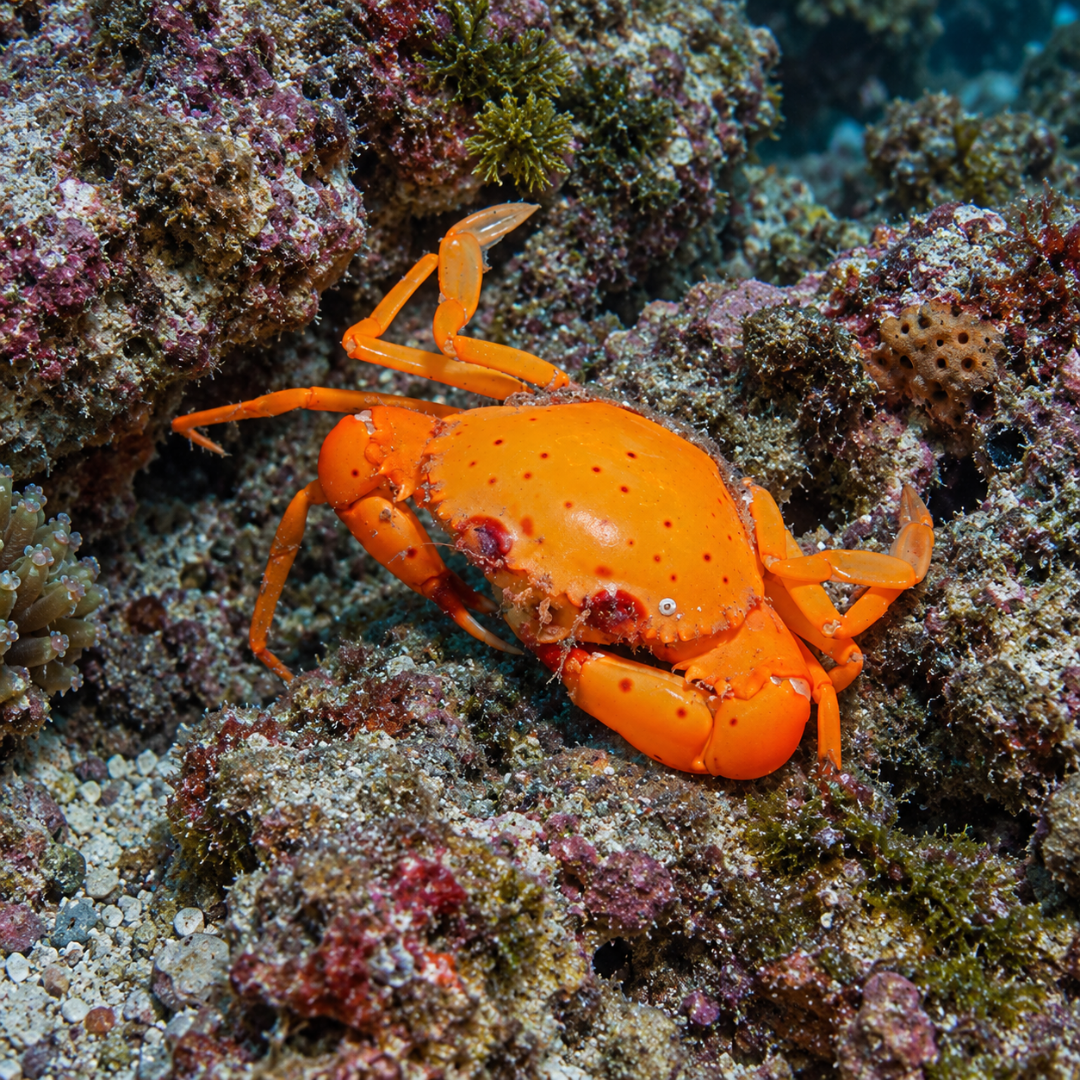
解説 / Description
カルパガザミは、朱色から赤褐色の体と淡いすみれ色の眼が印象的な、ワタリガニ科の小型のカニです。横に広く滑らかな甲羅を持ち、最後尾の脚の先端はオールのように平たくなっています。インド太平洋のサンゴ礁や岩礁などに生息し、日中は岩の隙間などに隠れ、主に夜間に活動します。肉食性のため、小魚や小型の甲殻類との混泳では捕食の危険に注意が必要です。本種に特化した飼育情報は限られています。飼育を検討する際は、安定した海水環境と隠れ場所を確保し、単独飼育を基本に個体の状態を観察することが大切です。 The violet-eyed swimming crab is a small member of the family Portunidae, distinguished by its vermilion to reddish-brown body and pale violet eyes. Its smooth carapace is broader than it is long, and the tips of the last pair of legs are flattened like paddles. It inhabits coral and rocky reefs across the Indo-Pacific, sheltering in crevices during the day and becoming active mainly at night. As a carnivore, it presents a potential predation risk to small fish and crustaceans. Species-specific husbandry information is limited. Anyone considering keeping it should provide stable seawater conditions and suitable shelters, with individual housing as the default and close observation of the animal’s condition.
基本情報 / Basic Information
| 学名 / Scientific Name | Carupa tenuipes Dana, 1852 |
|---|---|
| 通称 / Common Name | カルパガザミViolet-eyed Swimming Crab |
| 分類 / Family | 節足動物門・軟甲綱・十脚目・短尾下目・ワタリガニ科・カルパガザミ属。Phylum Arthropoda; class Malacostraca; order Decapoda; infraorder Brachyura; family Portunidae; genus Carupa. |
| 英名 / English Name | Violet-eyed Swimming Crab |
| 分布 / Distribution | 紅海、東アフリカ沿岸からインド洋、東南アジア、日本、オーストラリア、ハワイ諸島、フランス領ポリネシアにかけてのインド太平洋に広く分布します。日本では東京湾以南から琉球列島にかけて見られます。浅い潮だまりから水深約100mまでのサンゴ礁・岩礁域などで記録があり、地中海からは外来種として報告されています。Widely distributed in the Indo-Pacific, from the Red Sea and East African coast through the Indian Ocean and Southeast Asia to Japan, Australia, the Hawaiian Islands, and French Polynesia. In Japan, its range extends from Tokyo Bay southward to the Ryukyu Islands. Records include shallow tide pools and coral or rocky reef habitats down to approximately 100 m. It has also been reported as an alien species in the Mediterranean. |
| 最大体長 / Max Size | 大きさの目安は甲幅5cm程度です。甲幅は甲羅の横幅を指し、脚を広げたときの全幅とは異なります。Approximately 5 cm in carapace width as a general size guide. Carapace width is the width of the shell, not the overall span with the legs extended. |
| 寿命 / Lifespan | 飼育下の平均寿命や最長寿命については、十分な情報がありません。Reliable figures for average or maximum lifespan in captivity are not available. |
飼育環境 / Aquarium Environment
| 水槽サイズ / Tank Size | 本種に適した規格水槽の寸法や最低水量については、十分な情報がありません。体が小さいという理由だけで小型水槽に適すると判断せず、水温や塩分濃度を安定させられ、隠れ場所と活動する空間を確保できる設備を優先します。There is insufficient information to specify standard tank dimensions or a minimum water volume for this species. Small body size alone does not establish suitability for a small aquarium. Prioritize a system that can maintain stable temperature and salinity while providing shelter and room for activity. |
|---|---|
| 水温 / Temperature | 本種に固有の至適水温や、耐えられる温度範囲については、十分な情報がありません。導入前の飼育水温を確認し、急な温度変化を避けます。季節や室温に応じて、水槽用クーラーやサーモスタット付きヒーターなどで水温を管理します。 A species-specific optimal temperature and tolerance range have not been adequately established. Check the temperature at which the animal has been kept before introduction and avoid abrupt changes. Use an aquarium chiller or a thermostatically controlled heater as appropriate for seasonal and room conditions. |
| 水質 / Water Quality | 海水で飼育し、比重を測って塩分濃度の変化を把握します。本種に固有の比重やpHの推奨値については、十分な情報がありません。一般的な海水水槽の管理として、蒸発した水分は、不純物を除いたRO/DI水などの適切な淡水で補います。食べ残しは取り除き、水質悪化を防ぎます。水質調整用の添加剤は測定結果を踏まえて必要性を判断し、脱皮を促す目的でカルシウムなどをむやみに加えないようにします。Keep in seawater and measure specific gravity to monitor changes in salinity. Species-specific recommendations for specific gravity and pH have not been adequately established. As a general marine-aquarium practice, replace evaporated water with suitable freshwater, such as purified RO/DI water. Remove uneaten food to prevent deterioration in water quality. Base decisions about water-conditioning additives on test results rather than adding calcium or other substances indiscriminately in an attempt to promote molting. |
| レイアウト / Layout | ライブロックなどを使い、日中に体を隠せる暗い隙間や小さな洞窟を設けます。隠れ場所と、餌を探して動ける空間を両立させることが大切です。姿を見やすくするために隠れ場所を減らさず、落ち着いて過ごせる環境を優先します。Use live rock or similar structures to provide dark crevices and small caves where the crab can shelter during the day. Balance these shelters with room to move and forage. Do not remove hiding places merely to make the animal more visible; prioritize an environment where it can rest undisturbed. |
| 注意点 / Precautions | 導入時は水温や比重、pHの差を確認し、急変を避けて水合わせを行います。方法や所要時間は、輸送水の状態や水槽との水質差に応じて調整する必要があり、本種に一律に適用できる時間の基準はありません。導入の際は生体だけを移し、輸送水や販売店の水を本水槽へ入れないようにします。また、不必要な移動や、脚やハサミをつかむような扱いは避けます。Before introduction, check differences in temperature, specific gravity, and pH, and acclimate without abrupt changes. The method and duration should take account of shipping-water conditions and differences from the receiving aquarium; no fixed acclimation time is established for this species. Transfer the animal without adding shipping or retailer water to the aquarium. Avoid unnecessary movement and handling that involves grasping the legs or claws. |
餌と給餌 / Feeding
| 餌の種類 / Diet | 肉食性です。海水性の肉食甲殻類に用いられる、むきエビ、アサリのむき身、白身魚の切り身などが給餌の候補になります。ただし、本種での詳しい給餌試験や、人工飼料への餌付きに関する情報は限られています。海水生物向けの冷凍飼料や沈下性ペレットを使う場合も、食べることを前提にせず、個体ごとに摂餌を確認します。Carnivorous. Foods used for carnivorous marine crustaceans, such as peeled shrimp, clam meat, and pieces of white fish, are possible feeding options. However, detailed feeding trials and information on acceptance of prepared foods are limited for this species. When offering frozen marine foods or sinking pellets, do not assume acceptance; check that the individual actually eats them. |
|---|---|
| 給餌のポイント / Feeding Tips | 夜行性に合わせ、消灯後や薄暗い時間帯に給餌します。ピンセットで個体の近くへ餌を届け、実際に食べているかを観察します。一度に多く入れず、食べる量に応じて調整し、食べ残しは取り除きます。日中に姿が見えないことだけで食欲不振と判断せず、活動する時間帯の様子を確かめることが大切です。Feed after the lights go out or under dim conditions to match its nocturnal activity. Use feeding tongs to place food near the crab and observe whether it eats. Offer small portions, adjust the amount according to consumption, and remove leftovers. Remaining hidden during the day does not by itself indicate poor appetite; assess feeding during the animal’s active period. |
性格と混泳 / Temperament and Tank Mates
| 性格 / Temperament | 日中は隠れ場所で過ごし、主に夜間に活動する肉食性のカニです。隠れている時間が長くても、ほかの生き物に無害とは限りません。同種同士の相性や、複数飼育に適した条件についても十分な情報がないため、複数個体を安易に同居させないようにします。A carnivorous crab that shelters during the day and is active mainly at night. Spending much of its time out of sight does not mean that it is harmless to other animals. Compatibility between individuals and suitable conditions for group housing are also insufficiently documented, so multiple animals should not be placed together casually. |
|---|---|
| 混泳の相性 / Compatibility | 捕食や傷つけ合いを避けるため、単独飼育を基本とするのが無難です。小型のハゼ類や小魚、観賞用の小型エビなどは、餌として襲われる危険を考慮して組み合わせを避けます。一方、中・大型魚との組み合わせでは、カニの側が襲われる可能性があります。相手の大きさだけで安全とは判断できません。Individual housing is the more cautious default for avoiding predation and injury. Avoid combinations with small gobies, other small fish, or ornamental shrimp because they may be treated as prey. With medium-sized or large fish, the crab itself may be at risk of attack. The size of a potential tank mate alone does not establish compatibility. |
病気と対策 / Diseases and Prevention
| かかりやすい病気 / Common Diseases | 本種に特有の感染症や、飼育下で起こりやすい病気については、十分な情報がありません。飼育上は、急な環境変化や水質悪化に伴う不調、脱皮時の異常に注意します。脚やハサミの欠損には自切などの原因もあるため、欠けていることだけで病気と判断することはできません。There is insufficient information on species-specific infections or diseases commonly encountered in captivity. Husbandry concerns include problems associated with abrupt environmental changes, deteriorating water quality, and abnormalities during molting. Missing legs or claws can have causes such as autotomy, so limb loss alone does not establish that the animal has a disease. |
|---|---|
| 対策と予防 / Prevention | 水温と塩分濃度を安定させ、残餌を取り除き、落ち着いて休める隠れ場所を維持します。摂餌や活動に変化が見られたときは、水温や水質、直前に行った環境の変更を確認します。本種に対する薬剤の安全性や具体的な治療法については十分な情報がないため、適合性の分からない薬を安易に使用しないことが大切です。Maintain stable temperature and salinity, remove uneaten food, and preserve quiet shelters. When feeding or activity changes, check water temperature, water quality, and any recent alterations to the environment. Drug safety and specific treatments are insufficiently documented for this species, so avoid using medications of uncertain suitability. |
増やし方(繁殖) / Breeding
| 雌雄の判別 / Sexing | 本種の雌雄を見分けるための具体的な外見上の特徴については、十分な情報がありません。Detailed information on external features for identifying the sex of this species is not available. |
|---|---|
| 繁殖形態 / Reproduction | 本種の幼生の発育過程については、詳しい情報がありません。ワタリガニ類では一般に、卵からふ化した後、水中を漂うゾエア幼生、メガロパ幼生を経て稚ガニになります。ふ化した時点では成体をそのまま小さくした姿ではなく、成長に伴って体の形が変わるということです。ただし、この一般的な発育の流れから、本種の幼生期の日数や必要な水温まで判断することはできません。Detailed information on larval development in this species is not available. In portunid crabs generally, hatchlings pass through planktonic zoeal and megalopal stages before becoming juvenile crabs. In other words, they do not hatch as miniature adults; their body form changes during development. This general pattern does not establish the duration of larval development or the temperature requirements of this particular species. |
| 繁殖のポイント / Breeding Tips | 家庭水槽での繁殖成功例や、幼生の餌、管理水量、育成日数を含む具体的な飼育手順については、十分な情報がありません。成体を維持できることと、ふ化した幼生を稚ガニまで育てられることは分けて考える必要があります。繁殖を目的とする場合も、複数個体を同居させてよいとは限りません。Information on successful home-aquarium breeding and a detailed rearing procedure, including larval food, water volume, and development time, is insufficient. Maintaining adults and raising hatchlings into juvenile crabs are separate husbandry challenges. A breeding objective does not, by itself, make it safe to house multiple animals together. |
雑学と豆知識 / Trivia and Fun Facts
| 1. すみれ色の眼が引き立つ小さなカニ / 1. A Small Crab with Striking Violet Eyes | カルパガザミの印象を決めるのは、赤みのある甲羅だけではありません。淡いすみれ色の眼が、体の色との鮮やかな対比を生み出しています。英名の「Violet-eyed Swimming Crab」は、「すみれ色の眼を持つ遊泳ガニ」という意味で、この特徴を表した名前です。体色だけでなく眼の色にも注目すると、このカニならではの姿がよく分かります。 The reddish shell is only part of this crab’s distinctive appearance. Its pale violet eyes create a striking contrast with the body. The English name “Violet-eyed Swimming Crab” refers directly to this feature. Looking at the eyes as well as the body color helps reveal what makes its appearance so recognizable. |
|---|---|
| 2. オールのような脚と泳ぐ能力 / 2. Paddle-like Legs and Swimming Ability |
最後尾の脚をよく見ると、先端がほかの脚とは違い、幅広く平たい形をしています。こうした脚は、ワタリガニ類の「遊泳脚」として知られています。カルパガザミにも平たい脚先があり、仲間の特徴が外見に表れています。 ただし、平たい脚先があれば、どの種類も同じように泳げるわけではありません。本種では付け根寄りの節が長いなど、典型的な遊泳性のカニとは脚の構造が異なります。泳ぐ行動の報告はあるものの、遊泳性については文献間で見解が分かれています。脚先の形だけから、泳ぎが得意なカニと判断することはできません。 The tips of the last pair of legs are noticeably broader and flatter than those of the other legs. Such appendages are familiar as the swimming paddles of portunid crabs. The flattened tips of this species show that characteristic external form. However, a paddle-like tip does not mean that every species swims equally well. In this crab, features such as a relatively long segment closer to the body differ from those of typical swimming crabs. Swimming behavior has been reported, but published interpretations of its swimming ability differ. The shape of the leg tip alone is therefore not enough to identify it as a proficient swimmer. |
| 3. 学名の背後にある19世紀の探検航海 / 3. A Scientific Name Linked to a Nineteenth-Century Expedition |
カルパガザミを1852年に記載したのは、アメリカの博物学者ジェームズ・ドワイト・デーナです。その研究は、チャールズ・ウィルクスが率いた1838〜1842年のアメリカ合衆国探検遠征で集められた標本と結びついています。本種の記載の基準となった標本の産地は、南太平洋のトゥアモトゥ諸島です。小さなカニの学名をたどると、太平洋を巡った探検航海と標本研究の歴史につながります。 本種の名前の歴史には、1862年にヘラーが記載した Carupa laeviuscula も登場します。現在は Carupa tenuipes の同物異名、つまり同じ種に付けられた別の学名として扱われています。古い文献に異なる名前が出てきても、それだけで別種とは限らないことを示す例です。 The American naturalist James Dwight Dana described this species in 1852. His work was connected to specimens collected during the United States Exploring Expedition of 1838–1842, led by Charles Wilkes. The type locality—the place from which the specimen forming the basis of the species description originated—is the Tuamotu Archipelago in the South Pacific. Following the scientific name of this small crab leads into the history of Pacific exploration and specimen research. Another name in that history is Carupa laeviuscula, described by Heller in 1862. It is treated as a synonym of Carupa tenuipes, meaning a different scientific name applied to the same species. Its appearance in older literature therefore does not necessarily indicate a separate species. |
| 4. よく似たオオハシカルパガザミとの違い / 4. Distinguishing the Similar Carupa ohashii |
近縁のオオハシカルパガザミ Carupa ohashii は、武田正倫によって1993年に琉球列島から記載された種です。カルパガザミの甲羅が楕円形に近いのに対し、オオハシカルパガザミでは六角形に近く、側方の突起がより目立って張り出します。 見分ける際には、ハサミのふくらんだ部分である「掌部」の上面も手がかりになります。カルパガザミには2本の隆起線と1本の棘がありますが、オオハシカルパガザミの掌部上面は滑らかです。また、甲羅の前方から側面に並ぶ歯状の突起を「前側縁歯」といい、本種では第6歯、オオハシカルパガザミでは第5歯が最も大きくなります。体色だけに頼らず、甲羅の輪郭、突起の並び、掌部の表面を組み合わせて確かめることが、種を見分けるうえで重要です。 The related species Carupa ohashii was described from the Ryukyu Islands by Masatsune Takeda in 1993. The carapace of C. tenuipes is approximately elliptical, whereas that of C. ohashii is more nearly hexagonal, with a more prominent lateral projection. The upper surface of the palm—the swollen part of the claw—provides another useful distinction. In C. tenuipes, it bears two ridges and a spine; in C. ohashii, the upper surface of the palm is smooth. The tooth-like projections along the front-side margins of the carapace are called anterolateral teeth. The sixth is the largest in C. tenuipes, compared with the fifth in C. ohashii. Identification should therefore combine carapace outline, tooth arrangement, and palm texture rather than relying on color alone. |
| 5. 海底洞窟も隠れ場所の一つ / 5. Submarine Caves as Another Kind of Shelter |
カルパガザミは、サンゴ礁や岩礁だけでなく、海底洞窟からも記録されています。ただし、洞窟の奥だけに暮らすカニではありません。サンゴの隙間や岩の割れ目、洞窟の入口などにも見られ、洞窟は身を隠して過ごす場所の一つです。 暗い場所で見つかることと、洞窟だけに適応した生き物であることは別です。カルパガザミは、さまざまな隠れ場所を利用するカニとして捉えると、生息環境を理解しやすくなります。水槽でも、日中に姿が見えないことだけを問題にせず、体を隠して休める場所を残すことが大切です。 This crab has been recorded in submarine caves as well as on coral and rocky reefs. It is not, however, restricted to the depths of caves. It also occurs in coral crevices, cracks in rocks, and cave entrances; a cave is one of several places where it can shelter. Being found in darkness is not the same as being specialized for life exclusively in caves. Understanding it as a crab that uses various kinds of shelter gives a clearer picture of its habitat. In an aquarium, remaining out of sight during the day should not be treated as a problem in itself. Places where the animal can hide and rest should be retained. |
| 6. 脚を手放す防御と、脱皮による再生 / 6. Defensive Limb Loss and Regeneration Through Molting |
カニ類には、脚やハサミをつかまれたときなどに、自ら切り離す「自切」という防御反応が見られます。脚が外れていても、必ずしも外から無理に引きちぎられたとは限りません。カニを扱う際に、脚やハサミを強くつかまないよう注意する理由の一つです。 カニ類の失われた脚やハサミは、脱皮を通じて再生し、その後の脱皮で大きくなっていきます。ただし、再生する性質があるからといって、欠損を軽く扱ってよいわけではありません。カルパガザミで回復に必要な期間や脱皮回数については、十分な情報がありません。欠損した個体には余計な刺激を与えず、落ち着ける隠れ場所と安定した飼育環境を用意します。 Crabs can respond to situations such as a leg or claw being grasped by shedding the appendage themselves, a defensive response called autotomy. A missing limb has therefore not necessarily been forcibly torn away. This is one reason to avoid gripping a crab tightly by its legs or claws. In crabs, lost legs and claws can reappear through molting and grow larger in subsequent molts. The ability to regenerate does not make limb loss inconsequential. The recovery time and number of molts required in Carupa tenuipes are not adequately documented. An affected animal should be spared further disturbance and given a quiet shelter and stable aquarium conditions. |
| 7. 広い分布と、地中海での外来種記録 / 7. A Broad Range and Alien Records in the Mediterranean |
紅海から南太平洋までの広い分布は、カルパガザミの特徴の一つです。本来の分布域とは別に、地中海からも外来種として報告されています。紅海と地中海を結ぶスエズ運河を通じて侵入したと考えられており、海をつなぐ人工の経路が、生物の分布にも関わる例です。 ただし、外来種として見つかったことと、その場所への詳しい侵入経路や在来生物への影響が分かっていることは別です。船舶による移動の可能性が指摘される場合もありますが、個々の記録から確実に言える範囲を区別する必要があります。飼育では、同じ種類が近くの海に生息していても、飼育個体を自然の海へ放さず、最後まで管理することが大切です。 Its broad distribution from the Red Sea to the South Pacific is one of this crab’s notable features. Outside its native range, it has also been reported as an alien species in the Mediterranean. It is considered to have entered through the Suez Canal, which connects the Red Sea and Mediterranean, illustrating how artificial connections between seas can influence species distributions. However, recording an alien species does not automatically establish its precise route to each locality or its effects on native organisms. Shipping has also been suggested as a possible means of transport in some cases, but the evidence for individual records must be distinguished from possibilities. Captive animals should not be released into the sea, even where the same species occurs locally. |
| 8. 輸送時の扱いと受け取り時の確認 / 8. Transport and Arrival Checks |
カルパガザミを迎える際は、水槽に入れた後だけでなく、輸送中の扱いにも注意が必要です。狭い容器の中で個体同士が接触しないよう、一匹ずつ分けて運ぶのが無難です。夏の高温と冬の低温の両方に配慮し、保冷剤や使い捨てカイロを使う場合は、生体の入った袋へ直接触れないようにします。 購入前には学名と個体の状態を確認し、到着時に死亡していた場合の対応に加え、脚やハサミの欠損が保証の対象になるかどうかも確かめます。死亡と自切による欠損は異なる状態であり、保証の条件も販売店によって異なります。受け取り時には全体の状態を確認し、不必要に刺激を与えずに導入を進めます。 Careful handling matters during transport as well as after the crab enters its aquarium. Packing animals individually is a cautious way to prevent contact between them in confined containers. Account for both summer heat and winter cold. When cooling packs or disposable heat packs are used, they should not touch the animal’s bag directly. Before purchasing, confirm the scientific name and the individual’s condition. Check the seller’s arrangements not only for an animal that arrives dead but also for missing legs or claws. Death and limb loss through autotomy are different conditions, and guarantee terms vary between sellers. On arrival, assess the animal’s overall condition and proceed with introduction without unnecessary disturbance. |
まとめ / Conclusion
カルパガザミは、朱色の体とすみれ色の眼、平たい脚先が特徴の小型のカニです。日中は岩やサンゴの隙間に隠れ、主に夜間に活動します。見た目の美しさだけでなく、肉食性や隠れ場所を利用する習性も、飼育を考えるうえで重要な特徴です。 The violet-eyed swimming crab is a small crab distinguished by its reddish body, violet eyes, and flattened leg tips. It shelters among rocks and corals during the day and is active mainly at night. Its carnivorous diet and use of hiding places are just as important to consider in aquarium care as its attractive appearance.
飼育では単独飼育を基本とし、安定した海水環境と落ち着ける隠れ場所を維持します。日中に無理に姿を見せさせず、活動する時間帯に摂餌や体の状態を確かめることが大切です。隠れて休む時間も含めて見守ることが、このカニの習性に沿った飼育につながります。 Individual housing, stable seawater conditions, and quiet shelters form the basis of a cautious approach to keeping this species. Rather than forcing it into view during the day, assess feeding and body condition during its active hours. Allowing it to remain hidden while resting is part of caring for it in a way that respects its natural habits.

気になる道具や飼い方を見つけてみませんか?
 アイのアクアグッズ案内エンゼルフィッシュの飼育用品|高さのある水槽・ろ過・水草・餌の選び方道具の特徴や使い方、選ぶときのポイントをアイが紹介します。記事はコチラ →
 アイのアクアグッズ案内水合わせの道具とやり方|魚を迎える前にそろえたい容器・点滴キット・ネット買ってきた魚はすぐ水槽に入れていい? 水温合わせと水合わせの違いから、透明ケース・点滴キット・ネットの選び方、時間をかけすぎない注意点まで、アイとコタロウが紹介します。記事はコチラ →
 アイのアクアグッズ案内小型カラシンの群れを楽しむ|餌と水換えから考える飼育用品ガイド小型カラシンの群れを眺める時間を、もっと楽しく。泳ぐ余白、餌の食べ方、続けやすい水換えを軸に、日本で揃えやすい用品の選び方を紹介します。記事はコチラ →
 アイのアクアグッズ案内海水魚初心者の必需品|水槽・人工海水・比重計・水質検査道具の特徴や使い方、選ぶときのポイントをアイが紹介します。記事はコチラ →
さまざまな飼育テーマをご紹介。リンク先の記事には広告・商品紹介が含まれます。
案内・紹介記事一覧へ →分布マップ
カルパガザミ(Carupa tenuipes)は、紅海・東アフリカ沿岸からインド洋、東南アジア、日本、オーストラリア、ハワイ諸島、フランス領ポリネシアにかけてのインド太平洋に広く分布します。日本では東京湾以南から琉球列島にかけて見られ、地中海からは外来種として報告されています。
※地図は分布地域の位置関係を示す概略表示です。正確な分布境界や生息範囲を塗り分けたものではなく、表示範囲の全域に生息することを意味しません。ピンは表示用に設定した代表地点(北緯10度・東経130度)であり、実際の採集地点や生息確認地点ではありません。Google Earthのリンクも、同じ代表地点を中心に開きます。
参考文献
カルパガザミの分類・分布・生態
-
WoRMS — Carupa tenuipes Dana, 1852
DecaNet eds.(2026).World Register of Marine Species.AphiaID: 208760。受容学名、命名者・記載年、分類、同物異名を確認できる種別記録。
-
SeaLifeBase — Carupa tenuipes, Violet-eyed swimming crab
SeaLifeBase.分布海域、礁域での生息、水深、肉食性に関する種別データ。
-
Diversity in the Taiwanese Swimming Crabs (Crustacea: Brachyura: Portunidae) Estimated through DNA Barcodes, with Descriptions of 14 New Records
Huang, Y.-H. & Shih, H.-T.(2021).Zoological Studies, 60: e60。カルパガザミとオオハシカルパガザミの甲羅、前側縁歯、ハサミの掌部を比較した記載を含む。
-
Crabs from some submarine caves in the Pacific (Crustacea: Decapoda: Brachyura)
Takeda, M.(2024).Aquatic Animals, 2024: AA2024-33。本種の海底洞窟での採集記録と、サンゴ礁の隙間や洞窟入口を含む生息環境を扱う。
-
New insights into the evolution of portunoid swimming crabs (Portunoidea, Heterotremata, Brachyura) and the brachyuran axial skeleton
Hazerli, D., Höpel, C. G. & Richter, S.(2022).Frontiers in Zoology, 19: 24。本種を含むワタリガニ上科の形態比較と、脚の構造・遊泳機能の関係を検討した研究。
-
First reports of the Sohal surgeonfish … and the Violet-eyed swimming crab … from North African waters
Nour, O. M. ほか(2022).BioInvasions Records, 11(4): 1067–1077。地中海南部のリビア沿岸でのカルパガザミの初記録を報告した論文。マルタ大学機関リポジトリ収録。
飼育・繁殖・健康管理の一般資料
-
Coral Reef Aquarium Husbandry and Health
Lehmann, W.(2022).Lewbart, G. A. 編,Invertebrate Medicine 第3版,第6章,pp. 107–127,Wiley。海水水槽全般を対象に、塩分濃度の安定、ろ過、水質と健康の関係を解説する。
-
Mud crab aquaculture — A practical manual(PDF)
Shelley, C. & Lovatelli, A.(2011).FAO Fisheries and Aquaculture Technical Paper No. 567,78 pp.,国際連合食糧農業機関(FAO)。ノコギリガザミ属(Scylla)を対象に、ゾエア・メガロパの発育、給餌、水質管理、共食い防止を扱う飼育資料。
-
Crustaceans
Hancock-Ronemus, A. L., Buote, M. & Lewbart, G. A.(2022).Lewbart, G. A. 編,Invertebrate Medicine 第3版,第16章,pp. 367–398,Wiley。甲殻類の感染症と非感染性疾患を扱う獣医学の専門章。
-
Use of Copper in Marine Aquaculture and Aquarium Systems
Yanong, R. P. E..フロリダ大学 UF/IFAS Extension,FA165。海水飼育で使用される銅について、無脊椎動物への毒性や水質による作用の違いを解説した、薬剤使用上の注意に関する資料。
-
Patterns of Limb Loss in the Blue Crab, Callinectes sapidus Rathbun, and the Effects of Autotomy on Growth(PDF)
Smith, L. D.(1990).Bulletin of Marine Science, 46(1): 23–36。ワタリガニ科の Callinectes sapidus を対象に、脚やハサミの自切・再生と脱皮・成長の関係を調べた研究。スミソニアン協会機関リポジトリ収録。




コメント