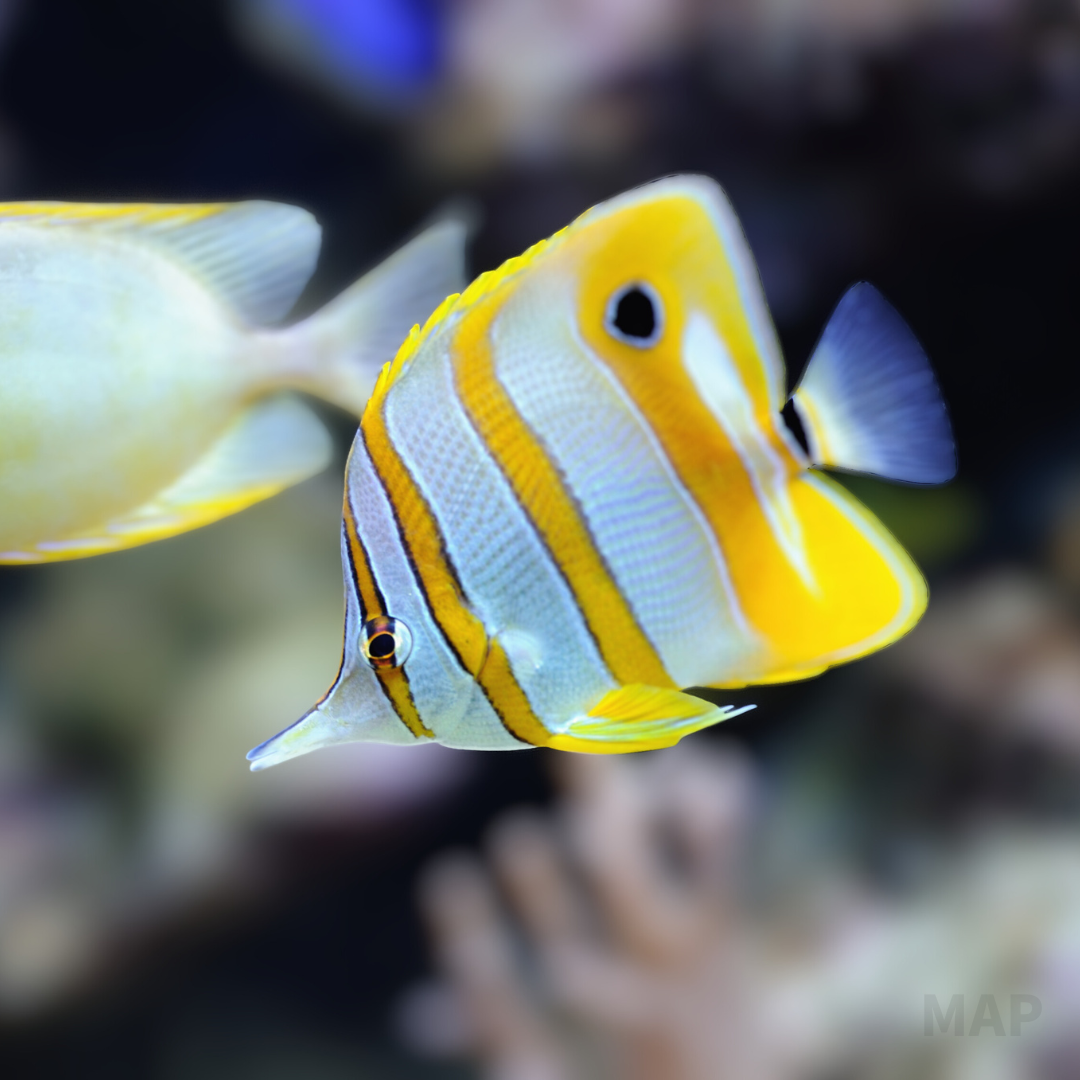
ハシナガチョウ(ハシナガチョウチョウウオ)は、その名の通りピンセットのように長く伸びた吻(ふん)が最大の特徴であるチョウチョウウオの仲間です。銀白色の体躯に銅色の美しいラインが走る姿は非常に洗練されており、海水魚アクアリウムの象徴的な存在の一つとして数えられます。自然界ではサンゴ礁や岩礁の隙間に潜む小さな獲物を巧みに捕らえて暮らしていますが、その繊細な美しさとは裏腹に、飼育下では餌付けや環境維持において極めて高い専門知識と技術を要求される「上級者向け」の魚としても知られています。The Copperband Butterflyfish is a member of the butterflyfish family, most notably characterized by its long, tweezer-like snout. Its silver body adorned with elegant copper bands makes it an iconic presence in marine aquariums. In the wild, they skillfully hunt for small prey hidden in coral and rock crevices. Despite their delicate beauty, they are known as a species for advanced aquarists, requiring expert knowledge and skill for feeding and environmental maintenance in captivity.
基本情報 / Basic Information
学名 / Scientific Name
Chelmon rostratus
通称 / Common Name
ハシナガチョウ、ハシナガチョウチョウウオCopperband Butterflyfish
分類 / Family
チョウチョウウオ科 ハシナガチョウチョウウオ属Chaetodontidae, Chelmon genus
英名 / English Name
Copperband butterflyfish
分布 / Distribution
西太平洋からインド洋東部、琉球列島(南西諸島)を含む広範な海域Widespread in the Western Pacific and Eastern Indian Ocean, including the Ryukyu Islands.
最大体長 / Max Size
約20センチメートルApproximately 20 cm
寿命 / Lifespan
約10年(適切な飼育下において)Up to 10 years under appropriate care.
飼育環境 / Aquarium Environment
水槽サイズ / Tank Size
成魚の飼育では300リットル以上を目安に、十分な遊泳空間を確保します。120×60×60cmなら外寸から計算した容量は約432リットルですが、120×45×45cmは約243リットルです。同じ「120cm水槽」でも容量は異なり、実際の水量は水位や岩組みの分だけさらに少なくなります。Plan for at least 300 liters and ample swimming space for an adult. External dimensions of 120 × 60 × 60 cm give about 432 liters, whereas 120 × 45 × 45 cm give about 243 liters. Actual water volume is lower because of the fill level and displacement by rockwork.
水温 / Temperature
24℃から28℃(急激な変化を避けることが必須)24°C to 28°C (Crucial to avoid rapid fluctuations).
水質 / Water Quality
pH 8.1から8.4、比重 1.020から1.025の安定した環境Stable environment with pH 8.1-8.4 and Specific Gravity 1.020-1.025.
レイアウト / Layout
豊富なライブロックと、安心できる隠れ家(洞窟やオーバーハング)を配置Abundant live rock and secure hiding places such as caves or overhangs.
注意点 / Precautions
導入前にろ過が安定し、アンモニアや亜硝酸が検出されないことを確認します。立ち上げから何か月経ったかだけでは判断せず、給餌後も水質が維持できる状態で迎えましょう。Confirm that filtration is established and ammonia and nitrite are undetectable before introduction. Time since setup alone does not establish readiness; the system needs to maintain stable water quality under its feeding load.
餌と給餌 / Feeding
餌の種類 / Diet
導入時は冷凍のイサザアミ(ミシス)や生きたブラインシュリンプ。殻付きのアサリを半分に割ったものも非常に有効です。Mysis shrimp or live brine shrimp during introduction. Clams on the half shell are also highly effective.
給餌のポイント / Feeding Tips
混泳環境では他の魚に餌を横取りされやすいため、長い吻だけが入る「チューブフィーダー」や「ホールフィーダー」を用いた個別給餌が推奨されます。Since they are slow eaters, using dedicated “tube feeders” or “hole feeders” is recommended to prevent food theft by faster tank mates.
性格と混泳 / Temperament and Tank Mates
性格 / Temperament
非常に温和ですが、同種や体色・シルエットが似た魚(キイロハギなど)とは激しく争うことがあります。Generally peaceful, but can be aggressive towards the same species or fish with similar colors and shapes (e.g., Yellow Tangs).
混泳の相性 / Compatibility
SPSサンゴ(ミドリイシ等)とは概ね良好ですが、LPSサンゴやシャコガイ、ケヤリなどは捕食対象となるため混泳は避けてください。Generally reef-safe with SPS corals, but avoid keeping with LPS corals, clams, or tube worms as they may be nipped or eaten.
病気と対策 / Diseases and Prevention
かかりやすい病気 / Common Diseases
白点病、水質悪化に伴う体表の赤み(内出血)Cryptocaryon irritans (White spot disease) and redness on the body surface due to poor water quality.
対策と予防 / Prevention
安定した温度管理と、徹底した殺菌(UV殺菌灯の使用など)。輸送時の物理的ダメージを負っていない健康な個体を選ぶことが最も重要です。Maintain stable temperature and use UV sterilizers. Selecting healthy individuals without physical transport damage is crucial.
増やし方(繁殖) / Breeding
雌雄の判別 / Sexing
外見による判別は極めて困難です。Very difficult to distinguish between sexes based on external appearance.
繁殖形態 / Reproduction
卵生。自然界では強固なペアを形成する一夫一婦制をとります。Oviparous. They form strong monogamous pairs in the wild.
繁殖のポイント / Breeding Tips
一般家庭の水槽での繁殖例はほとんどありませんが、近年では海外の研究プロジェクトにおいて世界初の完全人工繁殖が成功しています。Breeding in home aquariums is rare, though the first successful complete captive breeding was recently reported by global research projects.
雑学と豆知識 / Trivia and Fun Facts
1. 捕食者を欺く偽の目「デコイ」1. The False Eyespot Decoy
ハシナガチョウの背鰭後方には、大きな黒い斑点が存在します。これは「偽眼」と呼ばれ、捕食者にどちらが頭であるかを誤認させるためのデコイです。敵がこの斑点を狙って攻撃を仕掛けた瞬間、ハシナガチョウは本物の頭がある反対方向へ電光石火の如く逃げ延びるのです。The large black spot on the rear of the dorsal fin is a “false eye,” designed to confuse predators. When a predator attacks what it thinks is the head, the fish quickly escapes in the opposite direction, utilizing its true head.
2. ピンセットとしての吻(ふん)の真実2. The Truth Behind the Tweezer Snout
一部で「水を吹き出して獲物を捕る」と誤解されることがありますが、それはテッポウウオの習性です。ハシナガチョウはこの長く鋭い吻を、サンゴの奥深くや岩の亀裂に直接差し込み、物理的に獲物を引きずり出します。この進化の極致とも言える吻の形状は、他の魚が届かないニッチな場所の餌を独占するための優れた戦略です。Contrary to some beliefs that they “shoot water,” that is a behavior of Archerfish. The Copperband Butterflyfish uses its long snout as a physical tool to reach deep into crevices and coral gaps to pull out worms and crustaceans, accessing food sources that other fish cannot reach.
3. 特殊な消化システム:胃の中の不思議3. Specialized Digestion: Mysteries of the Stomach
長い吻だけでなく、体内の消化器も研究されています。LingとTan(1975)は本種の胃の粘膜を微細構造の観点から調べました。ただし、胃の構造を調べた研究から、そのまま人工飼料への餌付きや好みまで説明できるわけではありません。飼育では、目の前の個体が何を食べるかを確かめることが大切です。The digestive tract has been studied as well as the conspicuous snout. Ling and Tan (1975) examined the fine structure of this species’ gastric lining. Anatomical observations alone do not establish which aquarium foods a fish will accept, so feeding decisions should follow the response of the individual.
4. カーリー駆除のパラドックス4. The Aiptasia Eradication Paradox
カーリーを食べることを期待して迎えられる魚ですが、食べるかどうかには個体差があります。駆除だけを目的にせず、導入前から冷凍餌などを食べるか確認しましょう。カーリーが減った後も十分に食べられるようにし、腹部の痩せや餌取りの競争にも気を配ります。Keepers may hope that this fish will eat nuisance Aiptasia, but responses vary between individuals. Check acceptance of suitable aquarium foods before purchase rather than relying on pest control alone. Ensure adequate food remains available after anemones decline, and watch body condition and competition at feeding time.
5. 市場の光と影:人工繁殖個体の可能性5. Market Realities and the Future of Captive Breeding
2021年には、フロリダ大学の研究施設とRising Tide Conservationから人工繁殖の成功が報告されました。その後の育成報告では、稚魚が冷凍餌や乾燥飼料を食べる様子も紹介されています。野生採集個体だけに頼らない飼育につながる取り組みですが、ブリード個体でも購入時には実際の餌付きと健康状態を確認しましょう。In 2021, a University of Florida research facility and Rising Tide Conservation reported successful captive breeding. Later updates described juveniles eating frozen and dry foods. This work offers an alternative to dependence on wild collection, but feeding response and health still need to be checked when buying captive-bred fish.
まとめ / Conclusion
ハシナガチョウは、その類まれなる美しさと特異な生態で、私たちの目を楽しませてくれる素晴らしい魚です。しかし、その飼育には水質管理の徹底と、個体に合わせた細やかな給餌という、アクアリストとしての真の技量が試されます。安易なカーリー駆除目的ではなく、一匹の生命としての尊厳を持って向き合うことが、長期飼育の唯一の道と言えるでしょう。The Copperband Butterflyfish is a magnificent species that delights us with its rare beauty and unique ecology. However, keeping them tests an aquarist’s true skill, requiring rigorous water quality management and personalized feeding strategies. Long-term success is only achieved by treating them as valued lives rather than just a means for pest control.
近年では人工繁殖個体の流通も期待されており、海水魚趣味の未来を明るく照らす存在でもあります。この美しい貴公子を水槽に迎える際は、ぜひ万全の準備を整えて、その優雅な遊泳を長く楽しんでください。With the prospect of captive-bred individuals entering the market, this species shines as a beacon for the future of the marine hobby. When welcoming this elegant prince into your tank, ensure you are fully prepared to enjoy its graceful presence for years to come.



 アイのアクアグッズ案内エーハイムはおもちゃから始まった? 小さな噴水から水槽へ、アイとコタロウの探訪道具の特徴や使い方、選ぶときのポイントをアイが紹介します。記事はコチラ →
 アイのアクアグッズ案内水槽のエアーポンプの選び方|水深・音・泡で選ぶおすすめ用品道具の特徴や使い方、選ぶときのポイントをアイが紹介します。記事はコチラ →



コメント