

解説 / Description
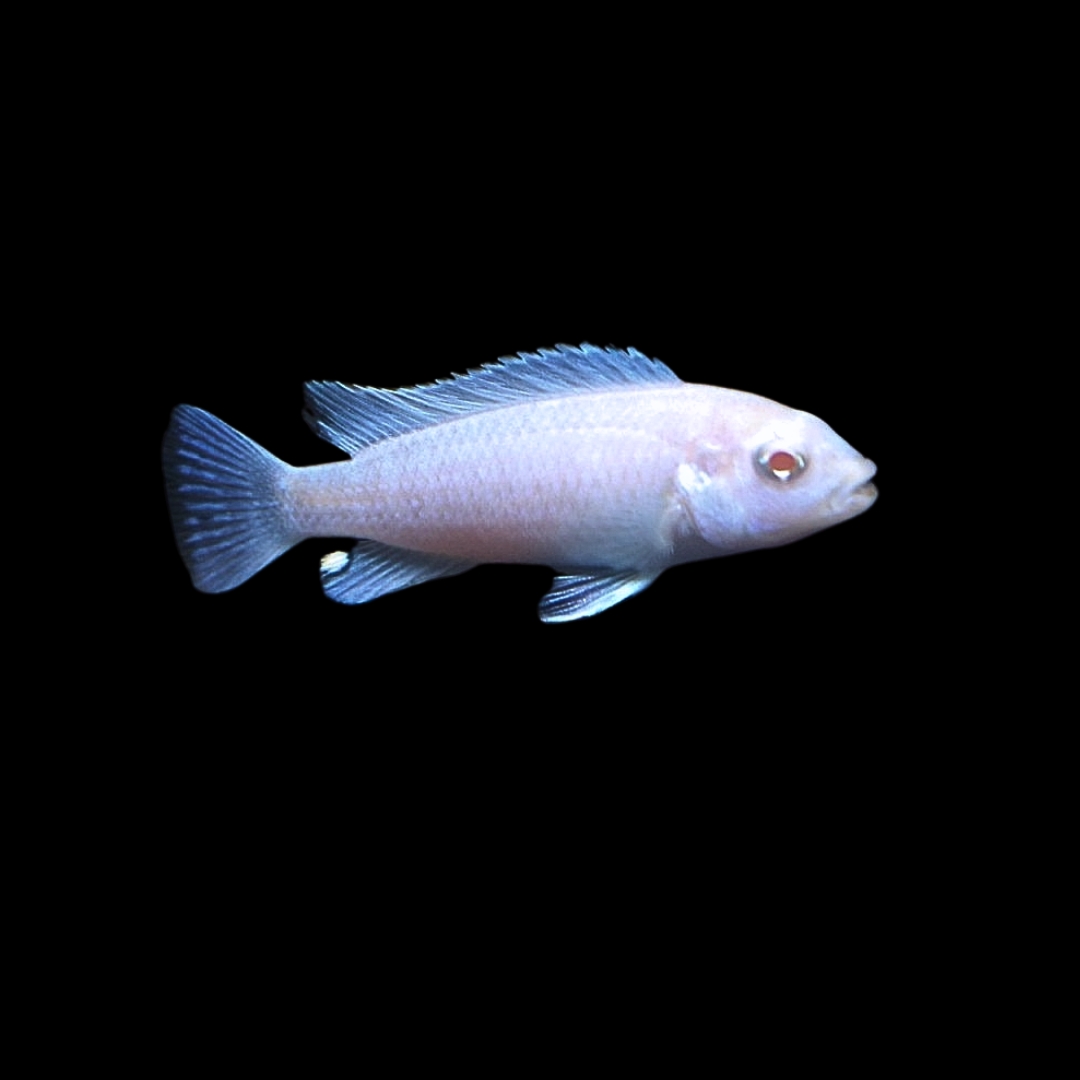
スノーホワイトシクリッドは、日本の観賞魚流通で白いアフリカンシクリッドに使われる流通名です。本ページでは、日本国内でこの名で扱われることがあるラビドクロミス・カエルレウス系の白色個体、または白化改良個体を中心に解説します。ただし、この名前は分類学上の正式な種名ではなく、海外ではチンドンゴ・ソコロフィのアルビノ個体などに使われることもあります。そのため、購入時には販売名だけで判断せず、可能であれば学名、親魚、成魚写真、最大サイズを確認するのが安心です。 The Snow White Cichlid is a trade name used for white African cichlids in the aquarium hobby. This page focuses on white or albino-type forms commonly treated in Japan as Labidochromis caeruleus-related fish. However, the name is not a formal scientific species name, and in overseas markets it may also refer to albino Chindongo socolofi or other white mbuna forms. When buying one, it is best to confirm the scientific name, parent stock, adult appearance, and expected size whenever possible.
白くすっきりした体色は淡水魚でありながら海水魚のような印象を与え、石組みレイアウトにもよく映えます。一方で、マラウイ湖産ムブナらしい弱アルカリ性の硬水、強いろ過、同居魚との力関係への配慮が必要です。見た目はやさしげでも、一般的な小型熱帯魚と同じ感覚で飼う魚ではありません。 Its clean white body can give a marine-like impression even in freshwater, and it stands out beautifully in rocky aquascapes. At the same time, it still requires the hard, alkaline water, strong filtration, and social management typical of Lake Malawi mbuna. Despite its gentle appearance, it should not be kept in the same way as ordinary small community fish.
基本情報 / Basic Information
| 学名 / Scientific Name | Labidochromis caeruleus var. または Labidochromis sp. として流通する白色・白化系統。流通名が Chindongo socolofi Albino を指す場合もあるため、購入時の確認が必要です。 |
|---|---|
| 通称 / Common Name | スノーホワイトシクリッド、スノーホワイト、白系ムブナSnow White Cichlid, Snow White Mbuna |
| 分類 / Family | スズキ目カワスズメ科、アフリカンシクリッド、ムブナ系Family Cichlidae, African cichlid, mbuna group |
| 英名 / English Name | Snow White Cichlid, Albino Yellow Lab, Snow White Mbuna |
| 分布 / Distribution | 原種のラビドクロミス・カエルレウスはアフリカのマラウイ湖に固有の魚です。スノーホワイトとして流通する個体は、野生採集の白い地域個体群そのものとは限らず、多くは観賞魚ファームや国内外のブリーダーによる繁殖個体です。The wild species Labidochromis caeruleus is endemic to Lake Malawi in Africa. Fish sold as Snow White Cichlids are not necessarily wild white regional forms; many are captive-bred aquarium strains produced by farms or breeders. |
| 最大体長 / Max Size | 一般的な飼育下では約10〜12cm前後を目安にします。資料によって最大体長の表記には差があり、系統や雌雄、飼育環境によって変わります。In aquariums, about 10–12 cm is a practical guideline. Reported maximum size varies among sources and may differ depending on strain, sex, and husbandry. |
| 寿命 / Lifespan | 適切な水質と餌管理ができていれば5〜10年程度が目安です。With suitable water quality and feeding management, a lifespan of roughly 5–10 years can be expected. |
飼育環境 / Aquarium Environment
| 水槽サイズ / Tank Size | 単独または少数飼育でも、長期飼育では60cm規格水槽以上を推奨します。複数匹や他のマラウイシクリッドとの混泳を考える場合は、90cm規格水槽以上が扱いやすくなります。小型水槽では縄張り争いと水質悪化が起こりやすいため、初心者ほど余裕のある水量を選ぶと安定します。For long-term care, a standard 60 cm tank or larger is recommended even for a single fish or small group. For groups or mixed Malawi cichlid tanks, a standard 90 cm tank or larger is much easier to manage. Small tanks increase both territorial stress and water-quality problems, so beginners benefit from extra water volume. |
|---|---|
| 水温 / Temperature | 24〜26℃を中心に、安定した水温を保ちます。短期的には22〜28℃程度まで対応できることがありますが、急変は避けてください。 Keep the temperature stable, ideally around 24–26°C. The fish may tolerate a broader short-term range of about 22–28°C, but sudden changes should be avoided. |
| 水質 / Water Quality | 弱アルカリ性からアルカリ性の硬水を好みます。目安はpH 7.5〜8.5前後、アンモニアと亜硝酸は常に0を維持します。高pH環境ではアンモニア毒性が問題になりやすいため、強力なろ過と定期的な換水が重要です。サンゴ砂、アラゴナイト、大磯砂、カキ殻などは、環境に合えばpHと硬度の維持に役立ちます。They prefer hard water that is slightly alkaline to alkaline. A practical target is around pH 7.5–8.5, with ammonia and nitrite kept at zero. Because ammonia becomes more dangerous in higher-pH water, strong filtration and regular water changes are essential. Crushed coral, aragonite, river gravel, or oyster shell can help maintain hardness and buffering capacity when appropriate. |
| レイアウト / Layout | 岩を使って複数の隠れ家と視線を切る構造を作ります。岩組みは崩れないように底面から安定させ、魚が掘っても倒れない配置にしてください。水草は食害や掘り返しを受けやすいため、入れる場合はアヌビアス類やバリスネリア類など、硬水寄りでも比較的使いやすい丈夫な種類を選びます。Use rocks to create multiple hiding places and visual barriers. Make sure the rockwork is stable from the bottom up so it will not collapse if the fish dig. Plants may be eaten or uprooted, so hardy options such as Anubias or Vallisneria are better choices if plants are used. |
| 注意点 / Precautions | 白色・アルビノ系統は視覚的なハンデや臆病さが出ることがあり、攻撃的な同居魚に押される場合があります。導入直後は特に観察し、追われ続ける個体がいればレイアウト変更や隔離を検討します。過密気味にして攻撃を分散させる方法はありますが、強力なろ過と経験が前提の上級者向けの調整です。White or albino-type strains may be more timid or visually disadvantaged and can be outcompeted by aggressive tank mates. Watch new fish closely, and consider rearranging the layout or isolating any fish that is constantly chased. Slightly crowded mbuna tanks can sometimes disperse aggression, but this is an advanced method that requires strong filtration and experience. |
餌と給餌 / Feeding
| 餌の種類 / Diet | 主食はアフリカンシクリッド用の人工飼料を中心にします。スピルリナ配合フード、植物質を含むシクリッドフード、消化しやすい小粒ペレットやフレークが使いやすいです。冷凍アカムシなどの動物質の餌は、体調や系統を見ながら少量の補助にとどめると安全です。牛ハツなどの哺乳類由来の肉は避けます。Use high-quality African cichlid foods as the staple diet. Spirulina-based foods, cichlid foods containing plant matter, and easily digestible small pellets or flakes are practical choices. Animal-based frozen foods such as bloodworms should be used only sparingly as supplements, depending on the fish’s condition and strain. Mammalian meats such as beef heart should be avoided. |
|---|---|
| 給餌のポイント / Feeding Tips | 1日1〜2回、数分で食べ切る量を与えます。食べ残しは水質悪化の原因になるため、与えすぎないことが最も大切です。マラウイ・ブロートは原因について複数の見解があるため、「高タンパクだけが原因」と断定せず、過給餌、急な餌の変更、傷んだ餌、水質悪化、消化に合わない餌を避ける総合管理で予防します。Feed once or twice a day, only as much as the fish can finish within a few minutes. Uneaten food quickly worsens water quality, so avoiding overfeeding is crucial. The causes of Malawi bloat are debated, so it is better not to treat high protein alone as the cause. Prevention should focus on avoiding overfeeding, sudden diet changes, spoiled food, poor water quality, and foods that the fish do not digest well. |
性格と混泳 / Temperament and Tank Mates
| 性格 / Temperament | ムブナの中では比較的扱いやすい部類とされることがありますが、温和なコミュニティフィッシュではありません。成長したオスは縄張りを主張し、同種や似た体型の魚を追うことがあります。It is often considered one of the more manageable mbuna types, but it is not a peaceful community fish. Mature males may claim territories and chase conspecifics or similarly shaped fish. |
|---|---|
| 混泳の相性 / Compatibility | 混泳は、同じマラウイ湖産シクリッドや近い水質を好む丈夫な魚を中心に考えます。ネオンテトラ、グッピー、エンゼルフィッシュ、コリドラスなど、弱酸性から中性の軟水を好む魚や攻撃に弱い魚との混泳は避けます。ハーレム構成にする場合はオス1匹に対してメスを複数入れ、1匹だけが追われ続けないようにします。Tank mates should mainly be other hardy Malawi cichlids or fish that prefer similar water. Avoid mixing with fish such as neon tetras, guppies, angelfish, or Corydoras, which prefer softer, more neutral-to-acidic water or are vulnerable to aggression. For harem setups, keep one male with several females so that attention is not focused on a single female. |
病気と対策 / Diseases and Prevention
| かかりやすい病気 / Common Diseases | 水質悪化によるエラのダメージ、白点病、外傷、ストレス性の拒食、腹部膨満を伴うマラウイ・ブロートに注意します。特に高pH水槽ではアンモニアと亜硝酸の検出を軽視できません。Watch for gill damage from poor water quality, ich, injuries, stress-related loss of appetite, and Malawi bloat with abdominal swelling. In high-pH aquariums, any detectable ammonia or nitrite should be taken seriously. |
|---|---|
| 対策と予防 / Prevention | 予防の基本は、安定した弱アルカリ性の硬水、強いろ過、定期的な換水、過給餌の防止です。腹部が膨れる、餌を吐き出す、白い糸状の糞が続くなどの異常があれば、早めに隔離して水質を確認します。エプソムソルトや薬剤を用いる方法が紹介されることもありますが、症状や原因の見極めが難しいため、可能であれば観賞魚に詳しい専門店や獣医師に相談してください。Prevention is based on stable hard, alkaline water, strong filtration, regular water changes, and controlled feeding. If the fish develops a swollen abdomen, spits out food, or repeatedly produces white stringy feces, isolate it early and check water quality. Epsom salt or medications are sometimes used by hobbyists, but diagnosis can be difficult, so consulting an experienced aquarium specialist or veterinarian is recommended whenever possible. |
増やし方(繁殖) / Breeding
| 雌雄の判別 / Sexing | 体色だけでの判別は難しいです。成熟したオスはメスより大きくなりやすく、尻ビレのエッグスポットが目立つ、縄張り行動が強い、ヒレがやや伸びるなどの傾向があります。ただし個体差があるため、確実に見るには行動観察や生殖突起の確認を組み合わせます。Sexing by body color alone is difficult. Mature males tend to be larger, may show more noticeable egg spots on the anal fin, show stronger territorial behavior, and may have slightly longer fins. Because individual variation is common, reliable sexing usually combines behavioral observation with vent examination. |
|---|---|
| 繁殖形態 / Reproduction | メスが受精卵や稚魚を口の中で守るマウスブルーダーです。産卵後、メスはおよそ3週間前後、口内で卵や稚魚を保護します。この間は食欲が落ち、喉元がふくらんで見えることがあります。They are maternal mouthbrooders. After spawning, the female protects the eggs and fry in her mouth for roughly three weeks. During this period she often eats little or nothing, and the throat area may appear swollen. |
| 繁殖のポイント / Breeding Tips | 繁殖を狙う場合は、オス1匹に対してメスを複数入れる構成が無難です。抱卵したメスは攻撃やストレスを受けやすいため、落ち着いた隔離水槽を用意すると稚魚の生存率が上がります。吐き出された稚魚は比較的大きく、ブラインシュリンプの幼生や細かく砕いた人工飼料を食べられます。For breeding, one male with several females is usually safer. A brooding female can be vulnerable to aggression and stress, so a calm separate tank can improve fry survival. Released fry are relatively large and can eat baby brine shrimp or finely crushed prepared foods. |
雑学と豆知識 / Trivia and Fun Facts
| 1. 「スノーホワイト」は正式な学名ではない / 1. “Snow White” is not a scientific name | スノーホワイトシクリッドという名前は、白い体色の印象を伝えるための流通名です。分類学上の正式な種名ではないため、同じ名前でも店や国によって指す魚が変わることがあります。日本ではラビドクロミス・カエルレウス系の白い個体として扱われる例がありますが、海外ではアルビノのチンドンゴ・ソコロフィを指す例も見られます。購入時には名前だけで判断せず、どの魚に由来する個体か販売店に確認しましょう。Snow White Cichlid is a trade name that describes the fish’s white appearance. It is not a formal scientific name, so the fish sold under this name can differ by shop or country. In Japan it may refer to a white Labidochromis caeruleus-related strain, while overseas it may refer to albino Chindongo socolofi. When buying one, ask the seller which fish the stock derives from rather than relying on the trade name alone. |
|---|---|
| 2. ラビドクロミス・カエルレウスは黄色だけの魚ではない / 2. Labidochromis caeruleus is not only yellow | ラビドクロミス・カエルレウスと聞くと、エレクトリックイエローの鮮やかな黄色を思い浮かべる人が多いかもしれません。しかし本種は地域や系統によって体色に幅があり、白や青みを帯びたタイプも知られています。現在もっとも有名なのは黄色い改良・流通個体ですが、種としての背景をたどると、マラウイ湖の地域変異の豊かさが見えてきます。Many aquarists associate Labidochromis caeruleus with the bright Electric Yellow form. However, the species shows variation among local forms and strains, including whitish and bluish types. The yellow aquarium form is the most famous today, but the species’ background reflects the rich geographic variation of Lake Malawi cichlids. |
| 3. チンドンゴ属への再分類が名前の混乱を深めた / 3. The genus Chindongo adds another layer to name confusion | 海外でスノーホワイトの名が使われることのあるソコロフィは、かつてプセウドトロフェウス属として広く知られていましたが、現在はチンドンゴ属として扱われます。観賞魚の世界では古い属名が長く残ることが多く、学名の更新と流通名が完全には一致しません。これも、購入時に「スノーホワイト」という名前だけで魚を判断しない方がよい理由です。Socolofi, which may also be sold overseas under a Snow White name, was long known in the hobby as Pseudotropheus socolofi but is now treated as Chindongo socolofi. Older genus names often remain in aquarium use even after taxonomic revisions. This is another reason not to identify a fish by the name “Snow White” alone. |
| 4. 白い体色は美しいが、野生では不利になりやすい / 4. A white body is beautiful, but can be disadvantageous in the wild | 白色やアルビノの魚は水槽ではよく目立ち、観賞価値が高い一方で、野生では捕食者に見つかりやすくなる可能性があります。アルビノ系統では視覚にハンデが出ることもあり、混泳水槽で気後れしたり、餌取りや縄張り争いで不利になる場合があります。水槽内では、美しさを楽しむだけでなく、その個体が落ち着いて暮らせる逃げ場を用意することが大切です。White or albino fish are highly visible and attractive in aquariums, but in the wild they may be easier for predators to spot. Albino strains may also have visual disadvantages, which can affect feeding and competition in a mixed tank. In aquariums, their beauty should be matched with enough hiding places and visual barriers to help them feel secure. |
| 5. 「過密飼育」は魔法の解決策ではない / 5. Overstocking is not a magic solution | アフリカンシクリッドでは、個体数をやや多めにして攻撃の標的を分散させる飼育法が語られます。たしかに有効に働く場合はありますが、その分だけ排泄物が増え、水質悪化も速くなります。過密は「魚をたくさん入れれば平和になる」という単純な方法ではなく、広い水槽、強いろ過、頻繁な換水、慎重な組み合わせがそろって初めて成立する管理技術です。African cichlid keepers sometimes use higher stocking densities to disperse aggression. This can work in some cases, but it also increases waste and accelerates water-quality decline. Overstocking is not simply adding more fish to create peace; it is a management technique that requires a spacious tank, strong filtration, frequent water changes, and careful species selection. |
まとめ / Conclusion
スノーホワイトシクリッドは、純白の体色が魅力的なアフリカンシクリッドですが、流通名に幅があるため、学名や系統の確認がとても重要です。本ページでは日本国内で扱われるラビドクロミス・カエルレウス系の白色・白化個体を中心にまとめましたが、同じ名前で別種が販売される可能性もあります。 The Snow White Cichlid is an attractive African cichlid with a striking white body, but the trade name is variable, making the scientific name and strain important to confirm. This page focuses on white or albino Labidochromis caeruleus-related fish seen in the Japanese hobby, while noting that other species may be sold under the same name.
飼育では、弱アルカリ性の硬水、強いろ過、過給餌を避けた安定した給餌、岩組みによる隠れ家作りが基本です。見た目の清楚さに反して、一般的な小型魚水槽向きの魚ではありません。マラウイ湖産ムブナとしての性質を理解して環境を整えれば、白く輝く姿とシクリッドらしい行動を長く楽しめるでしょう。 Successful care is based on hard, alkaline water, strong filtration, controlled feeding, and rocky hiding places. Despite its clean and delicate appearance, it is not suited to ordinary small community tanks. When kept with an understanding of its mbuna nature, it can reward the keeper with both its bright white appearance and fascinating cichlid behavior for many years.

気になる道具や飼い方を見つけてみませんか?
 アイのアクアグッズ案内ベタの一匹飼いを楽しむ|水槽・ヒーター・ふた・フィルターの選び方ベタの一匹飼いに向く水槽容量、ふたと空気層、ヒーターと水温計、弱い水流のフィルターを、コタロウとアイの会話で分かりやすく解説します。記事はコチラ →
 アイのアクアグッズ案内水槽のエアーポンプの選び方|水深・音・泡で選ぶおすすめ用品道具の特徴や使い方、選ぶときのポイントをアイが紹介します。記事はコチラ →
さまざまな飼育テーマをご紹介。リンク先の記事には広告・商品紹介が含まれます。
案内・紹介記事一覧へ →参考文献・参照資料
本記事では、スノーホワイトシクリッドという流通名に含まれる分類上の揺れ、マラウイ湖産ムブナとしての生息環境、飼育時の水質管理、繁殖形態、病気や注意点を確認するため、店舗・通販サイト・個人ブログ・まとめサイトを除外し、分類データベース、学術論文、公的機関・教育機関系の資料を中心に参照しました。
-
Froese, R. and Pauly, D. (eds.). FishBase. “Labidochromis caeruleus, Blue streak hap”.
参照項目:学名、分類、マラウイ湖固有種であること、分布、水温帯、淡水・底中層性、マウスブルーダーであること、保全状況。
https://fishbase.se/summary/Labidochromis-caeruleus -
Froese, R. and Pauly, D. (eds.). FishBase. “Chindongo socolofi, Pindani”.
参照項目:海外でスノーホワイト系の流通名と混同されやすい Chindongo socolofi の基礎情報、分布・生息環境、摂餌環境、メスがマウスブルーダーであること。
https://www.fishbase.se/summary/Chindongo-socolofi -
California Academy of Sciences. Eschmeyer’s Catalog of Fishes. “socolofi, Pseudotropheus Johnson 1974”.
参照項目:Pseudotropheus socolofi から Chindongo socolofi として扱われる分類上の履歴、原記載情報、現在の有効名。
https://researcharchive.calacademy.org/research/ichthyology/catalog/fishcatget.asp?spid=61146 -
Li, S., Konings, A. F. and Stauffer, J. R. Jr. (2016). “A Revision of the Pseudotropheus elongatus Species Group (Teleostei: Cichlidae) with Description of a New Genus and Seven New Species.” Zootaxa.
参照項目:Chindongo 属の設立、旧 Pseudotropheus グループの再整理、ムブナ類の分類を説明するための根拠。
https://zenodo.org/records/6059730 -
Genner, M. J. and Turner, G. F. (2005). “The mbuna cichlids of Lake Malawi: a model for rapid speciation and adaptive radiation.” Fish and Fisheries.
参照項目:ムブナ類がマラウイ湖の岩礁域に適応したシクリッド群であること、縄張り性、通年繁殖、メスによるマウスブルーディングなどの生態的背景。
https://onlinelibrary.wiley.com/doi/abs/10.1111/j.1467-2679.2005.00173.x -
Australian Government Department of Climate Change, Energy, the Environment and Water. “Risk Assessment Application to add Labidochromis caeruleus to the List of Specimens Suitable for Live Import.”
参照項目:Labidochromis caeruleus の流通・飼育利用、野外定着リスク、マラウイ湖での分布と生息環境、飼育下繁殖に関する補助情報。
https://www.dcceew.gov.au/sites/default/files/env/pages/d8bf16ca-362b-4e6d-9144-4b71770bd6b6/files/electric-yellow-cichlid-department-risk-analysis.pdf -
Francis-Floyd, R. et al. University of Florida IFAS Extension. “Ammonia in Aquatic Systems.”
参照項目:アンモニアが NH3 と NH4+ の形で存在すること、非イオン化アンモニア NH3 の毒性が高いこと、pH・水温とアンモニア毒性の関係。
https://ask.ifas.ufl.edu/publication/FA031 -
Merck Veterinary Manual. “Environmental Diseases of Aquatic Animals in Aquatic Systems” and “Common Environmental Hazards for Fish.”
参照項目:低溶存酸素・高アンモニアが魚を直接死に至らせる主要な水質要因であること、pH 8以上でアンモニア毒性に注意すべきこと、過密飼育時の水質管理上の注意。
https://www.merckvetmanual.com/exotic-and-laboratory-animals/aquatic-systems/environmental-diseases-of-aquatic-animals-in-aquatic-systems
https://www.merckvetmanual.com/multimedia/table/common-environmental-hazards-for-fish -
MSD Veterinary Manual. “Disorders and Diseases of Fish.”
参照項目:観賞魚の疾病・不調を水質変化と切り離して判断しないこと、pH変化によりアンモニア毒性が問題化し得ること、病気対策で水質管理を優先する理由。
https://www.msdvetmanual.com/all-other-pets/fish/disorders-and-diseases-of-fish
注:流通名「スノーホワイトシクリッド」は分類学上の正式名ではないため、記事内では日本国内で扱われる Labidochromis caeruleus 系の白色・白化個体を主軸にしつつ、海外で Chindongo socolofi のアルビノ個体に同名が使われる場合がある点を補足しています。




コメント