
解説 / Description
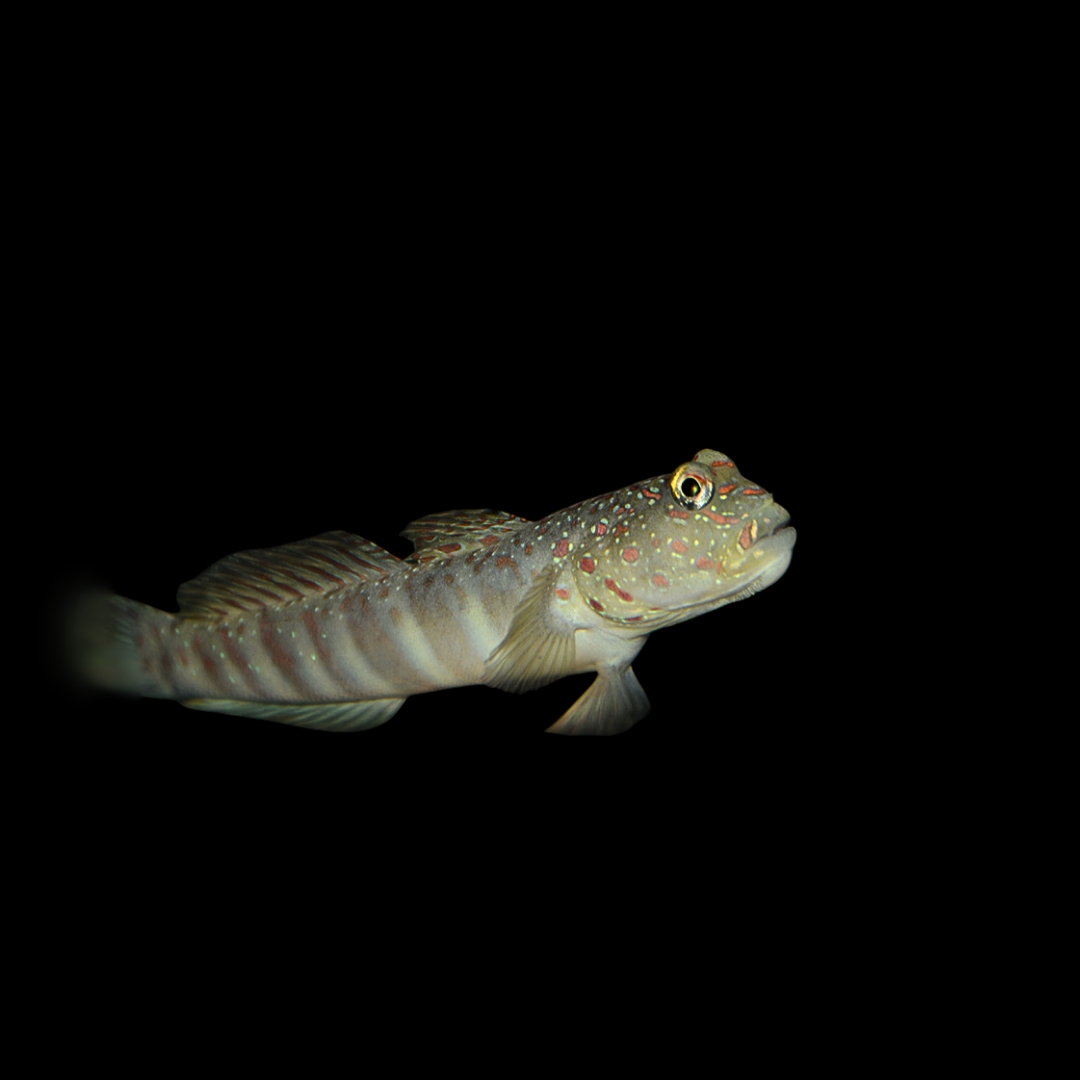
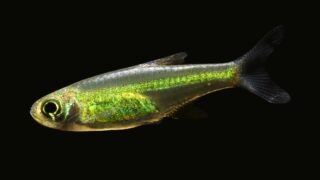
オイランハゼは、浅いサンゴ礁域や河口、内湾の砂泥底から泥底にすむ海水性の共生ハゼです。緑褐色を帯びた体に斜めの暗色帯が入り、頭部やヒレにはピンク色の斑点、顔まわりには細かな青い小点が見られます。最大の魅力はテッポウエビ類との相利共生で、エビが巣穴を掘り、ハゼが見張り役を担うという、海水水槽ならではの行動観察を楽しめる点にあります。 The Pink Shrimpgoby, known in Japan as Oiranhaze, is a marine shrimp goby found on shallow sandy-muddy to muddy bottoms around reef flats, estuaries, and sheltered bays. It has a greenish-brown body with oblique darker bars, pink spots on the head and fins, and fine bluish dots around the face. Its greatest appeal is its mutualistic relationship with pistol shrimps, in which the shrimp builds the burrow while the goby acts as a lookout.
基本情報 / Basic Information
| 学名 / Scientific Name | Cryptocentrus melanopus (Bleeker, 1860) |
|---|---|
| 通称 / Common Name | オイランハゼ、共生ハゼ、シュリンプゴビーPink Shrimpgoby, Pink Spot Shrimp Goby, Shrimp Goby |
| 分類 / Family | ハゼ科 イトヒキハゼ属。分類体系によりスズキ目またはハゼ目として扱われることがあります。Family Gobiidae, genus Cryptocentrus. Depending on the classification system, it may be placed in Perciformes or Gobiiformes. |
| 英名 / English Name | Pink Shrimpgoby / Pink Spot Shrimp Goby |
| 分布 / Distribution | 西部太平洋を中心に、シンガポール、マレーシア、ブルネイ、ベトナム、インドネシア、フィリピン、北部オーストラリアなどから知られます。日本では奄美大島、沖縄諸島、八重山諸島など、南西諸島の浅海域で記録されています。Known mainly from the western Pacific, including Singapore, Malaysia, Brunei, Vietnam, Indonesia, the Philippines, and northern Australia. In Japan, it has been recorded from the Amami Islands, Okinawa Islands, and Yaeyama Islands in the Ryukyu region. |
| 最大体長 / Max Size | 約10cm。国内の図鑑的資料では12cmほどとされることもあります。About 10 cm total length; some Japanese references describe it as reaching around 12 cm. |
| 寿命 / Lifespan | 本種単独の信頼できる寿命データは多くありません。飼育下では水質、給餌、飛び出し防止が安定していれば数年単位の飼育が期待できます。Reliable species-specific lifespan data are limited. In captivity, several years of keeping can be expected when water quality, feeding, and jump prevention are well managed. |
飼育環境 / Aquarium Environment
| 水槽サイズ / Tank Size | 単独飼育なら30cmキューブ水槽から検討できますが、テッポウエビとの共生、底面積、水質の安定を考えると60cm規格水槽以上が安心です。成立済みのペアや混泳を考える場合は、より広い底面積を確保できる水槽が向きます。A single specimen can be considered for a 30 cm cube tank, but a standard 60 cm tank or larger is safer for shrimp symbiosis, bottom area, and stable water quality. A larger footprint is preferable for a confirmed pair or community setup. |
|---|---|
| 水温 / Temperature | 24〜27℃を目安に管理します。高水温が続くと負担になりやすいため、夏場は水槽用クーラーや冷却ファンで水温上昇を抑えます。 Keep around 24 to 27°C. Prolonged high temperatures can be stressful, so cooling equipment may be needed in summer. |
| 水質 / Water Quality | 比重は1.020〜1.025、pHは8.1〜8.4を目安に、急変を避けて管理します。外部式、上部式、オーバーフローなど一般的な海水魚用ろ過で飼育できますが、プロテインスキマーの併用は溶存酸素量と水質の安定に役立ちます。A specific gravity of 1.020 to 1.025 and pH of 8.1 to 8.4 are suitable. Avoid sudden changes. Standard marine filtration can be used, and a protein skimmer helps maintain oxygen and water quality stability. |
| レイアウト / Layout | テッポウエビとの共生を楽しむ場合は、底床づくりが重要です。1〜2mm程度の細かいサンゴ砂と15〜20mm程度の粗いサンゴ礫を混ぜ、厚さ5〜10cmほど敷くと、エビが崩れにくい巣穴を作りやすくなります。ライブロックを土台として置くと、巣穴の位置を観察しやすい場所へ誘導できる場合があります。For observing shrimp-goby symbiosis, substrate design is important. A mix of fine coral sand around 1 to 2 mm and coarser coral rubble around 15 to 20 mm, laid 5 to 10 cm deep, helps the shrimp build more stable burrows. Live rock can serve as a foundation and may encourage burrow construction in visible areas. |
| 注意点 / Precautions | 飛び出し事故に非常に注意が必要です。普段は底付近で落ち着いていても、驚いた瞬間に強く跳ねることがあります。ガラスフタやネットカバーで、配管まわりの小さな隙間までしっかりふさいでから飼育を始めましょう。Jumping is a major risk. Even though the fish usually stays near the bottom, it may leap when startled. Cover the tank securely, including small gaps around pipes and equipment. |
餌と給餌 / Feeding
| 餌の種類 / Diet | 肉食性が強く、冷凍ブラインシュリンプ、イサザアミ、ホワイトシュリンプ、細かくした海水魚用冷凍餌などをよく食べます。環境に慣れると、沈下性の顆粒餌やフレークなどの人工飼料にも餌付きやすい魚です。It is mainly carnivorous and accepts frozen brine shrimp, mysid-type foods, small marine frozen foods, and similar items. Once settled, it often accepts sinking pellets and marine fish flakes. |
|---|---|
| 給餌のポイント / Feeding Tips | 巣穴から大きく離れて餌を追いにくいため、混泳水槽では餌が上層の魚に奪われやすい点に注意します。給餌時は一時的に水流を弱め、スポイトで巣穴の近くへ餌を届ける局所給餌が有効です。少量を1日2〜3回に分けると、水質悪化を抑えながら十分な栄養を与えやすくなります。It does not usually chase food far from its burrow, so faster tank mates may take food before it reaches the bottom. Temporarily reducing flow and target-feeding near the burrow with a pipette or turkey baster is effective. Small portions two to three times daily help provide nutrition while limiting water pollution. |
性格と混泳 / Temperament and Tank Mates
| 性格 / Temperament | 基本的には温和で、上層から中層を泳ぐおとなしい魚にはあまり干渉しません。一方で、巣穴周辺への縄張り意識はあり、同種や生活圏が近い底生性のハゼ類には強く反応することがあります。Generally peaceful toward calm fish that occupy the middle or upper water column, but territorial around its burrow. It may react aggressively toward conspecifics or other bottom-dwelling gobies with similar habits. |
|---|---|
| 混泳の相性 / Compatibility | 60cm以下の標準的な水槽では、1匹または成立済みの雌雄ペアを基本にします。温和な中層魚とは比較的合わせやすい一方、強すぎる魚、餌を独占する魚、同じ底面を使うハゼやギンポ類との組み合わせには注意が必要です。口に入るほど小さなエビや魚は捕食対象になる場合があります。In a standard tank of 60 cm or smaller, keeping one individual or a confirmed male-female pair is the safest approach. It can be kept with peaceful midwater fish, but care is needed with aggressive fish, fast feeders, or other bottom-dwelling gobies and blennies. Very small shrimps or fish may be eaten if they fit in its mouth. |
病気と対策 / Diseases and Prevention
| かかりやすい病気 / Common Diseases | 特定の病気に極端に弱い魚ではありませんが、導入直後の白点病、輸送ストレスによる拒食、混泳魚に餌を奪われることによる痩せには注意が必要です。飼育下での大きな死亡要因としては、病気よりも飛び出し事故が目立ちます。It is not especially prone to a single specific disease, but newly introduced fish may suffer from marine ich, transport-related stress, refusal to feed, or weight loss caused by food competition. In captivity, jumping accidents are often a greater risk than disease. |
|---|---|
| 対策と予防 / Prevention | 購入時は痩せ、ヒレの欠損、白点、呼吸の荒さを確認し、導入時は丁寧な水合わせを行います。水温と比重を安定させ、底面付近に餌が届くように管理しましょう。フタの設置は治療以上に重要な予防策です。When selecting a specimen, check for emaciation, damaged fins, white spots, and rapid breathing. Acclimate carefully, keep temperature and salinity stable, and make sure food reaches the bottom. A secure lid is one of the most important preventive measures. |
増やし方(繁殖) / Breeding
| 雌雄の判別 / Sexing | オスは尾鰭が大きな三角形に見え、背鰭のピンク色模様が独立した斑点として出やすいとされます。メスは尾鰭の後縁が丸みを帯び、背鰭のピンク色模様が帯状につながる傾向があります。ただし個体差や観察条件による見え方の差もあるため、複数の特徴を合わせて判断します。Males tend to have a larger triangular caudal fin, and the pink markings on the dorsal fin often appear as separate spots. Females tend to have a more rounded caudal fin, and the pink markings on the dorsal fin may form more continuous bands. Because appearance varies with individuals and observation conditions, several features should be checked together. |
|---|---|
| 繁殖形態 / Reproduction | 本種単独の詳細な繁殖データは限られます。近縁の共生ハゼ類と同様に、巣穴やその内部に産卵し、卵を保護する形態が考えられますが、家庭水槽で仔魚まで育てるのは難しい部類です。Detailed species-specific breeding data are limited. Like related shrimp gobies, it is expected to spawn in or near the burrow and guard the eggs, but raising larvae successfully in a home aquarium is difficult. |
| 繁殖のポイント / Breeding Tips | 繁殖を狙う場合は、安定した雌雄ペア、厚みのある底砂、落ち着いた巣穴環境、十分な給餌が重要です。ただし、産卵後に仔魚を育てるには、微細な初期餌料、清潔な育成水槽、光や水流の管理が必要になるため、上級者向けの課題です。A stable pair, deep substrate, a calm burrow environment, and ample feeding are important for breeding attempts. Raising the larvae requires very small first foods, a clean rearing tank, and careful control of light and water movement, making it an advanced challenge. |
雑学と豆知識 / Trivia and Fun Facts
| 1. 名前に込められた「花魁」の印象 / 1. The Impression Behind the Japanese Name | 標準和名のオイランハゼは、華やかな斑点模様と、巣穴の近くでヒレを広げながらふわりと舞うようにホバリングする姿に由来すると考えられています。泥底という一見地味な環境にすむ魚でありながら、近づいて見ると顔まわりの青い小点やピンク色の斑紋が非常に美しく、その印象が花魁道中の優美さと重ねられたのでしょう。The Japanese name Oiranhaze is thought to refer to its ornate markings and graceful hovering display near the burrow, with fins spread as if performing a slow dance. Although it lives on muddy bottoms, a closer look reveals brilliant blue dots and pink markings that give it a refined, elegant appearance. |
|---|---|
| 2. 学名が語る隠れた特徴 / 2. What the Scientific Name Suggests | 属名のCryptocentrusは「隠された棘」を意味する語に由来するとされ、本属の形態的特徴を反映した名前です。種小名のmelanopusは「黒い足」を連想させる語で、体の下側や腹鰭周辺の色彩的特徴に関係すると考えられます。学名は単なる記号ではなく、記載当時に研究者が注目した体の特徴を今に残す小さな記録でもあります。The genus name Cryptocentrus is derived from words meaning “hidden spine,” reflecting a morphological feature of the group. The species name melanopus suggests “black foot,” probably referring to coloration on the lower body or pelvic-fin region. Scientific names are not merely labels; they often preserve the features that early taxonomists noticed. |
| 3. テッポウエビとの触覚コミュニケーション / 3. Tactile Communication with Pistol Shrimps | 共生相手のテッポウエビは視力が弱く、巣穴の外で作業するときは長い触角をハゼの体に触れさせています。ハゼが危険を感じて尾を震わせると、その振動が触角を通じてエビに伝わり、エビはすぐに巣穴へ退避します。魚と甲殻類というまったく異なる生き物が、触れるというシンプルな方法で安全を共有している点が、この共生の大きな魅力です。The pistol shrimp has poor eyesight and keeps one of its long antennae in contact with the goby while working outside the burrow. When the goby senses danger, tail flicks and body movements are transmitted through the antenna, prompting the shrimp to retreat immediately. This simple tactile signal links two very different animals in a finely tuned survival partnership. |
| 4. 近縁種との混同に注意 / 4. Be Careful with Similar Species | オイランハゼは、近縁のCryptocentrus leptocephalusやC. singapurensisとの関係をめぐって、過去に同物異名として扱われたり、混同されたりしてきた経緯があります。現在の記事では、確認しやすい特徴として、頭部や背部のピンク色斑点、淡色小点の出方、第二背鰭下の帯が臀鰭の起点にかかるかどうかなどに注目するとしています。販売名や古い資料では学名表記が揺れることもあるため、写真や個体を確認する際は複数の特徴を合わせて見るのが安全です。This species has a history of being confused with the related Cryptocentrus leptocephalus and C. singapurensis, and some older sources have treated them differently. Practical identification points include the pink spots on the head and back, the pattern of pale dots, and whether the first band below the second dorsal fin reaches over the anterior anal-fin rays. Because names can vary in older references and trade use, several features should be checked together. |
| 5. 共生相手との相性が重要な理由 / 5. Why Shrimp Compatibility Matters | 自然下ではトウゾクテッポウエビと一緒に見られる例が知られ、飼育下では流通している別種のテッポウエビと共生することもあります。ただし、必ず同じ巣穴に入るとは限らないため、すでにペアリングが成立した個体を選ぶと観察の成功率が上がります。In the wild, it is known to be seen with certain pistol shrimps such as Alpheus rapax, and in aquaria it may also pair with other traded pistol shrimps. However, pairing is not always guaranteed, so an already established pair offers a better chance of successful observation. |
まとめ / Conclusion
オイランハゼは、美しい斑点模様だけでなく、テッポウエビとの共生行動を観察できる点で、海水水槽ならではの魅力を強く感じられる魚です。飼育そのものは極端に難しい魚ではありませんが、底砂の厚みと粒の組み合わせ、巣穴を作りやすいレイアウト、そして飛び出し防止のフタは欠かせません。 The Pink Shrimpgoby is attractive not only for its beautiful spotted pattern but also for the opportunity to observe shrimp-goby symbiosis. It is not extremely difficult to keep, but deep mixed substrate, a burrow-friendly layout, and a secure lid are essential.
これから飼育する場合は、餌が巣穴の近くまで届くように工夫し、同じ底面を使う魚との混泳を避けると安定しやすくなります。適切な環境を整えれば、家庭の60cm規格水槽でも「花魁」の名にふさわしい優雅な姿と、エビとの緻密な共同生活をじっくり楽しめるでしょう。 When keeping this species, make sure food reaches the burrow area and avoid combining it with fish that compete for the same bottom territory. With proper conditions, even a standard 60 cm marine aquarium can offer a close view of its graceful “oiran-like” presence and its intricate partnership with a pistol shrimp.
気になる道具や飼い方を見つけてみませんか?
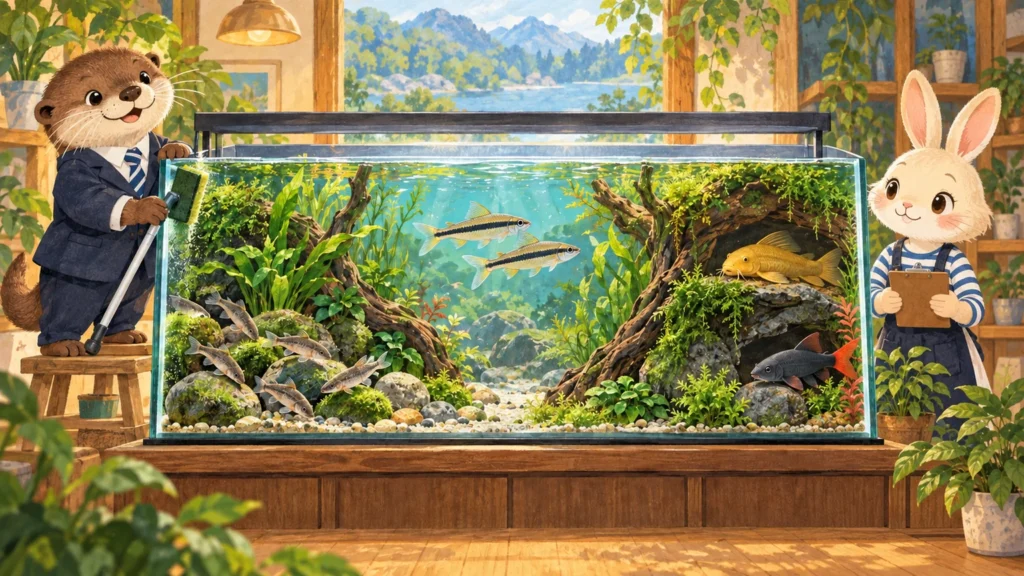 アイのアクアグッズ案内コケを食べるコイの仲間に合わせる飼育用品|フライングフォックス・アルジイーター・ガラ道具の特徴や使い方、選ぶときのポイントをアイが紹介します。記事はコチラ →
 アイのアクアグッズ案内水換え・底砂掃除の道具の選び方|砂利・砂・ソイルに合うクリーナーとポンプ道具の特徴や使い方、選ぶときのポイントをアイが紹介します。記事はコチラ →
さまざまな飼育テーマをご紹介。リンク先の記事には広告・商品紹介が含まれます。
案内・紹介記事一覧へ →参考文献・参照資料
この記事では、店舗・通販サイト・個人ブログ・まとめサイトを参考文献から除外し、分類、分布、生息環境、共生生態、飼育時の水質管理、繁殖難度、病気・導入時の注意点を支える資料だけを選定しています。特に、オイランハゼそのものの分類・分布・形態については魚類データベースと専門図鑑を優先し、飼育管理・病気については水族館、獣医学資料、公的・業界団体資料を補助的に参照しています。
-
World Register of Marine Species. “Cryptocentrus melanopus (Bleeker, 1860).”
https://www.marinespecies.org/aphia.php?id=278338&p=taxdetails
分類、学名、原記載名、シノニム確認の基礎資料として参照。 -
Froese, R. and D. Pauly, Editors. FishBase. “Cryptocentrus melanopus.”
https://www.fishbase.se/summary/Cryptocentrus-melanopus
分類、英名、分布、最大サイズ、関連文献確認の補助資料として参照。 -
Bray, D.J. 2018. “Cryptocentrus melanopus.” Fishes of Australia.
https://fishesofaustralia.net.au/home/species/5008
形態的特徴、最大体長、分布、浅所の生息環境、テッポウエビ類との巣穴共有、近縁種との識別・分類上の注意点を確認する主要資料として参照。 -
Bray, D.J. “Cryptocentrus.” Fishes of Australia.
https://fishesofaustralia.net.au/home/genus/383
イトヒキハゼ属の形態的特徴と、テッポウエビ類と巣穴を共有するグループとしての位置づけを確認する資料として参照。 -
WEB魚図鑑. “オイランハゼ.”
https://zukan.com/fish/internal803
日本国内での分布、体長、生息水深、河口・内湾・サンゴ礁域浅所の砂泥底・泥底で見られる点を確認する国内向け資料として参照。 -
アクアマリンふくしま. “オイランハゼ|生き物紹介.”
https://www.aquamarine.or.jp/animals/prawn-goby/
国内水族館による分布、生息場所、トウゾクテッポウエビとの共生、見張り行動の説明を確認する資料として参照。 -
Ornamental Aquatic Trade Association. “How to test for water quality in a marine tank / aquarium.”
https://ornamentalfish.org/what-we-do/advice-information/care-sheets/caresheets-marine-fish/how-to-test-for-water-quality-in-a-marine-tank-aquarium/
海水水槽における塩分、pH、水質変化、蒸発による塩分上昇など、飼育条件と水質管理の考え方を支える資料として参照。 -
Yanong, R.P.E. 2021. “Cryptocaryon irritans Infections (Marine White Spot Disease) in Fish.” University of Florida IFAS Extension.
https://edis.ifas.ufl.edu/publication/FA164
海水魚の白点病、症状、ストレスや管理上の注意を説明する病気・予防面の資料として参照。 -
Merck Veterinary Manual. “Parasitic Diseases of Fish.”
https://www.merckvetmanual.com/exotic-and-laboratory-animals/aquarium-fish/parasitic-diseases-of-fish
海水魚で見られるCryptocaryon irritansを含む寄生虫性疾患の獣医学的な確認資料として参照。 -
Domínguez, L.M. and Botella, Á.S. 2014. “An overview of marine ornamental fish breeding as a potential support to the aquarium trade and to the conservation of natural fish populations.” International Journal of Sustainable Development and Planning.
https://www.witpress.com/Secure/ejournals/papers/SDP090409f.pdf
海水観賞魚の繁殖・仔魚育成が種ごとの技術開発を要する分野であることを補足する、繁殖難度に関する総説資料として参照。
参照日:2026年6月10日。底砂の具体的な粒径や局所給餌などの実践的ノウハウは、上記資料で直接数値まで裏取りできる情報ではないため、実用上の助言として参考にしてください。参考文献は主に分類・分布・生態・水質管理・病気・繁殖難度に関するものです。

コメント