


解説 / Description
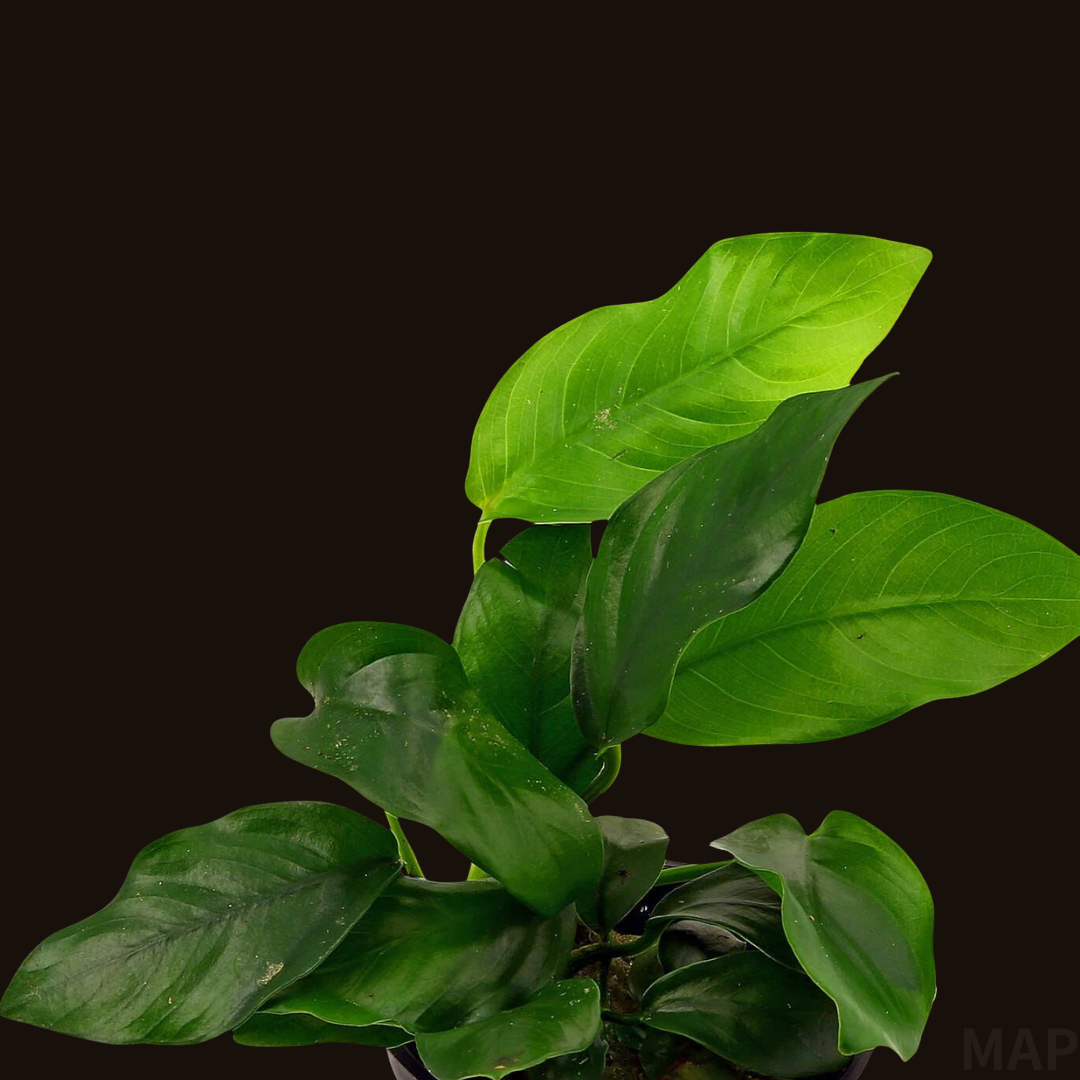
アヌビアス・ナナは、西アフリカのカメルーンを原産とするサトイモ科の水草です。アヌビアスの仲間は、森の中を流れる川のほとりで岩や倒木に根を張って暮らしています。深い緑色をした卵形の葉は厚みがあり、しっとりとした艶をもっています。強い光やCO2添加がなくても長く育ち、水質の違いにもよく耐えるため、「初めての水草」としてよく名前が挙がります。けれども、ただ丈夫なだけではありません。流木や石に活着させると、時間をかけて根を伸ばし、まるで最初からそこに生えていたかのような落ち着いた景色をつくってくれます。 Anubias nana is an aquatic plant in the arum family, native to Cameroon in West Africa. Plants of the genus Anubias grow along forest streams, rooting onto rocks and fallen logs. Its thick, oval leaves are a deep, glossy green. Because it lives for years without strong lighting or CO2 injection and tolerates a wide range of water conditions, it is often recommended as a first aquarium plant. Yet it is far more than just a hardy plant: attached to driftwood or stone, it slowly sends out roots and settles in so naturally that it looks as if it had always grown there.
成長はとてもゆっくりで、新しい葉が開くのは1か月に1〜2枚ほどです。そのぶん一枚一枚の葉が長持ちするので、一度レイアウトに組み込めば、姿が大きく崩れることはほとんどありません。日本では、東南アジアのファームから輸入されるポット苗と、無菌状態で育てられた組織培養カップの2つの形で流通しています。近年はプチやゴールデンといった改良品種も増え、品種を選べば小型水槽から大型水槽まで、幅広い水景で活躍します。 It grows very slowly, typically opening only one or two new leaves a month. In return, each leaf lasts a long time, so once it is placed in a layout, its shape rarely falls apart. In Japan it is sold in two main forms: potted plants imported from farms in Southeast Asia, and sterile tissue-culture cups. With cultivars such as Petite and Golden now widely available, the right choice of variety lets it play a role in everything from nano tanks to large display aquariums.
基本情報 / Basic Information
| 学名 / Scientific Name | Anubias barteri var. nana (Engl.) Crusio 1899年にエングラーが独立した種 Anubias nana として記載しました。その後、1979年にクルシオがアヌビアス属を見直した際、A. barteri の変種に位置づけられています。近年は変種を区別せず A. barteri にまとめる扱いもありますが、アクアリウムの世界では現在もこの変種名が広く使われています。Engler described it in 1899 as a separate species, Anubias nana. In his 1979 revision of the genus, Crusio placed it as a variety of A. barteri. Some recent treatments no longer distinguish varieties and simply include it in A. barteri, but the varietal name remains widely used in the aquarium hobby. |
|---|---|
| 通称 / Common Name | アヌビアス・ナナ、ナナAnubias nana, Dwarf Anubias |
| 分類 / Family | サトイモ科 アヌビアス属Araceae, genus Anubias |
| 分布 / Distribution | 西アフリカのカメルーン。野生の自生地はごく限られた地域からしか知られていません。アヌビアスの仲間は、森の木陰を流れる川沿いで、岩や倒木に着生して育ちます。Cameroon, West Africa. In the wild it is known only from a very limited area. Plants of the genus Anubias grow attached to rocks and fallen wood along shaded forest streams. |
| 育成難易度 / Difficulty | 易しい水草です。光やCO2が少なくても育ちます。よくある失敗は「根茎を底床に埋めて腐らせる」「強い光でコケだらけにする」の2つです。この2点に気をつければ、長く楽しめます。Easy. It grows well with little light and no CO2. The two most common mistakes are burying the rhizome in the substrate, where it rots, and using strong lighting that covers the leaves in algae. Avoid those two and it will last for years. |
育成環境 / Cultivation Environment
| 光量 / Light | 弱〜中程度の光が適しています。強い照明を当てても成長はあまり速くならず、かえって葉の表面にコケがつきやすくなります。流木の陰や、照明の真下から少し外れた場所に置くと、葉をきれいに保てます。Low to moderate light is ideal. Strong lighting does little to speed its growth and instead encourages algae on the leaves. Placing it in the shade of driftwood or slightly away from directly under the light helps keep the foliage clean. |
|---|---|
| CO2添加 / CO2 Injection | 必須ではありません。添加すると成長がやや良くなり、葉の艶も増します。Not required. Adding CO2 slightly improves growth and gives the leaves more gloss. |
| 水質 / Water Quality | 水温22〜28℃、pH6.0〜8.0が目安です。軟水から中硬水まで幅広く適応します。水質を選ばないので、弱アルカリ性を好むアフリカンシクリッドなどの水槽にも取り入れやすい水草です。Aim for 22–28°C and pH 6.0–8.0. It adapts to soft through moderately hard water. Because it is not fussy about water chemistry, it is also easy to use in tanks for fish that prefer slightly alkaline water, such as African cichlids. |
| 底床 / Substrate | 流木や石に活着させるのが基本なので、底床の種類は問いません。根が底床に伸びるのはかまいませんが、根茎(横に伸びる太い茎)は埋めないでください。栄養は主に水中から吸収するため、成長が鈍いときは液体肥料を少量与えると効果的です。Since it is usually attached to wood or stone, any substrate will do. Roots may grow down into the substrate, but never bury the rhizome (the thick, horizontal stem). It takes most of its nutrients from the water, so a small dose of liquid fertilizer helps when growth slows. |
レイアウト / Layout
| 配置 / Positioning | 前景から中景にかけて、流木の根元や石の隙間によく似合います。濃い緑の丸い葉を、明るい色の有茎草や細い葉のシダ類と並べると、色と形のコントラストが際立ちます。照明の当たりにくい陰の部分に置けば、レイアウトに奥行きと落ち着きが生まれます。30cmキューブ水槽(約27L)などの小型水槽ではプチを、60cm規格水槽(約57L)以上ではノーマル種を主役にするなど、水槽の大きさで品種を使い分けるのもおすすめです。It suits the foreground to midground, at the base of driftwood or between stones. Paired with bright stem plants or fine-leaved ferns, its dark, rounded leaves create a striking contrast in color and shape. Placed in the shaded parts of a layout, it adds depth and a calm atmosphere. It also works well to choose the variety by tank size: Petite for small tanks such as a 30 cm cube (about 27 L), and the standard form as a main feature in a standard 60 cm tank (about 57 L) or larger. |
|---|---|
| 注意点 / Precautions | 活着には、水草用の瞬間接着剤、ビニタイ、テグスなどを使います。接着剤は固まると白くなるので、正面から見えない裏側に塗りましょう。ビニタイは、根が素材にしっかり絡んだら(1〜2か月ほど)外します。テグスで強く縛りすぎると、太くなった根茎に糸が食い込み、そこから傷むことがあります。木綿糸は活着する前に水中で分解されやすいため、アヌビアスには不向きです。Attach it with aquarium-safe superglue gel, plant ties, or fishing line. The glue turns white as it cures, so apply it on the back where it won’t be visible. Remove plant ties once the roots have gripped the surface, usually after one to two months. Fishing line tied too tightly can cut into the thickening rhizome and damage it. Cotton thread tends to break down underwater before the plant has attached, so it is not well suited to Anubias. |
増やし方(トリミング) / Propagation & Trimming
| 増やし方 / Propagation | 根茎を切り分ける株分けで増やします。葉が3〜4枚以上つくように、清潔なハサミやカッターで根茎を切り分け、それぞれを流木や石に活着させます。根茎から脇芽が出ることもあるので、ある程度育ってから切り離すとよいでしょう。成長が遅いので、気長に付き合うのがコツです。Propagate by dividing the rhizome. Using clean scissors or a blade, cut it into sections that each keep at least three or four leaves, then attach each piece to wood or stone. Side shoots may also form on the rhizome; separate them once they have grown a little. Growth is slow, so patience is key. |
|---|---|
| トリミング / Trimming | こまめなトリミングは必要ありません。古くなった葉や傷んだ葉、コケが落ちなくなった葉を、根元から切り取る程度で十分です。根茎が伸びすぎて形が崩れてきたら、株分けを兼ねて整えましょう。Regular trimming is not needed. Simply cut off old, damaged, or algae-covered leaves at the base. If the rhizome grows too long and the plant loses its shape, tidy it up by dividing it. |
病気と対策(コケなど) / Pests & Algae
| かかりやすい病気 / Common Issues | いちばん多いトラブルは、葉に斑点状の緑のコケや黒ヒゲゴケがつくことです。葉が長持ちするぶん、一度ついたコケも残りやすく、強い光や強い水流、肥料の多すぎる環境では特に増えやすくなります。もう一つ気をつけたいのが根茎の腐れです。根茎が茶色く柔らかくなって溶け、強い臭いを出しながら、短期間で株が崩れてしまうことがあります。細菌による軟腐が原因と考えられており、根茎を底床に埋めたときや、根茎に傷があるときに起こりやすい傾向があります。The most common problem is green spot algae and black beard algae on the leaves. Because the leaves last so long, algae that settles on them tends to stay, especially under strong light, strong current, or excess fertilizer. Another issue to watch for is rhizome rot: the rhizome turns brown and soft, melts with a foul smell, and the plant can collapse in a short time. It is thought to be caused by bacterial soft rot and tends to occur when the rhizome is buried or wounded. |
|---|---|
| 対策と予防 / Prevention | 葉についたコケには、木酢液や食酢を使った処理が効果的です。株を水槽から取り出し、水で薄めた木酢液をコケの部分にだけ筆などで塗ります。30秒〜1分ほど置いたら、流水でよく洗い流してください。長く置きすぎると葉まで傷むので注意しましょう。数日たつとコケが変色して弱り、ヤマトヌマエビなどが食べられるようになります。根茎が腐った場合は、傷んだ部分を健康な組織が見えるところまで大きく切り落とし、残った株を別の容器で様子を見るのが現実的な対処です。 また、輸入ポット苗には農薬やスネール、プラナリアがついていることがあります。ロックウールを取り除き、「水草その前に」などの下処理剤で処理してから水槽に入れましょう。エビの水槽に入れる場合は、処理後もしばらく別の容器で水換えを繰り返すと安心です。最初から組織培養カップを選べば、こうした心配はほとんどありません。For algae on the leaves, treating with wood vinegar or regular vinegar works well. Take the plant out of the tank and brush diluted wood vinegar only onto the algae. After 30 seconds to a minute, rinse it thoroughly under running water; leaving it on too long will damage the leaves as well. Within a few days the algae changes color and weakens, so shrimp such as Amano shrimp can eat it. If the rhizome rots, cut away the damaged part generously until healthy tissue shows, then keep the rest in a separate container to watch how it recovers. Imported potted plants may also carry pesticide residues, snails, or planaria. Remove the rockwool and treat the plant with a pre-treatment product such as “Mizukusa Sono Mae ni” before adding it to the tank. If it is going into a shrimp tank, keep it in a separate container for a while afterward with repeated water changes to be safe. Choosing a tissue-culture cup from the start avoids almost all of these concerns. |
雑学と豆知識 / Trivia and Fun Facts
| 1. 魚に食べられにくい理由は「針の結晶」 / 1. Needle-Shaped Crystals That Keep Fish Away | 金魚や大型シクリッドの水槽では、多くの水草がすぐに食べられてしまいます。そんな水槽でもアヌビアス・ナナが残りやすいのは、葉が硬いことに加え、体の中に「ラフィド」と呼ばれるシュウ酸カルシウムの針のような結晶をためているためです。サトイモ科の植物によく見られる仕組みで、葉をかじると細かな針が口の中を刺激します。里芋の皮をむくと手がかゆくなるのも、同じシュウ酸カルシウムの結晶によるものです。つまり、身を守るために備えた性質が、魚と同居する水槽でも役立っているのです。In tanks with goldfish or large cichlids, most plants are eaten quickly. Anubias nana tends to survive there not only because its leaves are tough, but also because it stores needle-like crystals of calcium oxalate called raphides. This defense is common in the arum family: biting into a leaf irritates the mouth with tiny needles. The itchy hands you get from peeling taro come from the same calcium oxalate crystals. In other words, a trait the plant uses to protect itself also helps it hold its own in a tank full of fish. |
|---|---|
| 2. 水中でも咲くサトイモ科の花 / 2. An Arum Flower That Blooms Underwater | 環境が合うと、アヌビアス・ナナは水槽の中でも花を咲かせます。白っぽい「仏炎苞(ぶつえんほう)」に包まれた棒状の花は、ミズバショウやカラーと同じ、サトイモ科らしい形です。水中で咲いた花から種ができることはほとんどありませんが、ゆっくり育つこの水草が花をつけるのは、株が健康に育っているしるしといえます。見つけたときは、ちょっとしたご褒美として眺めてみてください。When conditions suit it, Anubias nana will bloom even underwater. Its rod-shaped flower wrapped in a pale spathe has the classic shape of the arum family, shared with skunk cabbage and calla lilies. Flowers that open underwater rarely produce seeds, but a bloom on such a slow-growing plant is a sign that it is healthy. If you spot one, enjoy it as a small reward. |
| 3. 同じ姿に育つ組織培養の苗 / 3. Tissue-Culture Plants That Stay True to Type | 成長の遅いアヌビアスを大量に生産するため、現在は茎の先端の細胞を無菌の培地で増やす「組織培養」が広く使われています。培養を長く続けると遺伝的な性質が変わることもありますが、アヌビアス・ナナでは、長期間培養を続けた株でも親株と同じ染色体数(2n=48)が保たれていたという研究があります。つまり、カップに入った小さな苗は、親株と同じ性質を受け継いだクローンとして、安定した姿に育つと考えられます。一方で、大量生産の中でまれに現れる変わった株が選び出され、プチやゴールデン、葉が波打つタイプなど、さまざまな改良品種も生まれてきました。To mass-produce this slow-growing plant, nurseries now rely heavily on tissue culture, which multiplies cells from the shoot tip on a sterile medium. Long-term culture can sometimes change a plant’s genetic makeup, but one study found that Anubias nana plants cultured over a long period kept the same chromosome number as the parent plant (2n = 48). In other words, the tiny plantlets in culture cups can be expected to grow into stable clones that share the parent’s traits. At the same time, rare unusual plants that appeared during mass production have been selected, giving rise to cultivars such as Petite, Golden, and wavy-leaved types. |
| 4. 小さな葉で描く遠近感 / 4. Creating Perspective with Small Leaves | アヌビアス・ナナには、葉が1〜2cmほどのプチ、1cmに満たないほど小さなパンゴリーノ、明るい黄緑色のゴールデンなど、多くのバリエーションがあります。手前に葉の大きいノーマル種、奥に葉の小さいプチやパンゴリーノを配置すると、遠くの木々が小さく見えるのと同じように、水槽の中に奥行きが生まれます。同じ仲間でも葉の大きさや色を変えるだけで景色に変化をつけられるのは、この水草ならではの楽しみ方です。Anubias nana comes in many variations, including Petite with leaves of about 1–2 cm, the tiny Pangolino with leaves under 1 cm, and the bright lime-green Golden. Place the larger-leaved standard form in front and smaller forms like Petite or Pangolino further back, and the tank gains depth, just as distant trees look smaller. Being able to vary a scene simply by changing leaf size and color within one plant is a pleasure unique to this plant. |
まとめ / Conclusion
アヌビアス・ナナは、強い光もCO2も必要とせず、さまざまな水槽に自然に馴染む水草です。流木や石に根を張り、深い緑の葉を一枚ずつ重ねていく姿には、静かで落ち着いた魅力があります。魚に食べられにくく、水質も選ばないため、ほかの水草が育ちにくい水槽でも頼れる存在です。 Anubias nana needs neither strong light nor CO2 and blends naturally into many kinds of aquariums. Rooted on driftwood or stone, adding one deep green leaf at a time, it has a quiet, calming charm. Because fish rarely eat it and it is not fussy about water conditions, it is a dependable choice even in tanks where other plants struggle.
根茎を埋めないこと、光を当てすぎないこと。この2つを守れば、何年も同じ場所で水景を支えてくれます。ゆっくりとした成長を見守り、根が少しずつ流木に絡んでいく様子を楽しめるのも、この水草ならではの魅力です。 Keep the rhizome above the substrate and avoid too much light, and it will support your aquascape from the same spot for years. Watching it grow slowly as its roots gradually wrap around the driftwood is part of what makes this plant so rewarding.

困りごとの解決から、用品えらび、水槽づくり、生き物えらびまで。飼育に役立つ案内です。
分布マップ
Anubias barteri var. nana は西アフリカのカメルーン原産で、野生の自生地はごく限られた地域からしか知られていません。地図ではカメルーン全体を表示しています。
※ 地図は分布地域のおおよその範囲を示す概略表示です。マーカーはカメルーン国内に置いた代表地点で、実際の採集地点や自生地を示すものではありません。
参考文献 / References
- Engler, A. (1899). Anubias nana Engl. Botanische Jahrbücher für Systematik, Pflanzengeschichte und Pflanzengeographie, 26: 423.
- Crusio, W. (1979). A revision of Anubias Schott (Araceae). (Primitiae Africanae XII). Mededelingen Landbouwhogeschool Wageningen, 79-14: 1–48.
- Plants of the World Online (POWO). Anubias nana Engl. Royal Botanic Gardens, Kew. https://powo.science.kew.org/taxon/urn:lsid:ipni.org:names:85535-1
- Kasselmann, C. (2003). Aquarium Plants. Krieger Publishing Company, Malabar, Florida.
- Franceschi, V. R. & Nakata, P. A. (2005). Calcium oxalate in plants: formation and function. Annual Review of Plant Biology, 56: 41–71. https://doi.org/10.1146/annurev.arplant.56.032604.144106
- Kanchanapoom, K., Chunui, P. & Kanchanapoom, K. (2012). Micropropagation of Anubias barteri var. nana from shoot tip culture and the analysis of ploidy stability. Notulae Botanicae Horti Agrobotanici Cluj-Napoca, 40(2): 148–151. https://doi.org/10.15835/nbha4027520
- van der Waals, J. E., van der Wolf, J. M., Van Gijsegem, F. & Yedidia, I. (2021). Pectobacterium and Dickeya: environment to disease development. In: Van Gijsegem, F., van der Wolf, J. M. & Toth, I. K. (eds.), Plant Diseases Caused by Dickeya and Pectobacterium Species. Springer, Cham, pp. 39–84. https://doi.org/10.1007/978-3-030-61459-1_3
コメント