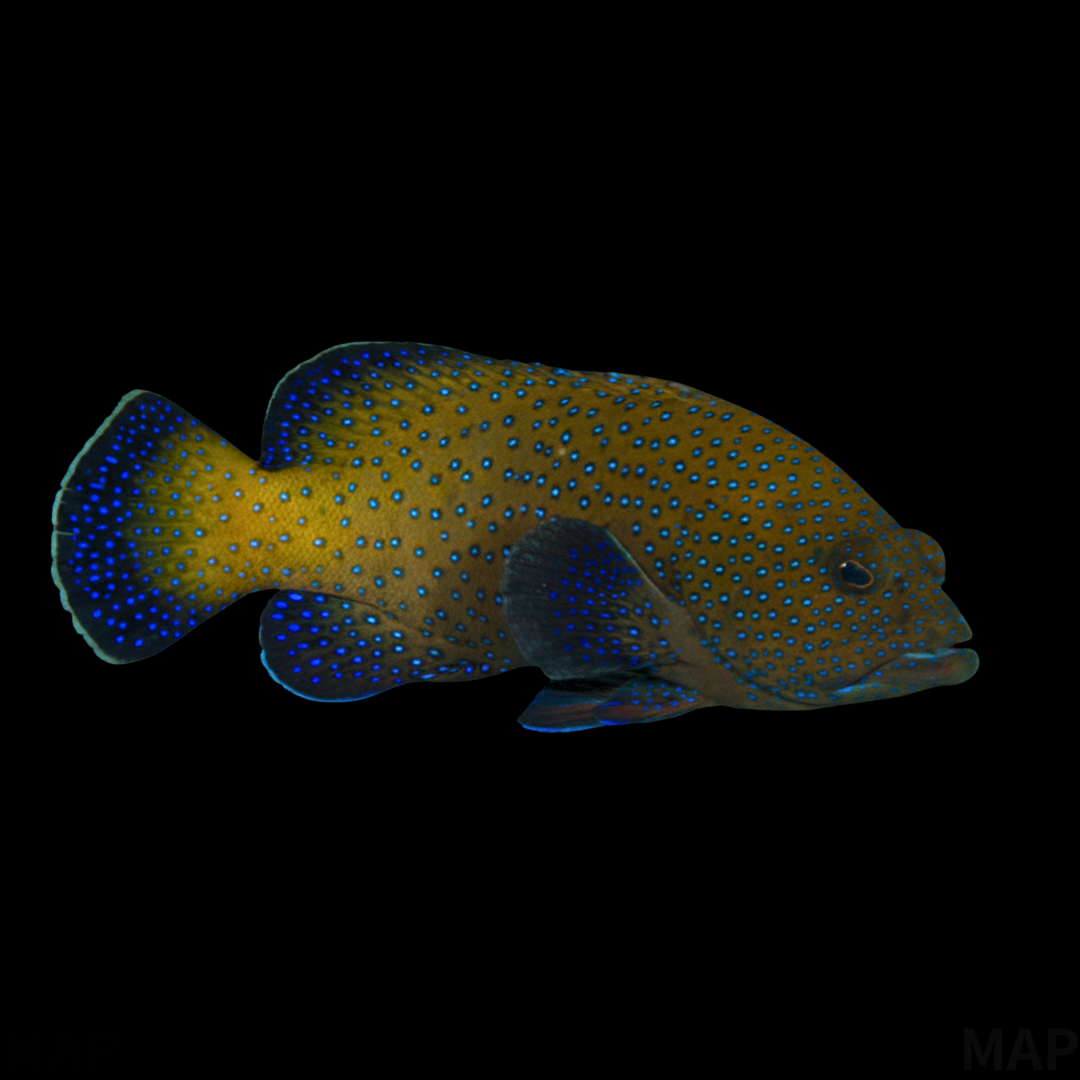
アオノメハタは、インド太平洋のサンゴ礁域に広く分布するハタ科の魚類です。暗褐色の地色に、黒く縁取られた鮮やかな青い斑点が全身に散りばめられたその姿は、一度見たら忘れられないほどのインパクトを与えます。その美しさと、環境の変化に動じない非常に堅牢な性質から、海水観賞魚の世界では古くから人気のある大型種です。しかし、自然界では食物連鎖の頂点に近い捕食者であり、知能の高さや特異な社会構造を持つことでも知られています。飼育にあたっては、その大きな体と強い個性を理解し、適切な環境を用意することが求められる、まさにプロフェッショナルな魅力に溢れた魚と言えるでしょう。The Peacock Grouper (Cephalopholis argus) is a species of serranid fish widely distributed across the coral reefs of the Indo-Pacific. Its striking appearance, characterized by a dark brown body covered in vivid blue spots with black outlines, leaves a lasting impression. Due to its beauty and exceptionally hardy nature, it has long been a popular large species in the saltwater aquarium hobby. In the wild, it is a top predator in the food chain, known for its high intelligence and unique social structure. Keeping this fish requires an understanding of its large size and strong personality, demanding a professional approach to provide an appropriate environment.
基本情報 / Basic Information
学名 / Scientific Name
Cephalopholis argus
通称 / Common Name
アオノメハタ、ヤーラミーバイ(沖縄)、オーナシPeacock Grouper, Roi (Hawaii), Blue-spotted Grouper
紅海、東アフリカから南日本、オーストラリア、ポリネシアに至るインド太平洋全域Across the Indo-Pacific from the Red Sea and East Africa to Southern Japan, Australia, and Polynesia.
最大体長 / Max Size
40cmから60cm(稀に80cm近くに達する)40cm to 60cm (rarely reaching nearly 80cm)
寿命 / Lifespan
約15年から20年Approximately 15 to 20 years
飼育環境 / Aquarium Environment
水槽サイズ / Tank Size
120cm規格水槽(約240L)以上。終生飼育を考えるなら180cmワイド水槽(約600L)が理想。A 120cm standard tank (approx. 240L) or larger. For lifelong care, a 180cm wide tank (approx. 600L) is ideal.
全身が隠れる大きな洞窟や、頑丈に組まれたライブロックによる隠れ家が必要。Requires large caves for full body cover and sturdy live rock structures for hiding spots.
注意点 / Precautions
飛び出し事故が多いため、隙間のない重い蓋が必須です。また多量の排泄物に対応するため、高性能なプロテインスキマーの併用を推奨します。A heavy, gap-free lid is essential as they are prone to jumping. A high-performance protein skimmer is recommended to handle the large bio-load.
餌と給餌 / Feeding
餌の種類 / Diet
肉食性。大型魚用ペレット、冷凍キビナゴ、イカやアサリの切り身、クリル。Carnivorous. Large fish pellets, frozen silver-stripe round herring, squid or clam pieces, and krill.
給餌のポイント / Feeding Tips
導入初期は活き餌(スジエビなど)を好む場合があります。肥満防止と水質維持のため、成魚には週に2回から3回、腹八分目を目安に与えてください。Newly introduced individuals may prefer live food like grass shrimp. To prevent obesity and maintain water quality, feed adults 2 to 3 times per week, aiming for “80% full.”
性格と混泳 / Temperament and Tank Mates
性格 / Temperament
非常に気が強く、縄張り意識が強い。口に入るサイズの生物はすべて捕食対象です。Very aggressive and highly territorial. Any organism small enough to fit in its mouth is considered prey.
混泳の相性 / Compatibility
同サイズ以上の大型ヤッコやニザダイ、ウツボ類とは混泳可能。同種間や近縁のハタ類とは激しく争うため避けてください。Compatible with large angelfish, surgeonfish, and moray eels of equal or larger size. Avoid keeping with conspecifics or closely related groupers due to intense fighting.
病気と対策 / Diseases and Prevention
かかりやすい病気 / Common Diseases
非常に丈夫ですが、導入直後の白点病や、寄生虫(ハダ虫など)には注意が必要です。Very hardy, but watch for Cryptocaryon irritans (white spot) or skin flukes immediately after introduction.
対策と予防 / Prevention
新しい個体を導入する前の検疫と、水質の安定が最大の予防です。殺菌灯の設置も有効です。Quarantining before introduction and maintaining stable water quality are the best preventions. UV sterilizers are also effective.
増やし方(繁殖) / Breeding
雌雄の判別 / Sexing
外見での判別は困難ですが、ハーレム内の最大個体が雄、それ以外が雌となります。Difficult to distinguish by appearance, but the largest individual in a harem is typically the male, while others are females.
繁殖形態 / Reproduction
雌性先熟の雌雄同体です。雌として成熟し、後に雄へと性転換します。Protogynous hermaphrodite. They mature first as females and later change sex to male.
繁殖のポイント / Breeding Tips
非常に広い縄張りを必要とするため、一般的な個人水槽での繁殖例は極めて稀です。Since they require vast territories, breeding in standard private aquariums is extremely rare.
雑学と豆知識 / Trivia and Fun Facts
1. 百眼の巨人「アルゴス」の伝説 / 1. Legend of Argus, the Hundred-Eyed Giant
学名の argus は、ギリシャ神話に登場する100の目を持つ巨人アルゴスに由来します。神話では、アルゴスの死後にその目が孔雀の尾羽に移されたとされており、本種の全身を覆う眼のような斑紋がそのイメージと重なったのです。英名の Peacock(孔雀)もこの伝説に基づいています。The scientific name ‘argus’ is derived from Argus Panoptes, the 100-eyed giant of Greek mythology. According to myth, after his death, his eyes were placed on the tail of a peacock. The numerous eye-like spots covering this fish evoke that same imagery, hence the English common name “Peacock.”
2. ウツボとのダンス、驚異の「協調狩猟」 / 2. Dancing with Eels: The Marvel of Cooperative Hunting
アオノメハタは知能が高く、ドクウツボなどのウツボ類と協力して狩りを行うことが知られています。獲物が岩の隙間に逃げ込むと、アオノメハタはウツボを呼びに行き、頭を振るダンスで合図を送ります。ウツボが隙間に入り獲物を追い出すことで、双方が食事にありつくチャンスを増やすという、非常に高度なコミュニケーション能力を持っています。Peacock groupers exhibit high intelligence through cooperative hunting with moray eels. If prey hides in a crevice, the grouper signals an eel by performing a head-shaking dance. The eel flushes the prey out, increasing the feeding chances for both—a sophisticated level of interspecies communication.
3. ハワイでの外来種問題と「ロイ」 / 3. Invasive Species Issue in Hawaii: The “Roi”
1950年代、食用資源としてハワイ諸島に移入されたアオノメハタ(現地名ロイ)は、天敵や競合者がいない環境で爆発的に増殖しました。しかし、毒性の問題から食べられることはなく、逆にハワイ固有の在来魚を大量に捕食したため、現在は生態系を守るための駆除プロジェクトが行われるほど深刻な外来種問題となっています。In the 1950s, Peacock groupers (known locally as “Roi”) were introduced to Hawaii for fisheries. With no predators or competitors, they proliferated exponentially. However, due to toxicity, they weren’t consumed, and instead, they decimated native Hawaiian fish populations, leading to serious invasive species issues and removal projects.
4. 食用厳禁!恐ろしい「シガテラ毒」 / 4. Strictly Not for Food! The Terrifying Ciguatera Poisoning
アオノメハタは、食物連鎖を通じてシガテラ毒を体内に蓄積しやすい魚種です。この毒は加熱しても分解されず、食べると温度感覚の異常や痺れなど、重篤な中毒症状を引き起こします。そのため、日本国内でも食用としての流通は厳しく制限されており、釣り上げた際も決して口にしてはいけません。Peacock groupers are notorious for accumulating Ciguatera toxins through the food chain. This heat-stable toxin causes severe symptoms like sensory distortions (reversing hot and cold) and numbness. Consequently, their distribution for food is strictly restricted in Japan, and anglers must never consume them.
まとめ / Conclusion
アオノメハタは、ギリシャ神話の巨人から名を譲り受けたその高貴な美しさと、他の魚には見られない高度な社会的知性を併せ持つ、海水魚の中でも特別な存在です。その強靭な生命力はアクアリストにとって大きな魅力ですが、それゆえに大型水槽での長期飼育と、シガテラ毒という野生の厳しさを正しく理解することが、この魚と向き合う上での礼儀と言えるでしょう。The Peacock Grouper is a special presence in the marine world, combining a noble beauty named after a Greek giant with advanced social intelligence unseen in many other fish. Its resilient vitality is a major draw for aquarists, but responsibly keeping this fish requires a large aquarium and a proper understanding of the harsh realities of nature, such as Ciguatera toxicity.
美しき監視者アルゴスを水槽に招くことは、サンゴ礁のダイナミズムを間近で観察する素晴らしい機会を与えてくれます。適切な環境と愛情を持って接すれば、あなたの水槽における最高のシンボルフィッシュとなってくれるはずです。Inviting the beautiful sentinel Argus into your aquarium offers a magnificent opportunity to observe the dynamism of the coral reef up close. With the right environment and care, it will undoubtedly become the ultimate centerpiece fish of your tank.
Bshary, R., Hohner, A., Ait-el-Djoudi, K., & Fricke, H. (2006)Interspecific Communicative and Coordinated Hunting between Groupers and Giant Moray Eels in the Red SeaPLOS Biology, 4(12), e431. (ハタとウツボの協調狩猟に関する研究)
Dierking, J. (2007)Effects of the introduced predatory fish Cephalopholis argus on native reef fish populations in HawaiiUniversity of Hawaii at Manoa. (ハワイにおけるアオノメハタの移入生態調査)
Meyer, A. L., & Dierking, J. (2011)Elevated ciguatoxin levels in the introduced peacock grouper (Cephalopholis argus) in HawaiiCoral Reefs, 30(4), 895-906. (ハワイ産アオノメハタのシガテラ毒蓄積に関する研究)
Hawaii Department of Land and Natural Resources (DLNR)West Hawaii Roi Removal Project: Ecosystem Restoration and Community ActionDivision of Aquatic Resources (DAR) Official Reports



 アイのアクアグッズ案内グッピー・プラティ・モーリーを親子で楽しむ飼育用品|水槽・稚魚保護・ろ過・餌・水草道具の特徴や使い方、選ぶときのポイントをアイが紹介します。記事はコチラ →
 アイのアクアグッズ案内コリドラスのもふもふ時間を楽しむ|餌・底砂・お掃除用品の選び方コリドラスのもふもふする食事風景を楽しむために。沈む餌2種類の違い、口元に配慮した底砂、食べ残しを回収する道具を、アクアグッズナビゲーターのアイが紹介します。記事はコチラ →



コメント