

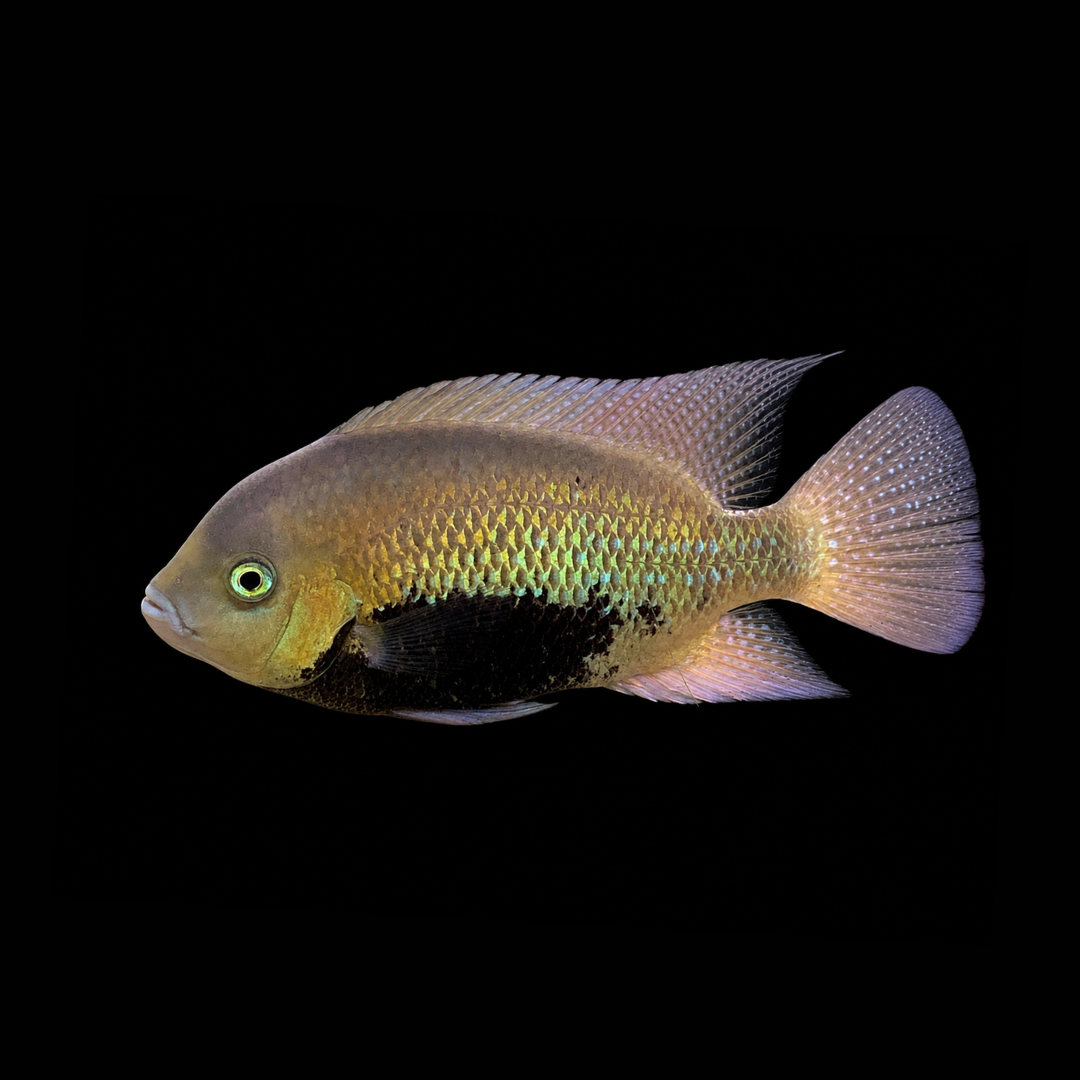
解説 / Description
シンセリクティス・パーセイは、メキシコ南東部からグアテマラ北部にかけて分布する中米産シクリッドです。飼育下では30cm前後まで成長することがあり、体高のある重厚な体つきが目を引きます。野生では水生植物や岸辺の植物、藻類、デトリタスを主に利用し、植物質を中心とした食性に強く適応しています。比較的落ち着いたシクリッドとして紹介されることが多い一方、縄張り性は明確で、特に繁殖期や狭い環境では同種間の攻撃が強まることがあります。植物を削り取るのに適した歯と、食物を処理する発達した下咽頭顎を備え、飼育面だけでなく形態と食性の結びつきにも注目したい魚です。 Cincelichthys pearsei is a Central American cichlid distributed from southeastern Mexico to northern Guatemala. In captivity it can grow to around 30 cm and develops a deep, robust body. In the wild it relies heavily on aquatic and riparian vegetation, algae, and detritus, showing a strong adaptation to a plant-dominant diet. Although it is often described as relatively calm for a cichlid, it is clearly territorial, and aggression toward conspecifics can intensify during breeding or when space is restricted. Its plant-cropping teeth and well-developed lower pharyngeal jaw make the link between form and feeding ecology one of the most interesting aspects of the species.
基本情報 / Basic Information
| 学名 / Scientific Name | Cincelichthys pearsei (Hubbs, 1936) |
|---|---|
| 通称 / Common Name | パーセイ、パンタノ・シクリッドPantano Cichlid, Zacatera |
| 分類 / Family | シクリッド目・シクリッド科・Cichlinae亜科・シンセリクティス属Order Cichliformes, Family Cichlidae, Subfamily Cichlinae, Genus Cincelichthys |
| 英名 / English Name | Pantano Cichlid |
| 分布 / Distribution | メキシコ南東部からグアテマラ北部の大西洋側水系。ウスマシンタ川、グリハルバ川、カンデラリア川、ペテン・イツァ湖などに分布します。Atlantic-slope drainages from southeastern Mexico to northern Guatemala, including the Usumacinta, Grijalva and Candelaria river systems and Lake Petén Itzá. |
| 最大体長 / Max Size | 成魚は30cm前後が一つの目安で、飼育下では30〜32cmに達した記録があります。体長の記録には測定方法による差があります。Adults are commonly around 30 cm, and captive individuals reaching approximately 30–32 cm have been documented. Reported size can vary depending on the measurement method used. |
| 寿命 / Lifespan | 飼育下では10年前後とされることがありますが、本種に限った長期的な寿命データは限られています。Captive lifespans of around 10 years are sometimes cited, but long-term species-specific longevity data are limited. |
飼育環境 / Aquarium Environment
| 水槽サイズ / Tank Size | 余裕を見た終生飼育では180cm級の大型水槽を基準にすると管理しやすく、ペア飼育や混泳では240cm級まで視野に入れると安心です。成魚の体長だけでなく、縄張り形成と濾過容量を考え、奥行きと水量にも余裕を持たせます。For comfortable long-term care, an aquarium around the 180 cm class provides a practical baseline, while pairs or mixed-species setups may benefit from tanks approaching 240 cm. Tank depth and water volume matter as much as length because territorial behavior and filtration capacity must also be considered. |
|---|---|
| 水温 / Temperature | 25〜30℃を目安にします。熱帯性のため、日本の冬季には大型水槽に対応した十分な能力のヒーターが必要です。 Maintain approximately 25–30°C. As a tropical species, it requires adequately powered heating for large aquaria during the Japanese winter. |
| 水質 / Water Quality | 自然分布域ではpH 7.5〜8.5、硬度3〜14 dH程度の記録があります。一方、飼育下ではpH 7.0台でも維持・繁殖例があるため、特定の数値へ強く寄せるより、水質を急変させず安定させることを優先します。日本の軟水でpHが下がりやすい場合は、サンゴ砂やカキガラを少量利用して緩衝力を補う方法があります。アンモニアと亜硝酸塩を蓄積させず、硝酸塩は定期換水で低く保ちます。Natural-habitat records include about pH 7.5–8.5 and 3–14 dH, while captive maintenance and breeding have also been achieved in water in the low pH 7 range. Stability is therefore more important than forcing the aquarium toward a single target value. In soft Japanese tap water, small amounts of coral sand or oyster shell can be used if buffering is insufficient. Keep ammonia and nitrite from accumulating and control nitrate with regular water changes. |
| レイアウト / Layout | 砂系の底床に、大型流木や角の丸い石を配置したシンプルなレイアウトが向きます。植物食性が強いため、生きた水草は食べられたり引き抜かれたりしやすく、岩と流木を中心に構成する方が管理しやすいでしょう。成魚は装飾物を動かす力があるため、重量物は崩落しないよう確実に固定します。A simple layout with a sandy substrate, large driftwood, and smooth rounded stones works well. Because the species is strongly herbivorous, live plants are likely to be eaten or uprooted, so a hardscape-focused design is easier to maintain. Adults are powerful enough to move décor, so heavy objects must be secured against collapse. |
| 注意点 / Precautions | 30cm前後まで育り、成長に伴って排泄量も増えるため、十分な生物濾過と物理濾過を確保します。アンモニアや亜硝酸塩を蓄積させず、定期換水で水質を安定させることが基本です。また、同種間の縄張り争いによる外傷にも注意し、重量のある石や流木は転倒しないよう確実に固定します。As the fish approaches 30 cm, its waste output also increases, so adequate biological and mechanical filtration are important. Prevent ammonia and nitrite accumulation and keep conditions stable through regular water changes. Also watch for injuries caused by territorial disputes between conspecifics, and secure heavy rocks or wood so they cannot shift or collapse. |
餌と給餌 / Feeding
| 餌の種類 / Diet | 主食はスピルリナなど植物質を多く含むシクリッド用ペレットや藻類ウエハースが適します。副食として、茹でたズッキーニ、ほうれん草、ケールなどの野菜類を利用できます。動物性の餌は完全に排除する必要はありませんが、冷凍ブラインシュリンプや赤虫などを補助的に与える程度とし、植物質中心の構成を崩さないようにします。Spirulina-rich cichlid pellets and algae wafers are suitable staple foods. Blanched vegetables such as zucchini, spinach, and kale can be offered as supplements. Animal foods do not need to be excluded completely, but items such as frozen brine shrimp or bloodworms are better used only as supplements so that the overall diet remains plant-dominant. |
|---|---|
| 給餌のポイント / Feeding Tips | 体格のわりに一度に大きな餌を丸飲みするタイプではなく、ついばむように食べる傾向があります。小〜中粒の植物性ペレットを中心に、食べ残しが出ない量を与えます。牛ハツなど脂肪の多い哺乳類由来の餌や、活魚を常食させる方法は本来の食性と合いにくいため避け、動物性の餌へ偏らせないことが大切です。Despite its robust body, it tends to nibble rather than swallow very large food items whole. Small to medium plant-based pellets are easy to manage, and portions should be kept small enough to avoid leftovers. Routine feeding of fatty mammalian meat or feeder fish does not match its natural feeding ecology well, so the diet should not be allowed to shift toward animal foods. |
性格と混泳 / Temperament and Tank Mates
| 性格 / Temperament | 比較的落ち着いたシクリッドとされますが、温和一辺倒ではありません。飼育下では個体間の優劣や縄張り争いが確認されており、狭い環境では鱗が剥がれるほどの攻撃が生じることがあります。繁殖期は産卵床や稚魚を守るため、防衛行動がさらに強くなります。It is often considered relatively calm for a cichlid, but it should not be regarded as uniformly peaceful. Captive observations show clear dominance and territorial conflict, and cramped conditions can lead to attacks severe enough to damage scales. Defensive behavior becomes stronger during breeding as the pair protects the spawning site and fry. |
|---|---|
| 混泳の相性 / Compatibility | 十分な水槽サイズと退避できる空間が確保できれば、同程度の大きさで極端に攻撃的ではない魚との混泳を検討できます。大型プレコ類、丈夫なナマズ類、大型のコイ科やカラシン類などが候補になりますが、相性には個体差があります。小型魚は捕食や事故の可能性があり、強く攻撃的なシクリッドとの同居も避けた方が安全です。導入後は必ず実際の行動を観察し、追い回しが続く場合は隔離できるようにします。With sufficient space and retreat areas, it may be kept with similarly sized fish that are not highly aggressive. Large plecos, robust catfish, and larger cyprinids or characins can be candidates, but individual compatibility varies. Very small fish may be at risk of predation or accidental injury, while highly aggressive cichlids are also poor choices. Observe the actual behavior after introduction and be prepared to separate fish if persistent chasing develops. |
病気と対策 / Diseases and Prevention
| かかりやすい病気 / Common Diseases | 本種に特有の好発疾患は十分に整理されていません。野生採集個体では寄生虫などの持ち込みに注意が必要で、飼育下では同種間の争いによる鱗の欠損や外傷、そこからの二次感染にも注意します。腹部膨満や白い便などの消化器症状が見られた場合も、餌だけを原因と決めつけず、水質や感染症を含めて状態を確認することが大切です。No species-specific set of commonly occurring diseases has been well established. Wild-caught fish may introduce parasites, while captive fish can suffer scale loss or other injuries from territorial conflict, with secondary infection as a possible consequence. If digestive signs such as abdominal swelling or pale feces appear, do not assume diet is the only cause; water quality and infection should also be considered. |
|---|---|
| 対策と予防 / Prevention | 新しい個体は隔離して状態を確認してから本水槽へ導入し、外傷や寄生虫の有無を観察します。日常管理では、植物質中心の無理のない給餌、十分な濾過、定期換水、水質の急変防止を徹底します。縄張り争いが続く場合はレイアウト変更だけで解決しようとせず、個体を分けられる準備も必要です。Quarantine new fish before adding them to the main aquarium and check for external injuries or parasites. Routine prevention depends on a sensible plant-dominant diet, adequate filtration, regular water changes, and avoiding abrupt shifts in water chemistry. If territorial fighting persists, do not rely on rearranging the décor alone; be prepared to separate the fish. |
増やし方(繁殖) / Breeding
| 雌雄の判別 / Sexing | 成熟したオスはメスより大きくなり、額が高く見える傾向がありますが、外見だけでは個体差があります。繁殖期には生殖突起も手掛かりとなり、メスでは産卵に使う開口部が確認しやすくなります。体格や頭部形状だけで断定せず、複数の特徴を合わせて判断します。Mature males tend to grow larger and may show a higher forehead, but external appearance varies among individuals. During the breeding period, the urogenital papilla provides another clue, and the female spawning opening becomes easier to identify. Sexing is more reliable when several features are considered together rather than relying on body size or head shape alone. |
|---|---|
| 繁殖形態 / Reproduction | オスとメスがペアを組み、底面や平らな場所を清掃して数百個の粘着性の卵を産み付ける、両親保護型の基質産卵魚です。産卵後は両親が卵と仔魚の周辺を守るため、繁殖時には縄張り性が強くなります。It is a biparental substrate-spawning cichlid. A male and female form a pair, clean a bottom area or flat surface, and lay several hundred adhesive eggs. After spawning, both parents guard the eggs and larvae, so territorial behavior becomes stronger during reproduction. |
| 繁殖のポイント / Breeding Tips | 28℃前後で行われた飼育下の観察では、卵は受精後約33時間で孵化しました。孵化直後の仔魚にはまだ口が形成されておらず、卵黄嚢の栄養に依存します。孵化後4日ほどで短い遊泳を始め、12日ほどで口が開き始め、卵黄嚢は15日ほどでほぼ吸収されます。外部からの摂餌が本格化する時期を見極め、開口後に口径に合った微細な生餌や微細飼料へ移行します。In captive observations at around 28°C, the eggs hatched about 33 hours after fertilization. Newly hatched larvae still lack a functional mouth and depend on yolk reserves. Short swimming movements begin at roughly four days post-hatch, the mouth starts opening at about 12 days, and the yolk sac is largely absorbed by around 15 days. Time the first external feeding to mouth development and use suitably fine live or prepared foods once the larvae are able to feed. |
雑学と豆知識 / Trivia and Fun Facts
| 1. 1936年の記載と「pearsei」の由来 / 1. The 1936 Description and the Name “pearsei” | この魚が科学の世界に正式に登場したのは1936年です。Carl Leavitt Hubbsが、メキシコ・カンペチェ州のチャンポトン川で得られた標本をもとに新種として記載しました。種小名の「pearsei」は、ユカタン半島での科学探検を率い、標本採集にも貢献した動物生態学者Arthur Sperry Pearseに献名されたものです。水槽の中で見る一匹の魚の名前の背後には、20世紀前半のフィールド調査と、未知の生物相を記録しようとした研究者たちの歴史が刻まれています。The species formally entered the scientific record in 1936, when Carl Leavitt Hubbs described it from material collected in the Río Champotón of Campeche, Mexico. The specific name “pearsei” honors zoological ecologist Arthur Sperry Pearse, who led scientific exploration in the Yucatán Peninsula and contributed to the collection of the type material. Behind the name of an aquarium fish is therefore a piece of early twentieth-century field biology and the effort to document a still poorly known fauna. |
|---|---|
| 2. 属名が変わり続けた魚 / 2. A Fish with a Long Taxonomic Journey | パーセイは長いあいだHerichthys、Cichlasoma、Vieja、Therapsなど複数の属名で扱われてきました。大きな転機となったのが2015年で、分子系統解析と形態の再評価をもとにCincelichthys属へ整理されました。観賞魚の世界では旧学名が流通名として残りやすいため、現在でも「ヘリクティス・パーセイ」などの表記を見かけます。分類の変遷は、名前が頻繁に変わったというだけでなく、中米産シクリッドの進化的な関係が研究の進展とともに描き直されてきた歴史でもあります。For many years, pearsei was treated under several generic names, including Herichthys, Cichlasoma, Vieja, and Theraps. A major change came in 2015, when molecular phylogenetic analyses and a reassessment of morphology placed the species in Cincelichthys. Older scientific names often persist in the aquarium trade, so labels such as “Herichthys pearsei” can still be encountered. This history reflects more than repeated renaming; it shows how the evolutionary relationships of Middle American cichlids have been redrawn as evidence has improved. |
| 3. 「ノミのような歯」が属名になった / 3. Chisel-like Teeth Gave the Genus Its Name | Cincelichthysという属名は、スペイン語で彫刻用の「ノミ」を意味するcincelと、ギリシャ語由来の「魚」を意味するichthysを組み合わせた名前です。由来になったのは、植物や藻類を削り取るのに適したノミ状の歯です。さらに口の奥には、植物繊維をすり潰すための幅広く頑丈な下咽頭顎が発達しています。水草を食べてしまうという飼育上の悩ましい特徴も、自然界で植物資源を利用するために磨かれてきた、非常に専門的な摂食装置の表れなのです。The genus name Cincelichthys combines the Spanish word cincel, meaning a sculptor’s chisel, with ichthys, a Greek-derived word for fish. The name refers to the chisel-like teeth used to crop vegetation and algae. Deeper in the throat, a broad and robust lower pharyngeal jaw helps crush fibrous plant material. The aquarium keeper’s problem of disappearing plants is therefore the visible consequence of a highly specialized feeding apparatus shaped for exploiting vegetation in nature. |
| 4. 大型シクリッドでは珍しい植物食への特化 / 4. Unusual Herbivorous Specialization in a Large Cichlid | 野生のパーセイの消化管からは、水生植物、岸辺の陸生植物の破片、藻類、デトリタスが多く確認され、魚類や無脊椎動物への依存は低いとされています。その食性に対応するように腸管も長く発達し、消化に時間のかかる植物質を長く体内に留められる構造を持ちます。大型シクリッドという外見から肉食性を想像しやすい魚ですが、実際には「大きな体で植物を食べる」という方向へ進化した存在であり、このギャップこそが本種の大きな魅力の一つです。Wild pearsei contain large amounts of aquatic plants, fragments of riparian vegetation, algae, and detritus in the digestive tract, with relatively little reliance on fish or invertebrate prey. Consistent with that diet, the intestine is long, allowing slowly digested plant material to remain in the gut for extended processing. Its imposing size may suggest a predatory cichlid at first glance, but the species represents a very different evolutionary solution: a large-bodied fish specialized for grazing and processing plant matter. |
| 5. 尾柄に見られる目立つ斑紋 / 5. The Distinctive Marking on the Caudal Peduncle | 尾びれの付け根に近い尾柄部には、暗色の目立つ斑紋が見られます。眼状斑のような模様は魚類で捕食者の注意をそらす機能が議論されることがありますが、本種についてその効果が実証されているわけではありません。パーセイでは、まず体色を見分ける特徴の一つとして捉え、機能については可能性の段階に留めて理解するのが適切です。A conspicuous dark marking is present near the base of the tail. Eye-like markings in fishes are sometimes discussed as features that may redirect a predator’s attention, but that function has not been demonstrated specifically for this species. In C. pearsei, it is best treated first as a useful identification feature, with any anti-predator role regarded as a possibility rather than an established fact. |
まとめ / Conclusion
シンセリクティス・パーセイは、30cm前後まで育つ重厚な体つきと、植物質を中心に利用する独特の食性をあわせ持つ中米産シクリッドです。植物を削り取るのに適した歯や発達した下咽頭顎は、自然界でどのような餌を利用してきたのかを姿そのものから感じさせてくれます。 Cincelichthys pearsei is a robust Central American cichlid that can reach around 30 cm and is distinguished by a strongly plant-oriented feeding ecology. Its plant-cropping teeth and developed lower pharyngeal jaw provide visible clues to the way the species has adapted to use vegetation and detrital resources in nature.
飼育では、余裕のある水槽、十分な濾過、安定した水質、植物質中心の給餌が重要です。比較的落ち着いた印象を見せる一方で、同種間の縄張り性や繁殖期の防衛行動も備えているため、その両面を理解して空間に余裕を持たせることが長期飼育につながります。堂々とした体格と落ち着いた色合いの中に、生態に根差した個性がしっかり感じられる魚です。 Successful care depends on generous space, adequate filtration, stable water conditions, and a plant-dominant diet. Although the species can appear relatively calm, it also shows clear territorial behavior toward conspecifics and stronger defensive behavior during breeding. Providing enough room for both sides of its temperament is important for long-term care. Its substantial body and subdued coloration give it a distinctive presence shaped as much by ecology as by appearance.

気になる道具や飼い方を見つけてみませんか?
 アイのアクアグッズ案内水草の肥料の選び方|底床用・液肥・メネデールの使い分け道具の特徴や使い方、選ぶときのポイントをアイが紹介します。記事はコチラ →
 アイのアクアグッズ案内水槽のろ材の選び方|ウール・リング・活性炭の違いとおすすめ商品フィルターの中の綿や石は何をしている? アイとコタロウが、ウール・スポンジ・セラミック・焼結ガラス・活性炭・ゼオライトを比較。機種との相性、入れ方、洗い方と交換まで商品とともに紹介します。記事はコチラ →
 アイのアクアグッズ案内水槽の底砂の選び方|砂・砂利の違いとおすすめ商品道具の特徴や使い方、選ぶときのポイントをアイが紹介します。記事はコチラ →
 アイのアクアグッズ案内水槽用浄水器の選び方|水換えを楽にするタイプとROの違い道具の特徴や使い方、選ぶときのポイントをアイが紹介します。記事はコチラ →
さまざまな飼育テーマをご紹介。リンク先の記事には広告・商品紹介が含まれます。
案内・紹介記事一覧へ →分布マップ
シンセリクティス・パーセイ(Cincelichthys pearsei)は、メキシコ南東部からグアテマラ北部の大西洋側水系に分布し、ウスマシンタ川、グリハルバ川、カンデラリア川、ペテン・イツァ湖などで知られています。
※この地図は記事に記載された分布地域をもとにした概略表示です。マーカーは分布域を把握しやすくするために設定した代表地点であり、実際の採集地点や特定の生息地点を示すものではありません。
参考文献
-
McMahan, C. D., Matamoros, W. A., Piller, K. R. & Chakrabarty, P. (2015). Taxonomy and systematics of the herichthyins (Cichlidae: Tribe Heroini), with the description of eight new Middle American genera. Zootaxa, 3999(2), 211–234. DOI: 10.11646/zootaxa.3999.2.3
分類・属の再編・形態的特徴
-
Lyons, T. J. (2019). Cincelichthys pearsei. The IUCN Red List of Threatened Species 2019: e.T192885A2179640. DOI: 10.2305/IUCN.UK.2019-2.RLTS.T192885A2179640.en
自然分布・生息域
-
Froese, R. & Pauly, D. (eds.). FishBase. Cincelichthys pearsei species summary. FishBase species summary(2026年8月11日閲覧)
分布・生息環境・水温・pH・硬度・食性
-
Hernández-Gómez, R. E., Perera-García, M. A., Castillo-Domínguez, A., Hernández-Hernández, F. A. & Valenzuela-Córdova, I. (2025). Cultivo inicial de la mojarra zacatera Cincelichthys pearsei. Universidad Juárez Autónoma de Tabasco. DOI: 10.19136/cimz.281025.304
飼育下での管理・水質・繁殖・給餌・疾病管理・設備
-
Hernández-Gómez, R. E., Hernández-Hernández, F. A., Valenzuela-Córdova, I., Castillo-Domínguez, A. & Melgar Valdes, C. E. (2025). Desarrollo embrionario y larval de Cincelichthys pearsei (Hubbs, 1936), (Perciformes: Cichlidae) en el sureste de México. International Journal of Morphology, 43(5), 1561–1570. DOI: 10.4067/S0717-95022025000501561
産卵後の胚発生・孵化・仔魚発達




コメント