

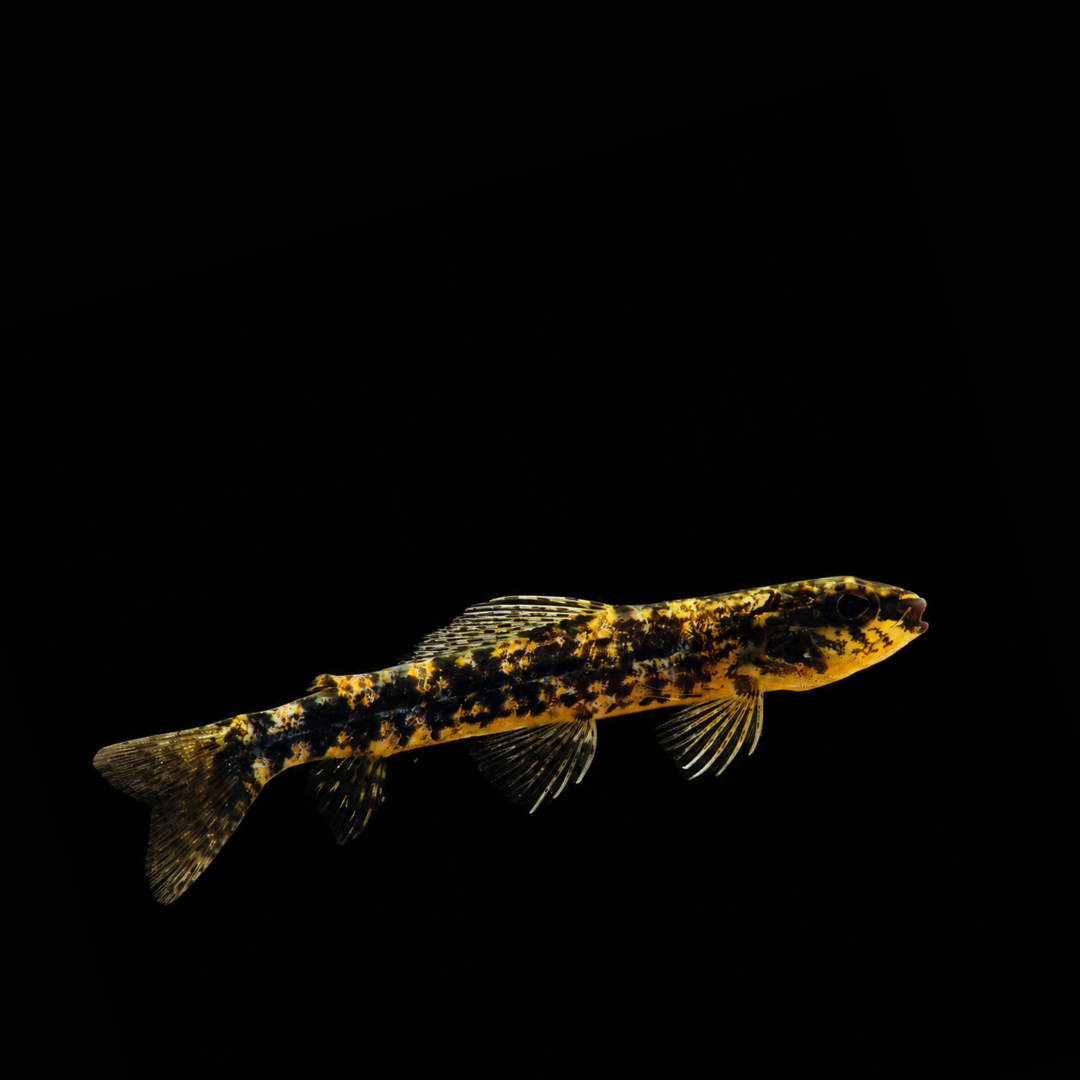
解説 / Description
ブラウンジェットダータテトラは、日本の観賞魚市場で「ブラックゴビーダータテトラ」と呼ばれることもある、南米産の小型底棲カラシンです。一般的なテトラのように水槽の中層を泳ぎ回るタイプではなく、石や流木、底床の上にとまり、必要な時だけ短い距離を素早く移動します。姿や動きは小型のハゼに似ていますが、分類上はカラシン目クレヌクス科の仲間として扱われます。 The Brown Jet Darter Tetra, sometimes traded in Japan as the Black Goby Darter Tetra, is a small bottom-dwelling characin from South America. Unlike typical tetras that cruise through the middle layer of the aquarium, it perches on stones, driftwood, and the substrate, moving only in short, quick bursts when needed. Its posture and movement resemble a small goby, but taxonomically it belongs to the family Crenuchidae within the order Characiformes.
本種の魅力は、派手な色彩よりも、底層生活に適応した体型と観察して楽しい行動にあります。胸鰭を横に広げて水底に構える姿、周囲に合わせて暗褐色から淡い褐色へ変わることがある体色、餌を見つけた瞬間にすっと飛び出すような動きは、通常の群泳性テトラとはまったく異なる雰囲気を持っています。一方で、流通名で扱われる魚であるため、正確な学名や産地がロットごとに異なる可能性があります。飼育では、学名を断定するよりも、冷涼で清潔な水、十分な酸素、餌が底まで届く環境を整えることが大切です。 The appeal of this fish lies less in bright colors and more in its bottom-adapted body form and fascinating behavior. Its broad pectoral fins, its ability to shift from dark brown to paler brown tones, and its sudden darting movement toward food give it a character very different from ordinary schooling tetras. Because it is mainly sold under trade names, the exact species identity and locality may vary between shipments. In practice, careful care is more important than forcing a firm scientific name: provide cool, clean, well-oxygenated water and make sure food reaches the bottom.
基本情報 / Basic Information
| 学名 / Scientific Name | Characidium sp. または Melanocharacidium sp. “Peru” として扱われることがある未同定の流通個体群 |
|---|---|
| 通称 / Common Name | ブラウンジェットダータテトラ、ブラックゴビーダータテトラ、ペルー産ジェットダータBrown Jet Darter Tetra, Black Goby Darter Tetra, Peruvian Jet Darter |
| 分類 / Family | カラシン目 クレヌクス科 ダータテトラ亜科。流通個体は Characidium 属または Melanocharacidium 属に近い小型底棲カラシンとして扱うのが現実的です。Order Characiformes, family Crenuchidae, subfamily Characidiinae. Aquarium specimens are best treated as small bottom-dwelling characins allied with Characidium or Melanocharacidium. |
| 英名 / English Name | Brown Jet Darter Tetra / Black Goby Darter Tetra |
| 分布 / Distribution | 主にペルー便で輸入される南米産個体として流通します。アマゾン上流域の小河川や森林内の細流に由来すると考えられますが、流通名で扱われるため、正確な採集地と種の対応は断定しない方が安全です。It is mainly traded as a South American fish imported via Peru. It is thought to originate from small streams and forest creeks in the upper Amazon region, but because it is sold under trade names, exact locality and species identity should not be stated too definitively. |
| 最大体長 / Max Size | おおむね3〜5cm前後。輸入ロットや近縁種の混在により、やや差が出る場合があります。Usually around 3–5 cm. Size may vary slightly depending on the shipment and possible inclusion of related forms. |
| 寿命 / Lifespan | 3〜5年程度を目安にします。長期飼育例が語られることはありますが、流通名の魚であり、種単位の寿命データは限られます。低めの安定した水温、清潔な底床、高い溶存酸素を保てる環境ほど長期維持を狙いやすくなります。A practical guideline is around 3–5 years. Longer-term cases are sometimes discussed by aquarists, but species-level lifespan data are limited because this is a trade-name fish. Cooler stable water, a clean substrate, and high dissolved oxygen improve the chance of long-term maintenance. |
飼育環境 / Aquarium Environment
| 水槽サイズ / Tank Size | 単独または少数の飼育なら30cm規格水槽でも維持は可能ですが、長期飼育では45cm規格水槽以上が扱いやすいです。複数匹で行動を観察するなら60cm規格水槽が安心です。本種は高さよりも底面積を使うため、同じ水量でも底面の広い水槽が向いています。A 30 cm standard tank can maintain a single fish or a very small number, but a 45 cm standard tank or larger is easier for long-term care. For a small group, a 60 cm standard tank is safer and more comfortable. Bottom area matters more than height for this fish. |
|---|---|
| 水温 / Temperature | 20〜26℃を目安に管理します。高水温では溶存酸素が下がりやすく、底棲で酸素要求の高い魚には負担になります。夏季に水温が上がりやすい環境では、冷却ファンや水槽用クーラーを使い、30℃前後まで上げないようにします。 Aim for 20–26°C. High temperatures reduce dissolved oxygen and can place stress on bottom-dwelling fish that benefit from oxygen-rich water. In hot seasons, use a cooling fan or aquarium chiller to avoid temperatures approaching 30°C. |
| 水質 / Water Quality | 弱酸性〜中性の軟水、pH 5.5〜7.0前後が扱いやすい範囲です。極端な数値を追うよりも、清潔で変動の少ない水を保つことが重要です。外部式フィルターやスポンジフィルターを使い、水面をしっかり揺らして酸素を確保します。硝酸塩や有機物がたまりすぎないよう、週1回を目安に3分の1程度の換水を行うと安定します。Soft, slightly acidic to neutral water around pH 5.5–7.0 is a practical range. Stability and cleanliness matter more than chasing extreme numbers. Use reliable filtration and good surface movement to maintain oxygen. A weekly water change of about one third helps prevent nitrate and organic waste buildup. |
| レイアウト / Layout | 細かい砂、角の丸い小石、流木、落ち葉を組み合わせると落ち着きやすく、自然な行動を観察しやすくなります。石や流木の上で休む魚なので、底層に平らな休憩場所を複数用意します。水草水槽にもよく合いますが、底床に汚れがたまりすぎないよう、掃除しやすい余白を残しておくと管理しやすくなります。Fine sand, rounded pebbles, driftwood, and leaf litter help the fish settle and encourage natural behavior. Provide several flat resting spots on stones or wood. It also fits planted aquariums well, but leave enough open space for siphoning so detritus does not accumulate on the substrate. |
| 注意点 / Precautions | 高水温、酸欠、餌負け、飛び出しに注意します。流れに向かう性質や底面から素早く跳ねる動きがあるため、フタは隙間なく設置し、配管まわりの開口部もスポンジなどでふさぎます。強い水流は好みますが、常に全体を激流にする必要はありません。休める弱い流れの場所も作ると安定します。Watch for heat stress, low oxygen, feeding competition, and escape. Because it may move suddenly and is attracted to flow, use a tight-fitting lid and block gaps around pipes with sponge or similar material. It appreciates current, but the whole tank does not need to be a torrent. Provide calmer resting areas as well. |
餌と給餌 / Feeding
| 餌の種類 / Diet | 冷凍アカムシ、冷凍ブラインシュリンプ、活イトメ、ミジンコ、沈下性の小粒フードなどを与えます。輸入直後や導入直後は人工飼料に慣れていないことが多いため、まずは食いつきの良い冷凍餌や活餌で体力を戻し、落ち着いてから沈下性フードに慣らしていくとよいでしょう。Offer frozen bloodworms, frozen brine shrimp, live tubifex, daphnia, and small sinking foods. Newly imported or newly introduced fish may ignore prepared foods at first, so it is best to rebuild condition with highly accepted frozen or live foods before gradually introducing sinking prepared diets. |
|---|---|
| 給餌のポイント / Feeding Tips | 中層を素早く泳ぐ魚と混泳していると、餌が底に届く前に食べられてしまうことがあります。スポイトやピンセットで本種の近くへ餌を落とすターゲット・フィーディングが有効です。消灯前に与える、給餌中だけ水流を弱める、沈下しやすい餌を選ぶなどの工夫をすると、痩せを防ぎやすくなります。In community tanks with fast midwater fish, food may be eaten before it reaches the bottom. Target feeding with a pipette or tweezers near the fish is very useful. Feeding shortly before lights-out, temporarily reducing current during feeding, and choosing foods that sink quickly can help prevent weight loss. |
性格と混泳 / Temperament and Tank Mates
| 性格 / Temperament | 基本的には温和で、他魚を積極的に追い回すタイプではありません。底層の石や流木の上で周囲を観察し、必要な時だけ短く素早く移動します。同種間では軽い場所取りが見られることがありますが、底面積と休憩場所を十分に用意すれば、大きな争いにはなりにくいです。It is generally peaceful and does not usually chase other fish actively. It watches its surroundings from stones or driftwood and moves in short, quick bursts when necessary. Mild disputes over resting spots may occur among conspecifics, but serious aggression is unlikely when enough floor space and perching sites are available. |
|---|---|
| 混泳の相性 / Compatibility | 小型カラシン、ペンシルフィッシュ、ハチェット類など、上層〜中層を泳ぐ温和な魚とは相性が良いです。ただし餌を奪われやすいため、混泳では給餌方法の工夫が必要です。コリドラスや小型シクリッドなど底層を使う魚と合わせる場合は、底面積と隠れ家を多めに確保します。口に入るサイズの肉食魚との混泳は避けます。Peaceful upper- and midwater fish such as small characins, pencilfish, and hatchetfish are suitable companions. Feeding must be managed carefully because this fish can lose out in competition. If kept with other bottom users such as Corydoras or small cichlids, provide extra floor space and shelters. Avoid predators large enough to swallow it. |
病気と対策 / Diseases and Prevention
| かかりやすい病気 / Common Diseases | 水質悪化や酸欠が続くと、エラの不調、細菌性の皮膚炎、体表のただれ、食欲低下、痩せが起こりやすくなります。輸入個体では、輸送疲れや導入直後の環境変化による体力低下にも注意が必要です。Poor water quality or low oxygen can lead to gill problems, bacterial skin issues, surface erosion, reduced appetite, and weight loss. Imported specimens may also be weakened by shipping stress and the sudden change in conditions after introduction. |
|---|---|
| 対策と予防 / Prevention | 予防の基本は、低めで安定した水温、強いエアレーション、清潔な底床、定期的な換水です。底床にデトリタスがたまると、底で休む本種の体表やエラに負担がかかります。導入直後は照明を落として静かに慣らし、冷凍アカムシなど食いつきの良い餌を少量ずつ与えて状態を確認します。Prevention is based on cool stable water, strong aeration, a clean substrate, and regular water changes. Detritus on the bottom can stress the skin and gills of a fish that rests directly on the substrate. After introduction, keep lighting subdued, allow the fish to settle quietly, and offer small portions of highly accepted foods such as frozen bloodworms. |
増やし方(繁殖) / Breeding
| 雌雄の判別 / Sexing | 雌雄差は小さく、通常の飼育下で確実に見分けるのは難しいです。成熟したメスは抱卵により腹部が丸みを帯びることがあります。オスでは繁殖状態で体色が濃く見えたり、鰭の形にわずかな変化が出たりする可能性がありますが、流通個体群では断定しにくいです。Sexual differences are subtle, and reliable sexing is difficult in normal aquarium conditions. Mature females may become rounder when carrying eggs. Males may appear darker or show slight fin changes in breeding condition, but this is hard to state confidently for trade-name populations. |
|---|---|
| 繁殖形態 / Reproduction | 近縁の小型カラシンと同じく、水草や石の隙間、底床付近に卵をばらまくタイプと考えられます。親が卵を守る性質は期待しにくく、産卵後に食卵する可能性があります。Like many related small characins, it is thought to scatter eggs among plants, stone crevices, or near the substrate. Parental care should not be expected, and adults may eat the eggs after spawning. |
| 繁殖のポイント / Breeding Tips | 水槽内繁殖は難易度が高く、一般的な繁殖魚としては扱われません。挑戦する場合は、複数匹を良好な状態で飼い込み、活イトメや冷凍餌でコンディションを上げます。そのうえで、RO水を使った新鮮な軟水への換水、水温のわずかな低下、導電率の変化などにより雨季の刺激を再現します。細かな水草、モス、産卵用ネット、ビー玉などを使い、卵が親魚の口に入りにくい構造を用意するとよいでしょう。Captive breeding is challenging and this fish is not commonly treated as an easy breeding species. If attempted, keep a group in excellent condition and feed rich foods such as live tubifex and frozen foods. Then simulate rainy-season cues with fresh soft water based on RO water, a slight temperature drop, and a conductivity shift. Fine plants, moss, spawning mesh, or marbles can help keep eggs out of reach of the adults. |
雑学と豆知識 / Trivia and Fun Facts
| 1. 流通名の裏にある分類の難しさ / 1. The taxonomic uncertainty behind the trade name | ブラウンジェットダータテトラという名前は、特定の1種を厳密に示す学術名ではなく、観賞魚流通上の呼び名として使われています。ペルー産の小型底棲カラシンには、Characidium 属に近いもの、Melanocharacidium 属として扱われるもの、未記載種の可能性があるものが含まれると考えられます。そのため、この流通名だけでは種を特定できません。この曖昧さは弱点であると同時に、南米小型魚の分類が今なお更新され続けていることを示す魅力でもあります。The name Brown Jet Darter Tetra is a trade name, not a strict scientific name for one confirmed species. Small bottom-dwelling characins imported from Peru may include forms allied with Characidium, forms treated as Melanocharacidium, and possibly undescribed species. The trade name alone therefore does not identify a single species. This uncertainty is not only a limitation; it also shows how actively the taxonomy of small South American fishes continues to develop. |
|---|---|
| 2. ハゼに似たカラシンという進化の面白さ / 2. A goby-like characin and the appeal of convergence | 本種は、水底で胸鰭を広げて静止するため、見た目も動きも小型のハゼに似ています。しかし、実際にはカラシン目の魚です。系統の異なる魚が、流れのある川底で暮らすという同じ環境に向き合うと、似た姿や行動に近づくことがあります。ブラウンジェットダータテトラの姿は、アクアリウムの中でそうした収斂進化を感じさせてくれる好例です。Because this fish spreads its pectoral fins and rests on the bottom, it looks and behaves much like a small goby. In reality, it is a characiform fish. Unrelated fish lineages can approach similar shapes and behaviors when they face the same challenge of living on the bottom in flowing water. The Brown Jet Darter Tetra offers aquarists a small but vivid glimpse of convergent evolution. |
| 3. 「ジェット」の印象を作る胸鰭 / 3. The pectoral fins that create the “jet” impression | ジェットダータという名前の印象を強めているのは、横に張り出した大きな胸鰭です。急流にすむ近縁のダータテトラ類では、体を水底に安定させるための体型や鰭の特殊化が知られています。水槽内で石の上に静止する姿は、小さな翼を広げて着地しているようにも見えます。派手に泳ぎ回る魚ではありませんが、止まっている姿そのものに機能的な美しさがあります。The “jet darter” impression comes largely from the broad pectoral fins spreading out to the sides. In related rheophilic darter tetras, body shape and fin specializations are known to help fish remain stable near the substrate. In the aquarium, a fish resting on a stone can look like a tiny aircraft with its wings set. It is not a flashy swimmer, but its still posture has a functional beauty of its own. |
| 4. 背景に合わせて印象が変わる体色 / 4. Color that changes the fish’s impression | ブラウンジェットダータテトラは、環境や気分、ストレスの状態によって体色の印象が変わることがあります。暗い流木や落ち葉の上では黒っぽく締まり、明るい砂の上では淡い褐色に見えることがあります。これは鑑賞上の面白さであると同時に、自然下では底床に溶け込むための性質として役立っている可能性があります。The Brown Jet Darter Tetra can change its apparent color depending on environment, mood, and stress. It may look darker on driftwood or leaf litter and paler brown on light sand. This is interesting for observation, and in nature it may help the fish blend into the substrate. |
| 5. 底層で存在感を出すペットフィッシュ / 5. A pet fish with presence on the aquarium floor | 底層でじっとしている時間が長い魚ですが、存在感は決して小さくありません。環境に慣れた個体は、水槽の外の動きや餌の気配に反応し、石や流木の上からこちらを見上げるような仕草を見せます。群泳魚のような華やかさとは違い、日々の観察の中で少しずつ個性が見えてくるタイプの魚です。Although it spends much of its time resting on the bottom, its presence is far from small. Once settled, it may respond to movement outside the aquarium or to signs of feeding, looking upward from a stone or piece of wood. It does not offer the brightness of a schooling fish; instead, its personality emerges gradually through daily observation. |
まとめ / Conclusion
ブラウンジェットダータテトラは、底層で暮らすことに特化した小型カラシンです。胸鰭を広げて石の上にとまる姿、短く鋭い移動、背景によって変わる体色は、一般的なテトラとは異なる静かな魅力を持っています。水草や流木、丸い小石を組み合わせたレイアウトでは、水底の景色に自然な緊張感と奥行きを加えてくれます。 The Brown Jet Darter Tetra is a small characin specialized for life on the bottom. Its broad pectoral fins, sharp darting movements, and background-sensitive coloration give it a quiet charm very different from ordinary tetras. In a layout with plants, driftwood, and rounded stones, it adds natural tension and depth to the aquarium floor.
飼育では、珍しさに目を向けるだけでなく、高水温を避けること、酸素を十分に保つこと、餌を確実に底へ届けること、飛び出しを防ぐことが大切です。これらの条件が整うと、本種は水槽の底で落ち着いた存在感を示し、観察するたびに小さな発見を与えてくれます。静かな水底に個性を添えたい水槽に、よく似合う魚です。 For successful care, its rarity should not be the only focus. Avoid excessive heat, maintain high oxygen, make sure food reaches the bottom, and prevent escape. When these needs are met, this fish develops a calm presence on the aquarium floor and offers small discoveries with every observation. It is an excellent choice for an aquarium that needs quiet individuality in the bottom layer.

気になる道具や飼い方を見つけてみませんか?
 アイのアクアグッズ案内バルブの仲間に合わせる飼育用品|チェリーバルブ・スマトラ・中型種の水槽とろ過道具の特徴や使い方、選ぶときのポイントをアイが紹介します。記事はコチラ →
 アイのアクアグッズ案内ラスボラ・ボララスの群泳を楽しむ飼育用品|水槽・ろ過・ヒーター・餌・水草道具の特徴や使い方、選ぶときのポイントをアイが紹介します。記事はコチラ →
 アイのアクアグッズ案内テトラミンって、こんなにあるの? アイとコタロウのごはん探究旅道具の特徴や使い方、選ぶときのポイントをアイが紹介します。記事はコチラ →
 アイのアクアグッズ案内アカヒレの仲間に合わせる飼育用品|無加温・混泳・繁殖の水槽とろ過道具の特徴や使い方、選ぶときのポイントをアイが紹介します。記事はコチラ →
さまざまな飼育テーマをご紹介。リンク先の記事には広告・商品紹介が含まれます。
案内・紹介記事一覧へ →分布マップ
本種は主にペルー便で輸入される南米産の小型底棲カラシンとして流通し、アマゾン上流域の小河川や森林内の細流に由来すると考えられています。この地図では、分布イメージとしてペルー北東部・アマゾン上流域周辺を概略代表地点で示しています。
この地図のプロットは、記事内の分布欄をもとにした分布イメージ用の概略代表地点です。実際の採集地点や厳密な生息範囲を示すものではありません。
参考文献・参照資料
この記事では、ブラウンジェットダータテトラという流通名の魚を、未同定の小型底棲カラシンとして慎重に扱っています。以下は、記事内の分類、分布、生息環境、飼育条件、繁殖、病気や注意点を支えるために選定した資料です。店舗・通販サイト、個人ブログ、一般的なまとめサイトは参考文献から除外しています。
-
Fricke, R., Eschmeyer, W. N. & van der Laan, R. (eds). 2026. Eschmeyer’s Catalog of Fishes: Genera, Species, References.分類体系、学名表記、Crenuchidae・Characidiinaeの扱いを確認するための基礎資料。https://www.calacademy.org/scientists/projects/eschmeyers-catalog-of-fishes
-
Buckup, P. A. 1993. Review of the characidiin fishes (Teleostei: Characiformes), with descriptions of four new genera and ten new species. Ichthyological Exploration of Freshwaters, 4(2): 97–154.Characidiinaeの分類整理、Melanocharacidiumなどの属の扱い、流通名個体を単一種として断定しにくい背景を支える資料。https://researcharchive.calacademy.org/research/ichthyology/catalog/getref.asp?id=20831
-
Buckup, P. A. 1993. Phylogenetic interrelationships and reductive evolution in neotropical characidiin fishes (Characiformes, Ostariophysi). Cladistics, 9(3): 305–341.ダータテトラ類の系統関係、底棲生活に関連する形態的な特殊化や退化的進化を説明するための学術的背景。https://researcharchive.calacademy.org/research/ichthyology/catalog/getref.asp?id=26741
-
Eschmeyer’s Catalog of Fishes: Melanocharacidium pectorale / Melanocharacidium rex species records.Melanocharacidium属にペルーを含む分布記録があること、また流通個体の同定を断定しない方針を補強するための参照。
-
Meza-Vargas, V., Faustino-Fuster, D. R., Chuctaya, J., Hidalgo, M. & Torres, H. O. 2021. Checklist of freshwater fishes from Loreto, Peru. Revista Peruana de Biología, 28(spe): e21911.ペルー・ロレト地域の淡水魚相、分類変更や新種記載が続く地域的背景を確認するためのチェックリスト。https://www.scielo.org.pe/scielo.php?pid=S1727-99332021000500004&script=sci_arttext
-
Zanata, A. M., Britzke, R., Meza-Vargas, V., Hidalgo, M. H., Faustino-Fuster, D. & Oliveira-Silva, L. 2025. A remarkable new Characidium (Characiformes: Crenuchidae) from tributaries of río Marañón, Loreto, Peru, with unique fin bony processes in both sexes. Neotropical Ichthyology, 23(3): e250047.ペルー産Characidiumの分類上の難しさ、ロレト県・マラニョン川支流域、一次支流・クリアウォーター/ブラックウォーターの生息環境を支える資料。https://www.ni.bio.br/content/v23n3/1982-0224-2025-0047/1982-0224-ni-23-03-e250047.pdf
-
Zanata, A. M., Ohara, W. M., Oyakawa, O. T. & Dagosta, F. C. P. 2020. A new rheophilic South American darter (Crenuchidae: Characidium) from the rio Juruena basin, Brazil, with comments on morphological adaptations to life in fast-flowing waters. Journal of Fish Biology, 97(5): 1343–1353.流水性の南米ダータに見られる体型・胸鰭などの形態適応を説明するための資料。記事中の「底棲・流水適応」の表現を支える。https://doi.org/10.1111/jfb.14485
-
Zuanon, J., Carvalho, L. N. & Sazima, I. 2006. A chamaeleon characin: the plant-clinging and colour-changing Ammocryptocharax elegans (Characidiinae: Crenuchidae). Ichthyological Exploration of Freshwaters, 17: 225–232.Characidiinaeに見られる底層・水草上での定位、視覚的探索、色彩変化、流れの中での移動行動を理解するための比較資料。https://pfeil-verlag.de/en/publications/ichthyological-exploration-of-freshwaters-volume-17/
-
Mazzoni, R., Caramaschi, E. P. & Fenerich-Verani, N. 2002. Reproductive biology of a characidiinae from the Ubatiba river, Maricá, RJ. Brazilian Journal of Biology, 62(3): 487–494.近縁のCharacidiinaeにおける繁殖生態、雌雄差、卵数、環境変動と繁殖戦略の関係を参照するための資料。https://www.scielo.br/j/bjb/a/6pXpLfL5rKDQyvtpHBqwXct/?lang=en
-
Tan, M. 2008. Water quality and the ornamental aquatic sector. International Aquarium Congress.観賞魚飼育における水質管理の基本項目、溶存酸素、温度、アンモニア、pH、アルカリ度などを確認するための資料。https://researchonline.jcu.edu.au/51423/
-
FAO. Aeration and Oxygenation in Aquaculture.水温上昇と溶存酸素、流水・酸素要求の高い魚で酸素管理が重要になる理由、エアレーションの意義を補強する資料。https://www.fao.org/4/x5744e/x5744e0m.htm
-
Petty, B. D., Francis-Floyd, R. & Yanong, R. P. E. 2024. Bacterial Diseases of Fish. MSD Veterinary Manual.水質悪化、有機物の蓄積、輸送・取り扱い、急な温度変化、低酸素などが細菌性疾患の誘因になる点を確認するための獣医学資料。https://www.msdvetmanual.com/exotic-and-laboratory-animals/aquarium-fish/bacterial-diseases-of-fish
最終確認日:2026年6月30日





コメント