

解説 / Description
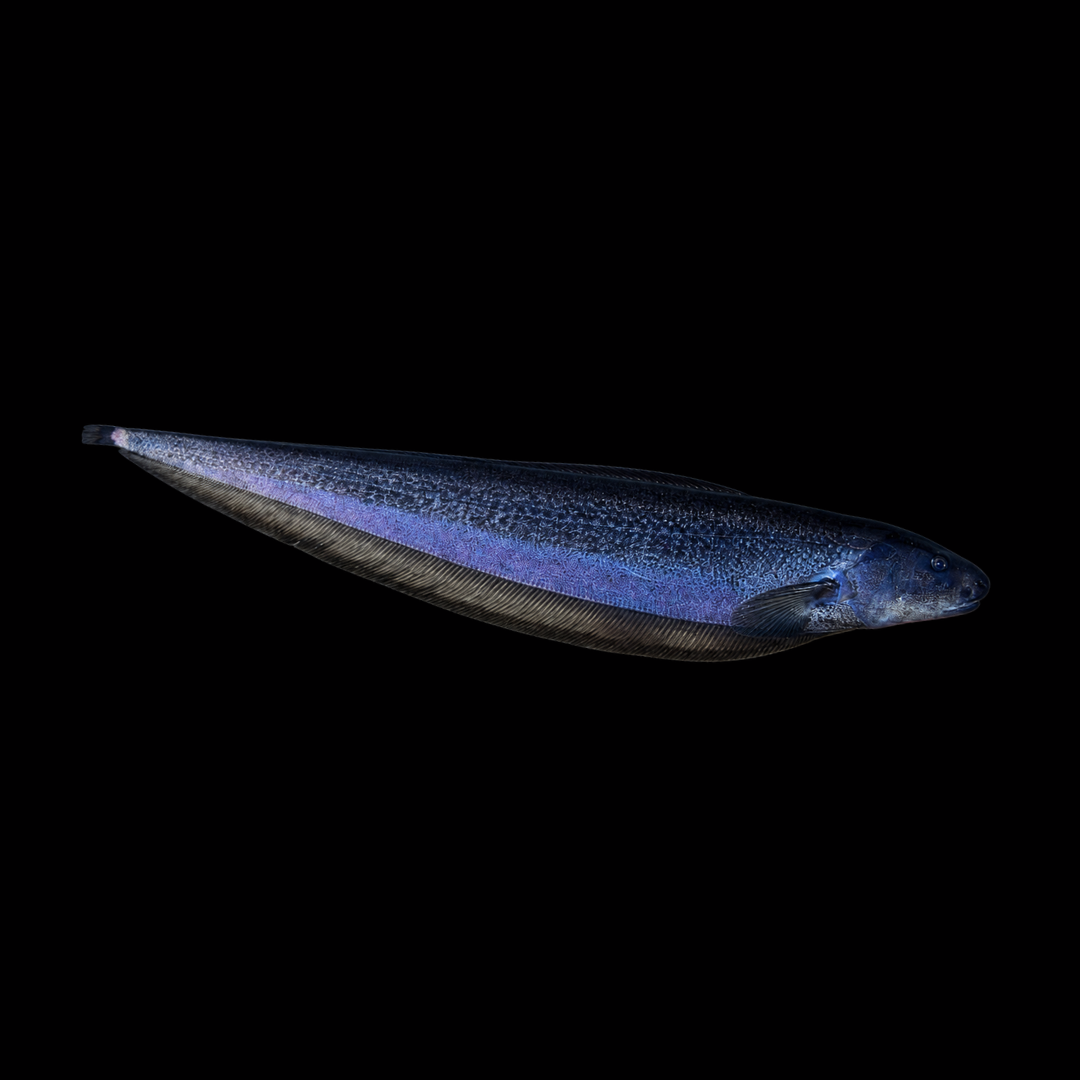
ドラゴンナイフフィッシュは、南米アマゾン川流域に分布するアプテロノトゥス科の弱電気魚です。背鰭と腹鰭を欠き、腹側に長く伸びた臀鰭を波打たせることで、体を大きく曲げずに前進、後退、静止に近いホバリングを行います。暗褐色から黒褐色の落ち着いた体色、尾部の淡色帯、そして成熟雄で著しく伸長する吻と顎が大きな特徴です。自ら発生させる弱い電場を周囲の把握と同種間の信号に利用するため、視界の悪い環境でも巧みに餌や障害物を探ることができます。流通量は多くなく、成長後の大きさ、夜行性、同種への攻撃性を理解したうえで迎えたい、中級者以上向けの大型珍魚です。 The dragon knifefish is a weakly electric ghost knifefish native to the Amazon Basin of South America. It lacks dorsal and pelvic fins and moves by sending waves along its long anal fin, allowing it to swim forward, backward, and hover while keeping the body relatively rigid. Its dark brown to blackish coloration, pale caudal marking, and the dramatically elongated snout and jaws of mature males are especially distinctive. The fish generates a weak electric field for orientation, prey detection, and communication, enabling it to function efficiently in dark or turbid water. Because it is uncommon in the trade, grows large, is nocturnal, and can be aggressive toward similar electric fishes, it is best suited to experienced aquarists.
基本情報 / Basic Information
| 学名 / Scientific Name | Apteronotus bonapartii (Castelnau, 1855) |
|---|---|
| 通称 / Common Name | ドラゴンナイフフィッシュ、ドラゴンナイフDragon knifefish, Bonaparte’s ghost knifefish |
| 分類 / Family | 条鰭綱・ギュムノートゥス目・アプテロノトゥス科Class Actinopterygii, Order Gymnotiformes, Family Apteronotidae |
| 英名 / English Name | Dragon knifefish / Bonaparte’s ghost knifefish |
| 分布 / Distribution | 南米のアマゾン川流域。ペルー、ブラジル、ボリビア、コロンビア、エクアドル、ギアナ地域などから記録されています。日本で販売される個体は、ペルー産として案内される例が多く見られます。The Amazon River Basin of South America, with records from Peru, Brazil, Bolivia, Colombia, Ecuador, and the Guianas. Specimens offered in Japan are frequently listed as Peruvian imports. |
| 最大体長 / Max Size | 標準体長約38cm。尾部を含む全長では40cm級になる可能性を見込み、十分な余裕を持って設備を用意します。尾部は野生下で損傷と再生を繰り返すことがあり、測定値には個体差があります。About 38 cm standard length. Aquarium planning should allow for a fish around 40 cm overall. Wild individuals often show tail damage and regeneration, which can make total-length measurements variable. |
| 寿命 / Lifespan | 本種固有の信頼できる寿命資料は乏しく、正確な年数は不明です。近縁の大型ゴーストナイフ類と同様に長期飼育を前提とし、購入時から成魚用設備と継続的な管理計画を整えてください。Reliable species-specific lifespan data are lacking. It should be treated as a long-term commitment, with adult-sized housing and a sustainable care plan prepared before purchase. |
飼育環境 / Aquarium Environment
| 水槽サイズ / Tank Size | 成魚は最低でも120cm規格水槽または120cmワイド水槽を基準とし、より余裕のある120×60×45cm級、もしくは150cm水槽が理想的です。幼魚を60cm水槽で一時的に育てることはできますが、終生飼育用には適しません。大容量の外部式フィルター、上部式フィルター、オーバーフロー濾過などを用い、排泄量に見合う濾過能力と十分な溶存酸素を確保します。Adults should be housed in at least a Japanese 120 cm standard or wide aquarium, with a 120 × 60 × 45 cm system or a 150 cm aquarium preferred. A 60 cm tank may be used temporarily for a juvenile but is unsuitable for lifelong care. Use high-capacity external, overhead, or overflow filtration and maintain strong oxygenation. |
|---|---|
| 水温 / Temperature | 24〜28℃を目安に、急変を避けて安定させます。高水温では水中の酸素量が減るため、夏季や治療時は特にエアレーションを強化してください。 Maintain 24–28°C with minimal fluctuation. Because warm water holds less oxygen, increase aeration during hot weather and whenever temperature is raised during treatment. |
| 水質 / Water Quality | 弱酸性から中性を中心とする軟水寄りの環境が扱いやすく、目安はpH6.0〜7.5です。アンモニアと亜硝酸は常に検出されない状態を保ち、硝酸塩の蓄積を避けるため、飼育密度と給餌量に応じて毎週4分の1から3分の1程度の換水を行います。導入直後は輸送水とのpH差と水温差を確認し、急激な水合わせを避けます。Slightly acidic to neutral, relatively soft water is practical, with pH 6.0–7.5 as a useful target. Ammonia and nitrite should remain undetectable, and weekly water changes of roughly 25–33% should be adjusted to feeding and stocking levels. On arrival, check temperature and pH differences and avoid abrupt acclimation. |
| レイアウト / Layout | 照明は控えめにし、流木、土管、内面が滑らかな塩ビパイプなどで、全身を収められる暗い隠れ家を用意します。成熟雄は吻が長くなるため、入口が狭すぎるシェルターや尖った石、粗い装飾品は避けてください。底床は細かな砂、または清掃性を優先したベアタンクが安全です。驚いた際の飛び出しを防ぐため、配管周辺を含めて蓋の隙間を塞ぎます。Use subdued lighting and provide dark shelters large enough for the entire fish, such as driftwood caves, ceramic tubes, or smooth PVC pipe. Mature males can develop very long snouts, so avoid narrow entrances, sharp rocks, and abrasive decor. Fine sand or a clean bare-bottom setup is suitable. Secure all lid and pipe openings to prevent escape when startled. |
| 注意点 / Precautions | 夜行性で導入初期は隠れがちですが、無理に追い出すと吻や尾部を傷めます。水質悪化と酸欠に弱いため、停電対策として電池式エアポンプや予備電源を準備すると安心です。同種や近縁の弱電気魚は、狭い水槽では縄張り争いと信号干渉の負担が大きくなるため、原則として単独飼育を基本にします。This nocturnal fish often hides after introduction. Do not force it from shelter, as the snout and tail are easily damaged. It is vulnerable to deteriorating water quality and low oxygen, so a battery air pump or backup power supply is valuable. Conspecifics and similar weakly electric fishes can experience aggression and signal interference in confined aquaria; single-specimen care is the safest default. |
餌と給餌 / Feeding
| 餌の種類 / Diet | 冷凍アカムシ、冷凍イサザアミ、小エビ、細く切った白身魚や貝類、沈下性の肉食魚用ペレットなどを組み合わせます。幼魚には口に入る大きさの冷凍飼料を中心に与えます。活魚だけに依存すると栄養が偏り、病原体を持ち込む危険もあるため、常用は避けます。Offer a varied diet of frozen bloodworms, mysid shrimp, small shrimp, thin pieces of white fish or mollusk, and sinking carnivore pellets. Juveniles should receive appropriately sized frozen foods. Avoid dependence on feeder fish because of nutritional imbalance and the risk of introducing pathogens. |
|---|---|
| 給餌のポイント / Feeding Tips | 導入直後は消灯前後に隠れ家の入口へ餌を落とすと食べやすくなります。電気受容と嗅覚を頼りに探索するため、沈む餌を同じ場所へ与えると給餌位置を学習しやすくなります。人工飼料への切り替えは、好物に小粒ペレットを混ぜ、徐々に割合を増やします。食べ残しは夜間のうちに回収し、肥満と水質悪化を防ぐため、腹部の張りを見ながら量を調整してください。New arrivals often feed more readily around lights-out when food is placed near the shelter entrance. Because they locate food through electrosensory and chemical cues, feeding sinking foods at a consistent location helps establish a routine. Transition to pellets by mixing small pellets with preferred frozen foods and gradually increasing the pellet portion. Remove leftovers and adjust portions to avoid obesity and water-quality decline. |
性格と混泳 / Temperament and Tank Mates
| 性格 / Temperament | 普段は物陰で静かに過ごしますが、同種や体形・生活域の近い弱電気魚に対しては縄張り性を示すことがあります。成熟個体は顎と吻を使った押し合いや噛み合いに発展する可能性があり、外見の穏やかさだけで判断できません。人の気配や給餌手順には慣れやすく、落ち着いた個体は前面に出て餌を待つようになります。It usually rests quietly in cover but may become territorial toward conspecifics and other weakly electric fishes with similar body shapes and habitat use. Mature fish can escalate disputes into pushing or biting with the jaws and snout, so their gentle appearance can be misleading. Many individuals habituate to the keeper and feeding routine and may eventually wait in the open for food. |
|---|---|
| 混泳の相性 / Compatibility | 最も安全なのは単独飼育です。混泳する場合は、本種を飲み込めず、本種の口にも入らない大きさで、攻撃性が低く、隠れ家を奪わない中上層性の魚を慎重に選びます。小型魚や小型エビは夜間に捕食される可能性があります。大型シクリッド、スネークヘッド、気性の荒いナマズなどとの組み合わせは、餌や隠れ家を巡る事故が起きやすいため、一般的な推奨例として扱わないほうが安全です。Single-specimen care is safest. In a community aquarium, choose peaceful mid- to upper-water fish too large to be swallowed and unable to swallow the knifefish, and ensure they do not compete for caves. Small fish and shrimp may be eaten at night. Large cichlids, snakeheads, and aggressive catfish carry a high risk of conflict over food and shelter and should not be treated as routine companions. |
病気と対策 / Diseases and Prevention
| かかりやすい病気 / Common Diseases | 輸送や急な水温変化の後には、白点病、体表の擦れ、細菌性の皮膚炎、鰓障害に注意します。本種は無鱗魚ではありませんが、鱗が細かく体表が傷つきやすいため、網で追い回したり、粗いシェルターへ押し込んだりしないことが大切です。呼吸が速い、体を物にこすりつける、餌を急に食べなくなる、隠れ家から飛び出して落ち着かないといった変化は、水質悪化や寄生虫、酸欠の初期サインになり得ます。After transport or sudden temperature changes, watch for ich, abrasions, bacterial skin lesions, and gill problems. This species is not truly scaleless, but its scales are small and the skin is easily injured, so avoid prolonged netting and abrasive shelters. Rapid breathing, flashing, sudden refusal of food, or frantic emergence from shelter can indicate water-quality problems, parasites, or low oxygen. |
|---|---|
| 対策と予防 / Prevention | 新魚は可能な限り隔離水槽で観察し、安定した水温、十分な酸素、低い有機物負荷を保ちます。白点病は魚体上の白点だけを狙って一度処置しても根絶できないため、寄生虫の生活環に合わせた継続治療が必要です。加温だけを治療の代わりにせず、塩分や薬剤を使う場合も、本種固有の耐性資料が乏しいことを踏まえ、製品表示、実水量、活性炭の除去、酸素供給を確認してください。銅、ホルマリン、マラカイトグリーンなどは有効成分になり得ますが、自己判断で濃度を一律に減らしたり増やしたりせず、観賞魚診療に詳しい獣医師や信頼できる専門店へ相談するのが安全です。Quarantine new fish when possible and maintain stable temperature, high oxygen, and low organic loading. Ich cannot be eliminated by treating visible spots only; therapy must continue through the parasite’s susceptible life stages. Do not rely on heat alone. If salt or medication is used, remember that species-specific tolerance data are limited and carefully verify the product label, true water volume, carbon removal, and aeration. Copper, formalin, and malachite green may be active ingredients, but doses should not be arbitrarily reduced or increased; consultation with an aquatic veterinarian or experienced specialist is safest. |
増やし方(繁殖) / Breeding
| 雌雄の判別 / Sexing | 成熟雄では吻と顎が著しく前方へ伸び、頭部が細長くなります。雌は吻が短く、下顎を含む頭部輪郭が比較的丸くまとまります。ただし幼魚や未成熟個体では差が小さく、外見だけでの確実な判別は困難です。電気器官放電の基本周波数には明確な雌雄差が確認されていないため、家庭で周波数を測って性別を判断する方法は適しません。Mature males develop a markedly elongated snout and jaws, producing a long, narrow head profile. Females retain a shorter snout and a more compact, rounded head and lower jaw. Juveniles and immature fish are difficult to sex reliably. The baseline electric-organ discharge frequency is not clearly sexually dimorphic, so frequency measurement is not a practical sexing method for aquarists. |
|---|---|
| 繁殖形態 / Reproduction | 卵生と考えられますが、本種の産卵行動、産卵場所、卵数、発生条件、親による保護の有無は十分に記載されていません。近縁種の情報をそのまま本種へ当てはめることはできません。It is considered oviparous, but the spawning behavior, site, clutch size, developmental requirements, and presence or absence of parental care are poorly documented for this species. Information from related species should not be assumed to apply directly. |
| 繁殖のポイント / Breeding Tips | 家庭水槽で再現性のある繁殖方法は確立されていません。成熟個体同士を同居させるだけでは激しい争いになる危険があり、十分な水量、複数の退避場所、季節変化、水質と導電率、餌条件を管理しながら行動を記録する研究的な設備が必要です。一般飼育では繁殖を目標にせず、単独個体を健康に長期維持することを優先します。No repeatable home-aquarium breeding method is established. Simply placing mature fish together can lead to severe aggression. Research-level facilities would be needed to manage space, multiple refuges, seasonal cues, water chemistry and conductivity, diet, and behavioral monitoring. For most aquarists, long-term health of a single specimen should take priority over breeding attempts. |
雑学と豆知識 / Trivia and Fun Facts
| 1. 学名は今も研究史を映している / 1. The name still reflects an unsettled research history | 本種は1855年にSternarchus bonapartiiとして記載されました。その後、Parapteronotusへの移属や、P. hasemaniとの同一視が提案された時期があります。しかし、後続の形態学・分子系統学研究では「Apteronotus」bonapartiiをParapteronotus hasemaniとは別に扱う例が多く、2026年時点のEschmeyer’s Catalog of FishesもApteronotus bonapartiiを有効名として掲載しています。属の系統関係には未解決部分が残るため、研究論文で属名に引用符を付けた「Apteronotus」bonapartiiという表記も見られます。したがって、Parapteronotus bonapartiiを唯一の確定名と断定するより、現在はApteronotus bonapartiiを基本にしつつ分類史を併記するのが慎重です。The species was described in 1855 as Sternarchus bonapartii. It was later transferred to Parapteronotus, and some authors proposed that it was the same species as P. hasemani. Subsequent morphological and molecular studies, however, often treat “Apteronotus” bonapartii separately from Parapteronotus hasemani, and the 2026 Eschmeyer’s Catalog of Fishes lists Apteronotus bonapartii as valid. Because its generic placement is still phylogenetically complicated, some papers use quotation marks around “Apteronotus.” It is therefore more cautious to use A. bonapartii as the working name while acknowledging its taxonomic history rather than presenting Parapteronotus bonapartii as the only settled combination. |
|---|---|
| 2. 雄の顔は成長とともに別の魚のように変わる / 2. Mature males can look like an entirely different fish | 成熟雄では吻と口裂が大きく伸び、雌や若魚とは驚くほど異なる姿になります。このような頭部の過成長は、アプテロノトゥス科で繰り返し進化した性的二型の一例です。本種では頭骨の前方部分や顎の輪郭に雌雄差がある一方、成熟雄だけに巨大な外向きの歯が発達するとは報告されていません。長い吻が求愛、威嚇、雄同士の押し合いのどこで最も重要なのかは、今も詳しい行動観察が必要な研究課題です。Mature males develop a greatly elongated snout and gape and can look strikingly different from females and juveniles. This craniofacial overgrowth is one example of a form of sexual dimorphism that evolved repeatedly within Apteronotidae. The sexes differ in the proportions and contours of the anterior skull and jaws, but mature males are not reported to develop the enormous externally projecting teeth seen in some related taxa. Whether the long snout is most important in courtship, display, or physical contests between males remains a subject requiring detailed behavioral study. |
| 3. 電気は武器ではなく、暗闇を読む感覚 / 3. Its electricity is a sensory system, not a weapon | デンキウナギのような強い電撃を放つ魚ではありません。成魚のアプテロノトゥス科は神経由来の発電器官から連続的な波状放電を出し、周囲の物体が電場をゆがめる様子を体表の受容器で読み取ります。本種の基本周波数は26℃付近でおよそ1.2〜1.3kHzと高く、平均値には明確な雌雄差が確認されませんでした。一方、短時間だけ周波数を変えるチャープでは、雄のほうが複数の周波数ピークを含む複雑な信号を出しやすいことが報告されています。外見の性差が極端なのに、基礎放電周波数の性差が小さいという組み合わせは、電気コミュニケーションの進化が単純な一方向ではないことを示しています。This is not a high-voltage predator like an electric eel. Adult apteronotids produce a continuous wave-type discharge from a neurogenic electric organ and detect distortions of that field with receptors distributed over the body. In this species the baseline frequency is high, roughly 1.2–1.3 kHz near 26°C, and no clear sex difference in the average frequency was found. Males, however, were more likely to produce chirps containing multiple frequency peaks. The combination of extreme visual sexual dimorphism with little sex difference in baseline frequency shows that the evolution of electric communication does not follow a single simple pattern. |
| 4. 神経再生の話は近縁種との区別が重要 / 4. Regeneration claims must distinguish this species from its relatives | ゴーストナイフ類が尾部と脊髄を再生する能力は、再生生物学で重要な研究対象です。ただし、細胞増殖、アポトーシス、発電機能の回復を詳しく調べた代表的な実験モデルは、主にブラウンゴーストのApteronotus leptorhynchusやブラックゴーストのA. albifronsです。A. bonapartiiの標本でも尾部損傷と再生痕は頻繁に確認されていますが、近縁種で得られた分子機構を本種で直接証明済みとして語ることはできません。「同じ科の魚で知られる驚異的な再生能力」と「本種で実験的に確認された事実」を分けて理解すると、科学的な魅力がより正確に伝わります。The ability of ghost knifefishes to regenerate the tail and spinal cord is an important topic in regenerative biology. However, the best-characterized experimental models for cell proliferation, apoptosis, and recovery of electric-organ function are mainly the brown ghost Apteronotus leptorhynchus and the black ghost A. albifrons. Tail injuries and signs of regeneration are common in A. bonapartii museum specimens, but molecular mechanisms demonstrated in related species cannot automatically be claimed as directly proven in this species. Separating family-level knowledge from species-specific evidence makes the story more scientifically accurate. |
| 5. 日本では少数入荷のペルー便として現れる / 5. In Japan it appears mainly as a limited Peruvian import | 国内の販売例ではペルー産として案内されることが多く、常時大量に並ぶ魚ではありません。2026年7月に確認できた販売例では、全長6〜8cmで税込12,000円、約13cmの個体で税込19,800円という掲載があり、別の通販掲載では15〜20cmのペルー産個体が紹介されていました。価格は入荷量、サイズ、餌付き、尾部や吻の状態、店舗でのトリートメント期間によって大きく変わります。生体価格だけで判断せず、成魚用水槽、濾過、保温、停電対策まで含めた総費用を先に見積もることが大切です。Japanese listings frequently identify the fish as a Peruvian import, and it is not a species stocked in large numbers year-round. Listings checked in July 2026 included a 6–8 cm fish at ¥12,000 and an approximately 13 cm specimen at ¥19,800, while another retailer described Peruvian fish in the 15–20 cm range. Prices vary with availability, size, feeding condition, condition of the tail and snout, and the length of shop quarantine. The true cost should include an adult aquarium, filtration, heating, and emergency aeration rather than the purchase price alone. |
| 6. 波打つ臀鰭は水中ロボットの手本になった / 6. Its ribbon-fin locomotion inspired underwater robots | ナイフフィッシュは体幹を比較的まっすぐ保ったまま、長い臀鰭に進行波を作って自在に移動します。この仕組みは、狭い場所で前後移動やホバリングを行う水中ロボットの設計に適しています。よく知られるGhostBotは主にブラックゴーストナイフフィッシュをモデルにしたもので、本種そのものを複製したロボットではありません。それでも、同じアプテロノトゥス科が共有する波動推進と電気感覚は、生物の動きを工学へ移す好例になっています。Knifefishes keep the trunk relatively straight while producing traveling waves along the long anal fin, enabling precise forward, reverse, and hovering movements. This is an attractive model for underwater robots operating in confined spaces. The well-known GhostBot was modeled primarily on the black ghost knifefish rather than on this species itself. Even so, the undulatory propulsion and electrosensory abilities shared within Apteronotidae provide a striking example of biological principles informing engineering. |
| 7. 人に慣れるが、顔認識の断定はできない / 7. It can habituate to people, but facial recognition is unproven | 長期飼育個体が給餌時刻、餌を落とす場所、人が水槽へ近づく気配を学び、手前へ出てくることは珍しくありません。弱電気魚は感覚処理と行動学の研究対象でもあり、単純な反射だけでは説明できない学習能力を示します。ただし、「飼い主の顔を識別する」「犬のように感情的な信頼関係を築く」といった表現を本種で科学的に証明された事実として扱うことはできません。人に慣れた行動は魅力的ですが、触れ合いを求めて素手で頻繁に触るより、安定した給餌と環境管理を通じて信頼を損なわないことが大切です。Long-kept individuals often learn feeding times, feeding locations, and the approach of a person and may emerge to the front of the aquarium. Weakly electric fishes are important behavioral and sensory research models and show learning that goes beyond simple reflexes. However, claims that this species recognizes an owner’s face or forms a dog-like emotional bond have not been scientifically demonstrated. Habituation is fascinating, but trust is better maintained through consistent feeding and stable husbandry than through frequent handling. |
まとめ / Conclusion
ドラゴンナイフフィッシュは、静かな暗色の姿の内側に、波打つ臀鰭による自在な遊泳、弱い電場で周囲を読む感覚、成熟雄だけが見せる劇的な頭部変化を備えています。その魅力を十分に引き出すには、小魚の感覚で購入せず、40cm級の成魚が安全に向きを変えられる大型水槽、暗い隠れ家、強力な濾過と酸素供給を最初から計画することが欠かせません。 The dragon knifefish combines a quiet dark appearance with remarkably agile ribbon-fin swimming, an electrosensory view of its surroundings, and dramatic cranial changes in mature males. To reveal those qualities safely, it must not be purchased as though it were a small community fish. A large aquarium that allows a roughly 40 cm adult to turn comfortably, together with dark shelter, powerful filtration, and reliable oxygenation, should be planned from the beginning.
単独飼育を基本に、急な環境変化を避け、夜間の行動と食欲を丁寧に観察すれば、隠れがちな幼魚が次第に飼育者の気配へ反応し、独特の後退やホバリングを見せるようになります。分類学にも生理学にも未解明の部分を残す魚だからこそ、断定的な神話に頼らず、一匹ごとの状態を読み取りながら長く付き合う姿勢が、その知的で不思議な存在感を最も美しく保ちます。 With single-specimen care as the default, gradual environmental changes, and careful observation of nighttime behavior and appetite, a shy juvenile may gradually respond to the keeper and display its distinctive backward swimming and hovering. Because important aspects of its taxonomy and biology remain unresolved, its welfare is best served by avoiding confident myths and instead reading the condition of the individual fish over many years.
分布マップ
ドラゴンナイフフィッシュは、南米のアマゾン川流域に広く分布し、ペルー、ブラジル、ボリビア、コロンビア、エクアドル、ギアナ地域などから記録されています。
この地図は、記事の分布情報を基にアマゾン川流域の広がりを概略表示したものです。表示した中心点や範囲は分布イメージ用の代表値であり、実際の採集地点や厳密な生息範囲を示すものではありません。
ドラゴンナイフフィッシュの参考文献
対象種:Apteronotus bonapartii (Castelnau, 1855) / 最終確認日:2026年7月18日
元記事のうち、分類、分布、形態、生息環境、飼育設計、繁殖、病気および導入時の注意点を検証するために選定した資料です。店舗、通販サイト、個人ブログ、まとめサイトは含めていません。
本種を直接対象にした査読済みの飼育試験と繁殖報告は非常に限られます。そのため、水槽寸法、水温、pH、換水頻度などの数値は、最大体長と自然史に一般的な魚類医学・水質管理の原則を組み合わせた保守的な飼育提案であり、本種について実験的に確立された許容限界ではありません。
1. 分類・分布・形態・行動
-
Fricke, R., Eschmeyer, W. N. & Van der Laan, R. (eds.). Eschmeyer’s Catalog of Fishes: Apteronotus bonapartii.現行の有効名、原記載名、科・亜科、模式産地、アマゾン川流域における分布記録の確認に使用。California Academy of Sciencesで確認
-
Hilton, E. J. & Cox Fernandes, C. (2017). Identity of “Apteronotus” bonapartii (Castelnau, 1855), a sexually dimorphic South American knifefish from the Amazon, with notes on its cranial osteology and on the taxonomic status of “Apteronotus” apurensis Fernández-Yépez, 1968. Proceedings of the Academy of Natural Sciences of Philadelphia, 165(1), 91–103.種の同定、分類史、属の扱い、頭蓋骨形態、分布資料を支える中心的な分類学論文。DOI: 10.1635/053.165.0109
-
Hilton, E. J. & Cox Fernandes, C. (2006). Sexual dimorphism in Apteronotus bonapartii (Gymnotiformes: Apteronotidae). Copeia, 2006(4), 826–833.成熟雄の吻・顎・頭骨の伸長と、雌雄判別に用いられる形態差を直接検討した一次資料。DOI: 10.1643/0045-8511(2006)6[826:SDIABG]2.0.CO;2
-
Bernt, M. J., Tagliacollo, V. A. & Albert, J. S. (2019). Molecular phylogeny of the ghost knifefishes (Gymnotiformes: Apteronotidae). Molecular Phylogenetics and Evolution, 135, 297–307.アプテロノトゥス科の分子系統と、従来の属区分に残る非単系統性・再検討の必要性を支える資料。DOI: 10.1016/j.ympev.2019.02.019
-
Ho, W. W., Cox Fernandes, C., Alves-Gomes, J. A. & Smith, G. T. (2010). Sex differences in the electrocommunication signals of the electric fish Apteronotus bonapartii. Ethology, 116(11), 1050–1064.電気器官放電、チャープ、雌雄差および同種間コミュニケーションに関する種固有の実験研究。DOI: 10.1111/j.1439-0310.2010.01823.x
2. 分布・生息環境・最大体長
-
Froese, R. & Pauly, D. (eds.). FishBase: Apteronotus bonapartii species summary.淡水・底中層性、アマゾン川流域、最大標準体長38.0cmという基礎情報の確認に使用。オンラインデータベースのため閲覧日を併記する。FishBaseで確認
3. 繁殖に関する比較資料
-
Kirschbaum, F. & Schugardt, C. (2002). Reproductive strategies and developmental aspects in mormyrid and gymnotiform fishes. Journal of Physiology-Paris, 96(5–6), 557–566.ギュムノートゥス目全体の繁殖戦略と発生を整理した比較総説。本種固有の産卵条件を示す資料ではないため、「近縁群の背景情報」としてのみ使用する。DOI: 10.1016/S0928-4257(03)00011-1
4. 水質管理・検疫・病気・薬剤使用
-
Francis-Floyd, R., Yanong, R. P. E. & Pouder, D. B. Ichthyophthirius multifiliis (White Spot) Infections in Fish. UF/IFAS Extension, CIR920/FA006.白点病の生活環、魚体上の成虫が薬剤から保護されること、遊泳期を標的に反復処置する必要性、隔離と早期発見の根拠。University of Floridaで確認
-
Yanong, R. P. E. Fish Health Management Considerations in Recirculating Aquaculture Systems—Part 1: Introduction and General Principles. UF/IFAS Extension, CIR120/FA099.魚種の生物学、水質、栄養、隔離、衛生、消毒を組み合わせる予防医学と、隔離可能な飼育システムの考え方を支える資料。University of Floridaで確認
-
Francis-Floyd, R., Yanong, R. P. E. & Petty, B. D. (updated 2024). Environmental Diseases of Aquatic Animals in Aquatic Systems. Merck Veterinary Manual.低溶存酸素、アンモニア、亜硝酸、pH、温度変動など、水質由来の疾病と緊急時対応を裏づける獣医学資料。Merck Veterinary Manualで確認
-
Petty, B. D., Francis-Floyd, R. & Yanong, R. P. E. (updated 2024). Management of Aquarium Fish. Merck Veterinary Manual.体表損傷の重要性、診断時の水質確認、隔離とバイオセキュリティ、薬浴濃度の計算、薬剤使用時の酸素供給と監視を支える資料。Merck Veterinary Manualで確認




コメント