

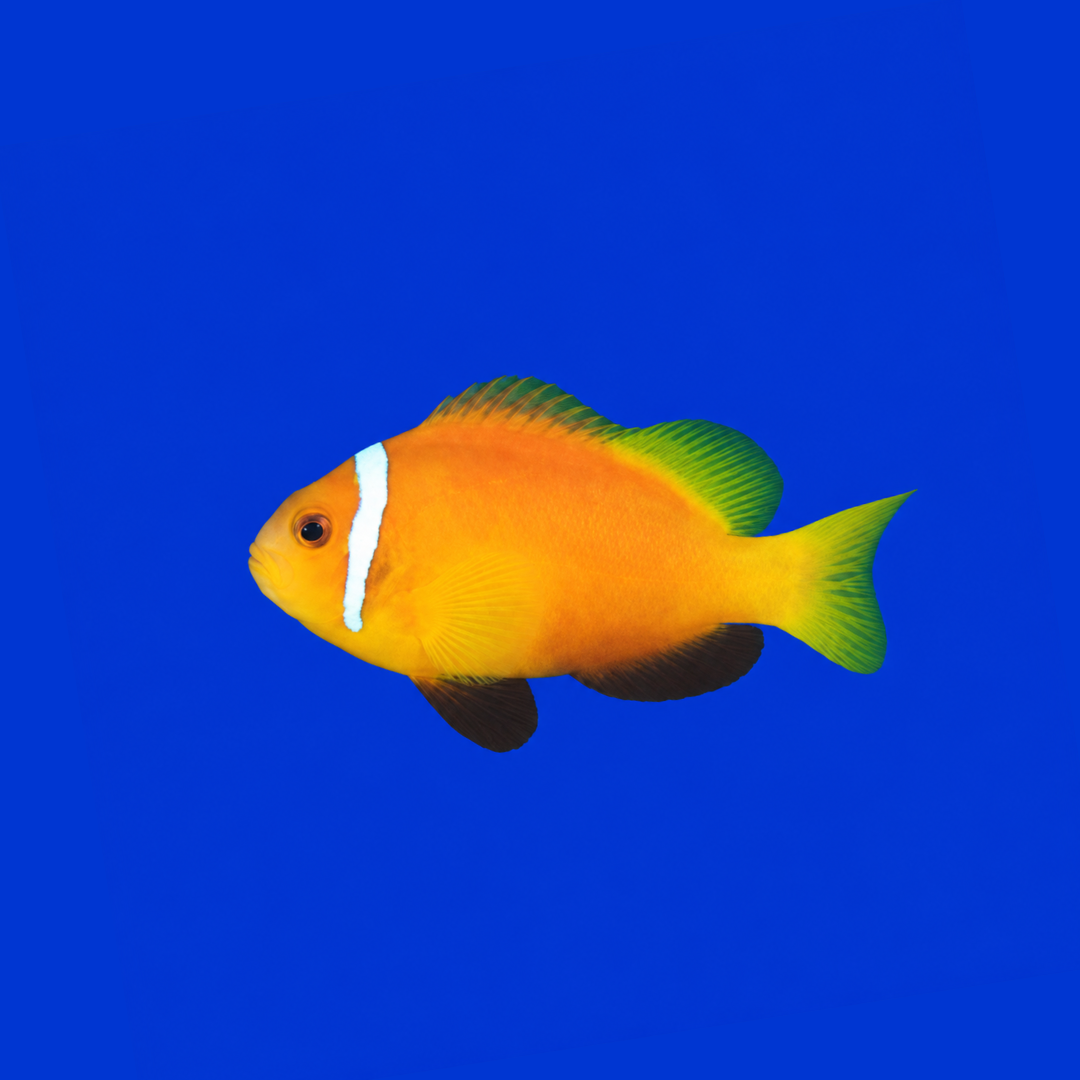
解説 / Description
モルジブアネモネフィッシュは、赤みを帯びたオレンジ色の体に一本の白い横帯が入り、腹鰭と尻鰭が黒く染まるクマノミの仲間です。西部インド洋の限られた海域に分布し、サンゴ礁の縁辺や外洋側の斜面で、センジュイソギンチャクを宿主として生活します。丈夫な個体は人工飼料にも慣れやすいものの、輸送直後は体調を崩しやすいため、導入時の隔離観察と安定した水質管理が欠かせません。単独、または相性の確認されたペアで飼育すると、本種らしい落ち着いた泳ぎと鮮明な色彩を観察しやすくなります。 The Maldive anemonefish is a clownfish with a reddish-orange body, a single white head bar, and characteristically black pelvic and anal fins. It has a restricted distribution in the western Indian Ocean and inhabits reef edges and outer reef slopes in association with the magnificent sea anemone. Healthy specimens usually adapt well to prepared foods, but newly transported fish can be vulnerable to stress and disease. Quarantine, stable water quality, and keeping either a single fish or a compatible established pair are central to successful long-term care.
基本情報 / Basic Information
| 学名 / Scientific Name | Amphiprion nigripes Regan, 1908 |
|---|---|
| 通称 / Common Name | モルジブアネモネフィッシュ、モルディブアネモネフィッシュMaldive anemonefish, blackfinned anemonefish |
| 分類 / Family | スズメダイ科・クマノミ属Family Pomacentridae, genus Amphiprion |
| 英名 / English Name | Maldive Anemonefish, Blackfinned Anemonefish |
| 分布 / Distribution | 西部インド洋のモルディブ諸島、ラクシャドウィープ諸島、スリランカ周辺。水深2〜25mほどのサンゴ礁縁辺や外洋側斜面で確認されています。The western Indian Ocean, including the Maldives, the Lakshadweep Islands, and waters around Sri Lanka. It is recorded from reef edges and outer reef slopes at depths of approximately 2–25 m. |
| 最大体長 / Max Size | 全長約11cm。ペアや群れでは、通常は優位なメスが最も大きくなります。Approximately 11 cm in total length. Within a pair or social group, the dominant female is normally the largest fish. |
| 寿命 / Lifespan | 本種に限った信頼性の高い寿命資料は十分ではありません。クマノミ類は適切な環境で長期飼育されるため、数年で飼い切る魚ではなく、長く世話を続ける前提で迎える必要があります。Reliable species-specific lifespan data are limited. Clownfish can remain in aquaria for many years under appropriate care, so this species should be regarded as a long-term commitment rather than a short-lived aquarium fish. |
飼育環境 / Aquarium Environment
| 水槽サイズ / Tank Size | 単独飼育では60cm規格水槽以上を最低限の目安とし、ペアには水量と逃げ場を確保しやすい90cm規格水槽以上が適しています。センジュイソギンチャクとの共生を再現する場合は、イソギンチャクの成長と移動を考慮し、90cm規格水槽〜120cmワイド水槽、約150〜200L以上の安定した設備を推奨します。A standard 60 cm aquarium is a practical minimum for a single specimen, while a standard 90 cm aquarium or larger is more suitable for a pair because it provides greater water volume and retreat space. When maintaining a magnificent sea anemone, a mature system of roughly 150–200 L or more, such as a standard 90 cm to 120 cm wide aquarium, is recommended to accommodate its growth and movement. |
|---|---|
| 水温 / Temperature | 25〜28℃を目安にします。短時間の数値よりも、日内変動や季節変動を小さく抑えることが重要です。Maintain approximately 25–28°C. Minimizing daily and seasonal fluctuations is more important than targeting a single exact value. |
| 水質 / Water Quality | 比重1.023〜1.026、pH8.0〜8.4を目安とし、アンモニアと亜硝酸は検出されない状態を維持します。硝酸塩の蓄積を抑え、蒸発した水分は塩水ではなく真水で補って、比重の上昇を防ぎます。Aim for a specific gravity of 1.023–1.026 and a pH of 8.0–8.4. Ammonia and nitrite should remain undetectable, while nitrate accumulation should be controlled. Replace evaporation with fresh water, not salt water, to prevent salinity from rising. |
| レイアウト / Layout | ライブロックなどで複数の隠れ場所を作り、前面には十分な遊泳空間を残します。センジュイソギンチャクを導入する場合は、強すぎる直線的な水流を避けながら、全体に複雑な水流が届くように調整します。移動したイソギンチャクが吸い込まれないよう、水流ポンプの吸水口には保護カバーが必要です。Create several secure shelters with live rock while retaining open swimming space. When adding a magnificent sea anemone, provide broad, variable water movement rather than a harsh direct jet. Pump intakes must be protected so that a wandering anemone cannot be drawn into them. |
| 注意点 / Precautions | 定着後は同種や他のクマノミに対して縄張りを守るため、複数個体を無計画に追加すると激しい争いが起こることがあります。新しく迎えた個体は本水槽へ直接入れず、専用の隔離水槽で少なくとも3〜4週間、食欲、呼吸、体表の粘液、白点、擦り付け行動の有無を観察します。センジュイソギンチャクは本種よりも飼育難度が高いため、十分に成熟し、照明と水流が整った水槽へ導入します。Once established, this fish may defend its territory against conspecifics and other clownfish, and unplanned additions can lead to serious aggression. New specimens should not be placed directly into the display aquarium; observe them in a dedicated quarantine system for at least three to four weeks for appetite, respiration, excess mucus, white spots, and flashing. The magnificent sea anemone is more demanding than the fish and should only be introduced to a mature aquarium with suitable lighting and water movement. |
餌と給餌 / Feeding
| 餌の種類 / Diet | 雑食性で、海水魚用の小粒ペレットやフレークを主食にできます。冷凍イサザアミ、ブラインシュリンプ、細かく刻んだエビ類などを補助的に組み合わせると、栄養の偏りを抑えられます。体色の維持には、アスタキサンチンやスピルリナを含む飼料も利用できます。This omnivorous species can be maintained on small marine pellets or flakes. Supplementing the staple diet with frozen mysid shrimp, brine shrimp, and finely chopped crustacean foods helps provide dietary variety. Foods containing astaxanthin or spirulina may also support coloration. |
|---|---|
| 給餌のポイント / Feeding Tips | 1日1〜2回、短時間で食べ切れる量を与えます。輸入直後の個体が人工飼料を食べない場合は、冷凍餌や香りの強い餌から始め、摂餌が安定してから少しずつ人工飼料へ移行します。食べ残しは水質悪化を招くため、一度に多量を与えず、魚の反応を見ながら調整します。Feed once or twice daily, offering only what the fish can consume quickly. If a newly imported specimen refuses prepared food, begin with frozen or strongly scented foods and gradually introduce pellets or flakes after feeding becomes consistent. Avoid large portions because uneaten food rapidly degrades water quality. |
性格と混泳 / Temperament and Tank Mates
| 性格 / Temperament | 普段は宿主や隠れ場所の近くで生活しますが、縄張りが定まると周囲へ強い防衛行動を示します。ペアでは大きなメスが優位に立ち、小さなオスを追う行動が見られます。短い追尾は順位確認の範囲に収まることがありますが、片方が餌を食べられないほど追い詰められる場合は隔離が必要です。The fish normally remains near its host or chosen shelter, but it can defend an established territory vigorously. In a pair, the larger female is dominant and may chase the smaller male. Brief chasing can be part of maintaining the hierarchy, but separation is necessary if one fish is prevented from feeding or is continually confined to a corner. |
|---|---|
| 混泳の相性 / Compatibility | 十分な水槽サイズと隠れ場所があれば、小型ハゼ類、ハナダイ類、温和なベラ類、小型ヤッコ類などと混泳できます。同種、他種のクマノミ、気性の強いスズメダイ類とは争いやすいため、基本は単独または相性の確認された1ペアで飼育します。極端におとなしい魚や餌取りの遅い魚を組み合わせる場合は、給餌時の競争にも注意が必要です。With adequate space and shelter, it can coexist with small gobies, anthias, peaceful wrasses, and dwarf angelfish. Conflict is more likely with conspecifics, other clownfish, and aggressive damselfish, so a single specimen or one compatible established pair is generally safest. Very timid or slow-feeding tank mates should be monitored during feeding. |
病気と対策 / Diseases and Prevention
| かかりやすい病気 / Common Diseases | 輸送ストレスを受けたクマノミ類では、ブルックリネラ病、海水白点病、ウーディニウム病などが問題になります。ブルックリネラ病では、体表や鰓の粘液が異常に増え、灰白色の膜、速い呼吸、食欲低下、体をこすり付ける行動などが現れることがあります。これらの症状は別の病気でも見られるため、外見だけで断定せず、可能であれば魚病に詳しい獣医師や専門家による顕微鏡検査を受けます。Transport-stressed clownfish may develop brooklynellosis, marine ich, or marine velvet. Brooklynellosis can cause excessive mucus on the skin and gills, a gray-white film, rapid respiration, loss of appetite, and flashing. Because similar signs occur with other diseases, diagnosis should not rely on appearance alone; microscopic examination by an aquatic veterinarian or experienced fish-health professional is preferable whenever possible. |
|---|---|
| 対策と予防 / Prevention | 最も重要な予防策は、新しい魚を専用水槽で隔離し、本水槽と器具や水を共有しないことです。異常が見られた場合は、十分なエアレーションを確保した隔離水槽で管理し、原因に合った治療を選びます。ホルマリンや銅を含む薬剤は、対象となる病原体、濃度、使用時間が異なり、誤用すると魚、無脊椎動物、濾過生物へ重大な害を与えます。自己判断で本水槽へ添加せず、国内で承認・流通している製品の表示と専門家の指示に従ってください。The most important preventive measure is to quarantine new fish in a separate system without sharing water or equipment with the display aquarium. If disease is suspected, maintain the fish in a well-aerated treatment tank and choose therapy according to the confirmed or most likely cause. Formalin- and copper-based products differ in their targets, concentrations, and exposure times, and misuse can seriously harm fish, invertebrates, and biological filtration. Do not add them to the display aquarium without an appropriate diagnosis, and follow locally approved product labels and professional guidance. |
増やし方(繁殖) / Breeding
| 雌雄の判別 / Sexing | 未成熟個体を外見だけで判別することは困難です。形成済みのペアでは、体の大きな個体がメス、小さな個体がオスです。クマノミ類は雄性先熟型で、まずオスとして成熟し、優位なメスがいなくなると、順位の高いオスがメスへ性転換します。Immature fish cannot be reliably sexed by appearance alone. In an established pair, the larger fish is the female and the smaller fish is the male. Clownfish are protandrous hermaphrodites: they mature first as males, and when the dominant female is lost, the highest-ranking male changes sex and becomes female. |
|---|---|
| 繁殖形態 / Reproduction | 基質産卵型です。ペアは岩面やタイルなどの表面を清掃し、粘着性のある卵をまとまって産み付けます。産卵後は主にオスが胸鰭で卵へ水流を送り、未受精卵や傷んだ卵を取り除きながら孵化まで保護します。This is a substrate-spawning species. The pair cleans a rock, tile, or similar surface and deposits a compact clutch of adhesive eggs. The male performs most of the parental care by fanning the eggs and removing infertile or damaged ones until hatching. |
| 繁殖のポイント / Breeding Tips | 安定したペアに多様で栄養価の高い餌を与え、水温と水質の変動を抑えます。研究例では、28〜30℃で卵はおよそ6〜7日後に孵化しています。孵化は消灯後に始まることが多いため、産卵基質を別容器へ移す方法や、仔魚を傷つけずに回収する方法を事前に準備します。初期飼料には栄養強化したワムシを用い、成長に合わせてアルテミア幼生や微粒子飼料へ移行します。親魚水槽とは別に、専用の仔魚育成設備が必要です。Provide an established pair with varied, nutrient-rich foods and minimize changes in temperature and water quality. In published rearing studies, eggs hatched after approximately six to seven days at 28–30°C. Hatching often begins after lights-out, so prepare either a removable spawning surface or a gentle larval collection method. Newly hatched larvae require enriched rotifers, followed gradually by Artemia nauplii and fine prepared foods. A dedicated larval-rearing system separate from the broodstock aquarium is essential. |
雑学と豆知識 / Trivia and Fun Facts
| 1. 黒い「足」が学名の由来 / 1. The black “feet” behind the name | 種小名のnigripesは、ラテン語で「黒い」を表すnigerと、「足」を表すpesに由来します。魚に足はありませんが、水中で目立つ黒い腹鰭が小さな足のように見えることから、この名が付けられました。一本の白帯と黒い腹鰭・尻鰭は、本種を見分けるうえで重要な特徴です。The species name nigripes derives from the Latin niger, meaning black, and pes, meaning foot. Fish have no true feet, but the conspicuous black pelvic fins resemble small dark feet underwater. Together with the single white head bar, the black pelvic and anal fins are important identifying features. |
|---|---|
| 2. 1908年に記載されたインド洋の固有性が高いクマノミ / 2. A restricted Indian Ocean species described in 1908 | 本種は、イギリスの魚類学者チャールズ・テイト・リーガンによって1908年に記載されました。クマノミ類の多くがインド太平洋の広い範囲に分布するのに対し、モルジブアネモネフィッシュの分布は西部インド洋の限られた島嶼域に集中しています。そのため、名前の印象以上に地域性の強い魚といえます。The species was described in 1908 by the British ichthyologist Charles Tate Regan. While many clownfish range widely across the Indo-Pacific, the Maldive anemonefish is concentrated in a comparatively small group of western Indian Ocean islands, making it a strongly regional species. |
| 3. 名前はモルジブでも、ラクシャドウィープでも研究されている / 3. Not limited to the Maldives | 「モルジブ」の名が広く知られていますが、インド領ラクシャドウィープ諸島のアガッティ島でも野生個体とセンジュイソギンチャクが採集され、胚発生や人工繁殖の研究が行われています。地域名を冠した英名だけでは、生息域の全体像を表しきれない好例です。Although the common name emphasizes the Maldives, wild fish and their host anemones have also been collected and studied at Agatti Island in India’s Lakshadweep archipelago. Research there has documented embryonic development and captive propagation, illustrating how a geographic common name may not describe the species’ full range. |
| 4. 自然界で確認される宿主はセンジュイソギンチャク / 4. A close association with the magnificent sea anemone | 本種は、自然界ではセンジュイソギンチャクと結びついて生活することで知られています。触手の間は捕食者から逃れる避難場所になり、クマノミは宿主の近くを縄張りとして守ります。飼育下ではイソギンチャクがなくても健康に生活できるため、魚のためだけに飼育難度の高い宿主を無理に導入する必要はありません。In nature, this species is known for its close association with the magnificent sea anemone. The tentacles provide refuge from predators, while the clownfish defends the area around its host. In captivity, the fish can remain healthy without an anemone, so a demanding host should not be added solely because the fish is present. |
| 5. 刺胞を避ける仕組みは、単純な「毒への免疫」ではない / 5. Avoiding stings is more complex than simple immunity | クマノミがイソギンチャクに刺されにくい仕組みには、体表粘液と宿主へ慣れる行動が関係しています。近年の研究では、粘液中のシアル酸濃度を低く保つことが刺胞の発射を抑える一因として示されました。一方で、糖類の有無だけでは説明できない結果も報告されており、粘液の成分、濃度、微生物相、宿主との接触経験などが組み合わさった複雑な仕組みと考えられています。The ability of clownfish to avoid being stung involves both skin mucus and acclimation behavior. Recent research indicates that maintaining low levels of sialic acids in the mucus may help reduce nematocyst discharge. Other findings show that the process cannot be explained by the simple presence or absence of one group of sugars, suggesting a complex interaction among mucus chemistry, concentration, microbiota, and experience with the host. |
| 6. 群れの順位が性と繁殖を決める / 6. Social rank controls sex and reproduction | 一つの宿主を利用する集団では、最大の個体が繁殖メスとなり、次に大きな個体が繁殖オスになります。メスが失われると、オスが時間をかけてメスへ性転換し、下位個体の中で最も大きな個体が新しいオスへ成長します。水槽内で大きさの異なる2匹がペアを形成しやすい背景には、この厳密な順位関係があります。In a social group sharing one host, the largest fish becomes the breeding female and the second-largest becomes the breeding male. If the female is lost, the male gradually changes sex, while the largest subordinate develops into the new male. This strict size hierarchy explains why two differently sized juveniles often have a better chance of forming a pair in captivity. |
| 7. 人工繁殖技術が確立されている / 7. Captive propagation has been demonstrated | ラクシャドウィープで行われた研究では、親魚の産卵、約6〜7日の卵管理、ワムシとアルテミアを用いた仔魚育成までが報告されています。クマノミ類は海水観賞魚の中では人工繁殖技術を確立しやすい一群であり、本種でも野生採集への依存を減らす選択肢が示されています。Studies in Lakshadweep have documented spawning, approximately six to seven days of egg development, and larval rearing with rotifers and Artemia. Clownfish are among the marine ornamentals most amenable to captive propagation, and this species demonstrates a practical route toward reducing reliance on wild collection. |
まとめ / Conclusion
モルジブアネモネフィッシュは、赤みのある体色、一本の白帯、黒い腹鰭と尻鰭によって、ほかのクマノミとは異なる端正な姿を見せます。その魅力は色彩だけにとどまらず、センジュイソギンチャクとの結びつき、厳密な順位関係、雄から雌への性転換、親魚による卵の保護といった、サンゴ礁で培われた生活史にも表れています。 The Maldive anemonefish is distinguished by its reddish body, single white bar, and black pelvic and anal fins. Its appeal extends beyond coloration to a life history shaped by coral reefs: a close association with the magnificent sea anemone, a strict social hierarchy, male-to-female sex change, and attentive parental care of the eggs.
安定した海水環境と導入時の検疫を整え、同種間の力関係に配慮すれば、本種は水槽の中で長く観察できる存在になります。センジュイソギンチャクとの共生を再現する場合は、魚だけを飼育する以上の設備と経験が求められます。無理に自然環境を模倣するのではなく、生体ごとの要求を理解して維持することが、モルジブアネモネフィッシュ本来の美しさと行動を引き出し、持続的な飼育につなげます。 With stable marine conditions, appropriate quarantine, and careful management of social aggression, this species can become a long-lived and rewarding aquarium resident. Recreating its association with a magnificent sea anemone requires considerably more equipment and experience than keeping the fish alone. Understanding and meeting the needs of each organism, rather than forcing a superficial imitation of the wild, is the most reliable way to reveal the fish’s natural beauty and behavior while supporting responsible long-term care.

気になる道具や飼い方を見つけてみませんか?
 アイのアクアグッズ案内水槽用浄水器の選び方|水換えを楽にするタイプとROの違い道具の特徴や使い方、選ぶときのポイントをアイが紹介します。記事はコチラ →
 アイのアクアグッズ案内ベタの一匹飼いを楽しむ|水槽・ヒーター・ふた・フィルターの選び方ベタの一匹飼いに向く水槽容量、ふたと空気層、ヒーターと水温計、弱い水流のフィルターを、コタロウとアイの会話で分かりやすく解説します。記事はコチラ →
さまざまな飼育テーマをご紹介。リンク先の記事には広告・商品紹介が含まれます。
案内・紹介記事一覧へ →分布マップ
モルジブアネモネフィッシュは、西部インド洋のモルディブ諸島、ラクシャドウィープ諸島、スリランカ周辺に分布します。地図では、これらの海域を含む概略的な分布イメージを示しています。
この地図のマーカーと円は、記事の分布情報をもとに配置した概略的な代表地点および分布イメージです。実際の採集地点や厳密な生息範囲を示すものではありません。
参考文献・情報源
分類・分布・生息環境には海洋生物データベースと本種を対象とした研究論文を使用し、飼育条件と繁殖には本種の種苗生産研究および大学・公的養殖機関のクマノミ類資料を参照しています。疾病情報は獣医学資料と病原体の原著論文に限定しています。一般家庭向けの水槽寸法などは、これらの研究条件とクマノミ類の飼育資料を基にした実務上の目安です。
-
分類・学名
World Register of Marine Species(WoRMS). Amphiprion nigripes Regan, 1908. WoRMSの分類レコード現在受容されている学名、命名者、記載年、分類上の位置づけを確認するための基礎資料です。 -
分布・水深・体長・食性・宿主・繁殖
Froese, R. and Pauly, D.(eds.). FishBase: Amphiprion nigripes, Maldive anemonefish. FishBaseの種情報西部インド洋での分布、水深2〜25m、最大体長約11cm、サンゴ礁縁辺での生息、雑食性、センジュイソギンチャクとの関係、基質産卵と雄による卵保護を支える資料です。 -
飼育条件・検疫・繁殖・仔魚育成
Ajith Kumar, T. T., Gopi, M., Dhaneesh, K. V., Vinoth, R., Ghosh, S., Balasubramanian, T. and Shunmugaraj, T.(2012). Hatchery production of the clownfish Amphiprion nigripes at Agatti island, Lakshadweep, India. Journal of Environmental Biology, 33, 623–628. 論文PDFラクシャドウィープ諸島での採集記録、隔離・親魚養成、水温26±2℃、塩分34〜35 psu、pH8.0〜8.3、産卵、雄の卵保護、ワムシとアルテミアを用いた仔魚育成の根拠です。 -
胚発生・孵化
Ghosh, S., Kumar, T. T. A. and Balasubramanian, T.(2012). Embryology of Maldives clownfish, Amphiprion nigripes(Amphiprioninae). Journal of Ocean University of China, 11, 174–180. DOI・論文情報アガッティ島で28〜30℃の条件下における胚発生を追跡し、受精後約170〜180時間で孵化したことを報告した本種固有の研究です。 -
一般飼育・水質・性転換・混泳注意・繁殖
DiMaggio, M. A., Groover, E. M., van Senten, J. and Schwarz, M.(2017). Species Profile: Clownfish. Southern Regional Aquaculture Center Publication No. 7213. 公的ファクトシートPDFクマノミ類の雄性先熟、ペア形成、同種間の攻撃性、水温26〜28℃、塩分30〜35 ppt、pH8.0〜8.3、濾過、給餌、産卵床、親魚と仔魚の管理を支える大学・公的養殖機関の資料です。 -
病気・診断・治療上の注意
Petty, B. D., Francis-Floyd, R. and Yanong, R. P. E. Parasitic Diseases of Fish. Merck Veterinary Manual. Full review May 2022; updated September 2024. 獣医師向け解説ブルックリネラ、海水白点病、ウーディニウム病の症状、皮膚・鰓の湿潤標本による鑑別、薬剤選択、衛生管理、過密回避、治療薬を慎重に扱う必要性を支える獣医学資料です。 -
ブルックリネラ病原体
Lom, J. and Nigrelli, R. F.(1970). Brooklynella hostilis n. g., n. sp., a pathogenic cyrtophorine ciliate in marine fishes. The Journal of Protozoology, 17, 224–232. 原著論文のDOI海産魚の鰓に寄生する高病原性繊毛虫として、Brooklynella hostilisを新属新種記載した原著論文です。
データベースおよびウェブ資料の最終確認日:2026年7月13日




コメント